
REVIEW · GARDEN & PALACE TOURS
Hiroshima; Hiroshima Peace Memorial Museum and Castle Tour
Hiroshima’s story hits hardest when you connect the museum to the actual places around it. This three-hour walking tour moves from the Peace Memorial Museum and Peace Park to the Atomic Bomb Dome, the hypocenter, surviving bombed buildings, and Hiroshima Castle, giving the city’s painful past a human scale.
I love the guided context at the museum and memorials, especially when your guide explains the meaning behind the cenotaphs and points out less-visited sites such as a school, hospital, or bank. I also like the flexible, personal feel: guides including Maria, Leo, Ihsan, Mehak, and Bilal have adjusted their pace and explanations for families, older couples, and curious students.
The main drawback is time. Three hours goes quickly, and the castle may feel less essential after the emotionally heavy museum and park. The museum also contains shocking images, so this is an important visit, but not a light sightseeing stop.
In This Review
- Key points before you book
- Why this Hiroshima route works
- Starting near the Peace Memorial Museum
- One focused hour inside the Peace Memorial Museum
- Reading the memorials in Peace Memorial Park
- The Atomic Bomb Dome and the hypocenter
- Surviving buildings and everyday Hiroshima
- Hiroshima Gokoku Shrine and the city before 1945
- Hiroshima Castle and its samurai displays
- Guide quality and the value of a personal pace
- Who should book this Hiroshima tour?
- Booking details worth knowing
- Should you book it?
- FAQ
- How long does the Hiroshima tour last?
- Where does the tour meet?
- What does the $67 price include?
- Are Hiroshima Castle tickets included?
- Is the Peace Memorial Museum audio guide included?
- Which languages are available?
- Is the tour suitable for children?
- Is the tour wheelchair accessible?
- Can I cancel the tour for a refund?
Key points before you book
- The museum ticket is included: You enter the Peace Memorial Museum without arranging admission separately, and the tour skips the ticket line.
- The route links major sites: You see the museum, Peace Memorial Park, Atomic Bomb Dome, hypocenter, surviving bombed buildings, Gokoku Shrine, and Hiroshima Castle.
- A guide adds meaning: Your guide explains memorial symbols, wartime events, daily life before the bombing, and Hiroshima’s recovery.
- The pace can be personal: Guides have adapted visits for children, slower readers, late arrivals, and guests with specific interests.
- The castle is a change of mood: Samurai armor, swords, and helmets offer a look at Hiroshima before the twentieth century, though the stop may feel less powerful than the memorial district.
- Plan for a serious subject: Comfortable shoes are useful, and you should be ready for disturbing museum displays.
Why this Hiroshima route works
Hiroshima is not a place I would rush through with a checklist. The essential sights are close together, but their meaning is not always obvious. A stone monument may seem simple until someone explains who it honors. A surviving wall may look like an old structure until you learn what happened to the people inside.
This tour gives you a guide for that interpretation. You walk, listen, pause, and ask questions instead of trying to absorb every sign on your own. That matters most at the Peace Memorial Museum, where the material is direct and emotionally demanding.
The tour also places the bombing within the life of the city. You hear about wartime Hiroshima, the atomic attack, the immediate aftermath, and the rebuilding that followed. The emphasis is not only on destruction. It is also on the people who lived there, the city they rebuilt, and the hope for peace expressed through the memorials.
The tour costs $67 per person for three hours. That is more than simply paying admission and walking through the park alone, but the museum ticket is included, along with a guide and traditional Hiroshima snacks. You are paying mainly for explanation and navigation. If you want a quick look at the museum, you can spend less by going alone. If you want help making sense of a difficult place, the extra cost is reasonable.
More garden & palace tours in Hiroshima:
- Japanesel Archery Experience HIROSHIMA CASTLE SHARAKU
★ 5.0 · 387 reviews - Osaka Castle: Museum and Tower Entry Ticket
★ 4.5 · 2,380 reviews - Tokyo: Imperial Palace and Shogun Historical Walking Tour
★ 5.0 · 2,251 reviews
Starting near the Peace Memorial Museum
The meeting point is the taxi stand near the Peace Memorial Museum, at 1-2 Nakajimacho. This is a practical start because you begin in the heart of the memorial district rather than spending part of your limited tour time getting there.
The experience is built around walking, with a short ten-minute walk between the Atomic Bomb Dome area and Hiroshima Castle. Wear shoes you can use comfortably for several hours. The route includes museum time, outdoor paths, photo stops, and guided explanations, so you will not be sitting in one place throughout.
English, Hindi, Malay, and Urdu are available. The exact guide is not fixed in advance, but the tour has included Maria, Leo, Ihsan, Mehak, Bilal, Ali, Waleed, and others. Maria appears often in the supplied booking feedback, with repeated praise for her English, patience, local suggestions, and ability to adjust the visit. Leo has been appreciated for tailoring the material to individual interests, while Ihsan has been praised for keeping the group engaged.
Those names are useful when comparing options, but do not assume you can request a particular guide unless the provider confirms it. The strongest pattern is the personal attention, not one guaranteed personality.
One focused hour inside the Peace Memorial Museum
The museum visit lasts about one hour. That is enough time for a guided introduction and a look at important displays, but it is not enough for every label and every room at a slow pace.
Some guides explain the main sections, then give you time to read and look around independently. That is a good approach here. The material deserves silence as well as commentary. Several guides have allowed extra time when people wanted to read carefully, while others have helped families or school-age children understand the subject without making the visit feel like a lecture.
Expect exhibits that show the human cost of the atomic bomb. The information specifically warns that some displays depict the horror of the attack in shocking detail. I would not book this as a casual stop between lunch and shopping. You may find the museum upsetting, and the guide can help explain the history, but no explanation removes the emotional weight of what you see.
The optional audio guide is not included. You do not need it if you stay with the live guide, but someone who wants to examine the exhibits alone may want to ask about it before entering. The included museum ticket and skip-the-line access save time, especially on a busy day.
A good guide also helps with questions that the museum alone cannot answer quickly. Why was Hiroshima selected? What was daily life like before the attack? How did the city recover? How do the memorials frame the event today? The tour is especially useful if you want a clear overview before returning to the museum later on your own.
Reading the memorials in Peace Memorial Park
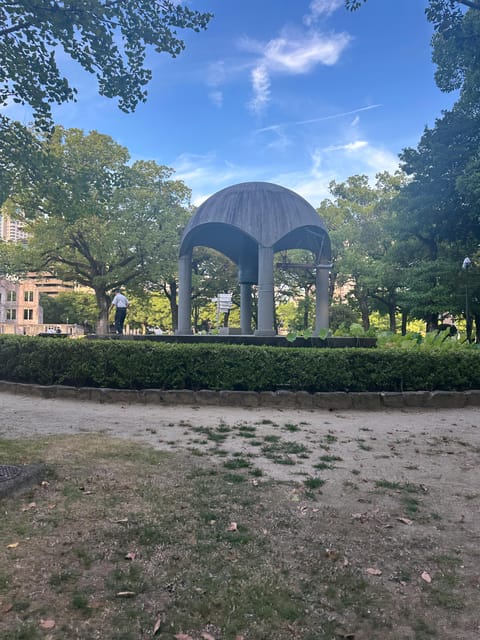
The next hour focuses on Peace Memorial Park. This is where the tour shifts from indoor exhibits to open spaces filled with monuments, names, symbols, and carefully placed reminders of the bombing.
I like this part because the guide can connect the physical setting to the ideas behind each memorial. You are not simply taking photos of the Cenotaph or walking past a monument. You learn what the memorial represents and why the park carries such a strong message about peace.
The park also gives you space to process the museum. The subject remains serious, but the outdoor setting allows the experience to breathe. Guides have been praised for being respectful of emotional needs, pausing when people need more time, and answering questions without rushing.
The best version of this stop is not a flood of dates. It is a conversation about Hiroshima before the bombing, the immediate effects on the city, and the way remembrance shapes the city now. The guide can also point out the connection between the park and the surviving structures around it.
Bring questions. This is the part of the tour where a local guide can make the greatest difference. You can ask about a specific monument, the city’s rebuilding, or the meaning of the peace message. The route is designed to help you leave with more than a collection of solemn photographs.
A few more Hiroshima trips to weigh up
- Hiroshima: Tour of Atomic Bomb Dome & Peace Memorial Museum
★ 5.0 · 20 reviews - Tokyo: teamLab Planets TOKYO Digital Art Museum Entry Ticket
★ 4.6 · 9,779 reviews - Tokyo: Samurai Ninja Museum Guided tour and Experience
★ 4.6 · 1,010 reviews - Kyoto: Tea Museum Tickets and Matcha Grinding Experience
★ 4.9 · 739 reviews
The Atomic Bomb Dome and the hypocenter
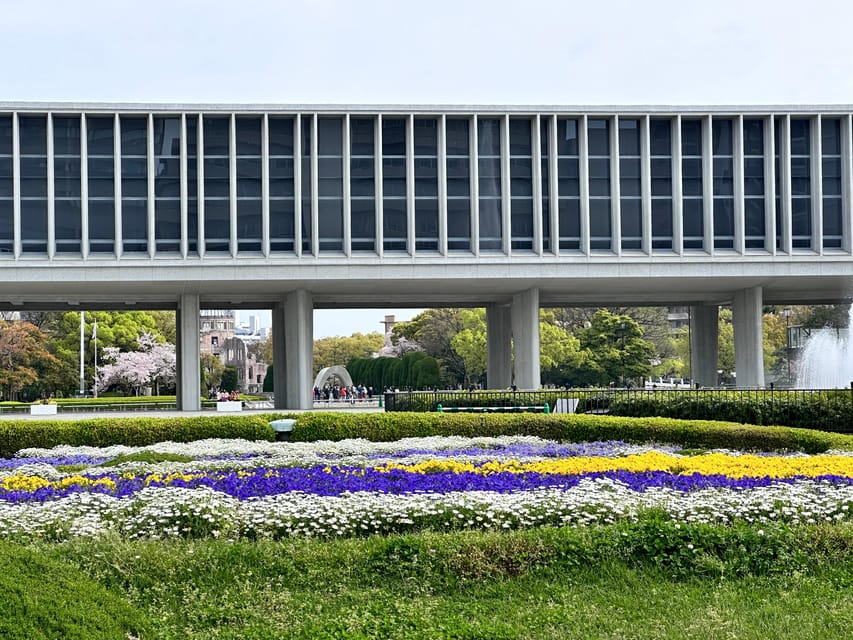
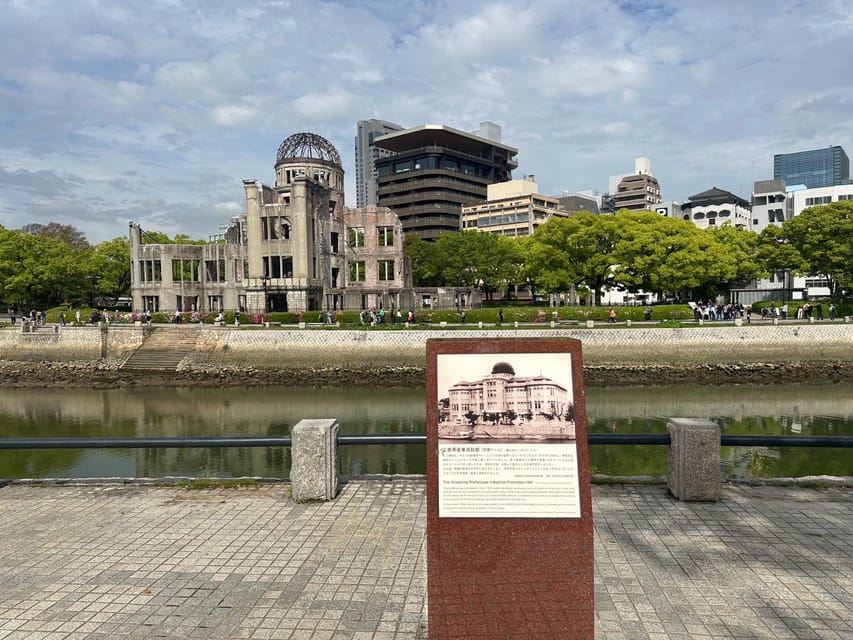
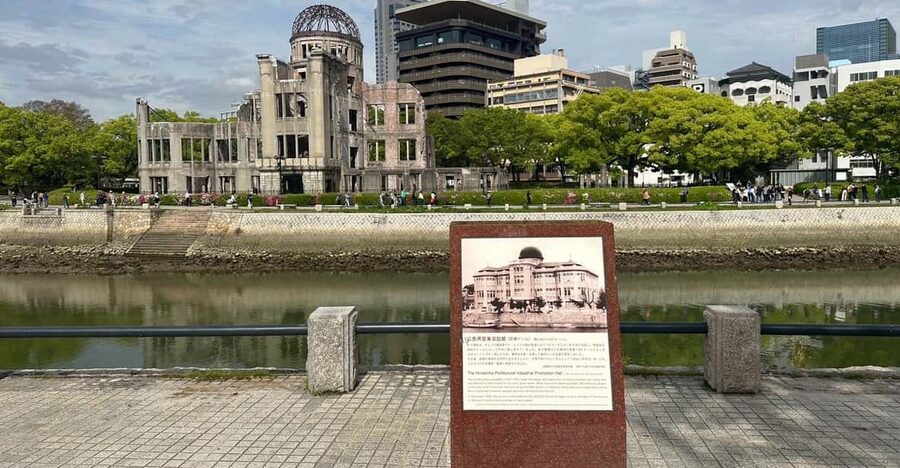
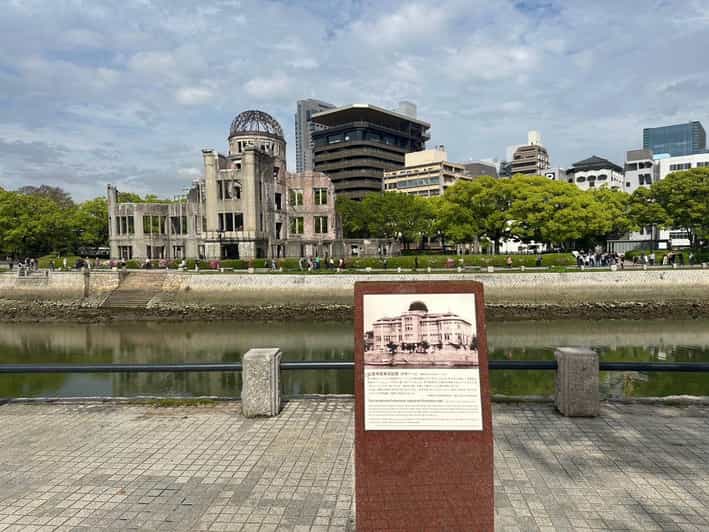
The Atomic Bomb Dome receives about ten minutes of guided attention. That may sound brief, but the building is visually powerful and easy to understand once you know its place in the story.
You can take photographs and hear about the structure’s survival. The Dome is not presented as an isolated landmark. It becomes a physical reference point for the attack and for the city’s decision to preserve a damaged building as a reminder.
The tour also visits the hypocenter, the point associated with the explosion. This is one of the most important details in the route because it turns an enormous historical event into a location you can stand near and consider. The guide helps explain what happened at ground level and how the surrounding town was affected.
The supplied itinerary describes a ten-minute walk after this portion before the castle visit. That walk is useful as a transition. The first half of the tour deals with mass destruction and remembrance. The second half looks at Hiroshima as a city with a much longer story.
Surviving buildings and everyday Hiroshima
One of the most valuable features is the attention to atomic bombed buildings beyond the Dome. Depending on your guide and the time available, you may see places such as a school, hospital, or bank connected with the bombing.
These sites help you understand ordinary life in Hiroshima. The museum presents objects and testimony. A surviving building can show the scale of the blast in a different way. You begin to think about workers, children, patients, and families rather than only about military decisions and casualty figures.
Guides have taken some groups to less-frequented locations, including a bank where only one employee survived and a school that was almost destroyed. These are exactly the details I want from a walking tour. They add local texture without turning the subject into spectacle.
The schedule is not long enough to guarantee every extra site on every departure. Treat these locations as a strong possibility rather than a promised separate itinerary. If this aspect matters to you, tell your guide at the start. The tour has room for personal questions and some adjustment, but the museum and main park stops remain the core.
This is also where the guide’s own style matters. Maria has been described as able to make the complicated history easier to follow, while other guides have brought in cultural details and stories about modern Hiroshima. A good guide should help you see both the damage and the daily life that continued afterward.
Hiroshima Gokoku Shrine and the city before 1945
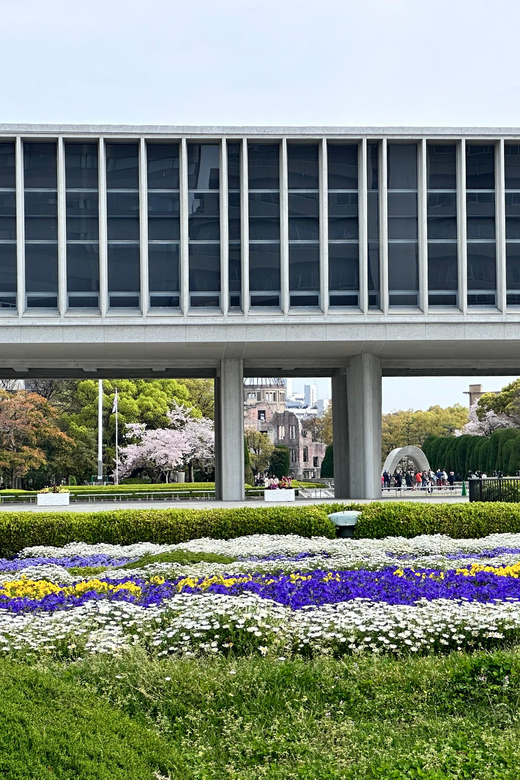
The route includes Hiroshima Gokoku Shrine, adding a different layer to the city’s story. The shrine helps place Hiroshima within Japanese culture and gives you a chance to consider the city beyond the atomic bombing.
This matters because Hiroshima can become, in the minds of first-time visitors, only a place of wartime tragedy. The shrine and castle broaden the picture. They show that the city had traditions, political history, religious life, and a samurai past long before August 1945.
The stop may be brief compared with the museum and park. Still, it gives the guide a chance to explain cultural context and answer questions about Japan beyond the memorial district. If you are traveling with children or teenagers, this variety may help hold their attention during a serious morning.
Hiroshima Castle and its samurai displays
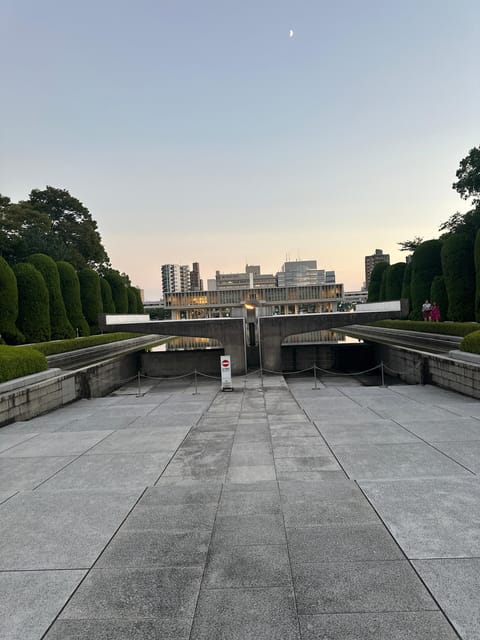
The final scheduled stop is Hiroshima Castle, with about forty minutes for a guided visit and sightseeing. Here you see displays connected with samurai life, including swords and helmets.
The castle changes the tone of the tour. After the memorial district, it is a chance to consider Hiroshima’s earlier history and the traditions that shaped Japan. I find that contrast useful, even if the castle is not the reason most people come to the city.
Keep your expectations measured. One piece of direct feedback found the castle less interesting than the other stops, with little to add after the museum and park. That is fair. The castle is included, but it may feel like an optional historical add-on rather than an essential Hiroshima sight.
If you love samurai history, the stop will likely be worthwhile. If your priority is the atomic bomb story, you may prefer more time at the museum, park, or surviving buildings. Ask your guide how to use the forty minutes if your interests lean strongly in one direction.
Castle admission is not included in the $67 price. The peace museum ticket is included, but you should budget separately for the castle. This is an important detail when comparing the total cost.
Guide quality and the value of a personal pace
The strongest part of this experience is the guide’s role. Names that appear in the booking material include Maria, Leo, Ihsan, Mehak, Bilal, Ali, James, Waleed, and Léo. Guests have described guides who answer detailed questions, speak clear English, adapt explanations for children, and offer suggestions for restaurants and other things to do in Hiroshima.
Several guides have adjusted the route to suit personal interests. One guide showed a family with children aged 16, 13, and 8 how to approach the subject in a way that kept everyone involved. Another stayed longer so the group could see more. Some bookings ran beyond the planned three hours, but you should not count on extra time. The advertised duration remains three hours.
This flexibility is particularly useful if you arrive late or need a slower pace. One guide communicated well after a taxi cancellation caused a delay. That does not make lateness risk-free, but it suggests that direct communication with the guide can help.
The tour is described as a walking tour and as wheelchair accessible, but the supplied practical information also says it is not suitable for wheelchair users. That is a clear contradiction. If you use a wheelchair, contact Fukuhara tours before booking and ask for a firm answer about the route, museum access, castle access, and walking sections.
People over 95 are listed as unsuitable for the activity. Comfortable clothing and shoes are recommended for everyone else.
Who should book this Hiroshima tour?
I would choose this experience if you have one day or less in Hiroshima and want a strong introduction without arranging several admissions and guides yourself. It is also a good fit if you prefer asking questions rather than reading every plaque alone.
Families can benefit from the personal pace, especially when children have different levels of interest in wartime history. Students and history-focused visitors may appreciate the chance to discuss causes, consequences, and recovery. The tour also works well for anyone who wants local food suggestions, since traditional Hiroshima snacks are included and guides may recommend places to eat.
I would think twice if you want a relaxed sightseeing walk with cheerful stops. The museum is emotionally difficult. I would also reconsider it if you want to spend a full afternoon examining every exhibit, since one hour inside the museum is only a starting point.
The castle is a useful bonus, but not the main reason to book. If the castle matters most to you, remember that the ticket costs extra. If peace education, personal stories, and the physical sites of the bombing matter most, the first two hours offer the real value.
Booking details worth knowing
The price is $67 per person, and the three-hour experience includes the walking tour, guide, Peace Memorial Museum admission, and traditional Hiroshima snacks. Food and drink charges beyond the included snacks are not covered, and the optional museum audio guide and castle tickets cost extra.
The tour offers free cancellation up to 24 hours before the start time, with a full refund. You can also reserve now and pay later, which is useful when your Japan itinerary is still changing. Starting times vary, so check availability for your date.
The tour has a top rating from 89 bookings, with repeated praise for respectful handling of the subject, clear explanations, friendly communication, and personal attention. I would focus less on the score and more on the pattern: the guide is the reason this experience works.
Should you book it?
Book it if you want Hiroshima explained by a person who can connect the museum, memorials, hypocenter, surviving buildings, and modern city. The route gives you the essential sites, then adds a glimpse of samurai-era Hiroshima at the castle.
Skip it if you prefer exploring silently, need several hours inside the museum, or have little interest in the castle. For most first-time visitors, though, the included museum admission and thoughtful walking route make $67 a fair price for a serious, useful introduction to Hiroshima.
FAQ
How long does the Hiroshima tour last?
The scheduled duration is three hours. Some guides have occasionally spent longer with a group, but extra time is not guaranteed.
Where does the tour meet?
The meeting point is the taxi stand near the Peace Memorial Museum, at 1-2 Nakajimacho.
What does the $67 price include?
The price includes the walking tour, a tour guide, admission to the Peace Memorial Museum, and traditional snacks from Hiroshima.
Are Hiroshima Castle tickets included?
No. Castle tickets are not included and must be paid for separately.
Is the Peace Memorial Museum audio guide included?
No. The optional audio guide costs extra. A live guide is included.
Which languages are available?
Live guides are available in English, Hindi, Malay, and Urdu.
Is the tour suitable for children?
The supplied information does not set a minimum age. Guides have tailored explanations for families with children, including children aged 8, 13, and 16. The museum contains disturbing images, so adults should consider each child’s readiness.
Is the tour wheelchair accessible?
The information is conflicting. The activity details say wheelchair accessible, while the restrictions say it is not suitable for wheelchair users. Contact Fukuhara tours before booking to confirm the route and access arrangements.
Can I cancel the tour for a refund?
Yes. You can cancel up to 24 hours before the experience for a full refund. You can also reserve now and pay later.
Just added around Hiroshima
- The Journey of Hiroshima from Tragedy to Peace★ 4.8 · 44 reviews
- Miyajima: Private Rickshaw Tour to Itsukushima Shrine★ 4.9 · 45 reviews
- Hiroshima: Miyajima Half-day Historical Walking Tour★ 4.7 · 100 reviews
- Hiroshima:Guided Virtual Tour/PEACE PARK TOUR VR★ 5.0 · 29 reviews
- Hiroshima/Miyajima Private Custom Tour with Local Guide★ 5.0 · 134 reviews
- Hiroshima: Saijo Sake Tasting at 7 Breweries Guided Tour★ 4.8 · 29 reviews
- Hiroshima: Tour of Atomic Bomb Dome & Peace Memorial Museum★ 5.0 · 20 reviews
- Hiroshima: Private Walking Tour with a Local★ 4.6 · 70 reviews
Garden & Palace Tours, compared.
Imperial Palace and Shogun Historical Walking Tour
Read our review →
Tokyo Castle & Imperial PalaceーShogun Walking Tour
Read our review →
Nijo-jo Castle and Ninomaru Palace Guided Tour
Read our review →

Ultimate Osaka Walking Tour: Castle, Dotonbori & Hidden Gems
Read our review →Tokyo Castle & Imperial PalaceーShogun Walking Tour
Read our review →Browse the lists this tour appears in