
REVIEW · GARDEN & PALACE TOURS
Japanesel Archery Experience HIROSHIMA CASTLE SHARAKU
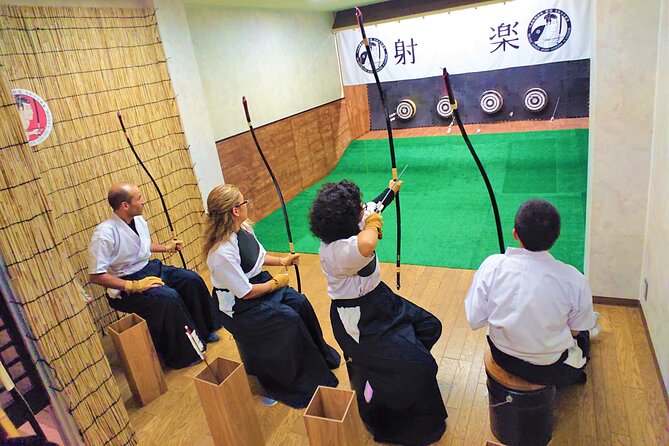
Kyudo is far more than firing an arrow at a target. You dress in dogi and hakama, follow a careful series of movements, and learn why posture, timing, and respect matter as much as accuracy. The result feels closer to a short cultural lesson with a bow than a standard archery class.
I like the small maximum group of four, which gives you plenty of attention, and I like that complete beginners can actually draw the bow and shoot. The costume, practice rounds, and friendly competition add a lot for the price.
The main consideration is communication. Translation apps help, but some instruction may be nonverbal, and one session found the host impatient with children touching the equipment. Parking near Hiroshima Castle can also be difficult, so arrive early.
In This Review
- Key points to know before you book
- Kyudo is a lesson in control, not quick shooting
- Dressing in dogi and hakama adds real character
- The opening explanation gives you the context you need
- Your first arrows are guided practice, not a test
- The target rounds turn practice into a game
- Hiroshima Castle makes the location easy to pair with sightseeing
- At $43.11, the value depends on what you want from an activity
- Who will enjoy this Hiroshima experience most
- Timing, group size, and cancellation details
- FAQ
- How long does the Japanese archery experience last?
- Where does the activity begin?
- Where does the activity end?
- What does the experience cost?
- How many people can join?
- Can a complete beginner shoot arrows?
- What will I wear?
- Is the experience available in English?
- Is the activity suitable for people with arm injuries?
- Can I cancel for a full refund?
- Should you book Japanese Archery Experience HIROSHIMA CASTLE SHARAKU?
Key points to know before you book
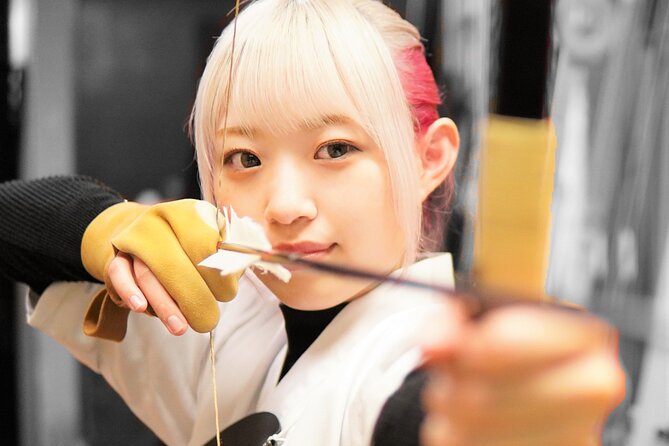
- You wear an authentic kyudo uniform: The outfit includes dogi on top and hakama below, making the lesson feel more like a traditional practice than a costume photo stop.
- You shoot as a beginner: Normal kyudo training limits beginners until they master the basics, but this experience lets you pull the bow and fire arrows during the lesson.
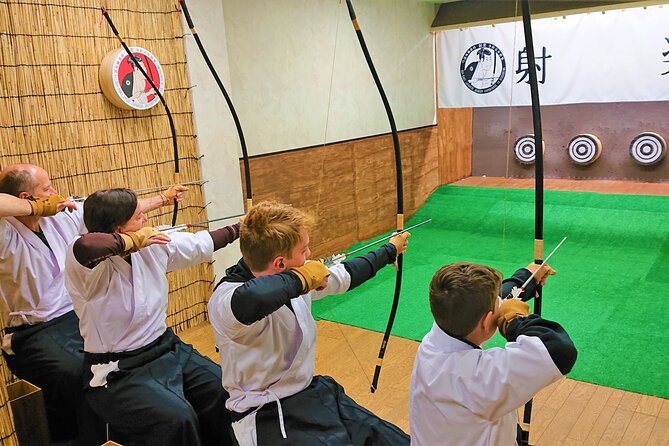
- The group is limited to four people: That keeps the session focused and gives the instructor time to correct your form.
- You learn a formal shooting routine: The bow, arrow, stance, hand position, and release all follow set steps.
- You may finish with a competition: After practice, groups can shoot several rounds and compete for high scores.
- The session lasts about one hour: It fits neatly beside sightseeing at Hiroshima Castle and other central Hiroshima stops.
Kyudo is a lesson in control, not quick shooting
The first thing to understand is that kyudo does not work like the archery range at a fair. You do not simply pick up a bow, pull the string, and aim at the center.
Every movement has a place. You learn how to hold the bow, position the arrow, raise your arms, draw, aim, and release. The routine pays respect to the equipment and to the person practicing beside you. That slow rhythm is part of the appeal.
You will probably find the technique puzzling at first. Several people have noted that the arrow can curve, and aiming slightly to one side may send it straighter than expected. This is not a mistake in the equipment. The Japanese bow has a different shape and handling method from the western bows many people know.
That difference makes the activity worthwhile even if you already practice archery. Familiar habits can get in the way, so you need to listen closely and accept that kyudo has its own rules. The challenge is not only hitting the target. It is making the whole sequence calm, clean, and controlled.
More garden & palace tours in Hiroshima:
- Hiroshima; Hiroshima Peace Memorial Museum and Castle Tour
★ 5.0 · 89 reviews - Osaka Castle: Museum and Tower Entry Ticket
★ 4.5 · 2,380 reviews - Tokyo: Imperial Palace and Shogun Historical Walking Tour
★ 5.0 · 2,251 reviews
Dressing in dogi and hakama adds real character
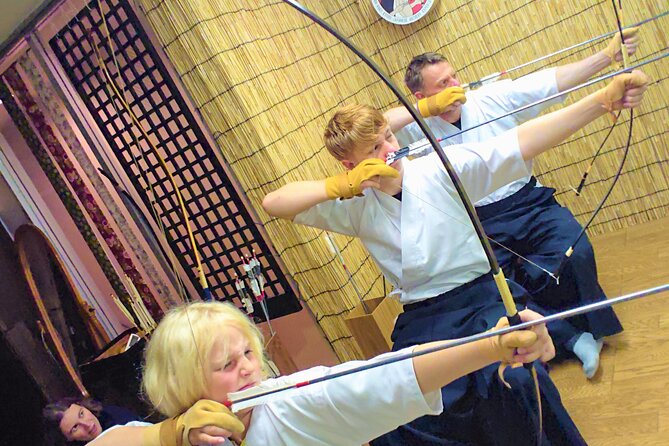
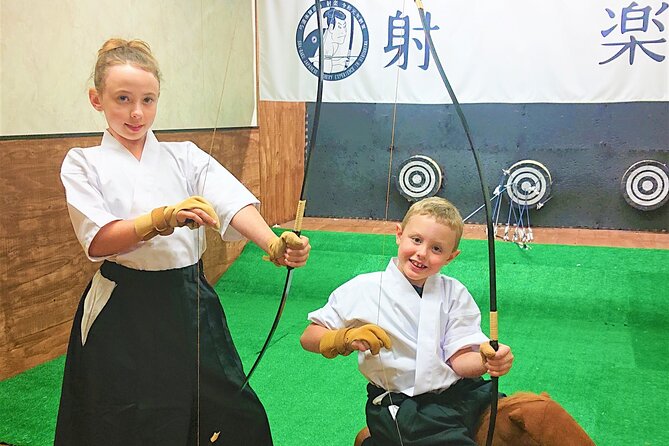
Before shooting, you change into a kyudo uniform. The upper garment is called a dogi, while the lower garment is a hakama. The outfit is not just a photo prop. It changes how you move and makes you pay closer attention to stance and posture.
You may also have the chance to wear armor as part of the presentation. That creates a memorable visual moment, especially for families and anyone looking for photographs or short videos from the experience.
The clothing does require a little care. A hakama is not casual sightseeing wear, and you may feel less free to move until you get used to it. That is part of the lesson, though. The traditional clothing helps you understand that kyudo is practiced as a disciplined art, not as a quick target game.
The instructor can take photographs and videos with your phone toward the end of the session. If you want those images, have your phone ready and ask when the shooting portion is finished. The activity is a good choice if you want a personal souvenir rather than another set of castle photographs.
The opening explanation gives you the context you need
The instructor begins with an introduction to kyudo and a demonstration. You learn that the goal is not simply to strike the target, but to bring the mind and body into complete focus.
The explanation also covers the respectful relationship between archer, bow, arrow, and target. That context matters because the formal movements might otherwise seem slow or overly strict. Once you understand that the routine is part of the art, each step has a clear purpose.
English ability can vary. Some sessions use a translation app on a tablet or phone to explain points that are harder to show physically. Several people have found the process effective, even with little shared language, while one group felt the host’s limited English and hurried manner made the lesson less comfortable.
I would treat the communication style as a practical consideration rather than an automatic problem. The class is built around demonstration and repetition, so you can learn much by watching. Still, if you need detailed verbal instruction, keep your questions short and use the translation app when necessary.
Your first arrows are guided practice, not a test
After the explanation, you begin learning the actual shooting steps. The instructor and assistants guide you through the process, from handling the arrow to setting your body and releasing the string.
You are not expected to arrive with archery experience. The activity is specifically arranged so a complete beginner can shoot during the lesson. That is unusual in formal kyudo, where students normally need to master the basic movements before pulling a full bow.
The instructors continue giving technique tips during practice. You may shoot a practice round of eight arrows, then continue with more practice if you need time to settle into the form. People who pick up the sequence quickly can move on to a friendly competition.
Do not judge the experience by your first few arrows. The opening steps can feel complicated, especially notching the arrow and coordinating both hands. After several attempts, the process becomes easier to follow. Your score will depend on your own coordination, but patient instruction can help you make progress within the hour.
You may also feel some strain in your hand or arm if you have never used this type of bow. That is normal physical effort, but the activity is not recommended for anyone with an arm, hand, or shoulder injury or disability. You should use your own judgment before booking.
Same city, a completely different kind of day:
- Peaceful Hiroshima & Miyajima UNESCO 1 Day Bus Tour
★ 5.0 · 5,309 reviews - Hiroshima: Hiroshima and Miyajima UNESCO Sites 1-Day Tour
★ 4.9 · 2,330 reviews - Hiroshima / Miyajima Full-day Private Tour with Government Licensed Guide
★ 5.0 · 1,298 reviews - Hiroshima Historical Walking Tour – Why A-Bomb was Dropped
★ 4.8 · 893 reviews
The target rounds turn practice into a game
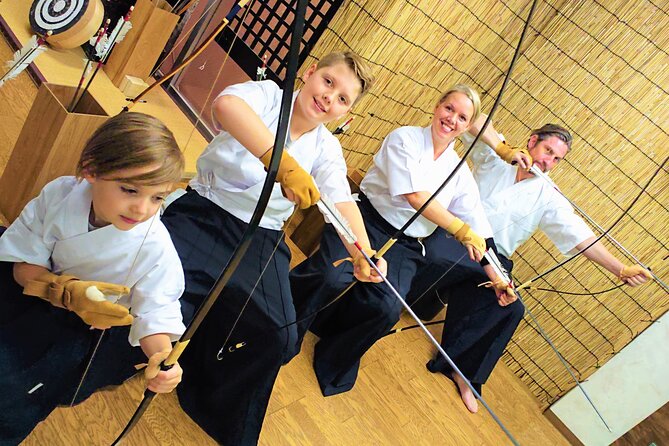
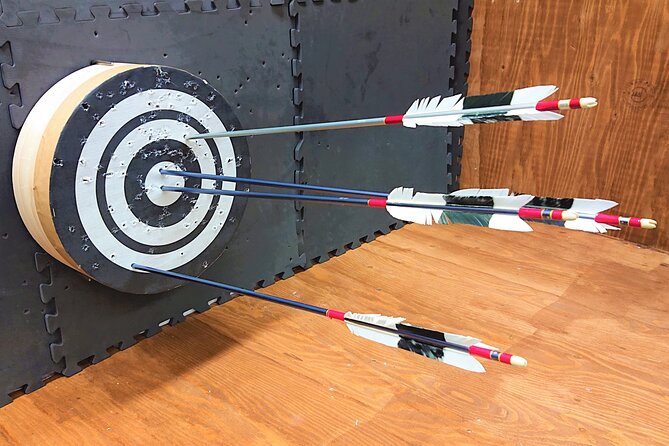
Once everyone understands the basic form, the class may shift into competition. A common format is eight arrows per round, split into two sets of four. The exact number of rounds depends on how quickly your group learns.
One group managed five competition rounds and fired more than 45 arrows per person, including practice. That is a lot of shooting for a one-hour activity, though you should not assume every session will reach that number.
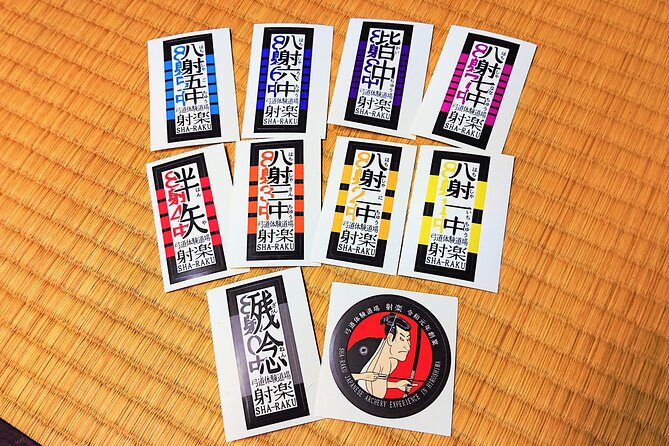
The competition gives the lesson a playful finish. You can compare scores with family or friends without losing the cultural focus of the class. If you shoot all eight arrows successfully in a round, you may receive a special place on the high-score wall or a high-score card.
The scoring adds just enough pressure to make the final rounds exciting. It also shows why good form matters. Following the rules may feel fussy during practice, but the discipline can help you hit the target more often.
If your group includes children, set expectations early. The equipment is authentic and expensive, so children need to listen carefully and avoid touching bows and arrows unless instructed. The activity has worked well for families with children around 11, 13, and 14, but the tone of the lesson may depend on how patiently everyone follows directions.
Hiroshima Castle makes the location easy to pair with sightseeing
The meeting point is Japanese Archery Experience HIROSHIMA CASTLE SHARAKU at the Hiroshima Castle Sannomaru Ruins, 21-7-2 Motomachi, Naka Ward, Hiroshima 730-0011. The activity ends at the same place.
That central setting makes the class easy to add to a day of Hiroshima sightseeing. You do not lose half a day traveling across the city for a one-hour lesson. The location is near public transportation, though the meeting point directions could be clearer than they are.
Give yourself extra time to find the exact spot. Parking nearby can be difficult, so driving is not the simplest choice. If you are using public transportation or walking from another castle-area stop, allow a cushion before the start time rather than arriving at the last minute in a hakama and trying to find the range.
Because the class stays at the meeting point, there is no second drop-off or final transfer to arrange. That makes the experience particularly useful between other activities.
At $43.11, the value depends on what you want from an activity
The price is $43.11 per person for roughly one hour. That is not the cheapest way to fill 60 minutes in Hiroshima, but you are paying for more than target practice.
The fee includes instruction, access to traditional equipment, the kyudo uniform, and the chance to shoot as a first-time participant. You also receive a short introduction to the art and may have time for several rounds, depending on your group’s pace.
I think the price works best for families, couples, and small groups who want an activity they can share. The four-person limit is important here. You are not standing in a long line waiting for a turn, and the instructor has time to watch your form.
The value is weaker if you only want a quick photograph in traditional clothing. The costume is fun, but the heart of the experience is learning the steps and trying to shoot properly. It is also less suitable if you are looking for a long historical tour or a full martial arts course. This is a compact introduction, not an advanced kyudo qualification.
Who will enjoy this Hiroshima experience most
I would recommend it to you if you:
- Want a hands-on Japanese cultural activity rather than another sightseeing stop
- Have never tried archery but would like a structured introduction
- Already practice archery and want to test yourself with a different bow and form
- Are visiting Hiroshima with family or a small group
- Enjoy friendly competition and do not mind learning through repetition
- Want photographs or video of yourself in traditional clothing
The class is also a good option for people who have already seen Hiroshima’s major memorial sites and want something lighter and more active. It offers a different way to think about Japanese tradition, through posture, movement, and concentration.
I would hesitate if you have an arm, hand, or shoulder injury, or if you need a fully verbal English lesson with detailed explanations at every stage. The translation app is useful, but it cannot always replace fluent conversation. You should also think twice if you dislike strict instructions or are uncomfortable handling equipment under close supervision.
Timing, group size, and cancellation details
The activity lasts about one hour and has a maximum of four participants. A small group can make a major difference here because everyone needs to learn the same sequence, and the instructor must watch each person’s hands and posture.
Confirmation is provided when you book, and the ticket is mobile, so you can show it from your phone. The meeting point is near public transportation. Since the activity ends where it begins, you can plan your next stop without arranging a separate return journey.
Free cancellation is available if you cancel at least 24 hours before the local start time. A cancellation made less than 24 hours in advance is not refundable, and changes inside that window are not accepted.
FAQ
How long does the Japanese archery experience last?
The activity lasts approximately one hour.
Where does the activity begin?
It begins at Japanese Archery Experience HIROSHIMA CASTLE SHARAKU, Hiroshima Castle Sannomaru Ruins, 21-7-2 Motomachi, Naka Ward, Hiroshima 730-0011, Japan.
Where does the activity end?
It ends back at the meeting point.
What does the experience cost?
The listed price is $43.11 per person.
How many people can join?
The activity has a maximum of four participants.
Can a complete beginner shoot arrows?
Yes. The lesson allows complete beginners to pull the bow and shoot arrows while learning the basic kyudo movements.
What will I wear?
You will wear a kyudo uniform that includes dogi, the upper garment, and hakama, the lower garment. Armor may also be part of the experience.
Is the experience available in English?
Translation apps may be used to assist participants. The amount of spoken English can vary by session.
Is the activity suitable for people with arm injuries?
The activity is not recommended for people with arm, hand, or shoulder injuries or disabilities.
Can I cancel for a full refund?
Yes, if you cancel at least 24 hours before the experience start time. Cancellations made less than 24 hours in advance are not refunded.
Should you book Japanese Archery Experience HIROSHIMA CASTLE SHARAKU?
I would book this if you want a short, active, distinctly Japanese experience near Hiroshima Castle. The strongest reasons are the small group, real kyudo equipment, traditional clothing, and the chance to shoot even if you have never handled a bow.
Go in expecting careful instruction rather than instant accuracy. Allow extra time to find the meeting point, avoid relying on nearby parking, and prepare for some communication through gestures or a translation app. If you follow the formal steps and enjoy the challenge, this one-hour session can become one of the more memorable parts of your Hiroshima visit.
Just added around Hiroshima
- The Journey of Hiroshima from Tragedy to Peace★ 4.8 · 44 reviews
- Miyajima: Private Rickshaw Tour to Itsukushima Shrine★ 4.9 · 45 reviews
- Hiroshima: Miyajima Half-day Historical Walking Tour★ 4.7 · 100 reviews
- Hiroshima:Guided Virtual Tour/PEACE PARK TOUR VR★ 5.0 · 29 reviews
- Hiroshima/Miyajima Private Custom Tour with Local Guide★ 5.0 · 134 reviews
- Hiroshima: Tour of Atomic Bomb Dome & Peace Memorial Museum★ 5.0 · 20 reviews
- Hiroshima: Saijo Sake Tasting at 7 Breweries Guided Tour★ 4.8 · 29 reviews
- Hiroshima: Private Walking Tour with a Local★ 4.6 · 70 reviews
Garden & Palace Tours, compared.
Imperial Palace and Shogun Historical Walking Tour
Read our review →
Tokyo Castle & Imperial PalaceーShogun Walking Tour
Read our review →
Nijo-jo Castle and Ninomaru Palace Guided Tour
Read our review →

Ultimate Osaka Walking Tour: Castle, Dotonbori & Hidden Gems
Read our review →Tokyo Castle & Imperial PalaceーShogun Walking Tour
Read our review →Browse the lists this tour appears in