
REVIEW · MUSEUMS
Hiroshima: Atomic Bomb Dome and Peace Memorial Museum 3 hours
The most powerful part of this Hiroshima tour is the way it connects three places that should be seen together: the Atomic Bomb Dome, the quiet memorial park, and the Peace Memorial Museum. The Dome gives you the physical remains, the park gives you space to think, and the museum explains what happened to Hiroshima’s people before, during, and after August 6, 1945.
I like two things here. First, a private guide can add human detail that you may miss on your own, including family stories and photographs shared by guides such as Naoka, Naomi, Takashi, and Yumi. Second, the three-hour plan gives you a clear route without wasting time. The main drawback is that two hours in the museum can feel short, especially if you read every display carefully.
In This Review
- Key points
- Why this Hiroshima visit matters
- Meeting at the Peace Memorial Museum
- Seeing the Atomic Bomb Dome in 30 minutes
- A quiet pause in Peace Memorial Park
- Two hours inside the Peace Memorial Museum
- What the guides add
- Is $94.26 a fair price?
- Who should book this experience?
- Practical details before you reserve
- Should you book this Hiroshima tour?
- FAQ
- How long does the Hiroshima Atomic Bomb Dome and museum tour last?
- What sites are included?
- Is admission to the Peace Memorial Museum included?
- Where does the tour start and finish?
- Is this a private tour?
- Are meals or drinks included?
- Can I cancel for a full refund?
Key points
- Personal family connections: Some guides, including Naoka, Naomi, Takashi, and Yumi, have shared family ties to Hiroshima’s bombing experience.
- Three essential sites together: You visit the Atomic Bomb Dome, Peace Memorial Park, and Peace Memorial Museum in one focused outing.
- Private group format: Only your own party participates, making it easier to ask questions and set the pace outside the museum.
- A quiet museum visit: Guides generally speak in a whisper and keep moving rather than stopping for long talks inside.
- Museum admission included: The $94.26 price covers the guide and entry to the Peace Memorial Museum.
- Simple three-hour timing: The tour starts and ends at the museum, with no lunch, coffee, or tea included.
Why this Hiroshima visit matters
Hiroshima is not a place to rush through with a camera and a checklist. The city’s Peace Memorial area asks you to slow down and consider individual lives, not just military dates and political decisions.
This tour helps by placing the main sites in a sensible order. You first see the damaged building that became the Atomic Bomb Dome. Then you walk through the memorial park to a cenotaph honoring the dead. Finally, you spend the largest part of the tour inside the museum, where the story becomes more personal and detailed.
I appreciate that the route does not treat the bombing as an isolated event. The museum also explains Hiroshima before the attack and follows the effect on its people. That broader framing helps you see the city as a living place, not only as a symbol of wartime destruction.
The subject is painful. Some museum displays are difficult to view, and your guide’s tone matters. The best guides described here, including Gordon, Emiko, Ami, and Hiroyuki, balance facts with respect. That is important. You want clear explanation, but you also need quiet time to process what you are seeing.
A few more Hiroshima trips to weigh up
- Hiroshima; Hiroshima Peace Memorial Museum and Castle Tour
★ 5.0 · 89 reviews - Hiroshima: Tour of Atomic Bomb Dome & Peace Memorial Museum
★ 5.0 · 20 reviews - Tokyo: teamLab Planets TOKYO Digital Art Museum Entry Ticket
★ 4.6 · 9,779 reviews
Meeting at the Peace Memorial Museum
The tour begins at the Hiroshima Peace Memorial Museum, at 1-2 Nakajimacho, Naka Ward. It also ends there, which makes the plan easy to fit into a day of sightseeing.
Because the museum is both the meeting point and the final stop, you do not need to find a separate office or arrange transport between the three locations. The area is near public transportation, and the meeting point is a practical anchor for the visit.
I would arrive a few minutes early. One booking involved a guide arriving right on time, which left the group briefly unsure if they were waiting in the correct place. The provider says guides should arrive at least ten minutes early, but giving yourself a little extra time is still wise.
This is a private activity, so only your group participates. That is a useful feature for a serious subject. You can ask questions without feeling that you are interrupting a large group, and your guide can respond to the interests of your party.
Seeing the Atomic Bomb Dome in 30 minutes
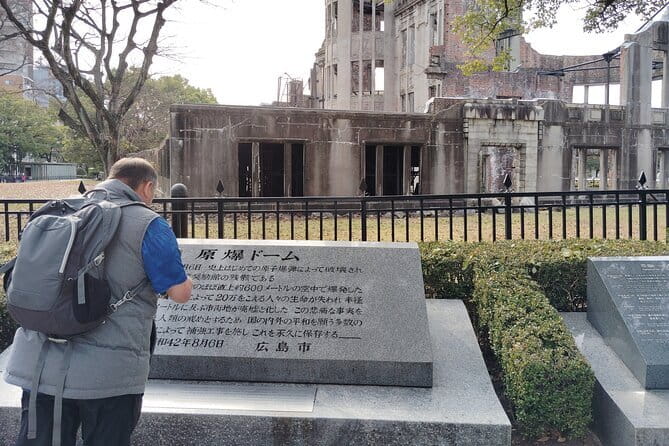
The Atomic Bomb Dome is the first major stop. Before the bombing, it was a graceful building. The heat rays and shock waves left it in ruins, while much of the city around it was destroyed.
The building’s damaged frame makes the scale of the blast easier to grasp than words alone. You are looking at a structure that survived in partial form near the point of the explosion. It is not a restored monument, and that is part of its force. The broken walls and open roof carry the weight of the event without needing much decoration.
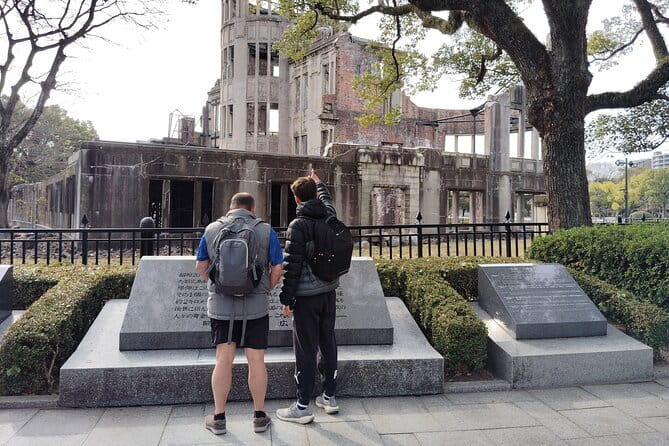
You have about 30 minutes here. That is enough time to view the Dome, hear its place in the story, and ask your guide questions. You do not enter the building as part of the listed plan, so expect to see it from the surrounding area.
Your guide can also explain why the Dome remains. During Hiroshima’s rebuilding, some people called for the ruins to be demolished. Keeping it required a decision to preserve physical evidence of what happened. That choice gives the site meaning beyond architecture.
I like starting here because it gives you a clear point of reference before the museum. The museum contains objects, photographs, and personal accounts. The Dome gives you a stark first impression, with no glass case between you and the damaged structure.
A quiet pause in Peace Memorial Park
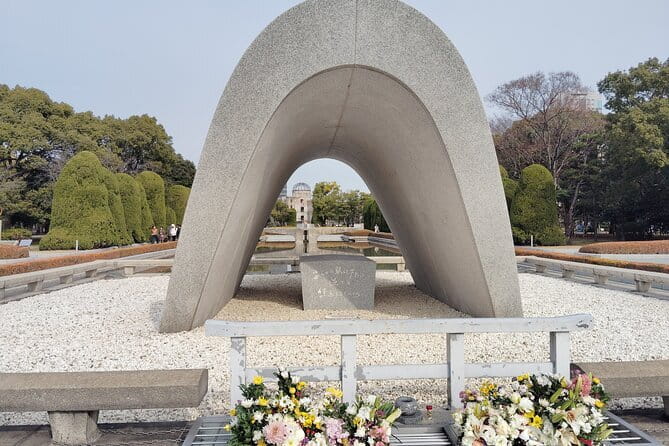
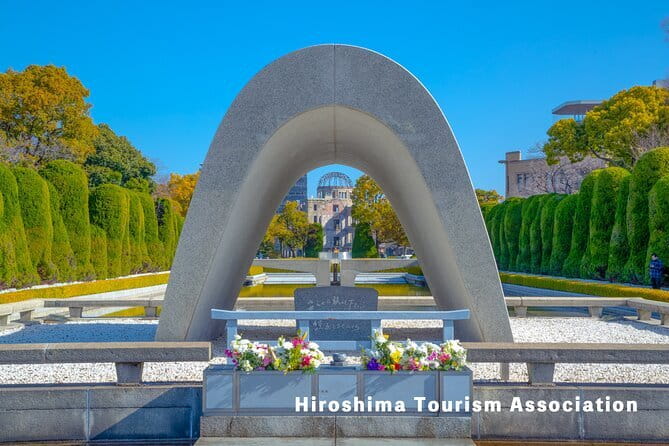
The next stop is Hiroshima Peace Memorial Park, with around 20 minutes planned for the area. A cenotaph sits in a place overlooking the Atomic Bomb Dome, created to comfort the spirits of those affected by the bombing.
This part of the tour is brief, but do not dismiss it as filler between the Dome and museum. The park creates a change of pace. After standing beside the ruins, you have room to look across the area and think about the human cost described by your guide.
A private guide can make this short walk more useful by pointing out memorial sites and explaining their purpose. Gordon was especially praised for taking a group to several places around the Peace Memorial area, rather than simply walking straight to the museum. Ami also included the park and offered a lunch suggestion at the end of the visit.
The 20-minute schedule does mean you will not have unlimited time at every memorial. If you are especially interested in the park itself, you may want to return after the tour. The activity ends at the museum, so you can continue exploring independently once the three hours are over.
Same city, a completely different kind of day:
- Peaceful Hiroshima & Miyajima UNESCO 1 Day Bus Tour
★ 5.0 · 5,309 reviews - Hiroshima: Hiroshima and Miyajima UNESCO Sites 1-Day Tour
★ 4.9 · 2,330 reviews - Hiroshima / Miyajima Full-day Private Tour with Government Licensed Guide
★ 5.0 · 1,298 reviews - Hiroshima Historical Walking Tour – Why A-Bomb was Dropped
★ 4.8 · 893 reviews
Two hours inside the Peace Memorial Museum
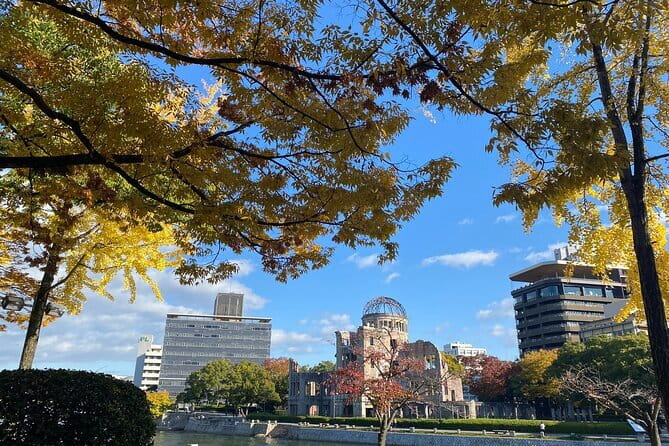
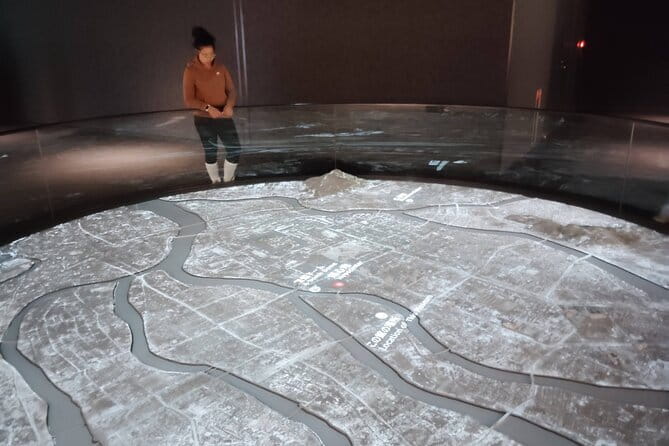
The museum receives the largest share of the schedule, about two hours, and admission is included in the price. It tells the story of Hiroshima and its people before the bombing, the destruction of August 6, 1945, and the long effect on survivors and families.
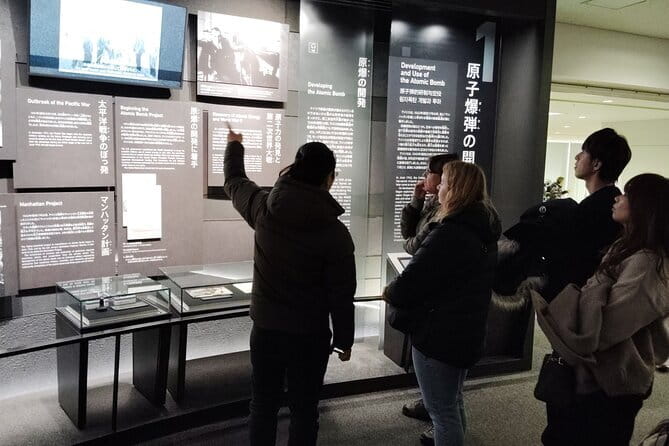
This is where the guide’s role can make the biggest difference. On your own, you can read the displays, but you may not know which details deserve extra attention or how the pieces fit together. A guide can provide context before you enter and answer questions afterward.
Naoka was described as a second-generation survivor and brought a family connection to the subject. Naomi also shared her family’s story, while Takashi’s personal connection added weight to the discussion. Hiroyuki visited with his mother, creating another personal link to the day’s subject. These details do not replace the museum’s evidence, but they can help connect the public story with family memory.
You should also know how the guiding works inside. As a rule, guides speak in a whisper and continue walking rather than stopping for extended explanations. The museum is a quiet place, and you are expected to keep your voice down.
That approach has advantages and limits. It respects the atmosphere and allows other people to view the exhibits. On the other hand, you may prefer a guide who gives long explanations beside each display. If so, ask questions in the appropriate places or discuss the main points before entering and after leaving.
Two hours is a useful introduction, but it may not satisfy every museum enthusiast. The archives quietly tell the story of Hiroshima as it was that day, and there is a lot to absorb. If you read every label, examine every photograph, and pause at each personal account, you could easily want more time.
What the guides add
The guide is the main reason to choose this experience instead of visiting the sites alone. The strongest guide experiences described here combine factual explanation, family perspective, patience, and respect.
Gordon has been praised for acting as a storyteller and historian while also leaving room for reflection. He explained the memorials, answered questions, and connected Hiroshima’s past with its present. Emiko was patient with questions, and Ami was described as kind, informed, and helpful with a lunch recommendation.
Several guides bring family stories into the visit. That can be deeply affecting, but it is also worth keeping expectations realistic. Not every guide will have the same personal connection or presentation style. One guide was described as kind but reserved, and the group felt it needed more explanation than it received.
That mixed experience is a useful warning. A private tour gives you access to a guide, but the quality depends on the individual person leading your group. If you are hoping for detailed historical discussion, tell your guide early. Ask about the events, the memorials, and the personal stories behind the displays.
The positive side is clear: the best guides can explain what you are seeing without turning the visit into a lecture. The most effective moments seem to come when the guide gives you a fact, answers a question, then lets the site speak for itself.
Is $94.26 a fair price?
The cost is $94.26 per person. That is not a bargain-priced museum visit, but the comparison should not be made against museum admission alone.
Your fee includes a local guide, admission to the Peace Memorial Museum, and a private format for your group. You also get a planned route linking the three most important sites in the Peace Memorial area. For a first visit, that structure has real value.
The price makes the most sense if you want interpretation. If you are comfortable reading museum panels, finding the Dome, and walking through the park without help, an independent visit will cost less. The paid experience earns its keep when your guide adds context, answers questions, and helps you understand the relationship between the sites.
Group discounts may improve the value for families or larger parties. Since only your own group participates, the cost can also feel more reasonable when shared among several people, though the exact discount is not specified.
Lunch, coffee, and tea are not included. Plan those separately. The three-hour duration leaves room to eat afterward, and Ami has been helpful with lunch suggestions, but meals are not part of the booking.
Who should book this experience?

I would choose this tour for a first visit to Hiroshima, especially if you want a clear introduction rather than a loose afternoon of independent sightseeing. It suits people who value personal stories, have questions about the memorials, or want help placing the museum’s displays in context.
It is also a good fit for families and small private groups. The private format lets you control the conversation better than a large group tour. Parents should still decide how their children may respond to the museum’s difficult material.
History-minded visitors may want more than three hours. You can use the tour as an introduction, then return to the museum or park afterward on your own. The fact that the activity ends at the museum makes that easy.
I would hesitate if you dislike guided visits, prefer complete silence, or want to spend a full day reading museum material. The whispering format is respectful, but it limits long explanations inside the galleries. You may get more from the tour if you see the guide as a pathfinder and interpreter, not a person who talks continuously at every exhibit.
Practical details before you reserve
Confirmation is provided when you book, and free cancellation is available until 24 hours before the local start time. Changes or cancellations made inside that 24-hour window are not accepted for a refund.
The listed duration is approximately three hours. The timing is roughly 30 minutes at the Atomic Bomb Dome, 20 minutes in Peace Memorial Park, and two hours in the museum. The plan is focused, so do not expect a meal break or unrelated city sightseeing.
The activity is near public transportation, and most people can participate. The meeting and ending point is the Peace Memorial Museum, which keeps the route straightforward.
Museum etiquette matters. Keep your voice low, listen to your guide’s instructions, and allow other people space to view the displays. This is not a light sightseeing stop. A respectful attitude will make the experience better for you and everyone around you.
Should you book this Hiroshima tour?
Book it if you want the Atomic Bomb Dome, Peace Memorial Park, and Peace Memorial Museum explained as one connected story. The strongest reason to pay for it is the guide, particularly if you can request or are matched with someone who brings family history, photographs, and patient answers.
Skip it if you prefer to explore at your own speed and read every museum display without a schedule. You can still visit the same places independently, but you will lose the added context that made guides such as Gordon, Naoka, Naomi, Takashi, Yumi, Emiko, Ami, and Hiroyuki so effective.
For most first-time visitors, I think the three-hour format is a sensible starting point. It gives you the essential sites, preserves time for the rest of Hiroshima, and leaves you with a clearer understanding of why this place asks to be remembered.
FAQ
How long does the Hiroshima Atomic Bomb Dome and museum tour last?
The tour lasts approximately three hours. The schedule includes about 30 minutes at the Atomic Bomb Dome, 20 minutes in Peace Memorial Park, and two hours at the Peace Memorial Museum.
What sites are included?
You visit the Atomic Bomb Dome, Hiroshima Peace Memorial Park, and the Hiroshima Peace Memorial Museum.
Is admission to the Peace Memorial Museum included?
Yes. Admission to the Peace Memorial Museum is included, along with the guide fee.
Where does the tour start and finish?
The tour starts and ends at the Hiroshima Peace Memorial Museum, 1-2 Nakajimacho, Naka Ward, Hiroshima, 730-0811, Japan.
Is this a private tour?
Yes. Only your own group participates in the activity.
Are meals or drinks included?
No. Lunch, coffee, and tea are not included.
Can I cancel for a full refund?
Yes, if you cancel at least 24 hours before the experience’s start time. Cancellations or changes made less than 24 hours before the start time are not accepted for a refund.
Just added around Hiroshima
- The Peace Memorial to Miyajima : Icons of Peace and Beauty★ 4.5 · 31 reviews
- Hiroshima & Miyajima All-Inclusive Tour w/Licensed guide Pancho★ 5.0 · 54 reviews
- Private Full Day Hiroshima Tour★ 4.5 · 29 reviews
- Okunoshima Rabbit Island Cycling Tour with Local Guide★ 4.5 · 17 reviews
- Shore Excursion from Hiroshima Port : Private Tour in Hiroshima★ 5.0 · 17 reviews
- Hiroshima Saijo Sake Tasting Tour with visit to 7 Breweries★ 5.0 · 104 reviews
- Miyajima Guided Tour and Fresh Oyster Farm Tour★ 5.0 · 20 reviews
- Hiroshima Country Cycling: Explore Rural Life 1 HR from City★ 5.0 · 22 reviews
Museums, compared.

teamLab Planets TOKYO Digital Art Museum Entry Ticket
Read our review →
Samurai Ninja Museum Guided tour and Experience
Read our review →
Tea Museum Tickets and Matcha Grinding Experience
Read our review →
Skip the lines Basic Ticket at SAMURAI NINJA MUSEUM KYOTO
Read our review →
Ninja Experience (Family Friendly) at Samurai Ninja Museum TOKYO
Read our review →
Tokyo Studio Ghibli Museum and Ghibli Film Appreciation Tour
Read our review →
Geiko Maiko Dance of Kyoto & Visits of Gion Museum
Read our review →
Tokyo Sword Experience – includes Museum Ticket/Ninja Experience
Read our review →Browse the lists this tour appears in