
REVIEW · COOKING CLASSES
Eat Osaka: Street Food Cooking in an Authentic Kitchen!
Osaka’s best souvenir may be a cooking skill, and this class puts you to work in an old Japanese restaurant kitchen. You’ll make local-style dishes from scratch, use proper kitchen tools, and finish with a meal you prepared yourself.
I like the small maximum of eight people, which gives the chef room to correct your technique and answer questions. I also like the warm, informal finish: beer, sake, or green tea with your food, rather than a quick photo and goodbye.
The one point to check before booking is the exact menu. The tour details describe udon, vegetable tempura, pickled cucumber, and mochi, while the cooking description also mentions okonomiyaki and yakitori. Ask Eat Osaka what your scheduled class will prepare.
In This Review
- Key points at a glance
- Cooking Osaka food in an old house
- What you may cook during the 2.5-hour class
- Hand-made udon
- Osaka-style tempura
- Okonomiyaki and yakitori
- Pickled cucumber and mochi
- A teacher-led class, not a rushed demonstration
- The meal and drinks at the end
- Is $79.28 a fair price?
- Who will enjoy this class most?
- Timing, location, and booking advice
- My call: book it if food is part of your travel story
- FAQ
- Where does the cooking class begin?
- Where does the activity end?
- How long does the experience last?
- How much does the class cost?
- How many people can join the class?
- Are ingredients included?
- Are drinks included?
- Which dishes will I make?
- Is the class near public transportation?
- Can I cancel for a full refund?
Key points at a glance
- Old Japanese house setting: Cook in a traditional-style kitchen rather than a large commercial classroom.
- Small-group format: The class accepts no more than eight people, allowing for closer help from the chef.
- Hands-on Osaka cooking: You may prepare hand-made udon, Osaka-style tempura, pickled cucumber, mochi, okonomiyaki, or yakitori, depending on the class menu.
- Local drinks included: Sit down with beer, sake, or green tea after the cooking.
- Friendly bilingual instruction: Miki, Niki, and Nathalie are named by participants as especially warm and clear instructors.
- Easy-to-plan timing: The experience lasts about two and a half hours and ends where it begins.
Cooking Osaka food in an old house
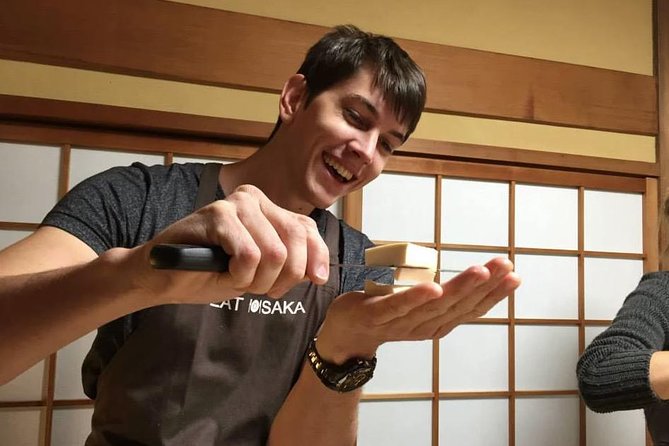
This is not a class where you simply watch a chef chop vegetables. You handle the ingredients, follow each step, and build a meal with your own hands. That makes the experience useful beyond the afternoon itself. You leave with a better idea of how Japanese dishes are assembled, not just how they look on a plate.
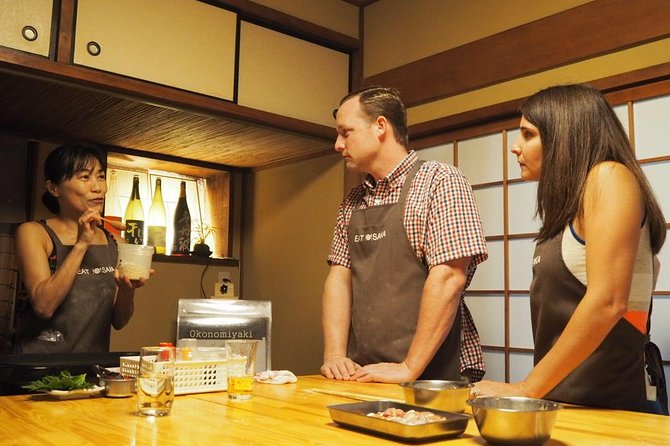
The setting adds plenty of character. Eat Osaka Higashinari is in an old Japanese house in Osaka’s Higashinari ward. The supplied details describe it as an old restaurant kitchen and a purpose-built cooking studio, so you should expect a working culinary space with traditional touches rather than a sleek hotel kitchen.
I like this kind of setting because it keeps the focus on ordinary food and local habits. Osaka is known for casual dishes that are made to be shared, eaten quickly, and enjoyed without ceremony. Cooking in a smaller house helps the class feel closer to a neighborhood experience than a staged food show.
The meeting point is at 1-chome-2-10 Higashinaka, Higashinari-ku, Osaka. It is near public transportation, but you should still allow time to find the exact entrance. The activity begins and ends there, so you will not need to arrange a separate ride home after the meal.
A few more Osaka trips to weigh up
- Osaka: Ramen and Gyoza Cooking Class in Dotonbori
★ 5.0 · 378 reviews - Osaka Cooking Class: Okonomiyaki &Japanese cuisines experience
★ 5.0 · 261 reviews - Ramen and Gyoza Cooking Class in Osaka
★ 5.0 · 202 reviews
What you may cook during the 2.5-hour class
The menu information includes several Osaka favorites, but it is not fully consistent. One description lists Osaka-style tempura, hand-made udon, pickled cucumber, and a sweet mochi dessert. Another describes okonomiyaki made from scratch, hand-made udon, and yakitori skewers with a signature sauce.
That difference matters if you have your heart set on one dish. The safest approach is to confirm the menu with Eat Osaka before you book, particularly if you have already taken an okonomiyaki class or specifically want to make noodles.
Hand-made udon
The noodle portion is one of the most practical parts of the class. You learn how dough becomes udon, then work through the process with guidance. The details do not promise that you will take noodles home, so think of this as a cooking lesson and meal rather than a take-home workshop.
Fresh udon also gives you a good feel for the texture of Japanese food. You can see how simple ingredients change through mixing, kneading, shaping, and cooking. For families, this is likely to be one of the easiest parts for children to understand and enjoy, provided they can take part safely under the chef’s direction.
Osaka-style tempura
The class may include vegetable tempura, and the description emphasizes professional tools and ingredients. That gives you a chance to learn the basic handling needed for crisp frying, rather than simply eating the finished dish.
Tempura is a useful dish to study because small choices affect the result. The batter, the ingredients, and the cooking process all matter. A local instructor can explain the reasoning as you work, which is more helpful than trying to copy a recipe from a book later.
One participant specifically received vegetarian accommodation from Nathalie. That is encouraging, but the available information does not promise that every dietary request can be met. Tell the provider about your needs in advance and get confirmation before paying.
Same city, a completely different kind of day:
- Osaka Go Karting Tour with Funny Costume
★ 5.0 · 2,658 reviews - Osaka Castle: Museum and Tower Entry Ticket
★ 4.5 · 2,380 reviews - Osaka: Shinsekai Food Tour with 13-15 Dishes at 5 Eateries
★ 4.8 · 2,204 reviews - Osaka Food Tour: 13 Dishes at 5 Local Eateries
★ 5.0 · 2,149 reviews
Okonomiyaki and yakitori
The cooking description also includes Osaka-style okonomiyaki and yakitori skewers with a signature sauce. Okonomiyaki is a casual savory pancake, while yakitori gives you a different lesson in seasoning and cooking food on skewers.
Because these dishes appear in one part of the description but not another, do not assume all of them will be prepared in one session. The class may use different menus on different dates, or the information may combine several versions of the experience.
Pickled cucumber and mochi
Pickled cucumber gives the meal a sharp, refreshing side dish. It is a small preparation, but it helps show how Japanese meals balance richer food with lighter flavors.
Mochi provides the sweet finish. The description calls it a delicious sweet dessert, though it does not give details about the filling or exact style. You can expect a hands-on dessert component, but not a specific flavor unless Eat Osaka confirms it.
A teacher-led class, not a rushed demonstration
The strongest feature here is the teaching. The class uses a local bilingual chef, and the small format means you should have a fair chance to ask questions and get help with each task.
Miki is praised for explaining both the steps and the reasons behind them. That distinction is important. A recipe tells you what to do, but a good teacher also tells you why a technique matters and what you are looking for as the food changes.
Niki is also named as a friendly, well-informed teacher in the supplied comments, while Nathalie receives repeated praise for being patient, clear, and accommodating. Since the instructor may vary by date, book with the expectation of bilingual local guidance, not a guarantee of one particular chef unless the provider confirms it.
The class is designed for conversation as well as cooking. The small room and shared meal can make it easy to meet the other people in your group. One experience included another couple from Ireland, which shows how the class can become a social part of your Osaka day without being a large group event.
You should not need advanced cooking skills. The format includes instruction and ingredients, and the feedback points to an easy-to-follow class. Still, it is worth remembering that you are taking part in real preparation. You will be standing, handling food, and following directions rather than sitting back for the whole session.
The meal and drinks at the end
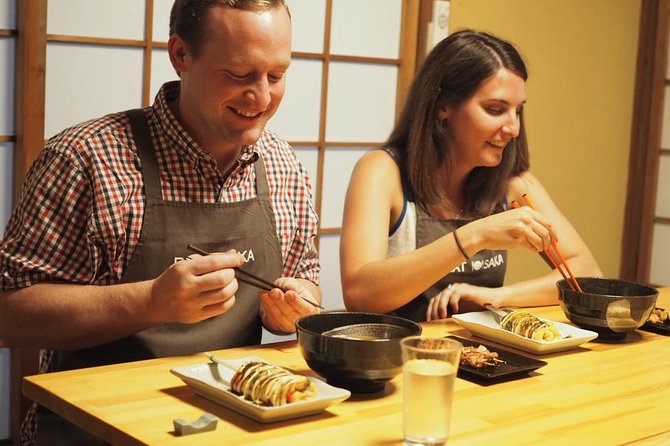
After the cooking is done, you sit down and eat what you prepared. Beer, sake, and green tea are included as drink choices. This is a small but valuable detail because it turns the class into a complete meal and gives you time to talk with the chef.
The drink selection also lets you choose the mood you want. Beer or sake fits the savory dishes, while green tea works well if you prefer not to drink alcohol. The information does not say how many drinks are included, so treat this as a welcome drink or meal accompaniment rather than an open bar.
I like the meal at the end because it gives the class a clear payoff. You can compare the result with the techniques you just learned, ask final questions, and slow down after the busy cooking portion. It also makes the $79.28 price easier to judge, since you are paying for instruction, ingredients, food, drinks, and a local setting rather than only a short demonstration.
Is $79.28 a fair price?
At $79.28 per person, this is not the cheapest way to eat Osaka food. You could spend far less on street food from a market or casual restaurant. The value comes from the teaching time, the ingredients, the use of professional equipment, the meal, the drinks, and the access to a bilingual local chef.
The two-and-a-half-hour length helps. You are not squeezing a recipe into a one-hour session before being sent on your way. There is time to prepare several dishes, receive help, and sit down to eat.
The price is strongest for people who want an activity with substance. If you only want to taste okonomiyaki, noodles, or tempura, a restaurant will be cheaper and simpler. If you want to understand how the food is made and remember Osaka through an active experience, the cost is easier to justify.
The small group is another part of the value. With a maximum of eight people, the class should feel more personal than a large cooking school. That matters when you are learning techniques such as noodle making or frying, where a quick correction can save a dish.
Who will enjoy this class most?
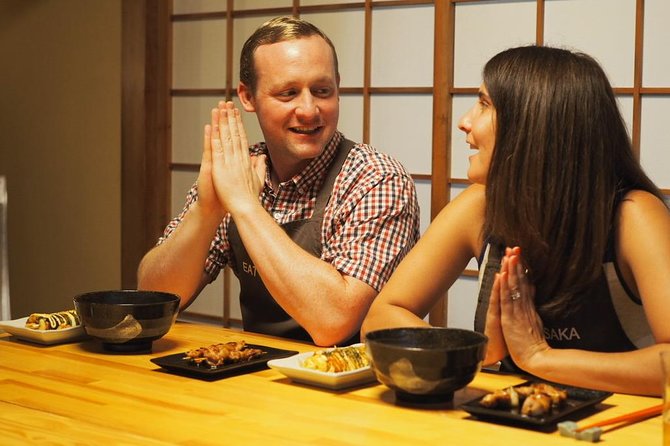
I would choose this for couples, families, and solo visitors who want a break from sightseeing. It suits people who like food but do not need a formal culinary course. The friendly teaching style described by the supplied information should also work well for beginners.
Families may find the shared cooking and meal appealing, especially because the hosts are described as warm and patient with children and adults. The provider does not give a specific minimum age, so check if you are booking for young children.
It is also a sound choice for vegetarians if you contact the provider first. Nathalie accommodated one vegetarian participant, but that single detail is not a promise of a fixed vegetarian menu. Ask what can be changed and whether the cooking surfaces and ingredients suit your needs.
You may want to skip it if your schedule is packed or if you dislike group activities. Even eight people can mean waiting briefly while others complete a step. You should also avoid booking on the assumption that every dish listed in the different descriptions will appear in one class.
Timing, location, and booking advice
The class lasts about 2 hours and 30 minutes. Since it includes cooking and a sit-down meal, allow the full block rather than planning a tight connection afterward.
The meeting point is Eat Osaka Higashinari, 1-chome-2-10 Higashinaka, Higashinari-ku, Osaka, Osaka 537-0021. The activity ends back at that same point. It is near public transportation, making it practical to fit into an Osaka day, but the information does not name a specific station or walking time.
A mobile ticket is available, and confirmation is provided at booking. The class has a maximum of eight people, so the small format may fill on popular dates. The experience also requires a minimum number of participants. If that minimum is not met and the class is canceled, you are offered another date or experience, or a full refund.
Free cancellation is available up to 24 hours before the start time for a full refund. Changes or cancellations made less than 24 hours before the start time are not refunded, and the cut-off follows local Osaka time.
My call: book it if food is part of your travel story
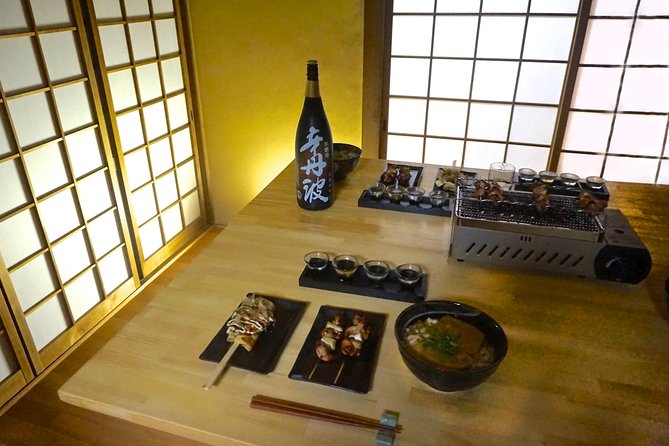
I would book this class if you want more than a meal and you enjoy learning by doing. The old-house setting, small group, hands-on food preparation, bilingual instruction, and final drink all work together to make a useful Osaka experience.
The main caution is the menu mismatch. Confirm whether your date includes udon and tempura, okonomiyaki and yakitori, or another combination. Once that is clear, the class is a good fit for beginners, families, couples, and anyone who wants to take a bit of Osaka’s cooking culture home in their head, even if the mochi stays on the plate.
FAQ
Where does the cooking class begin?
It begins at Eat Osaka Higashinari, 1-chome-2-10 Higashinaka, Higashinari-ku, Osaka, Osaka 537-0021, Japan.
Where does the activity end?
The activity ends back at the meeting point.
How long does the experience last?
The cooking class lasts approximately 2 hours and 30 minutes.
How much does the class cost?
The listed price is $79.28 per person.
How many people can join the class?
The activity has a maximum of eight participants.
Are ingredients included?
Yes. The ingredients and instruction are included.
Are drinks included?
Yes. You can enjoy beer, sake, or green tea after cooking.
Which dishes will I make?
The details include Osaka-style tempura, hand-made udon, pickled cucumber, and mochi. Another menu description includes okonomiyaki and yakitori, so confirm the exact dishes for your date with Eat Osaka.
Is the class near public transportation?
Yes. The meeting point is described as being near public transportation.
Can I cancel for a full refund?
Yes. You can cancel at least 24 hours before the start time for a full refund. Cancellations or changes made less than 24 hours before the start time are not refunded.
More Food in Osaka
- Hungry Osaka Street Food Tour:15 Tastings & 3 Drinks with a Local
★ 5.0 · 1,727 reviews - Osaka Local Foodie Walking Tour in Dotonbori and Shinsekai
★ 5.0 · 985 reviews - Hungry Osaka Street Food Tour: 15 Dishes & 3 Drinks
★ 4.9 · 694 reviews - Kuromon Market Food Walking Tour in Osaka (6 stops, 6 tastes)
★ 5.0 · 550 reviews
Just added around Osaka
- Samurai dress-up and shows, plus Tea Ceremony & Calligraphy★ 5.0 · 27 reviews
- Kyoto & Nara Private customized tour with English speaking Guide★ 4.5 · 99 reviews
- Well-balanced BENTO (lunch box) Cooking Class★ 5.0 · 35 reviews
- Urban Canvas: Osaka Street Art Bike Tour★ 5.0 · 47 reviews
- OSAKA:Feel the Power! Learn Taiko Drum from Professionals★ 5.0 · 28 reviews
- Volleyball in Osaka & Kyoto with Locals!★ 5.0 · 21 reviews
- 1.5〜2 Hours Traditional Kintsugi Work Shop in Namba Osaka★ 5.0 · 75 reviews
- Umami Town Street Food Tour★ 5.0 · 120 reviews
Cooking Classes, compared.
Ramen Cooking Class at Ramen Factory in Kyoto
Read our review →
Ramen & Gyoza Cooking Class in Tokyo with Local Supermarket Visit
Read our review →
Ramen Cooking Class at a Ramen Factory with Souvenir
Read our review →
Japanese Washoku Bento Small Group Cooking Class
Read our review →

Easy Ramen Cooking Experience in Kabukicho, Shinjuku
Read our review →
Ramen and Sushi Cooking Class with Sake Pairing Set in Tokyo
Read our review →Browse the lists this tour appears in