REVIEW · KYOTO TOURS
Early Half Day to Kyoto Highlights
Kyoto’s biggest sights can eat up a full day if you tackle them alone. This five-hour morning tour links Fushimi Inari, Arashiyama Bamboo Forest, and Kinkakuji by walking and public transport, getting you to the first two major stops early, before the crowds build.
I like two things right away: the small group, capped at eight, and the spare afternoon. Guide Indra is praised for keeping the route moving while explaining Shinto, Buddhism, Japanese society, and the stories behind each place. You see three very different sides of Kyoto without surrendering your entire day.
The trade-off is simple: this is a brisk route, not a slow temple stroll. You will pay about $94.71, then add ¥1,300 for transport and ¥500 for Kinkakuji, plus any gratuity. If you want long meals, shopping time, or a detailed visit to every corner, this schedule may feel tight.
In This Review
- Key points at a glance
- Why this early Kyoto route makes sense
- Meeting at Kyoto Tower Sando
- Fushimi Inari and the red torii gates
- Arashiyama Bamboo Forest in a focused 90 minutes
- Kinkakuji, the Golden Pavilion
- Guide Indra and the small-group advantage
- What the $94.71 price really covers
- Who should book this morning tour
- Should you book Early Half Day to Kyoto Highlights?
- FAQ
- How long does the Kyoto highlights tour last?
- What time does the tour start?
- Where do I meet the guide?
- Which attractions are included?
- Is Kinkakuji admission included?
- Is public transportation included?
- How many people can join the tour?
- Can I cancel for a full refund?
Key points at a glance
- Three major Kyoto sights before lunch: Fushimi Inari, Arashiyama Bamboo Forest, and Kinkakuji all fit into one carefully timed morning.
- An 8:00 am start: Early timing gives you a better chance of enjoying the red torii gates and bamboo paths with fewer people around.
- Guide Indra’s route planning: His role matters here because the sites are spread across Kyoto and require public transport between them.
- A small-group format: With no more than eight people, you can ask questions and get help without the feel of a large coach tour.
- A useful mix of culture and scenery: The morning covers Shinto at Fushimi Inari, nature and society in Arashiyama, and Buddhism at Kinkakuji.
- Free afternoon afterward: You return to Kyoto Station, leaving the rest of the day for Nishiki Market, Gion, museums, or your own plans.
Why this early Kyoto route makes sense
Kyoto is compact on a map but spread out in practice. Fushimi Inari lies south of the central station area, Arashiyama sits to the west, and Kinkakuji is farther north. Joining these sights in one morning takes planning, good timing, and a willingness to use trains, buses, or other public transport.
That is the main value of this experience. You are not paying only for entrance tickets, since two stops are free and the Golden Pavilion costs just ¥500. You are paying for the route, local guidance, and the time saved figuring out how to move between three distant parts of the city.
The 8:00 am start is especially useful. Fushimi Inari is one of Japan’s most photographed places, and its red gates become much harder to enjoy once the paths fill. Arashiyama has the same issue. An early arrival cannot guarantee solitude, but it gives you a much better chance of seeing the sites before the busiest part of the day.
The schedule also solves a common Kyoto problem: using every available hour on sightseeing and having no energy left for anything else. You finish back at Kyoto Station after roughly five hours. That leaves a full afternoon for a slower meal, a second neighborhood, or a site not covered by the tour.
Other Kyoto days people book alongside this one:
- PERFECT KYOTO 1-Day Bus Tour
★ 5.0 · 13,518 reviews - Kyoto: Fushimi Inari, Kinkakuji, Bamboo Grove 1 Day Bus Tour
★ 4.8 · 4,316 reviews - Kyoto: Tea Ceremony in a Traditional Tea House in Kiyomizu
★ 4.9 · 3,519 reviews
Meeting at Kyoto Tower Sando
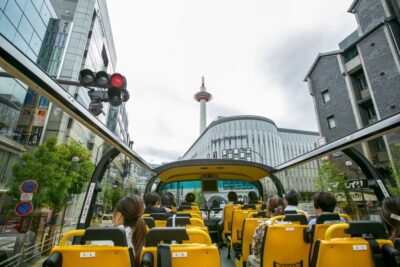
The morning begins at the Starbucks in Kyoto Tower Sando, in front of Kyoto Station. The meeting point is convenient if you are staying near the station or arriving there by train, but take a moment to check the exact location details supplied with your booking. Kyoto Station is large, and a few extra minutes can save a rushed start.
The first 15 minutes are set aside for gathering the group. This is not a sightseeing stop, but it gives Indra time to meet everyone and organize the morning before you head out.
You should arrive ready to walk and use public transport. The tour does not include a private vehicle, so the pace depends on the group staying together and following the guide through Kyoto’s transit network. That public approach is part of the appeal: you see how the city works rather than moving between attractions in a sealed vehicle.
Fushimi Inari and the red torii gates
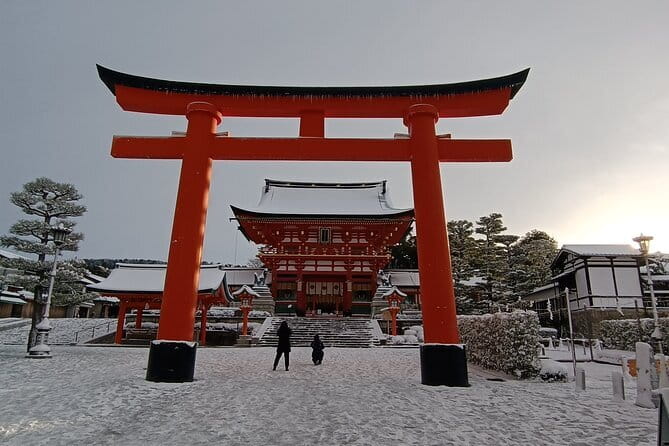
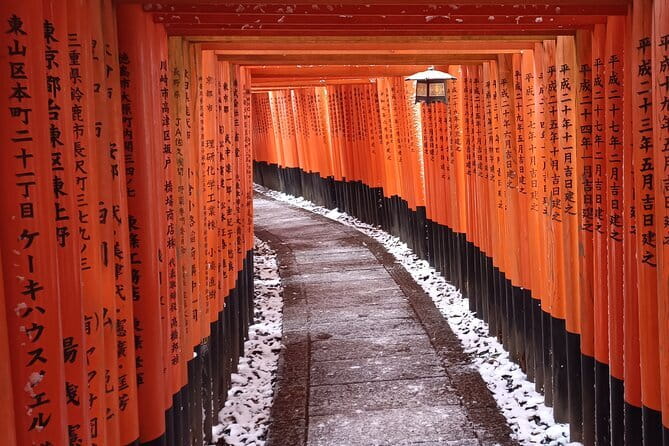
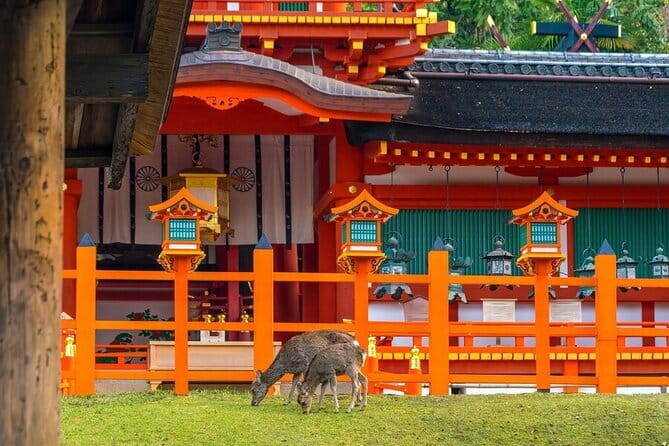
Fushimi Inari-taisha is the first major stop, with about 90 minutes scheduled. Its famous paths run beneath thousands of bright red torii gates, donated over time by individuals and businesses. The gates create one of Kyoto’s most memorable visual scenes, but Fushimi Inari is more than a photo stop.
This is a major Shinto shrine, and the tour uses the visit to explain Shinto beliefs and their place in Japanese culture. That context can change how you read the site. The gates, fox figures, shrine buildings, and mountain paths are not random decorations. They belong to a living religious tradition tied to Inari, a deity associated with rice, prosperity, and business.
The full Fushimi Inari mountain route is extensive, but this experience gives you about an hour and a half. That is enough for a meaningful look at the shrine and its torii paths, though not a leisurely exploration of every trail. If you have your heart set on reaching the summit, you should ask the guide how the group will use the available time.
Early arrival is the key advantage. The route is promoted as a way to enjoy the gates without the worst crowds, and that is exactly where the morning schedule earns its keep. The red tunnels are far more pleasant when you can pause for photographs and listen to the guide without constant congestion.
Indra’s role is important here. A guide can point out what deserves attention, explain proper shrine behavior, and keep the group on schedule. The stop is free to enter, but the cultural explanation is what gives it weight.
Arashiyama Bamboo Forest in a focused 90 minutes
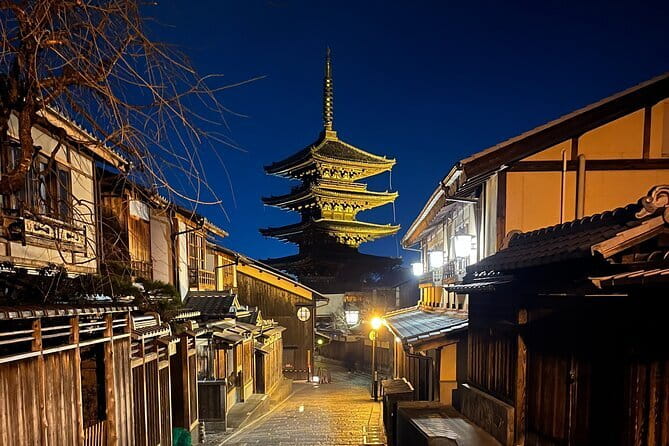
The next major stop is Arashiyama Bamboo Forest, with another 90 minutes. The tall bamboo creates a striking natural setting, and the paths offer a different mood from the shrine. Fushimi Inari is defined by color, ritual, and repeated gates. Arashiyama is quieter in appearance, with bamboo rising overhead and greenery surrounding the route.
The practical warning is that this is one of Kyoto’s most popular photo locations. The forest can feel crowded later in the day, so reaching it in the morning is a sensible choice. You should still expect other people, since no tour can control the flow of visitors, but early timing improves the experience.
The description of this stop also points to Japanese society, not just scenery. That gives Indra room to explain how natural spaces, tourism, and everyday life meet in Japan. The value is not in simply walking through bamboo and taking a picture. It is in understanding why this setting has become such a powerful symbol of Kyoto and how it fits into the city’s wider culture.
Ninety minutes is enough for the forest and a focused look around the area. It is not enough for a long wander through every nearby attraction. If you want extended time in Arashiyama, including a relaxed meal or extra sightseeing, you will need to return on your own after the tour or choose a longer experience.
Still, the time limit helps protect the half-day promise. The tour is designed to show you the essential character of Arashiyama, then move on rather than let one stop take over the morning.
Same city, a completely different kind of day:
- Kyoto Geisha Walking Tour: Gion District & Hidden Gems
★ 4.7 · 3,273 reviews - Kyoto: Tea Ceremony Ju-An at Jotokuji Temple
★ 4.9 · 3,207 reviews - Kyoto: Gion Magical Night Walking Tour with Geisha Trivia
★ 4.9 · 2,393 reviews - Kyoto: 45-Minute Tea Ceremony Lesson Experience
★ 4.3 · 2,378 reviews
Kinkakuji, the Golden Pavilion
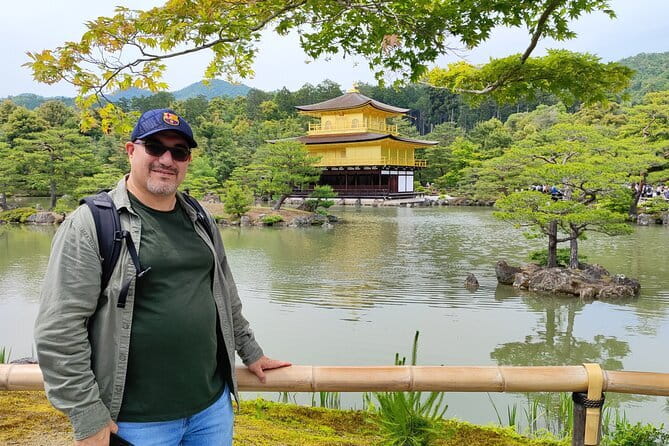
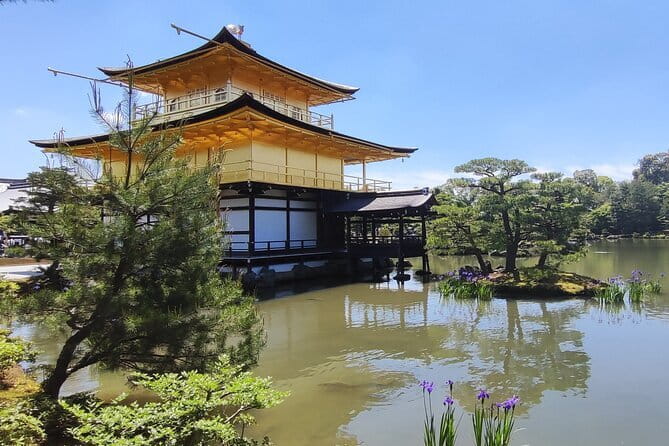
Kinkakuji comes next, with approximately 90 minutes scheduled. Known as the Golden Pavilion, the temple is famous for its gold-covered upper levels reflected in the pond below. The view is highly polished and almost theatrical, but the site also has a serious religious and historical setting.
Here the focus shifts to Buddhism in Japan and the temple’s past. That balance matters. Kinkakuji is easy to treat as a quick photograph, yet the grounds and the building’s story explain why it remains one of Kyoto’s key cultural sights.
Entrance is not included. You should budget ¥500 per person for the ticket. Compared with the overall tour price, that is a small extra cost, but it is worth knowing before you arrive, especially if you are traveling with a family or group.
The 90-minute visit should give you time to enter, see the pavilion from the main viewpoint, walk through the grounds, and hear the guide’s explanation. As with the other stops, the schedule favors a clear introduction over an exhaustive visit. You will see the central sights, but you should not expect an unhurried study of every garden detail.
Kinkakuji also provides a strong finish to the sightseeing portion. The morning moves from Shinto worship to bamboo scenery and Japanese society, then to Buddhist architecture and temple history. Those subjects make the route feel more thoughtful than a simple checklist of famous photographs.
Guide Indra and the small-group advantage
The guide can make or break a route like this. Indra is specifically praised for being friendly, organized, enthusiastic, and a good storyteller. Just as important, he is described as keeping the day on schedule and knowing where to take the group and what to watch for.
That matters because the tour covers a lot of ground. You need someone who can explain the sites without turning every stop into a lecture, answer questions, and get the group moving when it is time to leave. A guide who understands the route can save you the small delays that add up quickly in Kyoto.
The maximum group size is eight. That is a useful middle ground. You get company and shared transport, but the group should remain small enough for questions and conversation. You are also less likely to feel anonymous than you would on a large bus tour.
Several aspects of Indra’s guiding style are worth noting: practical planning, cultural explanation, and personal attention. He is described as answering questions and accommodating the group where possible, with the experience sometimes feeling close to a private tour. That does not mean the pace becomes fully flexible, but it suggests a more personal morning than a scripted group outing.
What the $94.71 price really covers
The listed price is $94.71 per person. Add ¥1,300 for public transportation and ¥500 for Kinkakuji, and remember that gratuity is not included. The true cost is therefore higher than the headline figure.
The two free attractions help keep the sightseeing costs low. Fushimi Inari and Arashiyama Bamboo Forest do not charge an admission fee, while Kinkakuji’s ticket is modest. The larger part of the price pays for the guide and the planning needed to link far-flung sights in a short time.
I see the value most clearly if you have limited time in Kyoto, are visiting for the first time, or do not want to work out the transport connections yourself. The route replaces several hours of planning with a guided morning and leaves you with the afternoon free.
If you are comfortable navigating Kyoto alone and already know these three sites are your priorities, you may prefer to pay only for transport and the temple ticket. You will save money, but you will also take on the timing, navigation, and cultural interpretation yourself.
The strong 5 rating from 15 reviews and a 100 percent recommendation give the experience a promising record, though the sample is still small. I would treat that as encouraging rather than conclusive. The most consistent strengths are clear: Indra, efficient organization, useful explanations, and the ability to see the main sights in half a day.
Who should book this morning tour
This tour suits you best if you want Kyoto’s headline sights without giving up the whole day. It works particularly well for first-time visitors, people staying near Kyoto Station, and anyone who values local explanation but prefers a small group.
It is also a good fit if you want a broad introduction. You get Shinto, Buddhism, nature, Japanese society, and the practical experience of using public transport, all in one morning.
You may want a different plan if you dislike early starts, find a brisk walking route tiring, or prefer to spend several hours at one temple or neighborhood. The tour has a clear purpose: wide coverage in limited time. It is not designed for lingering.
Most people can take part, and the activity is near public transportation. Since the experience requires walking and moving between sites, wear sensible shoes and keep your morning uncluttered. That is practical advice based on the route itself, not a promise of a particular walking distance.
Free cancellation is available up to 24 hours before the start time. Changes made inside that window are not accepted, and poor weather can lead to a different date or a full refund. The tour ends at the same Kyoto Station meeting point, which makes it easy to continue with your own plans.
Should you book Early Half Day to Kyoto Highlights?
Book it if you want three major Kyoto sights before lunch, prefer a small group, and value a guide who can make public transport and timing easier. Indra’s organization and clear cultural focus appear to be the main reasons this experience earns such strong marks.
Skip it if your ideal Kyoto day means slow photography, long temple visits, or spontaneous stops. For the right visitor, the $94.71 price plus local transport and admission costs is fair because it buys structure, context, and a free afternoon. For an independent planner, it may be more than you need.
My practical call: this is a strong first morning in Kyoto, especially when your schedule is short. You will see the city’s most recognizable sights, learn what makes them matter, and still have time to make the rest of the day your own.
FAQ
How long does the Kyoto highlights tour last?
The experience lasts approximately five hours, including the meeting period, sightseeing, transport, and return to Kyoto Station.
What time does the tour start?
The tour starts at 8:00 am.
Where do I meet the guide?
Meet at Starbucks Coffee in Kyoto Tower Sando, in front of Kyoto Station. The address provided is Kyoto Tower Building, 7211 Higashishiokōjichō, Shimogyo Ward, Kyoto, 600-8216.
Which attractions are included?
The route visits Fushimi Inari-taisha Shrine, Arashiyama Bamboo Forest, and Kinkakuji Temple, also called the Golden Pavilion.
Is Kinkakuji admission included?
No. The entrance fee is ¥500 per person.
Is public transportation included?
No. Public transportation costs ¥1,300 per person and is paid separately.
How many people can join the tour?
The group has a maximum of eight travelers.
Can I cancel for a full refund?
Yes. You can cancel at least 24 hours before the local start time for a full refund. Cancellations or changes made less than 24 hours before the start time are not refunded or accepted. If poor weather cancels the tour, you will be offered another date or a full refund.
Just added around Kyoto
- Private Guided Traditional Buddhist Cooking in Japan★ 5.0 · 16 reviews
- Kyoto: Gion Geisha District & Sake-in-Hand Walking Tour★ 5.0 · 37 reviews
- Your Private Vacation Photography Session In Kyoto★ 5.0 · 110 reviews
- Kyoto: Zen Meditation at a Private Temple with a Monk★ 5.0 · 25 reviews
- Traditional Japanese Washi Papermaking- Kyoto morning★ 5.0 · 77 reviews
- Kyoto Wagashi(Japanese sweets) Cooking Class near Fushimiinari★ 5.0 · 60 reviews
- Private Pewter Sake Cup Experience with a Kyoto Artisan★ 5.0 · 31 reviews
- Kyoto Private 6 hour Tour: English Speaking Driver Only, No Guide★ 5.0 · 88 reviews
Kyoto Tours, compared.
Tea Ceremony in a Traditional Tea House in Kiyomizu
Read our review →
Kyoto Geisha Walking Tour: Gion District & Hidden Gems
Read our review →

Gion Magical Night Walking Tour with Geisha Trivia
Read our review →

Gion Geisha District Walking Tour – Stories of Geisha
Read our review →
Best of Kyoto: Gion, Geisha, Pagodas & Cobblestones
Read our review →