
REVIEW · KYOTO TOURS
Dance and Game with Maiko
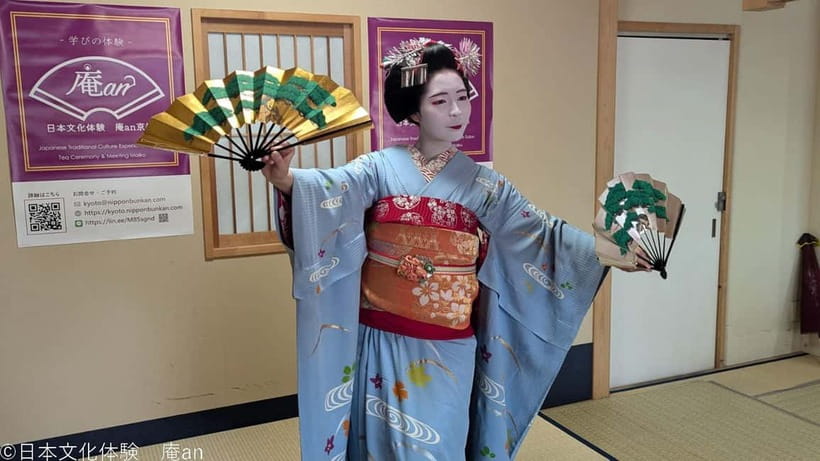
Kyoto’s geisha districts can feel mysterious and hard to enter, so this short program gives you a clear, easy way to see a maiko up close. You watch two graceful dances, see a traditional game, and finish with a personal photo and a Senjafuda lucky charm.
I like the convenient 45-minute format, especially if your Kyoto schedule is tight. I also like that the game creates a little contact between the performer and the room instead of leaving you to sit silently and watch.
The main point to consider is timing. The program is advertised as 45 minutes, but the dance and game portion may finish in about 30 minutes, with photos and casual conversation afterward. Recent feedback also praises the maiko’s beauty and the fun game, while noting that some children felt shy about joining in.
In This Review
- Key points before you book
- Meeting a maiko without losing half your day
- The two dances: graceful stories in a short space
- The game turns a performance into a shared event
- Photo time and the Senjafuda keepsake
- What $28 buys you in Kyoto
- The Gojo location keeps the logistics easy
- Children, participation, and the room atmosphere
- Cancellation and planning details
- Who will enjoy this 45-minute program most
- Should you book Dance and Game with Maiko?
- FAQ
- Where does Dance and Game with Maiko take place?
- Is the venue a traditional ochaya?
- How long does the program last?
- What happens during the program?
- Will a maiko always lead the program?
- Is a tea ceremony included?
- Is English available?
- Is the building accessible by elevator?
- Are children under two free?
- What is the cancellation policy?
Key points before you book
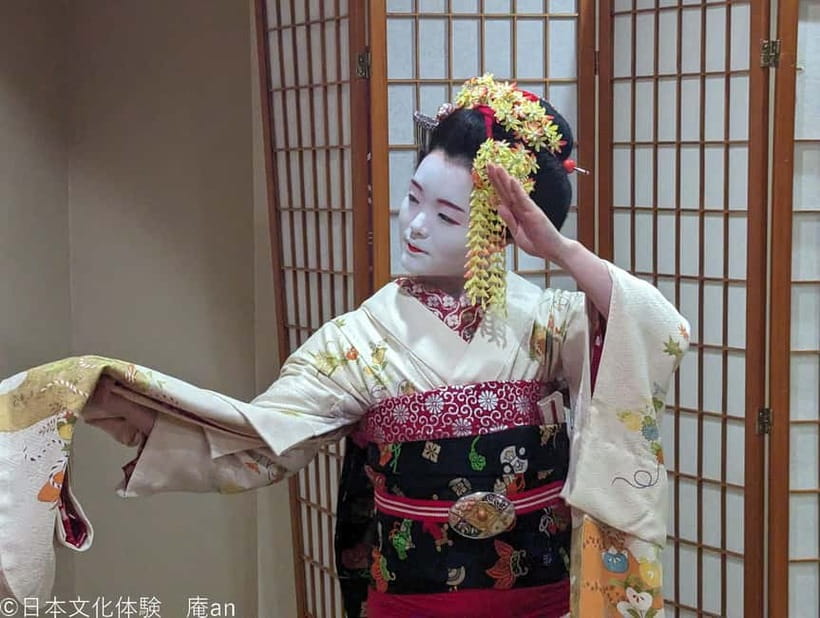
- Two maiko dances: Watch elegant performances inspired by Japan’s seasons, love stories, and daily life.
- A traditional game: Volunteers may play with the maiko, while everyone else claps and cheers.
- A personal photo: You can take a commemorative picture beside the maiko.
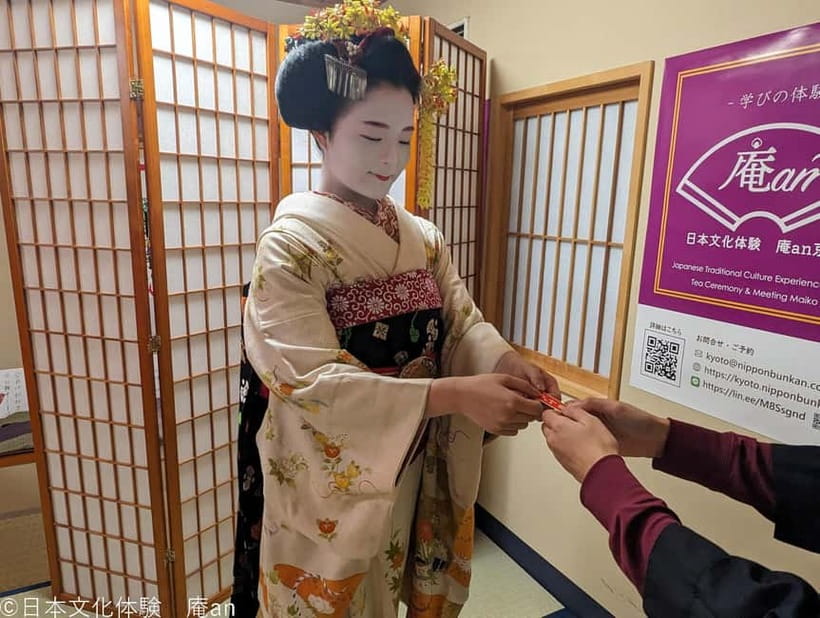
- A Senjafuda gift: Each participating booking includes a small lucky charm to take home.
- One minute from Gojo Station: The venue is beside Gojo-dori and easy to reach by subway.
- A short, simple introduction: The program suits a busy Kyoto day, but it is not a full tea ceremony or a visit to an ochaya.
Meeting a maiko without losing half your day
This experience is built around access. You do not need to spend an evening in Kyoto’s expensive dining districts or arrange a formal tea ceremony. Instead, you arrive at a building one minute from Exit 1 of Gojo Station and spend less than an hour watching a maiko perform and interact with the room.
That makes it useful for several kinds of visitors. You might have only one free afternoon in Kyoto. You might be traveling with children who would not sit through a long cultural program. Or you might simply want one clear introduction to the world of maiko without committing to dinner and entertainment.
The setting matters. This is not an ochaya, the traditional Japanese teahouse associated with geiko and maiko entertainment. It takes place in a building with a relaxed atmosphere and friendly staff. That makes the experience less formal and easier to understand, but it also means you should not expect an old wooden townhouse, tatami rooms, or an elaborate meal as part of the basic price.
Depending on the day, a geiko may appear instead of a maiko. Both are trained performers in Kyoto’s traditional entertainment culture, but a maiko is generally a younger apprentice, while a geiko is a fully trained artist. The exact performer is not guaranteed, so book this for the format and cultural experience rather than a particular person.
Other Kyoto days people book alongside this one:
- PERFECT KYOTO 1-Day Bus Tour
★ 5.0 · 13,518 reviews - Kyoto: Fushimi Inari, Kinkakuji, Bamboo Grove 1 Day Bus Tour
★ 4.8 · 4,316 reviews - Kyoto: Tea Ceremony in a Traditional Tea House in Kiyomizu
★ 4.9 · 3,519 reviews
The two dances: graceful stories in a short space
The program begins with two maiko dances. These are not simply displays of costume and movement. Traditional dances can suggest a season, a love story, or an ordinary scene from Japanese life through controlled gestures, music, and posture.
Pay attention to the small movements. A turn of the head, the position of a fan, or a measured step can carry more weight than a large theatrical gesture. The calm pace may feel very different from a modern stage show. It asks you to watch carefully rather than wait for constant action.
You are welcome to take photographs during the dance, but use common sense. Keep your camera ready before the performance starts, avoid blocking the view, and follow any instructions from the staff. The best moment may not be the biggest movement. A still pose, a fan held at the right angle, or the details of the kimono can make a stronger photograph.
The dances are the artistic heart of the program. If your main reason for booking is to study classical Japanese performance, you may wish the presentation lasted longer. This is an introduction, not a full evening of dance. Still, two separate dances give you more variety than a single short number and help you notice how expression changes from one piece to the next.
The game turns a performance into a shared event
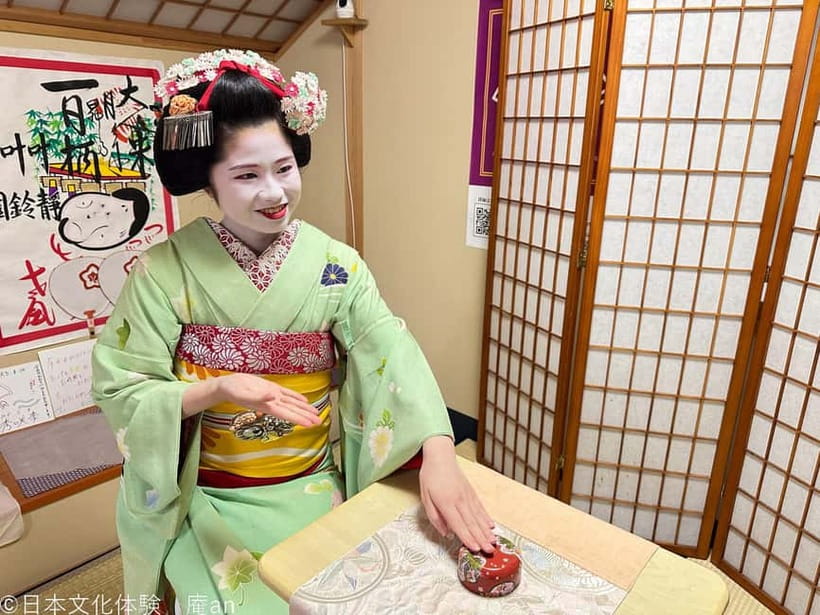
After the dances, the maiko leads a traditional game with people in the room. Volunteers are invited to participate. If you prefer not to step forward, you can simply watch, clap, and cheer.
That distinction is important for families and shy visitors. You do not need to perform in order to enjoy the activity. At the same time, the game is more engaging when someone accepts the invitation. The room becomes less like an audience at a show and more like a small social gathering.
The game is described as simple but exciting. You should not expect a long lesson in Japanese game culture or a complicated set of rules. Its value comes from the direct exchange with the maiko and the laughter and encouragement around it.
Families should think about personality, not just age. One recent booking included children who watched but felt embarrassed about taking part in a room where only a few people volunteered. If your children are outgoing, they may enjoy being chosen. If they are reserved, prepare them to watch without pressure. A parent cannot assume the children will want to play just because the activity is family-friendly.
The group size can affect this part of the program. Feedback describes a room with only a few people participating in the game. That can make the exchange feel personal, but it may also leave a quiet child feeling conspicuous. Encourage participation, but do not force it.
Photo time and the Senjafuda keepsake
After the dance and game, you have the chance to take a photo beside the maiko. This is one of the clearest reasons to choose this program over a dance performance viewed from a distance.
Have your camera or phone ready before the photo moment. A companion can take the picture, and you should expect a straightforward commemorative photograph rather than a long private portrait session. The chance to stand beside the performer gives you a lasting record of the visit, including the formal kimono and traditional styling.
The maiko then gives you a small Senjafuda lucky charm. Senjafuda are traditional paper name slips or votive cards associated with visits to temples and shrines. Here, the item functions as a personal souvenir of the meeting. It is light, easy to pack, and more meaningful than a generic shop purchase because it connects directly to the program.
The sequence is practical: dance, game, photo, charm, then the maiko leaves the room. Afterward, there is chatting time before you depart. This explains the difference between the advertised 45 minutes and the shorter performance segment. The formal portion may take about 30 minutes, while the remaining time includes photographs and conversation.
If you expect 45 minutes of continuous stage entertainment, adjust your expectations. If you see the program as a compact cultural meeting with several parts, the schedule makes more sense.
Same city, a completely different kind of day:
- Kyoto Geisha Walking Tour: Gion District & Hidden Gems
★ 4.7 · 3,273 reviews - Kyoto: Tea Ceremony Ju-An at Jotokuji Temple
★ 4.9 · 3,207 reviews - Kyoto: Gion Magical Night Walking Tour with Geisha Trivia
★ 4.9 · 2,393 reviews - Kyoto: 45-Minute Tea Ceremony Lesson Experience
★ 4.3 · 2,378 reviews
What $28 buys you in Kyoto
At $28 per person, the price is reasonable for a short cultural experience that includes live dance, an interactive activity, a personal photograph, and a Senjafuda charm. The value is strongest for people who want direct contact with a maiko but do not need a meal or a lengthy ceremony.
The price does not include a tea ceremony. If tea and traditional hospitality are your main goal, choose the separate Tea Ceremony with Maiko or Tea Ceremony with Maiko Premium program instead. This experience focuses on dance, play, and photographs.
It is also worth remembering what you are not paying for. The event does not take place in an ochaya, and the standard program does not promise a meal. It may be held in a room where people are also having lunch or dinner, so the atmosphere can vary from a quiet cultural presentation to a more social dining setting.
For a first look at maiko performance, I think the cost works well. For a specialist seeking a long, formal arts program, it may feel brief. The average rating is 3.9 from 46 ratings, which fits that middle ground: many people praise the performance and game, while the repeated concern is that the main activity can feel shorter than expected.
The Gojo location keeps the logistics easy
The meeting point is one minute from Exit 1 of Gojo Station on the Subway Karasuma Line. The entrance faces the main street, Gojo-dori, so you do not need to search through a maze of side streets.
That location is useful when you are fitting the program between other Kyoto sights. You can reach it by subway and avoid spending extra time on a distant transfer. Still, plan to arrive early. The event will not be held for late arrivals, and no compensation is provided for transportation expenses if you miss it.
The building has no elevator. You must use stairs to reach the venue, so this is an important consideration for anyone who has difficulty with stairs, uses a wheelchair, or is traveling with a stroller. The supplied information does not state the floor or provide alternative access, so contact the operator before reserving if this affects you.
The operator’s hours are 10:00 to 17:00. Reservations received after 17:00 are processed the next day. That detail matters if you are trying to book late in the evening for the following morning.
The instructor language is Japanese. English translation is offered as much as possible if requested, but it is not presented as a guaranteed full English-guided program. Contact the operator before booking if explanations in English are important to you.
Children, participation, and the room atmosphere
Children under two are free when they sit on a parent’s lap and do not need their own seat or meal. If a seat or meal is required, the regular per-person fee applies.
The short format can work well with children, but the game deserves special thought. The room may not have every child participating, and a shy child may prefer watching. You can still make the experience enjoyable by explaining that clapping and cheering are part of the event.
The room may also include people having lunch or dinner. This is not necessarily a problem, but it means the experience may not feel like a private meeting. If you want silence and full theatrical focus, ask about the arrangement before booking. If you like a relaxed social setting, the shared room may suit you.
The staff aim to provide a friendly, low-pressure introduction. You do not need special preparation, traditional clothing, or prior knowledge of maiko culture. Arrive ready to observe respectfully, follow photo instructions, and join the game only if you want to.
Cancellation and planning details
You can cancel up to eight days in advance for a full refund. After the cancellation fee applies, changing the date or time can also involve a specified charge. Read the conditions carefully before booking several fixed Kyoto activities around this one.
Do not book it as a flexible filler if your day has tight connections. The event will not wait for delayed arrivals, regardless of the reason. Give yourself enough time to reach Gojo Station, find the street-level entrance, and climb the stairs.
Those who do not participate in the experience cannot enter the venue. This matters if one member of your party plans to wait inside or take a meal while others attend. Everyone entering should be included in the reservation.
Who will enjoy this 45-minute program most
I would recommend it to you if you want:
- A compact introduction to Kyoto’s maiko culture
- Two live dances rather than a museum display
- A chance to join a simple traditional game
- A personal photo beside the performer
- A small cultural keepsake for $28
- An easy-to-reach activity near a subway station
It is especially practical for a first visit to Kyoto, a short stay, or a day already filled with temples and gardens. The event gives you a different side of the city without taking an entire evening.
You may want another option if your priority is a full tea ceremony, a traditional house, a meal, or a long formal performance. You should also contact the operator first if you need guaranteed English interpretation or step-free access.
Should you book Dance and Game with Maiko?
Book it if you want a short and accessible introduction to maiko performance with a real human exchange. The two dances, game, photograph, and Senjafuda give the 45-minute visit a clear beginning and end, and the Gojo location makes it easy to fit into a busy Kyoto itinerary.
Go in expecting a compact program, not a full evening of geisha entertainment. The main dance and game portion may last closer to 30 minutes, with photos and conversation filling out the rest. If that sounds like a fair trade for $28, this is a sensible choice. If you want tea ceremony traditions or a historic teahouse setting, choose one of the separate tea programs instead.
FAQ
Where does Dance and Game with Maiko take place?
It takes place in a building one minute from Exit 1 of Gojo Station on Kyoto’s Subway Karasuma Line. The entrance faces Gojo-dori.
Is the venue a traditional ochaya?
No. The activity is held in a building, not an ochaya or traditional Japanese house.
How long does the program last?
The stated duration is 45 minutes. The dance and game portion may finish in about 30 minutes, followed by photographs, the Senjafuda gift, and chatting time.
What happens during the program?
You watch two maiko dances, see or join a traditional game, take a photo beside the maiko, receive a Senjafuda charm, and have some time for conversation.
Will a maiko always lead the program?
A maiko is planned, but a geiko may appear instead depending on the situation.
Is a tea ceremony included?
No. Tea ceremony is not included in this program. Separate Tea Ceremony with Maiko and Tea Ceremony with Maiko Premium programs are available.
Is English available?
The instructor language is Japanese. English translation is provided as much as possible if you request it from the operator.
Is the building accessible by elevator?
No. The building has no elevator, and you must use stairs to reach the venue.
Are children under two free?
Children under two can attend free when they sit on a parent’s lap and do not require a seat or meal. A regular fee applies if a seat or meal is needed.
What is the cancellation policy?
You can cancel up to eight days before the activity for a full refund. Cancellation fees apply after that point, and changing the date or time after a fee has been incurred may involve another specified charge.
Just added around Kyoto
- Taste of Nishiki Market Walking Food Tour with Local guide★ 5.0 · 17 reviews
- Kyoto: Sushi Making Class with Sushi Chef★ 4.8 · 64 reviews
- Kyoto: City Secrets eBike Tour★ 4.9 · 196 reviews
- Sacred Pathways: Discover the Philosopher’s Path of Kyoto★ 4.9 · 20 reviews
- Private Tour to Monkey Park and Arashiyama Highlights★ 5.0 · 22 reviews
- Private Nara Tour from Osaka – Meet at Your Hotel★ 5.0 · 22 reviews
- Private Sake Tasting in Central Kyoto with Sake Sommelier★ 5.0 · 13 reviews
- Kyoto : Private Custom Walking Tour With A Local Guide★ 4.6 · 144 reviews
Kyoto Tours, compared.
Tea Ceremony in a Traditional Tea House in Kiyomizu
Read our review →
Kyoto Geisha Walking Tour: Gion District & Hidden Gems
Read our review →
Gion Magical Night Walking Tour with Geisha Trivia
Read our review →
Gion Geisha District Walking Tour – Stories of Geisha
Read our review →
Best of Kyoto: Gion, Geisha, Pagodas & Cobblestones
Read our review →
Browse the lists this tour appears in