REVIEW · KYOTO TOURS
Authentic Knife Making Experience at a Blacksmith in Kyoto
Making a Japanese knife at Atelier NIN is not a sit-back demonstration. You heat steel, hammer it into shape, grind the blade, and sharpen the edge. That hands-on work is the point, and it gives you a better feel for Japanese craftsmanship than simply buying a knife in a shop.
I like the small maximum of six people, since instructors can step in when your hammering or grinding goes off track. I also like that the uniform, tools, and materials are supplied, so you can arrive ready to work. The main consideration is physical effort: hammering hot steel for about an hour and working at a sanding belt takes energy and focus.
In This Review
- Key points to know before you book
- What you actually make at Atelier NIN
- Arriving near Rurikoin in Yase
- Changing into the traditional workshop outfit
- Learning the tools before the forge
- Forging the blade with hammer and heat
- Grinding, sharpening, and polishing
- What the $158.52 price buys you
- Who will enjoy this Kyoto activity
- Packing the knife for your trip home
- Timing, cancellation, and useful planning notes
- Should you book the Atelier NIN knife workshop?
- FAQ
- How long does the knife-making experience last?
- Where does the activity begin and end?
- Is the workshop suitable for beginners?
- What size knife will I make?
- Is a wooden handle included?
- Is transportation included?
- Can I cancel for a refund?
Key points to know before you book
- You make a real 13 to 15 cm knife: The finished blade is functional, sharp, and made with a traditional iron handle.
- The work is genuinely hands-on: Expect forging, grinding, sharpening, and polishing rather than a short demonstration.
- The group is limited to six: This gives you room to ask for help, especially during the tricky finishing stages.
- Daiki and the English-speaking team guide beginners: Instructors show you how to handle the tools safely and correct mistakes when needed.
- The setting is outside central Kyoto: The studio is at Yasenosechō, near Rurikoin, and the final walk can be hard to follow without a plan.
- A checked bag may be needed: The knife is sharp, and its size may cause problems with airline carry-on rules.
What you actually make at Atelier NIN
The finished knife is small by kitchen standards, about 13 to 15 centimeters, and each one varies because you shape it by hand. It is not the large chef’s knife shown in many cooking shops. A regular cooking knife can take more than five hours and cost more than $400 when made through a longer process.
Atelier NIN keeps this workshop to roughly two and a half to three hours and charges $158.52 per person. That makes it a shortened introduction to traditional knife forging, not a full professional apprenticeship. For a souvenir you help create from hot steel, the price is reasonable, especially compared with buying a high-quality Japanese knife and taking a separate craft lesson.
There is an important design detail. The standard knife has no wooden handle. The blade and handle use a simple traditional iron construction. One experience offers the option of adding a wooden handle for ¥5,000, with the fitting handled separately at home. Confirm the handle choice when booking, since the supplied information describes both the basic iron version and this optional upgrade.
The knife is fully functional once the handle is secured. Treat it as a real blade, not a harmless craft project. That affects how you pack it and how you store it once home.
Other Kyoto days people book alongside this one:
- PERFECT KYOTO 1-Day Bus Tour
★ 5.0 · 13,518 reviews - Kyoto: Fushimi Inari, Kinkakuji, Bamboo Grove 1 Day Bus Tour
★ 4.8 · 4,316 reviews - Kyoto: Tea Ceremony in a Traditional Tea House in Kiyomizu
★ 4.9 · 3,519 reviews
Arriving near Rurikoin in Yase
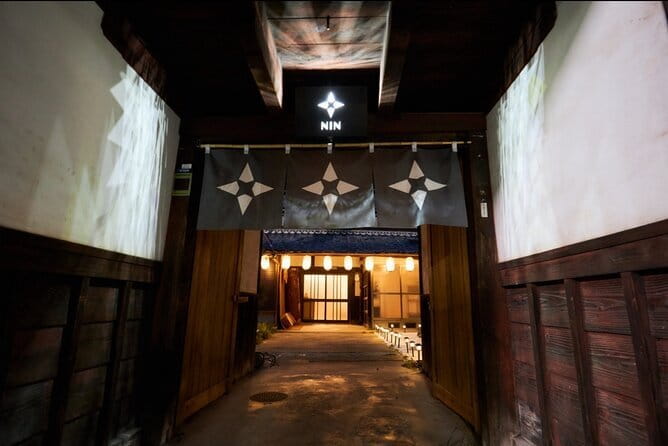
The meeting point is studio NIN at 168-1 Yasenosechō, Sakyo Ward, Kyoto, 601-1254. The itinerary names Rurikoin as the first stop, and the studio is in the same broader Yase area. The activity begins and ends at the studio, so do not expect transportation between several Kyoto sights.
This part of Kyoto feels removed from the dense center. The train ride itself can be part of the outing, and one account describes the final train as a charming one-carriage ride. Allow extra time for the approach. The studio is within a residential area, and the last section can be difficult to locate.
A useful practical warning: phone reception may disappear near the station. Save directions before leaving central Kyoto, and keep the studio address available offline. One person also found the walk to the location long, though worthwhile. The supplied details confirm that public transportation is nearby, but they do not include private transfers. You will need to make your own way there.
Rurikoin is listed as the itinerary stop, but this is not a sightseeing tour of the temple grounds. The main event is the workshop at Atelier NIN. If you want to visit Rurikoin separately, check its opening arrangements and allow time before or after the class rather than assuming the knife session includes a temple visit.
Changing into the traditional workshop outfit
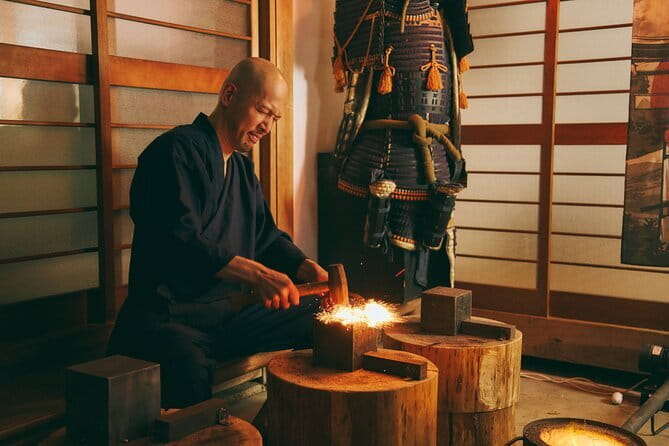
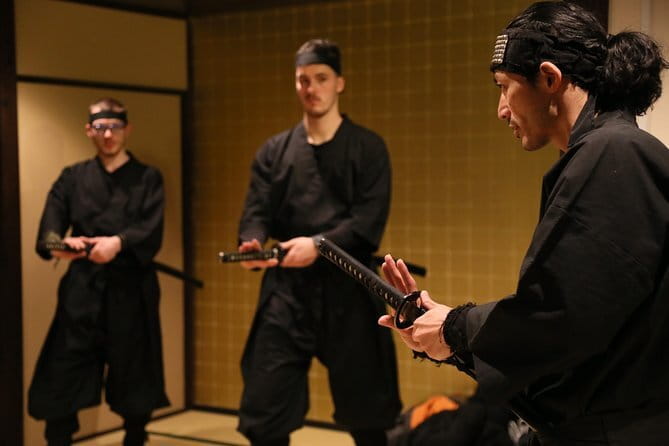
At the start, you change into a traditional goldsmith uniform. This is more than a photo prop. It gives the class a clear workshop feel and means you do not need to bring protective clothing yourself.
Still, dress for practical work underneath. The activity requires a moderate level of physical fitness, and you will be standing, hammering, handling hot metal, and using grinding equipment. The available information does not promise safety shoes. One account specifically wished for better foot protection and found that a dropped knife was a concern.
That does not make the class unsuitable, but it is worth considering if you dislike heat, noise, dust, or repetitive hand work. Ask the staff about footwear and safety procedures when you arrive. The instructors demonstrate safe tool use, and the class is designed for first-timers, but you remain responsible for paying attention.
Learning the tools before the forge

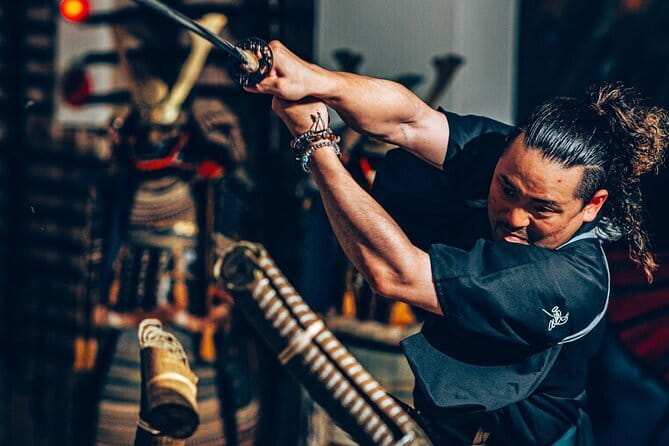
You first learn how the tools work. The staff provide the full set used for making the knife, and an English guide explains the process. Daiki is singled out as an engaging instructor who gives help without taking over the work. That balance matters here. You want guidance, but you also want the blade to feel like your own.
The class is suitable for people with no blacksmithing background. You do not need to arrive knowing how to hold a hammer or set a sharpening angle. Instructors show you how to proceed and correct errors when necessary.
The best results come from accepting help early. Hammering too lightly will not shape the steel well, while wild swings waste energy and can make the work less controlled. Listen closely during the first demonstration. The small group limit should make it easier to get a direct answer instead of waiting behind a large crowd.
Same city, a completely different kind of day:
- Kyoto Geisha Walking Tour: Gion District & Hidden Gems
★ 4.7 · 3,273 reviews - Kyoto: Tea Ceremony Ju-An at Jotokuji Temple
★ 4.9 · 3,207 reviews - Kyoto: Gion Magical Night Walking Tour with Geisha Trivia
★ 4.9 · 2,393 reviews - Kyoto: 45-Minute Tea Ceremony Lesson Experience
★ 4.3 · 2,378 reviews
Forging the blade with hammer and heat
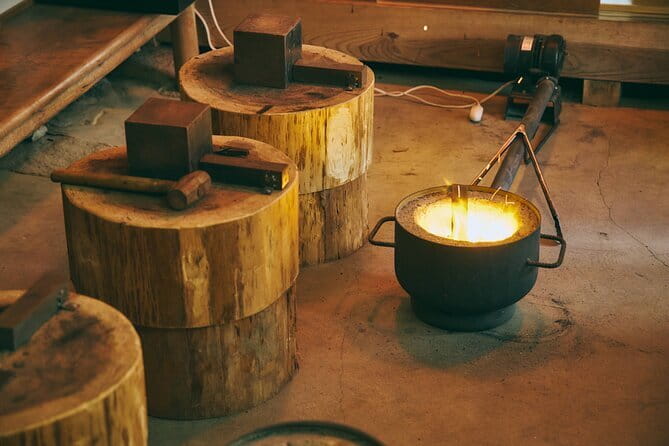
Forging is the heart of the experience. You work a steel billet by heating and hammering it, flattening and stretching the metal until it begins to resemble a blade. This is the part that most clearly separates the class from a souvenir workshop where you only decorate a pre-made object.
Plan on roughly an hour of forging. It is repetitive and strenuous, but the physical effort helps you understand what knife-making requires. You are not merely watching a blacksmith shape steel. You are contributing to the shape with every blow.
The instructors remain close and step in when your technique needs correction. That support is particularly useful for couples and families, since each person can work at a different pace. A 13-year-old participant enjoyed the activity, although the working area can feel tight.
You also get to choose a knife design. The exact range of shapes is not specified, so do not expect unlimited custom engineering. The finished size remains around 13 to 15 centimeters, with some variation based on your work.
Grinding, sharpening, and polishing
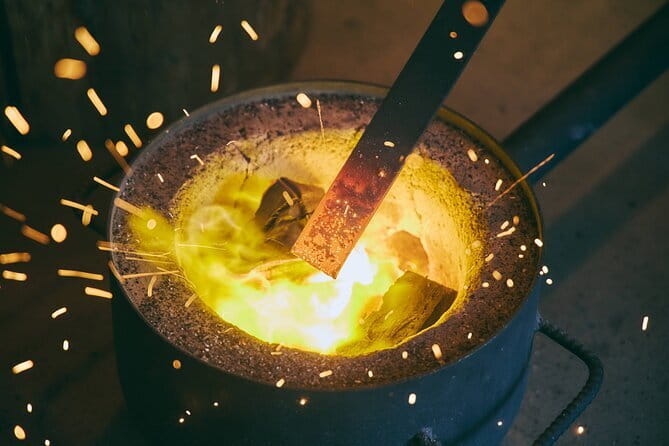
After forging, the staff cut the rough metal into the requested knife shape. You then move to grinding and finishing. This stage removes roughness, cleans the surface, and begins forming the edge.
For many beginners, grinding is harder than the hammering. You must hold the blade at the right angle and keep your movements controlled. One participant felt there could have been more explanation here, and this is the main stage where mistakes can affect the final appearance.
Ask for a close demonstration before you begin. If you are unsure about the angle, stop and request help rather than trying to repair a poor grind later. The instructors are there to correct amateur efforts, and the small group should allow for useful hands-on guidance.
The final steps include sharpening and polishing. Some of the last professional finishing work may be handled by the staff, which helps ensure that your knife is usable and properly sharp. That means the result is partly your own work and partly the instructors’ finishing skill. This is a sensible arrangement for safety and quality, but it also means your finished blade may look better than your rough grinding suggests.
The knife is wrapped and presented in a gift bag. A small photograph may also be provided as a keepsake. These touches add value without changing the main appeal, which is the work itself.
What the $158.52 price buys you
At $158.52, this is not a cheap activity. You are paying for an English-guided craft class, a uniform, tools, steel, instructor attention, and a finished knife. The six-person limit is important when judging the cost. A large group class could offer a lower price, but it would likely give you less individual help during forging and grinding.
The price makes the most sense if you value an activity and a souvenir together. A factory-made knife may cost less, especially for a small utility blade, but it cannot carry the memory of hammering its steel into shape in Kyoto.
The workshop also avoids the cost and time of a full-size kitchen knife class. The supplied information notes that a normal cooking knife often requires more than five hours and costs over $400. Atelier NIN’s shorter format is a practical compromise for a holiday schedule.
The wooden handle is an extra cost if you choose it. The standard iron handle keeps the process simple and traditional, while the ¥5,000 wooden option may appeal if you want a more familiar kitchen-knife look. Ask what is included before committing to the upgrade.
Who will enjoy this Kyoto activity
I would choose this for adults who like tools, food, craft, or unusual cultural activities. It also works well for couples because you each make a separate object and can compare the results at the end.
Older children and teenagers may enjoy it too. A 13-year-old completed the activity and had a good time, but the physical work and sharp finished blade mean parents should judge their child’s focus and maturity. The studio may feel cramped when several people are working, so this is not ideal for someone who needs a spacious, quiet environment.
Chefs and serious home cooks will find the process especially interesting. You gain a better sense of how much labor goes into a Japanese blade, even though this short workshop does not cover every step used for a full-size professional knife.
I would skip it if you want a relaxed Kyoto activity with little exertion. This class includes heat, hammering, grinding, and careful handling. It is satisfying, but it is work.
Packing the knife for your trip home
The finished knife is sharp and may exceed airline carry-on rules. If you are flying, plan to place it in checked luggage. One account specifically found that the blade length could create a problem for a return trip to the United Kingdom.
Pack it securely and check the rules for your airline and destination. The workshop wraps the knife and places it in a gift bag, but that is not the same as airline-approved packing. Do not put a loose blade in your hand luggage.
If you are traveling with only a carry-on, this practical issue may outweigh the appeal of the activity. Confirm the transport rules before booking, not after you have made the knife.
Timing, cancellation, and useful planning notes
The experience lasts about three hours, though the working portion is described as roughly two and a half hours. Keep the rest of your day flexible. You may want time to reach the studio, change clothes, complete the forging, and return to central Kyoto without rushing.
Snacks and private transportation are not included. Water and toilets are available on site. Since the area can have weak phone service, download directions and save the address before departure.
Free cancellation is available when you cancel at least 24 hours before the local start time. Changes or cancellations made within 24 hours are not accepted for a refund. This matters if your Kyoto schedule depends on weather, train timing, or a packed sightseeing day.
Should you book the Atelier NIN knife workshop?
Book it if you want to make something with your hands and take home a useful Japanese keepsake. The strongest parts are the real forging, the small group, the patient English guidance, and the chance to take part in several stages rather than simply watching a blacksmith work.
Go in expecting effort, a compact working space, and a basic iron-handled knife unless you pay for the wooden option. Be ready to ask for extra instruction during grinding, and arrange checked luggage if you are flying.
For a first blacksmithing experience in Kyoto, the $158.52 cost is fair when you count the lesson, materials, staff help, and finished blade. It is best for curious, active participants who see value in the process. If that sounds like you, this is a memorable way to spend three hours outside the city center.
FAQ
How long does the knife-making experience last?
The experience lasts approximately three hours. The workshop describes its hands-on format as about two and a half hours, including forging, sharpening, and polishing.
Where does the activity begin and end?
It begins and ends at studio NIN, at 168-1 Yasenosechō, Sakyo Ward, Kyoto, 601-1254, Japan.
Is the workshop suitable for beginners?
Yes. You learn how to use the tools before starting, and the instructors guide you through forging, grinding, sharpening, and polishing. No previous knife-making experience is required.
What size knife will I make?
The finished knife is approximately 13 to 15 centimeters long. Because each knife is handmade, the exact size can vary.
Is a wooden handle included?
The standard knife has a simple iron handle, not a wooden one. A wooden handle may be available for an additional ¥5,000.
Is transportation included?
No. Private transportation is not included. The studio is near public transportation, but you must make your own way to the meeting point.
Can I cancel for a refund?
You can cancel for a full refund if you cancel at least 24 hours before the experience start time. Cancellations or changes made less than 24 hours before the start are not accepted for a refund.
Just added around Kyoto
- Private Guided Traditional Buddhist Cooking in Japan★ 5.0 · 16 reviews
- Kyoto: Gion Geisha District & Sake-in-Hand Walking Tour★ 5.0 · 37 reviews
- Your Private Vacation Photography Session In Kyoto★ 5.0 · 110 reviews
- Kyoto: Zen Meditation at a Private Temple with a Monk★ 5.0 · 25 reviews
- Traditional Japanese Washi Papermaking- Kyoto morning★ 5.0 · 77 reviews
- Kyoto Wagashi(Japanese sweets) Cooking Class near Fushimiinari★ 5.0 · 60 reviews
- Private Pewter Sake Cup Experience with a Kyoto Artisan★ 5.0 · 31 reviews
- Kyoto Private 6 hour Tour: English Speaking Driver Only, No Guide★ 5.0 · 88 reviews
Kyoto Tours, compared.
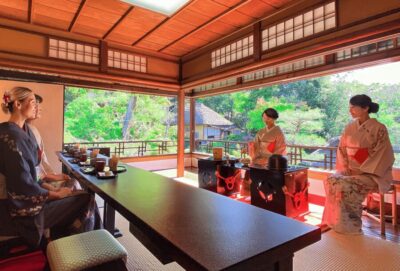
Tea Ceremony in a Traditional Tea House in Kiyomizu
Read our review →
Kyoto Geisha Walking Tour: Gion District & Hidden Gems
Read our review →

Gion Magical Night Walking Tour with Geisha Trivia
Read our review →

Gion Geisha District Walking Tour – Stories of Geisha
Read our review →
Best of Kyoto: Gion, Geisha, Pagodas & Cobblestones
Read our review →