
REVIEW · ARASHIYAMA BAMBOO TOURS
Arashiyama Hidden Gems: Walking Tour escaping crowds
Arashiyama is famous for its bamboo grove, but the best part of this tour is what comes after the photo stop. Yusuke Tanaka leads you toward quiet temples, old imperial grounds, and Osawa Pond, giving you a fuller sense of the district than the usual short walk through the bamboo.
I like the small maximum of six people, which should make questions and photo stops easy. I also like the optional Tale of Genji focus, since several locations connect with Japan’s classic novel. The main caution is the walking: about 3 kilometers, with roughly 55 minutes on foot, and a total outing of close to four hours.
In This Review
- Key Points
- Arashiyama Beyond the Famous Bamboo Path
- Nonomiya Shrine and Its Black Torii
- The Bamboo Forest Without Making It the Whole Visit
- Seiryoji Temple and a 1,200-Year Story
- Daikakuji, the Former Saga Gosho
- Osawa Pond, Japan’s Oldest Artificial Pond
- What the Tale of Genji Option Adds
- Price, Extra Tickets, and What You Receive
- Timing, Meeting Point, and Physical Effort
- Who Will Get the Most From This Walk
- Should You Book the Arashiyama Hidden Gems Walk?
- FAQ
- How long does the Arashiyama walking tour take?
- How many people can join the tour?
- What places does the tour visit?
- Are entrance tickets included?
- Do I need to remove my shoes?
- Where does the tour end?
Key Points
- Only six people maximum: The small group suits visitors who want a calmer walk and direct time with Yusuke.
- A black torii at Nonomiya Shrine: You’ll see one of only two shrine gates in Japan described as black.
- The bamboo forest is just one stop: The route continues to Seiryoji, Daikakuji, and historic Osawa Pond.
- Optional Tale of Genji storytelling: Choose the added literary context while visiting the same locations.
- Extra admission costs matter: Temple and pond tickets add ¥1,300 per person, before optional snacks.
- The tour ends at Daikakuji: Yusuke offers a free walking return to the starting point if you prefer not to finish there.
Arashiyama Beyond the Famous Bamboo Path
The usual Arashiyama visit can be brief and crowded. You walk through the bamboo grove, take a few pictures, and head back toward the station without seeing much of the district’s older religious and imperial character.
This tour takes a different shape. The bamboo forest remains part of the morning or afternoon, but it is only a 15-minute stop. Most of your time goes to places where you can pause, hear the background, and look closely at details such as moss gardens, temple buildings, Buddhist art, and water gardens.
That makes this a good choice if you want context rather than a quick checklist. Yusuke designed the walk and guides it himself. He has led more than 3,000 people and includes an original booklet of about 15 pages, giving you something to refer to after the tour.
The experience is capped at six people. That number matters in Arashiyama, where a large group can clog narrow paths and make a quiet visit feel like a procession. A smaller party also gives Yusuke more room to adjust the pace, answer questions, and help with photos.
More Walking Tours in Kyoto
- Kyoto Geisha Walking Tour: Gion District & Hidden Gems
★ 4.7 · 3,273 reviews - Kyoto: Gion Magical Night Walking Tour with Geisha Trivia
★ 4.9 · 2,393 reviews - Kyoto: Gion Geisha District Walking Tour – Stories of Geisha
★ 4.7 · 2,187 reviews
Nonomiya Shrine and Its Black Torii
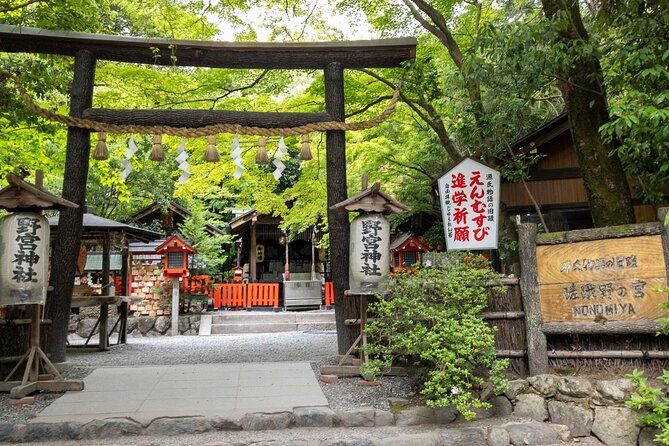
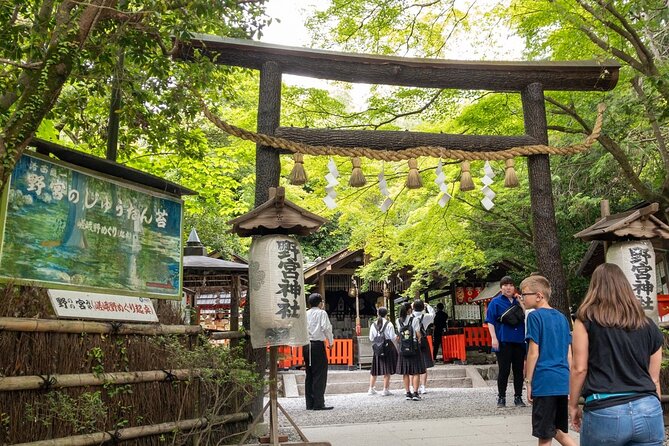
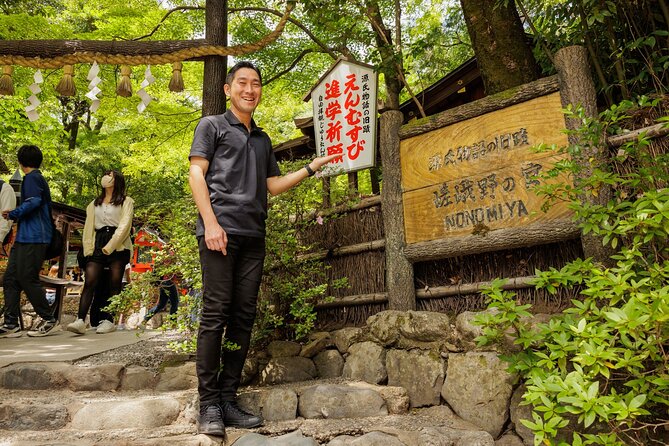
The first stop is Nonomiya Shrine, with about 30 minutes set aside. The shrine is known here for its black wooden torii gate, described as one of only two black torii gates at shrines in Japan.
That is a small detail, but it gives you a useful reason to look closely. Instead of treating the shrine as a quick photo background, Yusuke explains how to visit and pray, along with the differences between a Shinto shrine and a Buddhist temple. Those customs can be confusing when you first arrive in Japan, so this early explanation helps you read the rest of the tour.
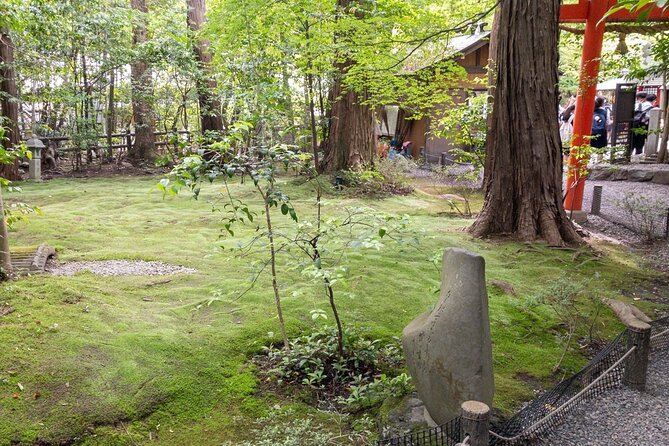
The moss garden adds another visual pause. Moss is easy to overlook when you are rushing toward the bamboo grove, yet it rewards a slower look. You can expect this stop to be less about a long historical lecture and more about learning how to behave and what you are seeing.
The Bamboo Forest Without Making It the Whole Visit
The bamboo forest receives about 15 minutes. That is enough for a walk through the tall bamboo, time to listen to the soundscape, and a chance to take pictures.
You should set your expectations correctly. This is not a long, private stroll through an empty grove. The tour is designed to escape the busiest pattern of Arashiyama, but the bamboo forest itself remains the district’s best-known sight. Conditions can change during the day.
Yusuke helps take photos, a useful extra if you are traveling alone or want a picture of your whole party. He is learning photography as a hobby, so this is friendly photo assistance rather than a formal photography session. Still, it can save you from handing your phone to a stranger and hoping for the best.
I appreciate the short timing here. The bamboo is striking, but spending the entire tour in one narrow path would leave out the places that give Arashiyama its character. You get the expected sight, then move on.
Seiryoji Temple and a 1,200-Year Story
Seiryoji receives about 55 minutes, making it one of the substantial stops. The temple was originally built about 1,200 years ago, while the present buildings date from about 300 years ago.
That contrast helps you understand how Japanese religious sites change over time. An old foundation does not always mean every visible structure is ancient. At Seiryoji, Yusuke explains the setting and points out a Japanese national treasure, the Shaka Nyorai Buddhist statue.
The visit is also a change of mood after the open bamboo grove. You move into an older temple environment, where the value comes from looking carefully and listening to the explanation rather than collecting photos.
You must remove your shoes to enter the interior at Seiryoji. Wear socks and shoes that are easy to take off and put back on. This is a minor practical point, but it becomes less minor when you are already walking for several hours.
The route is not a flat, effortless sightseeing loop. One person who took the tour found the distance tiring on a warm day at age 68. That is useful guidance for anyone concerned about heat, stamina, or long periods on foot. You can ask about the pace, but you should still arrive prepared for a proper walk.
Same city, a completely different kind of day:
- PERFECT KYOTO 1-Day Bus Tour
★ 5.0 · 13,518 reviews - Kyoto: Fushimi Inari, Kinkakuji, Bamboo Grove 1 Day Bus Tour
★ 4.8 · 4,316 reviews - Kyoto: Tea Ceremony in a Traditional Tea House in Kiyomizu
★ 4.9 · 3,519 reviews - Kyoto: Tea Ceremony Ju-An at Jotokuji Temple
★ 4.9 · 3,207 reviews
Daikakuji, the Former Saga Gosho
Daikakuji is the longest temple visit, at about 50 minutes. Its earlier identity was Saga Gosho, a former imperial palace built about 1,200 years ago.
This is the point where the tour moves furthest from the standard Arashiyama route. You are not simply entering another temple. You are seeing a place connected with imperial life, with traditional rooms and distinctive features that Yusuke explains along the way.
The appeal is space and atmosphere rather than a single famous object. Daikakuji gives you time to notice the relationship between the buildings, gardens, and older court culture. If you choose the Tale of Genji option, this is also one of the places where the literary setting can add another layer to what you see.
Shoes must come off inside Daikakuji too. If you dislike barefoot temple visits, bring comfortable socks. The extra effort is worthwhile for many people, but it is part of the physical rhythm of the tour.
Daikakuji is also where the tour ends. That can be convenient if you want to continue exploring the Saga area, but it may require planning if your next stop is back near central Arashiyama. Yusuke offers a free walking return to the starting point for anyone who prefers that option.
Osawa Pond, Japan’s Oldest Artificial Pond
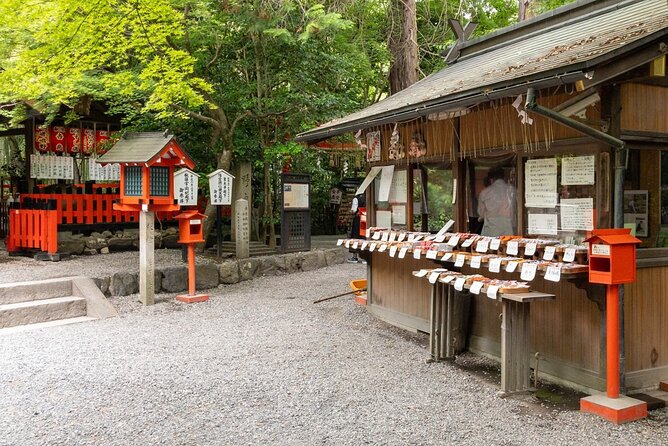
Osawa Pond is the final stop, with about 20 minutes. It is described as the oldest artificial pond in Japan and offers a quieter setting after the temple interiors.
The pond changes with the seasons, so this is a place where the same route can feel different at another time of year. The surrounding bamboo and water views offer a calm ending, with less emphasis on famous landmarks and more on the way Japanese gardens use water, trees, and open space.
Admission to the pond is ¥300, included in the combined Daikakuji and Osawa-no-ike charge of ¥800. You should not expect a row of restaurants at the ending point. Bring a snack if you think you will be hungry, especially since the tour can last close to four hours.
This ending also gives the route a sensible arc. You begin near the center of Arashiyama, pass through the famous bamboo, visit older religious sites, and finish in a quieter area. It feels more like a district walk than a string of unrelated stops.
What the Tale of Genji Option Adds
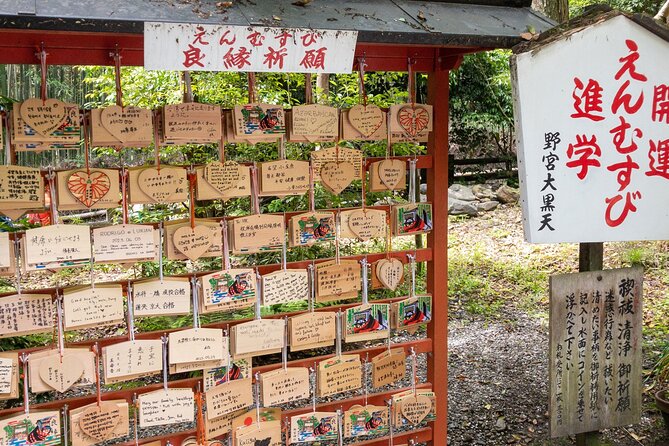
Both versions of the experience visit the same locations. The difference is the storytelling.
Most stops, apart from the bamboo forest, appear in The Tale of Genji. If you have read the novel, the added option can help connect the places with its characters, settings, and courtly world. One participant who had read the book several times was especially interested in walking through those literary connections.
You do not need to know the novel to join the standard tour. The regular route still covers shrine customs, Buddhist temples, imperial history, and local scenery. But if the book is already part of your reading life, the extra option gives the walk a clear theme instead of leaving the literary links as background trivia.
This choice is a good example of how to pick the right version. Choose the standard tour if you want practical cultural explanations and historical sightseeing. Choose the Tale of Genji option if you want more storytelling tied to the places themselves.
Price, Extra Tickets, and What You Receive
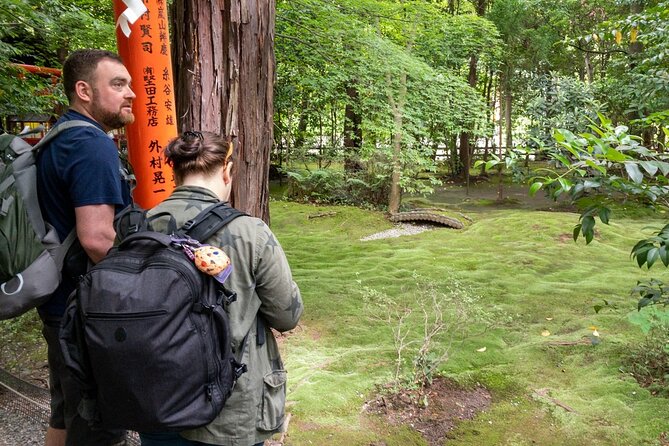
The tour costs $89 per person. That is not the cheapest way to see Arashiyama, especially since admission is separate.
Required admission adds ¥800 for Daikakuji and Osawa-no-ike Pond, plus ¥500 for Seiryoji. That makes ¥1,300 in entrance fees per person. Optional Japanese snacks cost about ¥500, and insurance is not included. Gratitude for the guide is also not included.
The price makes more sense if you value a small group and a guide who stays with you through several different types of places. You are paying for about three to four hours, route planning, explanations, photo help, and the booklet, not just entry to the bamboo forest.
It is less attractive if you only want a quick bamboo picture or prefer to explore temples alone with an audio guide. In that case, the extra guide fee and the required walking may not fit your plans.
The original booklet is a useful touch. Fifteen pages will not replace a full guidebook, but it can help you remember names, customs, and themes after the walk. Since Yusuke guides the experience himself, you are also getting one consistent voice rather than a handoff between different hosts.
Timing, Meeting Point, and Physical Effort
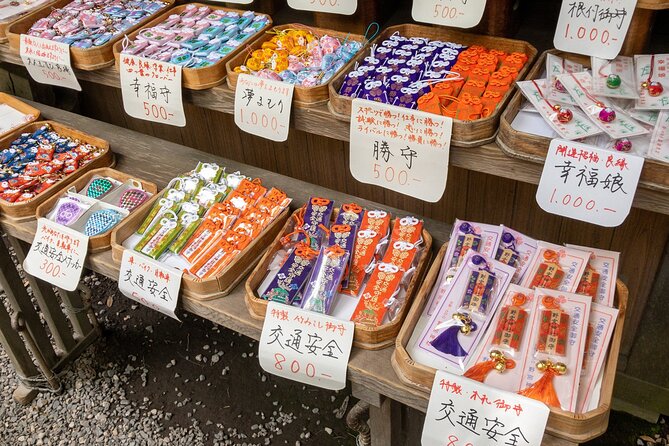
The meeting point is Randen-yaJapan inside Arashiyama Station Hannari Hokkori Square, at 202 Sagatenryuji Tsukurimichicho. The location is near public transportation, which makes it a practical starting point.
Allow close to four hours, even though the stated duration is approximately three to four hours. The stop times add up to about 170 minutes, and the tour includes walking and travel between areas. The route covers around 3 kilometers, with about 55 minutes of walking during the tour.
That is manageable for most people who are comfortable walking, but warm weather can make it feel longer. Plan for water, suitable shoes, and enough energy for temple visits at the end rather than assuming the bamboo grove is the only physical part.
The tour requires good weather. If poor weather causes cancellation, you are offered another date or a full refund. You can cancel for a full refund up to 24 hours before the start time. Changes or cancellations inside that window are not accepted.
Who Will Get the Most From This Walk
I would recommend this experience to you if you want Arashiyama to feel like a historic Kyoto district rather than a single famous path. It works particularly well for people who enjoy temples, traditional customs, literary connections, and a guide who can explain small details.
The six-person limit is useful for couples, families, and small groups who do not want to be folded into a large tour. It also suits solo visitors who want help with photos and a bit of company without joining a crowd.
The Tale of Genji option is the clear choice for readers of the novel. You will get more from it if you enjoy learning why a place matters, not only seeing how it looks.
I would think twice if you have limited walking ability, dislike removing shoes, or need frequent food stops. The warm-weather fatigue noted by a 68-year-old participant is a fair warning, not a reason to reject the tour outright. Ask yourself if you can walk 3 kilometers and remain comfortable for several hours.
Should You Book the Arashiyama Hidden Gems Walk?
Book it if you want a slower, more thoughtful Arashiyama visit, especially with Yusuke’s personal guidance and the small group size. The strongest parts are the mix of Nonomiya Shrine, Seiryoji, Daikakuji, and Osawa Pond, plus the chance to connect those places with The Tale of Genji.
Skip it if your only goal is the bamboo forest, or if you want a short and inexpensive outing. The entrance fees, optional snack cost, and long walking time push the total beyond the headline price.
For most fit visitors who want history, local customs, and quieter scenery, this is a well-shaped introduction to the parts of Arashiyama that a quick photo stop misses. Bring comfortable shoes, socks, water, and a snack, and you will be ready for the full route.
FAQ
How long does the Arashiyama walking tour take?
The tour takes approximately three to four hours. The activity includes about 3 kilometers of walking and roughly 55 minutes of walking time, along with travel and visits at each stop.
How many people can join the tour?
The tour has a maximum of six travelers.
What places does the tour visit?
The route visits Nonomiya Shrine, the Arashiyama Bamboo Forest, Seiryoji Temple, Daikakuji Temple, and Osawa Pond.
Are entrance tickets included?
No. Daikakuji Temple and Osawa-no-ike Pond cost ¥800 per person together, and Seiryoji Temple costs ¥500 per person. Guiding and the original tour booklet are included.
Do I need to remove my shoes?
Yes. You must remove your shoes to enter the interiors at Seiryoji Temple and Daikakuji Temple.
Where does the tour end?
The tour ends at Daikakuji Temple. If you prefer to return to the starting point, Yusuke offers a free walking return tour.
More Arashiyama Bamboo Tours in Kyoto
- Osaka/Kyoto:Kinkakuji,Arashiyama,FushimiInariShrine,NaraPark
★ 4.1 · 1,596 reviews - Kyoto/Osaka: Nara, Fushimi Inari Taisha, Arashiyama Bus Tour
★ 4.7 · 1,275 reviews - Kyoto Arashiyama Walking Tour: Bamboo, Monkeys, Gardens & Secrets
★ 5.0 · 1,216 reviews - Arashiyama Bamboo, Temple, Monkeys, or Secret Sake Brewery
★ 4.8 · 886 reviews
Just added around Kyoto
- Private Guided Traditional Buddhist Cooking in Japan★ 5.0 · 16 reviews
- Kyoto: Gion Geisha District & Sake-in-Hand Walking Tour★ 5.0 · 37 reviews
- Your Private Vacation Photography Session In Kyoto★ 5.0 · 110 reviews
- Kyoto: Zen Meditation at a Private Temple with a Monk★ 5.0 · 25 reviews
- Traditional Japanese Washi Papermaking- Kyoto morning★ 5.0 · 77 reviews
- Kyoto Wagashi(Japanese sweets) Cooking Class near Fushimiinari★ 5.0 · 60 reviews
- Private Pewter Sake Cup Experience with a Kyoto Artisan★ 5.0 · 31 reviews
- Kyoto Private 6 hour Tour: English Speaking Driver Only, No Guide★ 5.0 · 88 reviews
Arashiyama Bamboo Tours, compared.
Osaka/Kyoto:Kinkakuji,Arashiyama,FushimiInariShrine,NaraPark
Read our review →
Kyoto/Osaka: Nara, Fushimi Inari Taisha, Arashiyama Bus Tour
Read our review →
Kyoto Arashiyama Walking Tour: Bamboo, Monkeys, Gardens & Secrets
Read our review →
Arashiyama Bamboo, Temple, Monkeys, or Secret Sake Brewery
Read our review →
Arashiyama Bamboo Forest, Monkeys, Matcha & Temple Tour
Read our review →
Osaka/Kyoto: Arashiyama, Nara & Fushimi Inari Shrine w/Lunch
Read our review →
Nijo, Kinkaku-ji, Arashiyama, Kiyomizu & Fushimi Inari
Read our review →
Arashiyama Bamboo Forest & Hidden Gems Bike Tour (Early Bird)
Read our review →Browse the lists this tour appears in