
REVIEW · FOOD MARKET TOURS
Tuna auction at Toyosu Market with qualified guide and early morning tour of Tsukiji Outer Market
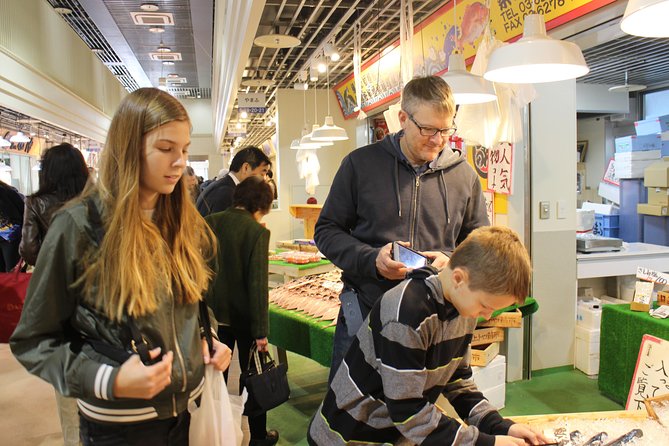
The tuna auction is the main event here: huge frozen fish, fast-moving buyers, and a glimpse of the trade behind Tokyo’s famous sushi counters. Afterward, you move to Tsukiji Outer Market for tastings, food shopping, and a look at the older market culture. I like the private format and the guide’s practical help, especially from Nobu, who explains the sales chain and can point you toward a good sushi breakfast. I also like that the tour links two markets in one morning.
The catch is the price, $216.77 per person, for about three hours. You can enter parts of these markets without a guide, so this makes the most sense if you want context, translation help, smooth timing, and a better chance of seeing the auction without fumbling through Tokyo before sunrise.
In This Review
- Key points to know before booking
- Why the 5:30 am start is worth considering
- Watching the auction from Toyosu’s second floor
- What the guide adds at Toyosu
- Riding from Toyosu to Tsukiji Outer Market
- Exploring Tsukiji before the crowds build
- Is $216.77 a fair price?
- Who will enjoy this market morning most?
- Practical details that affect your morning
- My take on the tuna auction and Tsukiji pairing
- Should you book this tour?
- FAQ
- What time does the tour start?
- Where does the tour begin?
- Where does the tour end?
- Is the tuna auction included?
- Can I visit other buildings at Toyosu?
- Is transportation between the markets included?
- Is breakfast included?
- Can I cancel for a full refund?
Key points to know before booking
- The tuna auction begins before most of Tokyo wakes up: The tour starts at 5:30 am, so plan your route the night before.
- You watch from above, not from the auction floor: The visitor aisle on the second floor gives you a clear view, but you remain behind the public viewing area.
- Nobu receives especially strong praise: His explanations cover auction customs, market history, and the complicated path from seller to sushi counter.
- Toyosu and Tsukiji offer very different experiences: Toyosu is the modern wholesale center, while Tsukiji Outer Market is better for browsing, samples, and food souvenirs.
- Breakfast is not included: You can buy food at Tsukiji after the tour, and the guide may suggest an early-opening sushi restaurant.
- Private means your group alone joins the activity: That can make questions, translation, and pacing easier, but it also helps explain the high cost.
Why the 5:30 am start is worth considering
Tokyo’s tuna auction is one of those experiences that depends almost entirely on timing. Arrive too late and you may see only the aftermath. Arrive on time and you can watch the market work while the auction is still underway.
This tour begins at Shijō-mae Station near Toyosu Market at 5:30 am. The early hour is not a marketing trick. It matches the working rhythm of the market. You’ll want to check your route in advance and allow extra time, since a missed train or wrong exit could cost you the part you came to see.
The three-hour schedule is compact. You spend about an hour at Toyosu, then about an hour at Tsukiji Outer Market, with transport between them. That leaves little room for wandering aimlessly, which is useful in a market complex that can feel confusing on a first visit.
The tour is often booked well ahead, with an average booking window of about 47 days. If the auction is a top priority for your Tokyo visit, booking early is sensible. The activity has a 4.8 rating from 16 reviews and a 94 percent recommendation rate, but the smaller number of reviews means you should still read the details and decide if the price suits your plans.
More Food Market Tours in Tokyo
- Tokyo: Shinjuku Food Tour (13 Dishes at 4 Local Eateries)
★ 5.0 · 6,603 reviews - Tokyo Tsukiji Fish Market Food and Culture Walking Tour
★ 5.0 · 3,184 reviews - Tokyo: Shinjuku Food Tour (15 Dishes and 4 Eateries)
★ 4.9 · 2,033 reviews
Watching the auction from Toyosu’s second floor
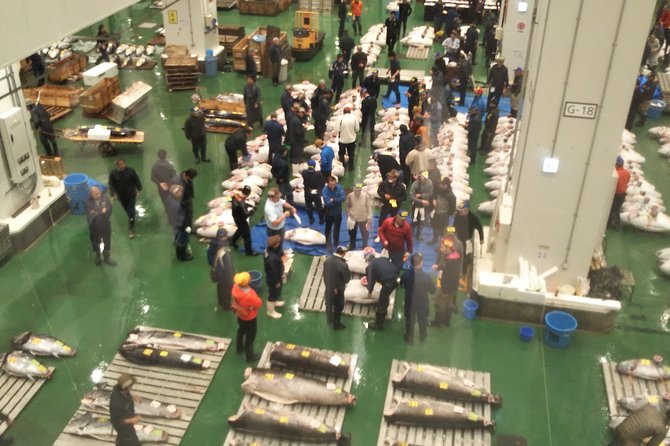
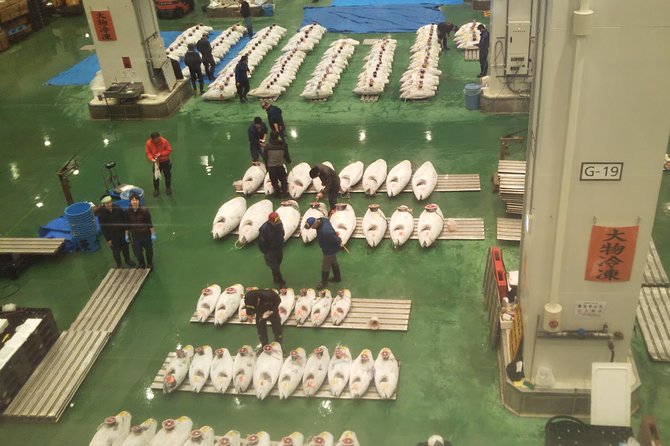
Toyosu Market is Tokyo’s newer wholesale market, and its design feels very different from the old Tsukiji site. The auction is viewed from the visitor aisle on the second floor of the Fisheries Wholesale Building.
That viewing position matters. You get a broad look at the action, including the size and number of tuna, but you are not standing among the buyers on the auction floor. One candid description of the experience makes this clear: the platform offers a good view, but the public does not join the auction itself.
For most people, the value is in seeing the scale of the operation. A tuna auction is not just a colorful photo opportunity. It is part of a complicated chain involving wholesalers, buyers, restaurants, transport, and skilled handling of fish. A good guide turns the scene from a distant spectacle into something you can understand.
Nobu is repeatedly praised for explaining this chain in clear English. He also adds historical context, helping you understand how the market has changed since the old Tsukiji wholesale market moved to Toyosu. That background is useful because the modern building can otherwise feel like a large, controlled viewing site rather than a working center of Tokyo’s food trade.
The tour provider points out that the modern arrangement has one practical advantage over the old system. At Tsukiji, visitors once waited for hours and had only 10 to 15 minutes of viewing time. At Toyosu, if you arrive during the auction, you may be able to watch for about an hour until it ends. That is a much better use of your early morning.
You can also visit the Fisheries Wholesale Building and the Fruit and Vegetables Building if you wish. The advertised itinerary gives Toyosu about one hour, so do not expect an extended exploration of every building. The auction is the focus, and the guide keeps the visit moving.
What the guide adds at Toyosu
You can find your own way to Toyosu and watch the auction without booking a private activity. That is the central question behind the price.
A guide helps in four practical ways. First, you have someone who understands where to go and when to arrive. Second, you can ask questions as the auction unfolds. Third, you receive cultural and business context that is hard to pick up from signs alone. Fourth, the guide can help you connect Toyosu with Tsukiji instead of treating the two markets as unrelated stops.
Nobu receives the strongest praise in the supplied feedback. People describe him as well informed, prompt, friendly, and able to answer questions in good English. He is also credited with explaining the history of the markets and the structure of Japanese seafood sales.
That last point is worth noting. The seafood business involves many professional roles, and the path from wholesale auction to restaurant is not always easy to follow. If you are curious about fish, sushi, or Japanese food culture, this explanation may be more valuable than simply watching the tuna pass through the auction area.
The private format also changes the tone. Only your group takes part, so you can ask about a particular fish, pause for clarification, or move along once you have seen enough. A large group tour would cost less per person, but it might offer less personal attention.
Riding from Toyosu to Tsukiji Outer Market
Transport from Toyosu Market to Tsukiji is included by bus. This is a small detail with real value at that hour. You do not have to work out a second route while tired, carrying shopping bags, or trying to keep your morning on schedule.
The ride also gives the tour a clear story. Toyosu is the modern wholesale center. Tsukiji Outer Market, or Tsukiji Jogai, is where you can browse shops selling ingredients, kitchen tools, and food products from across Japan.
Do not confuse Tsukiji Outer Market with the former wholesale market. The wholesale operations moved to Toyosu, while the outer market continued as a popular food district. That distinction explains why the two stops feel so different.
The tour ends inside Tsukiji Outer Market in the Tsukiji 4-chōme and nearby 6-chōme area. From there, you can continue exploring, eat breakfast, or shop on your own.
Same city, a completely different kind of day:
- Mt Fuji and Hakone 1-Day Bus Tour Return by Bullet Train
★ 5.0 · 26,383 reviews - 1-Day Tokyo Bus Tour
★ 5.0 · 14,250 reviews - Tokyo: TOKYO SKYTREE® Admission ticket
★ 4.5 · 11,192 reviews - Tokyo: teamLab Planets TOKYO Digital Art Museum Entry Ticket
★ 4.6 · 9,779 reviews
Exploring Tsukiji before the crowds build
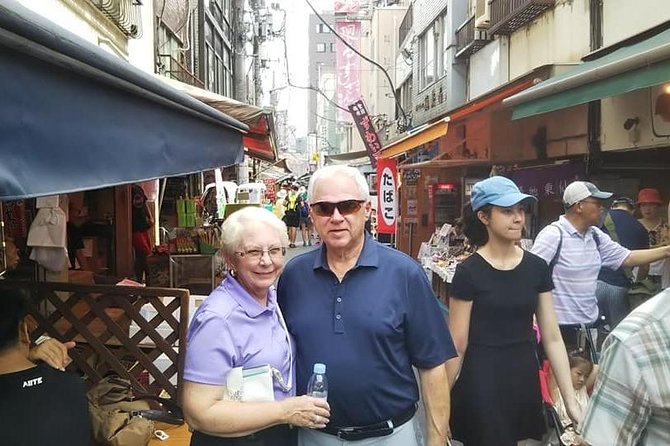
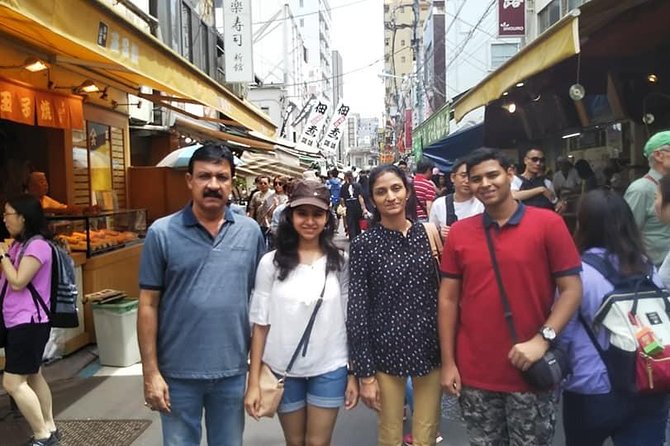
The early arrival is one of the tour’s best features. Tsukiji can feel overwhelming later in the day, with narrow lanes, food counters, displays, and shoppers competing for space. Reaching it early gives you a calmer chance to look around.
You can sample various foods for free, though the exact offerings can vary by shop and day. You can also buy high-quality ingredients and Japanese cooking utensils. This is a useful place to shop for food-related souvenirs, especially if you prefer something practical over a standard Tokyo gift.
A guide can help translate labels, explain unfamiliar ingredients, and suggest what is worth buying. That assistance matters more at Tsukiji than it may at a department store, since many small shops have limited English information and sell items aimed at home cooks or restaurant professionals.
I would save room in your schedule and appetite for this stop. Breakfast is not part of the $216.77 price, and meals and shopping are paid separately. One of the tour’s useful extras is help finding a sushi restaurant that opens early. Several accounts specifically point to a good sushi breakfast recommendation.
Still, do not assume the tour includes a reserved table or a meal. The official inclusions are the guide fee and bus fare between the markets. Think of the Tsukiji visit as a guided introduction, followed by time for you to choose where to eat and shop.
Is $216.77 a fair price?
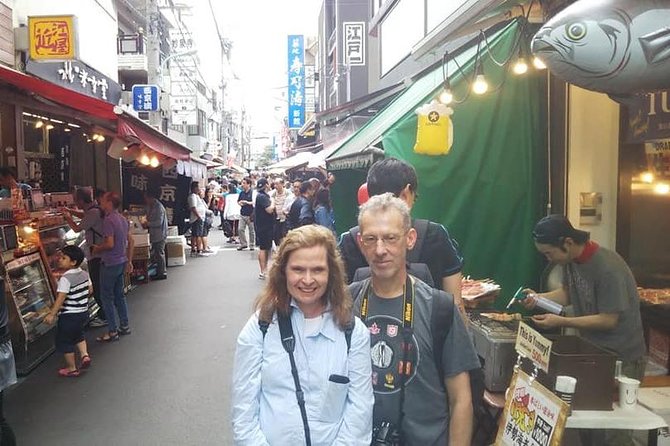
This is an expensive market visit. The cost is easier to accept if you value a private guide, early-morning coordination, translation help, and transport between the two sites.
It is harder to justify if you are comfortable navigating Tokyo alone. One honest assessment of the experience makes the point directly: someone who already knows Tokyo could visit the markets independently and save a substantial amount.
That criticism is fair. Admission to the two stops is listed as free, and breakfast and purchases are not included. The tour price mainly covers the guide’s time and the private arrangement, not tickets or a meal.
The early start also helps explain the fee. The guide must be ready near the market at an hour when many other Tokyo activities have not begun. The operator notes that a guide may need to stay overnight near the market because the tuna auction starts so early.
For a couple or small group, the private format may offer better value than it first appears, particularly if you split the cost among several people. Group discounts are available, though the exact savings are not stated. For a solo visitor, the cost is more difficult to defend unless the auction is a major personal interest.
I would compare it with the cost of your time. If missing the auction would be a major disappointment, paying for help may be sensible. If you simply want to see a Tokyo market and eat sushi, you can likely build a cheaper morning around Tsukiji alone.
Who will enjoy this market morning most?
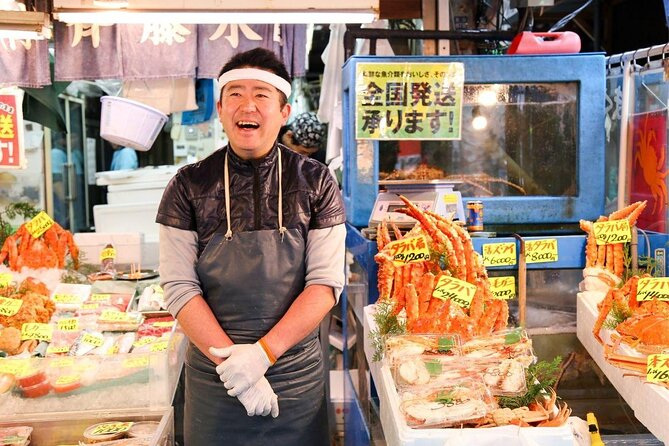
This tour suits you if you have a strong interest in fish, sushi, Japanese food businesses, or the daily work behind restaurant counters. The explanations about tuna, wholesalers, and the sales chain add purpose to what could otherwise be a short viewing stop.
It also suits first-time visitors who want someone to guide them through an unfamiliar part of Tokyo before sunrise. You do not need to be a seafood expert. The guide can provide the basic context and answer questions in English.
It is less suitable if you dislike early mornings, want a leisurely market breakfast included, or prefer to explore without a fixed timetable. Three hours is enough for a focused visit, but not enough for a slow morning of browsing every aisle.
Families and most people able to use public transport can participate, according to the activity information. The tour is private, so your group does not have to keep pace with strangers. You should still be comfortable being out early and walking through large market facilities.
Practical details that affect your morning
The meeting point is Shijō-mae Station at 6 Chome-3 Toyosu, Koto City. The start time is 5:30 am. The end point is inside Tsukiji Outer Market in central Tokyo.
A mobile ticket is available, and confirmation arrives at booking. The activity is near public transportation, but the early hour makes preparation important. Look up the station route before bed and avoid treating this as a morning when you can improvise.
The listed duration is approximately three hours. Admission tickets are free, while meals and shopping are extra. The guide fee and bus fare from Toyosu to Tsukiji are included.
The tour requires good weather. If poor weather causes cancellation, you are offered another date or a full refund. You can cancel for a full refund up to 24 hours before the start time. Cancellations or changes made within 24 hours are not accepted for a refund.
My take on the tuna auction and Tsukiji pairing
The two-stop design is smart. Toyosu gives you the wholesale side of Tokyo’s seafood trade, while Tsukiji gives you the retail, tasting, and shopping side. Seeing both in one morning helps you understand why each market exists today.
The auction itself may be less intimate than old Tsukiji. You watch from a public platform, not at floor level, and the modern building does not have the same rough, old-market atmosphere. Yet the longer viewing window is a real improvement for anyone who wants time to watch and ask questions.
The best part of the tour is not simply getting through the doors. It is having someone explain what you are seeing and then lead you to a more hands-on market experience. Nobu’s record of clear explanations, historical context, and sushi recommendations makes him an important part of the value.
Should you book this tour?
Book it if the tuna auction is high on your Tokyo list, you want a private guide, and you would rather pay for certainty than handle a pre-dawn market visit alone. It is especially appealing to fish lovers and first-time visitors who want context, translation help, and a direct transfer to Tsukiji.
Skip it if you are confident navigating Tokyo, are mainly interested in eating breakfast, or consider $216.77 too much for a tour with no meal or admission ticket included. In that case, visit Tsukiji Outer Market independently and spend the savings on sushi.
For the right person, this is a focused and unusual Tokyo morning. Just remember what you are paying for: not entry, but expert guidance, private pacing, early-hour organization, and a better understanding of how the tuna reaches your plate.
FAQ
What time does the tour start?
The tour starts at 5:30 am.
Where does the tour begin?
It begins at Shijō-mae Station near Toyosu Market, at 6 Chome-3 Toyosu, Koto City, Tokyo.
Where does the tour end?
It ends inside Tsukiji Outer Market in the Tsukiji 4-chōme and nearby 6-chōme area.
Is the tuna auction included?
Yes. The tour includes a visit to the visitor aisle on the second floor of the Fisheries Wholesale Building, where you can watch the tuna auction.
Can I visit other buildings at Toyosu?
You can also visit the Fisheries Wholesale Building and the Fruit and Vegetables Building if you wish, although the tour allows about one hour at Toyosu.
Is transportation between the markets included?
Yes. Bus fare and private transportation from Toyosu Market to Tsukiji Market are included.
Is breakfast included?
No. Breakfast and other meals are not included. Shopping and food purchases at Tsukiji are also paid separately.
Can I cancel for a full refund?
Yes, if you cancel at least 24 hours before the experience start time. Changes or cancellations made less than 24 hours before the start are not refunded, and poor-weather cancellations offer a different date or full refund.
More Shopping Tours in Tokyo
- Tsukiji Fish Market: Street Food & Culture Walking Tour
★ 5.0 · 669 reviews - Tsukiji Fish Market Small-Group Food Walking Tour
★ 5.0 · 621 reviews - Tokyo: Tsukiji Fish Market Sushi Making Class with Pro Chef
★ 4.9 · 506 reviews - Tokyo Food Tour Taste Fresh Delights at Tsukiji Market
★ 5.0 · 429 reviews
More Markets in Tokyo
- Tokyo: Tsukiji Fish Market Food and Walking tour
★ 5.0 · 1,724 reviews - Tokyo: Tsukiji Fish Market Guided Walking Tour
★ 4.9 · 1,397 reviews - Tsukiji Fish Market Guided Tour and Sushi Making with Pro Chef
★ 5.0 · 775 reviews - Tokyo: Tsukiji Fish Market Food and Culture Walking Tour
★ 4.7 · 757 reviews
Just added around Tokyo
- Private Memorable Tokyo Tour with English Speaking Driver★ 5.0 · 30 reviews
- Private Tokyo Custom Full-Day Tour by Chartered Vehicle★ 5.0 · 16 reviews
- Private Sightseeing to Mt Fuji and Hakone with English Driver★ 5.0 · 51 reviews
- Tokyo Photography Masterclass – Private Photography Lesson★ 5.0 · 25 reviews
- Private Mt. Fuji Day Trip from Tokyo with English-Speaking Driver★ 5.0 · 33 reviews
- 4 Day Tour – Mount. Fuji, Tokyo, Hakone, Kamakura and Yokohama★ 5.0 · 19 reviews
- Private Unforgettable Mt Fuji Tour with English Speaking Driver★ 5.0 · 142 reviews
- Private Tokyo Food Tour – A Journey Through Time Through Food★ 5.0 · 36 reviews
Food Market Tours, compared.
Shinjuku Food Tour (13 Dishes at 4 Local Eateries)
Read our review →
Tokyo Tsukiji Fish Market Food and Culture Walking Tour
Read our review →
Shinsekai Food Tour with 13-15 Dishes at 5 Eateries
Read our review →
Osaka Food Tour: 13 Dishes at 5 Local Eateries
Read our review →
Shinjuku Food Tour (15 Dishes and 4 Eateries)
Read our review →
Best of Shinjuku: Izakaya Food Tour (4 Stops, 14+ Tastings)
Read our review →
Hungry Osaka Street Food Tour:15 Tastings & 3 Drinks with a Local
Read our review →
Browse the lists this tour appears in