
REVIEW · KIMONO & CULTURE EXPERIENCES
Tokyo:Calligraphy &Make your original folding fan in Asakusa
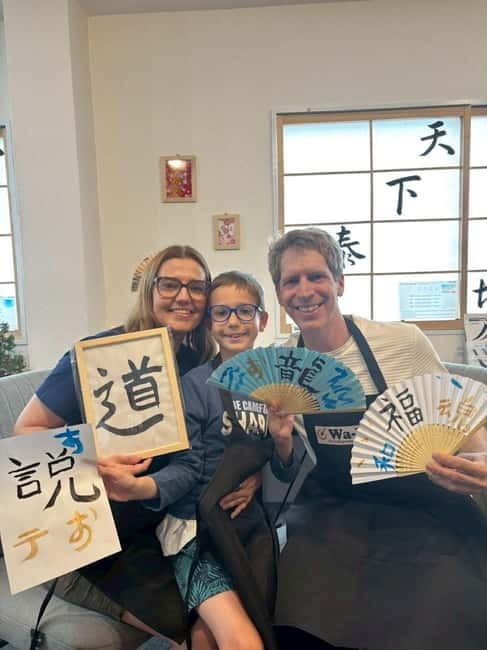
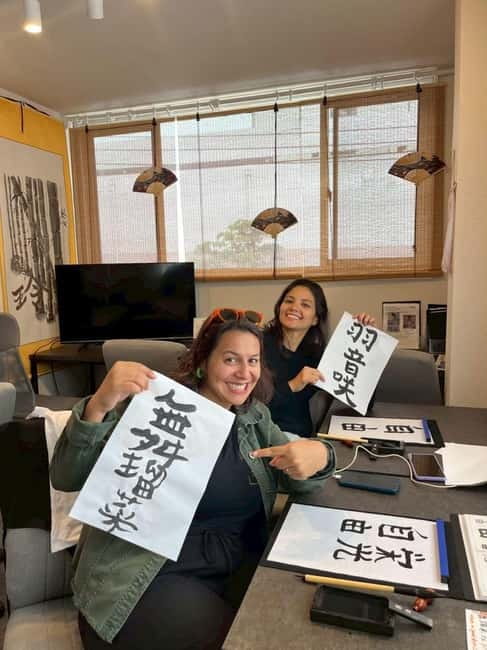
The best part of this Asakusa activity is that your souvenir begins with your own hand. You learn a few basic brush techniques, choose meaningful Japanese characters, then place your favorite work on an original folding fan. It is a small creative class with a lasting result, not just another souvenir-shop purchase.
I like the calm pace and the personal teaching from Mana, whose clear English and patient guidance make the class approachable even if your brush skills are shaky. I also like the postcard ritual: after calligraphy, you write to your future self over green tea, giving the visit a simple personal touch.
The main thing to consider is that ink can be messy, even with aprons provided. The class is not suitable for wheelchair users, and you should check your selected option carefully because choosing a henna tattoo option means the calligraphy class is not included.
In This Review
- Key points to know before you book
- Why this Asakusa class feels different from a souvenir stop
- Your first lesson: posture, attitude, and the Japanese brush
- Melting the ink slows the whole room down
- Thirty minutes of practice before the important strokes
- Choosing the character for your folding fan
- Green tea and a postcard to your future self
- How long the activity takes in real trip planning
- What to wear and what to leave at home
- Optional shirts and the henna warning
- Who will enjoy this most
- Should you book the Asakusa calligraphy and fan class?
- FAQ
- Where does the calligraphy and fan activity take place?
- How much does the activity cost?
- How long does the class last?
- Is the instructor available in English?
- Do I need previous calligraphy experience?
- What will I make during the activity?
- Is green tea included?
- Can I write something to take home besides the fan?
- What should I wear?
- Is the activity wheelchair accessible?
Key points to know before you book
- Melt traditional ink by hand: You use water to prepare a solid ink stick, an old-fashioned step that helps you slow down before writing.
- Learn more than pretty strokes: Mana explains posture, brush handling, ink control, and the basic techniques behind Japanese calligraphy.
- Practice before making the final fan: You work on thin paper with guide sheets, so your keepsake does not depend on your first attempt.
- Take home a personal souvenir: Your finished calligraphy goes onto a folding fan, with other design choices available from a sample book.
- End with tea and a postcard: Green tea and a note to yourself turn the class into a small travel memory you can revisit later.
- Plan for ink and access limits: Wear clothes that can get dirty, use the provided apron, and note that the activity is not wheelchair accessible.
Why this Asakusa class feels different from a souvenir stop
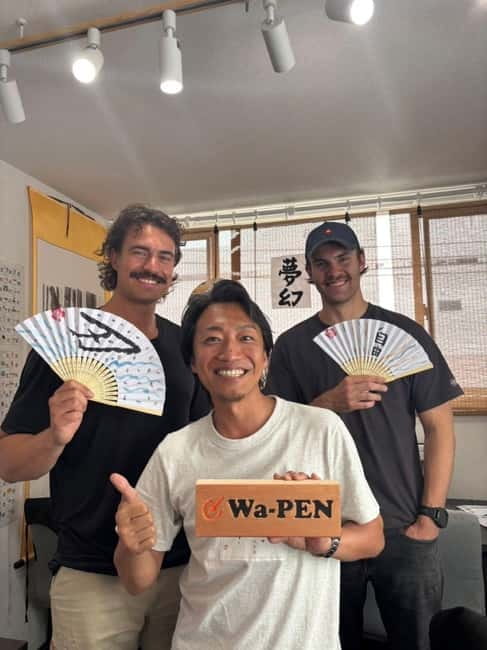
Tokyo gives you no shortage of things to buy. You can find fans, prints, shirts, charms, and calligraphy in shops throughout the city. This class gives you time to make one instead.
That difference matters. You are not expected to produce museum-quality Japanese writing. You are learning how a brush moves, how much ink it can hold, and how posture changes the line. The final fan carries the marks of your own practice, including the small imperfections that prove it was made during your trip.
The setting is in Asakusa, close to the coordinates provided for the meeting point, but the exact meeting place can vary with the option you book. Check the booking details before setting off. The class is especially easy to pair with time around Senso-ji, and Mana has even helped participants with nearby food and sightseeing suggestions.
At $16 per person, the value is strong if you want a hands-on cultural activity rather than a long formal lesson. The price includes instruction, practice materials, traditional ink preparation, green tea, the postcard, and the folding fan. You are paying for a short lesson and a finished object, not simply admission to a workshop.
More Kimono & Culture Experiences in Tokyo
- Tokyo: Samurai Ninja Museum Guided tour and Experience
★ 4.6 · 1,010 reviews - Tokyo: Samurai Sword & Archery Class from Samurai Descendant
★ 5.0 · 603 reviews - Best Samurai Experience in Tokyo
★ 5.0 · 458 reviews
Your first lesson: posture, attitude, and the Japanese brush
The class begins with context. You learn about Japanese calligraphy, the place of hiragana in Japanese writing, and the connection between writing and daily culture. This introduction is brief enough for a short activity, but it gives meaning to the physical work that follows.
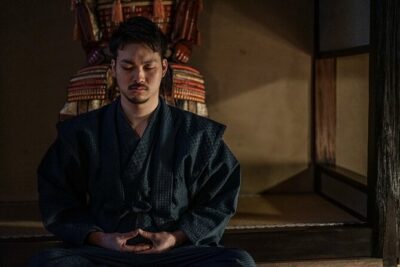
You then study the proper posture and attitude for calligraphy. That may sound formal, but it is useful. When you lean too close, grip the brush too tightly, or rush a stroke, the writing shows it. Sitting correctly gives your arm room to move and helps you pay attention to each mark.
The brush is called a fude. You learn how to hold it and how to judge the amount of ink. Too little ink produces a weak line. Too much can leave a thick, wet mark that spreads across the paper. These are simple ideas, but they are much easier to understand when you see them demonstrated.
Mana is the kind of instructor this activity needs. She has been described as patient, encouraging, and easy to understand in English. If you are nervous about writing Japanese characters, expect her to show the stroke movement and help you correct your approach without turning the session into a test.
Melting the ink slows the whole room down
One of the more memorable steps is preparing ink from a traditional solid ink stick. You use water to melt it before writing. It is a slower process than squeezing ink from a bottle, but that is part of its appeal.
This is a useful contrast to Tokyo outside the classroom. The city runs on speed, screens, trains, and constant movement. Here, you repeat a small action and watch the ink become ready. I would not book this as a deep historical lesson, but the hands-on preparation gives the class a connection to older calligraphy practice that a quick demonstration would miss.
You should not bring food or drinks into the session. Green tea is part of the planned experience at the end, not something to sip throughout the working portion.
Thirty minutes of practice before the important strokes
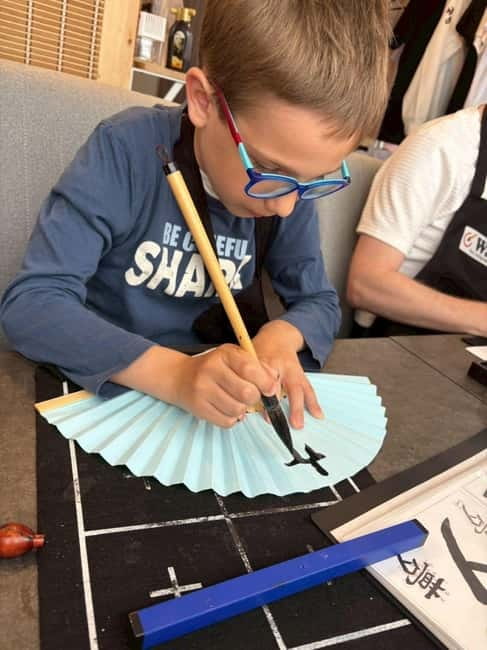
The practice period is where you get the most value from the instruction. You work on thin paper with guide paper underneath, learning about eight basic techniques. The guides help you see where a stroke should begin, how it should turn, and where it should finish.
Do not worry if your first attempts look uneven. The point is to repeat the movements until the brush feels less foreign. Some people may find the activity relaxing right away. Others may need several attempts before the writing begins to look intentional. Both reactions are normal for a first calligraphy lesson.
You can practice for about 30 minutes, and the instructor may allow extra time when the schedule permits. Several people have found the teacher willing to let them continue until they felt satisfied. That flexibility is useful because the final design is meant to be something you want to keep.
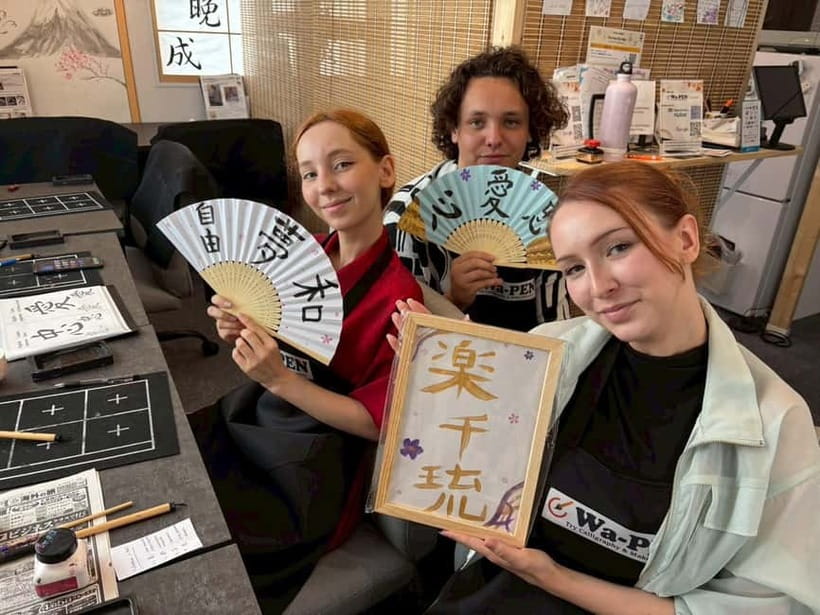
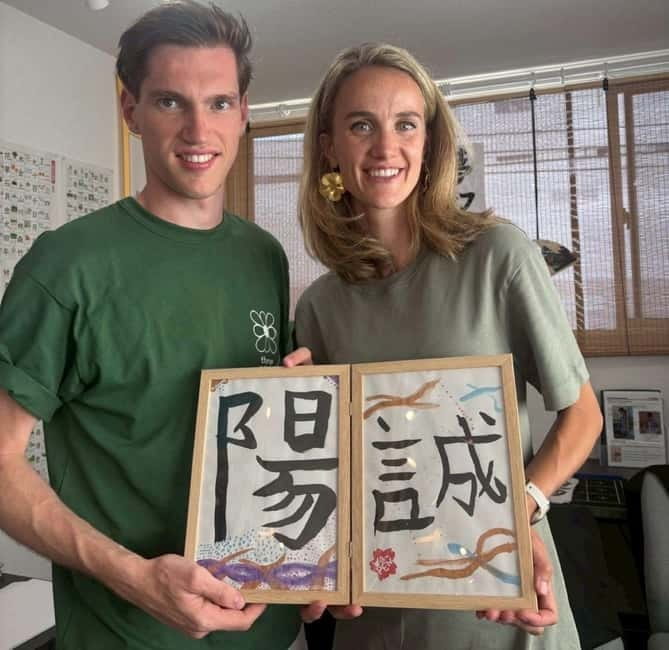
You can choose a design from a sample book or ask the instructor for help with a particular character. The class can include writing your name in kanji and discussing the meaning of Japanese kanji. If you already have an idea for a word or character, it is sensible to think about it before arriving, but the sample book gives you a starting point if you do not.
Same city, a completely different kind of day:
- Mt Fuji and Hakone 1-Day Bus Tour Return by Bullet Train
★ 5.0 · 26,383 reviews - 1-Day Tokyo Bus Tour
★ 5.0 · 14,250 reviews - Tokyo: TOKYO SKYTREE® Admission ticket
★ 4.5 · 11,192 reviews - Tokyo: teamLab Planets TOKYO Digital Art Museum Entry Ticket
★ 4.6 · 9,779 reviews
Choosing the character for your folding fan
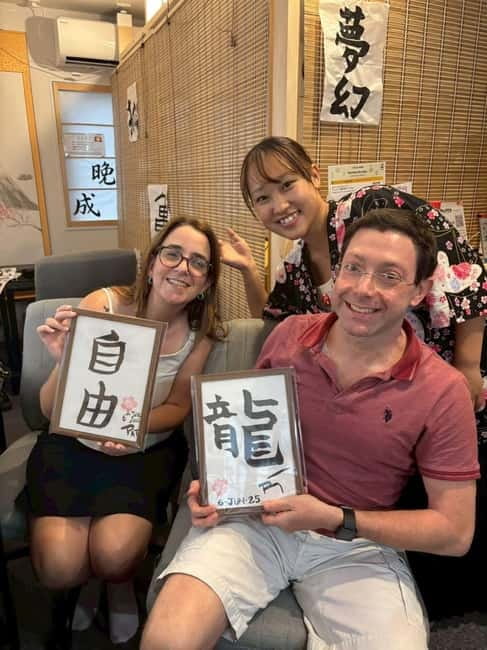
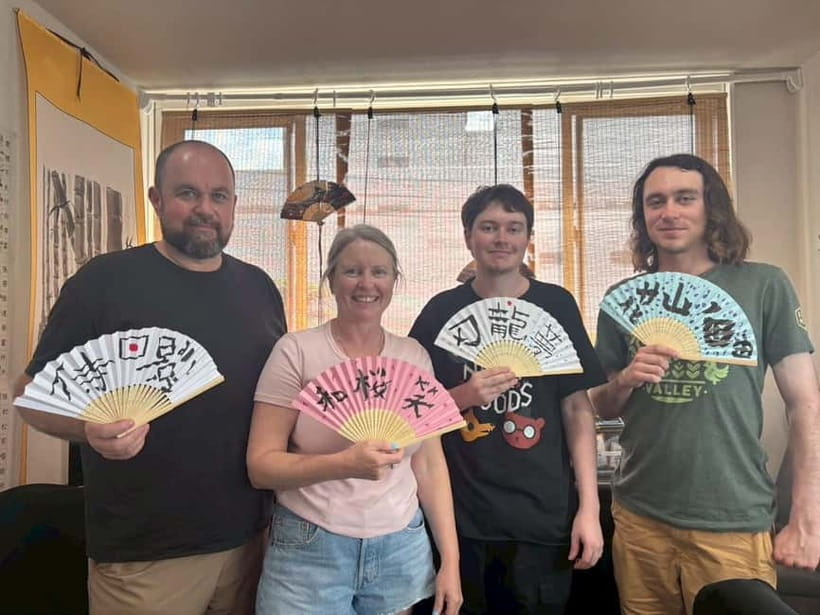
The fan is the heart of the activity. After practice, you choose the work you want to use for the final design. You then create a one-of-a-kind folding fan to take home.
This is where the class moves from exercise to souvenir. Your best sheet of practice paper may not be the first one you write, and that is why the preparation matters. You have time to settle your hand before committing to the final piece.
The fan also makes the activity appealing for families and mixed-age groups. A six-year-old has taken part successfully with patient help, and an older relative who had always liked calligraphy found the class rewarding. The lesson is not limited to people who already understand Japanese writing.
Still, expectations matter. You are making a personal craft item, not receiving professional calligraphy. If you want a flawless display piece, the process may feel less predictable than buying a finished fan. If you value the story behind the object, the handmade result is the better choice.
Green tea and a postcard to your future self
After the brushwork, you enjoy a cup of green tea and write a postcard to yourself. The idea is simple: describe your feelings about the calligraphy session and your Tokyo trip, then send the postcard home so the memory returns after you do.
This is a smart ending. Many activities finish when the craft is complete, and the object is quickly packed into a suitcase. The postcard adds a second reminder. It asks you to put the experience into words while it is still fresh.
You should not expect a tea ceremony. The green tea is a quiet closing moment, not a separate formal lesson. That suits the class well. After concentrating on brush pressure and ink, a short pause gives you time to look at your fan and think about what you made.
The postcard also makes this a good choice near the end of a Tokyo visit. You can write about the trip as a whole rather than only the calligraphy. It is a modest detail, but one that gives the activity more emotional weight than its low price suggests.
How long the activity takes in real trip planning
The stated duration ranges from 30 to 90 minutes, depending on the starting time and option. The core practice itself lasts about 30 minutes, while the full visit can include the introduction, ink preparation, final fan, tea, and postcard.
Allow enough room in your schedule that you do not have to rush away halfway through your design. If you are booking around Senso-ji, leave time for walking and for the possibility that you will want to practice a little longer.
The class works well as a break from sightseeing. One person used it as a peaceful escape from the heat and noise of Tokyo, while another described it as a friendly pause after a great deal of walking. That is the right way to think about it. It is not an all-day attraction. It is a compact cultural stop that changes the pace of your day.
English instruction is available. This is important because the class depends on small corrections to posture and brush movement. You should be able to ask questions and understand the explanation of the techniques.
What to wear and what to leave at home
Wear comfortable clothes that can tolerate a little ink. Aprons are provided, but the advice is still worth taking seriously. A loose, practical outfit is better than clothing you would worry about protecting.
Keep food and drinks out of the working area. The activity is not set up as a casual snack break, and green tea is served as part of the closing portion.
Pets are not allowed, although assistance dogs are permitted. The activity is not suitable for wheelchair users, so check this point before booking if accessibility is important for anyone in your group.
The exact meeting point may vary by option. Use the coordinates supplied with your booking and confirm the details rather than relying on a general assumption that every version meets in the same place.
Optional shirts and the henna warning
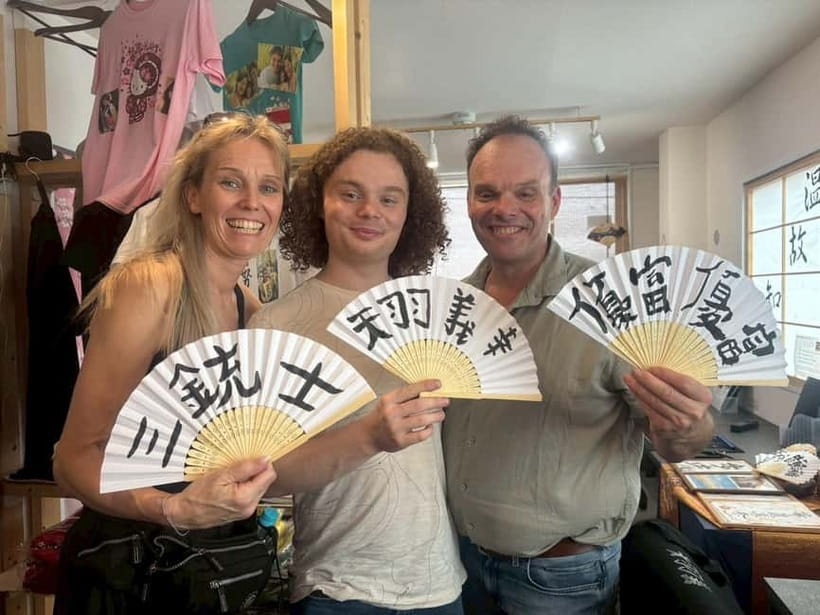
You can ask about having your calligraphy printed on a T-shirt, but this is not included in the basic price. The print itself and clothing fees are separate, and you may need to buy a T-shirt in the shop.
This can be a nice add-on if you want to wear the design, but it changes the cost calculation. At $16, the fan is the included keepsake. Treat a shirt as an optional purchase, not part of the standard package.
Pay close attention to the option names when booking. If you choose a henna tattoo option, the calligraphy experience is not included. This is the most important booking detail in the description, since selecting the wrong version could leave you with a different activity than the one described here.
Who will enjoy this most
I would recommend this class to you if you want a creative activity that does not require prior skill. It suits solo visitors, couples, families, and older relatives. The patient teaching makes it friendly for beginners, and the final fan gives everyone a clear project to work toward.
It is also a good choice for anyone who likes meaningful souvenirs. You learn the basics, choose a character, and take home something connected to your own time in Tokyo. The postcard makes it especially fitting for birthdays, anniversaries, family trips, or a final-day activity.
You may want to skip it if you dislike seated craft work, cannot tolerate the risk of ink on clothing, or need wheelchair access. It may also disappoint you if you are seeking an advanced calligraphy course with a long study of Japanese writing. This is an introductory class, carefully shaped for visitors with limited time.
The 5.0 rating from 62 reviews reflects a clear pattern in the experience: the teacher’s patience, the relaxed pace, the chance to practice, and the fan at the end are its strongest points. One participant even bought a calligraphy kit afterward because the process was so calming. That does not mean every brush stroke will go perfectly, but it does show what the class is designed to offer.
Should you book the Asakusa calligraphy and fan class?
Book it if you want to slow down for an hour, learn a real Japanese craft, and take home a souvenir you helped create. At $16, the fan, instruction, tea, postcard, and practice time add up to good value, especially compared with buying a finished object without the story behind it.
Choose a standard calligraphy option, wear clothes that can handle ink, and plan for up to 90 minutes so you are not watching the clock. If Mana is teaching your session, expect clear English, gentle corrections, and help choosing a character that carries meaning.
I would place this among the better short activities for a Tokyo itinerary. It gives you culture without requiring a full day, creativity without demanding experience, and a keepsake that feels personal rather than mass-produced.
FAQ
Where does the calligraphy and fan activity take place?
It takes place in Asakusa, Tokyo, on Honshu. The exact meeting point can vary depending on the option you book. The supplied coordinates are 35.7162239, 139.7922354.
How much does the activity cost?
The listed price is $16 per person. Extra charges may apply if you choose an optional T-shirt printing service or buy a T-shirt.
How long does the class last?
The activity takes 30 to 90 minutes. The calligraphy practice portion lasts about 30 minutes, with the total time depending on the selected starting time and activities.
Is the instructor available in English?
Yes. The activity includes an English-speaking instructor. Mana is identified as the guide for the class.
Do I need previous calligraphy experience?
No previous experience is required. You learn posture, brush use, ink control, and basic techniques before choosing your final design.
What will I make during the activity?
You will make an original folding fan using your calligraphy. You can select a design from a sample book or ask the instructor for help with a design.
Is green tea included?
Yes. You receive a cup of green tea during the closing part of the activity.
Can I write something to take home besides the fan?
Yes. You write a postcard to yourself about your feelings and memories from the calligraphy experience and your trip.
What should I wear?
Wear comfortable clothes that can get a little dirty from ink. Aprons are provided, but ink-safe clothing is still recommended.
Is the activity wheelchair accessible?
No. The activity is not suitable for wheelchair users. Pets are not allowed, although assistance dogs are permitted.
Just added around Tokyo
- Private Memorable Tokyo Tour with English Speaking Driver★ 5.0 · 30 reviews
- Private Sightseeing to Mt Fuji and Hakone with English Driver★ 5.0 · 51 reviews
- Tokyo Photography Masterclass – Private Photography Lesson★ 5.0 · 25 reviews
- Private Tokyo Custom Full-Day Tour by Chartered Vehicle★ 5.0 · 16 reviews
- Private Mt. Fuji Day Trip from Tokyo with English-Speaking Driver★ 5.0 · 33 reviews
- 4 Day Tour – Mount. Fuji, Tokyo, Hakone, Kamakura and Yokohama★ 5.0 · 19 reviews
- Private Unforgettable Mt Fuji Tour with English Speaking Driver★ 5.0 · 142 reviews
- Private Tokyo Food Tour – A Journey Through Time Through Food★ 5.0 · 36 reviews
Kimono & Culture Experiences, compared.
Kyoto Geisha Walking Tour: Gion District & Hidden Gems
Read our review →
Gion Magical Night Walking Tour with Geisha Trivia
Read our review →
Gion Geisha District Walking Tour – Stories of Geisha
Read our review →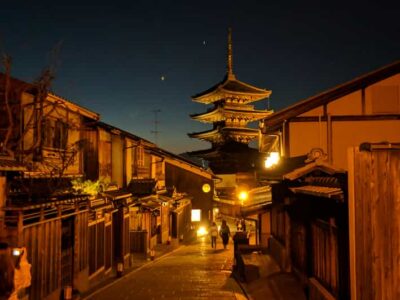
Best of Kyoto: Gion, Geisha, Pagodas & Cobblestones
Read our review →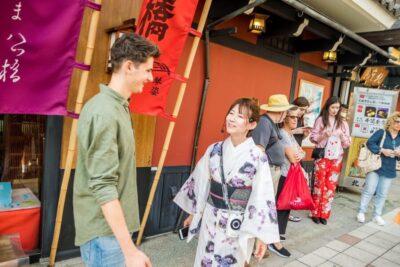
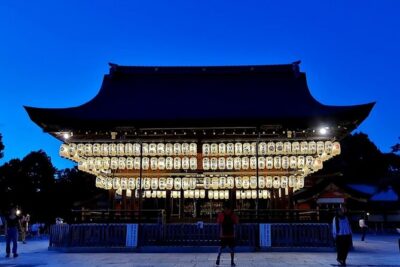
Kyoto Gion Geisha District Walking Tour – The Stories of Geisha
Read our review →
Browse the lists this tour appears in