
REVIEW · FOOD MARKET TOURS
Tokyo: Tsukiji Fish Market Seafood & Street Eats
Tsukiji is best approached with an appetite and a plan. This 2.5-hour small-group walk takes you from Tsukiji Hongwanji Temple into the market district where tuna, sashimi, grilled seafood, rice crackers, eel, scallops, and crab compete for your attention. A guide helps you make sense of it all instead of leaving you to guess at every menu.
I like the practical help, especially the chance to ask a local guide what is worth eating. I also like the small maximum of 10 people, and guides such as Haru have helped guests handle queues and find popular tuna dishes. The main catch is simple: food and drinks are not included, so your final cost depends on how hungry you are.
In This Review
- Key points at a glance
- Starting at Tsukiji Hongwanji Temple
- One and a half hours in the Tsukiji fish market
- Choosing your own bites at Tsukiji Jogai Market
- What the guides add to the morning
- Is $42 a fair price?
- Timing, pace, and group size
- Who will enjoy this Tsukiji experience?
- Practical details before you book
- Should you book the Tsukiji market walk?
- FAQ
- How long is the Tsukiji seafood tour?
- What places are visited?
- Is food included in the $42 price?
- How large is the group?
- Is the tour conducted in English?
- Where does the tour start?
- Where does the tour end?
- Can I cancel for a full refund?
- What happens if bad weather cancels the tour?
Key points at a glance
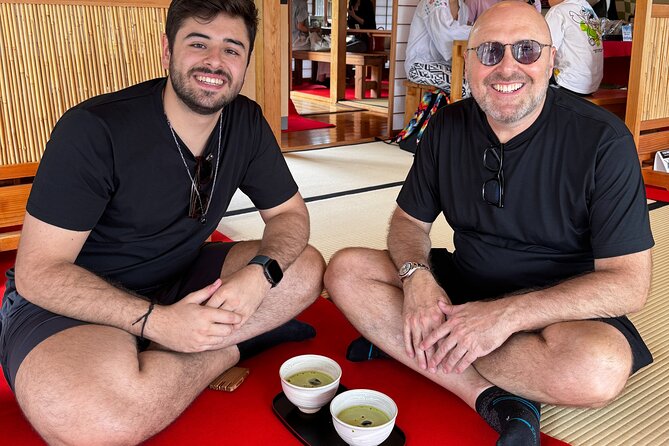
- Fresh seafood is the main event: Choose and pay for sushi, fatty tuna, seafood rice crackers, tuna skewers, eel, scallops, crab, and other market foods as you go.
- The tour starts with culture: Tsukiji Hongwanji Temple gives you a striking first stop before the food stalls take over.
- A guide makes the market easier: Haru, Toko, and Ryo are among the guides associated with this experience, though your assigned guide can vary.
- Small groups keep it personal: The tour accepts no more than 10 people, leaving more room for questions and practical help.
- It fits a morning well: The 2-hour-30-minute schedule works nicely before another Tokyo activity.
- Budget for extra food: The $42 tour fee covers the guide and listed admissions, but every bite and drink costs extra.
Starting at Tsukiji Hongwanji Temple
The meeting point is at 3-chōme-9-10 Tsukiji, in Tokyo’s Chuo City. The walk begins at Tsukiji Hongwanji Temple, an unusual building that gives the morning a useful change of pace before you enter the market streets.
This stop is included in the tour, and your local Japanese guide explains the temple’s place in the area. It is not simply a quick photo stop. You get an introduction to Tsukiji’s culture before focusing on seafood, shops, and eating.
I like this opening because it helps prevent the tour from becoming just a sequence of snacks. The temple gives you a little context and lets you see a different side of the neighborhood. If your main goal is to eat as much as possible, though, this portion uses time that could otherwise go toward more stalls.
The starting area is close to public transportation, which matters in Tokyo. Give yourself enough time to reach the meeting point, especially if you are still learning the subway system. One family had trouble finding the right accessibility exits, and the guide waited and adjusted the plan. That is useful evidence of the kind of practical support a small group can provide, but you should still check your route before setting out.
More Food Market Tours in Tokyo
- Tokyo: Shinjuku Food Tour (13 Dishes at 4 Local Eateries)
★ 5.0 · 6,603 reviews - Tokyo Tsukiji Fish Market Food and Culture Walking Tour
★ 5.0 · 3,184 reviews - Tokyo: Shinjuku Food Tour (15 Dishes and 4 Eateries)
★ 4.9 · 2,033 reviews
One and a half hours in the Tsukiji fish market
The first market section lasts about 1 hour and 30 minutes. Your guide introduces Tsukiji’s role in Tokyo’s seafood trade and explains how the market changed after the famous wholesale operations moved away from this area.
The experience is focused on the market district open to the public, not on a guaranteed tuna auction viewing. The description refers to Tsukiji as the place where famous tuna auctions occurred, but this activity is a walking and food tour. You should book it for market culture and eating, not as an auction visit.
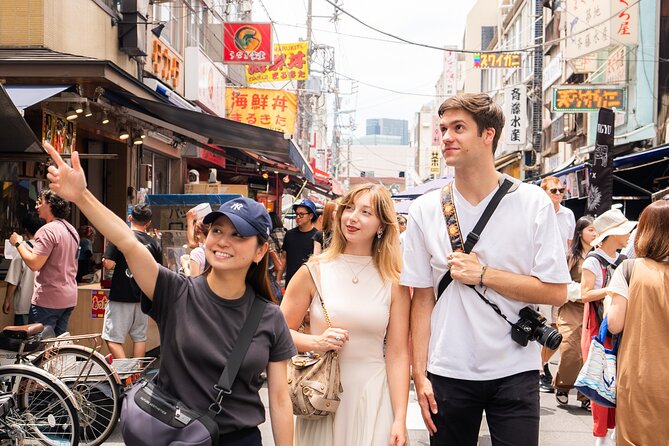
This is where the English-speaking guide earns the $42 fee. Tsukiji can feel like a maze of narrow lanes, counters, signs, queues, and small shops. A local guide can point out what a stall sells, explain food customs, and help you decide how to spend your extra food budget.
Haru has been especially useful for this kind of visit. He has waited in line at a popular tuna restaurant while guests looked around, allowing the group to use its time more sensibly. That does not mean every guide will offer the exact same queue arrangement, but it shows why a guide can be more helpful than a self-guided stroll.
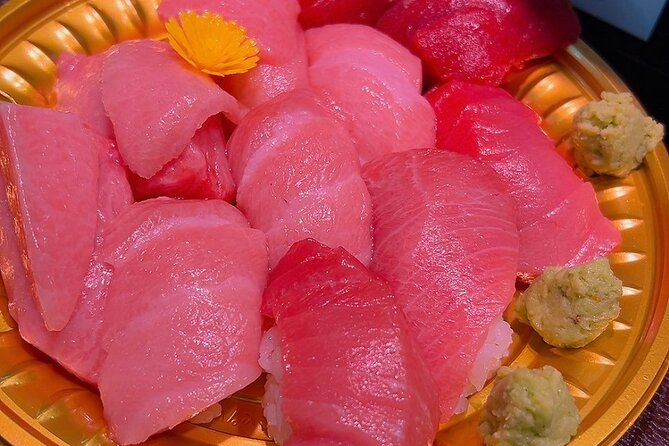
You may encounter several forms of seafood during this section. The food examples connected with the tour include super-fresh tuna sashimi in three fatty cuts, seafood rice crackers, tuna kebabs, giant crab, eel, and scallops. The exact selection depends on what is available at the stalls and what you choose to buy.
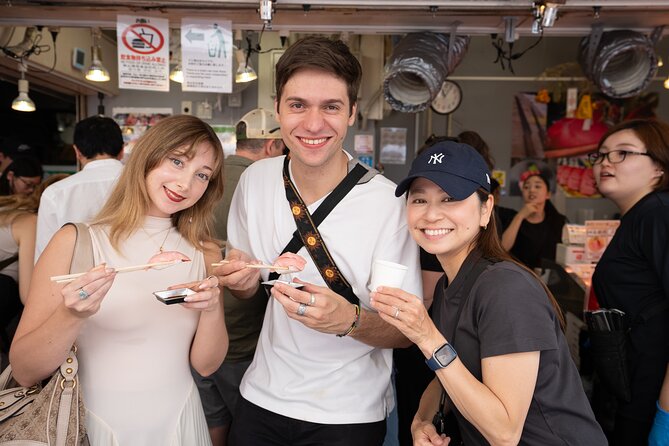
The tasting style is flexible. You can purchase one small item or build a full seafood meal. That freedom is good for mixed groups. One person can try sashimi while another chooses a cooked snack, and children do not have to eat raw fish. It also means the $42 price does not tell you the full cost of the morning.
Choosing your own bites at Tsukiji Jogai Market
The second stop is Tsukiji Jogai Market, visited for about one hour. This is the public outer market, lined with shops and stalls selling seafood, Japanese street food, and ingredients connected with the city’s food culture.
The guide leads you through the stalls rather than placing a fixed meal in front of you. You can stop for a taste, ask what something is, and decide if it deserves your money. For first-time visitors, that is often the best way to handle Tsukiji. You get choice without having to decode every sign alone.
I would arrive hungry but not ravenous. The market offers enough tempting options that you may want to sample several small portions instead of committing to one large dish. At the same time, because food is extra, decide in advance how much you want to spend. A few premium seafood choices can quickly push your morning cost above the tour price.
The market is also a place to watch how food is sold. You can see the care taken with seafood, the quick pace of service, and the mix of locals and visitors choosing breakfast or lunch. Your guide’s commentary connects those details to Japanese culinary customs, which gives each bite more meaning than it would have on its own.
There is no promise of a particular restaurant, dish, or queue-free entry. Popular places may require waiting. Haru has helped by standing in line for guests, but you should treat that as guide-dependent rather than a guaranteed feature. A small group is still useful here because it is easier to stop, regroup, and ask questions than it would be with a large coach party.
What the guides add to the morning
The tour is led by a local Japanese English-speaking guide. The guide names appearing in the experience feedback include Haru, Toko, and Ryo, but the person assigned to your date may be different.
Haru is described as friendly, flexible, and good at helping groups find favored dishes. Toko has been praised for patience with children. Ryo’s approach suits people who want to focus on eating rather than receive a long formal lecture. These differences matter because the best guide for your group depends on your interests.
You should tell the guide early if your group has children, older relatives, dietary concerns, or mobility needs. The small format gives the guide a better chance to adjust, and one multigenerational group received help after needing different subway exits. Still, the supplied information does not promise a fully accessible route or specific dietary substitutions, so ask before booking if those points are essential.
The guide also helps with social details. Market shops may have limited space, and eating areas can be compact. A local escort can explain where to stand, how to order, and how to avoid slowing a stall’s service. That is a modest service, but it can make the morning feel far less awkward.
Same city, a completely different kind of day:
- Mt Fuji and Hakone 1-Day Bus Tour Return by Bullet Train
★ 5.0 · 26,383 reviews - 1-Day Tokyo Bus Tour
★ 5.0 · 14,250 reviews - Tokyo: TOKYO SKYTREE® Admission ticket
★ 4.5 · 11,192 reviews - Tokyo: teamLab Planets TOKYO Digital Art Museum Entry Ticket
★ 4.6 · 9,779 reviews
Is $42 a fair price?
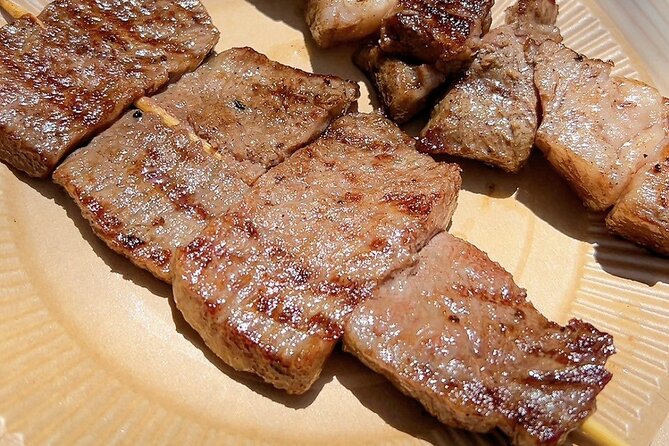
At $42 per person, this is not a cheap breakfast. It is a guiding fee, not a food package. The price includes the English-speaking local guide, the cultural and market explanation, and admission arrangements for Tsukiji Jogai Market and Tsukiji Hongwanji Temple. It does not include any food or drinks.
I think the value is strongest if you are new to Tokyo, unsure what to order, or eager to try several market foods without spending your first morning wandering in circles. The guide’s help with popular stalls and queues can also save time, which is important during a short visit.
The value is weaker if you already know Tsukiji well and are comfortable choosing food independently. You can control your spending more easily on your own, and you may prefer to use the full morning for eating rather than explanations and temple context.
Think of the $42 as payment for orientation and local assistance. Then add a separate food budget. The tour allows you to eat as much or as little as you like, which is better than paying for a fixed meal you may not want, but it makes your total cost less predictable.
Timing, pace, and group size
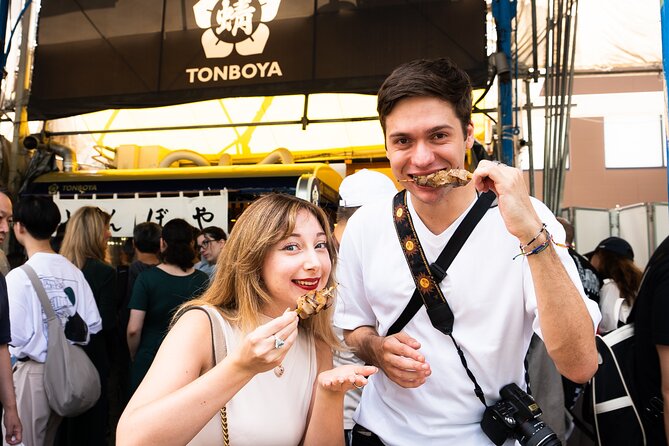
The total duration is about 2 hours and 30 minutes. That is long enough to cover the temple, the main market area, and the Jogai Market without taking over your entire day.
The morning timing is one of the strongest practical features. You can eat early, finish around the middle of the day, and still reach another Tokyo sight or neighborhood. Since the tour ends back at the meeting point, you do not need to arrange a separate pickup or find your way to an unfamiliar final stop.
The group maximum is 10 people. That is small enough for questions and easier movement through tight market lanes. It also helps the guide keep track of the group when people stop to look at food.
Do not expect the pace of a private tour. Ten people still need to agree on stops, and a popular stall may slow everyone down. If your priority is a very specific restaurant or a long sit-down meal, confirm the plan with the guide at the start rather than assuming it is included.
Who will enjoy this Tsukiji experience?
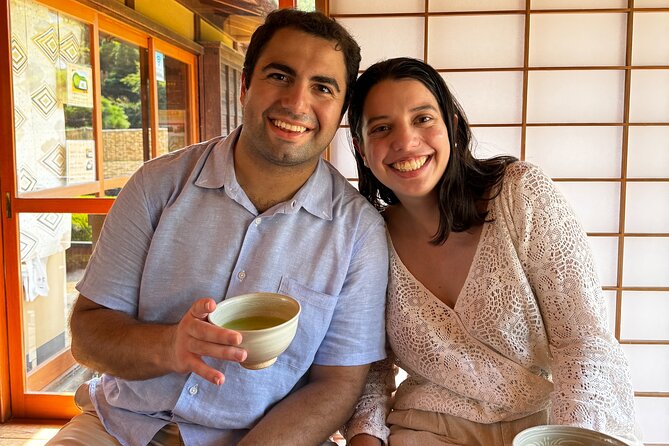
I would recommend this walk to first-time Tokyo visitors who want an easy introduction to Japanese seafood. It is also a good fit for couples, families, and small groups with different levels of food confidence.
Families may find the format particularly useful. The food choices range from raw tuna to cooked seafood snacks, and Toko has been patient with children. The flexible purchasing system means parents can decide what each child should try instead of accepting a fixed tasting menu.
Food-focused visitors should also consider it. The strongest praise goes to the guide’s ability to find good tuna and other market specialties. If you want practical recommendations and bomb eats more than a lengthy lecture, a guide such as Ryo may suit your style.
This is less suitable for anyone who wants a formal cooking class, an included meal, or a visit to a tuna auction. It is also not the right choice if you dislike seafood or do not want to buy food as you walk.
Practical details before you book
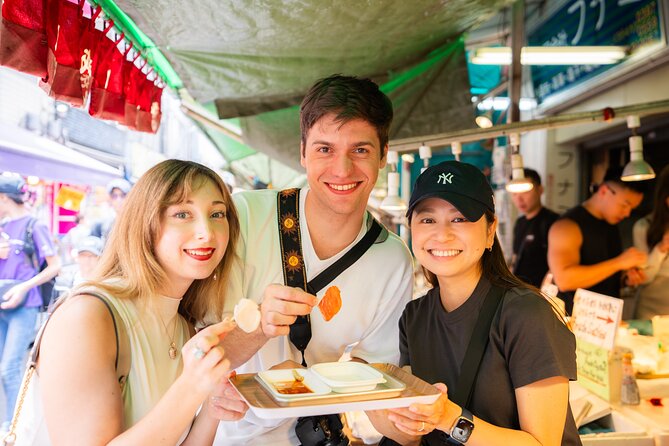
Confirmation is provided when you book, and the experience is near public transportation. Most people can participate, but the route’s exact accessibility details are not provided. If you use a mobility aid or need a particular subway exit, contact the provider before the day of the tour.
Wear shoes suitable for walking and keep your belongings manageable. The market has narrow spaces, and you may need both hands free for eating or handling purchases. Since food and drinks are separate, carrying a little extra spending money is sensible.
The tour depends on good weather. If poor weather cancels it, you are offered another date or a full refund. It also requires a minimum number of participants. If that minimum is not met, you can choose another date or experience, or receive a full refund.
Free cancellation is available until 24 hours before the start time. Cancel later than that and you will not receive a refund. Changes made within 24 hours are not accepted, so check your plans carefully before the cut-off.
Should you book the Tsukiji market walk?
Book it if you want help finding and ordering seafood, prefer a small group, and like the freedom to choose your own food. The guide support is the real reason to pay the $42 fee, especially if you want to try fatty tuna, grilled seafood, or market snacks without spending your morning guessing.
Skip it if you want food included, a fixed low total price, or a guaranteed tuna auction visit. For everyone else, this is a useful short introduction to Tsukiji, with enough culture to add context and enough free choice to keep the meal your own.
FAQ
How long is the Tsukiji seafood tour?
The experience lasts approximately 2 hours and 30 minutes.
What places are visited?
The tour visits Tsukiji Hongwanji Temple, Tsukiji Fish Market, and Tsukiji Jogai Market.
Is food included in the $42 price?
No. Food and drinks are not included and must be purchased separately.
How large is the group?
The activity has a maximum of 10 participants.
Is the tour conducted in English?
Yes. It includes a local Japanese English-speaking guide.
Where does the tour start?
It starts at 3-chōme-9-10 Tsukiji, Chuo City, Tokyo 104-0045, Japan.
Where does the tour end?
The experience ends back at the meeting point.
Can I cancel for a full refund?
Yes. You must cancel at least 24 hours before the start time for a full refund.
What happens if bad weather cancels the tour?
You will be offered a different date or a full refund.
More Shopping Tours in Tokyo
- Tsukiji Fish Market: Street Food & Culture Walking Tour
★ 5.0 · 669 reviews - Tsukiji Fish Market Small-Group Food Walking Tour
★ 5.0 · 621 reviews - Tokyo: Tsukiji Fish Market Sushi Making Class with Pro Chef
★ 4.9 · 506 reviews - Tokyo Food Tour Taste Fresh Delights at Tsukiji Market
★ 5.0 · 429 reviews
More Markets in Tokyo
- Tokyo: Tsukiji Fish Market Food and Walking tour
★ 5.0 · 1,724 reviews - Tokyo: Tsukiji Fish Market Guided Walking Tour
★ 4.9 · 1,397 reviews - Tsukiji Fish Market Guided Tour and Sushi Making with Pro Chef
★ 5.0 · 775 reviews - Tokyo: Tsukiji Fish Market Food and Culture Walking Tour
★ 4.7 · 757 reviews
Just added around Tokyo
- Private Memorable Tokyo Tour with English Speaking Driver★ 5.0 · 30 reviews
- Tokyo Photography Masterclass – Private Photography Lesson★ 5.0 · 25 reviews
- Private Tokyo Custom Full-Day Tour by Chartered Vehicle★ 5.0 · 16 reviews
- Private Sightseeing to Mt Fuji and Hakone with English Driver★ 5.0 · 51 reviews
- Private Mt. Fuji Day Trip from Tokyo with English-Speaking Driver★ 5.0 · 33 reviews
- 4 Day Tour – Mount. Fuji, Tokyo, Hakone, Kamakura and Yokohama★ 5.0 · 19 reviews
- Private Unforgettable Mt Fuji Tour with English Speaking Driver★ 5.0 · 142 reviews
- Private Tokyo Food Tour – A Journey Through Time Through Food★ 5.0 · 36 reviews
Food Market Tours, compared.
Shinjuku Food Tour (13 Dishes at 4 Local Eateries)
Read our review →
Tokyo Tsukiji Fish Market Food and Culture Walking Tour
Read our review →
Shinsekai Food Tour with 13-15 Dishes at 5 Eateries
Read our review →
Osaka Food Tour: 13 Dishes at 5 Local Eateries
Read our review →
Shinjuku Food Tour (15 Dishes and 4 Eateries)
Read our review →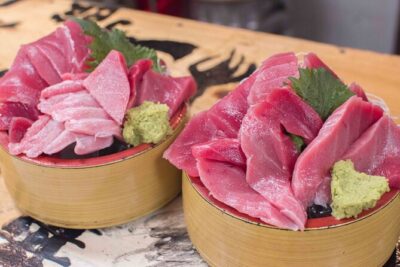
Best of Shinjuku: Izakaya Food Tour (4 Stops, 14+ Tastings)
Read our review →
Hungry Osaka Street Food Tour:15 Tastings & 3 Drinks with a Local
Read our review →
Browse the lists this tour appears in