
REVIEW · TEA CEREMONY EXPERIENCES
Tokyo: Tea Ceremony Experience
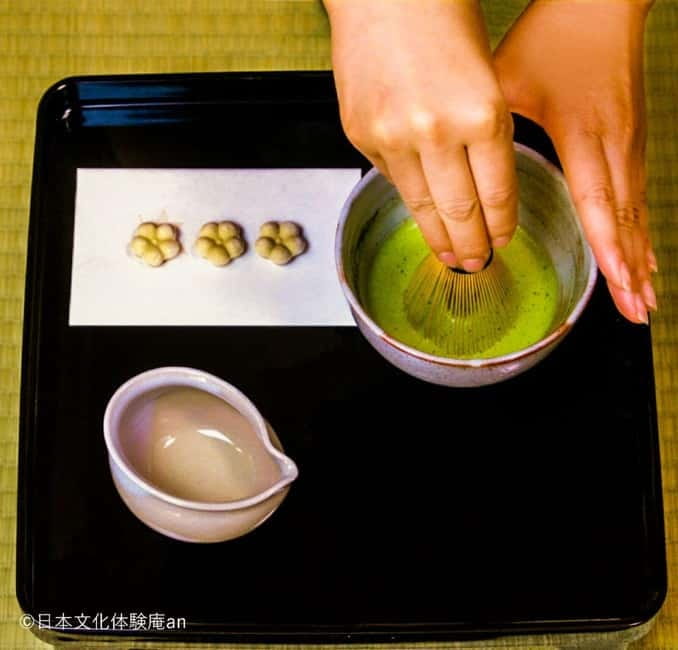
A small bowl of matcha can give your Tokyo day a welcome pause. At AN TOKYO Japanese Culture Experience, you receive a short introduction, watch a single-origin matcha grinding demonstration, then prepare your own tea and enjoy it with traditional ohigashi sweets.
I like the low price and the hands-on format. At about $7 per person, this is an easy way to try a real Japanese tea custom without giving half a day to a formal ceremony. I also like that you can book as one person or with a group, making it a handy stop during sightseeing.
The main consideration is language. The instructor is Japanese, and English translation is provided as much as possible if you request it in advance. The explanations may feel brief, and the 30-minute schedule leaves no room for late arrival.
In This Review
- Key points
- A short tea lesson in central Tokyo
- What happens during the 30 minutes
- Single-origin matcha and ohigashi sweets
- A casual approach to Japanese tea ceremony
- Why the $7 price works
- Language and the pace of instruction
- Timing, arrival, and the Tokyo day plan
- Who will enjoy this experience most
- Practical booking and cancellation details
- How it compares with a longer tea ceremony
- My take on the overall value
- Should you book this Tokyo tea experience?
- FAQ
- Where does the tea ceremony experience take place?
- How long does the activity last?
- What is included in the price?
- How much does the experience cost?
- Is matcha included?
- What are ohigashi sweets?
- Is the experience offered in English?
- Can I book as a solo participant?
- Can I cancel for a full refund?
- Is a completion certificate included?
Key points
- Single-origin matcha: You make and drink tea prepared with a specially selected single-origin matcha.
- Ohigashi included: Your tea comes with Japanese dry sweets designed to pair with matcha.
- A 30-minute format: The session is short enough to fit between other Tokyo plans.
- Hands-on preparation: You do not just watch a demonstration. You make your own matcha after the introduction.
- For solo visitors or groups: One person can book, and groups can join together.
- Low-cost cultural stop: At $7, it offers a simple way to add Japanese culture to a busy day.
A short tea lesson in central Tokyo
This experience is built around one simple idea: give you a friendly introduction to tea ceremony without requiring a long formal session. You arrive at AN TOKYO Japanese Culture Experience in Tokyo, on Honshu, and take part in a compact program that lasts about 30 minutes.
The pace matters. Tokyo sightseeing can mean long walks, crowded stations, and a steady list of temples, shops, and museums. A short tea session gives you a quiet break without forcing you to reorganize your whole day.
This is not presented as an extended ceremonial performance. Instead, you receive an explanation of tea, see how matcha is ground, prepare your own cup, and have time to eat and drink. The result is approachable and practical, especially if you have never taken part in a Japanese tea ceremony before.
The activity is called an experience of OTE-MAE, a term connected with the act of preparing and serving tea. You should expect a basic cultural introduction rather than a long study of tea schools, utensils, or ceremony rules.
More Tea Ceremony Experiences in Tokyo
- Matcha Making Class in Tokyo with Authentic Japanese Sweets Set
★ 5.0 · 744 reviews - Tokyo: Traditional Tea Ceremony with a Tea Master
★ 5.0 · 528 reviews - Tokyo: Matcha Making Experience with Mochi Sweets in Asakusa
★ 4.9 · 388 reviews
What happens during the 30 minutes
The schedule is divided into clear stages. The opening explanation covers the tea itself and the general idea behind the ceremony. This gives you enough background to understand what you are doing instead of simply copying movements without context.
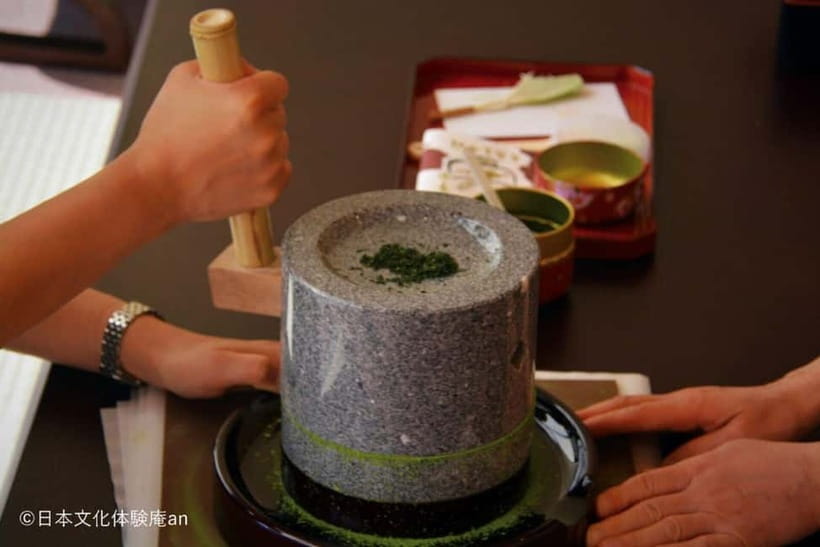
Next comes a demonstration of matcha grinding. This is a useful detail because matcha is not ordinary powdered green tea. The grinding step helps show how the tea is prepared before it reaches your bowl.
After the demonstration, you take part in the tea ceremony experience and make your own matcha. The hands-on part is the heart of the session. You get to see the process, follow the basic instructions, and drink tea that you prepared yourself.
The experience portion finishes at about the 20-minute mark. The remaining time is set aside for eating and drinking, with the full room departure planned for 30 minutes after the start. That gives you a little breathing space instead of ending the moment the tea is made.
There is also picture time during the program. If you enjoy recording small cultural moments from your trip, this allows you to take a photo before leaving. Keep in mind that the schedule is tight, so this is a quick picture opportunity rather than a long photo session.
Single-origin matcha and ohigashi sweets
The tea is one of the most appealing parts of this activity. You use a special single-origin matcha, which gives the session a more focused feel than simply ordering a green tea drink at a café.
Matcha has a strong taste that may be new to you. It can be earthy and pleasantly bitter, and the flavor is more concentrated than many loose-leaf teas. That is why the sweet served with it matters.
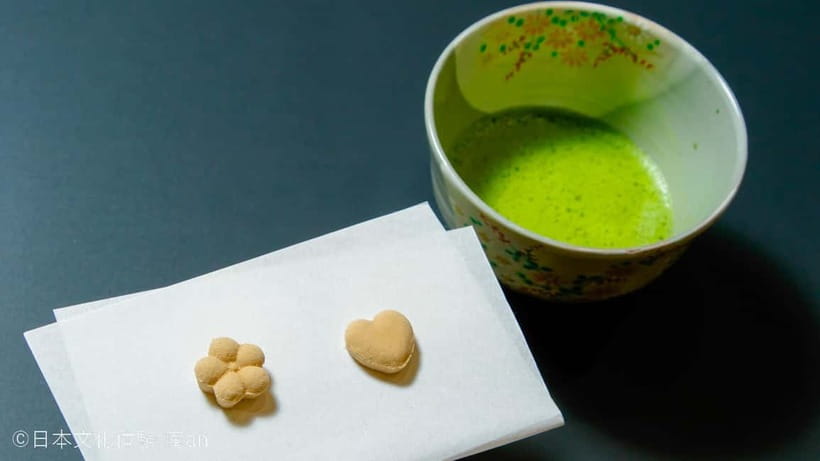
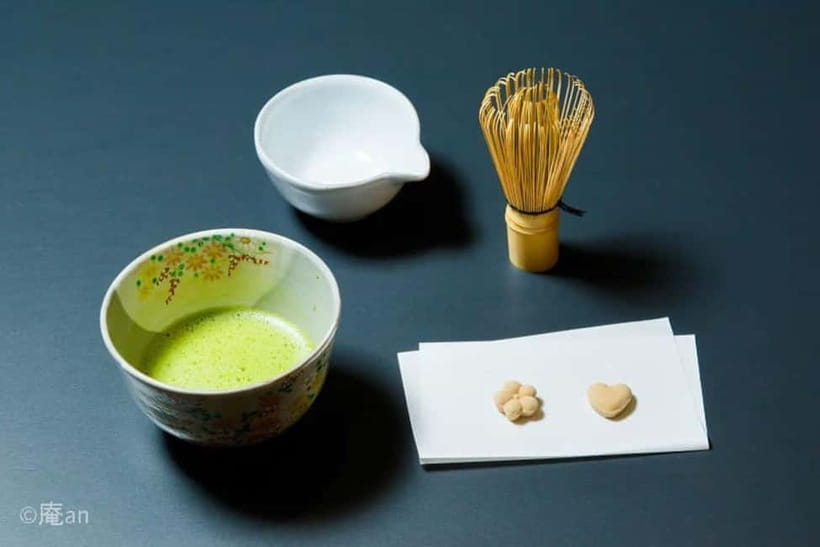
Ohigashi is a type of Japanese dry sweet traditionally served with tea. Its sweetness helps balance the matcha and gives you a small taste of the way tea and sweets are paired in Japanese culture. The sweet is included in the price, so you do not need to make an extra purchase to complete the experience.
I would approach this as a cultural tasting rather than a chance to customize a drink. The focus is on learning the basic preparation and enjoying the combination of matcha and ohigashi. If you already drink matcha, the single-origin tea may be the part that interests you most. If you are new to it, the sweet makes the first cup easier to appreciate.
A casual approach to Japanese tea ceremony
Formal tea ceremony can seem intimidating from the outside. There are precise movements, established manners, and a strong sense of tradition. This activity offers a more relaxed entry point.
You receive a brief lecture, but you are not expected to arrive with prior knowledge. The structure helps you understand the main actions before you try them yourself. That makes the experience suitable for a first introduction.
The word casual is important here. You can enjoy matcha while sightseeing, take part in the basic ritual, and continue with your Tokyo plans soon after. This is a good choice if you want a taste of Japanese culture but do not want a long, highly formal event.
The tradeoff is depth. Thirty minutes cannot cover every detail of tea ceremony or explain the differences among the many traditions found in Japan. If you want a long lesson in tea history, etiquette, or philosophy, you may find this format too brief. For a first look, though, the short length is a strength.
Same city, a completely different kind of day:
- Mt Fuji and Hakone 1-Day Bus Tour Return by Bullet Train
★ 5.0 · 26,383 reviews - 1-Day Tokyo Bus Tour
★ 5.0 · 14,250 reviews - Tokyo: TOKYO SKYTREE® Admission ticket
★ 4.5 · 11,192 reviews - Tokyo: teamLab Planets TOKYO Digital Art Museum Entry Ticket
★ 4.6 · 9,779 reviews
Why the $7 price works
At about $7 per person, this is one of the easier cultural activities to fit into a Tokyo budget. The price includes the tea ceremony experience, the matcha preparation, the demonstration, and the ohigashi sweet.
Value here comes from participation. You are not paying only to sit and watch someone else prepare tea. You make your own matcha and have time to drink it, which gives the session a personal element even though it is short.
The low cost also reduces the risk of trying something unfamiliar. If you are unsure whether a tea ceremony suits you, this is a modest commitment in both time and money. It can work well on a day when you have an open half-hour between larger attractions.
You should still keep the limits in mind. The price does not include a completion certificate. If you want one, it costs 300 JPY. For a nominative certificate, you need to provide your names in advance. Otherwise, a blank space will be left for the name.
Language and the pace of instruction
The listed language is Japanese. English translation is provided as much as possible if you would like it, but you need to contact the provider to request that help.
That makes advance communication useful. If you want to understand the explanation clearly, ask about English translation before the day of your visit. The activity is hands-on, so you may still be able to follow the basic motions even if the verbal explanation is quick, but language support can make the cultural details easier to catch.
The pace may feel brisk. One French participant described the explanations as fast but interesting, which is a fair way to think about the format. You receive the essentials, then move into the practical part of the session.
A short lesson is not necessarily a flaw. Some people prefer a clear introduction followed by action. Others will want more time for questions. If you are in the second group, prepare a few specific questions before you arrive and ask during the available time.
Timing, arrival, and the Tokyo day plan
The experience operates from 10:00 to 17:00. Reservations received after 17:00 are processed the next day, so late-evening booking requests may not receive an immediate response.
The session itself lasts 30 minutes, with starting times subject to availability. Since the program has a fixed sequence, arrive with enough time to find the meeting point and settle in.
The provider does not hold the event for late arrivals. This is especially important in Tokyo, where a delayed train, a wrong exit, or a slow transfer can quickly eat up a half-hour. Plan conservatively rather than aiming to arrive at the exact starting minute.
One useful detail is that the instructor showed kindness to a participant who had transportation problems and arrived late. That suggests some human flexibility may be possible in an unusual situation, but you should not count on the session being delayed. The official rule is clear: the event will not be held to accommodate delays.
The location is AN TOKYO Japanese Culture Experience, at coordinates 35.6916541, 139.7715022. Use the exact meeting point when planning your route, especially if you are moving between Tokyo attractions on a tight schedule.
Who will enjoy this experience most
I would recommend this tea session to several kinds of visitors:
- First-time visitors to Japan who want a simple cultural activity
- People who enjoy matcha or want to taste it for the first time
- Solo visitors looking for an activity that accepts individual bookings
- Couples, families, and groups seeking a short shared experience
- Budget-conscious visitors who want hands-on culture for about $7
- People with a busy Tokyo schedule and only 30 minutes available
It is also a reasonable choice for families, with one special condition. Children under two who sit on a parent’s lap are free. The information does not provide broader age guidance, so families with older children should confirm the booking details before reserving.
I would be less likely to recommend it to someone seeking a grand, formal tea ceremony with a long explanation and elaborate etiquette. The program is compact and introductory. Its strength is ease, not ceremony on a large scale.
Practical booking and cancellation details
You can reserve now and pay later, which helps if your Tokyo schedule is still changing. Free cancellation is available up to 24 hours in advance for a full refund.
Once a cancellation fee has been incurred, changing the reservation date or time can bring another specified fee. Check the conditions before making a last-minute change, and remember that requests made after 17:00 are treated as arriving the next day.
If you cancel, the provider does not compensate you for travel expenses to the venue. That is another reason to leave plenty of time for transportation and avoid building your plans around a rushed connection.
Only people taking part in the activity may enter. Someone accompanying you but not participating will not be allowed inside, so book for everyone who plans to attend. Children under two sitting on a parent’s lap are the stated exception to the normal charge.
How it compares with a longer tea ceremony
This 30-minute format is best understood as a first taste. You see the tea preparation, receive a short explanation, make matcha, eat ohigashi, and leave with a basic sense of how tea is enjoyed.
A longer ceremony would give you more time to study the gestures, setting, etiquette, and meaning behind the customs. This activity does not promise that level of detail. It keeps the focus on participation and refreshment.
That can be exactly right during a packed Tokyo visit. You may already have a shrine, a museum, a shopping district, and dinner reservations on your calendar. A half-hour activity fits into that kind of day far more easily than a lengthy ceremony.
The best way to judge it is to ask yourself what you want from the experience. If you want to understand the basic process and drink a carefully selected matcha, the price is strong. If you want a serious lesson in tea practice, look for a longer program.
My take on the overall value
The strongest points are the low price, the short schedule, and the fact that you prepare your own drink. The included ohigashi sweet adds a small but meaningful cultural touch, and the single-origin matcha gives the tasting a clear focus.
The experience also earns credit for being friendly to different kinds of plans. You can come alone or with a group, book now and pay later, and request English translation. The high marks for value make sense when you consider how little time and money are required.
The weaker point is the limited depth. The explanations can move quickly, and Japanese is the main language. You need to arrive promptly, and the schedule is not designed for delays or long conversations.
Still, those limits are tied to the format rather than a surprise. This is a short cultural stop, not an all-afternoon class. If you judge it on that basis, it offers a pleasant and inexpensive way to add matcha to your Tokyo plans.
Should you book this Tokyo tea experience?
Book it if you want a quick, affordable, hands-on introduction to Japanese tea. The single-origin matcha, ohigashi sweet, grinding demonstration, and chance to make your own cup give you more than a standard café stop.
Skip it if you need extensive English instruction, a long formal ceremony, or a relaxed schedule that can absorb a late arrival. For everyone else, especially first-time visitors with a busy day, this 30-minute session is an easy cultural add-on with good value.
FAQ
Where does the tea ceremony experience take place?
It takes place at AN TOKYO Japanese Culture Experience in Tokyo, Japan. The meeting point coordinates are 35.6916541, 139.7715022.
How long does the activity last?
The full experience lasts 30 minutes. The tea ceremony portion finishes at about 20 minutes, followed by eating and drinking time before you leave.
What is included in the price?
The price includes the OTE-MAE Japanese tea ceremony experience, matcha, and Japanese ohigashi sweets.
How much does the experience cost?
The listed price is $7 per person.
Is matcha included?
Yes. You watch a matcha grinding demonstration and make your own matcha during the experience.
What are ohigashi sweets?
Ohigashi are Japanese dry sweets served with tea. They are included with the matcha during this activity.
Is the experience offered in English?
The instructor’s language is Japanese. English translation is provided as much as possible if you request it by contacting the provider.
Can I book as a solo participant?
Yes. The experience is available for one person or for a group.
Can I cancel for a full refund?
You can cancel up to 24 hours in advance for a full refund. Cancellation fees apply after that point, and changing the date or time after a fee is incurred may involve an additional specified charge.
Is a completion certificate included?
No. A completion certificate costs 300 JPY. If you want a certificate with your name, provide the names in advance. Otherwise, the name section will be left blank.
Just added around Tokyo
- Private Memorable Tokyo Tour with English Speaking Driver★ 5.0 · 30 reviews
- Private Tokyo Custom Full-Day Tour by Chartered Vehicle★ 5.0 · 16 reviews
- Private Sightseeing to Mt Fuji and Hakone with English Driver★ 5.0 · 51 reviews
- Tokyo Photography Masterclass – Private Photography Lesson★ 5.0 · 25 reviews
- 4 Day Tour – Mount. Fuji, Tokyo, Hakone, Kamakura and Yokohama★ 5.0 · 19 reviews
- Private Mt. Fuji Day Trip from Tokyo with English-Speaking Driver★ 5.0 · 33 reviews
- Private Unforgettable Mt Fuji Tour with English Speaking Driver★ 5.0 · 142 reviews
- Private Tokyo Food Tour – A Journey Through Time Through Food★ 5.0 · 36 reviews
Tea Ceremony Experiences, compared.

Tea Ceremony in a Traditional Tea House in Kiyomizu
Read our review →

World Heritage Kyoto & Nara Uji Authentic Matcha Experience
Read our review →
Browse the lists this tour appears in