
REVIEW · KIMONO & CULTURE EXPERIENCES
Tokyo: Samurai Sword Academy in the Hometown of the Last Samurai
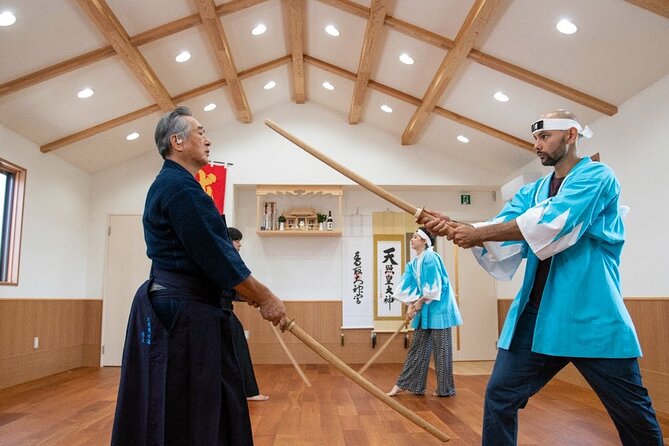
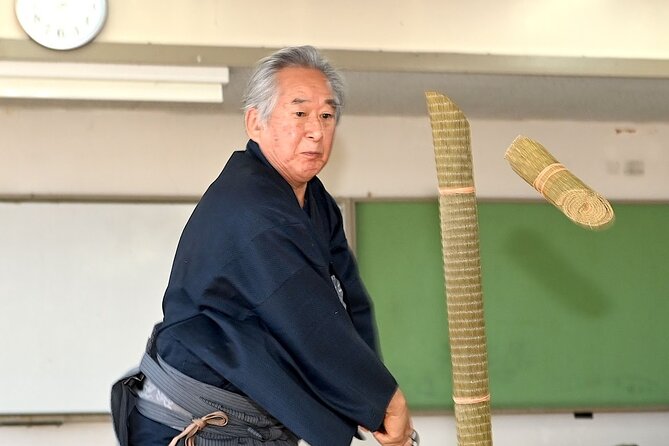
The most unusual part of this Tokyo activity is that you practice Tennen Rishin-ryu swordsmanship in a working dojo, not a stage set made for tourists. In Hino, the home of the Shinsengumi, Masao Inoue leads the session, drawing on his family connection to Genzaburo Inoue, one of the group’s executives.
I like two things right away: the group is capped at four people, and you get to handle a Japanese sword while learning forms, etiquette, and basic posture. The two-hour format also keeps the lesson focused. The main consideration is that this is a physical martial arts session, not a passive cultural show, so you should have moderate fitness and be ready to follow instructions carefully.
In This Review
- Key points at a glance
- Why Hino matters to this sword lesson
- Starting at the Genzaburo Inoue Shiryokan
- Learning the basics of Tennen Rishin-ryu
- Handling a Japanese sword
- What the two-hour schedule means
- The value of the $118.60 price
- Who should book this experience
- Practical details before you go
- Should you book the Hino sword academy?
- FAQ
- Where does the swordsmanship experience take place?
- What time does the activity start?
- How long does the experience last?
- How many people can join the session?
- Who leads the swordsmanship experience?
- Is English guidance available?
- What will I learn during the session?
- What level of fitness is required?
- Can I cancel for a full refund?
Key points at a glance
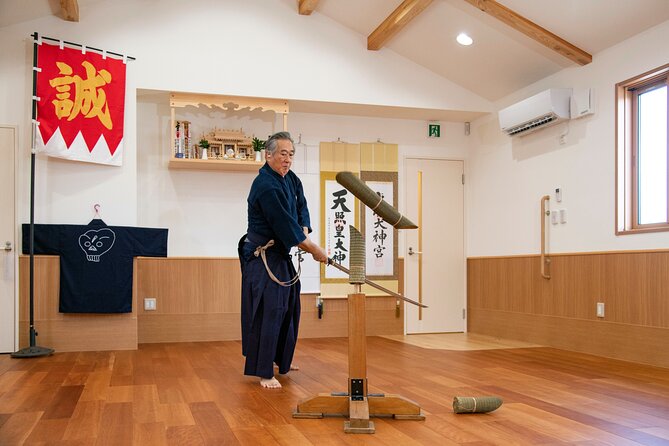
- Practice in Hino, the Shinsengumi’s hometown: Learn the sword style associated with the group known as the Shogun’s Last Samurai.
- Train with a family connection: Masao Inoue, descendant of Shinsengumi executive Genzaburo Inoue, leads the program.
- Handle a Japanese sword: The session covers sword posture, forms, and the samurai meaning attached to the weapon.
- Small maximum group of four: This gives the lesson a more personal feel than a large demonstration.
- Possible live-blade test cutting: A supplied Japanese review describes instruction in shinken test cutting, along with etiquette and forms.
- Two hours at 1 p.m.: The activity begins at the Genzaburo Inoue Shiryokan in Hino and finishes back at the meeting point.
Why Hino matters to this sword lesson
Tokyo is usually sold through neon, shopping streets, temples, and food markets. Hino offers a different angle. The town is tied to the Shinsengumi, the late Edo-period swordsmen who became known as one of the strongest fighting groups of their era.
The Tennen Rishin-ryu style was practiced by swordsmen from Hino who later formed the Shinsengumi. That connection gives this lesson a clear sense of place. You are not simply taking a generic samurai class somewhere in Tokyo Prefecture. You are learning the tradition in the town linked to the people who made it famous.
The historical setting matters because swordsmanship here is presented as a living practice. The style began in the Edo period and is still practiced at the Tennen Rishin-ryu Hino Dojo. That continuity is the heart of the program. You get a short introduction to a tradition that has survived beyond the age when samurai carried swords in daily life.
Do not expect a broad tour of Hino or a long lecture on Japanese history. The activity is built around practice. The setting and family connection provide the context, then the lesson puts your attention on movement, conduct, and control.
More Kimono & Culture Experiences in Tokyo
- Tokyo: Samurai Ninja Museum Guided tour and Experience
★ 4.6 · 1,010 reviews - Tokyo: Samurai Sword & Archery Class from Samurai Descendant
★ 5.0 · 603 reviews - Best Samurai Experience in Tokyo
★ 5.0 · 458 reviews
Starting at the Genzaburo Inoue Shiryokan
The meeting point is the Genzaburo Inoue Shiryokan at 4 Chome 1112 Hinohonmachi, Hino, Tokyo 191-0011. The listed start time is 1 p.m., and the activity ends back at this same meeting point.
The named location is important because Genzaburo Inoue was a Shinsengumi executive and an ancestor of Masao Inoue, who leads the experience. Even before the lesson begins, the venue connects the practical training to a particular person and place rather than to a general samurai theme.
You should allow enough time to reach Hino and find the meeting point. The activity is listed as being near public transportation, which makes it possible to reach without arranging a private transfer. Still, the provided details do not give a train station, walking time, or route instructions, so check the final booking information closely before setting out.
The small group limit of four is a real advantage here. A sword lesson depends on seeing the instructor, correcting your stance, and keeping a safe distance from other people. Four participants should make the space easier to manage than a large class, though the group may still include people with different levels of experience.
Learning the basics of Tennen Rishin-ryu
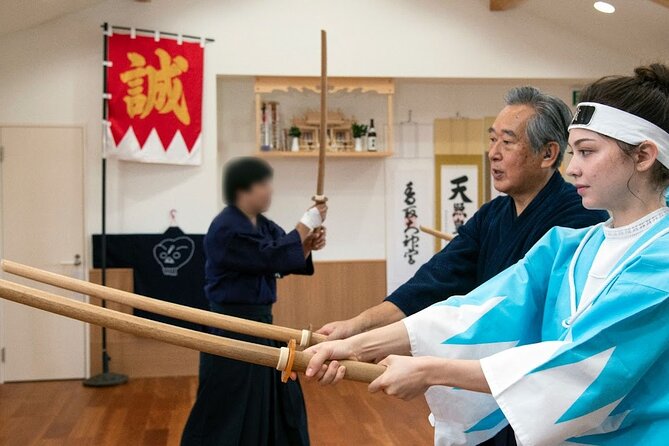
The core of the session is an introduction to the basic forms of Tennen Rishin-ryu. You learn how to stand, hold the sword, and move through the forms with care. The program also includes samurai etiquette, which makes the lesson about discipline and conduct as much as about cutting or striking.
That distinction is worth keeping in mind. A short class cannot turn you into a trained swordsman. Its value is in giving you a direct sense of how the art is practiced, including the precision and seriousness expected in a dojo.
Masao Inoue leads the experience. His family connection to Genzaburo Inoue gives the lesson a personal link to the Shinsengumi, but the session still depends on instruction rather than storytelling alone. You will be expected to listen, copy the movements, and repeat the forms under supervision.
English guidance is provided by Yu Ma, according to the supplied activity details. That should make the class easier to follow for English-speaking participants, especially when instructions involve posture, sequence, and safety. Sword practice is not an activity where you want to rely on guessing or watching only from a distance.
The lesson may feel formal at first. That is part of its character. The supplied Japanese account describes etiquette, sword positioning, kata, and test cutting, with the instructor teaching each part carefully. You should expect a serious tone, but not assume that seriousness means the session is unfriendly. The practical aim is to help you learn safely and enjoyably.
Handling a Japanese sword
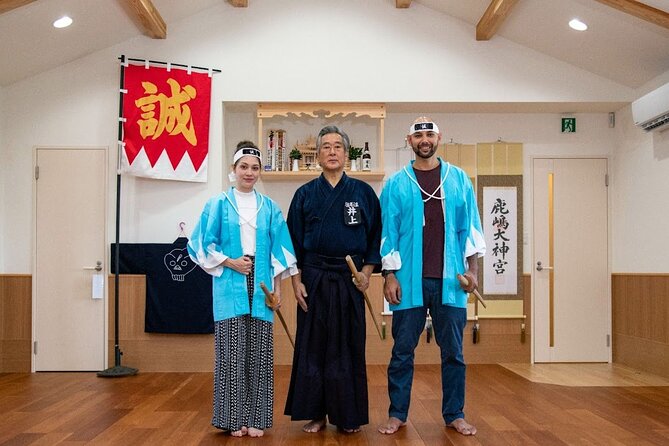
The chance to handle a Japanese sword is the feature that will matter most to many people booking this activity. The sword is treated as more than a prop. The program presents it as a symbol of the samurai spirit and asks you to approach it with the proper care.
You should not expect to pick up a sword and begin swinging. The lesson first establishes forms and handling. That order is sensible. Good posture and controlled movement are more important than theatrical action, especially in a real dojo.
The supplied information also describes shinken test cutting, meaning cutting with a live blade, as part of one participant’s session. This is a significant detail, and it sets the activity apart from a simple wooden-sword demonstration. At the same time, the general description emphasizes learning basic forms and handling a Japanese sword, so the exact scope of test cutting should be confirmed at booking if it is the deciding factor for you.
If live-blade practice is included in your session, the instructor’s control and your willingness to follow directions matter greatly. This is not an opportunity for improvisation. You should treat the sword, the dojo, and the instructions with full attention.
For some people, simply holding the sword and learning the correct stance will be enough. You get a physical connection to the tradition that a museum display cannot provide. For others, the test-cutting element may be the main reason to book. The activity gives both types of participant a useful way to judge the art, as long as expectations remain realistic.
Same city, a completely different kind of day:
- Mt Fuji and Hakone 1-Day Bus Tour Return by Bullet Train
★ 5.0 · 26,383 reviews - 1-Day Tokyo Bus Tour
★ 5.0 · 14,250 reviews - Tokyo: TOKYO SKYTREE® Admission ticket
★ 4.5 · 11,192 reviews - Tokyo: teamLab Planets TOKYO Digital Art Museum Entry Ticket
★ 4.6 · 9,779 reviews
What the two-hour schedule means
Two hours is a good length for this kind of introduction. It gives the instructor enough time to explain etiquette, demonstrate forms, supervise practice, and allow you to handle the sword without turning the class into an all-day commitment.
The 1 p.m. start also fits neatly into a day based in Tokyo. You could schedule this as an afternoon cultural activity, though the exact travel time from your earlier plans is not provided. Since the activity begins and ends at the same point, you do not need to arrange a separate pickup location.
The short duration has a limit. You will receive an introduction, not a full course in Tennen Rishin-ryu. If you already practice martial arts, you may find the basic forms familiar in structure but still demanding in detail. If you are completely new to swordsmanship, the session should give you a clear first look without requiring a long commitment.
I like the fact that the program does not try to pack in too many unrelated stops. The named stop is the Genzaburo Inoue Shiryokan, and the rest of the time is devoted to swordsmanship. That focus is a better use of two hours than rushing between several loosely connected attractions.
The value of the $118.60 price
At $118.60 per person, this is not a bargain-priced activity. You are paying more than you would for a standard museum admission or a brief public demonstration. The price needs to be judged against what is included: a two-hour lesson, a maximum of four participants, access to an actual dojo setting, instruction in a historic sword style, and the chance to handle a Japanese sword.
For a small-group activity led by Masao Inoue, the cost can make sense if you want personal instruction and a strong connection to the Shinsengumi. A larger group would spread the instructor’s attention more thinly. Here, the four-person maximum should give you more room to ask questions, repeat movements, and receive corrections.
The value is weaker if you are looking only for entertainment or a quick photo. The experience asks for concentration and participation. You will get more from it if you care about Japanese martial arts, samurai culture, or the way historic traditions are practiced today.
The booking pattern gives one practical clue: the activity is booked an average of 31 days ahead. That does not guarantee that every date sells out, but the small capacity means you should not assume you can arrange it at the last minute. If this is important to your Tokyo plans, booking well ahead is sensible.
Who should book this experience
I would recommend this activity to you if you have a serious interest in samurai culture or Japanese martial arts. It suits people who prefer learning a skill over watching a performance, and it gives repeat visitors to Tokyo a reason to see a less familiar part of the prefecture.
It is also a good match for anyone interested in the Shinsengumi. The Hino setting, the Tennen Rishin-ryu connection, and Masao Inoue’s family link to Genzaburo Inoue give the class a focused historical frame.
The activity may work well for couples or small groups of friends because the capacity is limited to four. One supplied account describes two people taking part together and finding the combination of etiquette, sword posture, kata, and test cutting both demanding and enjoyable. That suggests the program can work for companions who want to share an unusual activity rather than split up for separate lessons.
You should think twice if you want a relaxed, purely theatrical attraction. The description clearly says this is a real swordsmanship experience at an authentic dojo, not a tourist leisure activity. Moderate physical fitness is required, and the lesson’s tone may feel more disciplined than casual.
You should also be comfortable with close instruction and careful repetition. The experience is designed to transform your understanding through direct contact with the art, but that only works if you take the rules seriously.
Practical details before you go
The activity uses a mobile ticket, and booking confirmation is received at the time of booking. Keep the ticket accessible on your phone, then make your way to the stated meeting point in Hino.
The activity begins at 1 p.m. and lasts about two hours. It returns to the meeting point, so you can plan your next activity from there rather than arranging a second meeting place.
The listed address is in Hinohonmachi, Hino, Tokyo 191-0011, and the site is near public transportation. Since no exact station or walking directions are provided here, use the confirmed booking information for the final approach.
The cancellation rule is straightforward but firm. You can receive a full refund if you cancel at least 24 hours before the local start time. Cancellations or changes made within 24 hours are not accepted for a refund.
Should you book the Hino sword academy?
Book it if you want hands-on training with a real historical connection, not a staged samurai show. The small group, two-hour lesson, Hino setting, and Masao Inoue’s connection to Genzaburo Inoue give the activity a clear identity.
The $118.60 price is reasonable for a four-person maximum and a focused dojo lesson, but only if you value instruction and cultural context. You should confirm the exact sword and test-cutting arrangements if that detail is essential to your decision.
For a first look at Tennen Rishin-ryu, this is a concentrated and unusual choice. If you can make the 1 p.m. appointment in Hino, have moderate fitness, and are ready to follow formal instruction, I would put this on the shortlist for a distinctive Tokyo day.
FAQ
Where does the swordsmanship experience take place?
It takes place in Hino, Tokyo, at the Genzaburo Inoue Shiryokan, located at 4 Chome 1112 Hinohonmachi, Hino, Tokyo 191-0011.
What time does the activity start?
The listed start time is 1 p.m.
How long does the experience last?
The activity lasts approximately two hours.
How many people can join the session?
The maximum group size is four participants.
Who leads the swordsmanship experience?
Masao Inoue, chairman of the Tennen Rishin-ryu Hino Dojo and a descendant of Shinsengumi executive Genzaburo Inoue, leads the program.
Is English guidance available?
The activity information identifies Yu Ma as providing English guidance.
What will I learn during the session?
You will learn basic Tennen Rishin-ryu forms, sword posture, handling, and samurai etiquette. The supplied information also describes Japanese sword test cutting in one session.
What level of fitness is required?
You should have a moderate level of physical fitness.
Can I cancel for a full refund?
Yes. You can cancel at least 24 hours before the experience’s local start time for a full refund. Cancellations or changes made less than 24 hours before the start are not accepted for a refund.
Just added around Tokyo
- Private Memorable Tokyo Tour with English Speaking Driver★ 5.0 · 30 reviews
- Private Tokyo Custom Full-Day Tour by Chartered Vehicle★ 5.0 · 16 reviews
- Private Sightseeing to Mt Fuji and Hakone with English Driver★ 5.0 · 51 reviews
- Tokyo Photography Masterclass – Private Photography Lesson★ 5.0 · 25 reviews
- Private Mt. Fuji Day Trip from Tokyo with English-Speaking Driver★ 5.0 · 33 reviews
- 4 Day Tour – Mount. Fuji, Tokyo, Hakone, Kamakura and Yokohama★ 5.0 · 19 reviews
- Private Unforgettable Mt Fuji Tour with English Speaking Driver★ 5.0 · 142 reviews
- Private Tokyo Food Tour – A Journey Through Time Through Food★ 5.0 · 36 reviews
Kimono & Culture Experiences, compared.

Kyoto Geisha Walking Tour: Gion District & Hidden Gems
Read our review →
Gion Magical Night Walking Tour with Geisha Trivia
Read our review →
Gion Geisha District Walking Tour – Stories of Geisha
Read our review →
Best of Kyoto: Gion, Geisha, Pagodas & Cobblestones
Read our review →
Kyoto Gion Geisha District Walking Tour – The Stories of Geisha
Read our review →
Browse the lists this tour appears in