
REVIEW · KIMONO & CULTURE EXPERIENCES
Tokyo Samurai Experience: Kyudo (Archery) and Swordsmanship
The best part of this Asakusa experience is the quick change from sightseer to samurai. You put on a hakama outfit, learn how to hold a katana, and try Japanese kyudo, a form of archery that feels quite different from the Western version. The costume and photo opportunities make the hour memorable, while the friendly staff, including Coach Mori and Joe, keep the training easy to follow.
I like the mix of movement and culture. You get to handle both a traditional bow and a single-edged sword, and the short samurai-rank game gives the session a playful start. Japanese snacks and bilingual instruction add value, though one hour passes quickly, so this is an introduction rather than serious martial-arts training.
In This Review
- Key points to know before you book
- Changing into a samurai in Asakusa
- A short lesson before the weapons
- The samurai-rank mini-game
- Learning kyudo with a traditional Japanese bow
- Holding the katana and finding the pose
- Snacks and the social side of the hour
- What $96 means for the value
- Getting there and preparing for the session
- Who will enjoy this most
- Should you book the Asakusa samurai experience?
- FAQ
- Where does the Tokyo Samurai Experience take place?
- How long does the activity last?
- What activities are included?
- Is prior experience required?
- Is the activity conducted in English?
- Are traditional clothes included?
- What should I wear or bring?
- Is the experience suitable for children?
- Is the activity wheelchair accessible?
Key points to know before you book
- Hakama outfit in several sizes: Change into traditional Japanese clothing before training, with options for different heights and builds.
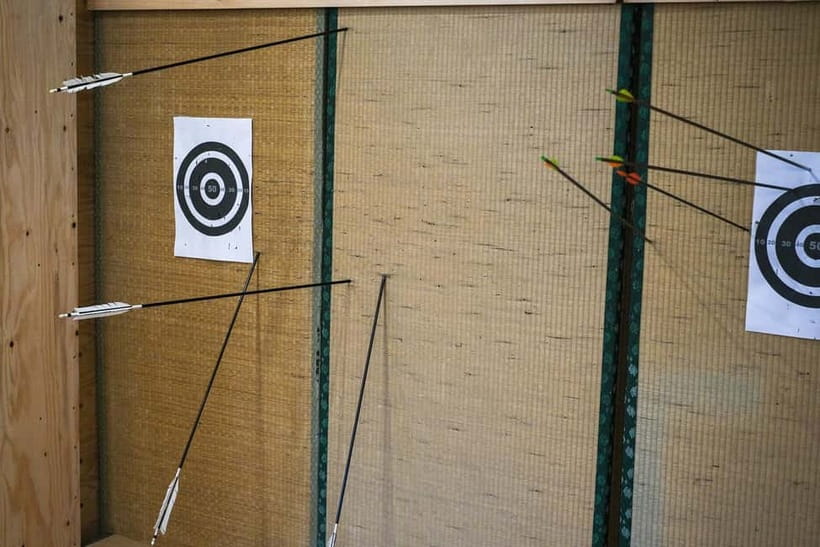
- Kyudo is not ordinary archery: You use a traditional Japanese bow and learn why its methods differ from Western target shooting.
- Katana instruction focuses on form: Practice the pose, grip, and way of presenting the sword rather than full combat.
- A samurai mini-game starts the session: Your result determines a playful rank, but everyone receives the real training afterward.
- English-speaking staff guide beginners: Coaches such as Mori and Joe explain the activity clearly and adjust to your level of English.
- Asakusa location and easy access: The activity takes place in the Heiwa Building at 2 Chome 6-11, with an elevator to the fifth floor.
Changing into a samurai in Asakusa
This is a compact, hands-on activity in the Asakusa district of Tokyo. You will find the BUB Activity Center at 2 Chome 6-11, Taito-ku, inside the Heiwa Building. Take the elevator to the fifth floor, and arrive about 10 minutes early so you are not trying to find the room at the last minute.
The experience begins with a change into a hakama set. The clothing is one of the strongest parts of the hour because it changes the mood right away. You are not simply watching a demonstration in modern clothes. You are preparing to take part, with the wide trousers and formal look associated with traditional Japanese dress.
Different heights and sizes are available, which makes the costume practical for a mixed group. You should still wear comfortable clothes underneath and comfortable shoes. The activity does not call for special equipment, but shoes that are easy to move in will help.
The costume also gives the staff a natural chance to take photos. Bring a phone or camera if you want your own record, and expect the staff to help take pictures during the poses. This matters for families and groups of friends, since the visual change is one of the clearest souvenirs you get from the experience.
More Kimono & Culture Experiences in Tokyo
- Tokyo: Samurai Ninja Museum Guided tour and Experience
★ 4.6 · 1,010 reviews - Tokyo: Samurai Sword & Archery Class from Samurai Descendant
★ 5.0 · 603 reviews - Best Samurai Experience in Tokyo
★ 5.0 · 458 reviews
A short lesson before the weapons
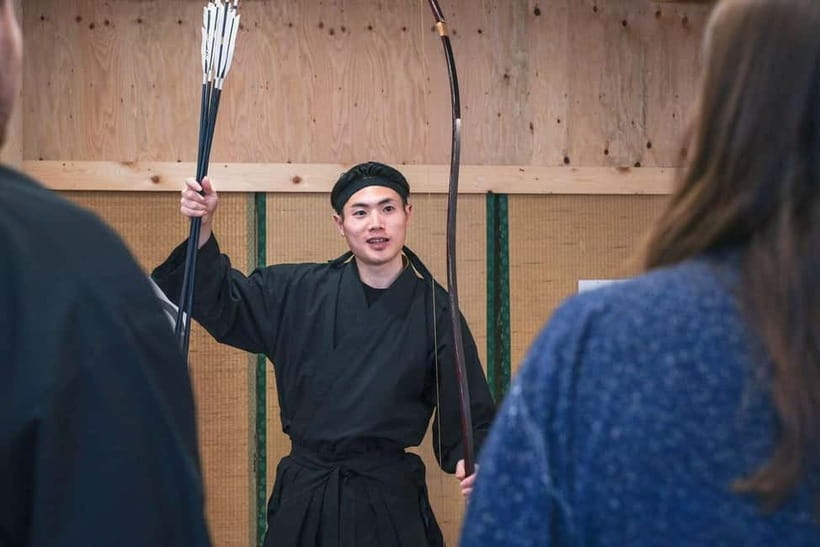
Before you pick up the bow or sword, the staff introduce basic samurai history and traditions. The lesson is designed for a fun activity, not an academic lecture, so you get just enough background to understand why posture, discipline, and rank matter in the session.
I like this order. Without any context, the equipment could feel like a costume prop. A short explanation gives the bow and katana a place in Japanese culture and helps you pay attention to the way each item is handled.
The English instruction is aimed at a wide range of ability. The activity is conducted in English, and the staff explain the steps in a simple way, adapting to your level of English knowledge. Coaches Mori and Joe are specifically named among the instructors associated with the experience, and the staff are described as patient, friendly, and clear.
That makes this a good choice if you want a cultural activity without needing Japanese. It also helps children and younger adults follow along. The session is family-friendly, and no previous experience is required.
The samurai-rank mini-game
The first active piece is a game that determines your samurai rank. You might win a high position, or you might not. Either way, the game is meant to get everyone involved before the proper instruction begins.
This small competition adds energy without making the activity too serious. It also gives you a simple way to understand the old rank structure used in the presentation. If you are visiting with friends, the game can become a light contest before the archery begins.
The important point is that losing does not remove you from the main activity. Everyone receives the training, so you do not need to be competitive to enjoy the session. The rank is a playful introduction, not a test of actual martial skill.
For parents, this structure is useful. Children can enjoy the game while still learning the basic ideas behind samurai culture. For adults, it keeps the opening from becoming a long talk. The hour moves forward quickly.
Learning kyudo with a traditional Japanese bow
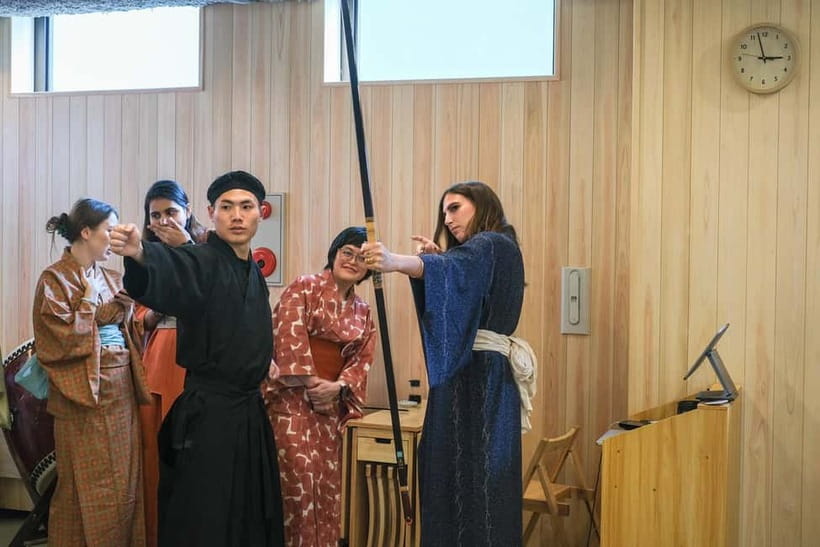
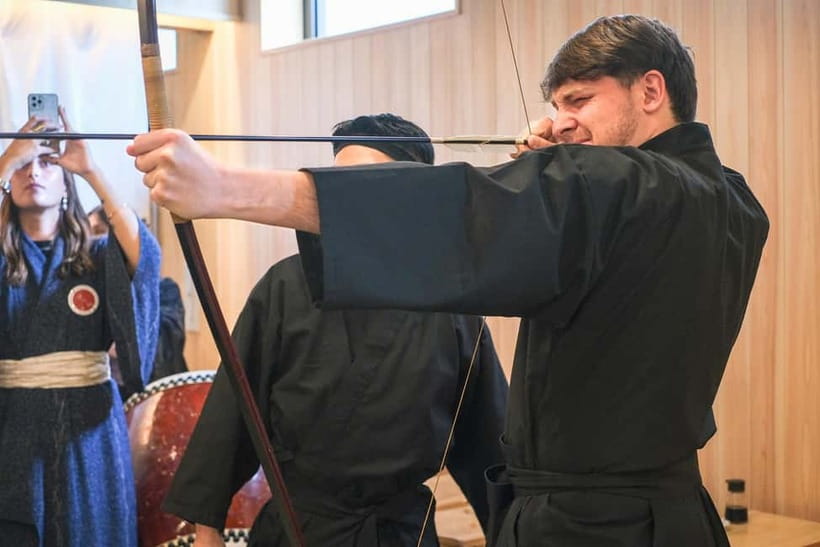
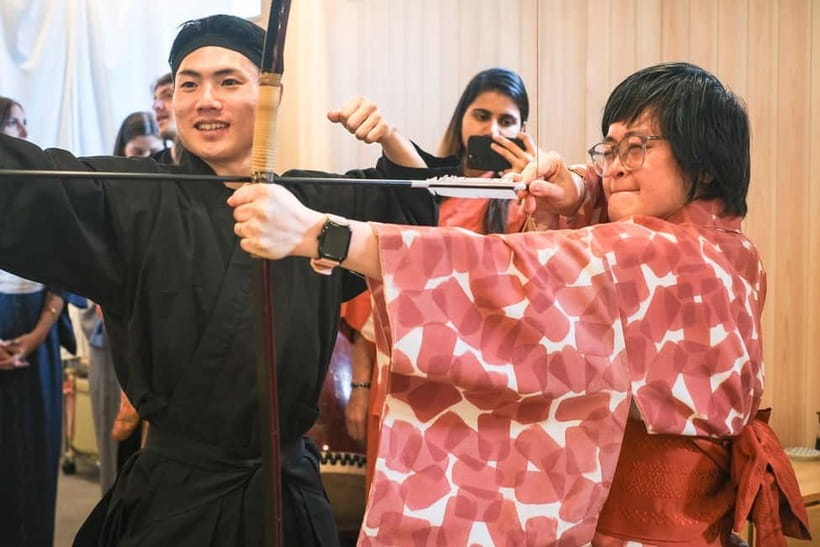
The archery section introduces kyudo, a Japanese martial art with a long tradition. You use a traditional Japanese bow and take part in a friendly competition for the shogun position.
Do not expect this to feel exactly like Western archery. Kyudo has its own posture, rhythm, and handling methods, and the activity specifically points out the difference. The lesson is less about simply pulling a string and hitting a target, and more about the form and discipline used to make the shot.
That distinction gives the archery section real cultural value. You are not just trying an activity that could take place anywhere. You are getting a short introduction to a Japanese practice with its own rules and visual style.
The competitive element gives you a clear reason to focus. You may compare results with friends, but beginners are welcome and no prior experience is needed. The instructor guides you through the process, so you do not need to arrive knowing how to stand, hold the bow, or prepare for a shot.
The limitation is time. In one hour, the kyudo lesson can only cover the basics. If you already practice archery or want a formal study of kyudo, this will feel brief. If you want a first try that fits neatly into a day of sightseeing, the shorter format works well.
Same city, a completely different kind of day:
- Mt Fuji and Hakone 1-Day Bus Tour Return by Bullet Train
★ 5.0 · 26,383 reviews - 1-Day Tokyo Bus Tour
★ 5.0 · 14,250 reviews - Tokyo: TOKYO SKYTREE® Admission ticket
★ 4.5 · 11,192 reviews - Tokyo: teamLab Planets TOKYO Digital Art Museum Entry Ticket
★ 4.6 · 9,779 reviews
Holding the katana and finding the pose
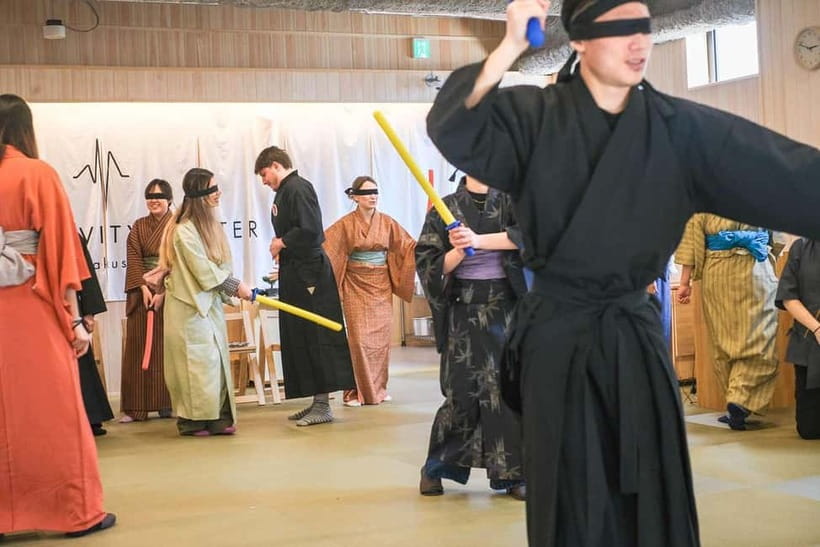
The sword lesson concentrates on the katana, a single-edged Japanese sword. You learn the basic pose and the proper way to hold it, with the goal of looking and standing like a strong samurai.
This is not presented as a full sword-fighting course. The emphasis is on posture, grip, and presentation. That makes the activity accessible to families and first-time participants, and it also keeps the session controlled in an indoor setting.
The pose may sound simple, but it is the part that brings the costume, history lesson, and photo session together. Once you know how to stand and hold the katana, the outfit feels more complete. Staff help take photos, so you can preserve the moment without having one member of your group miss out.
I would treat this as an introduction to swordsmanship rather than combat instruction. You are learning the look and basic handling of the katana, not practicing a long sequence of fighting movements. That is a plus if you want a safe, family-friendly cultural activity. It may be less satisfying if your main goal is advanced martial-arts technique.
Snacks and the social side of the hour
Traditional Japanese snacks are included. They give the activity a small hospitality element and provide a pause from the movement and instruction.
The snacks are not the reason to book this experience, but they help the session feel more like a cultural visit than a simple costume photo stop. You get clothing, background, archery, sword handling, and food within the same hour.
The staff also offer practical conversation about other experiences and shopping in the area. That can be useful in Asakusa, where you may be planning more sightseeing before or after the session. Still, keep your expectations measured. The scheduled activity is one hour, so any extra advice depends on the time available.
The friendly tone is one of the strongest points of the experience. The staff are described as fun, patient, and helpful, and that matters when you are trying unfamiliar movements in front of other people. Clear coaching takes away much of the awkwardness.
What $96 means for the value
At $96 per person, this is not a bargain-priced photo opportunity. The value comes from combining several elements in a short booking: traditional clothing, use of a Japanese bow, use of a katana, English instruction, snacks, the samurai-rank game, and help with photos.
I think the price makes the most sense for you if you want a planned cultural activity with equipment and instruction included. You do not need to arrange a costume rental, search for a separate archery lesson, or find a sword demonstration elsewhere. The convenience is part of what you are paying for.
The one-hour length cuts both ways. You can fit it into a busy Tokyo itinerary, perhaps alongside other Asakusa plans, without giving up half a day. On the other hand, the experience will feel fast if you want long practice time with both weapons.
For a family or small group, the included photos and friendly competition may add enough value to justify the cost. For a solo visitor mainly seeking a serious kyudo lesson, the short format and broad focus may not be the best match.
Getting there and preparing for the session
The meeting point is in Asakusa at the Heiwa Building, 2 Chome 6-11, Taito-ku, Tokyo. Once you arrive at the building, take the elevator to the fifth floor. The location is wheelchair accessible.
Give yourself extra time to find the building, especially if you are unfamiliar with the area. The instructions specifically ask you to arrive 10 minutes before the start. If you have trouble locating the room, contact the activity provider rather than arriving late and missing the opening explanation.
Wear comfortable clothes under the hakama and choose comfortable shoes. You do not need to bring archery or sword equipment because the traditional bow and katana are supplied.
Alcohol and drugs are not allowed. That is an obvious safety rule, but it is worth keeping in mind before booking any activity involving bows and swords.
The cancellation policy is practical for a Tokyo itinerary: you can cancel up to 24 hours before the activity for a full refund. You can also reserve now and pay later, which gives you some flexibility if your schedule is still shifting.
Who will enjoy this most
I would recommend this for families, couples, groups of friends, and first-time visitors who want a cultural activity with plenty of participation. Children and young adults are specifically suited to the format, especially if they enjoy games, costumes, and friendly competition.
It also works for adults who want something more active than a museum visit but less demanding than a full martial-arts class. The English instruction makes it approachable, and no previous experience is required.
You may want to look elsewhere if you are seeking a long, formal kyudo course, detailed sword training, or a deep study of samurai history. This is a lively introduction built around trying things yourself.
The experience received a perfect 5 rating from 14 verified bookings, with repeated praise for the friendly staff, clear teaching, and fun atmosphere. Those points match the design of the activity: the session depends less on your athletic ability and more on good coaching and a willingness to play along.
Should you book the Asakusa samurai experience?
Book it if you want to wear a hakama, try both kyudo and katana handling, learn a little about samurai customs, and leave with photos from a one-hour activity. The strongest reasons to go are the combination of bow and sword instruction, the simple English explanations, and the staff’s patient approach.
Think twice if $96 feels high for a short introduction or if you want serious technical training. The session gives you a taste of several traditions rather than mastery of one.
For most visitors, I see this as a good fit between sightseeing and entertainment. You get a real hands-on activity, a bit of Japanese cultural context, and a clear memory of Asakusa that does not require a full day. Arrive early, wear comfortable clothes, and let yourself enjoy the slightly theatrical business of becoming a samurai for an hour.
FAQ
Where does the Tokyo Samurai Experience take place?
It takes place at the BUB Activity Center in the Heiwa Building at 2 Chome 6-11, Taito-ku, Asakusa, Tokyo. Take the elevator to the fifth floor.
How long does the activity last?
The activity lasts one hour.
What activities are included?
You learn basic kyudo with a traditional Japanese bow and practice the pose and handling of a single-edged katana. The experience also includes a samurai history introduction, a rank mini-game, traditional clothing, and Japanese snacks.
Is prior experience required?
No. The activity is designed for beginners and requires no previous archery or sword experience.
Is the activity conducted in English?
Yes. Bilingual staff provide English instruction and adapt explanations to your level of English knowledge.
Are traditional clothes included?
Yes. A traditional hakama outfit is included, with different heights and sizes available.
What should I wear or bring?
Wear comfortable clothes and comfortable shoes. The bow, katana, traditional clothing, and snacks are provided.
Is the experience suitable for children?
Yes. It is family-friendly and is recommended for children and young adults.
Is the activity wheelchair accessible?
Yes, the activity is wheelchair accessible. The meeting point is reached by elevator to the fifth floor.
Just added around Tokyo
- Private Memorable Tokyo Tour with English Speaking Driver★ 5.0 · 30 reviews
- Private Tokyo Custom Full-Day Tour by Chartered Vehicle★ 5.0 · 16 reviews
- Private Sightseeing to Mt Fuji and Hakone with English Driver★ 5.0 · 51 reviews
- Tokyo Photography Masterclass – Private Photography Lesson★ 5.0 · 25 reviews
- Private Mt. Fuji Day Trip from Tokyo with English-Speaking Driver★ 5.0 · 33 reviews
- 4 Day Tour – Mount. Fuji, Tokyo, Hakone, Kamakura and Yokohama★ 5.0 · 19 reviews
- Private Unforgettable Mt Fuji Tour with English Speaking Driver★ 5.0 · 142 reviews
- Private Tokyo Food Tour – A Journey Through Time Through Food★ 5.0 · 36 reviews
Kimono & Culture Experiences, compared.

Kyoto Geisha Walking Tour: Gion District & Hidden Gems
Read our review →
Gion Magical Night Walking Tour with Geisha Trivia
Read our review →
Gion Geisha District Walking Tour – Stories of Geisha
Read our review →
Best of Kyoto: Gion, Geisha, Pagodas & Cobblestones
Read our review →

Kyoto Gion Geisha District Walking Tour – The Stories of Geisha
Read our review →
Browse the lists this tour appears in