
REVIEW · KIMONO & CULTURE EXPERIENCES
Tokyo: Samurai Adventure! Authentic Sword Experience
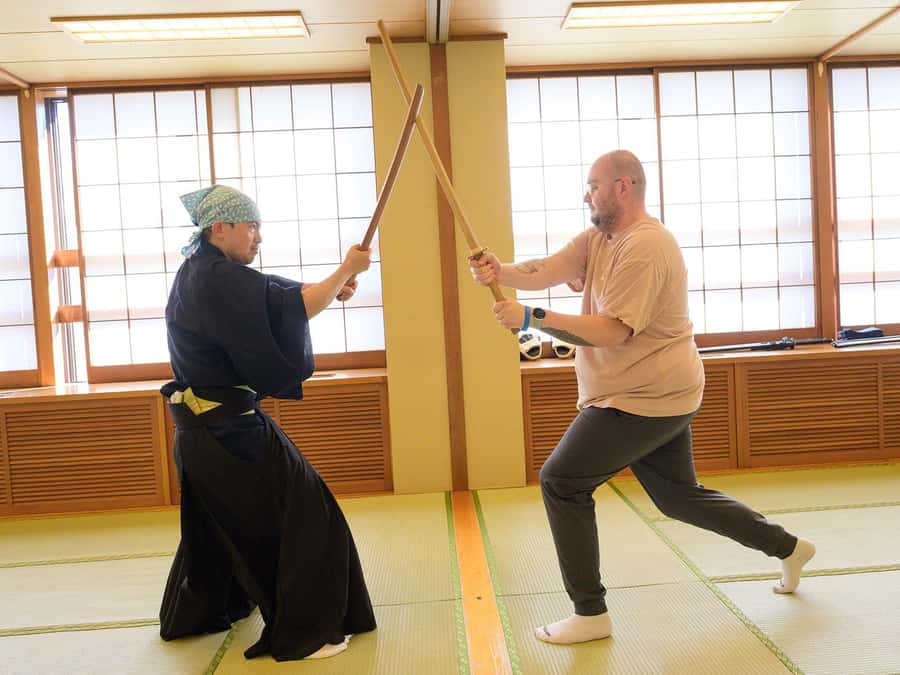
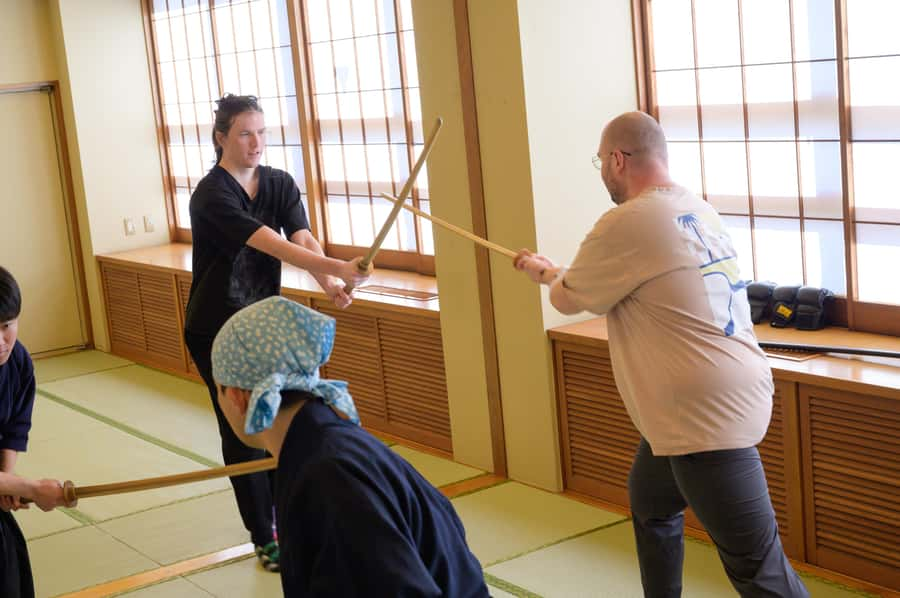
The sharpest part of this Tokyo activity is that you do not merely pose beside a sword. You learn the controlled movements used in Tate, the staged sword fighting seen in Japanese films and theater, with action actors Dai and Kume guiding you. The swords are wooden practice weapons, and the lesson is built for safety, not combat.
I like the hands-on training and the chance to watch a samurai demonstration from close range. I also like the choice between a public class, where you practice with Japanese acting students, and a private course shaped around your level. The main consideration is simple: one lesson gives you a taste of the craft, not mastery, and the physical work may not suit anyone with back problems, vertigo, pregnancy, or other medical conditions.
In This Review
- Key points at a glance
- What this samurai workshop really teaches
- Arriving at Samurai Experience Photo Studio ICHI
- Warm-ups, stance, and the first sword movements
- Public class or private lesson?
- The paired practice with a professional samurai
- The demonstration: where training becomes theater
- Costumes and the final photo session
- Who will get the most from it?
- Booking advice and practical value
- Should you book this samurai adventure?
- FAQ
- Where does the samurai experience begin?
- Where does the activity end?
- Are real swords used during the lesson?
- Is the experience suitable for beginners?
- Can I choose between a group and private class?
- Is a samurai costume included?
- What should I wear and when should I arrive?
Key points at a glance
- Learn staged sword fighting, not actual combat: You practice basic Tate movements with wooden swords under professional supervision.
- Train with Dai and Kume: The instructors are action actors who explain grip, stance, swings, rest positions, and defensive movements.
- Choose your class style: A public course lets you work beside Japanese acting students, while a private course begins with a short cultural introduction and more tailored instruction.
- See the technique up close: A live demonstration shows how much timing and control goes into a samurai action scene.
- Finish with photos: You can pose with the samurai after class, and a costume option may be available for an added fee.
- Budget-friendly Tokyo activity: At $24 per person, the workshop offers active cultural contact for less than many major Tokyo attractions.
What this samurai workshop really teaches
This is a practical introduction to Japanese sword performance, not a martial arts certification and not a duel. The word Tate refers to choreographed sword action. Every movement is planned, controlled, and made to look forceful without putting the participants into real danger.
That distinction matters. You may arrive expecting a dramatic clash of metal, but the class uses wooden practice swords and focuses on body position, timing, and safe movement. You will learn how to grip and hold the sword, how to stand, how to swing, and how to make basic defensive motions.
I see the appeal in this approach. A museum can explain the samurai, but it cannot show you how much coordination goes into a single staged strike. Here, you get to feel the stance in your own body, then watch a trained performer make the same movements look effortless.
The instructors are professional action actors. Dai and Kume are repeatedly singled out for being friendly, patient, and careful with corrections. That is useful for beginners, who may feel awkward holding a sword at first. It also gives the lesson a relaxed tone rather than the stern atmosphere you might expect from a formal martial arts school.
More Kimono & Culture Experiences in Tokyo
- Tokyo: Samurai Ninja Museum Guided tour and Experience
★ 4.6 · 1,010 reviews - Tokyo: Samurai Sword & Archery Class from Samurai Descendant
★ 5.0 · 603 reviews - Best Samurai Experience in Tokyo
★ 5.0 · 458 reviews
Arriving at Samurai Experience Photo Studio ICHI
The meeting point is listed on Google Maps as Samurai Experience Photo Studio ICHI. It is in central Tokyo, with access from Tokyo Station, Ginza, and Tsukiji. You should search the full studio name before setting out and arrive 15 minutes early.
The studio is the starting point and the place where the activity ends. One practical detail from the experience is that you may begin at the studio, change into a costume if you have selected that option, and then walk to a nearby building for the dojo portion. Allow a little time to get oriented rather than arriving at the last second.
Wear comfortable clothing and closed-toe shoes suitable for physical activity. High heels are not allowed, and loose or restrictive clothing could make basic sword movements harder. Meals and drinks are not included, so plan those separately around the class.
The setting is convenient for fitting into a day near Tokyo Station, Ginza, or Tsukiji. It is not a full-day excursion, so you can place it between sightseeing stops. The activity returns you to the meeting point, which makes onward planning easier.
Warm-ups, stance, and the first sword movements
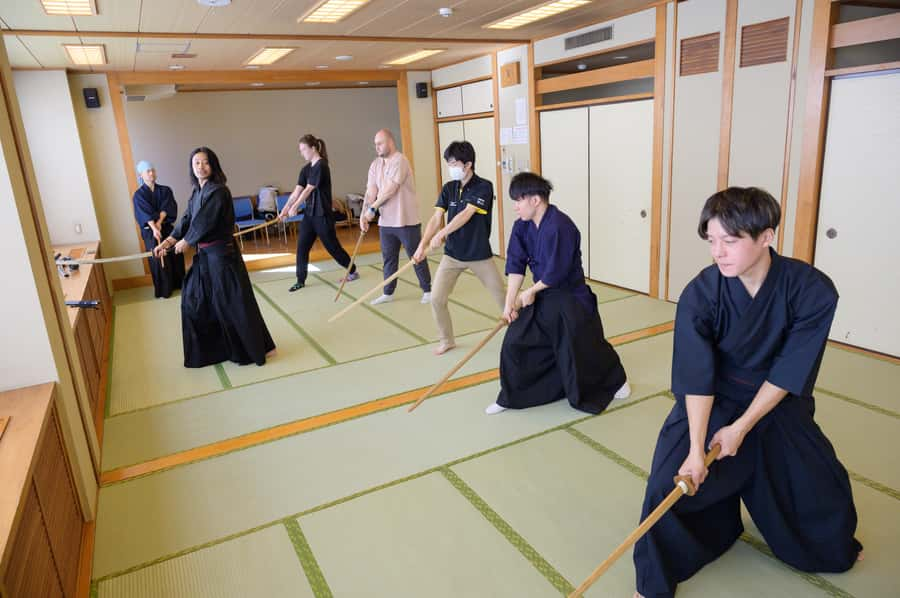
The workshop starts with warm-up exercises. This is more than a formality. Warming up helps you move with control and gives the instructors a chance to introduce the physical rhythm of the class before handing you a practice sword.
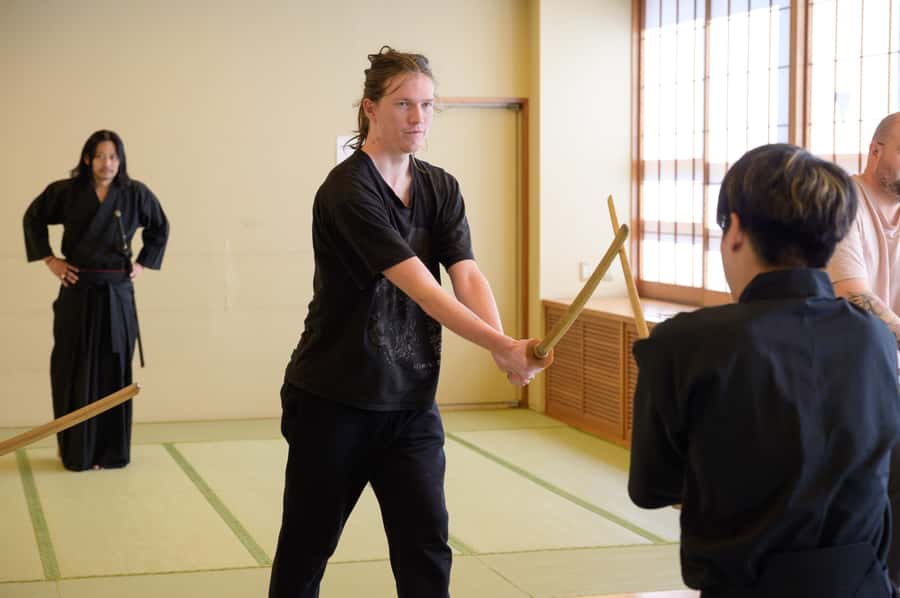
You then work through the basic movements of a samurai. Expect instruction on proper grip, how to hold the sword, how to stand, and how to swing. The class also includes basic strikes and defensive moves, all performed with wooden swords.
Pay attention to the rest positions. One participant specifically enjoyed learning these along with the sword movements, and they are part of what makes the session feel like training rather than a quick photo opportunity. You learn when to move, but also how to stop and reset.
For most people, the value is in the details. A sword swing is not just an arm motion. Your stance, hands, posture, and timing all affect how the movement looks. Dai and Kume demonstrate each point and help correct you when something feels off.
The teaching is designed for beginners, so you do not need prior martial arts experience. At the same time, the lesson can appeal to people who already practice martial arts or have an interest in Japanese culture. If you are new to this kind of activity, expect a guided introduction rather than a test of skill.
Public class or private lesson?
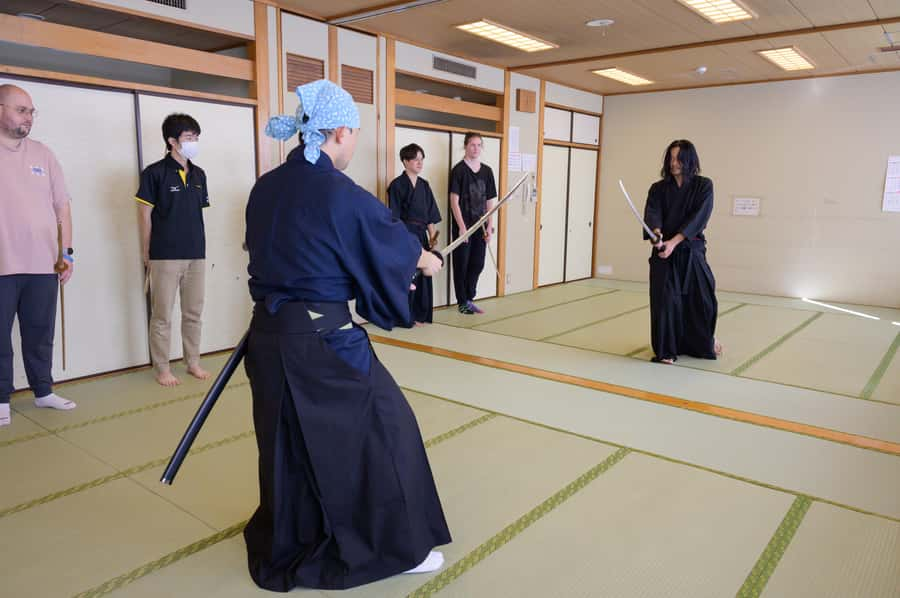
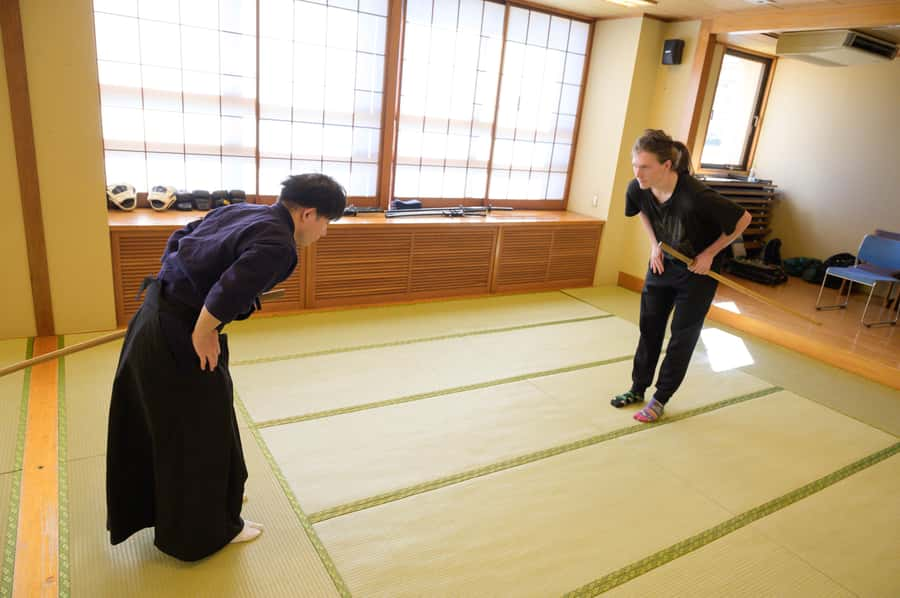
The public course places you in a class with Japanese students who are learning samurai action for acting work. After watching the students train, you practice alongside them.
This option offers a useful cultural exchange. You are not simply receiving a tourist demonstration. You get to see aspiring Japanese actors working on the same basic performance skills, then try the movements with them. The pace and attention may be shared with others, but the setting gives the activity a stronger connection to working performers.
The public course may be the better choice if you enjoy group energy or want to see how Japanese students approach the craft. It also costs less than booking a private lesson, according to the available options, though the exact price difference should be checked when reserving.
The private course begins with a short introduction to samurai history and culture. A professional action actor then adjusts the lesson to your level and goals.
Private instruction makes more sense if you want more explanation, have a specific interest in sword performance, or prefer not to practice in front of other students. It is also a good fit for martial arts practitioners and people who already know something about Japanese culture and want more focused guidance.
There is no need to assume private is always better. The public class provides the special chance to train beside Japanese actors in the making. The private course gives you more personal attention. Choose based on what you want from the hour or session: shared atmosphere or tailored instruction.
Same city, a completely different kind of day:
- Mt Fuji and Hakone 1-Day Bus Tour Return by Bullet Train
★ 5.0 · 26,383 reviews - 1-Day Tokyo Bus Tour
★ 5.0 · 14,250 reviews - Tokyo: TOKYO SKYTREE® Admission ticket
★ 4.5 · 11,192 reviews - Tokyo: teamLab Planets TOKYO Digital Art Museum Entry Ticket
★ 4.6 · 9,779 reviews
The paired practice with a professional samurai
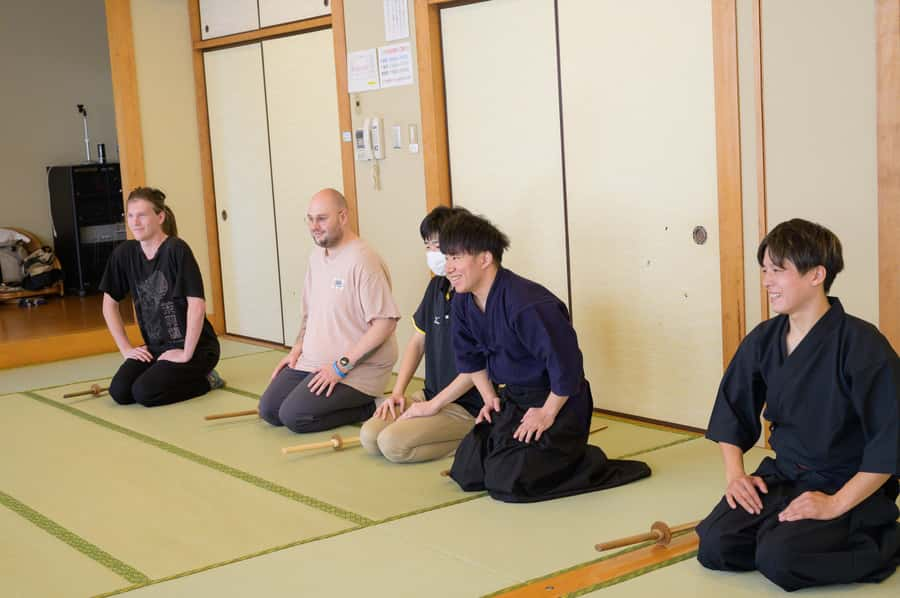
Once you have the basic movements, you take part in paired practice with a professional samurai. This is where the workshop starts to feel like a scene from an action film.
The exercise remains controlled and uses practice swords. You are not engaging in unscripted sword fighting. Instead, the instructor guides the sequence, shows you where to place your body, and helps you follow the rhythm of the movement.
That safety structure is important. A sword scene only works when both people know exactly what is coming next. The lesson introduces that idea in a simple way, giving you a taste of performance timing without pretending that a beginner can fight like a trained actor after one class.
The instructors’ manner is a major part of the experience. Dai and Kume are described as warm and encouraging, with clear demonstrations and useful corrections. One participant also noted that the instructors helped fix a broken item for a friend, a small detail that suggests they pay attention to the whole group rather than rushing through the routine.
If you feel nervous, say so and follow the instructor’s pace. The class is meant to be accessible to beginners, and observing is also allowed. You can still enjoy the performance and photos if you decide not to take part in every physical exercise.
The demonstration: where training becomes theater
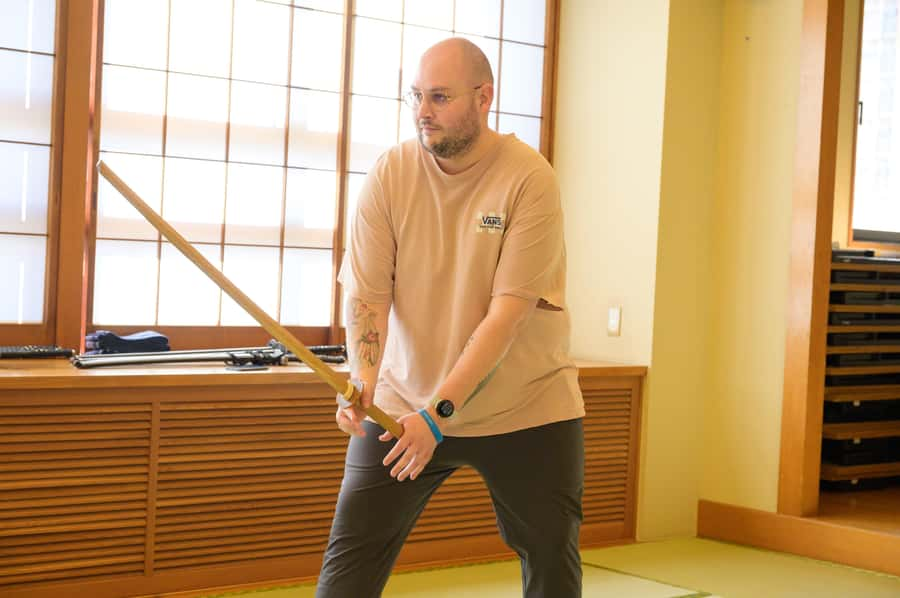
The live demonstration is likely to be the most impressive visual part of the workshop. After you have worked through the basic movements, the instructors show what those same skills look like when performed by trained action actors.
Up close, you can notice the precision behind the drama. The force is staged, but the posture, speed, expression, and timing are real performance skills. This is why the demonstration adds value beyond a costume photo: it gives context to the movements you have just practiced.
The contrast can be amusing. Your first swing may feel careful and mechanical, while Dai or Kume can make a sequence look fast and polished. That gap is not a problem. It helps you see the work involved in samurai action and gives you a clearer appreciation for Japanese film and stage combat.
The activity is best approached with curiosity rather than the expectation of becoming a samurai for an afternoon. You are learning a few building blocks of a performance style, then seeing those pieces used at a professional level.
Costumes and the final photo session
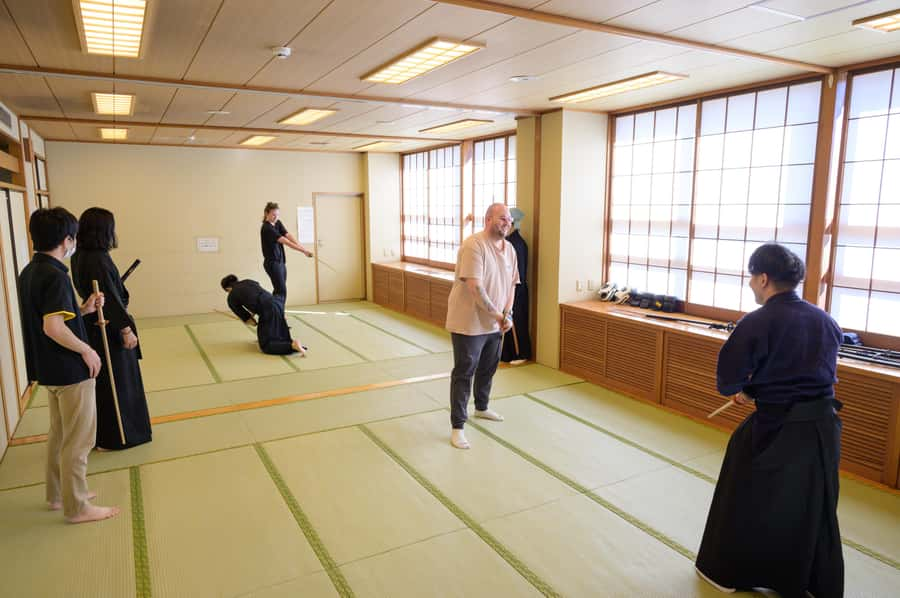
The listed price is $24 per person. That is a modest cost for an activity that includes a cultural introduction, live demonstrations, hands-on practice, wooden swords, and a photo session.
The value is strongest if you want to do something active. Many Tokyo cultural activities ask you to watch, listen, or pose. This one asks you to learn a movement and repeat it. For the price, that physical element gives the experience a clear purpose.
A samurai costume is not included in the base price, but it may be available as an option. Several participants enjoyed wearing samurai clothing or a kimono, so check the costume terms when you book if clothing is important to your plans.
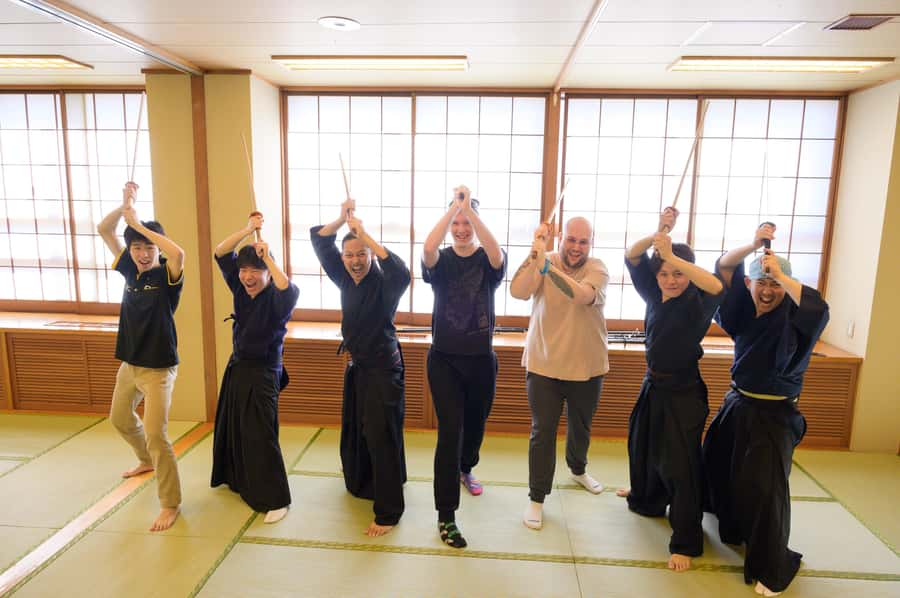
At the end, you can take photos with the samurai. This is a good moment for a group picture, a family portrait, or a simple keepsake. The photo session also helps round off the activity after the more focused practice.
The workshop can work well for families and mixed-age groups, provided everyone can manage the physical activity. A three-generation group described the experience as a lasting shared memory, which points to one of its best qualities: you do not need to be a specialist to enjoy learning together.
Who will get the most from it?
I would recommend this workshop to you if you want a short Tokyo activity that combines culture, movement, and performance. It suits first-time visitors who want more than a standard sightseeing stop, as well as people already interested in samurai films, Japanese theater, or martial arts.
It is especially useful for:
- Families seeking a shared activity rather than another viewing attraction
- Couples who want photos and a hands-on cultural experience
- Solo visitors who enjoy learning a new physical skill
- Martial arts practitioners looking for an introduction to Tate
- Visitors with a strong interest in Japanese history and performance
- People who want an activity near Tokyo Station, Ginza, or Tsukiji
It is less suitable if you want a formal historical lecture, advanced sword training, or unstructured combat. The history introduction is brief in the private class, and the physical lesson is an introductory session.
You should also take the health restrictions seriously. The activity is not suitable for pregnant women, wheelchair users, people with back problems, people with vertigo, or people with pre-existing medical conditions. Electric wheelchairs are specifically not permitted. Alcohol, drugs, smoking, drones, and explosive substances are also prohibited.
Booking advice and practical value
At $24, this is an easy activity to add to a Tokyo itinerary without committing a large part of your budget. The reserve-now, pay-later option can help if your schedule is still shifting, and cancellation is allowed up to 24 hours ahead for a full refund.
Book the public course if you like meeting Japanese students and do not mind sharing the lesson. Choose private instruction if you want a more personal pace or have a particular goal. If you are unsure about the physical side, observing is still described as enjoyable, but you should confirm the best arrangement before booking.
The activity is offered in Japanese and English. English support matters here because grip, timing, and safety instructions need to be clear. Arriving early, wearing practical clothing, and bringing patience will do more for your experience than bringing any special equipment.
One lesson cannot give you a full education in samurai culture. What it can give you is a physical sense of how staged sword action works, a close demonstration by trained performers, and a story to take home that is more memorable than another souvenir.
Should you book this samurai adventure?
I would book it if you want an affordable, active Tokyo experience led by friendly instructors who take beginners seriously. Dai and Kume appear to be the heart of the class, combining demonstrations with patient corrections and a playful spirit.
Choose it for the chance to practice Tate movements, work beside Japanese acting students in the public class, and see a samurai demonstration at close range. Skip it if you need a fully accessible activity, have a medical condition affected by physical movement, or expect real sword combat.
For most suitable participants, the $24 price is fair. You get instruction, equipment, performance, and photos in one compact workshop. Just arrive ready to move, keep your expectations focused on staged swordsmanship, and treat the class as a lively introduction rather than a complete samurai course.
FAQ
Where does the samurai experience begin?
It begins at Samurai Experience Photo Studio ICHI, which you can find by searching that name on Google Maps.
Where does the activity end?
The workshop ends back at the meeting point.
Are real swords used during the lesson?
No. You practice the samurai movements safely with wooden practice swords, and you do not take part in actual sword fighting.
Is the experience suitable for beginners?
Yes. Beginners are welcome, and the instructors guide you through warm-ups, stance, grip, holding, swinging, strikes, and defensive movements.
Can I choose between a group and private class?
Yes. The public course takes place with Japanese students learning samurai action. The private course includes a short introduction to samurai history and culture, followed by instruction tailored to your level and goals.
Is a samurai costume included?
No. Samurai costume is not included in the listed price, but it may be available as an optional extra.
What should I wear and when should I arrive?
Wear comfortable clothing and closed-toe shoes suitable for physical activity. High heels are not allowed, and you should arrive 15 minutes early.
Just added around Tokyo
- Private Memorable Tokyo Tour with English Speaking Driver★ 5.0 · 30 reviews
- Private Tokyo Custom Full-Day Tour by Chartered Vehicle★ 5.0 · 16 reviews
- Private Sightseeing to Mt Fuji and Hakone with English Driver★ 5.0 · 51 reviews
- Tokyo Photography Masterclass – Private Photography Lesson★ 5.0 · 25 reviews
- Private Mt. Fuji Day Trip from Tokyo with English-Speaking Driver★ 5.0 · 33 reviews
- 4 Day Tour – Mount. Fuji, Tokyo, Hakone, Kamakura and Yokohama★ 5.0 · 19 reviews
- Private Unforgettable Mt Fuji Tour with English Speaking Driver★ 5.0 · 142 reviews
- Private Tokyo Food Tour – A Journey Through Time Through Food★ 5.0 · 36 reviews
Kimono & Culture Experiences, compared.

Kyoto Geisha Walking Tour: Gion District & Hidden Gems
Read our review →
Gion Magical Night Walking Tour with Geisha Trivia
Read our review →
Gion Geisha District Walking Tour – Stories of Geisha
Read our review →
Best of Kyoto: Gion, Geisha, Pagodas & Cobblestones
Read our review →
Kyoto Gion Geisha District Walking Tour – The Stories of Geisha
Read our review →
Browse the lists this tour appears in