
REVIEW · KIMONO & CULTURE EXPERIENCES
Tokyo: Calligraphy Experience with yukata or Samue
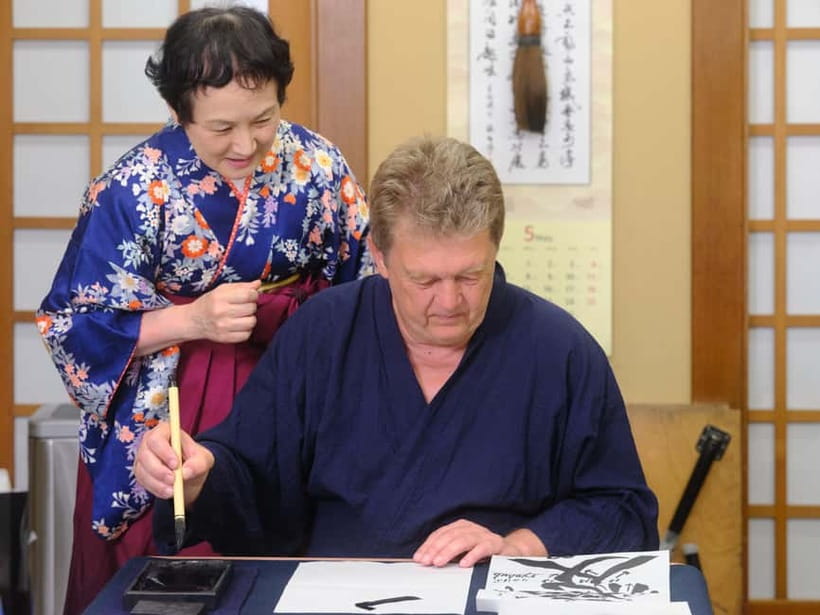
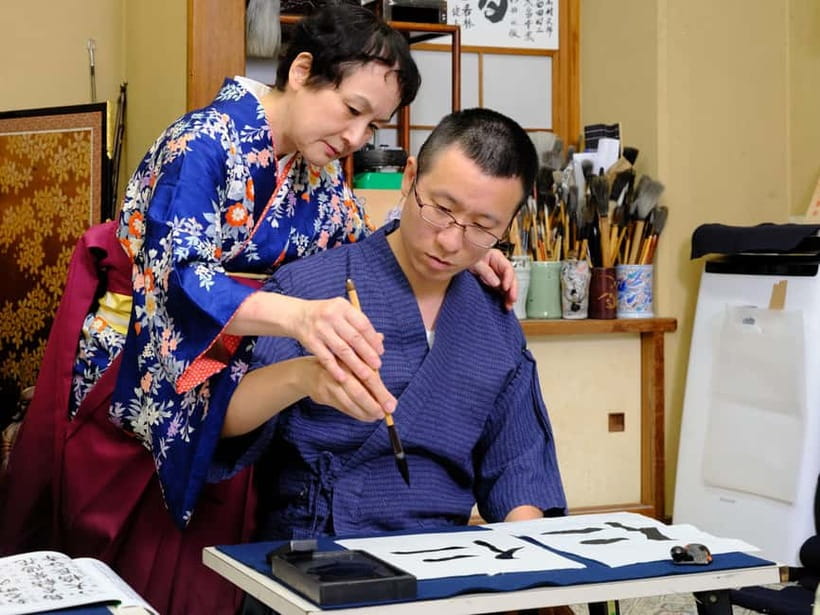
Japanese calligraphy is not a quick brush-and-photo stop. You put on a yukata or samue, learn how to hold the brush, and work through basic strokes before creating a finished kanji artwork. The class also explains the spiritual ideas and history behind the characters, which gives the quiet practice some real weight.
I like two things here: the small group of up to 10, which leaves room for patient instruction, and the finished work you take home. Some sessions also include help writing your name, and the English or French guidance makes the class easy to follow.
The main consideration is the 90-minute limit. You get a satisfying introduction, not a full art course, and ink can make a mess, so wear clothes that can get dirty. The meeting point description also needs careful checking because it is given by nearby landmarks rather than a polished tourist venue address.
In This Review
- Key points at a glance
- What the 90-minute Tokyo calligraphy class feels like
- Yukata, samue, and the first few minutes
- Learning to control the brush
- Choosing and writing your kanji
- Creating the final artwork to take home
- Tea and the quieter side of Tokyo
- How much value do you get for $64?
- Who will enjoy this class most
- Language support and teaching style
- Finding the meeting point and preparing well
- Cancellation, group size, and other practical details
- Should you book this Tokyo calligraphy experience?
- FAQ
- How long does the Tokyo calligraphy class last?
- How much does the experience cost?
- What languages are available?
- How many people can join the class?
- Are calligraphy tools included?
- Can I take my calligraphy work home?
- Is Japanese tea included?
- What should I wear?
- Is the activity suitable for all ages?
- Can I cancel for a refund?
- Is transportation included?
Key points at a glance
- Dress in traditional clothing first: Depending on the session, you may wear a yukata or samue before picking up the brush.
- Learn before you create: The class covers brush handling, lines, stroke order, and the meaning of the characters.
- Work with named local instructors: Hana, Koushi, and Tomo have led recent classes, with English and French instruction available.
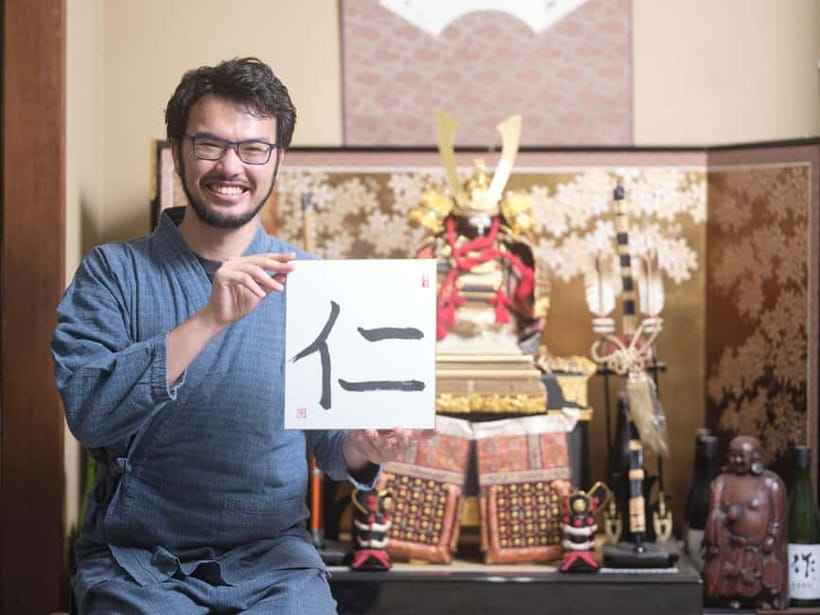
- Take home a personal artwork: You practice first, then produce a final piece on a board or paper to keep.
- A calm break is built in: Japanese tea is included, and some sessions have welcomed participants with tea and biscuits.
- Small groups make a difference: A maximum of 10 people gives the instructor room to correct your technique.
What the 90-minute Tokyo calligraphy class feels like
This class is built around doing, not simply watching. You meet your instructor in Tokyo, receive guidance in English or French, and work through the basic actions of Japanese brush calligraphy step by step.
The pace suits a first attempt. You do not need to know Japanese, and you do not need to arrive with artistic skill. The aim is to understand the brush, the ink, and the character well enough to make a respectable piece of your own.
I would think of the class as a cultural lesson with an art project at the end. You learn why the characters matter, then use that understanding while your hand tries to reproduce their form. That combination makes the activity more memorable than simply buying a calligraphy print in a souvenir shop.
More Kimono & Culture Experiences in Tokyo
- Tokyo: Samurai Ninja Museum Guided tour and Experience
★ 4.6 · 1,010 reviews - Tokyo: Samurai Sword & Archery Class from Samurai Descendant
★ 5.0 · 603 reviews - Best Samurai Experience in Tokyo
★ 5.0 · 458 reviews
Yukata, samue, and the first few minutes
Several participants have enjoyed dressing in a kimono-style outfit before beginning. The experience is described as offering a yukata or samue, with some accounts using the words kimono and samui. Your exact clothing choice may depend on the session and what is available that day.
This opening gives the class a clear Japanese setting without requiring a full-day cultural program. You can take in the clothing, settle with a cup of tea, and then move into the lesson. It also makes the activity appealing for a birthday outing or a family occasion.
Do not wear anything precious. The instructions specifically recommend clothes that can get dirty, and that is sensible advice for an activity involving ink and repeated brush practice. Comfortable clothing also makes it easier to concentrate on posture and hand movement.
Some classes have offered tea and biscuits on arrival. Japanese tea is included in the activity, while extra snacks should be treated as a pleasant possibility rather than a guaranteed part of every booking.
Learning to control the brush
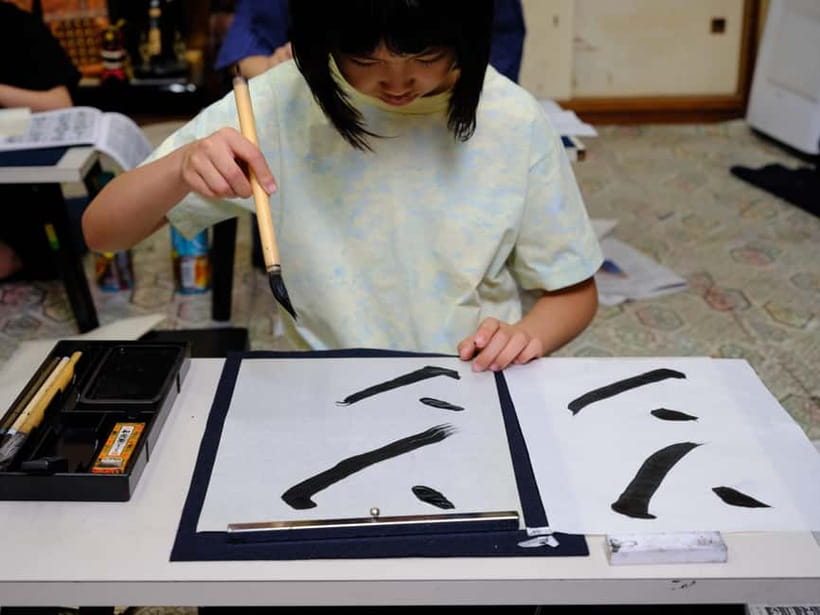
The first real lesson is basic brush control. You learn how to hold the brush correctly, how much pressure to use, and how to create simple lines. The teachers also show you how to position the brush and guide it through each stroke.
That sounds simple until you try it. A calligraphy brush responds to pressure in a way a normal pen does not. A small change in angle can make a stroke thin, broad, soft, or heavy. The practice section matters because it gives you permission to make mistakes before the final artwork begins.
You also learn stroke order and the structure of a kanji character. This is useful even if you cannot read Japanese. Instead of copying a shape as if it were a logo, you begin to see the character as a sequence of deliberate movements.
The class introduces the spiritual and historical meaning behind the characters as well. That context is one of the strongest reasons to book this instead of a generic craft session. You are not only making a decorative mark. You are learning why a character has significance and how calligraphy treats the act of writing as a focused practice.
Choosing and writing your kanji
After the basic exercises, you move toward writing a kanji of your own. The instructor guides you through the process, correcting your technique and helping you understand how the completed character should look.
The exact character choice is not specified, so you should ask your teacher what options are available when the class begins. The important point is that you do not simply receive a pre-made souvenir. You create the final piece yourself after practice.
That makes the result personal, even if your lines are not as polished as those of the professional calligrapher. In fact, a little unevenness is part of the charm. You will remember the concentration, the careful pauses, and the moment the brush finally moves in the right way.
Some sessions have also included a teacher writing the participant’s name. This can be a lovely extra, especially if you want something that connects the artwork directly to your trip. It should not be treated as a guaranteed part of every booking, but it is worth asking about.
Same city, a completely different kind of day:
- Mt Fuji and Hakone 1-Day Bus Tour Return by Bullet Train
★ 5.0 · 26,383 reviews - 1-Day Tokyo Bus Tour
★ 5.0 · 14,250 reviews - Tokyo: TOKYO SKYTREE® Admission ticket
★ 4.5 · 11,192 reviews - Tokyo: teamLab Planets TOKYO Digital Art Museum Entry Ticket
★ 4.6 · 9,779 reviews
Creating the final artwork to take home
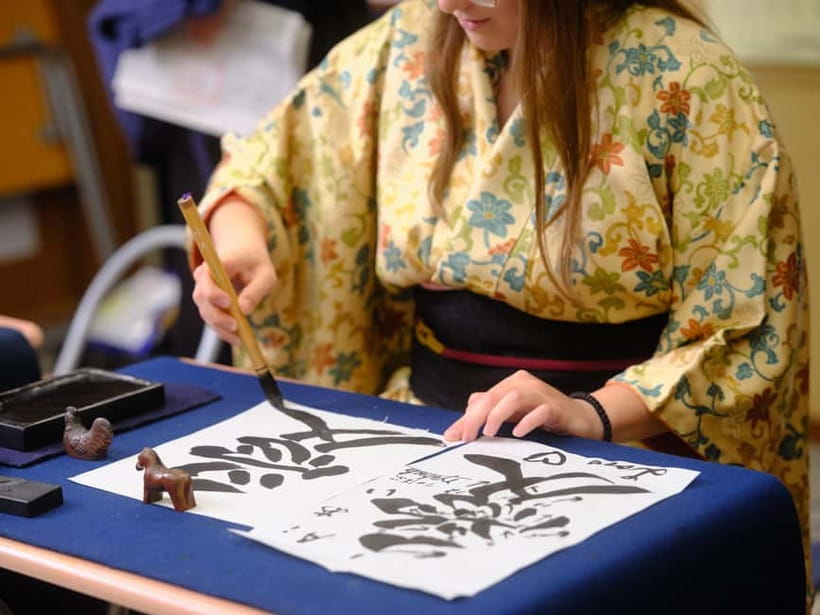
The final stage is the practical payoff. After you have practiced lines and characters, you produce your finished calligraphy work on a board or suitable backing to take with you.
This is more useful than a fragile object that takes up space in your luggage. You leave with something that records both the activity and the character you studied. If you are buying gifts, the personal nature of the artwork may also make it more meaningful than a standard Tokyo souvenir.
The instructor’s example and corrections help here. Participants have described teachers with strong artistic ability, including Koushi, Tomo, and Hana. The important distinction is that the professionals do not simply perform for you. They guide your hand and explain what you are doing.
You should keep your expectations realistic. A 90-minute lesson cannot turn you into a master calligrapher. It can, however, give you a basic technique, a better sense of Japanese writing, and a finished piece that you made during your stay.
Tea and the quieter side of Tokyo
The tea break is modest, but it helps shape the mood. Calligraphy requires attention, and a pause with Japanese tea gives the class a gentle rhythm rather than making it feel like a rushed craft workshop.
I like this part because it leaves space for conversation. You can ask about the character, the tools, and the cultural ideas connected with calligraphy. For many people, that calm exchange becomes as valuable as the brush practice.
This is also a useful choice if you want a break from Tokyo’s crowded sightseeing areas. The activity is indoors and focused, with a small number of participants. It gives you a short period in which the city recedes and the details of one brushstroke matter more than your next train connection.
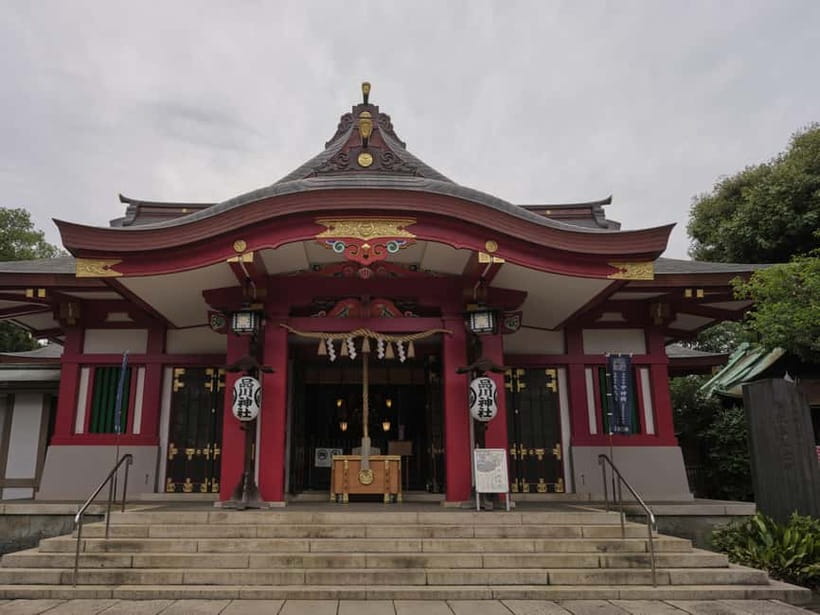
The setting itself appears to be identified by nearby landmarks, including a nursery and Kaideiji Temple, rather than by a large, obvious attraction. I would allow extra time to find it and check the location details carefully before leaving. Individual transportation is not included.
How much value do you get for $64?
At $64 per person, this is not the cheapest souvenir activity in Tokyo. The price makes more sense when you count what is included: professional instruction, calligraphy tools, an English or French-speaking guide, tea, and the finished artwork.
You are also paying for personal attention. With no more than 10 participants, the instructor can watch your brush technique and offer corrections. In a much larger class, the activity could become a demonstration with a short turn at the table. This format gives you more time to practice.
The traditional clothing adds another layer for people who want a cultural activity rather than a technical lesson alone. If dressing in yukata or samue is important to you, the price may feel fair. If you only want to write one character quickly, you may find the cost harder to justify.
I see the best value for couples, families, and solo visitors who want a take-home item with a story behind it. The artwork is not an anonymous purchase. You made it after learning its form and meaning.
Who will enjoy this class most
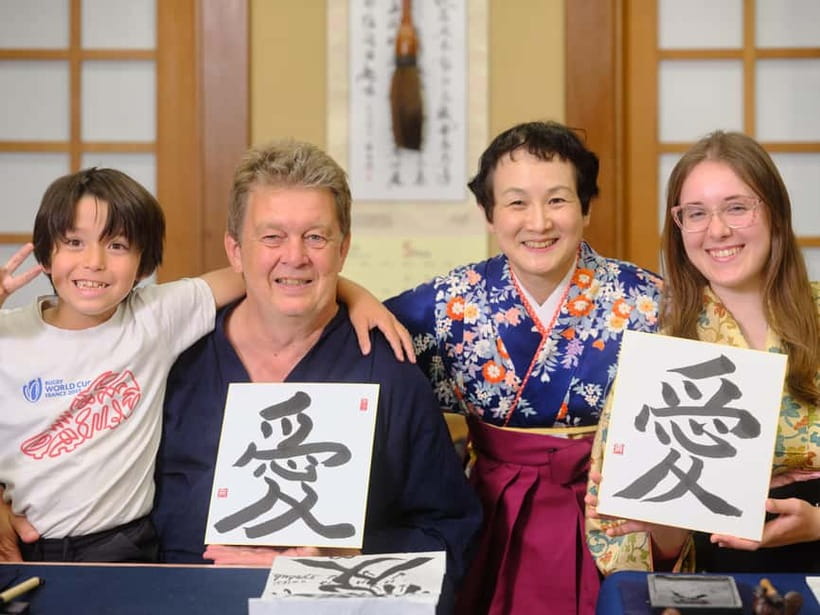
This suits first-time visitors to Japan who want a guided cultural activity without committing half a day. It also works well for people who enjoy quiet, hands-on activities and prefer making something to simply taking photographs.
Families have found the warm teaching style appealing, and one birthday booking included help with arranging a taxi and finding a calligraphy set afterward. Still, the official restrictions say the activity is not suitable for children under 4 or people over 70. If your group includes anyone near those limits, confirm suitability before booking.
The class is especially practical for:
- Couples looking for a shared souvenir
- Families with older children
- Solo visitors who want structured cultural contact
- Art lovers curious about Japanese brushwork
- Visitors who speak English or French
- Anyone who wants a quiet indoor activity in Tokyo
You do not need Japanese language skills or prior calligraphy experience. You do need patience. The satisfaction comes from slowing down and repeating a movement until it starts to make sense.
Language support and teaching style
English and French are the listed teaching languages. That is a real advantage because calligraphy instruction depends on small details. You need to understand pressure, direction, pauses, and stroke order, not just copy a finished character.
The instructors who have led recent sessions include Hana, Koushi, and Tomo. Their roles can vary by date, and an assistant or interpreter may also help. French-language instruction has been available in some sessions, so French-speaking visitors should select that option if offered when booking.
The teaching style is described as patient, warm, and step by step. That matters for beginners. A professional artist can make calligraphy look effortless, but a good teacher explains the movements in a way you can repeat.
I would still ask questions during the lesson. If a stroke feels awkward, stop and ask for a correction before moving on. The small group gives you a good chance to get that help.
Finding the meeting point and preparing well
The meeting information refers to a location next to a nursery and beside Kaideiji Temple. Those landmarks may be useful once you are nearby, but they are not as clear as a major station entrance or a famous public building.
Before the day, save the meeting point details and check the map carefully. If the booking platform provides a map pin or updated instructions, use those rather than relying only on a translated landmark description.
A few simple preparations will help:
- Wear clothes that can get dirty
- Arrive ready to work with ink and a brush
- Check whether you want English or French instruction
- Confirm the meeting location before setting out
- Leave room in your luggage for the finished artwork
Individual transportation is not included, so you arrange your own way to and from the class. If you need a taxi afterward, assistance may be available, but transport itself is not part of the stated inclusions.
The activity lasts 90 minutes, with starting times depending on availability. That makes it fairly easy to fit around sightseeing, but I would not schedule a tight connection immediately afterward. Finding the meeting point and completing a careful artwork both deserve a little breathing room.
Cancellation, group size, and other practical details
You can cancel up to 24 hours in advance for a full refund. The reserve-now, pay-later option also helps if your Tokyo plans are still shifting.
The class is limited to 10 people. That is small enough to feel personal while still allowing you to meet other participants. If you are booking for a private family event, check the booking details to see how your group will fit into the available session.
The experience provider is 日本書鏡院. The class includes the instructor fee and all necessary calligraphy equipment, so you do not need to buy brushes, ink, or paper before arriving.
The age limits deserve attention. Children under 4 are not accepted, and people over 70 are listed as unsuitable. The activity can be family-friendly for the right age group, but it is still a seated, concentration-based lesson rather than a free-play program.
Should you book this Tokyo calligraphy experience?
I would book it if you want more than a quick costume photo and prefer a souvenir you actually create. The combination of traditional clothing, brush practice, cultural explanation, tea, and a finished kanji piece gives the 90 minutes a clear shape.
I would skip it if you want a fast, highly polished artwork made entirely by an expert, or if ink and careful repetition sound tedious. The class asks you to slow down and accept that your first brushstrokes may be imperfect.
For most visitors, the strongest reason to go is the personal instruction. You learn enough to understand the discipline, then take home a record of your own attempt. Confirm the meeting point, wear practical clothes, and treat the class as a quiet cultural lesson rather than a rushed attraction. At $64, that is a fair deal for a small-group activity with materials, guidance, tea, and a handmade souvenir.
FAQ
How long does the Tokyo calligraphy class last?
The activity lasts 90 minutes.
How much does the experience cost?
The listed price is $64 per person.
What languages are available?
Instruction and guiding are available in English and French.
How many people can join the class?
The activity is a small-group experience limited to 10 participants.
Are calligraphy tools included?
Yes. All necessary calligraphy tools are included in the activity price.
Can I take my calligraphy work home?
Yes. Your finished calligraphy work is included as a souvenir to take home.
Is Japanese tea included?
Yes. Japanese tea is included.
What should I wear?
Wear clothes that can get dirty because the class uses ink and calligraphy materials.
Is the activity suitable for all ages?
No. It is not suitable for children under 4 or people over 70.
Can I cancel for a refund?
Yes. You can cancel up to 24 hours in advance for a full refund.
Is transportation included?
No. Individual transportation to and from the meeting point is not included.
Just added around Tokyo
- Private Harajuku Omotesando Architecture Tour★ 4.9 · 18 reviews
- Tokyo: Customizable Private Guided Walking Tour★ 4.5 · 129 reviews
- Tokyo: Guided Helicopter Ride★ 4.9 · 24 reviews
- Tokyo: Guided Walking Tour of Tsukiji Market with Lunch★ 4.4 · 24 reviews
- Tokyo: Private Personalized Local Food Tour★ 4.5 · 101 reviews
- Tokyo GINZA: KONPARU Japanese Cabaret Show with Drink★ 4.8 · 38 reviews
- Tokyo: Guided Walking Tour of Tsukiji Market with Breakfast★ 4.4 · 134 reviews
- Tokyo: Gotokuji Cat Temple, Shinjuku Cat Cafe & 3D Cat Tour★ 4.9 · 38 reviews
Kimono & Culture Experiences, compared.
Kyoto Geisha Walking Tour: Gion District & Hidden Gems
Read our review →
Gion Magical Night Walking Tour with Geisha Trivia
Read our review →
Gion Geisha District Walking Tour – Stories of Geisha
Read our review →
Best of Kyoto: Gion, Geisha, Pagodas & Cobblestones
Read our review →
Kyoto Gion Geisha District Walking Tour – The Stories of Geisha
Read our review →
Browse the lists this tour appears in