
REVIEW · KIMONO & CULTURE EXPERIENCES
Tokyo: Best Samurai Experience
The sharpest part of this Tokyo experience is not watching a samurai show. It is stepping into the scene yourself, dressed in kimono and hakama, with a safe practice sword in hand. You learn how to draw, hold, swing, and return the sword, then use those moves in a staged fight set to music.
I like two things here. First, the lesson gives the fun a little structure, so you learn stance names, blade parts, and basic offensive and defensive moves before the action begins. Second, staff help take photos and videos on your phone, which means you can focus on the performance instead of trying to film it yourself. The main consideration is time: one hour goes quickly, and this is a theatrical introduction rather than serious martial arts training.
In This Review
- Key points at a glance
- Entering Samurai Theater Tokyo
- Choosing a kimono and hakama
- Learning the sword before the fight
- Practicing a simple chanbara routine
- The music, lights, and final performance
- Photos and phone videos without the usual scramble
- What the $63 price really covers
- Who will enjoy this most
- Language, timing, and booking flexibility
- How this compares with a passive samurai show
- Should you book Tokyo’s Best Samurai Experience?
- FAQ
- Where does the samurai experience take place?
- How long does the activity last?
- How much does it cost?
- What costume will I wear?
- Is the sword real?
- What will I learn?
- Is instruction available in English?
- Can I join alone?
Key points at a glance
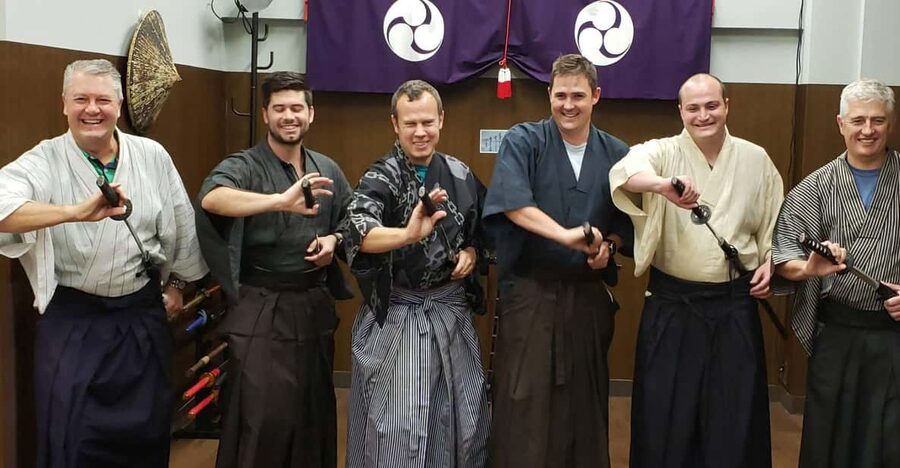
- Choose your own samurai costume: Select a kimono and hakama before the lesson begins.
- Learn real terminology in a safe setting: Study sword parts, stance names, drawing, swinging, and returning a non-cutting sword.
- Fight samurai performers: Put your new movements into a simple chanbara routine, then join a more dramatic final performance.
- Small groups keep it personal: No more than 10 participants take part, with English and Japanese instruction available.
- Your phone becomes the memory book: Staff can take photos and record video while you perform and pose with the samurai.
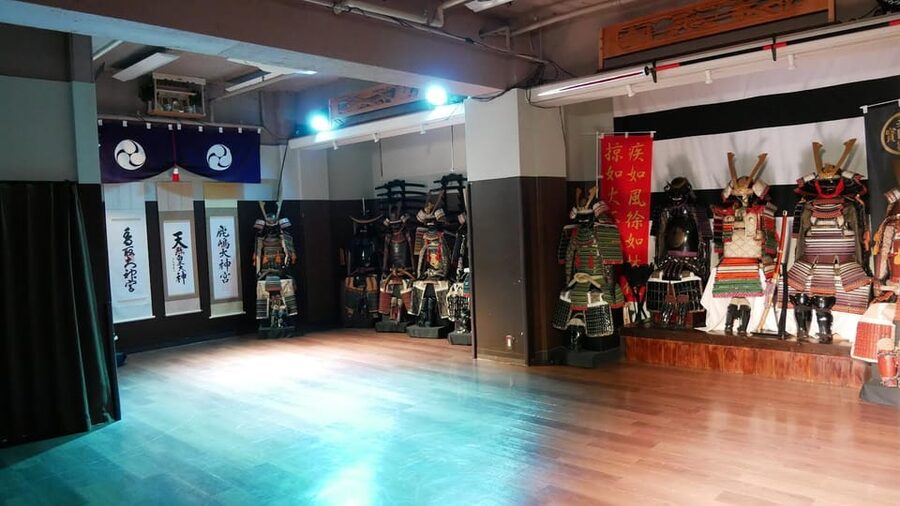
- The setting adds atmosphere: Weapons, armor, swords, and spears are displayed in a dojo designed to feel far removed from modern Tokyo.
Entering Samurai Theater Tokyo
To find the venue, search Google Maps for Samurai Theater Tokyo. The meeting instructions are short, so I would save the location before setting out and allow enough time to find the entrance.
Inside, you find a dojo with swords, spears, and armor on display. That setting matters. It gives the hour a clear sense of place, rather than making the activity feel like a generic costume photo stop. You are surrounded by objects associated with samurai culture before you even pick up a sword.
The experience is designed for small groups of up to 10 people. That is a useful limit for an activity built around movement and photos. You should get more direct attention than you would in a large stage production, and the instructors can help position you for the camera.
The teachers speak English and Japanese. The instructors are presented as authentic performers who have appeared in major Japanese dramas and films. That does not turn this into a historical lecture, but it does explain the polished stage presence and strong sense of timing that make the mock fights work.
More Kimono & Culture Experiences in Tokyo
- Tokyo: Samurai Ninja Museum Guided tour and Experience
★ 4.6 · 1,010 reviews - Tokyo: Samurai Sword & Archery Class from Samurai Descendant
★ 5.0 · 603 reviews - Best Samurai Experience in Tokyo
★ 5.0 · 458 reviews
Choosing a kimono and hakama
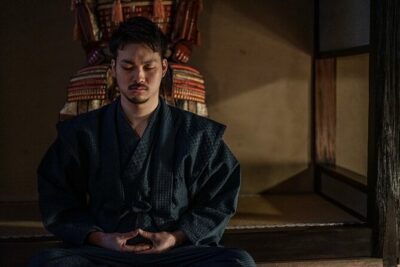
Your first hands-on step is changing into a samurai costume. You choose a favorite kimono and hakama, then staff help you get dressed.
The hakama is the pleated lower garment often associated with formal Japanese dress and martial arts. Wearing it changes the way you stand and move, even during a short lesson. It also makes the photos far more convincing than a quick robe rental with no instruction.
You should allow a little patience during changing. The costume is part of the experience, not a minor add-on, and staff need to make sure it sits properly before you begin handling the sword. The supplied details do not specify a range of sizes or a particular changing arrangement, so anyone with clothing or mobility concerns should check before booking.
Armor seen around the dojo is not included in the standard price. You can pay an optional extra fee to wear the display armor. If the armor matters to you, ask about that cost before the session begins. The included kimono and hakama are enough for the main lesson, so the armor is an add-on rather than something you need to enjoy the activity.
Learning the sword before the fight
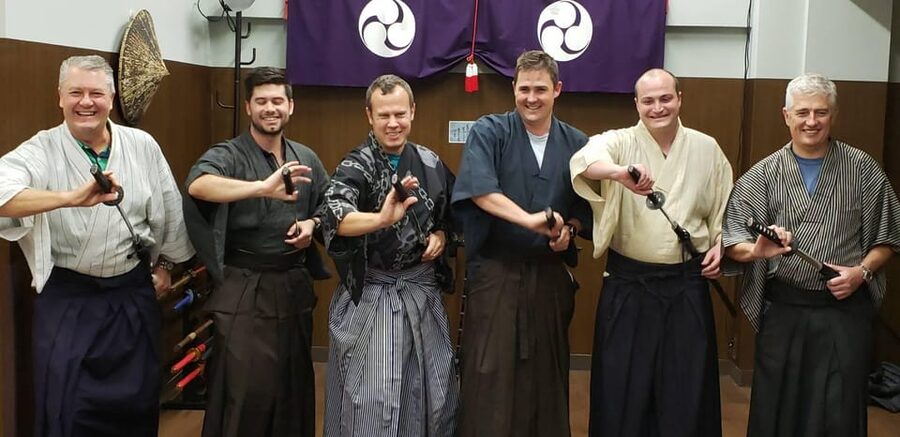
Once dressed, you receive a fake sword, specifically a sword that cannot cut. That distinction is important. You are learning choreographed movement with a non-cutting prop, not handling a live blade.
The instructor explains the parts of the sword and introduces basic Japanese terms. One participant described learning blade-part names and stance names, which gives you a small piece of vocabulary to take away from the hour. This is one reason the activity works better than simply posing with a sword.
The basic sequence covers four useful actions:
- Drawing the sword
- Holding the sword correctly
- Swinging the sword
- Returning the sword to its sheath
You repeat each movement after a demonstration. The lesson is aimed at beginners, and the teachers are described as patient and energetic. You do not need prior sword experience or martial arts training.
The movements are taught for performance, not combat. That keeps the activity accessible, but it also sets a limit on what you will learn. If you are hoping for a serious study of Japanese swordsmanship, this hour will feel light. If you want a safe, memorable introduction that combines movement with theater, the balance is more suitable.
Practicing a simple chanbara routine
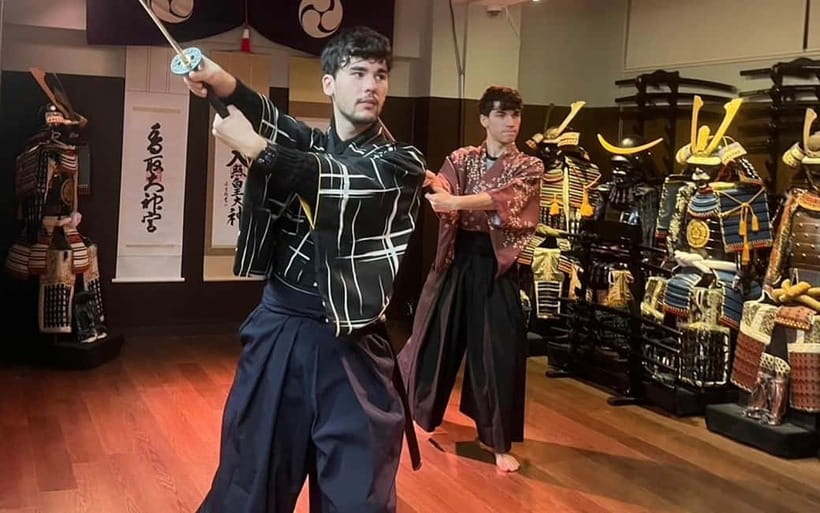
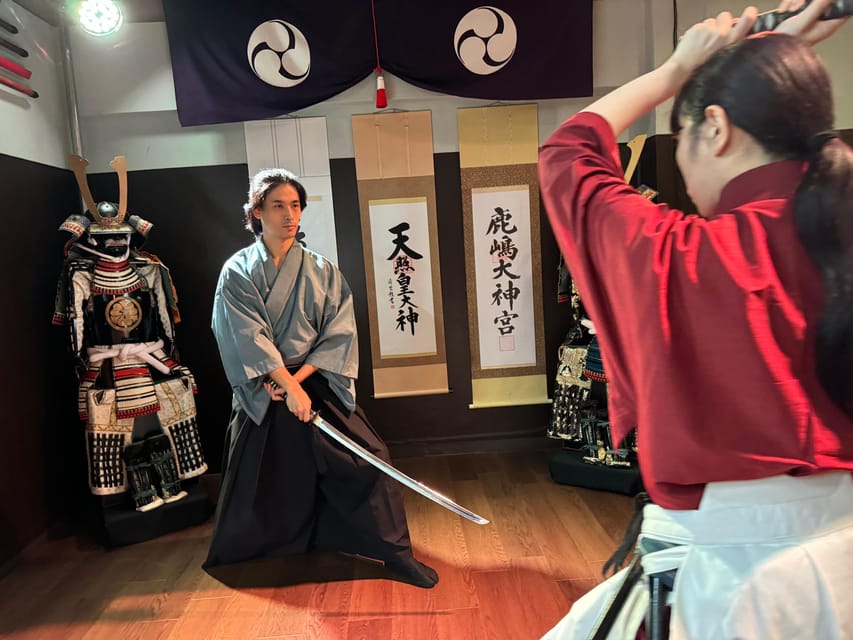
After the basic instruction, you practice a simple chanbara fight. Chanbara is the Japanese stage and screen style of sword combat, built around clear movements, timing, and dramatic reactions.
The routine includes offensive and defensive moves. You learn where to stand, how to swing, and how to respond to the person opposite you. The instructor guides the pace, so you are not expected to invent a fight on the spot.
This section is where the costume and lesson come together. A short movement can feel more convincing when you are wearing hakama, holding the sword correctly, and responding to a trained performer. The staff supply energy and direction, while you supply the concentration and willingness to play along.
I would treat the routine as a piece of stage work. Keep your movements controlled, listen carefully, and follow the instructor rather than trying to swing hard. The sword is not meant to cut, but it is still sensible to respect the space around you and the people sharing it.
The session can suit people who are shy about performing. One participant said the staff made the activity inviting even for someone who was not outgoing. The instructors lead the action, demonstrate the poses, and help with the timing, so you do not need to arrive with a performer’s confidence.
Same city, a completely different kind of day:
- Mt Fuji and Hakone 1-Day Bus Tour Return by Bullet Train
★ 5.0 · 26,383 reviews - 1-Day Tokyo Bus Tour
★ 5.0 · 14,250 reviews - Tokyo: TOKYO SKYTREE® Admission ticket
★ 4.5 · 11,192 reviews - Tokyo: teamLab Planets TOKYO Digital Art Museum Entry Ticket
★ 4.6 · 9,779 reviews
The music, lights, and final performance
The activity builds toward a more theatrical finale. You try to eliminate the bad guys to music, with lights and a soundtrack adding drama to the final performance.
That production element is a major part of the value. At $63 per person, this is not simply a costume rental or a short museum talk. You receive a costume, instruction, a staged fight, and a performance setting within one hour. The soundtrack and lighting help turn simple movements into something that looks good on video.
The final scene is still a mock fight. You should not expect a full-length samurai show or a detailed historical reenactment. The appeal is participation. You are part of the action, and the instructors use their performance skills to make the scene feel bigger than the basic steps alone.
Families can take part, and a 61-year-old participant described having a great time with the whole family. That suggests the session is not aimed only at young martial arts fans. Still, sword movement and costume changes require a reasonable level of physical comfort, so consider your own mobility before reserving.
Photos and phone videos without the usual scramble
Staff can take photos with the samurai and record video on your smartphone. This is a small detail with a big practical benefit.
Many performance activities leave you choosing between taking part and documenting the moment. Here, assistants can capture the action while you concentrate on the instructor and the scene. You can also pose with the samurai after the fighting portion.
Bring a phone with enough storage and battery for photos and video. The experience specifically allows you to use your own smartphone, but the supplied information does not promise professional photography, edited clips, or a separate download service. Think of this as helpful staff-recorded material rather than a formal photo package.
The camera work also rewards group bookings. Friends and family can film each other, while staff capture the wider moments. If you attend alone, you can still join because single participants are accepted, and the staff can help record your part.
What the $63 price really covers
The $63 price is fair if you want several elements in one compact Tokyo activity. The fee includes changing into kimono and hakama, the sword-parts explanation, use of a non-cutting sword, sword fighting with samurai performers, and a photo with a samurai.
In other words, you are paying for an interactive performance, not just a viewing seat. The small group limit of 10 also helps explain the price. The teachers must dress participants, demonstrate movements, manage the fight scenes, and help with photos.
The value is strongest for three kinds of people:
- You want a memorable family activity with clear participation.
- You enjoy samurai films, Japanese stage performance, or martial arts.
- You want photos and video of yourself in a Japanese costume.
The value is weaker if your priority is a long historical lesson, a museum collection, or serious sword instruction. The session lasts only one hour, and much of that time includes changing, demonstrations, practice, and the final performance. That is enough for a strong first taste, but not enough for advanced training.
The optional armor fee is the only listed extra cost tied to the activity itself. You do not need it to take part, so decide based on how much the visual effect matters to you.
Who will enjoy this most
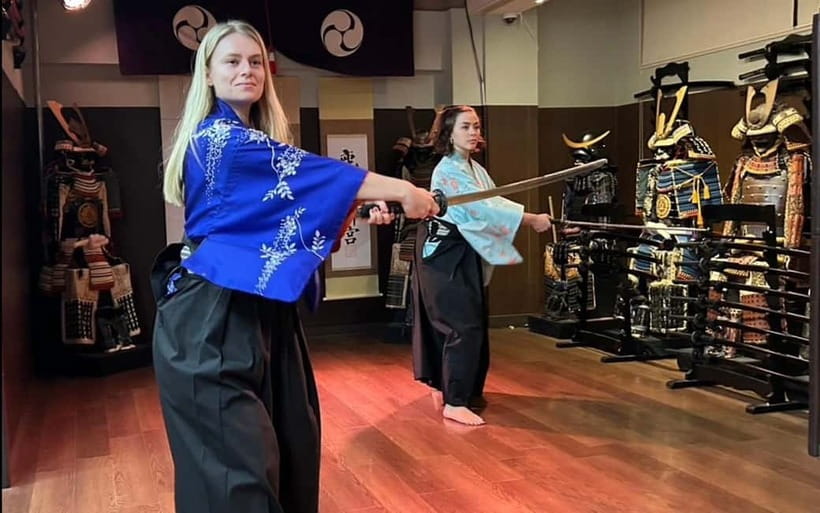
This is a good match for first-time visitors who want something more active than sightseeing. You get a direct connection to a familiar part of Japanese culture, but the format stays friendly and easy to follow.
It is also a strong choice for families. The activity is interactive, the final fight gives children a clear goal, and adults can take part rather than simply supervise. The age restrictions still matter: it is not suitable for children under 4, children under 3 feet or 90 centimeters, pregnant women, wheelchair users, people with visual impairments, babies, or people over 95.
Solo participants are welcome. A one-person reservation does not mean you miss the main parts of the experience. The small-group format allows you to join others for instruction, fighting, and photographs.
I would be more cautious if you dislike dressing up, staged combat, or being the focus of a camera. The instructors aim to make the session fun, but the whole point is to perform, pose, and take part. It is not a quiet cultural talk.
Language, timing, and booking flexibility
Instruction is available in English and Japanese. If you need English guidance for the sword movements, confirm the available language when choosing a time.
The duration is one hour, so fit it carefully into your Tokyo day. Same-day reservations are possible, subject to availability, and you can reserve now and pay later. Free cancellation is available up to 24 hours before the start time for a full refund.
Those policies help if your schedule is still shifting. Tokyo days can change quickly, especially when you are combining several neighborhoods, so the ability to hold a place without paying immediately is useful.
Arrive on time if you can. One participant who came late after a direct transfer from Kyoto was still welcomed and did not lose part of the experience, but I would not plan on that courtesy. Costume changes and group instruction work best when everyone starts together.
How this compares with a passive samurai show
A standard show lets you sit back and watch trained performers. This experience asks you to learn a routine, wear the costume, face a samurai, and appear in the final scene.
That difference is the main reason to choose it. You are not studying samurai culture in depth, but you are using your body, hearing Japanese terms, and taking part in a choreographed tradition of stage combat. For many visitors, that creates a stronger memory than another hour spent watching from a seat.
The trade-off is polish. Your movements will not look like those of the instructors, and the activity is designed for fun rather than historical precision. The teachers make the fight feel real through timing and energy, not through dangerous weapons or complex technique.
I like that the session does not pretend to offer expert-level training. It teaches a small set of movements, then uses them well. That keeps the hour focused and gives you a clear beginning, middle, and finale.
Should you book Tokyo’s Best Samurai Experience?
Book it if you want to dress as a samurai and perform, not just look at one. The costume, safe sword lesson, mock fight, music, lighting, and phone videos make this a neatly packaged one-hour activity with plenty to remember.
I would especially recommend it for families, solo visitors who want a guided activity, fans of samurai films, and anyone who values good photos from a trip. The 4.9 rating from 124 reviews also fits the practical picture: the strongest points are the friendly instructors, the personal group size, the balance between learning and fun, and the staff’s help with photos and video.
Skip it if you want a full history lesson, advanced martial arts training, or a long performance. At $63, it earns its price through participation and production, not depth. For a short, lively Tokyo activity with a clear cultural theme, it is an easy one to add to your plans.
FAQ
Where does the samurai experience take place?
Search Google Maps for Samurai Theater Tokyo to find the meeting point.
How long does the activity last?
The experience lasts one hour.
How much does it cost?
The listed price is $63 per person.
What costume will I wear?
You choose a kimono and hakama and change into a samurai costume.
Is the sword real?
No. You use a fake, non-cutting sword for the lesson and staged fight.
What will I learn?
You learn about sword parts and practice drawing, holding, swinging, and returning a sword. You also learn basic stance names and a simple chanbara fight routine.
Is instruction available in English?
Yes. The instructors provide English and Japanese instruction.
Can I join alone?
Yes. Single participants can join the experience. Groups are limited to 10 people.
Just added around Tokyo
- Tokyo: Customizable Private Guided Walking Tour★ 4.5 · 129 reviews
- Private Harajuku Omotesando Architecture Tour★ 4.9 · 18 reviews
- Tokyo: Guided Helicopter Ride★ 4.9 · 24 reviews
- Tokyo: Guided Walking Tour of Tsukiji Market with Lunch★ 4.4 · 24 reviews
- Tokyo: Private Personalized Local Food Tour★ 4.5 · 101 reviews
- Tokyo GINZA: KONPARU Japanese Cabaret Show with Drink★ 4.8 · 38 reviews
- Tokyo: Guided Walking Tour of Tsukiji Market with Breakfast★ 4.4 · 134 reviews
- Tokyo: Gotokuji Cat Temple, Shinjuku Cat Cafe & 3D Cat Tour★ 4.9 · 38 reviews
Kimono & Culture Experiences, compared.
Kyoto Geisha Walking Tour: Gion District & Hidden Gems
Read our review →
Gion Magical Night Walking Tour with Geisha Trivia
Read our review →
Gion Geisha District Walking Tour – Stories of Geisha
Read our review →
Best of Kyoto: Gion, Geisha, Pagodas & Cobblestones
Read our review →
Kyoto Gion Geisha District Walking Tour – The Stories of Geisha
Read our review →
Browse the lists this tour appears in