
REVIEW · WALKING TOURS
The Dark Side of Osaka Walking Tour
Osaka’s less polished side is the subject here: working-class streets, old entertainment quarters, day-labor history, and Tobita Shinchi, the city’s largest red-light district. This is not a standard sightseeing stroll. It is a guided look at parts of Osaka that many visitors pass without understanding.
I like the strong social-history focus, and I like the small maximum group of 15, which should make it easier to ask questions. Guides including Jay, Matt, and Rico are praised for clear local stories and patient answers. The main drawback is simple: the first half can feel like a walk through ordinary, worn-down streets, and there is little to do beyond listen and observe.
In This Review
- Key points at a glance
- What kind of Osaka tour is this?
- Shinsekai: Osaka’s old New World
- Nishinari and the city beneath the tourist map
- Jan Jan Yokocho and retro street life
- Tobita Shinchi: a careful look at Osaka’s red-light district
- Tsutenkaku Hondori and the finish near the tower
- How the guides shape the experience
- Is $25 a fair price?
- Practical details before you book
- Who should take this walk?
- Should you book The Dark Side of Osaka Walking Tour?
- FAQ
- How long does The Dark Side of Osaka Walking Tour last?
- What time does the tour start?
- Where does the tour begin?
- Where does the tour finish?
- Which areas does the tour visit?
- Is admission included?
- Are snacks included?
- How many people can join the tour?
- Is the tour accessible by public transportation?
- What happens if the weather is poor?
Key points at a glance
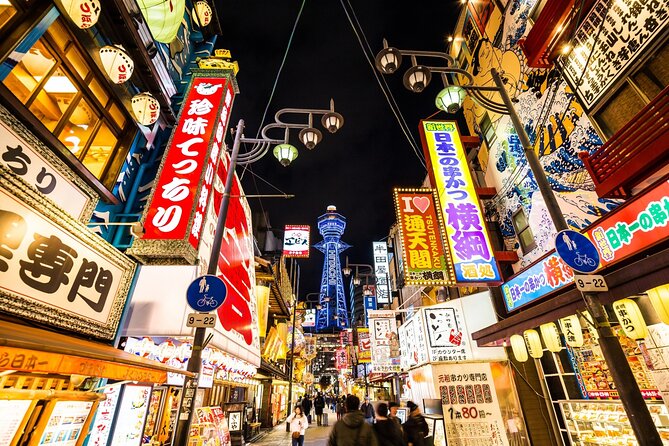
- Shinsekai after dark: Begin in Osaka’s retro entertainment district, with free time built around its streets rather than paid attractions.
- Nishinari context: Learn about an area shaped by day labor, working-class life, and social change.
- Tobita Shinchi visit: See Osaka’s best-known red-light district from a respectful distance while learning how its environment is regulated.
- Guides make the difference: Jay, Matt, and Rico are singled out for local knowledge, friendly pacing, and thoughtful answers.
- A small, affordable group: The $25 price includes fees and taxes, with no more than 15 people.
- Nearly two hours walking: The route is about two hours, so this suits you if you are comfortable staying on your feet.
What kind of Osaka tour is this?
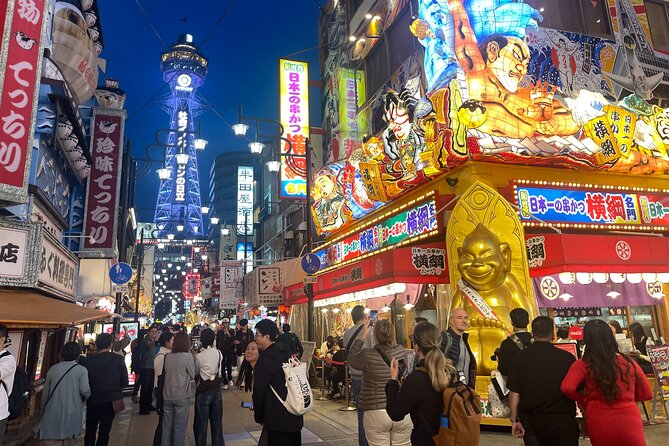
The Dark Side of Osaka Walking Tour takes you away from the city’s familiar postcard stops and into southern Osaka. Its subject is not simply crime or nightlife. The walk uses Shinsekai, Nishinari, and Tobita Shinchi to explain how poverty, labor, entertainment, and social boundaries have shaped the city.
You meet at 5:30 pm outside MEGA Don Quijote Shinsekai in Ebisuhigashi. That start time matters. The route begins in the evening, when Shinsekai’s signs and old-style streets take on a different character, then continues through areas associated with Osaka’s working-class past and adult entertainment.
I would not book this as a conventional sightseeing tour. You will not be collecting major monuments or spending long periods inside museums. Instead, you will walk, pause, listen, and ask questions. The value depends heavily on the guide’s ability to explain what you are seeing without turning local hardship into a spectacle.
The tour has earned a 4.9 rating from 49 ratings, with 98 percent recommending it. That strong response fits the experience’s best feature: a good guide can give meaning to streets that might otherwise seem unremarkable. Jay receives especially warm praise for thoughtful explanations and social history, while Matt and Rico are also named as friendly and well-prepared guides.
More Walking Tours in Osaka
- Osaka Kickstart: Hotspots & Hidden Gems Tour
★ 5.0 · 1,306 reviews - Osaka: Hotspots & Hidden Gems Walking Tour Private or Group
★ 4.9 · 1,300 reviews - Osaka Local Foodie Walking Tour in Dotonbori and Shinsekai
★ 5.0 · 985 reviews
Shinsekai: Osaka’s old New World
The walk opens in Shinsekai, whose name means New World. The district was established in 1912 and remains one of Osaka’s most distinctive areas, blending retro design with everyday local life.
You spend about 30 minutes here. The stop is free, and the focus is the district itself rather than an admission attraction. That makes the guide’s commentary especially important. Look around as you walk, but listen for the changes that shaped Shinsekai and the way its past still affects the streets today.
Shinsekai can be fun and visually striking, but it is not presented as a tidy historic quarter. Its appeal comes from the mix of old entertainment culture, shops, food streets, and working-class character. If you want only polished Osaka, this may feel rough around the edges. If you want help reading the city beyond its main attractions, it is a useful start.
Nishinari and the city beneath the tourist map
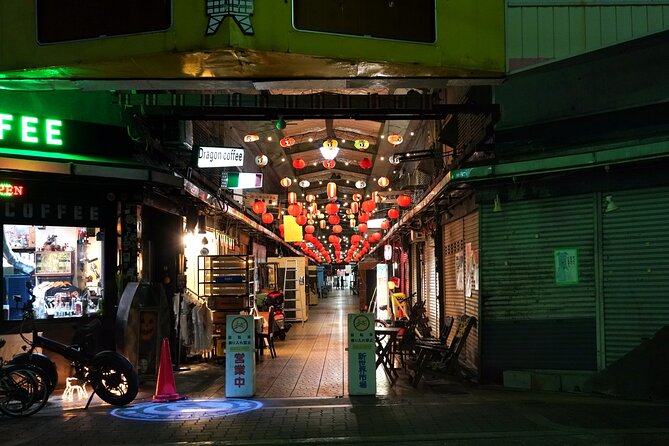
The next stop is Nishinari Dobutsuen-mae Deep Osaka Street, with about 30 minutes set aside. Nishinari is associated with day laborers and working-class communities, giving the tour a chance to discuss parts of Japanese society that are often left out of a standard Osaka introduction.
This section may be the most demanding part of the walk. One low-rated experience found that the first half involved wandering through slum areas without enough to see or do. That is a fair warning. You are not going to a site with a clear entrance, a famous viewpoint, or a series of exhibits. The streets themselves are the material.
I think this stop works best if you arrive with realistic expectations. The guide is there to provide context, not to entertain you every minute. Jay is praised for answering questions and explaining local issues in a way that makes the area easier to understand. You may find that the value comes after the walk, when you begin to notice how Osaka’s social divisions connect with its streets and businesses.
The tour also gives you a chance to ask about areas you would probably not explore alone. That does not mean every part of Nishinari will feel comfortable or visually rewarding. It means you have someone there to explain what you are seeing and to help keep the conversation respectful.
Jan Jan Yokocho and retro street life
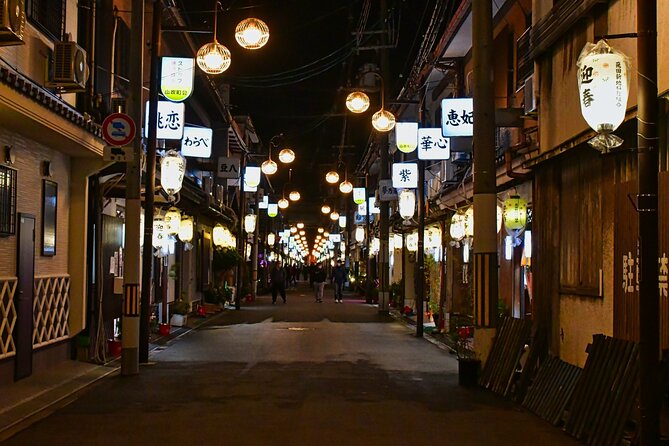
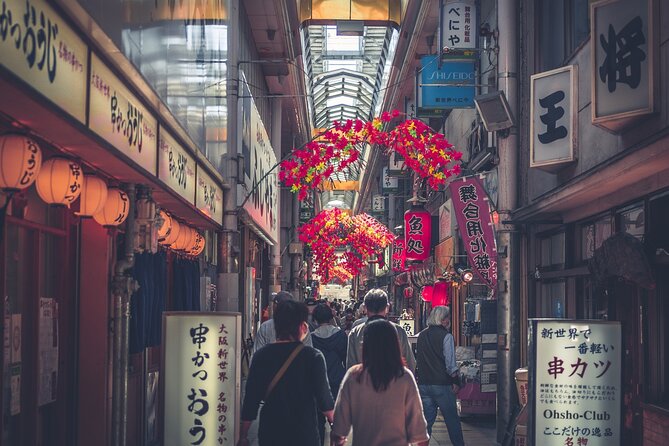
After Nishinari, the route reaches Jan Jan Yokocho, also called the Nanyodori Shopping District. This narrow shopping and dining street sits near Tsutenkaku Tower in Shinsekai and is known for its old-fashioned atmosphere.
You spend around 20 minutes here. The street offers a change of pace from the social-history discussion. Instead of focusing only on hardship and marginal life, the stop shows how food, small shops, and local entertainment fit into Shinsekai’s identity.
This is a good place to pay attention to the small details. The route does not include snacks, so any food or drink is at your own cost. The tour price covers fees and taxes, but not purchases. If you want something from the street, budget separately and be prepared to keep the group’s timing in mind.
Jan Jan Yokocho may be more enjoyable for you than the Nishinari section because it has a clear street character. Still, this is a short guided stop, not a food tour. The experience provider is Localized Walking & Food Tours, but this particular walk does not include snacks.
Same city, a completely different kind of day:
- Osaka Go Karting Tour with Funny Costume
★ 5.0 · 2,658 reviews - Osaka Castle: Museum and Tower Entry Ticket
★ 4.5 · 2,380 reviews - Osaka: Shinsekai Food Tour with 13-15 Dishes at 5 Eateries
★ 4.8 · 2,204 reviews - Osaka Food Tour: 13 Dishes at 5 Local Eateries
★ 5.0 · 2,149 reviews
Tobita Shinchi: a careful look at Osaka’s red-light district
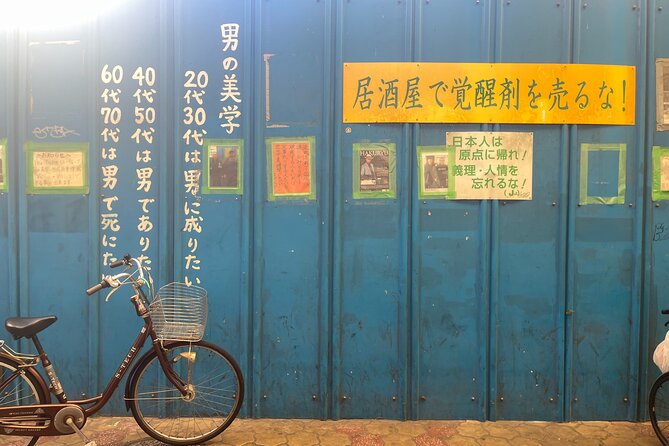
Tobita Shinchi receives about 20 minutes, making it one of the most distinctive stops. It is described as Osaka’s largest and most famous red-light district, with more than a century of history and a tightly regulated setting.
This part requires good manners. You are there to learn about the district’s structure and place in Osaka, not to treat people or businesses as scenery. The guide’s role is crucial. A respectful explanation can help you understand the area’s unusual architecture and rules without reducing it to a sensational story.
The tour’s title may suggest something lurid, but the strongest use of this stop is social context. Tobita Shinchi shows how entertainment districts can operate beside ordinary residential and commercial streets. The walk gives you a chance to see that contrast while keeping the visit brief.
Some people will find this stop fascinating. Others may feel uncomfortable, especially because the subject is adult entertainment and the area is still active. If you prefer tours built around art, temples, or food, this is probably not the right choice. If you want a frank account of Osaka’s less-discussed urban life, it is one of the tour’s main reasons to go.
Tsutenkaku Hondori and the finish near the tower
The final stop is Tsutenkaku Hondori Shopping Street, a 20-minute visit at the foot of Tsutenkaku Tower. This arcade has a retro feel and a mix of shops that continues the Shinsekai theme.
The tour ends at Tsutenkaku, at 1-chōme-18-6 Ebisuhigashi. The end point is close to where you began, which is practical if you are continuing your evening in Shinsekai. The walk does not list entry to Tsutenkaku Tower, so do not expect an observation-deck visit as part of the $25 fee.
This last section helps bring the tour back from its darker subjects to everyday Osaka. You finish among shops and streets rather than at a dramatic final attraction. That is consistent with the tour’s purpose: it is about understanding a district, not checking off a landmark.
How the guides shape the experience
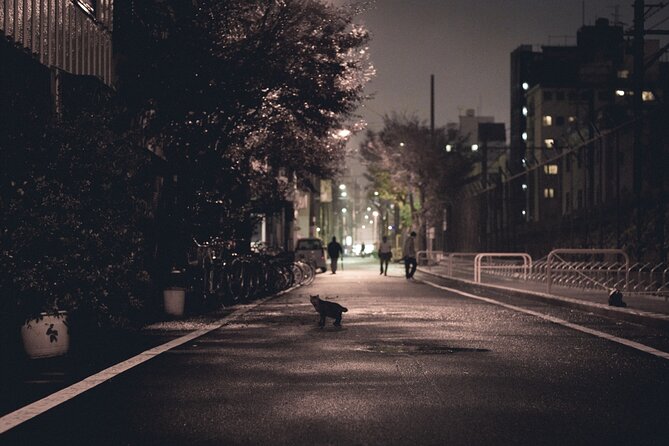
The guide matters more here than on a tour built around famous buildings. Much of the route consists of public streets with no admission charge. Your guide supplies the background, explains local customs and history, and answers questions when the surroundings alone do not tell you much.
Jay is repeatedly praised for social-history explanations, local stories, and practical tips about the different areas. One particularly useful quality is his willingness to answer questions while keeping the pace comfortable. Matt is described as friendly and interesting, while Rico receives praise for being well informed and accommodating.
The pace appears moderate, but do not mistake that for a short stroll. One participant found the tour required almost two hours of walking and advised being prepared. The listed duration is about two hours, with the stops totaling roughly two hours as well. You should be comfortable walking for that length of time.
The group limit is 15. That is not a private tour, but it is small enough to avoid the huge crowd problem common on free walking tours. A smaller group also gives you a better chance to hear explanations and ask about sensitive topics.
Is $25 a fair price?
At $25 per person, this is an inexpensive guided introduction to southern Osaka. All fees and taxes are included, and every stop has free admission. You are paying primarily for the guide’s time, interpretation, and local perspective.
That value is strong if you are curious about Osaka’s social history and would not feel confident walking through these districts alone. A good guide can turn an ordinary street into a lesson about labor, entertainment, poverty, and urban change.
The value is weaker if you expect attractions, tastings, or paid entry. Snacks are not included, and the route does not promise food samples or tower admission. One critical assessment felt there was not enough to see or do, even while giving the guide five stars. That distinction is important: the tour’s value is intellectual and cultural, not activity-packed.
Practical details before you book
You receive a mobile ticket, and confirmation is provided when you book. The meeting point is MEGA Don Quijote Shinsekai, 3-chōme-4-36 Ebisuhigashi, Naniwa Ward. The start time is 5:30 pm.
The tour is near public transportation, and service animals are allowed. Most people can participate, but the walk requires staying on foot for close to two hours. The group can have up to 15 people.
Free cancellation is available if you cancel at least 24 hours before the local start time. Cancellations or changes made less than 24 hours ahead are not accepted for a refund. The experience depends on good weather. If poor weather causes cancellation, you are offered another date or a full refund.
Who should take this walk?
I would recommend it to you if you want an Osaka experience that goes beyond food, shopping, and famous towers. It suits curious adults who are comfortable discussing poverty, labor, adult entertainment, and social boundaries in a respectful way.
It is also a good fit if you prefer asking questions to taking photographs. The guide’s explanations are the main attraction, and the small group makes that exchange more practical.
I would think twice if you want constant action, polished streets, or a formal sightseeing route. The first half can feel slow because much of it involves walking through areas without obvious attractions. You should also skip it if the red-light district subject would make you uncomfortable.
Should you book The Dark Side of Osaka Walking Tour?
Book it if you want context for parts of Osaka that are easy to overlook. At $25, the risk is modest, and the strong rating suggests the guide can make the experience worthwhile, especially when Jay, Matt, or Rico leads the walk.
Do not book it expecting a food tour, tower visit, or parade of sights. You are paying for an honest, sometimes uncomfortable conversation about the city, carried out on foot. For the right audience, that is exactly the point.
FAQ
How long does The Dark Side of Osaka Walking Tour last?
The tour lasts approximately two hours.
What time does the tour start?
The tour starts at 5:30 pm.
Where does the tour begin?
The meeting point is MEGA Don Quijote Shinsekai at 3-chōme-4-36 Ebisuhigashi, Naniwa Ward, Osaka, 556-0002, Japan.
Where does the tour finish?
The walk ends at Tsutenkaku, 1-chōme-18-6 Ebisuhigashi, Naniwa Ward, Osaka, 556-0002, Japan.
Which areas does the tour visit?
The route includes Shinsekai, Nishinari Dobutsuen-mae Deep Osaka Street, Jan Jan Yokocho, Tobita Shinchi, and Tsutenkaku Hondori Shopping Street.
Is admission included?
All fees and taxes are included, and the listed stops have free admission. Entry to attractions such as Tsutenkaku Tower is not listed.
Are snacks included?
No. Snacks are not included.
How many people can join the tour?
The maximum group size is 15 people.
Is the tour accessible by public transportation?
The experience is near public transportation.
What happens if the weather is poor?
The experience requires good weather. If it is canceled because of poor weather, you are offered a different date or a full refund.
Just added around Osaka
- Samurai dress-up and shows, plus Tea Ceremony & Calligraphy★ 5.0 · 27 reviews
- Kyoto & Nara Private customized tour with English speaking Guide★ 4.5 · 99 reviews
- Well-balanced BENTO (lunch box) Cooking Class★ 5.0 · 35 reviews
- Urban Canvas: Osaka Street Art Bike Tour★ 5.0 · 47 reviews
- OSAKA:Feel the Power! Learn Taiko Drum from Professionals★ 5.0 · 28 reviews
- Volleyball in Osaka & Kyoto with Locals!★ 5.0 · 21 reviews
- 1.5〜2 Hours Traditional Kintsugi Work Shop in Namba Osaka★ 5.0 · 75 reviews
- Umami Town Street Food Tour★ 5.0 · 120 reviews
Walking Tours, compared.

Kyoto Geisha Walking Tour: Gion District & Hidden Gems
Read our review →
Tokyo Tsukiji Fish Market Food and Culture Walking Tour
Read our review →
Gion Magical Night Walking Tour with Geisha Trivia
Read our review →
Imperial Palace and Shogun Historical Walking Tour
Read our review →
Gion Geisha District Walking Tour – Stories of Geisha
Read our review →
Asakusa Walking Tour with Sensoji Temple Visit
Read our review →
Kyoto Gion Geisha District Walking Tour – The Stories of Geisha
Read our review →Browse the lists this tour appears in