
REVIEW · KIMONO & CULTURE EXPERIENCES
Samurai Training in Tokyo: Swords, Bushido & Mental Discipline
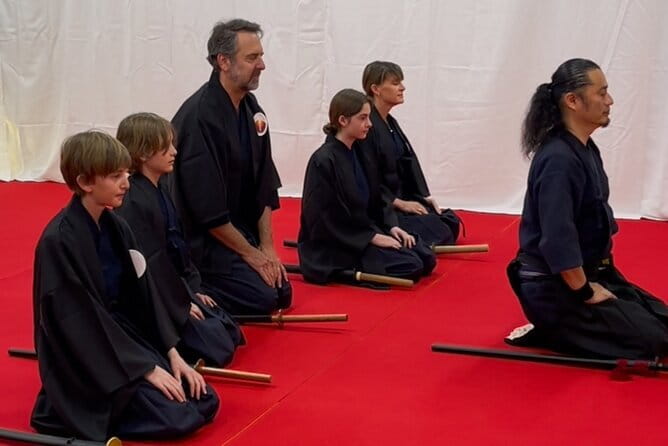
Tokyo’s Samurai Training experience goes well beyond posing with a sword. In a private dojo on former Edo Castle grounds, you learn etiquette, breathing, meditation, wooden sword movements, silent walking, and one authentic combat kata before practicing with an instructor.
I especially like the balance between physical work and mental discipline. The matcha and Japanese sweets break gives the two-hour session a calm cultural pause, while the personalized scroll certificate and photo in samurai dress make useful souvenirs. The main consideration is that this is a beginner lesson, not a full martial arts course, and at least two people must book.
- Former Edo Castle setting: Train in Tokyo’s Kojimachi district, where samurai once practiced within the castle’s inner grounds.
- Mind before movement: Bushido, breathing, meditation, posture, and silent walking come before sword drills.
- Private instruction: Only your group participates, so you can ask questions freely and receive direct guidance.
- Real technique in a safe format: You practice with wooden swords and learn one combat kata before one-on-one sparring with an instructor.
- A well-rounded souvenir: You receive a named, scroll-style certificate and a commemorative photo in traditional clothing.
- English support included: The session is taught in English, with translator assistance available, and is designed for beginners.
In This Review
- Why this dojo experience feels different from a samurai photo stop
- Beginning with etiquette, Bushido, and a quiet mind
- Wooden swords, heavy sticks, and silent walking
- Learning one combat kata instead of collecting random moves
- Matcha, sweets, and the pause that improves the lesson
- Traditional clothing, photographs, and the certificate
- What $85.66 buys you in two private hours
- Getting to Kojimachi and planning your day
- Who will enjoy this samurai training most
- Is this Tokyo samurai experience worth booking?
- FAQ
- Where does the samurai training take place?
- How long does the experience last?
- Is the activity private?
- Is the experience taught in English?
- Do I need previous martial arts experience?
- What do I receive at the end?
- What is the cancellation policy?
Why this dojo experience feels different from a samurai photo stop
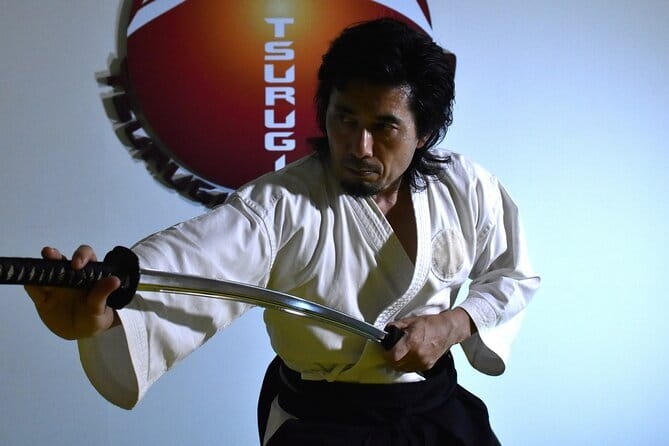
Many Tokyo activities use samurai clothing and swords as decoration. This one puts the training first. You do not simply hold a blade for a photograph, listen to a short talk, and leave. You spend the session learning how a warrior was expected to stand, breathe, move, and show respect.
The setting adds useful context. The dojo is in Kojimachi, in central Tokyo, on ground once connected with the inner area of Edo Castle. You are not walking through a preserved samurai residence, and the activity does not claim to recreate an entire castle-era life. Still, the location gives the lesson a stronger sense of place than a generic studio would.
The session is private, meaning only your own group takes part. That matters here. Sword movements require correction, and the instructor can respond to your questions rather than rushing through a large class. The minimum booking is two participants, so this is not designed for a solo booking.
At roughly two hours, the lesson has enough time for several kinds of practice without taking over your day. I would place it neatly between major Tokyo sights, especially if you want an activity with more substance than a standard costume rental.
Beginning with etiquette, Bushido, and a quiet mind
The first part focuses on samurai etiquette and the spirit of Bushido. Bushido is presented through ideas such as respect, discipline, and proper conduct, rather than as a movie-style tale of fearless warriors.
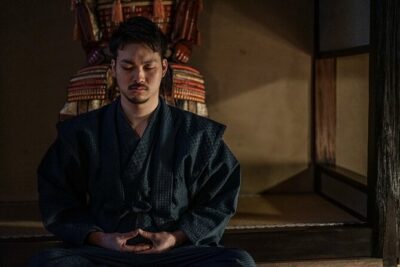
That opening is important because it gives meaning to the physical exercises that follow. You learn that the posture, bowing, controlled movements, and attention to others are part of the practice. If you arrive expecting to swing a sword within the first five minutes, you may find the pace more measured than expected. If you like learning the reason behind a technique, this is one of the strongest parts of the experience.
Breathing exercises and meditation follow. These are meant to settle your attention before you handle the wooden sword. You will not spend two hours in silence, but the training asks you to slow down and focus on small details.
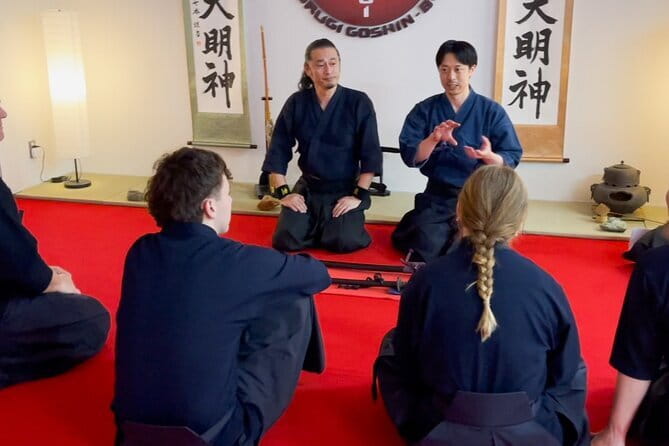
I like this approach because it keeps the activity from becoming simple stage combat. The instructor is teaching a way of thinking as well as a set of movements. The English presentation and translator support also help with ideas that can be difficult to understand through gestures alone.
The teaching team has included Sensei Oedo and Yukiji, along with English translators. That combination is useful if you want to ask about Bushido, the sword techniques, or the cultural background without worrying that a language gap will blur the answer.
More Kimono & Culture Experiences in Tokyo
- Tokyo: Samurai Ninja Museum Guided tour and Experience
★ 4.6 · 1,010 reviews - Tokyo: Samurai Sword & Archery Class from Samurai Descendant
★ 5.0 · 603 reviews - Best Samurai Experience in Tokyo
★ 5.0 · 458 reviews
Wooden swords, heavy sticks, and silent walking
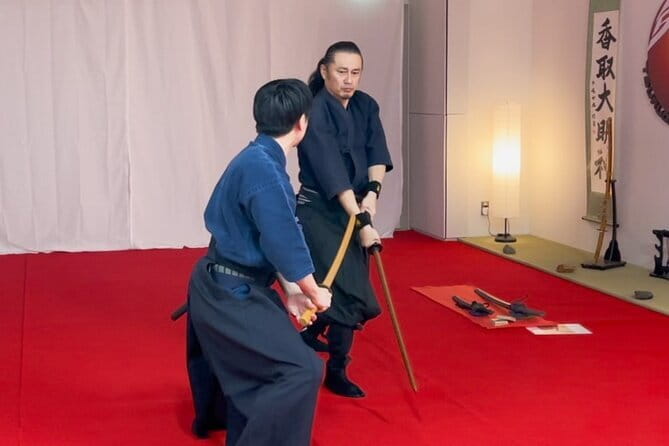
Once the mental preparation is complete, you move into physical drills. The sword work uses a wooden sword, so you practice movement without handling a live blade. The instructor also demonstrates sword techniques, giving you a clear model to follow.
The lesson includes strength training with a heavy stick. This section adds variety and makes the activity more physical than a formal talk. You will work on controlled movement rather than simply trying to swing with force. The point is coordination, posture, and discipline.
Silent walking is another unusual part of the session. You practice moving quietly while maintaining balance and focus. The comparison to ninja-style movement may sound playful, but it gives you a simple goal: control every step and avoid letting your posture collapse.
This is where comfortable clothing and sensible footwear become useful, even though you will also wear a samurai uniform. The activity is beginner-friendly, but it still involves movement, strength work, and repeated drills. Most people can participate, according to the supplied details, but you should be realistic about your own comfort with physical instruction.
Do not expect a modern fitness class with a long workout. The exercises support the sword lesson. Their value is in helping you notice how you stand, where your attention goes, and how much effort you use.
Learning one combat kata instead of collecting random moves
The central technical section teaches one authentic samurai combat kata. A kata is a set sequence of movements practiced in a specific order. Learning one complete form is more useful than being shown a dozen disconnected flourishes.
You will work through the positions and actions step by step. The instructor explains the sword skills and corrects your form. Since the experience is private, you can ask for clarification when a movement feels confusing or unnatural.
The lesson then applies the training through one-on-one sparring with an instructor. The supplied information does not describe the exact rules or intensity of this sparring, so you should see it as a guided practice section rather than a competitive match. The focus remains on applying what you have just learned.
This is also the point where the two-hour format makes sense. You have enough time to understand a movement, repeat it, and connect it to the larger kata. You will not leave as a trained swordsman after one class, but you will have a concrete form to remember and a better idea of how structured martial arts practice works.
The certificate lists your name and the techniques you learned. That detail gives the lesson a satisfying finish. It records the specific training rather than acting as a generic admission ticket or costume souvenir.
Matcha, sweets, and the pause that improves the lesson
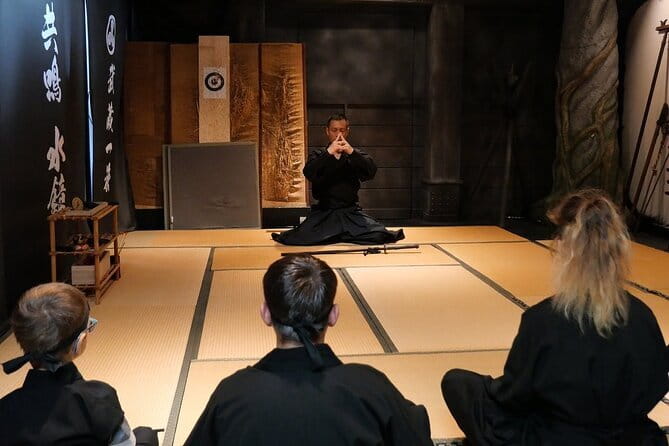
A break with matcha green tea and traditional Japanese sweets divides the training into manageable sections. It is a small feature, but it helps the experience feel like a cultural activity rather than a continuous exercise class.
The tea break also gives you time to ask more questions. You can discuss the movements, the meaning of Bushido, or the instructor’s demonstration while sitting down and resetting your attention.
The supplied details describe a quiet cultural setting for the break. Do not expect a formal tea ceremony unless specifically stated. This is a refreshment pause with matcha and sweets, not a separate tea lesson.
I like the contrast. The session begins with calm breathing, becomes physical through the drills, and then returns to a quieter rhythm before the final photographs and certificate. That change of pace keeps the experience from feeling repetitive.
If you have a strong interest in Japanese food, this will be a tasting rather than a meal. Plan to eat before or after if you need lunch or dinner.
Same city, a completely different kind of day:
- Mt Fuji and Hakone 1-Day Bus Tour Return by Bullet Train
★ 5.0 · 26,383 reviews - 1-Day Tokyo Bus Tour
★ 5.0 · 14,250 reviews - Tokyo: TOKYO SKYTREE® Admission ticket
★ 4.5 · 11,192 reviews - Tokyo: teamLab Planets TOKYO Digital Art Museum Entry Ticket
★ 4.6 · 9,779 reviews
Traditional clothing, photographs, and the certificate
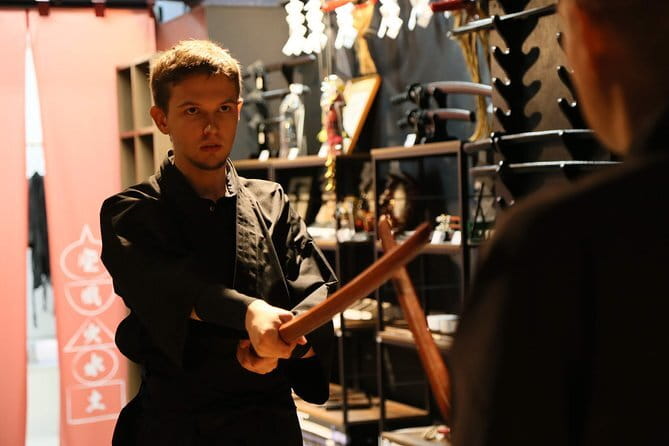
Samurai uniform rental is included. Wearing the clothing changes the feel of the lesson and makes the final photograph more meaningful than a quick snapshot in ordinary street clothes.
The instructor will take a commemorative photo with you in traditional dress. Since the activity is private, your group can take the photograph without a crowd of unrelated participants in the frame. The photo is a nice reminder of the occasion, though you should not expect a professional photography session.
The scroll-style certificate is personalized with your name and the techniques learned. It is one of the better souvenirs available in this price range because it reflects what you actually practiced. You receive something more specific than a printed card saying you attended a samurai event.
Keep your expectations in proportion. The certificate marks participation and instruction in the listed techniques. It is not a professional martial arts qualification, and the activity does not indicate that it awards a rank or belt.
What $85.66 buys you in two private hours
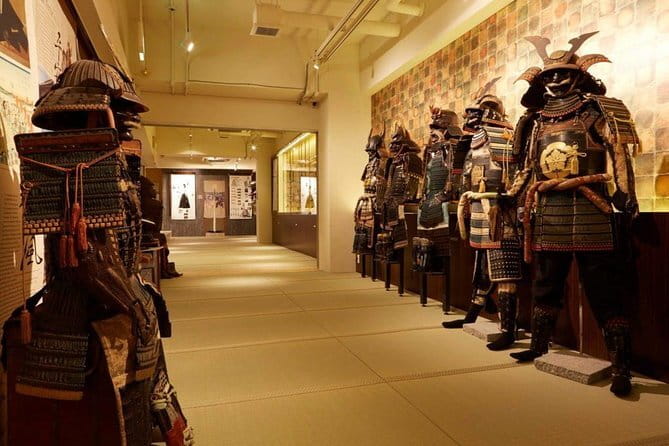
At $85.66 per person, this costs more than a museum ticket or a brief cultural demonstration. The price is easier to justify because it covers a private two-hour lesson, uniform rental, English instruction, a live sword demonstration, matcha, sweets, a personalized certificate, and a photo.
The private format is the biggest value point. You are not paying only for a performance. You are paying for direct instruction and the chance to ask questions throughout the session. That matters even more for first-time participants who need repeated explanations of posture or timing.
The certificate and uniform also add practical value, especially if you want a keepsake tied to an activity rather than another souvenir from a shop. The matcha break is a pleasant extra, but I would not book this solely for the tea and sweets.
The price may feel high if your main goal is a quick sword photograph. In that case, a shorter photo experience could suit you better. This activity makes more sense if you want to spend two hours learning a sequence, hearing about Bushido, and taking part in a structured lesson.
The experience is booked, on average, about 37 days ahead. That suggests you should reserve well before your Tokyo visit, particularly if your dates are fixed. A mobile ticket is provided, and the booking confirmation arrives at the time of reservation.
Getting to Kojimachi and planning your day
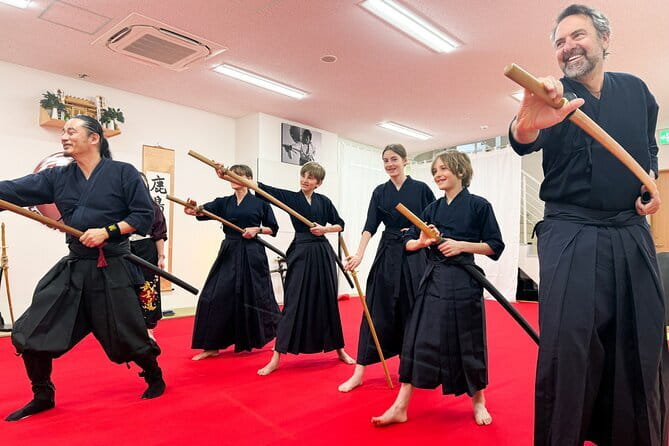
The meeting point is Samurai Sword Tokyo at 4-chōme-2-1 Kōjimachi, Chiyoda City, Tokyo 102-0083. The location is near public transportation, but private transportation is not included. You make your own way to the dojo, and the activity ends back at the same meeting point.
Allow enough time to find the building. A martial arts class is not the place to arrive breathless and distracted, especially since the first section covers etiquette and meditation. The supplied details do not provide a station name or walking time, so check the route from your hotel or preceding attraction before setting out.
Because the activity lasts about two hours and returns to its starting point, it is easy to pair with other central Tokyo plans. Keep your schedule flexible enough to account for getting there and changing into traditional clothing.
Free cancellation is available up to 24 hours before the start time for a full refund. Changes or cancellations made inside that 24-hour window are not accepted for a refund, and the cut-off uses Tokyo local time.
Who will enjoy this samurai training most
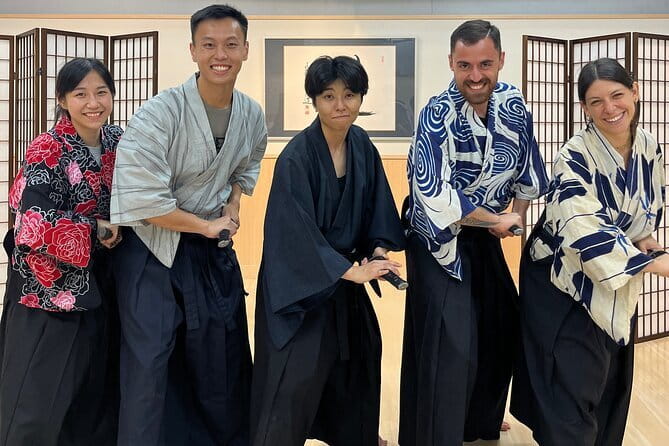
I would recommend this for adults, families, and older children who want to participate rather than watch. The class is designed for beginners, and direct instruction makes it approachable even if you have never held a wooden sword.
It also suits people who enjoy Japanese culture through practice. You learn etiquette, Bushido, meditation, movement, and a kata, so the session has more layers than a history lecture or a costume photograph.
The private format works well for couples, families, and small groups with different levels of interest. One person can ask about the cultural side while another focuses on the physical drills.
You may want to choose a different activity if you have limited mobility, dislike structured physical instruction, or want a full day of historical sightseeing. The details state that most people can participate, but they do not provide specific information about wheelchair access, age limits, or accommodations for individual medical needs. Contact the provider if those points affect your booking.
This is also not the right choice if you expect advanced sword training. The session teaches one combat kata and gives you a taste of the discipline. It cannot replace long-term study at a dojo.
Is this Tokyo samurai experience worth booking?
Yes, if you want a hands-on cultural lesson with real structure. I particularly like the combination of meditation, etiquette, wooden sword work, one kata, and the quiet tea break. The experience gives you something to do, think about, and remember.
Book it for the instruction, not just the costume. The best value comes from the private format, the English guidance, and the chance to ask questions while you practice. The certificate, matcha, sweets, and photograph then round out the visit.
The main limits are clear: it lasts only about two hours, requires at least two participants, and is beginner-level. For most visitors seeking an unusual Tokyo activity, that is a fair trade. If you want to understand the discipline behind samurai imagery instead of simply looking at it, this is a strong choice.
FAQ
Where does the samurai training take place?
The activity begins and ends at Samurai Sword Tokyo, 4-chōme-2-1 Kōjimachi, Chiyoda City, Tokyo 102-0083, Japan. The dojo is in Tokyo’s Kojimachi district, near public transportation.
How long does the experience last?
The training takes approximately two hours, including the instruction, physical drills, matcha break, photograph, and certificate presentation.
Is the activity private?
Yes. Only your group participates in the private activity, and you can ask the instructor questions throughout the session.
Is the experience taught in English?
Yes. The experience is in English, and translator support is available. English guidance covers sword skills, Bushido, and samurai history.
Do I need previous martial arts experience?
No. The experience is beginner-friendly, and most people can participate. You learn basic training techniques and one combat kata rather than taking an advanced course.
What do I receive at the end?
You receive a personalized scroll-style certificate with your name and the techniques you learned. Samurai uniform rental, matcha, Japanese sweets, and a commemorative photo are included.
What is the cancellation policy?
You can cancel up to 24 hours before the local start time for a full refund. Cancellations or changes made less than 24 hours before the start time are not accepted for a refund.
Just added around Tokyo
- Private Memorable Tokyo Tour with English Speaking Driver★ 5.0 · 30 reviews
- Private Tokyo Custom Full-Day Tour by Chartered Vehicle★ 5.0 · 16 reviews
- Private Sightseeing to Mt Fuji and Hakone with English Driver★ 5.0 · 51 reviews
- Tokyo Photography Masterclass – Private Photography Lesson★ 5.0 · 25 reviews
- Private Mt. Fuji Day Trip from Tokyo with English-Speaking Driver★ 5.0 · 33 reviews
- 4 Day Tour – Mount. Fuji, Tokyo, Hakone, Kamakura and Yokohama★ 5.0 · 19 reviews
- Private Unforgettable Mt Fuji Tour with English Speaking Driver★ 5.0 · 142 reviews
- Private Tokyo Food Tour – A Journey Through Time Through Food★ 5.0 · 36 reviews
Kimono & Culture Experiences, compared.

Kyoto Geisha Walking Tour: Gion District & Hidden Gems
Read our review →
Gion Magical Night Walking Tour with Geisha Trivia
Read our review →
Gion Geisha District Walking Tour – Stories of Geisha
Read our review →
Best of Kyoto: Gion, Geisha, Pagodas & Cobblestones
Read our review →
Kyoto Gion Geisha District Walking Tour – The Stories of Geisha
Read our review →
Browse the lists this tour appears in