
REVIEW · KIMONO & CULTURE EXPERIENCES
Samurai Experience – Learn Bushido through Kendo, in Tokyo
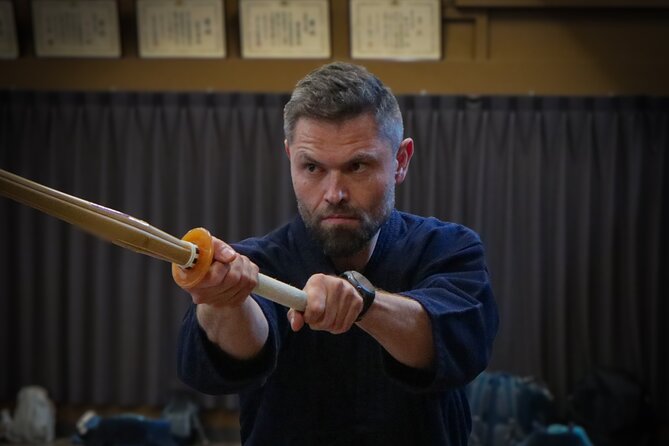
Kendo asks you to earn the sword. Before you pick up a bamboo blade, you learn how to bow, focus your spirit, move with balance, and show respect. Then Daichi and Makoto build the lesson step by step until you face a protected instructor in a short match.
I like the small group of up to eight, which gives beginners room to ask questions and practice without feeling lost. I also like the honest physical element: this is not just a costume photo. You may work up a sweat in the armor, but you leave with a clearer sense of Bushido and Kendo’s discipline.
The main consideration is heat and exertion. Two hours can feel warm once you are moving in protective gear, and the class may be more demanding than its tourist-friendly format suggests. Rest periods and drinks are provided, but wear comfortable clothes and arrive ready to participate.
In This Review
- Key points to know before booking
- Why this Kendo class feels different from a samurai photo stop
- The first lesson is bowing, not swordplay
- Footwork makes the lesson more challenging than it looks
- Handling the shinai comes after the basics
- Protective gear turns practice into a real challenge
- The instructor match is the moment of truth
- Stay for the instructors’ final demonstration
- What the two-hour format does well
- Location and planning near Tokyo Station
- Who will get the most from this experience
- Booking value, flexibility, and private sessions
- Should you book the Samurai Experience?
- FAQ
- How long does the Kendo experience last?
- How much does the experience cost?
- Is the class taught in English?
- Do I need previous Kendo or martial arts experience?
- What equipment is provided?
- Is the dojo far from Tokyo Station?
- Can I book a private session?
Key points to know before booking
- You earn the sword: The session begins with etiquette, spirit, and footwork before sword practice.
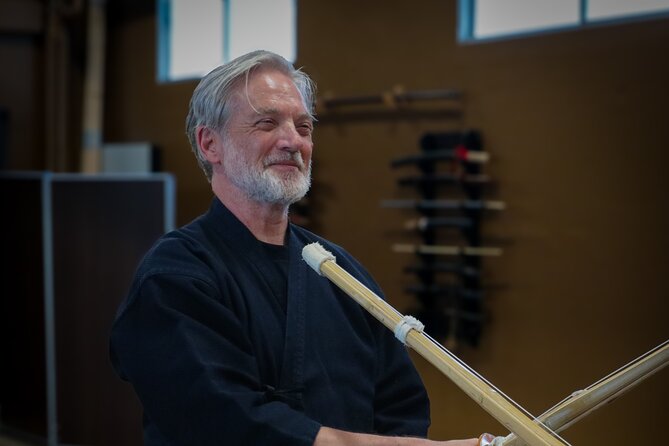
- Daichi and Makoto teach in English: Japanese is also available, and questions are welcome throughout the class.
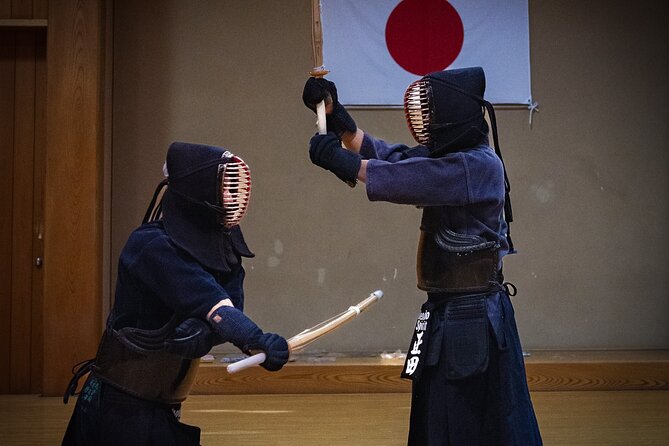
- You may wear full Kendo protection: The lesson builds toward a friendly match with a protected instructor.
- The final instructor demonstration matters: You see the speed, control, and focus that beginners are still learning.
- The dojo is close to central Tokyo: It is about 15 minutes from Tokyo Station, making it easy to fit into a city day.
- The class is active, not merely theatrical: Comfortable clothing is wise, since the training can become a workout.
Why this Kendo class feels different from a samurai photo stop
Tokyo offers plenty of ways to pose with a sword. This experience takes a more serious route. You do not begin with a dramatic stance or a quick photograph. You begin with rei, the etiquette of bowing and showing respect.
That choice sets the tone. Kendo is presented as a living martial art shaped by samurai practice and carried forward through Bushido. The goal is not to pretend you have become a warrior in two hours. It is to let you feel how discipline, posture, timing, and intent fit together.
I appreciate that distinction. The class still has fun, especially once you begin striking and sparring, but entertainment is not the whole point. You are asked to pay attention to how you stand, how you move, and how you face another person.
The experience costs $103 per person. That is not a bargain basement activity, but the price covers a two-hour class, Kendo clothing, a bamboo sword called a shinai, drinks, souvenirs, and the use of protective equipment. Photos and videos are taken during the session and sent to you by email afterward.
For someone who wants only a quick samurai-themed photograph, this is probably more time and money than necessary. For you if you want instruction, physical practice, cultural context, and a real demonstration, the price is easier to justify.
More Kimono & Culture Experiences in Tokyo
- Tokyo: Samurai Ninja Museum Guided tour and Experience
★ 4.6 · 1,010 reviews - Tokyo: Samurai Sword & Archery Class from Samurai Descendant
★ 5.0 · 603 reviews - Best Samurai Experience in Tokyo
★ 5.0 · 458 reviews
The first lesson is bowing, not swordplay
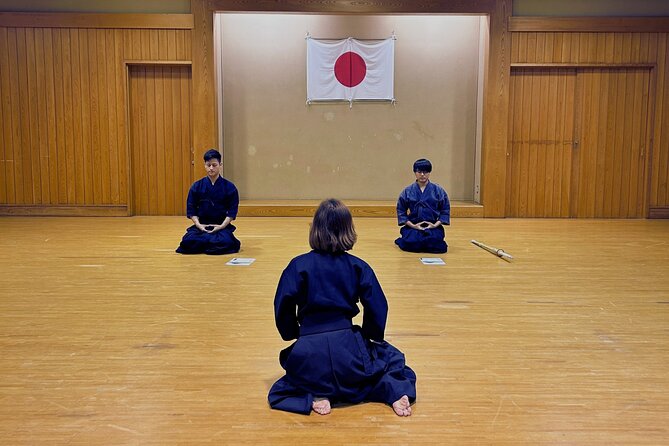
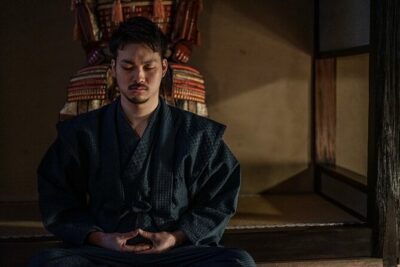
The opening is built around etiquette. You calm yourself, face the training space, and bow before practice begins. This is not treated as an empty ritual. It is explained as a way to meet another person with respect and to prepare your mind.
That makes the class accessible even if you know nothing about martial arts. You are not expected to understand Japanese terms or arrive with a special attitude. You simply need to listen and take the first movements seriously.
The instructors introduce the ideas of ki, tai, and ken. In plain terms, these refer to spirit, body, and sword. The lesson’s larger principle is ki-ken-tai-itichi, the joining of spirit, sword, and body in one action.
You will not master that principle in a single class. Still, it gives the exercises a purpose. A sword swing is not treated as arm movement alone. Your feet, posture, focus, and timing all have a part to play.
Footwork makes the lesson more challenging than it looks
The next stage is footwork. You practice moving while keeping your body grounded, balanced, and ready. This may sound simple, but beginners often find that the feet are harder to control than the hands.
The class adds new pieces gradually. You learn how to stand and move, then how to combine those movements with basic striking techniques. One participant described learning the step technique, attack technique, and four main points of attack. That gives you a useful sense of the lesson’s scope: it is an introduction, but not a quick skim.
I like this progression because it keeps the sword from becoming a toy. By the time you handle the shinai, you have already learned that movement and intent matter. The bamboo sword is part of a system, not a prop.
The instructors are also reported to pace the class carefully for beginners. That matters if you are not athletic or have never tried martial arts. You can participate without having to keep up with experienced Kendo students.
Handling the shinai comes after the basics
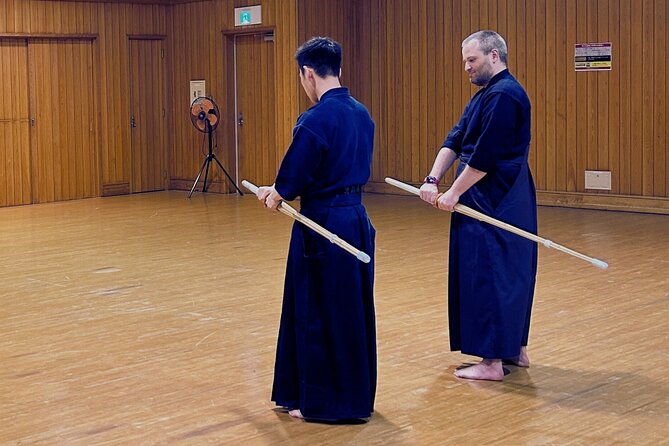
Only after the initial instruction do you learn how to hold and swing the shinai. You practice the basic actions under close guidance, with the instructors correcting movement and showing how the pieces fit together.
The bamboo sword is lighter and safer than a metal blade, but you should not mistake the session for casual play. Kendo depends on control. You learn to direct the strike, keep proper form, and maintain your attention on the person in front of you.
This is also where the vocabulary and customs begin to make sense. The class includes instruction in greetings and Kendo terms, along with details such as how to draw and fold the shinai. Those small habits help you understand that the tradition is carried through repeated physical acts.
For me, this is the point where the activity earns its cultural value. You are not just hearing that respect is important. You are practicing a formal way to enter, move through, and leave the training space.
Same city, a completely different kind of day:
- Mt Fuji and Hakone 1-Day Bus Tour Return by Bullet Train
★ 5.0 · 26,383 reviews - 1-Day Tokyo Bus Tour
★ 5.0 · 14,250 reviews - Tokyo: TOKYO SKYTREE® Admission ticket
★ 4.5 · 11,192 reviews - Tokyo: teamLab Planets TOKYO Digital Art Museum Entry Ticket
★ 4.6 · 9,779 reviews
Protective gear turns practice into a real challenge
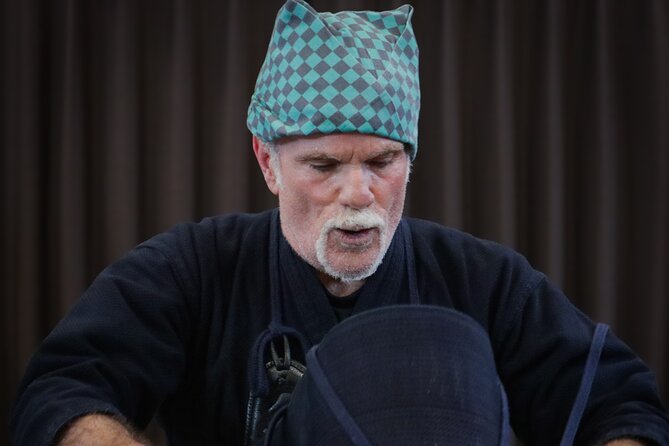
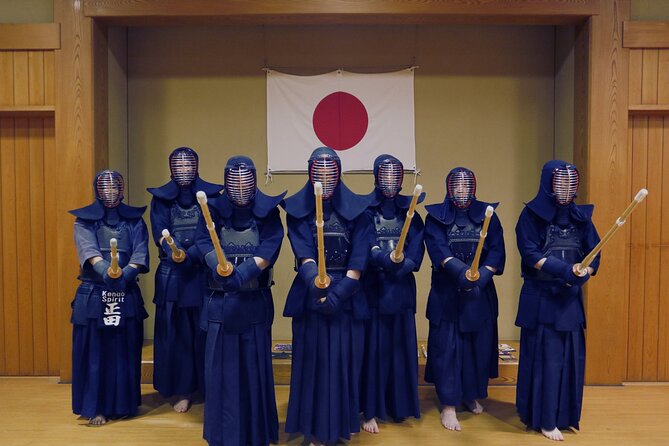
The class progresses toward full Kendo protection. Wearing the armor changes the mood. It makes the exercises feel more serious, and it also adds weight and heat to the activity.
This is the part to plan for physically. One participant compared the experience to a workout and advised dressing as if you were going for a run. Another noted that the room and equipment felt warm, though cold water and rest periods helped.
You do not need to be in excellent shape. The class is intended for beginners, and the group is small. Still, I would not schedule it immediately after a long, exhausting day of sightseeing unless you are comfortable with a physical activity.
The protective equipment also helps you take part in controlled practice with an instructor. You get a safer sense of distance, timing, and pressure than you would from simply waving a sword in front of a camera.
The instructor match is the moment of truth
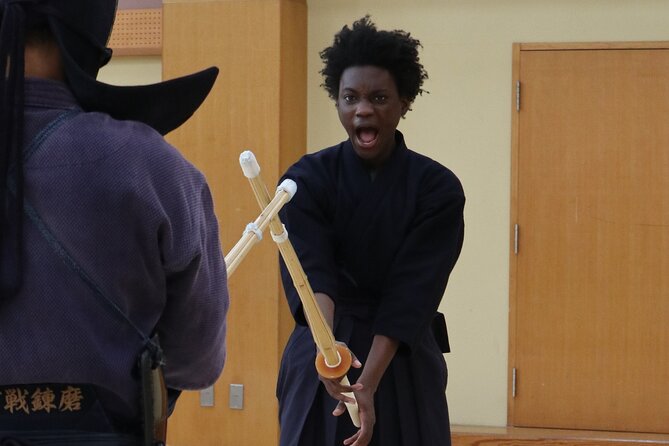
The practical high point is a friendly match with a protected Kendo instructor. You put the footwork, strikes, and focus together while facing a person who knows how to control the exchange.
The instructors do not expect a beginner to fight like a trained practitioner. The aim is to let you feel the pressure of an opponent and apply the basics you have just learned. That can be surprisingly intense. One participant described freezing for a moment when the sword was pointed at them, which says more about the focus of the encounter than about physical danger.
If you are shy about sparring, tell yourself that everyone begins at the same level. The small group setting helps, and the instructors guide the process. If you are eager to try martial arts, this is the part you will likely remember most.
The match also reveals why Kendo is built around more than strength. A wild swing is not the same as a controlled strike. You begin to see how calm posture and focused intent can matter as much as speed.
Stay for the instructors’ final demonstration
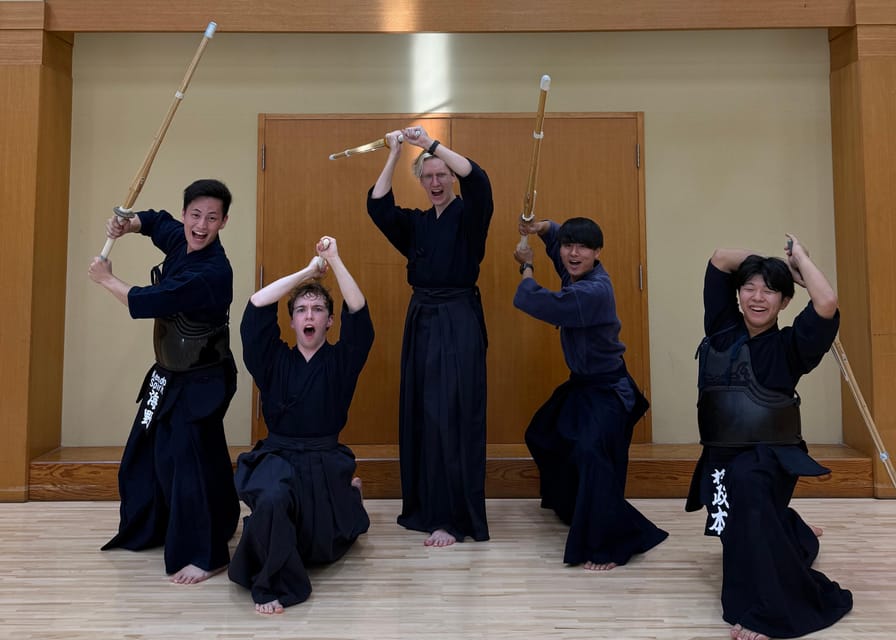
After the beginner practice, Daichi and Makoto demonstrate Kendo themselves. This is not simply a repeat of your exercise at a faster pace. It lets you see what the basic principles look like when two trained instructors bring them together.
The demonstration is described as intense, with speed balanced by control. That contrast is important. From the outside, Kendo can look like rapid sword fighting. From inside the lesson, you have already learned that every movement is tied to etiquette, footwork, timing, and spirit.
The final match gives the class a satisfying finish. You have spent the earlier part learning individual elements, then tested them in a beginner exchange. Now you can watch the same ideas used with precision.
The session closes with another bow. That return to etiquette gives the activity a clear shape. Respect is not only an opening gesture. It is meant to remain in place after the exertion and competition are over.
What the two-hour format does well
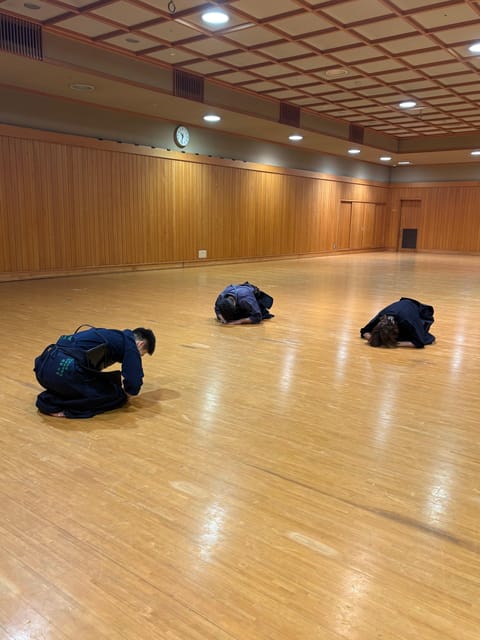
Two hours is enough time to cover the main building blocks without turning the activity into a full martial arts course. You receive cultural explanation, basic instruction, equipment practice, a match, and a demonstration.
The pace appears to be one of the class’s strengths. The instructors explain and demonstrate each new element before asking you to try it. That is useful when the movements feel unfamiliar or when English is not your first language.
The session is offered in English and Japanese. English-speaking instructors make it possible to ask questions as you go, rather than simply copying movements without understanding them.
The limit of eight participants is another practical advantage. A group of three with two instructors has also been used, creating a particularly personal class. Group size can vary, but the stated limit keeps the experience from becoming a crowded workshop.
You receive all equipment, so there is no need to bring a sword, armor, or special clothing. Photos and videos are taken with your agreement and sent by email afterward. Souvenirs are included as well, giving you something physical to carry home beyond the memory of the class.
Location and planning near Tokyo Station
The dojo is within approximately 15 minutes of Tokyo Station. That makes the experience easy to pair with central Tokyo plans, and you do not need to commit to a long ride across the city.
The exact starting time depends on availability, so check the schedule before building the rest of your day. The class lasts two hours, but you should allow a little breathing room around it rather than booking a rushed connection immediately afterward.
You are asked not to attend under the influence of alcohol or drugs. The activity is not suitable for pregnant women, babies under one year, or people over 95 years old.
For clothing, the provider supplies Kendo attire, but comfortable clothes are still sensible underneath. Since the class can become warm and active, avoid treating this like a quiet museum visit. Bring an open mind, water if you prefer your own supply, and the willingness to follow instructions.
Who will get the most from this experience
I would choose this class if you want a cultural activity that asks something of you. It suits people curious about martial arts, Japanese customs, samurai traditions, and the mental side of physical practice.
It is also a good fit for families with older children and teenagers. A parent and 15-year-old completed the two-hour introduction together, taking part in the exercises and the protected match. The activity is more suitable for participants who can follow instructions and take part physically than for very young children.
You do not need prior Kendo experience. Most participants are beginners, and the lesson is designed to build from the ground up. You do need to accept that the class includes discipline and formal behavior, not just a fun sword battle.
I would be cautious about booking it if you want a passive show, have limited tolerance for heat, or are looking for a short activity between other reservations. The experience is friendly, but it is still training. You will be expected to move, listen, bow, practice, and try the match.
Booking value, flexibility, and private sessions
The $103 price makes the most sense when you value the full package: teaching by Kendo instructors, clothing, shinai, protective gear, drinks, souvenirs, and digital photos and videos. It also includes an actual practice session and instructor demonstration rather than a staged performance alone.
Free cancellation is available up to 24 hours before the activity for a full refund. You can also reserve now and pay later, which helps if your Tokyo schedule is still shifting.
A private session is available as an add-on. You must request Exclusive Private Session before payment, with one add-on per group. Private sessions are available only on dates that still show eight available places, so you should check that condition before planning around privacy.
Large groups may also be arranged by contacting the provider. If your preferred date does not fit the published schedule, an alternative session may be possible.
Should you book the Samurai Experience?
Book it if you want to understand Kendo through your own movement rather than watching a performance or posing in armor. Daichi and Makoto’s step-by-step teaching, the small group size, the match with an instructor, and the final demonstration give the two hours a clear purpose.
I especially recommend it for first-time visitors who want something beyond temples, food tours, and observation decks. You will not become a samurai in one afternoon, but you will gain a practical feel for the respect, concentration, and body control that Kendo demands.
Skip it if you want an effortless photo stop or if a workout in protective gear sounds unpleasant. For everyone else, this is a focused, memorable way to spend two hours close to Tokyo Station, with enough genuine practice to make the samurai theme feel earned.
FAQ
How long does the Kendo experience last?
The experience lasts two hours. Check availability for the starting times offered on your chosen date.
How much does the experience cost?
The listed price is $103 per person.
Is the class taught in English?
Yes. The instructors speak English and Japanese, and the experience is conducted in English.
Do I need previous Kendo or martial arts experience?
No. The class is designed for beginners, including people with no previous martial arts experience.
What equipment is provided?
Kendo attire, a bamboo sword called a shinai, and the required training equipment are provided. Drinks and souvenirs are also included.
Is the dojo far from Tokyo Station?
No. The dojo is located within approximately 15 minutes of Tokyo Station.
Can I book a private session?
Yes. Add Exclusive Private Session before payment, with one add-on per group. Private sessions are available only on dates that still show eight available spots.
Just added around Tokyo
- Tokyo: Customizable Private Guided Walking Tour★ 4.5 · 129 reviews
- Private Harajuku Omotesando Architecture Tour★ 4.9 · 18 reviews
- Tokyo: Private Personalized Local Food Tour★ 4.5 · 101 reviews
- Tokyo: Guided Helicopter Ride★ 4.9 · 24 reviews
- Tokyo: Guided Walking Tour of Tsukiji Market with Lunch★ 4.4 · 24 reviews
- Tokyo GINZA: KONPARU Japanese Cabaret Show with Drink★ 4.8 · 38 reviews
- Tokyo: Guided Walking Tour of Tsukiji Market with Breakfast★ 4.4 · 134 reviews
- Tokyo: Gotokuji Cat Temple, Shinjuku Cat Cafe & 3D Cat Tour★ 4.9 · 38 reviews
Kimono & Culture Experiences, compared.
Kyoto Geisha Walking Tour: Gion District & Hidden Gems
Read our review →
Gion Magical Night Walking Tour with Geisha Trivia
Read our review →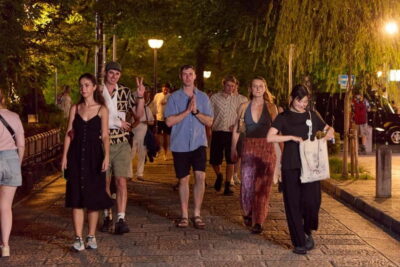
Gion Geisha District Walking Tour – Stories of Geisha
Read our review →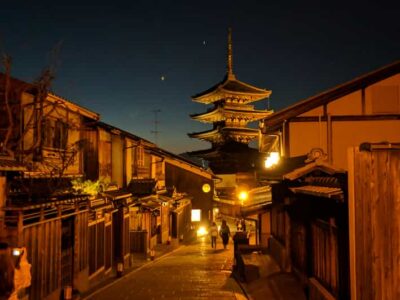
Best of Kyoto: Gion, Geisha, Pagodas & Cobblestones
Read our review →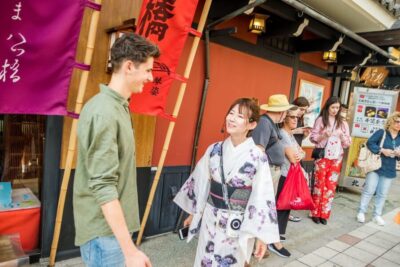
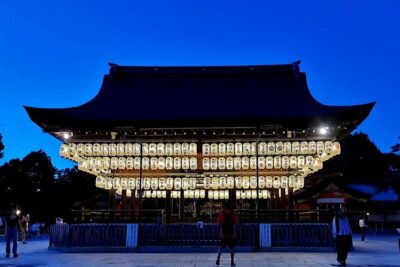
Kyoto Gion Geisha District Walking Tour – The Stories of Geisha
Read our review →
Browse the lists this tour appears in