
REVIEW · WALKING TOURS
Sakai – Knife Factory and Craft Walking Tour
Sakai’s best reason to leave central Osaka is hiding in plain sight: a working knife factory where blades arrive from blacksmiths and are shaped by hand. You’ll see the sharpening station, visit the office, and watch skilled makers turn rough blades into cooking tools. The factory access is the heart of this tour.
I like the small-group feel, with no more than 10 people, and the chance to practice sharpening rather than just watch. I also like the local flavor: a cinnamon mochi tasting and a stop at Sakai’s craft museum. Guides including Scott, Rémi, and Jean-Yves have earned warm praise for their conversation, language skills, and knowledge of the city.
The main caution is that the tour’s value depends heavily on your interest in knives. Some of the city stops can be visited independently, and the historical explanation may feel uneven. The factory and buying access are the real reasons to book.
In This Review
- Key points to know before you book
- Why Sakai is the right place for a knife tour
- Starting with cinnamon mochi in Sakai
- Inside the century-old knife factory
- Ordering a knife made for you
- Sakai Traditional Crafts Museum and Knife Shop
- What the guides add to the morning
- Timing, group size, and practical planning
- The unusual March and April 2026 restriction
- What the ratings suggest about value
- Who should book this Sakai experience?
- Should you book the Sakai Knife Factory and Craft Walking Tour?
- FAQ
- Where does the tour start?
- What time does the tour begin?
- How long does the experience last?
- What is included in the price?
- Is shopping included?
- Can I order a custom knife?
- Can a solo person book?
- Is a French-speaking guide guaranteed?
Key points to know before you book
- Enter a real family knife factory: The factory has more than 100 years of history and handles blades supplied directly by blacksmiths.
- Practice traditional sharpening: A professional shows you the method and gives you a chance to try it.
- Choose a handmade knife: You can order a customizable knife and watch it being made in front of you.
- Taste Sakai’s cinnamon mochi: The sweet comes from a local shop with a 400-year origin story.
- Keep the morning manageable: The tour begins at 9:00 a.m., lasts about 3 to 4 hours, and has a maximum of 10 people.
- Check special dates: From March 6 to April 6, 2026, only the blacksmith portion is available on Tuesdays, Wednesdays, and Thursdays.
Why Sakai is the right place for a knife tour
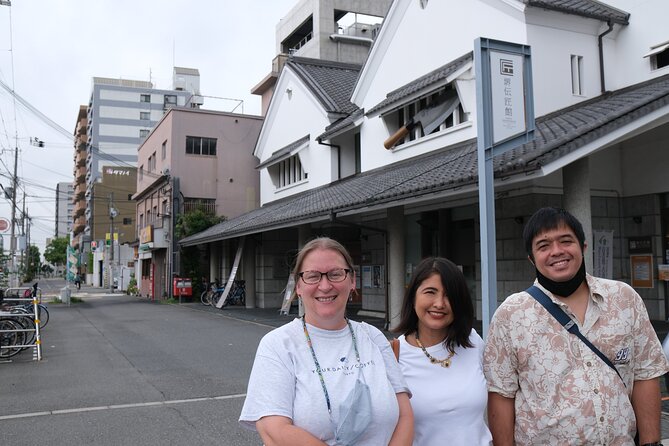
Sakai is in Osaka Prefecture, but it feels like a different stop from the city’s bright shopping streets and food districts. This tour gives you a reason to see the area through its working crafts.
The focus is not a staged demonstration built only for photographs. You enter a functioning factory, see the sharpening station, and watch handmade cooking knives take shape. That makes the visit useful even if you have little interest in collecting knives. You can see how much handwork sits behind a tool that usually gets pulled from a kitchen drawer without a second thought.
The tour also shows that Sakai’s identity is broader than blades. You get a small taste of local food, a look at traditional crafts, and time at a museum devoted to products made in the city. That wider view helps keep the morning from becoming a single-topic sales visit.
The price is $66.05 per person. For roughly half a day, that covers a bilingual guide, the factory visit, the sharpening lesson, the sweet tasting, and admission fees. I consider that fair value if you want personal guidance and access to a working craft site. If your only goal is to buy a knife, you may find the price harder to justify, since the museum and some public areas can be explored on your own.
More Walking Tours in Osaka
- Osaka Kickstart: Hotspots & Hidden Gems Tour
★ 5.0 · 1,306 reviews - Osaka: Hotspots & Hidden Gems Walking Tour Private or Group
★ 4.9 · 1,300 reviews - Osaka Local Foodie Walking Tour in Dotonbori and Shinsekai
★ 5.0 · 985 reviews
Starting with cinnamon mochi in Sakai
The morning starts at 9:00 a.m. at 3-chōme-22 Ebisujimachō, Sakai Ward, Sakai, Osaka 590-0985. The first stop is 八百源来弘堂本店, a shop connected with a traditional Japanese cinnamon mochi said to have a 400-year origin story.
You receive one sweet as part of the tour. You can buy more if you like, but there is no extra food included beyond the provided snack.
This is a short stop, about 15 minutes, so expect a taste and a quick introduction rather than a full food tour. I like this opening because it gives you an immediate local detail before the technical part of the morning begins. It also adds a little variety for anyone in your group who is less focused on knives.
If you have dietary concerns, the supplied information does not specify ingredients beyond cinnamon mochi. Ask the guide or shop directly before eating if that matters to you.
Inside the century-old knife factory
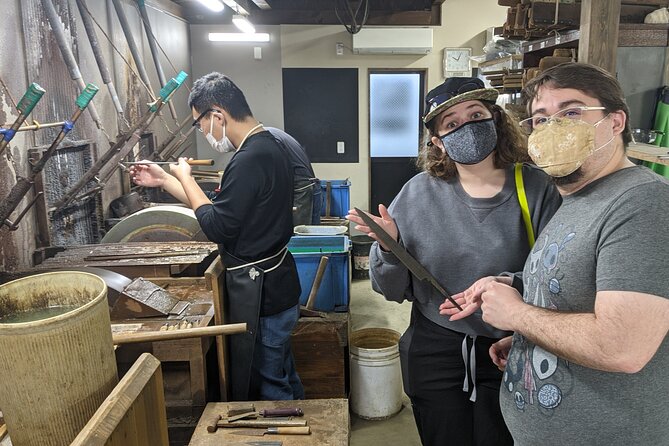
The second stop is the tour’s main event. At a traditional family knife factory on Shukuyachōnishi, you spend about an hour seeing how handmade cooking knives are finished.
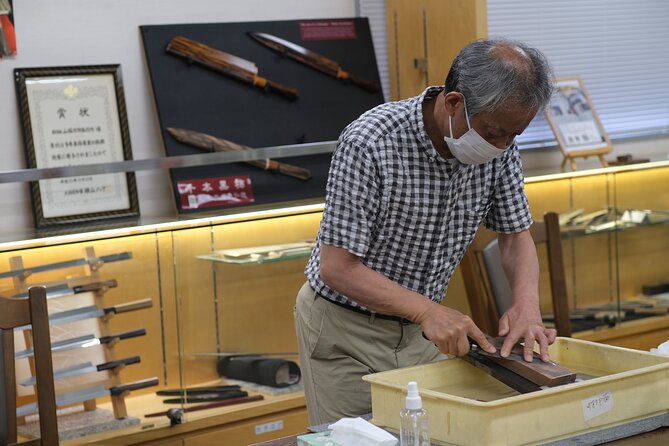
Raw blades arrive directly from the blacksmith. At the sharpening station, you watch professionals work with precision and patience. The point is not simply to see a finished knife behind glass. You see the practical steps that turn a blade into a usable kitchen tool.
You also visit the main office, which gives the factory visit a more complete feel. The experience connects the workshop floor with the family business behind it. That matters because Japanese knife making is not just about the metal. The final performance depends on shaping, sharpening, and careful finishing.
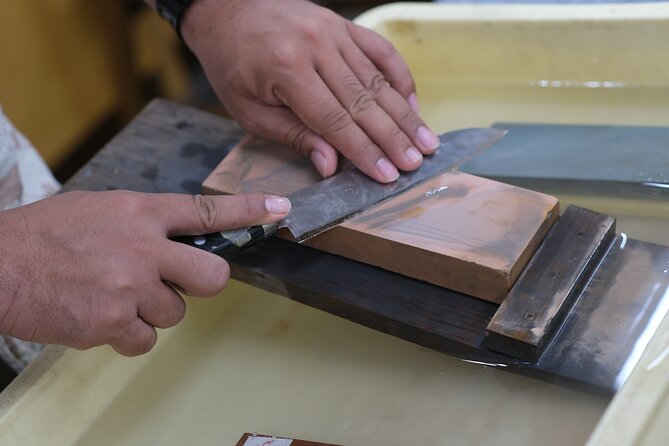
The sharpening lesson is included. A professional teaches you traditional sharpening techniques, then gives you a chance to practice. This hands-on part makes the tour more memorable, but you should not expect to become an expert in one short session. The value is in learning how much care the process requires and understanding why a handmade knife needs proper treatment.
The factory portion may be less exciting for children or companions who have no interest in tools. It is also a working environment, not an entertainment venue. Your access and what you see may depend on the day’s activity, so go in ready to observe carefully rather than expecting a large production.
Ordering a knife made for you
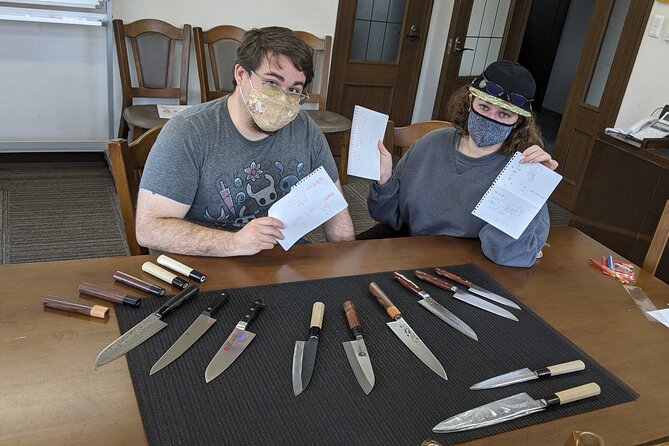
One of the strongest reasons to choose this experience is the chance to order a customizable knife. You can select a knife and watch it being made in front of you.
The supplied information does not list every customization option, so ask the guide or maker what is available before you decide. You should also think ahead about how you will use the knife. A Japanese kitchen knife is not a magic upgrade for every cook. Its value comes from matching the blade to your habits and caring for it properly.
The factory does not use hard-sell tactics, based on the experience described by the provider. Still, the setting is designed to make you appreciate the work. After seeing a blade sharpened by hand, you may find yourself more interested in buying one than you expected.
Shopping is not included in the tour price. Set your budget before you arrive, and ask about care, sharpening, and any delivery or carrying arrangements if you place an order. The tour gives you access to the craftsman, which is more useful than wandering through a general souvenir shop, but the purchase itself remains your responsibility.
Same city, a completely different kind of day:
- Osaka Go Karting Tour with Funny Costume
★ 5.0 · 2,658 reviews - Osaka Castle: Museum and Tower Entry Ticket
★ 4.5 · 2,380 reviews - Osaka: Shinsekai Food Tour with 13-15 Dishes at 5 Eateries
★ 4.8 · 2,204 reviews - Osaka Food Tour: 13 Dishes at 5 Local Eateries
★ 5.0 · 2,149 reviews
Sakai Traditional Crafts Museum and Knife Shop
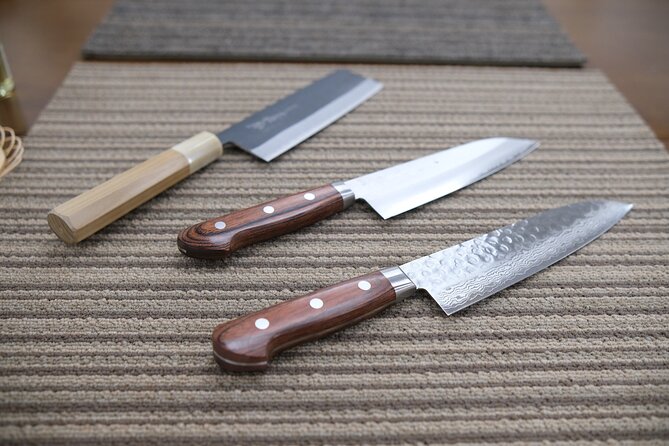
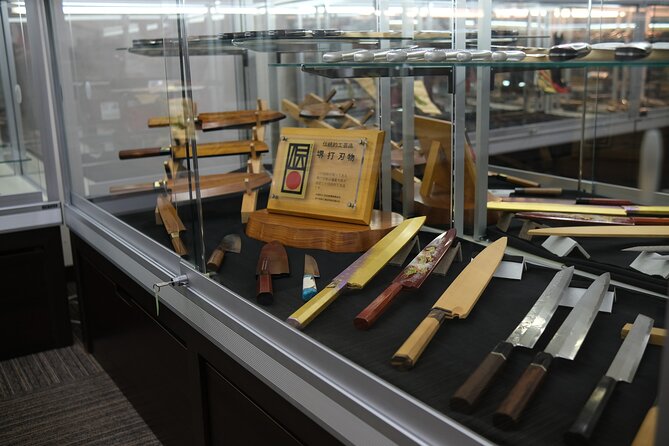
After the factory, the tour continues to the Sakai Traditional Crafts Museum and Knife Shop for about 30 minutes. This museum introduces products associated with the city, including handmade crafts, local goods, and bicycles.
Sakai is also linked with Shimano, which was first created in the city. That detail helps broaden the picture of local industry. The area is not only about old techniques. It also has a modern manufacturing side.
The museum is a good place to compare knives and other products after seeing the work behind them. You may find this stop useful for deciding what interests you, especially if you are considering a purchase. It is less essential if you already know exactly what knife you want.
There is an important scheduling note. Every third Tuesday of the month, the museum may close for inventory without notice. If that happens, your guide will take you directly to The Craftsman location instead. This can change the planned order and museum portion, but the main craft focus remains.
What the guides add to the morning
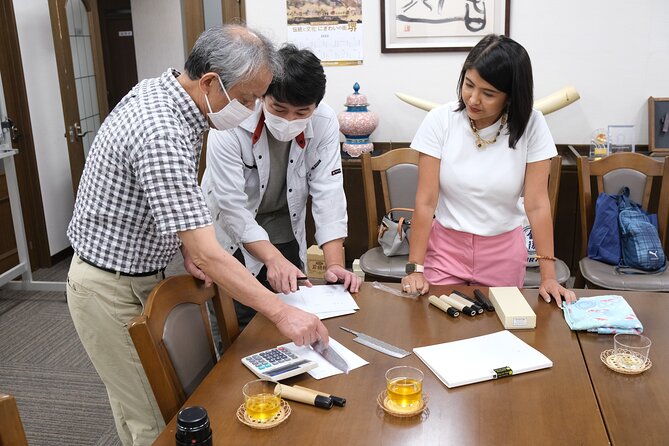
The tour includes a bilingual guide. Named guides connected with the experience include Scott, Rémi, and Jean-Yves.
Scott is praised for good conversation and for making the history easy to enjoy. Rémi is described as speaking French, English, and Japanese, which is useful for French-speaking visitors who want more than a basic translation. Jean-Yves has also been singled out for his kindness, local explanations, and practical lunch and mochi suggestions.
The company cannot guarantee a French-speaking guide on a shared tour. If French is essential, do not assume it will be available simply because some guides speak French.
A guide matters here because the factory work can be hard to understand without context. You need someone to explain what you are seeing, help with the sharpening lesson, and make sense of Sakai’s connection to crafts and industry. At the same time, the quality of the morning will partly depend on the guide assigned that day.
The historical presentation may not suit everyone. One critical assessment found the explanation too Eurocentric and felt the guide lacked enough knife expertise. That is a fair concern. The strongest version of this tour comes when the guide lets the makers and the process lead, then adds clear local context without forcing the story through a foreign framework.
Timing, group size, and practical planning
The tour lasts about 3 to 4 hours and ends back at the meeting point. The start is early, but 9:00 a.m. is a sensible time for a factory visit and leaves your afternoon open for Osaka.
The group is capped at 10 people. That is small enough for questions and for a sharpening lesson to feel personal, though the exact atmosphere will depend on how many people book that day.
Single visitors can book, but the tour needs at least two participants to operate. If you are the only person booked, the session may be canceled. You should then receive notice and be offered another date or a full refund. If you are traveling alone, this is worth checking before you build an important day around the tour.
The meeting point is near public transportation, and most people can participate. Wear comfortable shoes, since this is a walking tour with workshop visits. The supplied details do not promise a fully step-free route, so ask the provider directly if you have mobility concerns.
A mobile ticket is included. Bring your booking details and arrive ready to start at 9:00 a.m. Since the tour ends at its starting point, you can plan lunch afterward in the same general area or follow the guide’s local suggestions.
The unusual March and April 2026 restriction
If you plan to visit from March 6 through April 6, 2026, pay close attention to the special schedule.
During that period, the blacksmith is available only on Tuesdays, Wednesdays, and Thursdays. The dates are described as blacksmith-only, so you should not expect the full standard experience with every regular factory element.
This is not a minor footnote. The blacksmith connection is central to understanding where the blades begin, but the usual tour also includes the sharpening station, factory visit, museum, and knife shop. Confirm exactly what your selected date includes before paying.
The third-Tuesday museum closure can also affect the program. On that day, the museum may close for inventory, and the guide may take you straight to The Craftsman location. Flexible visitors should be fine, but anyone set on seeing the museum should avoid that date or ask for confirmation.
What the ratings suggest about value
The experience has a 4.8 rating from 44 reviews, with 93 percent recommending it. The most consistent praise goes to the factory visit, the knife-making process, and guides such as Scott, Rémi, and Jean-Yves.
The most memorable element is seeing the precision involved in a handmade knife. Several people who arrived with only a general interest in cooking found the craft more fascinating than expected. The sharpening lesson also gives the morning a useful edge, since you leave with a better sense of how to care for a knife.
The less positive feedback points to two limits. First, the public parts of Sakai can be visited without a guide. Second, not every guide may have deep technical knowledge of knives. That means the tour is best seen as guided access to the factory and craftsman, not as a complete scholarly course in Japanese blades.
The strongest value comes if you plan to purchase a knife, want help choosing one, or care about the work behind it. If you are simply checking off Sakai’s main sights, the $66.05 cost may feel high for a morning that includes short stops.
Who should book this Sakai experience?
I would choose this tour if you cook often, collect kitchen tools, enjoy traditional crafts, or want to meet the people behind a Japanese product rather than only shop for it.
It also suits you if you have one morning in Osaka to spare and want something quieter and more practical than another major city attraction. The mochi tasting and craft museum help keep the experience varied for a small group with mixed interests.
You may want to skip it if you dislike workshop visits, have no interest in buying or caring for a knife, or prefer to explore at your own pace. The museum stop is brief, and the tour moves around a single main subject.
French speakers should request a French-speaking guide but understand that a shared tour cannot guarantee one. Solo bookers should also remember the two-person minimum.
Free cancellation is available up to 24 hours before the start time. Cancellations made later are not refunded, and changes are not accepted inside that 24-hour window.
Should you book the Sakai Knife Factory and Craft Walking Tour?
Book it if the idea of watching a blade become a cooking knife appeals to you. The working factory access, personal sharpening lesson, and chance to order a custom knife are the parts you cannot easily reproduce with a self-guided visit.
I would not book it only for a general Sakai sightseeing walk. The city stops are pleasant additions, but the factory is the reason to pay. Check the 2026 blacksmith schedule, avoid the third Tuesday if the museum matters, and confirm language needs before booking.
For cooks and craft fans, this is a focused, memorable morning with a clear purpose. For everyone else, Sakai has enough public sights to explore independently at a lower cost.
FAQ
Where does the tour start?
It starts at 3-chōme-22 Ebisujimachō, Sakai Ward, Sakai, Osaka 590-0985, Japan.
What time does the tour begin?
The tour begins at 9:00 a.m.
How long does the experience last?
It lasts approximately 3 to 4 hours and ends back at the meeting point.
What is included in the price?
The price includes one sweet per person, all fees and taxes, a bilingual guide, the knife factory visit, and a knife sharpening lesson.
Is shopping included?
No. Extra food, knives, souvenirs, and other purchases are not included.
Can I order a custom knife?
Yes. The tour gives you the chance to order a customizable knife and watch it being made in front of you.
Can a solo person book?
Yes, but the tour needs at least two participants to operate. If the minimum is not met, you may be offered another date or experience, or receive a full refund.
Is a French-speaking guide guaranteed?
No. French-speaking guides may be available, but the provider cannot guarantee French on a shared tour.
Just added around Osaka
- Samurai dress-up and shows, plus Tea Ceremony & Calligraphy★ 5.0 · 27 reviews
- Kyoto & Nara Private customized tour with English speaking Guide★ 4.5 · 99 reviews
- Well-balanced BENTO (lunch box) Cooking Class★ 5.0 · 35 reviews
- Urban Canvas: Osaka Street Art Bike Tour★ 5.0 · 47 reviews
- OSAKA:Feel the Power! Learn Taiko Drum from Professionals★ 5.0 · 28 reviews
- Volleyball in Osaka & Kyoto with Locals!★ 5.0 · 21 reviews
- 1.5〜2 Hours Traditional Kintsugi Work Shop in Namba Osaka★ 5.0 · 75 reviews
- Umami Town Street Food Tour★ 5.0 · 120 reviews
Walking Tours, compared.

Kyoto Geisha Walking Tour: Gion District & Hidden Gems
Read our review →
Tokyo Tsukiji Fish Market Food and Culture Walking Tour
Read our review →
Gion Magical Night Walking Tour with Geisha Trivia
Read our review →
Imperial Palace and Shogun Historical Walking Tour
Read our review →
Gion Geisha District Walking Tour – Stories of Geisha
Read our review →

Asakusa Walking Tour with Sensoji Temple Visit
Read our review →
Kyoto Gion Geisha District Walking Tour – The Stories of Geisha
Read our review →Browse the lists this tour appears in