
REVIEW · JAPANESE COOKING CLASSES
Ramen Cooking Class at Ramen Factory in Mt.Fuji
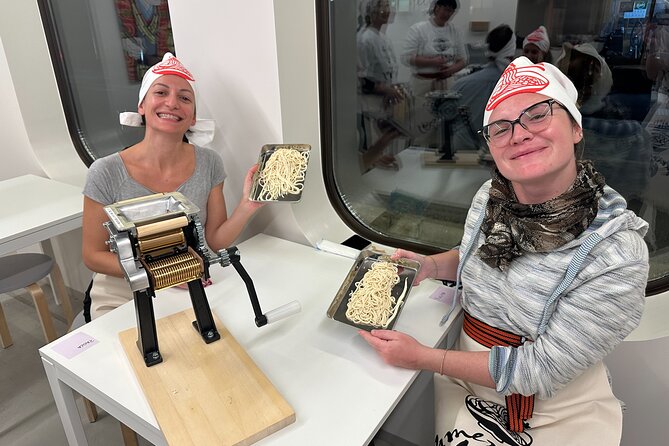
The best part of Ramen Factory Mt. Fuji is that you make the entire bowl yourself. You knead the flour, roll and cut the noodles, mix the broth, prepare the chicken, and finish the dish at the table. This is not a demonstration where you watch someone else cook.
I like the class for two clear reasons: the hands-on work feels authentic, and the instructors, including Jojo and Eri, explain each step in clear English. I also like the choice of souvenir, since you leave with a T-shirt, ramen bowl, or Japanese apron rather than only a quick meal.
The main drawback is the price, $141.56 per person for about 90 minutes. That is a serious spend for lunch, even though food, instruction, taxes, and a souvenir are included. You also need to reach the Mt. Fuji location yourself, and it is important not to confuse it with the separate Kyoto store.
In This Review
- Key points to know before booking
- Making ramen from flour to finished bowl
- Kneading, rolling, and cutting the noodles
- Preparing the chicken, or choosing tofu
- Building a broth that matches your taste
- The final assembly and the meal
- Jojo, Eri, and the teaching style
- What the $141.56 price really includes
- Finding the Mt. Fuji location
- Group size, timing, and who will enjoy it most
- Your souvenir choice after the cooking
- Cancellation and booking details
- Should you book Ramen Factory Mt. Fuji?
- FAQ
- Where is the Ramen Factory Mt. Fuji cooking class held?
- Does the class take place in Kyoto?
- How long does the ramen class last?
- What do I make during the class?
- Can I choose the ramen broth?
- Are vegetarian and vegan options available?
- Can the class accommodate gluten-free or Muslim-friendly diets?
- Is transportation included?
- What souvenir can I take home?
- What is the cancellation policy?
Key points to know before booking
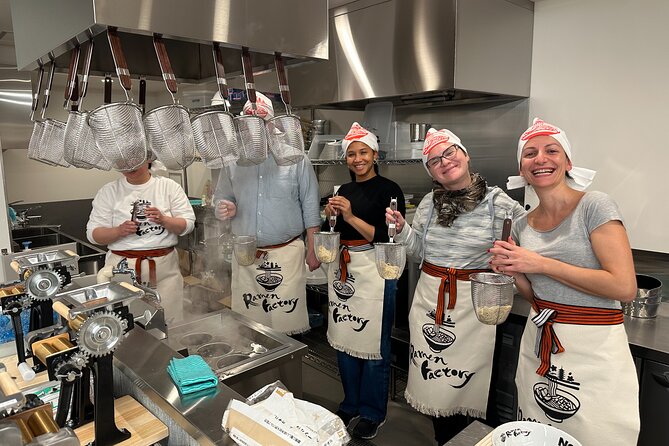
- You make every major part of the bowl: Knead, roll, cut, boil, and drain your own noodles, then prepare the soup and topping.
- The chicken is prepared by hand: You tie it with string, add condiments, cook it, and slice it to your liking.
- The broth is your choice: Several broths and sauces let you blend a flavor suited to your taste.
- Dietary needs can be handled: Vegetarian, vegan, gluten-free, and Muslim-friendly options are available with advance notice.
- The class stays fairly small: A maximum of 18 people keeps the instruction more personal than a large food show.
- You take home a useful memento: Choose one souvenir from a T-shirt, ramen bowl, or Japanese apron.
Making ramen from flour to finished bowl
Ramen Factory Mt. Fuji turns a familiar Japanese meal into a short cooking workshop. The class lasts about 1 hour and 30 minutes, so you get a full activity without giving up an entire day around Fujikawaguchiko.
The order of work matters. You do not simply assemble pre-made ingredients. You begin with flour and work toward fresh noodles, a seasoned broth, and a prepared topping. That gives you a better sense of how texture, timing, and flavor fit together in a ramen bowl.
The instructors guide you through the process in simple steps. You can follow along even if you are not confident in the kitchen, and help is available if your dough, noodles, or cooking technique needs attention. The class is designed to be practical rather than technical, so you do not need prior cooking experience.
The activity is described as the only place in the world where you can create your own original ramen from scratch. That is a bold claim, but the useful point for you is clear: this is a full start-to-finish class, not just a noodle-making lesson or a broth-tasting session.
More japanese cooking classes in Fujikawaguchiko machi:
- Ramen Cooking Class at Lake Kawaguchiko (Short Course)
★ 5.0 · 42 reviews - Sushi Cooking Class at Sushi Factory -KIWAMI- Mt.Fuji
★ 5.0 · 23 reviews - Fujisan Sushi Making Lesson
★ 5.0 · 16 reviews
Kneading, rolling, and cutting the noodles
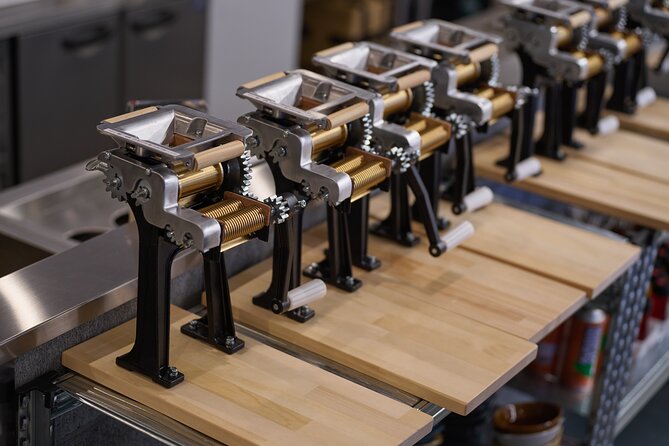
The first substantial task is making the noodles. You knead the flour, roll out the dough, and cut it into noodle shapes before boiling them.
This stage gives the class its most physical character. Dough responds to pressure, and the thickness of your rolled sheet affects the finished noodles. The process is simple enough to follow, but it still feels like real food preparation rather than a staged photo opportunity.
After cutting, you boil the noodles and drain them. Timing matters here because noodles can lose their best texture if they sit too long. The instructors show you what to do, and you can ask for help as you work through the steps.
I like this part because it gives you a practical memory to take home. You are not only eating ramen in Japan. You are learning the basic sequence required to make fresh noodles, which may help you repeat the dish later.
The drawback is that the class is short. You will make noodles during the session, but you should not expect a long lesson in flour types, regional noodle styles, or advanced ramen technique. The focus is on completing one enjoyable bowl within the scheduled time.
Preparing the chicken, or choosing tofu
The topping receives its own preparation stage. You tie the chicken with string, add condiments, cook it, and slice it as you prefer.
This is a useful detail because the chicken is not treated as an anonymous garnish added at the end. You take part in shaping and seasoning it before it reaches the bowl. The slicing step also gives you some control over how the topping looks and feels when you eat it.
If you request a vegetarian or vegan version in advance, tofu can replace the chicken. Gluten-free and Muslim-friendly needs can also be accommodated, but you need to state your requirements when booking.
Do not wait until you arrive to raise a dietary concern. The kitchen needs advance notice to prepare the right ingredients and method. This is especially important if more than one person in your group needs a special meal.
The class is a good choice for mixed groups because the dietary options are built into the booking process. You can enjoy the same basic activity while selecting a topping and preparation that suit your needs.
Building a broth that matches your taste
Once the noodles and topping are ready, you create the soup. You choose from several broths and sauces, then mix them to form the base of your ramen.
This gives the meal a personal angle. Two people can complete the same class and still end up with different bowls, depending on their broth choices and preferred balance of flavors. You are not being asked to accept one fixed recipe.
The soup stage is also where the class moves from craft to cooking judgment. You have to consider how the broth works with the noodles and topping. The instructors explain the choices, so you can make decisions without needing a background in Japanese cooking.
I would pay attention here rather than rushing to the final bowl. The soup is a large part of ramen’s character, and the chance to adjust it is one of the more valuable parts of the experience.
The supplied details do not identify every broth or sauce by name, so you should not book this expecting a particular regional style or a precise level of heat. You will have several options, but the exact menu choices are best confirmed with the provider if you have a very specific preference.
A few more Fujikawaguchiko machi trips to weigh up
- Ramen Cooking Class at Ramen Factory in Kyoto
★ 5.0 · 1,937 reviews - Ramen & Gyoza Cooking Class in Tokyo with Local Supermarket Visit
★ 5.0 · 823 reviews - Kyoto: Ramen Cooking Class at a Ramen Factory with Souvenir
★ 4.9 · 532 reviews - Kyoto: Ramen, Gyoza, and Onigiri Cooking Class
★ 5.0 · 445 reviews
The final assembly and the meal
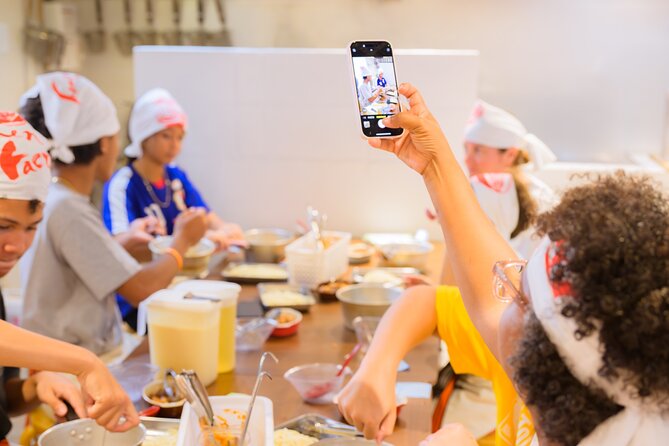
At the end, you place the boiled noodles into the soup, add the toppings, and prepare the finished bowl. This is the moment when the separate stages come together.
The class includes food tasting, lunch, and dinner in the stated inclusions. The practical meaning is that your ramen is part of the booking rather than an extra charge. The exact meal label may depend on the scheduled class time, so I would think of it as your included ramen meal rather than assume you receive separate lunch and dinner servings.
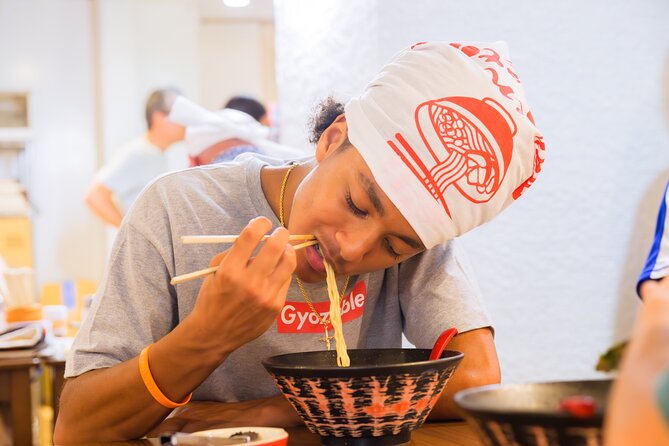
The final bowl is also the payoff for the work. You have handled the ingredients from beginning to end, and you can taste the result immediately. That makes the meal more satisfying than a standard restaurant order, even if the finished ramen is not perfect.
That last point is worth keeping in mind. Fresh noodles and a custom broth can be delicious, but the class is about participation as much as restaurant-level precision. If you want a polished bowl prepared by a specialist, a ramen shop may be a better use of your money. If you want to understand the process and eat what you made, this class makes sense.
Jojo, Eri, and the teaching style
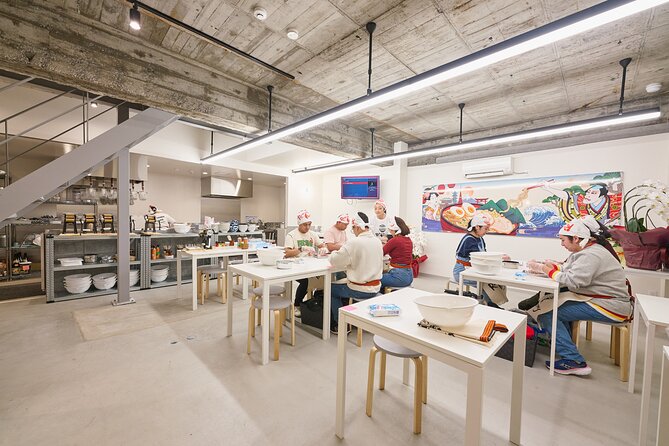
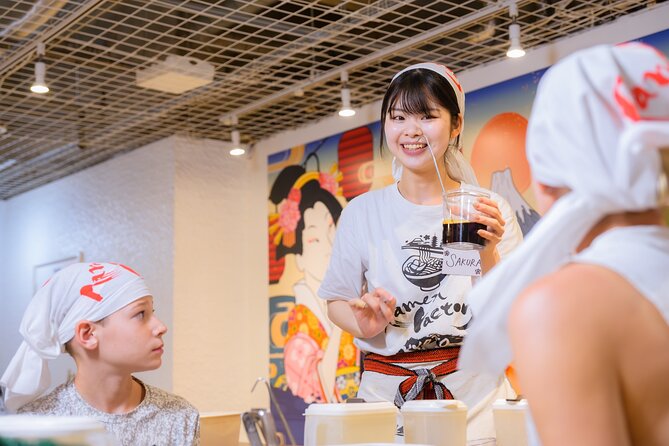
The class is led by instructors who explain the work in English, with Jojo and Eri specifically identified as members of the teaching team. Clear instructions matter here because the activity has several linked stages and you need to keep moving.
The teaching style is friendly and easy to follow. You do not need to be an experienced cook, and help is available if you get stuck. That makes the class suitable for a first cooking activity in Japan, including for people who normally avoid lessons because they worry about language or technique.
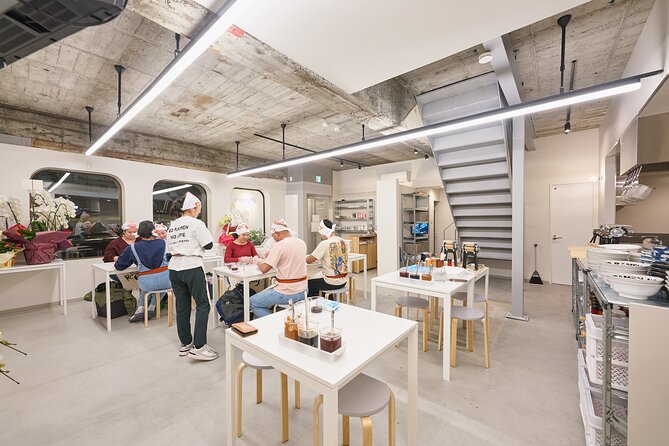
The maximum group size is 18 people. That is not a private class, but it is still more manageable than a large commercial demonstration. You should have enough structure to follow the steps and access to an instructor when necessary, though the amount of individual attention can vary with the group.
I would especially recommend this format for couples, families, and friends who want an activity they can do together. Each person makes a personal bowl, but the process gives the group something to work on at the same time.
What the $141.56 price really includes
At $141.56 per person, this is not a budget meal. You can buy ramen in Japan for far less, and the food alone does not justify the price.
The value comes from the combination of instruction, ingredients, a full meal, and a souvenir. All fees and taxes are included, and the price covers the tour escort or host, food tasting, lunch, and dinner as listed. You also choose one take-home item: a T-shirt, ramen bowl, or Japanese apron.
The souvenir affects the value in a practical way. A ramen bowl or Japanese apron can remain useful after the trip, while a T-shirt may appeal more if you want something easy to pack and wear. You are not forced into one standard gift.
I would book this when you want a structured culinary activity and can accept paying for the lesson, not just the meal. I would skip it if your main goal is inexpensive local dining or if your schedule is already crowded with paid attractions around Mt. Fuji.
Because the class is only about 90 minutes, the price also reflects the convenience of a compact activity. You can fit it into a day in Fujikawaguchiko more easily than a long cooking course. Still, transportation is not included, so add the cost and time of reaching the meeting point to your calculation.
Finding the Mt. Fuji location
The meeting point is Ramen Factory Mt. Fuji, at 3487-15 Funatsu, Fujikawaguchiko, Minamitsuru District, Yamanashi 401-0301, Japan. The activity ends back at the same meeting point.
The location is near public transportation, but the class does not include transportation. Plan your route before the day of the booking, especially if you are connecting it with sightseeing around Mt. Fuji.
Pay close attention to the store name and location. The activity takes place at the Mt. Fuji store, not the Kyoto store. This is the most important location warning attached to the booking.
A mobile ticket makes the entry process simpler, but it does not solve the transport question. Have the address ready and leave enough time to reach Funatsu before the class begins.
Group size, timing, and who will enjoy it most
The maximum group is 18 people, and the class takes about 1 hour and 30 minutes. That combination makes it a focused, social activity rather than a slow, private cooking lesson.
You will get the most from it if you like doing things with your hands. Kneading dough, cutting noodles, preparing chicken, and mixing soup require attention, so this is not a passive break between sightseeing stops.
The class suits:
- First-time cooks who want clear guidance
- Families and groups who enjoy making food together
- Ramen fans who want to understand the basic process
- Visitors with vegetarian, vegan, gluten-free, or Muslim-friendly needs
- People looking for a compact activity near Mt. Fuji
It may not suit you if you want a quiet meal, a private lesson, or a highly advanced culinary course. The group can include up to 18 people, and the class follows a set process so everyone finishes within the scheduled time.
The high satisfaction rate, 99 percent recommended, and 5 out of 5 rating from 101 reviews point to a consistently well-received experience. I would still read those figures in context: people are judging a fun cooking activity, not comparing it with a fine-dining restaurant or professional chef school.
Your souvenir choice after the cooking
The take-home gift is a small but smart feature. You choose one item from a T-shirt, ramen bowl, or Japanese apron.
I would choose the ramen bowl if you want a direct reminder of the meal and have room in your luggage. The apron is the most fitting choice if you actually plan to repeat the noodle-making at home. The T-shirt is likely the simplest option for packing, though the supplied information does not specify its design or size range.
This choice adds a personal finish to the activity. It also helps explain part of the price, since you are leaving with more than a recipe and a full stomach.
Cancellation and booking details
You receive confirmation at the time of booking, and the experience offers free cancellation up to 24 hours before the start time.
For a full refund, cancel at least 24 hours before the local start time. Cancellations or changes made within 24 hours are not accepted for a refund, so do not wait until the last day if your Mt. Fuji plans are uncertain.
The activity is booked, on average, 31 days in advance. That does not guarantee that every date fills early, but it is a useful sign that you should reserve ahead if the class is important to your itinerary.
Should you book Ramen Factory Mt. Fuji?
I would book this if you want a cheerful, hands-on food activity that gives you a real role in making lunch. The strongest reasons are the complete process, clear English instruction from teachers such as Jojo and Eri, flexible dietary arrangements, and the choice of a useful souvenir.
I would not book it for a cheap meal or a serious culinary qualification. At $141.56, the class costs much more than eating ramen at a restaurant, and you must arrange your own transport to Funatsu.
For a first visit to Mt. Fuji, it works best as a compact activity added to a wider Fujikawaguchiko day. Reserve early, specify dietary needs in advance, confirm you are going to the Mt. Fuji store, and choose your souvenir before you arrive. If those details fit your plans, this is a friendly way to turn one Japanese meal into a story you helped make.
FAQ
Where is the Ramen Factory Mt. Fuji cooking class held?
It is held at Ramen Factory Mt. Fuji, 3487-15 Funatsu, Fujikawaguchiko, Minamitsuru District, Yamanashi 401-0301, Japan.
Does the class take place in Kyoto?
No. This activity is held at the Mt. Fuji store. Take care not to confuse it with the separate Kyoto store.
How long does the ramen class last?
The activity lasts approximately 1 hour and 30 minutes.
What do I make during the class?
You knead flour, roll out dough, cut the noodles, boil and drain them, prepare the chicken or tofu, mix the soup, and assemble the finished ramen.
Can I choose the ramen broth?
Yes. You can choose from various broths and sauces and blend them for your soup.
Are vegetarian and vegan options available?
Yes. Tofu is available as a vegetarian or vegan option with advance notice.
Can the class accommodate gluten-free or Muslim-friendly diets?
Yes. Gluten-free and Muslim-friendly options can be accommodated when you provide the dietary requirement at booking.
Is transportation included?
No. Transportation is not included. You need to reach the Mt. Fuji meeting point yourself.
What souvenir can I take home?
You can choose one gift from a T-shirt, ramen bowl, or Japanese apron.
What is the cancellation policy?
You can cancel for a full refund up to 24 hours before the experience start time. Cancellations or changes made less than 24 hours before the start time are not refunded.
More Workshops in Fujikawaguchiko machi
- Sushi Making Tokyo Roll and Authentic Japanese Sushi Class
★ 5.0 · 3,971 reviews - Kyoto: 45-Minute Tea Ceremony Lesson Experience
★ 4.3 · 2,378 reviews - Tokyo: Roll and Authentic Sushi Making Class in Asakusa
★ 4.9 · 1,957 reviews - Tokyo Shinjuku Chopsticks Making Class
★ 5.0 · 1,763 reviews
Just added around Fujikawaguchiko machi
- Cute & Fun E-Car tour following guide around Lake Kawaguchiko★ 5.0 · 54 reviews
- Early Morning Kayaking With Views of Mt Fuji at Lake Kawaguchiko★ 5.0 · 69 reviews
- Private Local Hiking to enjoy the nature and culture of Mt.Fuji★ 5.0 · 22 reviews
- Ramen Cooking Class at Lake Kawaguchiko (Short Course)★ 5.0 · 42 reviews
- Sushi Cooking Class at Sushi Factory -KIWAMI- Mt.Fuji★ 5.0 · 23 reviews
- Fujisan Sushi Making Lesson★ 5.0 · 16 reviews
- Hidden Fuji drive tour with a Local English speaking guide★ 5.0 · 43 reviews
- Private Fuji Half-day Car Tour with Hotel Pickup and Local Guide★ 5.0 · 20 reviews
Japanese Cooking Classes, compared.
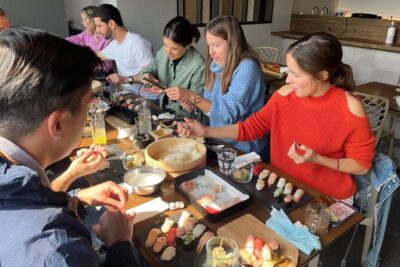
Sushi Making Tokyo Roll and Authentic Japanese Sushi Class
Read our review →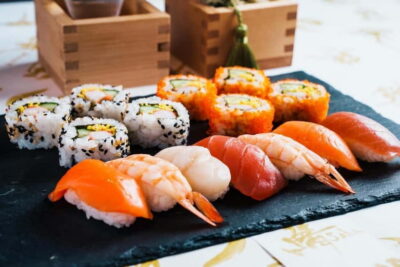
Roll and Authentic Sushi Making Class in Asakusa
Read our review →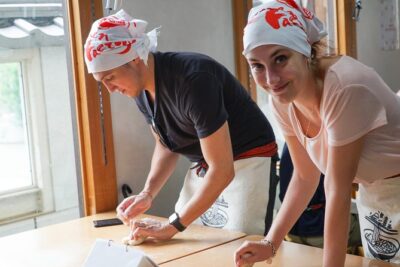
Ramen Cooking Class at Ramen Factory in Kyoto
Read our review →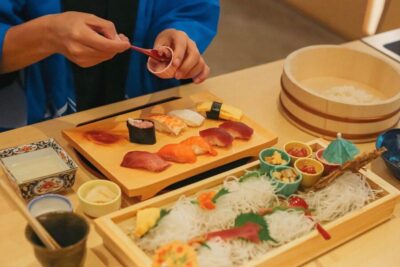
Sushi Making Class in a Happi Coat near a Famous Spot
Read our review →
Sushi Making Osaka Roll and Authentic Japanese Sushi Class
Read our review →
Tokyo Sushi Making Class in Tsukiji with Professional Chef
Read our review →
Ramen & Gyoza Cooking Class in Tokyo with Local Supermarket Visit
Read our review →
Tsukiji Fish Market Guided Tour and Sushi Making with Pro Chef
Read our review →Browse the lists this tour appears in