
REVIEW · JAPANESE COOKING CLASSES
Fujisan Sushi Making Lesson
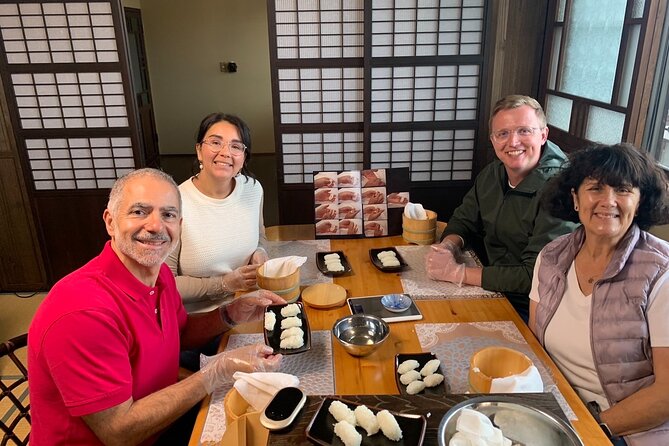
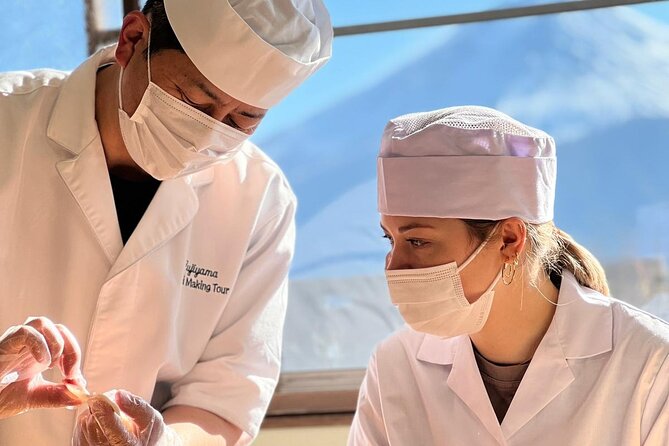
The best part of this Fujikawaguchiko experience is that you do not simply eat sushi, you make nigiri and sushi rolls yourself under the guidance of a veteran chef. Along the way, you learn the food’s history, basic cooking methods, and Japanese table etiquette, with Mount Fuji country as your setting.
I like the practical focus. The methods are meant to be copied at home, and the private format keeps the lesson limited to your own group. I also like the mix of hands-on work and cultural background, including an informative slideshow and trivia questions.
The main drawback is the price: $229.91 per person is a serious splurge for a three-hour activity. You will need to decide if personal instruction, a private booking, and the Fuji setting are worth more to you than a standard sushi meal or a less expensive group class.
In This Review
- Key points to know before booking
- Making sushi near Kawaguchiko Station
- What the three-hour lesson covers
- Learning the story behind sushi
- Why the private format matters
- Mount Fuji views without a sightseeing detour
- Food choices, allergies, and preparation
- Is $229.91 a fair price?
- Who will enjoy this experience most?
- Practical details for a smooth visit
- Should you book the Fujisan Sushi Making Lesson?
- FAQ
- Where does the sushi lesson begin?
- Where does the activity end?
- How long does the sushi lesson last?
- Is the lesson private?
- Is the lesson taught in English?
- Can vegetarians or people with food allergies participate?
Key points to know before booking
- You make two sushi styles: Prepare both nigiri sushi and sushi rolls, rather than watching a chef do all the work.
- The lesson lasts about three hours: That gives you time for food preparation, cultural background, etiquette, and questions without turning the activity into a full-day commitment.
- A veteran chef leads the class: The chef has worldwide cooking experience and explains the lesson in English.
- The setting is close to Mount Fuji: You prepare sushi in Fujikawaguchiko, with the possibility of beautiful Fuji views while you work.
- Your booking is private: Only your group participates, which can make questions and hands-on practice easier.
- Vegetarian options require notice: Tell the provider about vegetarian needs or food allergies in advance.
Making sushi near Kawaguchiko Station
The experience begins at Kawaguchiko Station, at 3641 Funatsu in Fujikawaguchiko, Yamanashi. This is a useful meeting point for a day in the Mount Fuji area because it is close to public transportation, and the activity finishes back where it started.
That simple arrangement matters. You do not need to arrange a complicated transfer to an outlying cooking school, and you can fit the lesson around other time in Fujikawaguchiko. Still, the meeting point is a station address rather than a sightseeing stop, so allow enough time to find the exact meeting spot before the scheduled start.
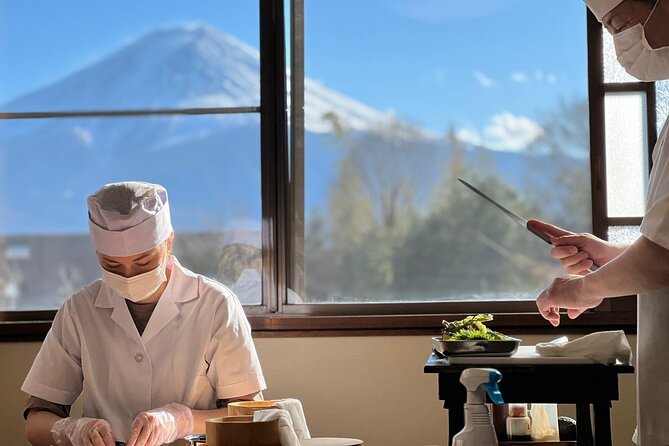
The setting adds atmosphere without changing the focus of the lesson. You are not signing up for a long sightseeing tour of the mountain. You are coming to cook, with Mount Fuji nearby and possible views from the preparation space. If the mountain is hidden by cloud, the sushi lesson remains the main event.
More japanese cooking classes in Fujikawaguchiko machi:
- Ramen Cooking Class at Ramen Factory in Mt.Fuji
★ 5.0 · 101 reviews - Ramen Cooking Class at Lake Kawaguchiko (Short Course)
★ 5.0 · 42 reviews - Sushi Cooking Class at Sushi Factory -KIWAMI- Mt.Fuji
★ 5.0 · 23 reviews
What the three-hour lesson covers
The class centers on two familiar forms of sushi: nigiri and rolls. Nigiri requires you to shape sushi rice and handle the topping with care. Rolls involve a different set of motions and a more visible construction process, making the contrast useful for a first lesson.
I like this pairing because it gives you more than one basic technique. A roll can feel approachable at first, while nigiri helps you understand the balance between rice, topping, shape, and presentation. The stated aim is to teach methods you can imitate at home, so the class is not only about producing a meal during your visit.
The exact order of the activities is not specified, so you should expect the chef to organize the lesson around preparation, demonstration, practice, and eating. The three-hour length should allow room for explanation rather than rushing straight from one dish to the next.
A professional chef leads the instruction, and the chef is described as having worldwide cooking experience. The lesson is presented in English, which makes it suitable if you want direct explanations instead of relying on translation. One account of the class also highlights Japanese-language teaching, trivia questions, and an informative slideshow. Since the formal description says the chef explains in English, ask ahead if you have a strong preference for the language used during your particular session.
Learning the story behind sushi
This is not just a kitchen task. The class includes the tradition and history of sushi as part of Japanese food culture. That background gives you a better sense of why sushi is handled in such a careful way, rather than treating it as a collection of attractive pieces on a plate.
The lesson also covers Japanese table etiquette. This is especially useful if you plan to eat at sushi restaurants during the rest of your visit. Etiquette instruction can clarify how to approach the meal and how presentation, utensils, and behavior fit into the dining experience.
The slideshow and trivia questions add a classroom element. I like that mix because a short explanation can stay with you longer when it is tied to a question or a visual example. It also breaks up the practical work, giving you time to understand the food before returning to the preparation.
Do not expect a formal culinary qualification or advanced chef training. The useful promise here is more modest and more realistic: learn accessible methods, understand the cultural setting, and leave with a better idea of how sushi is made.
Why the private format matters
Only your group participates in this activity. That makes a real difference in a cooking class, where you may need to stop, ask for a repeat demonstration, or get help with shaping rice and rolls.
A private session can also suit mixed groups. One person may want to ask about Japanese food culture, while another may care more about the actual kitchen technique. Families, couples, and groups of friends can set their own pace more easily than in a large class, although the supplied information does not state the maximum group size.
There is also a social benefit. The experience welcomes foreign tourists, expatriates, and local friends, so it is designed for people with different connections to Japan. You do not need to be a sushi expert or a Japanese food specialist to take part.
The tradeoff is cost. Private instruction often costs more than a large shared class, and this activity is priced at $229.91 per person. If you are booking for several people, check the available group discounts. Those discounts could change the value calculation, but the amount is not provided here.
A few more Fujikawaguchiko machi trips to weigh up
- Sushi Making Tokyo Roll and Authentic Japanese Sushi Class
★ 5.0 · 3,971 reviews - Kyoto: 45-Minute Tea Ceremony Lesson Experience
★ 4.3 · 2,378 reviews - Tokyo: Roll and Authentic Sushi Making Class in Asakusa
★ 4.9 · 1,957 reviews - Ramen Cooking Class at Ramen Factory in Kyoto
★ 5.0 · 1,937 reviews
Mount Fuji views without a sightseeing detour
The experience takes place close to Mount Fuji, and you can enjoy views while preparing sushi. That setting is one of the reasons this is more than a generic cooking class that could happen anywhere.
Keep your expectations practical. The schedule identifies Mount Fuji as the sightseeing element, but it does not promise a separate mountain viewpoint, a photo stop, or clear weather. The view is a bonus attached to the cooking lesson, not a replacement for a dedicated Mount Fuji excursion.
This can work well on a day when you want an activity that connects to the region without spending all your time outdoors. You get a cultural activity indoors or at the cooking venue, while the surrounding Fuji area gives the session a strong sense of place.
I would pair it with other Fujikawaguchiko plans only if you allow enough time around the three-hour class. The activity returns to the station meeting point, so you can continue from there, but the start and end times should guide the rest of your day.
Food choices, allergies, and preparation
Vegetarian participation is available, but you must request it in advance. The same rule applies to food allergies. Do not wait until you arrive, because the chef needs notice to prepare the lesson appropriately.
The information does not list the ingredients used, nor does it promise accommodation for every dietary restriction. If your allergy is serious, give clear details before booking and confirm that the provider can handle it.
For anyone who eats seafood and wants to understand sushi from the inside, the two-style format should be satisfying. For vegetarians, the class can still offer the central skills of rice handling, rolling, shaping, and presentation, but you should confirm exactly what ingredients will be provided.
This is also a useful activity for someone who enjoys Japanese food but has never tried making it. The chef’s job is to show methods that you can repeat at home, so you do not need to arrive with professional knife skills or prior sushi-making experience.
Is $229.91 a fair price?
At $229.91 per person, this is not a budget activity. The three-hour duration works out to a high hourly cost, especially if you compare it with simply ordering sushi at a restaurant or joining a larger class.
The value comes from the combination of private instruction, cultural teaching, and a Mount Fuji setting. You are paying for an active lesson with a professional chef, not only for a meal. The chef’s worldwide cooking experience, English explanation, slideshow, trivia, etiquette guidance, and at-home methods all add to the substance of the session.
I would see the price as easier to justify for a special occasion, a small private group, or someone who places a high value on food culture. It is harder to justify if you mainly want a quick introduction or a low-cost activity near the station.
Group discounts may help if you are booking with friends or family. Since the experience is booked an average of 157 days ahead, demand appears strong enough that you should not assume a last-minute place will be available. Confirmation arrives within 48 hours, subject to availability, so check your booking before building a tight schedule around it.
Who will enjoy this experience most?
I would recommend this class to you if you fit one or more of these descriptions:
- You want to learn a Japanese food skill you can practice at home.
- You enjoy cultural explanations as much as hands-on activity.
- You are staying near Mount Fuji and want a local activity close to public transportation.
- You prefer a private experience where your own group can ask questions.
- You are comfortable paying a premium for personal instruction.
- You need a vegetarian option or have an allergy that you can communicate in advance.
It may not be the right pick if you want a full day of Mount Fuji sightseeing, a cheap meal, or a highly advanced professional cooking course. The mountain scenery is part of the setting, not the full purpose, and the class is designed around accessible sushi-making methods.
The lesson also suits a group with different interests. Someone who wants cultural context gets sushi history and etiquette, while someone who likes practical work gets to prepare nigiri and rolls. The private booking keeps that mix within your own party.
Practical details for a smooth visit
The activity uses a mobile ticket, so keep your booking accessible on your phone. Meet at Kawaguchiko Station, and remember that the activity ends back at the meeting point.
Plan for approximately three hours, not counting the time you need to reach the station or continue to another activity afterward. Since the class is close to public transportation, it is easier to combine with a day in Fujikawaguchiko than an experience that requires a long rural transfer.
Free cancellation is available if you cancel at least 24 hours before the local start time. Cancellations or changes made inside that 24-hour window are not accepted for a refund, so check the local time carefully before making changes.
The provider is お寿司作り体験教室. Confirmation is sent within 48 hours of booking, subject to availability. Because the activity is often reserved well ahead, I would book early if your Mount Fuji dates are fixed.
Should you book the Fujisan Sushi Making Lesson?
Book this if you want a hands-on Japanese food experience with private instruction, and if the price fits your budget. The combination of nigiri, sushi rolls, etiquette, history, trivia, and possible Mount Fuji views gives the three hours a clear purpose.
I would be more cautious if your main goal is mountain sightseeing or saving money. You will not get a dedicated Fuji tour, and $229.91 per person is a substantial outlay. But for a food-focused visit, a special occasion, or a group that values privacy and personal help, this is a thoughtful way to connect with Japan through something you can try again at home.
FAQ
Where does the sushi lesson begin?
The activity begins at Kawaguchiko Station, 3641 Funatsu, Fujikawaguchiko, Minamitsuru District, Yamanashi 401-0301, Japan.
Where does the activity end?
The activity ends back at the meeting point at Kawaguchiko Station.
How long does the sushi lesson last?
The lesson lasts approximately three hours.
Is the lesson private?
Yes. Only your group participates in the activity.
Is the lesson taught in English?
The chef is described as explaining the lesson in English. One account also refers to Japanese-language teaching, so you should confirm your preferred language in advance if this matters to you.
Can vegetarians or people with food allergies participate?
Vegetarian options are available, and you should inform the provider about any food allergies in advance.
Just added around Fujikawaguchiko machi
- Cute & Fun E-Car tour following guide around Lake Kawaguchiko★ 5.0 · 54 reviews
- Early Morning Kayaking With Views of Mt Fuji at Lake Kawaguchiko★ 5.0 · 69 reviews
- Private Local Hiking to enjoy the nature and culture of Mt.Fuji★ 5.0 · 22 reviews
- Ramen Cooking Class at Lake Kawaguchiko (Short Course)★ 5.0 · 42 reviews
- Sushi Cooking Class at Sushi Factory -KIWAMI- Mt.Fuji★ 5.0 · 23 reviews
- Hidden Fuji drive tour with a Local English speaking guide★ 5.0 · 43 reviews
- Ramen Cooking Class at Ramen Factory in Mt.Fuji★ 5.0 · 101 reviews
- Private Fuji Half-day Car Tour with Hotel Pickup and Local Guide★ 5.0 · 20 reviews
Japanese Cooking Classes, compared.
Sushi Making Tokyo Roll and Authentic Japanese Sushi Class
Read our review →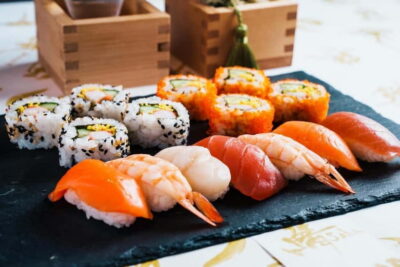
Roll and Authentic Sushi Making Class in Asakusa
Read our review →
Ramen Cooking Class at Ramen Factory in Kyoto
Read our review →
Sushi Making Class in a Happi Coat near a Famous Spot
Read our review →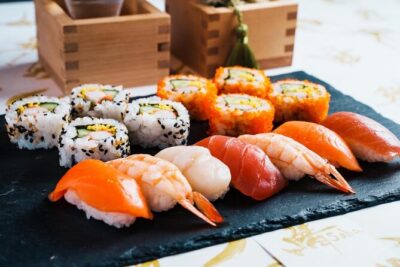
Sushi Making Osaka Roll and Authentic Japanese Sushi Class
Read our review →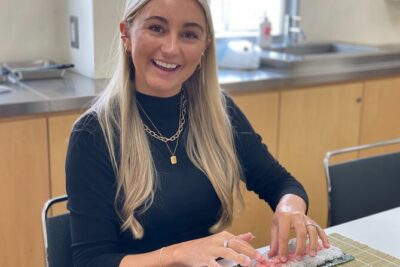
Tokyo Sushi Making Class in Tsukiji with Professional Chef
Read our review →
Ramen & Gyoza Cooking Class in Tokyo with Local Supermarket Visit
Read our review →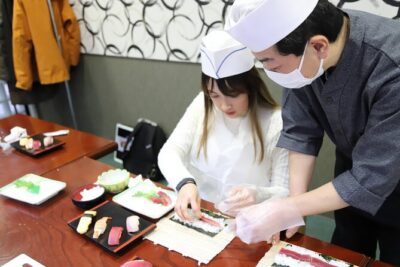
Tsukiji Fish Market Guided Tour and Sushi Making with Pro Chef
Read our review →Browse the lists this tour appears in