

REVIEW · HIKING & TREKKING
Private Local Hiking to enjoy the nature and culture of Mt.Fuji
A sacred cave, an old shrine, and a forest born from volcanic fire make this more than a standard Mt. Fuji photo stop. With Yuki, a certified mountain guide who has climbed Fuji more than 40 times, you get local stories along with the scenery. I like the private transport and the chance to eat Yoshida Udon in a local restaurant, but clear weather matters if Fuji views are your main goal.
I also like that the main hike is moderate, about one hour uphill and 30 minutes down, with free trekking shoes, poles, rain gear, and gloves available. The tradeoff is the pickup rule: you must already be staying in the Kawaguchiko or Fujiyoshida area, or make your own way there.
In This Review
- Key Points
- Why This Mt. Fuji Tour Feels Different
- Starting Near Kawaguchiko and Fujiyoshida
- Fuji Omuro Sengen Shrine and Fuji Worship
- Saiko Lake, the Quieter Alternative
- Aokigahara Forest and the Sea of Trees
- Ryugudoketsu and the Sacred Lava Cave
- The Sankodai Hike: One Hour Up, 30 Minutes Down
- Yoshida Udon at a Local Restaurant
- Kaneyamaen Garden and Optional Matcha
- What the $131 Price Includes
- Who Should Book This Experience
- Practical Details Before You Reserve
- Should You Book the Mt. Fuji Nature and Culture Tour?
- FAQ
- Where does the tour take place?
- Is pickup available from any hotel?
- What time does the tour start?
- How long is the tour?
- How difficult is the hike?
- Is hiking equipment included?
- Are lunch and matcha included?
Key Points
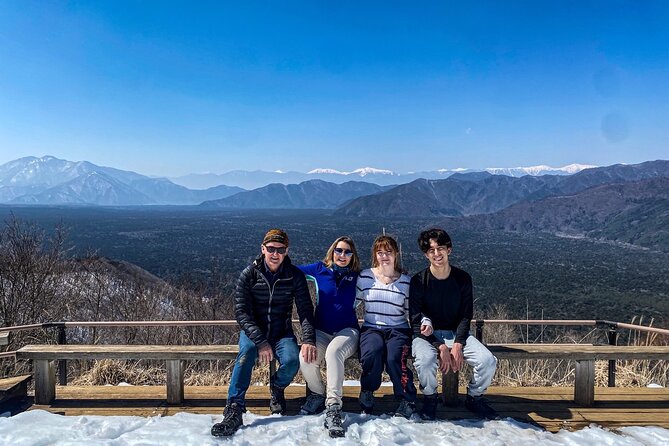
- A private route away from the busiest Fuji viewpoints: Your group travels with its own guide and transportation.
- A mountain guide with local roots: Yuki has climbed Mt. Fuji more than 40 times and also works as a licensed local hunter.
- A short but worthwhile summit walk: Sankodai takes about one hour up and 30 minutes down for broad views of Fuji, Saiko Lake, and Aokigahara.
- Volcanic and spiritual sights together: The route links Fuji Omuro Sengen Shrine, a sacred lava cave, and the forest created by an eruption about 1,200 years ago.
- Food and tea finish the day: Yoshida Udon costs about ¥1,000, while matcha and a Japanese sweet at the garden cost an optional ¥1,000.
- Useful gear is included: Shoes, poles, rain clothing, gloves, private transport, and the guide fee are covered.
Why This Mt. Fuji Tour Feels Different
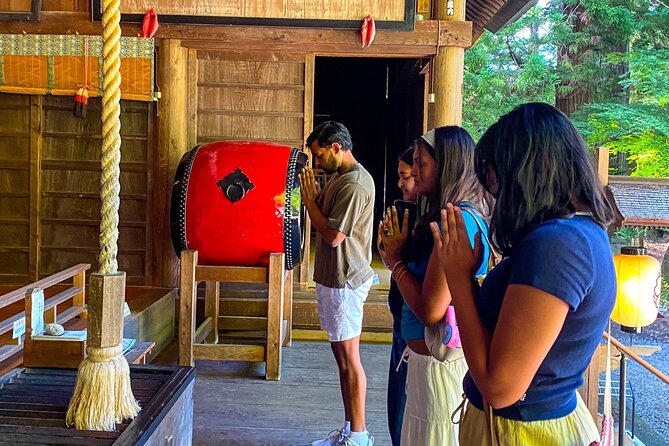
Many Fuji excursions focus on one lookout and a quick photograph. This outing uses the mountain as the thread connecting nature, religion, food, and local life. In five to six hours, you move from shrine grounds to quiet lakeshore, from ancient lava to a forest shaped by an eruption, then finish with noodles and tea.
That mix is the best reason to book. You are not simply waiting for Fuji to appear behind a pagoda. You are learning why people prayed to the mountain, how eruptions shaped the area, and how the communities around Fuji still eat and relax today.
The tour is private, so your pace belongs to your group. That matters on a trail. You can pause for photos, ask questions, or take a longer break at the viewpoint without being tied to a large bus group. Yuki has also brought coffee, tea, chocolate, and snacks for the summit break on past outings, a small touch that can make a short climb feel especially pleasant.
There is one clear limitation. Fuji is a weather-dependent subject. The tour requires good weather, and clouds can hide the mountain even when the trail itself is enjoyable. If conditions are poor, the experience can be canceled with an offer of another date or a full refund, but you should not book this expecting guaranteed postcard views.
A few more Fujikawaguchiko machi trips to weigh up
- Fushimi Inari Hidden Hiking Tour (Private Option Available)
★ 5.0 · 1,750 reviews - Kyoto: 3-Hour Fushimi Inari Shrine Hidden Hiking Tour
★ 4.9 · 270 reviews - Hiroshima Local guided Hiking Tour&Open-air Tea Ceremony
★ 5.0 · 213 reviews
Starting Near Kawaguchiko and Fujiyoshida
The advertised start time is 9:00 in the morning. Pickup is available only if you are staying in Kawaguchiko or Fujiyoshida, or if you can reach those areas yourself. This is important when planning your hotel and morning transport.
Private transportation is included, which saves you from piecing together several local connections between the lake, forest, trailhead, restaurant, and garden. The exact meeting arrangements should be confirmed at booking, since the pickup service does not cover every part of the wider Fuji region.
The route begins around Lake Kawaguchiko, the best-known of the Fuji Five Lakes. This is the area most visitors use as their base, and it offers the classic pairing of water and mountain. The lake can be busy, but the tour soon shifts toward quieter places, especially around Saiko Lake and the forest.
Fuji Omuro Sengen Shrine and Fuji Worship
Fuji Omuro Sengen Shrine provides the cultural opening. This ancient shrine is tied to worship of Mt. Fuji and to the region’s response to one of the mountain’s major eruptions.
The shrine was built as a spiritual effort to calm the mountain’s destructive power. That detail gives the visit real purpose. Mt. Fuji is beautiful, but it is also an active volcano with a long record of eruptions. For local communities, the mountain has never been only a scenic backdrop.
You have about 15 minutes here, with no admission charge. That is enough for a focused visit rather than a long temple-style stop. I would listen closely to Yuki’s explanation, since the value of the shrine comes from its connection to Fuji worship and local belief, not from checking off another photo location.
Saiko Lake, the Quieter Alternative
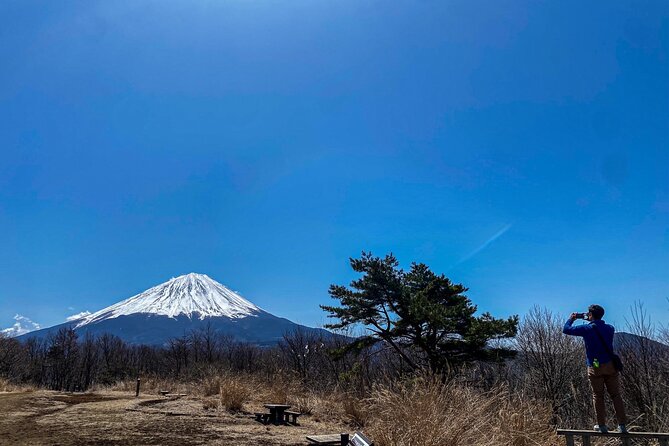
Saiko Lake is quieter than Kawaguchiko and offers a different mood. The water, mountain, and surrounding trees create a calmer setting, with Fuji visible when the sky is clear.
The planned stop lasts about 10 minutes, so this is a short viewing pause rather than a lakeside walk. That keeps the day moving toward the hike, but it also means you should be ready with your camera before getting out of the vehicle.
The contrast between the two lakes is useful. Kawaguchiko is the famous name and the easier place to base yourself. Saiko feels more peaceful and helps you see why the Fuji Five Lakes area is more than one busy waterfront.
Same city, a completely different kind of day:
- Mt Fuji Area Private Guided Tours in English-Nature up close, quiet, personal
★ 5.0 · 288 reviews - Explore Mt. Fuji Ice Cave in Aokigahara Forest
★ 5.0 · 243 reviews - Private guided hidden gems tour by local English speaking driver
★ 5.0 · 142 reviews - Ramen Cooking Class at Ramen Factory in Mt.Fuji
★ 5.0 · 101 reviews
Aokigahara Forest and the Sea of Trees
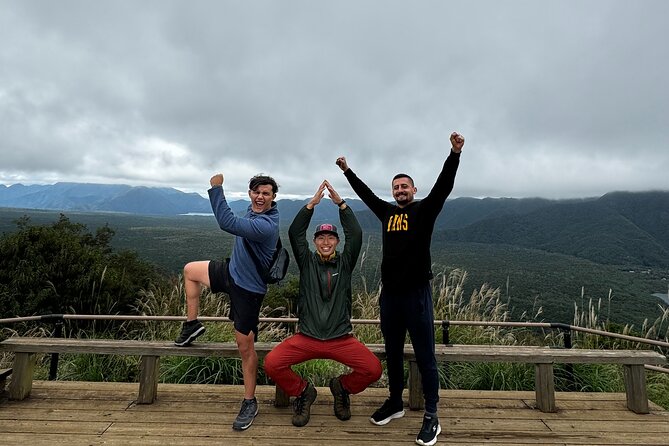
Aokigahara Forest is known locally as Jukai, or the sea of trees. From a viewpoint, the forest can look like a broad green sea, a visual effect created by the way the trees spread across the old lava flows.
A major Mt. Fuji eruption about 1,200 years ago helped form this area. Lava covered the ground, and the forest later grew over it. That connection between geology and vegetation is one of the strongest parts of the day because you can see how a single volcanic event shaped the region people visit now.
The scheduled forest stop is about 15 minutes. Do not expect a long independent walk through the woods at this point. Instead, treat it as a short introduction before the lava cave and main hike. The forest can have a serious reputation, but the tour presents it through its volcanic origins and local setting.
Ryugudoketsu and the Sacred Lava Cave
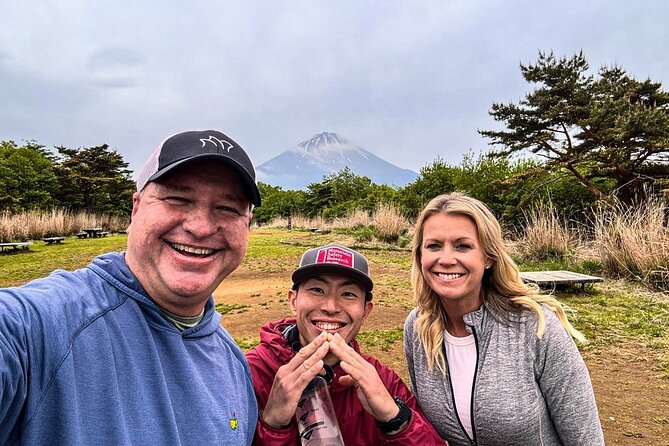
At the Ryugudoketsu entrance, you visit a sacred cave linked to the goddess of Mt. Fuji. Before climbing the mountain, people came here to pray. They believed the cave represented the inside of the goddess, which made it a place of preparation and worship.
The visit lasts about 30 minutes. A cave formed by lava is already a striking natural feature, but its religious meaning makes it more than a geological stop. Here, the mountain’s physical power and spiritual role meet in one place.
Conditions inside a lava cave can differ from those outdoors, and the ground may feel uneven. The supplied details do not specify the exact cave access conditions, so you should follow Yuki’s instructions and use the offered footwear if needed. Free trekking shoes, poles, rain jackets and pants, and gloves are available as part of the experience.
The Sankodai Hike: One Hour Up, 30 Minutes Down
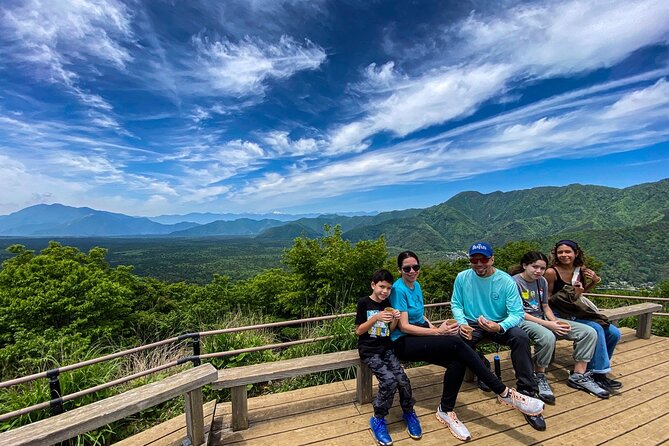
The main walk climbs to Sankodai viewpoint. The uphill section takes about one hour, followed by roughly 30 minutes downhill. It is described as moderate and suitable for outdoor beginners, but you still need to be comfortable walking uphill for an extended period.
The payoff is broad. From the viewpoint, you can see Mt. Fuji, Saiko Lake, and the sea of trees at the same time. On a clear day, this is the strongest Fuji view of the tour because it brings mountain, lake, and forest into one frame.
The hike is not a Mt. Fuji summit climb. That is a benefit for many people. You get a proper mountain walk without committing to the demands of climbing Fuji itself. If you want a gentle stroll with almost no effort, this may be more work than expected. If you want a manageable trail with a strong view, the timing is quite reasonable.
Good footwear matters even though gear is supplied. Wear comfortable clothes that allow movement, and be ready for changing weather. Rain gear is included, but the presence of jackets and gloves does not remove the need to plan for a mountain environment.
At the top, give yourself time to enjoy the break. Yuki has served coffee, tea, chocolate, and snacks at the summit on previous tours. Those extras are not listed as a formal inclusion, so do not depend on them, but they reflect the personal style this private format can provide.
Yoshida Udon at a Local Restaurant
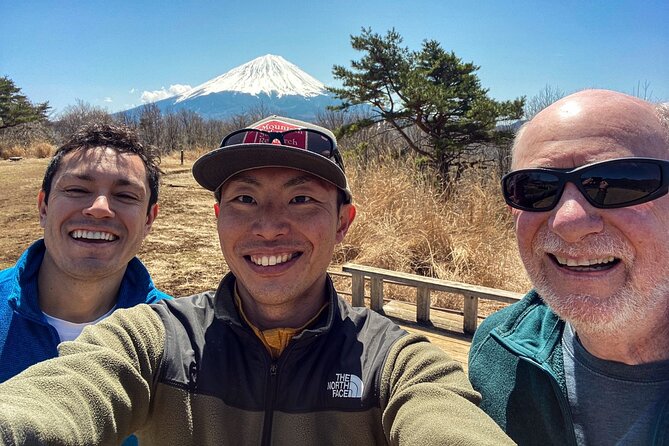
After the outdoor portion, the tour turns to food. You visit a local restaurant chosen by Yuki and try Yoshida Udon, one of the area’s signature dishes.
Lunch is not included. The expected cost is about ¥1,000 per person, which makes this a modest extra rather than a major budget concern. The value is in eating a local specialty in a place you might not find on your own, especially after a morning walk.
Yoshida Udon is a useful part of the tour because it connects the scenery to ordinary life in the Fuji region. You have seen the mountain as a sacred force and a volcanic creator. Over lunch, you experience how the area functions as a living community, not simply as a sightseeing zone.
The meal stop is listed at about 30 minutes. That is enough for a straightforward lunch, but not a long food tour. If you want several courses or a slow restaurant experience, keep your expectations modest.
Kaneyamaen Garden and Optional Matcha
The final stop is Fujisan Onsen Hotel Kaneyamaen in Fujiyoshida. This is one of the city’s oldest hotels and has a large Japanese garden open to the public.
You can stroll through the garden and relax after the hike. Matcha and a Japanese sweet are available for an optional ¥1,000 per person. You can also simply enjoy the garden without ordering tea.
I like this ending because it changes the rhythm of the day. The trail gives you fresh air and exertion; the garden offers a quiet place to sit and slow down. It also gives you a small taste of Japanese tea culture without requiring a separate formal tea ceremony.
The tea is optional, so the listed tour price does not cover it. Think of it as a pleasant add-on, not a required part of the experience.
What the $131 Price Includes
At $131.38 per person, this is not the cheapest way to see Mt. Fuji. It is also not just a guided walk. The fee includes the guide, private transportation, and a useful set of outdoor equipment: trekking shoes, poles, rain jackets and pants, and gloves.
That package can be good value if you need gear or want to avoid arranging transport between several locations. The private format adds value too, especially for families, couples, or friends who prefer a flexible pace.
You still need to budget for lunch at about ¥1,000 and optional matcha with a sweet at another ¥1,000. Insurance is not included. Group discounts are available, so the per-person cost may work better for a larger private group.
I would compare this price with the cost of hiring transport, renting hiking gear, and arranging a guide separately. For a simple lake viewpoint, it would be expensive. For a half-day of transport, cultural stops, a guided hike, food guidance, and garden time, the price is easier to justify.
Who Should Book This Experience
I would choose this tour if you want several sides of the Fuji region in one day. It suits people who enjoy a moderate walk but do not want a full mountain climb. It also works well for anyone who values explanation and local context over a quick sequence of photo stops.
Families may appreciate the private setup and the manageable hiking distance, though every person in the group should be ready for an uphill trail. Outdoor beginners can take part, but this is still an active outing, not a flat sightseeing loop.
The experience is especially useful if you are staying in Kawaguchiko or Fujiyoshida and want transport between places that are spread around the lakes and forest. It is less convenient if you are based far away and cannot reach the pickup area independently.
You should think twice if your priority is a guaranteed view of Fuji, a long meal, or a full-day mountain hike. Weather can block the main attraction, the restaurant stop is brief, and the walk reaches a viewpoint rather than the summit.
Communication appears to be handled carefully from the time of booking, and the private guide format allows more personal attention. Yuki’s background as both a mountain guide and licensed hunter adds a local angle that a standard sightseeing driver may not provide.
Practical Details Before You Reserve
The activity lasts approximately five to six hours and begins at 9:00 a.m. Confirmation is provided at booking, and the tour is private, so only your own group takes part.
Most people can participate, but you should be ready for the one-hour climb to Sankodai and the downhill return. Use the included trekking gear if your own equipment is limited. Insurance is not part of the package, so arrange your own coverage if that matters to you.
Free cancellation is available until 24 hours before the start time for a full refund. Changes or cancellations inside that 24-hour window are not accepted for a refund. The weather rule is important: if poor conditions force cancellation, you are offered another date or a full refund.
Should You Book the Mt. Fuji Nature and Culture Tour?
Book it if you want a private, well-rounded day that combines Fuji views with shrine tradition, volcanic geology, a quiet lake, a moderate hike, local noodles, and a Japanese garden. The strongest features are the guide’s personal knowledge of the mountain, the flexible private format, and the range of places covered without requiring you to organize the transport yourself.
Skip it if you want a guaranteed clear view, a very easy walk, or an inexpensive transfer to one lookout. For the right visitor, the $131.38 price buys much more than a photograph. It gives you a practical introduction to how Mt. Fuji shapes the land, beliefs, food, and daily life around it.
FAQ
Where does the tour take place?
The experience takes place around Fujikawaguchiko and Fujiyoshida at the foot of Mt. Fuji, including areas around Lake Kawaguchiko, Saiko Lake, Aokigahara Forest, and Sankodai.
Is pickup available from any hotel?
No. Pickup is available only for people already staying in the Kawaguchiko or Fujiyoshida area. You can also make your own way to those areas.
What time does the tour start?
The stated start time is 9:00 a.m.
How long is the tour?
The full experience lasts approximately five to six hours.
How difficult is the hike?
The trail is described as moderate and suitable for outdoor beginners. The uphill walk to Sankodai takes about one hour, and the descent takes about 30 minutes.
Is hiking equipment included?
Yes. Trekking shoes, trekking poles, rain jackets and pants, and gloves are available at no extra charge. Private transportation and the guide fee are also included.
Are lunch and matcha included?
No. Lunch costs about ¥1,000 per person. Matcha with a Japanese sweet at Fujisan Onsen Hotel Kaneyamaen is optional and costs about ¥1,000 per person.
Just added around Fujikawaguchiko machi
- Cute & Fun E-Car tour following guide around Lake Kawaguchiko★ 5.0 · 54 reviews
- Early Morning Kayaking With Views of Mt Fuji at Lake Kawaguchiko★ 5.0 · 69 reviews
- Ramen Cooking Class at Lake Kawaguchiko (Short Course)★ 5.0 · 42 reviews
- Sushi Cooking Class at Sushi Factory -KIWAMI- Mt.Fuji★ 5.0 · 23 reviews
- Fujisan Sushi Making Lesson★ 5.0 · 16 reviews
- Hidden Fuji drive tour with a Local English speaking guide★ 5.0 · 43 reviews
- Ramen Cooking Class at Ramen Factory in Mt.Fuji★ 5.0 · 101 reviews
- Private Fuji Half-day Car Tour with Hotel Pickup and Local Guide★ 5.0 · 20 reviews
Hiking & Trekking, compared.
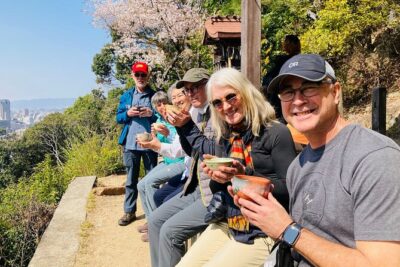
Hiroshima Local guided Hiking Tour&Open-air Tea Ceremony
Read our review →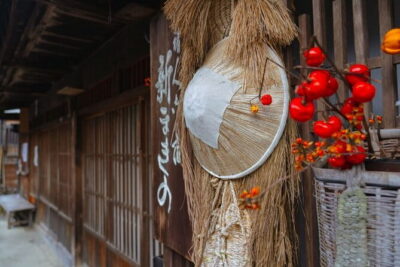
Hiking the Historic Nakasendo Trail [1 Day Tour from Nagoya]
Read our review →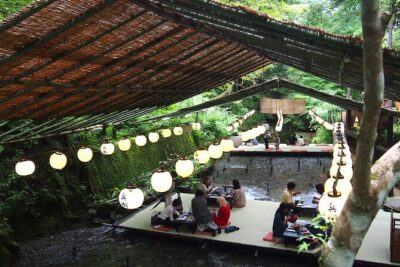
Kyoto Hiking Tour: The Nature and Legends of Kurama and Kibune
Read our review →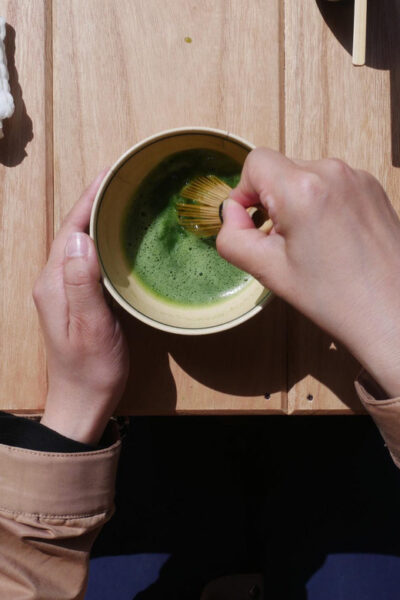
Full Day Hiking Tour at Mt.Takao including Hot Spring
Read our review →
Browse the lists this tour appears in