
REVIEW · JAPANESE COOKING CLASSES
Ramen Cooking Class at Lake Kawaguchiko (Short Course)
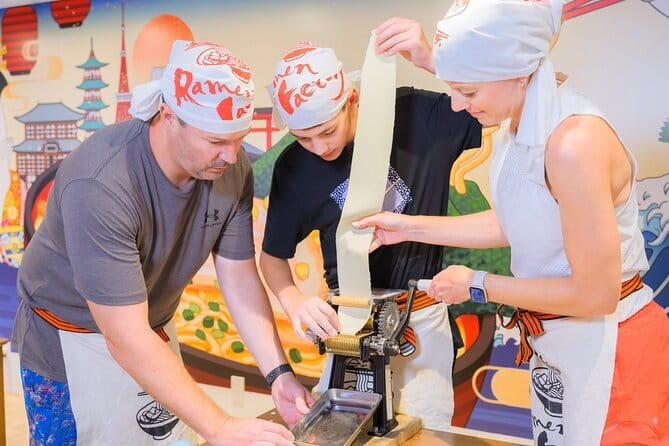
Making ramen from scratch is the heart of this one-hour class near Lake Kawaguchiko. You knead the dough, roll and cut the noodles, select your tare, cook the noodles, and finish the bowl with toppings such as chashu. Then you eat your own work with a view of Mt. Fuji.
I like two things right away: the class gives you real hands-on work instead of a quick cooking demonstration, and the English-speaking instruction keeps the process easy to follow. The bandana souvenir and group certificate add a nice touch, especially for families and couples.
The main drawback is the short format. One hour is enough to make and eat the ramen, but not enough for a long lesson about broth-making or noodle technique. Drinks cost extra, and you should report allergies or dietary restrictions before arrival.
In This Review
- Key points at a glance
- Turning flour into ramen in one hour
- Kneading, rolling, and cutting your noodles
- Choosing a tare for your bowl
- Boiling and topping the finished ramen
- Eating ramen with a Mt. Fuji view
- Mae, Kimmy, and Hiro as English-speaking instructors
- The bandana and group certificate
- Is $39.14 a fair price?
- Who will enjoy this class most?
- Timing, meeting point, and cancellation
- Should you book the Lake Kawaguchiko ramen class?
- FAQ
- How long does the ramen cooking class last?
- Where does the activity start and finish?
- Is an English-speaking instructor included?
- What will I do during the class?
- Is food included?
- Do I receive a souvenir?
- How many people can join the class?
- Can I cancel for a full refund?
Key points at a glance
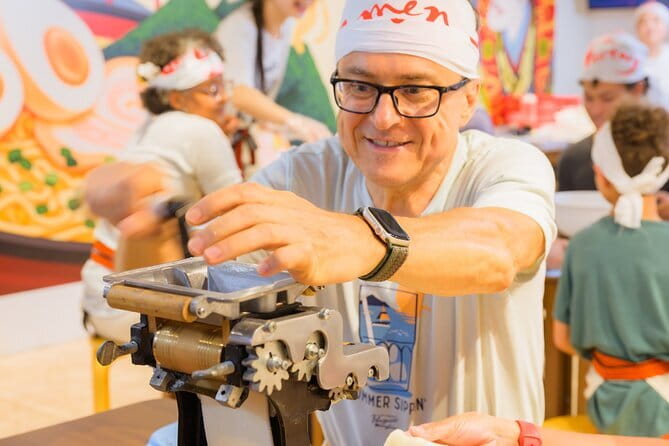
- Fresh noodles from dough: Knead, roll, and cut the noodles yourself with a noodle-making machine.
- Your choice of tare: Select the seasoning base that shapes the flavor of your ramen.
- Mt. Fuji with lunch: Eat the finished bowl while taking in the view from the Lake Kawaguchiko area.
- English-speaking guidance: Mae, Kimmy, and Hiro are named instructors associated with the class.
- Small reward to take home: Each participant receives an original bandana, and each group receives a completion certificate.
- Short and easy to fit in: The class lasts about one hour and ends where it begins.
Turning flour into ramen in one hour
This is a practical class, not a long culinary school session. You arrive at the Fuji Activity Reservation Center in Fujikawaguchiko, where the instructor leads your group through the full process from dough to finished bowl.
The order matters. You first work with the dough, then shape and cut the noodles, choose the soup seasoning, boil the noodles, and add toppings. That gives you a clear sense of how the parts of a ramen bowl come together. You are not simply watching someone else prepare lunch.
I like the way the class puts the noodles at the center. Ramen is often treated as a finished dish, but here you get to handle the basic ingredient before it reaches the pot. Kneading and rolling make the meal feel personal, while the noodle-making machine helps with the cutting step.
The class lasts about an hour, so expect a brisk pace. That timing works well if you are fitting the activity between sightseeing around Lake Kawaguchiko, but it also means the instructor cannot spend much time on long explanations or repeated practice. If you want a detailed lesson on broth from bones, seasoning chemistry, or regional ramen styles, this is not that kind of class.
More japanese cooking classes in Fujikawaguchiko machi:
- Ramen Cooking Class at Ramen Factory in Mt.Fuji
★ 5.0 · 101 reviews - Sushi Cooking Class at Sushi Factory -KIWAMI- Mt.Fuji
★ 5.0 · 23 reviews - Fujisan Sushi Making Lesson
★ 5.0 · 16 reviews
Kneading, rolling, and cutting your noodles
The first stage is making the noodles. You knead the dough, roll it out, and cut it with a noodle-making machine. This is the most hands-on part of the activity, and it gives children and first-time cooks a clear job to do.
The noodle-making machine is useful because it takes some of the difficulty out of achieving even strands. You still take part in the process, but you do not need advanced knife skills or professional kitchen equipment. That makes the class friendly for beginners.
I would pay attention to the texture during this step. The noodle is the part you have made yourself, and the cooking time later affects how it feels in the bowl. The instructor guides you through the process, so you are not left guessing about the basic steps.
The supplied information does not specify the exact ingredients, flour type, or noodle thickness. Do not book this expecting a specialized lesson in several noodle styles. Instead, think of it as a quick, satisfying introduction to handmade ramen.
Choosing a tare for your bowl
After making the noodles, you choose your preferred tare, or seasoning base. This choice lets you adjust the character of the soup rather than receiving one fixed bowl selected by the instructor.
The tare is an important part of ramen. It brings the main seasoning to the broth, so this is where you get a small taste of personal control. If you are cooking with a partner, choosing different seasoning bases can make the finished bowls feel more distinct.
The class details do not list the specific tare choices or describe their flavor profiles. For that reason, I would ask the instructor about the options if you have a strong preference or dietary concern. You should also share allergies or dietary restrictions in advance, as requested by the provider.
Drinks are not included. Since the class includes food tasting and the ramen itself, the extra drink cost is easy to understand, but you should budget for it if you want something alongside your bowl.
Boiling and topping the finished ramen
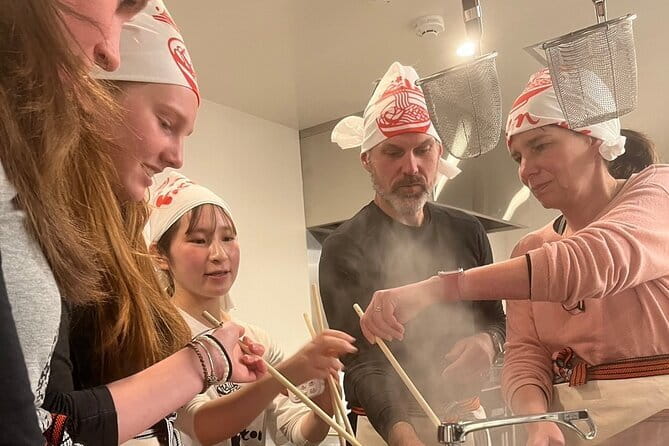
Once your noodles are cut, you boil them in a real noodle cooker. This step brings the earlier work together. The dough you handled at the start now becomes the main part of your meal.
Boiling noodles sounds simple, but timing affects the result. The instructor controls the pace of the class and helps you cook the noodles properly. You then add your chosen soup base and finish the bowl with toppings, including chashu.
The topping stage gives the experience a satisfying finish. You see the noodles, broth, and toppings turn into a recognizable ramen bowl, then sit down and eat it. That is more rewarding than taking home an unfinished ingredient or watching a chef prepare the entire meal.
The class is described as a food-tasting experience, so you should expect to eat the ramen you make during the session. The provided details do not promise additional dishes or a full meal beyond the ramen and included food tasting. Small extra treats may sometimes be offered, but I would not count on them as part of the standard meal.
A few more Fujikawaguchiko machi trips to weigh up
- Ramen Cooking Class at Ramen Factory in Kyoto
★ 5.0 · 1,937 reviews - Ramen & Gyoza Cooking Class in Tokyo with Local Supermarket Visit
★ 5.0 · 823 reviews - Kyoto: Ramen Cooking Class at a Ramen Factory with Souvenir
★ 4.9 · 532 reviews - Kyoto: Ramen, Gyoza, and Onigiri Cooking Class
★ 5.0 · 445 reviews
Eating ramen with a Mt. Fuji view
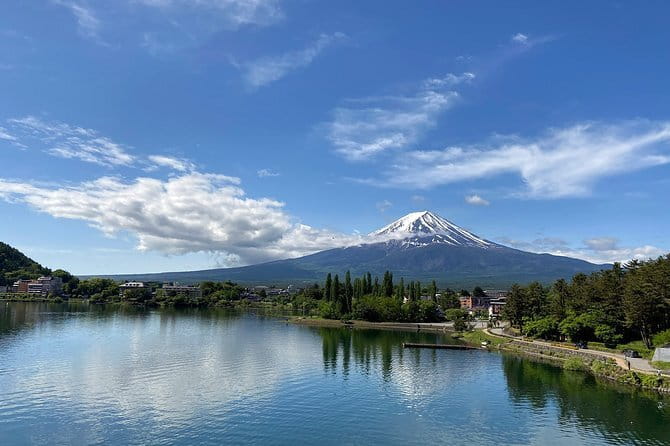
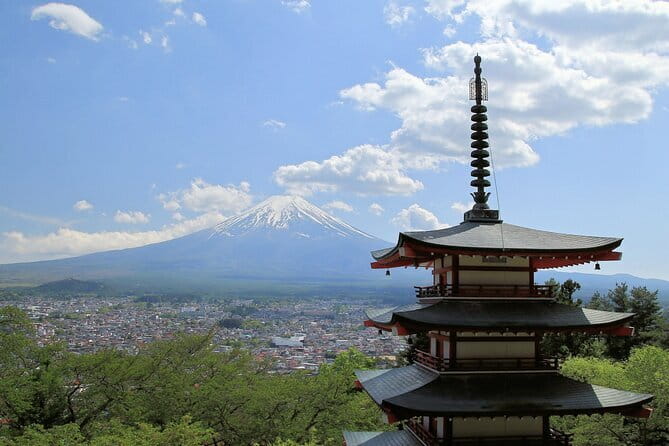
The setting adds value to what would otherwise be a straightforward cooking lesson. After boiling and topping your noodles, you enjoy the finished ramen with a view of Mt. Fuji.
Views around Kawaguchiko can depend on weather and visibility, and the information does not guarantee clear conditions. Still, the setting gives the meal a stronger sense of place. You are not just making a familiar Japanese dish in an anonymous classroom. You are doing it in the Mt. Fuji area, then sitting down to eat it there.
I would plan this class with the rest of your day in mind. The experience ends back at the meeting point, so it does not provide transportation to another attraction. That makes it easy to pair with nearby plans, especially since the location is near public transportation, but you need to arrange your own route to and from the center.
The meeting point is the Fuji Activity Reservation Center at 3487-15 Funatsu, Fujikawaguchiko, Minamitsuru District, Yamanashi 401-0301, Japan. Check your timing carefully, since the class is short and late arrival could cut into the part you most want to do.
Mae, Kimmy, and Hiro as English-speaking instructors
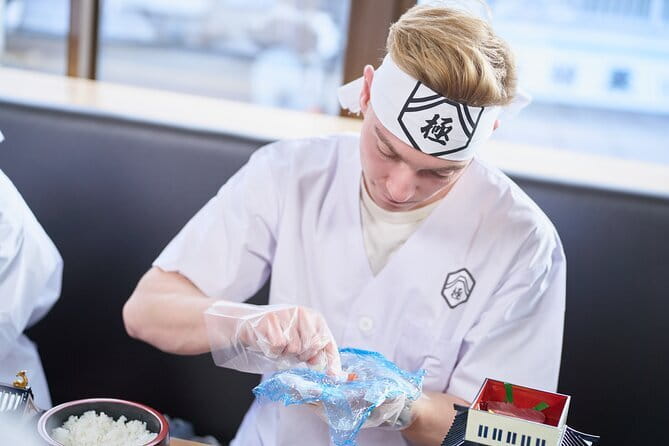
The class includes an English-speaking instructor, which matters during the dough-making and boiling stages. Clear directions are especially helpful when you are working with equipment and need to follow a set order.
Mae is specifically praised for being enthusiastic and helpful. A couple attending a 5 p.m. session had the class to themselves and received one-on-one instruction. That kind of session can make a big difference, though you should not assume every departure will be private or nearly private.
Kimmy and Hiro are also named instructors connected with the experience. They are described as nice and helpful, with the class providing useful guidance and extra treats on one occasion. The maximum group size is 20 people, so the amount of personal attention can vary depending on the number booked.
A group of 20 is still manageable for a simple one-hour activity, but it will not feel like the same experience as a two-person session. If personal instruction matters most to you, consider choosing a time that may be less popular, such as the 5 p.m. departure mentioned above. That is a practical tip, not a guarantee of a small group.
The bandana and group certificate
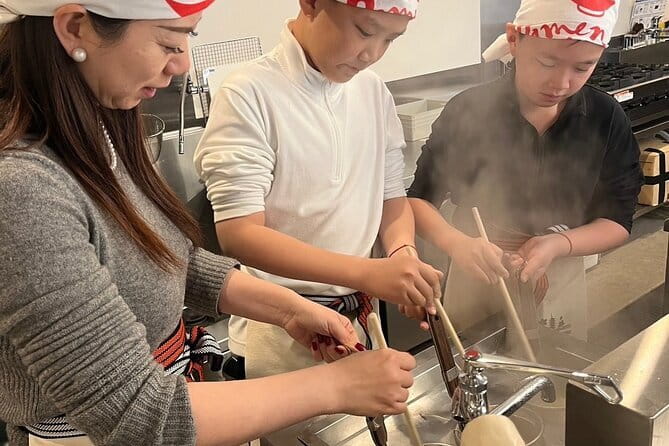
The souvenirs are a small but welcome part of the price. Every participant receives an original bandana, and each group receives one official certificate of completion.
The bandana is the more useful item. You can wear it during the class, and it gives you something tangible to take home without adding a separate souvenir purchase. For children, the certificate helps turn lunch into a named activity with a clear finish.
The certificate is given to each group rather than to each person. If you are traveling with family or friends, that may be fine. If everyone wants an individual keepsake, the bandana provides that personal item.
These extras do not make the class worth booking on their own. The real value is the chance to prepare and eat your own ramen. Still, they make the one-hour experience feel more complete.
Is $39.14 a fair price?
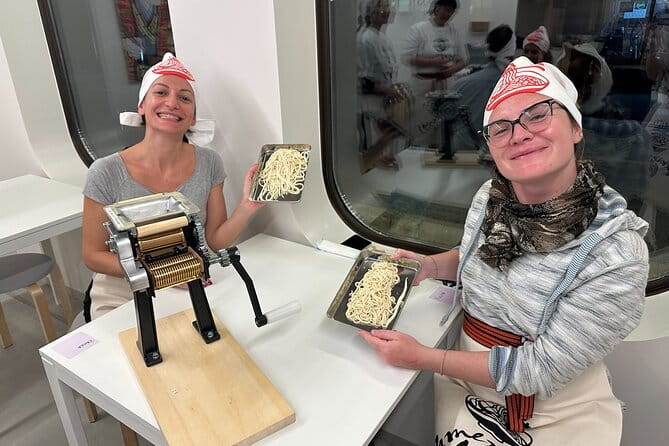
At $39.14 per person, the class sits in the moderate range for a short food activity. The price includes local taxes, food tasting, the equipment and materials needed to make the ramen, an English-speaking instructor, and the original bandana.
The value comes from participation. You are paying for instruction, ingredients, use of the noodle-making equipment, and a prepared meal that you helped create. If you only want a bowl of ramen, a restaurant would likely be the simpler choice. If you want an activity to share with a partner or family, the price is easier to justify.
The one-hour length keeps the cost from getting out of hand, but it also limits the depth of the lesson. I see this as a good value for someone who wants a memorable food activity during a Mt. Fuji-area visit. It is less appealing for a serious home cook who wants advanced technique, several soup styles, or a long kitchen session.
Private transportation is not included. The meeting point is near public transportation, so you need to account for your own travel time and transport costs when comparing the total price with other activities.
Who will enjoy this class most?
I would recommend it most strongly to couples, families, and first-time visitors who want to add a hands-on Japanese food activity to a Kawaguchiko itinerary.
It suits you if:
- You want to make something rather than watch a demonstration.
- You enjoy ramen and want to control part of the flavor.
- You need an activity that takes about one hour.
- You value an English-speaking guide.
- You like taking home a small souvenir.
- You want a meal connected to the Mt. Fuji setting.
Children may enjoy the kneading, cutting, topping, and certificate, though the supplied information does not give a minimum age or specific child policy. Ask before booking if those details matter for your family.
The class also works well for couples. A two-person session can provide close instruction, based on the 5 p.m. class experience described above. Just remember that session size is not guaranteed, and the maximum is 20 people.
I would skip it if you want a long, serious cooking workshop, a wide choice of dishes, or included drinks. It is also not the right choice if you need a fully private activity, since the standard format can include other participants.
Timing, meeting point, and cancellation
The activity begins and ends at the Fuji Activity Reservation Center in Funatsu, Fujikawaguchiko. It runs for about one hour and is near public transportation. Private transportation is not included, so leave enough time to reach the center on your own.
Confirmation is provided at booking, and the ticket is mobile. That is convenient for a sightseeing day, since you can keep the booking on your phone rather than carrying printed paperwork.
You can cancel for a full refund up to 24 hours before the start time. Cancellations or changes made inside that 24-hour window are not accepted for a refund. The cut-off follows local time in Japan, so check the start time carefully before making changes.
The class has a maximum of 20 participants. Since it is booked an average of 34 days in advance, I would reserve ahead if your Kawaguchiko schedule is fixed or if you want a particular time.
Should you book the Lake Kawaguchiko ramen class?
Book it if you want a compact, friendly activity where you make a real bowl of ramen from dough to toppings. The combination of hands-on noodle work, tare selection, English instruction, a Mt. Fuji view, and a take-home bandana gives the hour plenty to do.
I especially like the class for couples and families who want a shared memory without giving up half a day. The named instructors, including Mae, Kimmy, and Hiro, add a personal feel, and a quieter time may bring more direct help.
Skip it if you are mainly looking for a cheap lunch or an advanced cooking course. At $39.14, the price makes sense because the activity includes instruction, ingredients, equipment, food, taxes, and a souvenir. The best reason to book is not the ramen alone. It is the chance to make your own noodles, eat them near Mt. Fuji, and leave with something small to remember the afternoon.
FAQ
How long does the ramen cooking class last?
The class lasts approximately one hour.
Where does the activity start and finish?
It starts and finishes at the Fuji Activity Reservation Center, 3487-15 Funatsu, Fujikawaguchiko, Minamitsuru District, Yamanashi 401-0301, Japan.
Is an English-speaking instructor included?
Yes. An English-speaking instructor is included.
What will I do during the class?
You will knead the dough, roll it out, cut the noodles with a noodle-making machine, choose a tare, boil the noodles, and add toppings including chashu.
Is food included?
Yes. Food tasting and everything needed to make your own ramen are included. Drinks are not included.
Do I receive a souvenir?
Yes. Every participant receives an original bandana. Each group also receives one official certificate of completion.
How many people can join the class?
The activity has a maximum of 20 participants.
Can I cancel for a full refund?
Yes, if you cancel at least 24 hours before the experience start time. Cancellations or changes made less than 24 hours before the start time are not refunded or accepted.
More Workshops in Fujikawaguchiko machi
- Sushi Making Tokyo Roll and Authentic Japanese Sushi Class
★ 5.0 · 3,971 reviews - Kyoto: 45-Minute Tea Ceremony Lesson Experience
★ 4.3 · 2,378 reviews - Tokyo: Roll and Authentic Sushi Making Class in Asakusa
★ 4.9 · 1,957 reviews - Tokyo Shinjuku Chopsticks Making Class
★ 5.0 · 1,763 reviews
Just added around Fujikawaguchiko machi
- Cute & Fun E-Car tour following guide around Lake Kawaguchiko★ 5.0 · 54 reviews
- Early Morning Kayaking With Views of Mt Fuji at Lake Kawaguchiko★ 5.0 · 69 reviews
- Private Local Hiking to enjoy the nature and culture of Mt.Fuji★ 5.0 · 22 reviews
- Sushi Cooking Class at Sushi Factory -KIWAMI- Mt.Fuji★ 5.0 · 23 reviews
- Fujisan Sushi Making Lesson★ 5.0 · 16 reviews
- Hidden Fuji drive tour with a Local English speaking guide★ 5.0 · 43 reviews
- Ramen Cooking Class at Ramen Factory in Mt.Fuji★ 5.0 · 101 reviews
- Private Fuji Half-day Car Tour with Hotel Pickup and Local Guide★ 5.0 · 20 reviews
Japanese Cooking Classes, compared.
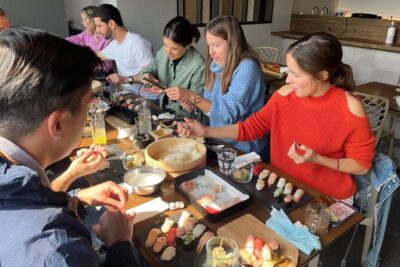
Sushi Making Tokyo Roll and Authentic Japanese Sushi Class
Read our review →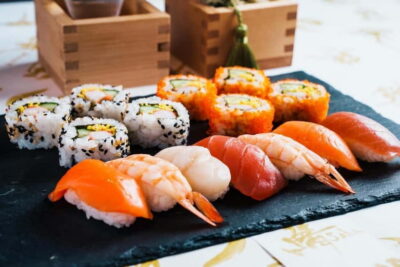
Roll and Authentic Sushi Making Class in Asakusa
Read our review →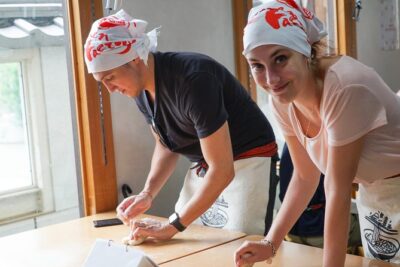
Ramen Cooking Class at Ramen Factory in Kyoto
Read our review →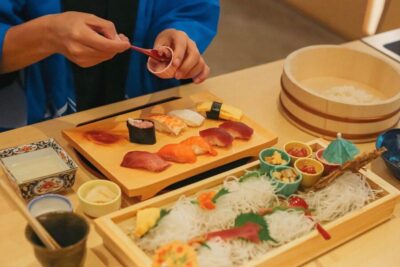
Sushi Making Class in a Happi Coat near a Famous Spot
Read our review →
Sushi Making Osaka Roll and Authentic Japanese Sushi Class
Read our review →
Tokyo Sushi Making Class in Tsukiji with Professional Chef
Read our review →
Ramen & Gyoza Cooking Class in Tokyo with Local Supermarket Visit
Read our review →
Tsukiji Fish Market Guided Tour and Sushi Making with Pro Chef
Read our review →Browse the lists this tour appears in