
REVIEW · MOUNT FUJI TOURS
Explore Mt. Fuji Ice Cave in Aokigahara Forest
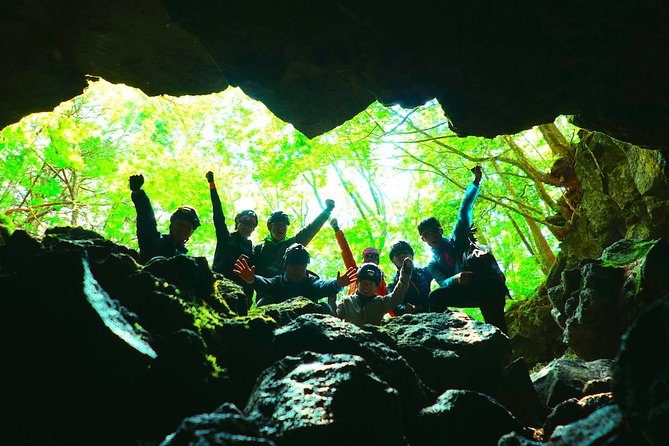
Mt. Fuji’s Ice Cave is not a polished attraction with railings and souvenir stands. It is a natural lava tube beneath Aokigahara Forest, where melted snow has formed ice inside volcanic rock for centuries. You walk through the forest, put on protective gear, and use a headlamp to explore a cold, shadowy world at about 0°C.
I like two things right away: the special entry permit gives you access that is difficult to arrange independently, and the English-speaking guides make the forest more than a pretty walk. Tada, Toshi, and Takasi are repeatedly praised for their humor, care, and grasp of the forest, wildlife, and Mt. Fuji’s geology. The main caution is simple: this is an active outdoor excursion, not an easy sightseeing stop. Expect rocks, some scrambling, cold, and a firm meeting time.
In This Review
- Key points to know before booking
- Why this cave is worth your morning
- Walking through Aokigahara Forest
- The 0°C cave and its ice formations
- Guides who make the difference
- A three-hour plan, step by step
- Price, pickup, and what you receive
- Clothing, fitness, and family notes
- How this compares with easier Fuji outings
- Who should book this experience?
- Should you book the Mt. Fuji Ice Cave tour?
- FAQ
- Where does the Mt. Fuji Ice Cave tour take place?
- How long does the tour last?
- Is pickup available?
- Is the tour conducted in English?
- What equipment is provided?
- What should I wear?
- Is the cave very cold?
- Is the tour suitable for children?
- What happens if the weather is poor?
Key points to know before booking
- The cave formed from Mt. Fuji’s lava: A major eruption about 1,200 years ago sent lava across the base of the mountain, leaving tubes and caverns behind.
- Ice remains inside the cave: Snowmelt entered the cold volcanic chambers and created natural ice formations, sometimes called ice art.
- Aokigahara is part of the experience: The route includes about 40 minutes of forest walking before and after roughly 60 minutes in the cave.
- Your guide matters here: Tada, Toshi, Takasi, and Tadasuke are noted for clear English, local knowledge, patience, and a good sense of humor.
- You receive the essential gear: The tour supplies a helmet, headlamp, gloves, and coveralls, but you need suitable clothing and shoes.
- The advertised price is $53.06 per person: With transport, equipment, permits, and a professional guide included, that is a fair price for a specialized three-hour outing.
Why this cave is worth your morning
The appeal is not just the cold. It is the change in scale.
You begin in the Sea of Trees, surrounded by dense woodland on the old lava flow. Then the ground opens into a cave created by the same volcanic force that shaped the area. The forest feels broad and quiet; the cave is close, dark, and elemental. In a short period, you get two very different views of Mt. Fuji’s effect on the region.
The cave has a strong sense of place because it was not built for tourism. The tour includes a special entry permit, and the secluded section called the Real Cave has not become a standard sightseeing stop. That gives the outing a more adventurous character than a visit to a developed cave with bright lighting and paved paths.
Your headlamp is part of the fun. You are not looking at an underground room lit for photographs. You are using one small light to pick out the lava walls, ice, and uneven ground. Photos can record the shapes, but they do not fully capture the cold air, darkness, and careful movement required inside.
Other Mount Fuji days people book alongside this one:
- Mt Fuji Area Private Guided Tours in English-Nature up close, quiet, personal
★ 5.0 · 288 reviews - Hakone 6 hour Private Tour with Government-Licensed Guide
★ 5.0 · 218 reviews - From Tokyo: Mount Fuji Full Customized Tour English Guide
★ 5.0 · 137 reviews
Walking through Aokigahara Forest
The forest portion takes about 40 minutes on the way to the cave and another 40 minutes on the return. That is a substantial part of the three-hour schedule, and it should be one of the reasons you book, not an afterthought.
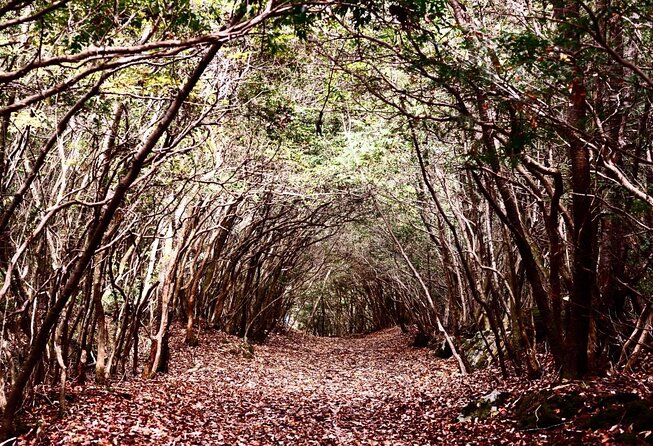
Aokigahara is often described in dramatic terms, but your guide helps place it in a broader setting. The forest grew over volcanic ground, and the guide may point out local plants, animals, trees, and changes caused by the lava. The forest’s damp, mossy atmosphere can feel mysterious, especially in poor weather, but the experience is not designed as a spooky performance.
A guide such as Tada or Takasi can also address the forest’s difficult reputation with care. That matters. You get context about the place rather than being pushed toward sensational stories. Several guides are praised for helping visitors see Aokigahara as a living forest with geological and natural value.
The walk is also where you can settle into the pace. You are not racing from one photo stop to another. You have time to look at the ground, listen to the guide, and notice how the forest sits over the old lava. One outing included a scenic stop with views of Mt. Fuji before entering the forest, so keep your camera ready at the start.
The 0°C cave and its ice formations
After the forest walk, you prepare for the cave. The operator provides a helmet, headlamp, gloves, and overall coveralls. You also have time to use the toilet and change into suitable clothing before moving to the departure point.
Inside, temperatures are around 0°C. The cold is not a small detail. Even if the weather around Lake Kawaguchiko is mild, the cave can feel sharply colder, so wear warm layers under the supplied coveralls. One useful approach is a light base layer with a warm jacket available, rather than bulky clothing that makes movement difficult.
The cave section lasts about 60 minutes. The route requires you to move around rocks and, in places, scramble or maneuver through uneven sections. The cave is described as spacious rather than tightly claustrophobic, but the footing can still be tricky. Shoes with firm grip are strongly advisable.
What you see is the result of two forces working together. The eruption produced hollow spaces in the cooling lava. Later, Mt. Fuji’s snowmelt entered these cold chambers and froze, forming natural ice shapes. The result changes with conditions and the passage of time, so the cave is not a fixed display.
Your guide leads the way and manages the pace. Follow instructions closely, especially when moving over rock or using your headlamp to judge the next step. The operator can stop the activity if someone ignores safety directions or disrupts the group. That is a sensible rule in a natural cave.
Guides who make the difference
The guide is central to the quality of this outing. The cave itself is unusual, but without good explanation the experience could become a cold walk through a dark hole.
Tada, also referred to as Tadasuke, is praised for speaking clear English, answering questions in both Japanese and English, and keeping a mixed-age group comfortable. He is also noted for explaining the forest’s nature, the cave’s past uses, and the volcanic setting without making the talk feel like a lecture.
Toshi is described as passionate about the forest and cave, with a strong grasp of local plants and animals. Takasi is praised for patience with children, a friendly manner, and a strong understanding of Mt. Fuji’s history. The names suggest that several members of the local team lead this experience, so your exact guide may vary.
That personal element has practical value. You can ask why ice forms in one area, how the lava created the cave, or what you are seeing along the forest path. Guides have also helped take photographs and adjusted the pace for families. On quieter dates, a small booking may become a private outing, though you should not count on that.
The advertised group limit is 12 people. That is small enough for questions and close supervision without requiring you to pay for a private tour. One additional piece of booking information lists a maximum of one traveler, which appears to be a booking-system detail rather than the stated group limit. If you are booking alone or with a larger party, confirm the current arrangement with the operator.
Same city, a completely different kind of day:
- From Tokyo: Full-Day Mount Fuji Tour in English or Spanish
★ 4.7 · 101 reviews - Mt Fuji Hakone/Enoshima Tour:Optional Ropeway/Lake Ashi Boat
★ 4.3 · 49 reviews - From Kawaguchiko: Mt. Fuji Private Tour with a Local Guide
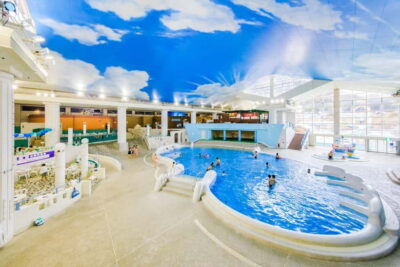
★ 5.0 · 35 reviews - Kowakien Yunessun Hot Springs Entry Ticket
★ 4.2 · 23 reviews
A three-hour plan, step by step
The day begins at the appointed meeting point, with pickup available from Kawaguchiko Station and hotels around Lake Kawaguchiko. The vehicle is air-conditioned, and private transportation is included for the short transfers to and from the forest.
The meeting time deserves attention. The published start time may not be the same as the actual reception time, so check the current instructions carefully after booking. One person missed the outing after arriving according to the listed start time rather than an earlier meeting window. Arrive early, especially if you are coming from Tokyo by bus.
Next comes preparation. You receive the helmet, headlamp, gloves, and coveralls. You can use the toilet and change clothes before heading out. This is a useful pause, since the cave is cold and the forest walk comes first.
The group then moves to the trailhead or departure site. The first forest walk takes roughly 40 minutes. The guide introduces the volcanic ground and the forest as you go, with time for questions and occasional views.
The cave exploration lasts about an hour. Expect a natural route, uneven surfaces, low light, and cold air. The guide helps you use the equipment and move safely, but you still need to pay attention to your footing.
You then walk back through Aokigahara for another 40 minutes, return to the meeting point, and have a brief review before departure. The schedule can shift depending on the group and conditions, so avoid arranging a tight connection immediately afterward.
Price, pickup, and what you receive
At $53.06 per person, this tour offers solid value for a specialized activity. The fee includes an English-speaking local guide, vehicle transfers, the special entry permit, helmet, headlamp, gloves, coveralls, taxes, and handling charges.
That combination matters. An independent visit might save money only if you could reach the correct area, secure the required access, understand the route, and bring or rent the right equipment. The permit and guide are the main value here. You are paying for access and interpretation, not merely a cave entrance.
Pickup from Kawaguchiko Station is helpful if you are staying near the lake or arriving by train or bus. Hotel pickup and drop-off are also offered around Lake Kawaguchiko. Food and drinks are not included, and the activity does not cover your wider transportation to the Fuji area or accommodation.
The small-group format also improves the calculation. A maximum of 12 people keeps the price below a private excursion while preserving a more personal feel. On some dates, low enrollment has resulted in a private tour, but that is a pleasant possibility rather than part of the guarantee.
Clothing, fitness, and family notes
Wear long sleeves, long pants, and a warm jacket. The supplied overall adds protection, but it does not replace warm clothing in a cave near freezing. Bring shoes with good grip, since smooth-soled footwear can make the rocky sections harder.
You need moderate physical fitness. The forest route takes about 80 minutes in total, and the cave involves uneven ground and some climbing or scrambling. The activity is not a good match for serious mobility limitations, and the information provided advises caution for people who are pregnant or have been drinking.
Children must be accompanied by an adult. The guides have handled mixed-age groups, including a six-year-old and a small child, with patience. Still, the natural cave and cold conditions mean you should judge your child’s comfort with darkness, rocks, and a steady walking pace.
The tour requires good weather and may be canceled if conditions are poor. If that happens, you are offered another date or a full refund. You can also cancel for a full refund up to 24 hours before the start time. Changes or cancellations inside that window are not accepted.
How this compares with easier Fuji outings
Around Lake Kawaguchiko, you can fill a day with viewpoints, a ropeway, a boat ride, and standard photo stops. Those options are easier and require less preparation, but they can also feel more familiar.
This outing asks more of you. You walk, get dirty, wear protective gear, and spend an hour in a cold cave. In return, you get a less polished side of the Mt. Fuji area, plus an explanation of how an eruption shaped the forest beneath your feet.
I would choose this tour for variety. If your itinerary already includes several lookout points and transport-based attractions, the ice cave adds a physical and geological experience. If you want an effortless morning with guaranteed views, choose something simpler.
Who should book this experience?
I would recommend it to curious visitors who enjoy nature, geology, local stories, and a little adventure. It suits couples looking for something different, families with active older children, and solo visitors who want a guide for a place that is difficult to arrange alone.
It is also a good choice if you want to understand Aokigahara beyond its public reputation. The forest walk, natural setting, and respectful explanation give the area more depth than a quick drive past its entrance.
I would hesitate if you dislike cold spaces, uneven ground, or outdoor clothing. You should also avoid booking it as a filler activity between tight train or bus connections. Weather, group pace, and forest conditions can affect the timing.
Should you book the Mt. Fuji Ice Cave tour?
Yes, if you want an unusual Fuji-area experience and can handle a moderate walk, a near-freezing cave, and some rock scrambling. The $53.06 price is reasonable because it covers transport, equipment, an English-speaking guide, and special access.
Book it with warm layers and proper shoes, and treat the meeting time as firm. The strongest part is not simply seeing ice. It is walking from the forest into the volcanic world below it, with guides such as Tada, Toshi, or Takasi helping you understand what you are seeing.
FAQ
Where does the Mt. Fuji Ice Cave tour take place?
The experience takes place in Fujikawaguchiko-machi, Japan, with walking routes through Aokigahara Forest and exploration of a lava-formed ice cave.
How long does the tour last?
The tour lasts approximately three hours. The schedule includes about 40 minutes of walking through the forest, around 60 minutes exploring the cave, and another 40 minutes walking back.
Is pickup available?
Yes. Pickup and drop-off are offered at Kawaguchiko Station and hotels around Lake Kawaguchiko.
Is the tour conducted in English?
Yes. An English-speaking local guide is included. Guides named in the available information include Tada, Tadasuke, Toshi, and Takasi.
What equipment is provided?
The tour provides a helmet, headlamp, gloves, and overall coveralls. Taxes, fees, private transportation, and the special entry permit are also included.
What should I wear?
Wear long sleeves, long pants, and a winter jacket or other warm layer. Shoes with good grip are recommended because the cave has rocks and uneven surfaces.
Is the cave very cold?
Yes. The cave is described as having a temperature of about 0°C, so you should prepare for near-freezing conditions underground.
Is the tour suitable for children?
Children must be accompanied by an adult. The guides have worked with young children, but the activity still requires moderate fitness and comfort with forest walking, darkness, cold, and uneven ground.
What happens if the weather is poor?
The tour requires good weather. If the operator cancels because of poor conditions, you can choose another date or receive a full refund. You can cancel up to 24 hours before the experience for a full refund.
Just added around Mount Fuji
- From Kawaguchiko: Mt. Fuji Private Tour with a Local Guide★ 5.0 · 35 reviews
- Mt Fuji Hakone/Enoshima Tour:Optional Ropeway/Lake Ashi Boat★ 4.3 · 49 reviews
- Mt. Fuji Guided Scenic Trike Adventure from Lake Kawaguchi★ 5.0 · 15 reviews
- Kowakien Yunessun Hot Springs Entry Ticket★ 4.2 · 23 reviews
- Hakone: Day Tour to View Mt Fuji & Wooden Culture Experience★ 5.0 · 23 reviews
- Hakone Hachiri: Old Tokaido Highway Hiking Tour★ 4.9 · 22 reviews
- Hakone Adventure: Explore Nature’s Beauty and Tranquility★ 4.2 · 14 reviews
- Tokyo: Private Mt. Fuji Luxury Day Tour – Fully Customizable★ 4.9 · 17 reviews
Mount Fuji Tours, compared.
Mt Fuji Area Private Guided Tours in English-Nature up close, quiet, personal
Read our review →
Hakone 6 hour Private Tour with Government-Licensed Guide
Read our review →
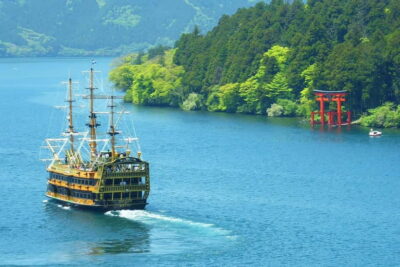
Mt Fuji Hakone/Enoshima Tour:Optional Ropeway/Lake Ashi Boat
Read our review →
From Kawaguchiko: Mt. Fuji Private Tour with a Local Guide
Read our review →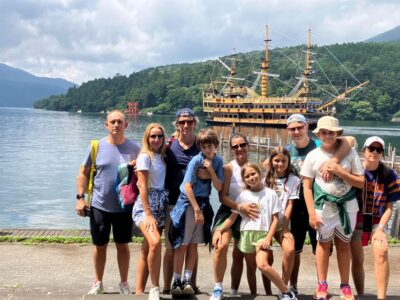
Browse the lists this tour appears in