
REVIEW · WALKING TOURS
Private Osaka Walking Tour: Highlights & Hidden Gems
The best thing about this Osaka tour is that it does not force you into one fixed route. You tell your host what matters to you, then spend two to eight hours exploring Osaka’s temples, shopping streets, food areas, and quieter corners at a pace that fits your group. Maria, Max, Taku, Ryan, Kai, and Loys are among the guides praised for warm personalities, local knowledge, and flexible planning.
I like the advance questionnaire, which gives your guide a useful head start, and I like the private format. You can ask for Osaka Castle, a fish market, unusual food, shopping help, or lesser-known shrines without waiting for a large group. The main catch is that this is a walking tour, not a private car tour. Four hours can also mean 15,000 to 20,000 steps, so comfortable shoes matter.
In This Review
- Key points at a glance
- Why a custom Osaka walk can work so well
- Namba begins with a giant lion
- Hozenji and the old lanes of Namba
- Dotonbori after the temples
- Shitennoji, a calmer look at Osaka
- Amerikamura shows Osaka’s younger side
- Shopping through arcades and underground Umeda
- A quiet island pause in the middle of the city
- Osaka Castle and the practical side of the tour
- Food advice without a fixed food tour
- How much walking should you expect?
- Guides, communication, and the personal touch
- Price, group value, and what is extra
- Who should book this Osaka experience?
- Should you book the private Osaka walk?
- FAQ
- How long does the private Osaka walking tour last?
- Is the tour private?
- Can I choose what I see?
- Is hotel pickup available?
- Where does the tour end?
- Are food and drinks included?
- Are transportation costs included?
- Can I cancel for a refund?
Key points at a glance
- A route built around you: Choose history, food, shopping, architecture, nightlife, or a mix.
- A private guide for your group: The tour is not shared with other parties.
- Osaka’s contrasts in one day: Visit Shitennoji, Namba, Amerikamura, Hozenji, and Dotonbori.
- Useful local help: Guides can explain public transport, help with ICOCA cards, and suggest restaurants.
- Flexible timing: Book for roughly 2 to 8 hours, with flexible start times.
- A serious walking day: Some four-hour routes have reached 15,000 steps or more.
Why a custom Osaka walk can work so well

Osaka is easy to enjoy and surprisingly hard to organize. One neighborhood may be filled with neon signs, arcades, and food counters, while the next has a quiet temple courtyard or a narrow lane of old bars. A private host helps connect those pieces instead of making you choose between a standard sightseeing route and complete guesswork.
Before the tour, you receive a short online questionnaire. Use it well. Tell your host if you care more about temples than shopping, if you want local food, or if you have already seen the famous sights. Mention your walking limits and any must-see places. The more clearly you answer, the more useful the final route can be.
The private setup is especially handy for families, couples, and first-time visitors with limited time. A guide can explain the subway, adjust the pace, help with photos, and respond to last-minute requests. Maria, for example, is repeatedly praised for contacting people ahead of time and adjusting the day to their interests. Max has helped people use public transport and find restaurants after the tour.
This flexibility also means your exact day is not fully predictable in advance. The listed stops are possibilities, not a guarantee that every one will fit into a short booking. A two-hour walk might focus on Namba and Dotonbori, while a six or eight-hour outing can link several districts.
More Walking Tours in Osaka
- Osaka Kickstart: Hotspots & Hidden Gems Tour
★ 5.0 · 1,306 reviews - Osaka: Hotspots & Hidden Gems Walking Tour Private or Group
★ 4.9 · 1,300 reviews - Osaka Local Foodie Walking Tour in Dotonbori and Shinsekai
★ 5.0 · 985 reviews
Namba begins with a giant lion
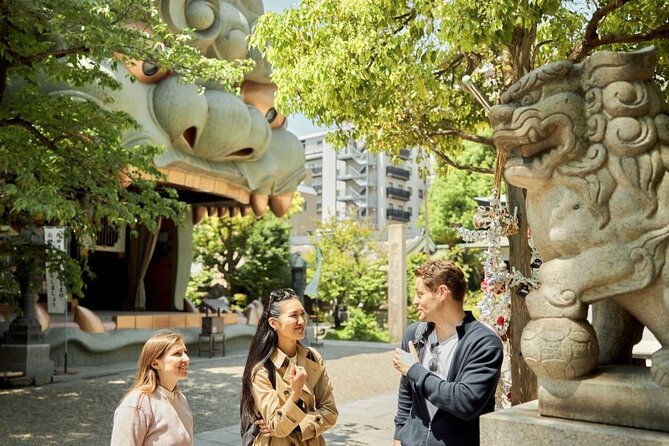
One of the most memorable stops is Namba Yasaka Shrine, home to a huge lion-head structure. The lion is believed to swallow evil spirits and bring good luck, making this a quick but striking introduction to Osaka’s mix of religious tradition and theatrical design.
The shrine sits in Namba, one of the city’s main entertainment and shopping areas. That location makes it easy to pair with other nearby stops, but do not expect a long, isolated temple visit. The appeal is the contrast: a bold shrine structure tucked into a busy urban district.
Your guide can add context that is easy to miss if you arrive alone. You may also get a better sense of how Osaka places everyday city life directly beside sacred spaces.
Hozenji and the old lanes of Namba
Hozenji Temple offers a quieter pause. Its moss-covered Fudomyoo statue is traditionally honored by pouring water over it, and the small ritual gives you something simple to do rather than merely photograph.
The temple is reached through a stone-paved alley lined with more than 60 traditional restaurants and bars. This is a good place to ask your host about dinner ideas, local customs, or the difference between a quick snack stop and a full Osaka meal.
The lane is compact, and it can feel crowded at popular times. Still, it rewards slow walking. Look up at the signs, notice the narrow entrances, and ask your guide which places are suited to your taste and budget. Food and drinks are not included, so any meal or snack is paid separately.
Dotonbori after the temples
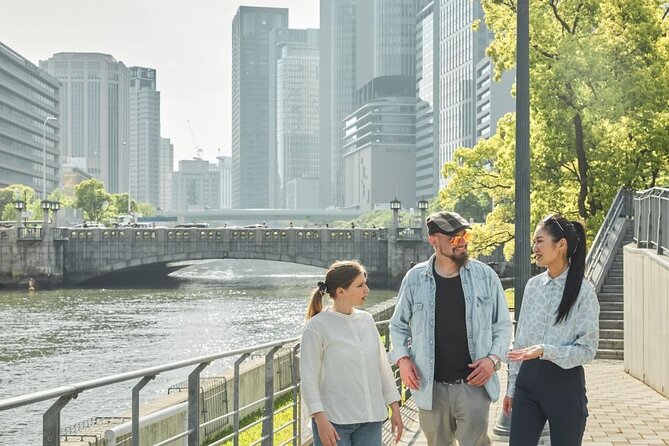
Dotonbori is Osaka’s famous canal district, lit by large signs and surrounded by arcades, restaurants, and entertainment venues. It is the visual postcard of the city, but it is more enjoyable when you are not trying to understand it alone.
A guide can point out side streets and explain how the area fits into Osaka’s food culture. You might stop for local specialties, though the exact choices depend on your preferences and the time available. Past visitors have enjoyed kushikatsu, curry, unusual local dishes, and other food recommendations from their hosts.
This is also a strong place for photographs, especially if your group wants family pictures. The downside is clear: Dotonbori can be loud, crowded, and full of bright commercial signs. If that is not your style, tell your host to keep the stop brief and spend more time in quieter neighborhoods.
Same city, a completely different kind of day:
- Osaka Go Karting Tour with Funny Costume
★ 5.0 · 2,658 reviews - Osaka Castle: Museum and Tower Entry Ticket
★ 4.5 · 2,380 reviews - Osaka: Shinsekai Food Tour with 13-15 Dishes at 5 Eateries
★ 4.8 · 2,204 reviews - Osaka Food Tour: 13 Dishes at 5 Local Eateries
★ 5.0 · 2,149 reviews
Shitennoji, a calmer look at Osaka
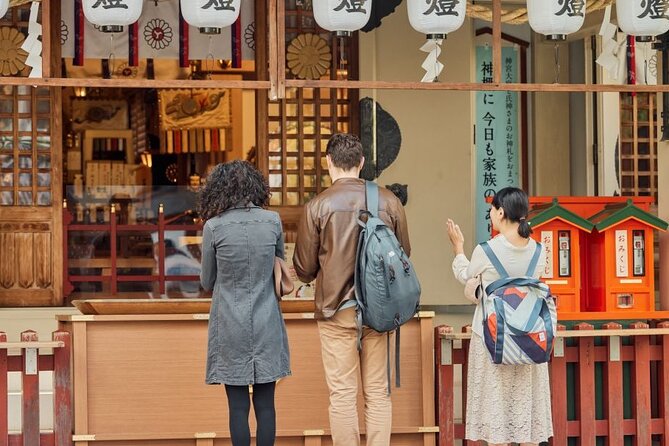
Shitennoji was founded in 593 and is regarded as Japan’s oldest official temple. It is one of the most meaningful stops on the possible route because it connects Osaka to the early spread of Buddhism in Japan.
The temple grounds offer a change of pace from Namba and Dotonbori. You can take a quieter walk, look at the traditional architecture, and hear how the site fits into Japanese religious history. It is a strong choice for anyone who wants more than shopping streets and city lights.
Entry fees for attractions are not included. Ask your host about the current plan and any paid areas before you arrive. If you have only two or three hours, Shitennoji may need to be balanced against the travel time from the southern districts.
Amerikamura shows Osaka’s younger side
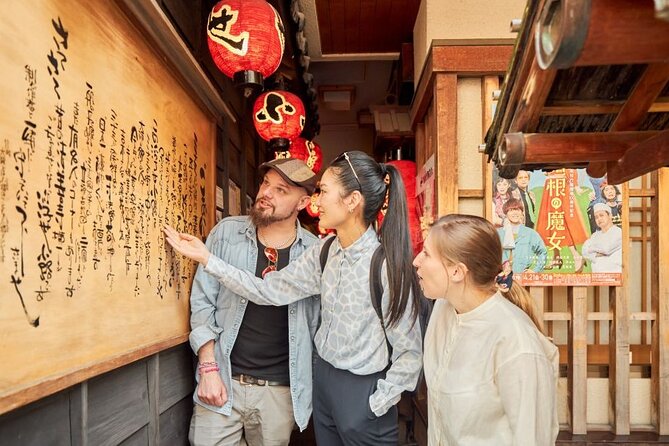
Amerikamura, often shortened to Amemura, is the center of Osaka’s American-influenced youth culture. Indie music, thrift shops, hip-hop fashion, galleries, and unusual small stores give the neighborhood a different mood from the temple districts.
I would choose this area if you want to see how Osaka’s local style changes from one street to the next. It is less about a single grand sight and more about browsing, people-watching, and noticing the city’s creative side.
The area suits visitors who enjoy fashion, music, design, and shopping. If your group mainly wants old Japan, you may prefer to spend more time at Shitennoji, Hozenji, or another shrine.
Shopping through arcades and underground Umeda
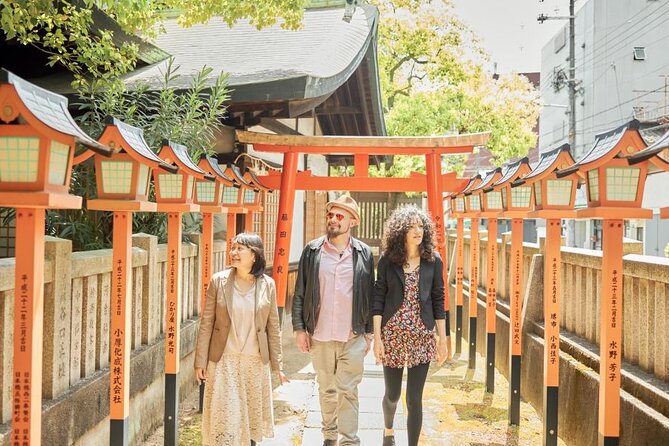
The tour can also turn toward Osaka’s shopping culture. One option is a major department store, where you can find an enormous range of goods, food, household items, and surprises. Another is White Umeda, the maze-like underground shopping area known for its many passages and stores.
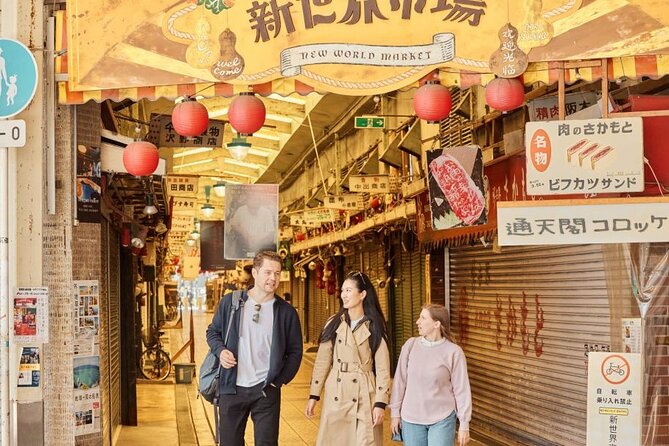
Osaka’s covered shopping arcades are another useful stop. They combine shops, cafés, restaurants, souvenir counters, and character goods. This can be a practical part of the tour, especially if you want gifts but do not know where to begin.
Shopping with a local guide saves time and reduces the usual aimless wandering. You can ask for everyday Japanese products instead of generic souvenirs, or get help finding a restaurant in a huge station complex. Keep in mind that purchases are not included, and shopping time can quickly replace sightseeing time. Tell your host how much browsing you actually want.
A quiet island pause in the middle of the city
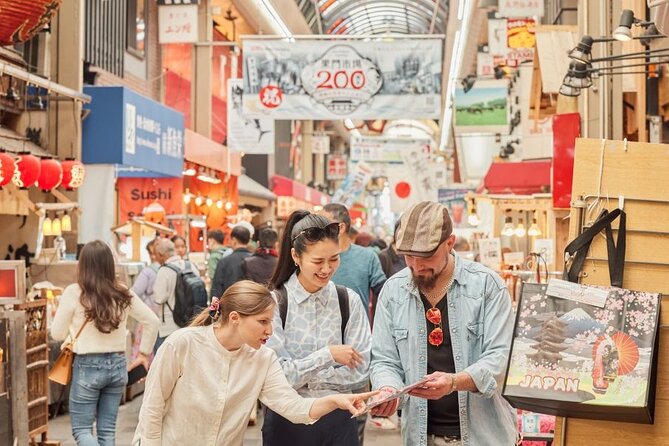
The itinerary may include an island-like oasis with art museums, early 20th-century buildings, and a pleasant park. This setting provides a late-morning walk away from the noise of Osaka’s major shopping zones.
It is a good fit for travelers who want architecture and art, or anyone who needs a calmer stretch during a long day. The contrast helps explain Osaka better than a list of famous sights alone. The city is not just neon streets and food signs; it also has quiet public spaces and older buildings.
Because the activity is personalized, ask your guide to include this kind of stop if it appeals to you. It may not be the best use of a very short booking if your priority is Namba or Osaka Castle.
Osaka Castle and the practical side of the tour
Several routes have included Osaka Castle, and it is a sensible request for a first visit. The castle and its park provide a major landmark, open space, and a chance to discuss Osaka’s place in Japanese history.
The castle is not listed as a guaranteed stop for every booking, so ask for it during the planning stage. If you want to go inside, attraction admission is extra. A route that includes the castle may also require public transport or a taxi, depending on where your walk begins.
That transport flexibility is one of the tour’s useful features. Max has guided people through the subway, and Kai has helped visitors purchase ICOCA cards for public transport. Maria has used public transport and Uber when needed for someone with sore knees. These examples show why you should be direct about mobility before the day begins.
You pay transport costs separately. The tour price covers the guide and planning, not trains, taxis, food, or entry fees.
Food advice without a fixed food tour
This is not a food tour with a set tasting menu. Food and drinks are not included, but food can still shape the route. You can ask to visit a fish market, try curry, sample kushikatsu, or stop for other local specialties.
That arrangement gives you more control. You are not paying for dishes you do not want, and you can choose how much time and money to spend eating. It also means you need to tell your host about allergies, dislikes, and your preferred meal budget.
I like the way the food element can be folded into a broader day. You might visit a temple in the morning, walk through a market, stop for lunch, then continue to a shopping arcade. Guides have also offered restaurant suggestions for after the tour, including help getting to a restaurant inside Osaka Station.
How much walking should you expect?
The official duration is flexible, from about two to eight hours. The walking distance is not fixed, and that matters more than the clock. One four-hour outing reached around 15,000 steps, while another passed 20,000 steps.
That is a lot for some people, especially in summer, during rainy weather, or after several days of sightseeing. Wear supportive shoes and tell your guide if you need regular breaks. The private format makes it easier to slow down or use public transport between districts, but additional fares still apply.
A two-hour booking is best for a focused neighborhood introduction. Four hours gives you a solid taste of Osaka, perhaps combining one major sight, one local area, and food or shopping. Six to eight hours suits people who want several districts, but only if your group is comfortable with a full day on foot.
Guides, communication, and the personal touch
The guide can make or break a custom walk. The strongest names associated with this experience include Maria, Max, Taku, Ryan, Kai, Loys, Mayura, Karim, and Khalid.
Maria is praised for excellent English, advance planning, energy, and close attention to a group’s pace. Max is noted for transport help, restaurant advice, and a friendly manner. Taku has taken people to local places they would not have found alone and adjusted the route around food interests.
Ryan is valued for his long experience living in Osaka and his storytelling about Japanese culture. Kai has combined history with practical help using public transport. Loys has blended older and newer Osaka while helping a family with shopping.
These details point to the real value of the experience: you are not simply paying for directions. You are paying for conversation, interpretation, and help making choices in a large city. You cannot request a particular guide with certainty from the information provided, but you can ask about guide availability when booking.
Price, group value, and what is extra
The listed price is $81.07 per person. Since this is a private activity, the value depends heavily on your group size and the length you choose. For a couple or family, a shared local guide for several hours can be reasonable, especially if you would otherwise spend time struggling with transit, restaurant choices, and route planning.
The price includes a private guide, a personalized plan, the questionnaire process, flexible start times, and hotel pickup if your hotel is centrally located. It does not include meals, drinks, attraction admissions, public transport, taxis, or gratuity.
Group discounts are offered, so larger parties should check the final rate. For a solo visitor, the per-person price is harder to justify unless you place a high value on personal attention and a custom route.
Free cancellation is available if you cancel at least 24 hours before the start time. Changes or cancellations inside that window are not accepted for a refund.
Who should book this Osaka experience?
I would recommend it most to first-time visitors who want help getting oriented quickly. It also suits families, private groups, food-focused visitors, shoppers, and people with a short Osaka stop between Kyoto and Tokyo.
The tour can work for people who need a gentler pace, provided they explain their needs before the day. Guides have adjusted routes with public transport and taxis when walking became difficult, but this remains a walking activity, not an accessible vehicle tour.
You may want something else if you prefer a fixed historical lecture, a dedicated food tour with tastings included, or a sightseeing bus. You should also think twice if you dislike making choices, since the experience asks you to share your interests and help shape the day.
Should you book the private Osaka walk?
Book it if you want Osaka explained by a local person rather than simply marked off on a map. The strongest reasons are the private format, flexible route, practical transport help, and the chance to combine major sights with small streets and local food stops.
Before booking, decide on your priorities and be realistic about walking. Ask for your must-sees, state your desired pace, and confirm how transport will be handled. If you do that, the $81.07 starting price can buy more than sightseeing: it can give you a useful introduction to how Osaka fits together.
FAQ
How long does the private Osaka walking tour last?
The experience can last approximately 2 to 8 hours, depending on the option you book.
Is the tour private?
Yes. Only your group participates in the private activity.
Can I choose what I see?
Yes. After booking, you receive an online questionnaire about your interests, preferences, and must-see places. Your host uses that information to plan a personal route.
Is hotel pickup available?
Pickup is offered from centrally located hotels. The standard meeting point is at DAISO, 2-chōme-2-17 Nanbanaka, Naniwa Ward, Osaka.
Where does the tour end?
The activity ends back at the meeting point.
Are food and drinks included?
No. Food and drinks are not included, so you pay separately for any meals, snacks, or drinks.
Are transportation costs included?
No. This is a walking tour. Public transportation or local taxis may be used if requested, but those costs are extra and can be discussed with your host after booking.
Can I cancel for a refund?
You can cancel at least 24 hours before the local start time for a full refund. Cancellations or changes made less than 24 hours before the start time are not refunded or accepted.
Just added around Osaka
- (Ticket Included) Explore Osaka Castle & Museum of History★ 4.8 · 21 reviews
- Hidden Osaka – Yukaku Red Light Tour & Culinary Adventure★ 4.8 · 96 reviews
- Osaka: Walking Tour and Top Highlights★ 4.8 · 104 reviews
- Osaka: Private Ceramic Painting Workshop★ 5.0 · 13 reviews
- Eat Like a Local in Osaka – Private Custom Street Food Tour★ 4.3 · 33 reviews
- Pickleball in Osaka, Kobe & Kyoto with Locals!★ 4.7 · 80 reviews
- Osaka:SUMO BEATS SHOWCASE: Taiko Drum and Wagyu burger!★ 4.2 · 37 reviews
- Kimono photoshoot-Includes 100 photo data★ 5.0 · 21 reviews
Walking Tours, compared.
Kyoto Geisha Walking Tour: Gion District & Hidden Gems
Read our review →
Tokyo Tsukiji Fish Market Food and Culture Walking Tour
Read our review →
Gion Magical Night Walking Tour with Geisha Trivia
Read our review →
Imperial Palace and Shogun Historical Walking Tour
Read our review →
Gion Geisha District Walking Tour – Stories of Geisha
Read our review →
Asakusa Walking Tour with Sensoji Temple Visit
Read our review →
Kyoto Gion Geisha District Walking Tour – The Stories of Geisha
Read our review →Browse the lists this tour appears in