
REVIEW · WALKING TOURS
Osaka Walking Tour
Osaka reveals itself through food, neon, rail lines, and old neighborhoods, and this three-hour walking tour connects those pieces quickly. You begin in modern Osaka Station City, ride the subway like a local, eat kushikatsu in Shinsekai, and finish at Ebisu Bridge in Dotonbori.
I like the small group of no more than 10 and the way local guides such as Hide, Harry, Keiko, Minako, Rika, and Kaori bring different voices to the walk. I also like the useful first-day format: you get a basic map of the city, practical rail help, and a taste of Osaka food without giving up an entire day.
The main drawback is simple: this is an orientation walk, not a grand parade of Osaka’s biggest sights. You pay an additional subway fare, spend part of the tour in and around a station, and the food tasting is modest rather than a full meal.
In This Review
- Key points to know before you book
- A quick way to get your Osaka bearings
- Starting at Osaka Station City
- Riding the subway like a local
- Shinsekai and the taste of kushikatsu
- Small alleys and Osaka’s everyday rhythm
- Hozenji, Dotonbori, and the walk to Ebisu Bridge
- How the guides shape the experience
- Weather, comfort, and the small practical details
- Who will get the most from this Osaka walk
- Should you book the Osaka Walking Tour?
- FAQ
- How long is the Osaka Walking Tour?
- Where does the tour begin?
- Where does the tour end?
- Is the subway fare included?
- Is food included?
- How large is the group?
- Is the tour suitable for children?
- Can I cancel for a refund?
Key points to know before you book
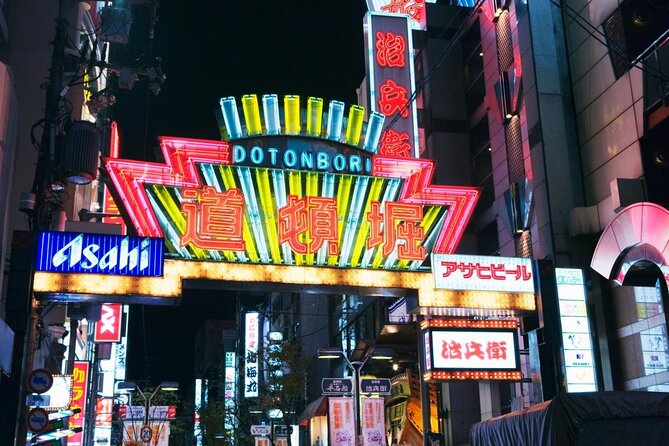
- Three distinct Osakas in three hours: See modern Umeda, old-school Shinsekai, and neon-filled Dotonbori.
- Kushikatsu is included: Try Osaka’s deep-fried skewers with one non-alcoholic drink.
- The guide makes the difference: Hide, Harry, Ichi, Ichiro, Keiko, Minako, Kaori, and Rika are among the guides associated with this walk.
- The subway fare is extra: Budget 430 yen for an adult or youth ticket, and 220 yen for a child.
- The group stays small: The maximum is 10 people, which gives you a better chance to ask questions.
- You finish in the heart of Namba: Ebisu Bridge puts you right in Dotonbori, with plenty of options for continuing your day.
A quick way to get your Osaka bearings
Osaka can feel scattered at first. Umeda, Namba, Shinsekai, and Dotonbori each have their own mood, and the city’s large train stations can be confusing even when you are used to Japanese rail travel.
This walk gives you a useful overview without trying to cover every corner. It links the north-center district around Osaka Station with the southern entertainment areas, so you get a feel for how the city changes as you move through it.
I especially like this setup for your first day. You are not just being driven from one sight to another. You walk through public spaces, use the subway, pause for local food, and end somewhere you can easily explore on your own.
The tour costs $53.06 per person. That is fair if you value a local guide, a small group, and help making sense of Osaka’s neighborhoods. The price includes the guide, a kushikatsu tasting, and one non-alcoholic drink, but not the subway fare or extra food.
If you already know Osaka well, the route may feel basic. You could visit Dotonbori and Shinsekai yourself for less money. The value here lies in the explanation, the city connections, and the ease of having someone else handle the route.
More Walking Tours in Osaka
- Osaka Kickstart: Hotspots & Hidden Gems Tour
★ 5.0 · 1,306 reviews - Osaka: Hotspots & Hidden Gems Walking Tour Private or Group
★ 4.9 · 1,300 reviews - Osaka Local Foodie Walking Tour in Dotonbori and Shinsekai
★ 5.0 · 985 reviews
Starting at Osaka Station City
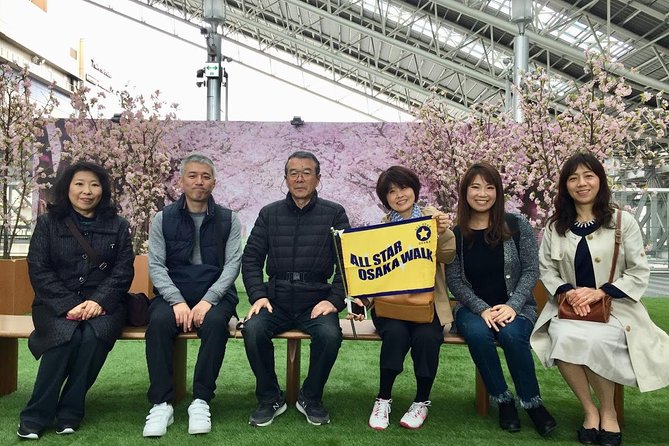
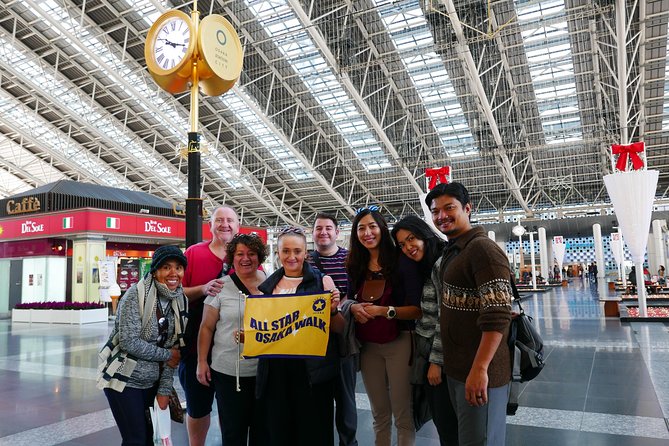
Meet at the Osaka Tourist Information Center on the ground level, in front of the central gate of JR Osaka Station, at 9:50 a.m. The tour starts exactly at 10 a.m. Look for the guide holding an All Star Osaka yellow flag.
Allow extra time to find the meeting point. Osaka Station is large and busy, and the central gate is not the same as every other station entrance. One guide, Rika, has been especially helpful with clear meeting directions, but you should still arrive early rather than attempt a last-minute station dash.
The first portion lasts about 45 minutes and takes place around Osaka Station City. This is a useful contrast with the older neighborhoods later in the walk. You see the modern commercial side of Osaka, the part shaped by department stores, offices, rail connections, and large-scale redevelopment.
That may not sound exciting if you came looking for temples and narrow alleys. It is still worthwhile context. Osaka Station is one of the city’s main transport centers, and understanding this area helps you plan later trips between northern Osaka and Namba.
A department store stop has also been part of the experience for some groups. Do not expect a museum visit or a long shopping break. Think of this opening as an introduction to how people move, shop, and meet in present-day Osaka.
Riding the subway like a local
The subway ride is short but important. It shows you how to connect the city’s main districts and gives you a practical lesson in Osaka transportation.
The fare is not included. Adults and youths pay 430 yen, while children pay 220 yen. Bring enough yen or be ready to purchase your own ticket. Since the tour uses escalators and some steps, keep an eye on strollers and allow for the usual station changes in pace.
This is one of the tour’s most useful features for first-time visitors. A local guide can point out the correct route and help you feel less awkward about using the system. You will not become an Osaka rail expert in one ride, but you will have a better mental map for the rest of your stay.
The walking pace is generally relaxed. That matters in Osaka’s hot, humid months, when a fast route through crowded streets can take the fun out of the morning. The tour still involves a moderate amount of walking, so wear shoes you can comfortably use for three hours.
Shinsekai and the taste of kushikatsu
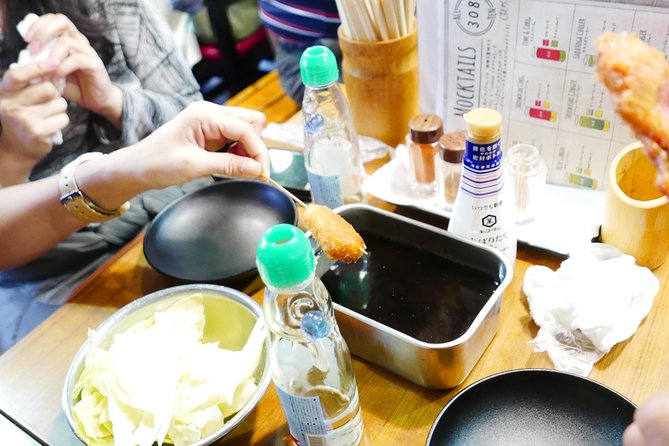
Shinsekai is the tour’s food-and-character stop. This downtown district is known for its casual restaurants and kushikatsu, Osaka’s famous deep-fried skewers.
Kushikatsu can include meat, vegetables, seafood, and other ingredients placed on sticks, coated, and fried. Here, the tasting is one serving at a restaurant, along with one non-alcoholic drink. It is a sample, not a full lunch, so you may want to eat more afterward.
That modest portion is both a strength and a limitation. You get a clear introduction to one of Osaka’s signature foods without spending time on a long meal. If you are hungry, picky, or hoping for a full food tour, you may find the tasting too small.
The restaurant setting can vary. Some groups have eaten in an unusual old Volkswagen bus attached to a restaurant, which adds a bit of local color. Do not book this walk solely for that detail, since the precise food venue is not guaranteed.
Shinsekai itself gives you something the polished station district cannot: a rougher, more old-fashioned downtown mood, with restaurants, game areas, shops, and signs aimed at everyday local entertainment. Your guide explains how the area fits into Osaka’s development and postwar story.
Guides such as Keiko, Ichi, Ichiro, and Hide have been praised for explaining history in clear English. The subject matter can range from how Osaka was built to what changed after World War II. That historical frame helps you see Shinsekai as more than a place to grab a fried snack.
Same city, a completely different kind of day:
- Osaka Go Karting Tour with Funny Costume
★ 5.0 · 2,658 reviews - Osaka Castle: Museum and Tower Entry Ticket
★ 4.5 · 2,380 reviews - Osaka: Shinsekai Food Tour with 13-15 Dishes at 5 Eateries
★ 4.8 · 2,204 reviews - Osaka Food Tour: 13 Dishes at 5 Local Eateries
★ 5.0 · 2,149 reviews
Small alleys and Osaka’s everyday rhythm
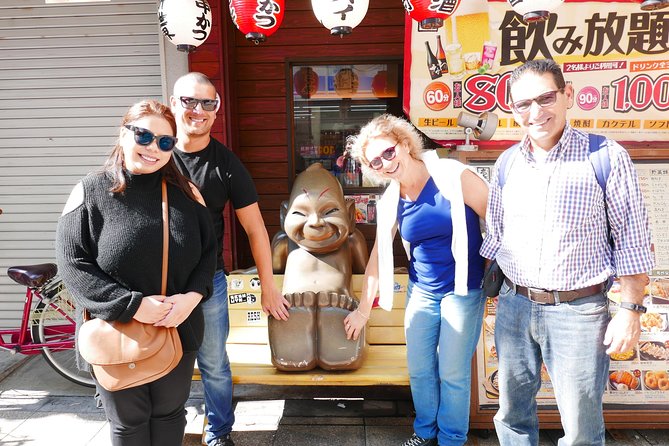
Between the larger stops, the route passes through attractive restaurant alleys and commercial streets. These are the parts of the tour that can be easy to miss if you simply follow a major road between famous sights.
You might find small dining lanes, arcade-style entertainment, storefronts, theaters, and restaurants packed close together. The streets give you a sense of Osaka’s social life, where eating, shopping, and entertainment often run side by side.
This section is not a formal sightseeing stop with a ticket or a long presentation. Its value depends heavily on your guide. A good guide slows down for the right detail, explains an unfamiliar sign or custom, and answers questions without turning every pause into a lecture.
That is where the small group helps. With only 10 people at most, you have a better chance of hearing the guide and asking about food, neighborhoods, or Japanese customs. Some outings are even much smaller, which can make the walk feel close to private.
There is one point to watch. A few guides have asked participants to pose for company photographs, and that may not suit everyone. If you prefer to keep your camera time for your own memories, say so politely at the start.
Hozenji, Dotonbori, and the walk to Ebisu Bridge
The overview includes Hozenji Temple and the waterfront area of Dotonbori. The route also passes through the lively commercial district associated with restaurants, shops, theaters, and giant illuminated signs.
Hozenji is a good small-scale counterpoint to the noise around Dotonbori. The temple is known for its intimate atmosphere and offers a brief reminder that religious spaces can sit right beside Osaka’s entertainment streets. This is not a long temple visit, so treat it as a quick cultural pause rather than a major shrine excursion.
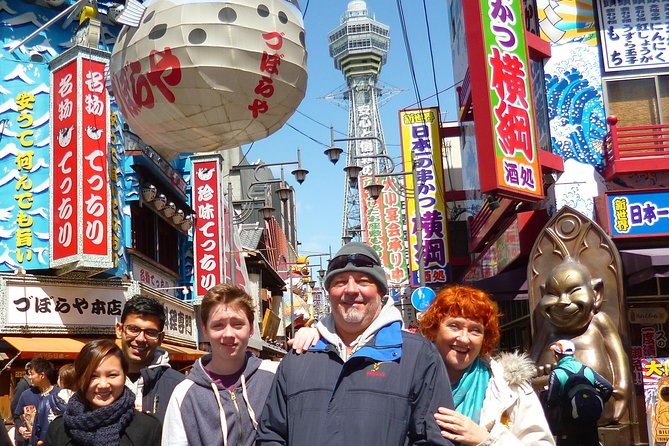
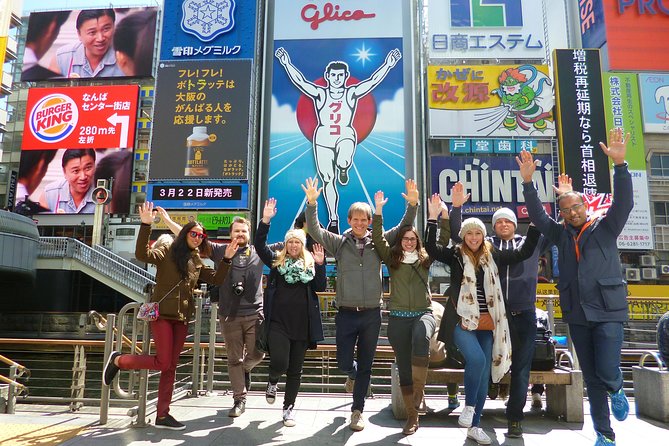
Dotonbori brings the tour to its loudest and most recognizable setting. The district is famous for food signs, bright billboards, pedestrian traffic, and the canal-side scene. You will see the area during the daytime, when it is active but not necessarily at its most theatrical.
The tour ends at Ebisu Bridge, near 1 Chome-6 Dotonbori. This is a useful finish because you are not left beside an obscure station or at a hotel you did not choose. From the bridge, you can continue through Namba and Dotonbori, stop for a larger meal, shop, or find your way back by rail.
The final 10 minutes are listed for Ebisu Bridge, so do not expect a guided tour of every nearby lane. Your guide may offer practical advice about continuing on your own, and some guides have gone out of their way to help participants orient themselves for the trip back to a cruise ship.
How the guides shape the experience
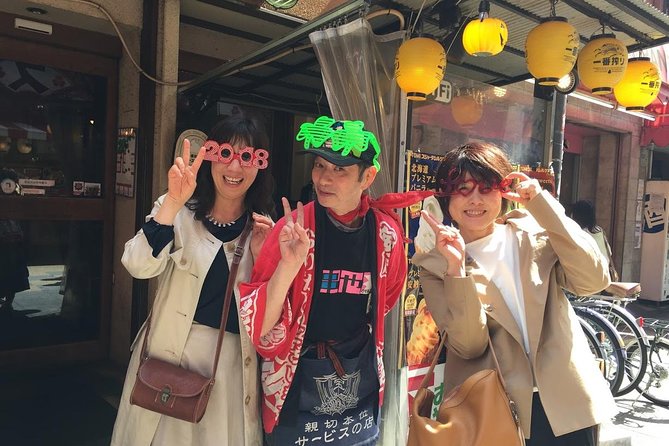
The tour’s strongest feature is not a particular monument. It is the person leading you.
Hide, also called Harry, has been praised for an easy pace, strong English, local insight, and a friendly manner. Minako has been noted for offering practical advice about both Osaka and Japan, while Kaori is careful with questions and explanations. Ichi and Ichiro are associated with clear stories about the city’s past and its different districts.
Names alone cannot guarantee the guide you will receive. The important point is that the tour depends on a local person interpreting Osaka for you. Some guides will focus more on history, some on food, and some on practical details such as trains and neighborhood orientation.
I would use the walk as a chance to ask specific questions. Ask where to eat after the tour, how to get back to your hotel, what Osaka dishes to try next, or which neighborhoods are best at night. You will get more from the experience if you treat it as a conversation rather than a lecture.
English ability has generally been strong, but no guide can answer every question instantly. That is not a problem. The most helpful guides take the time to find an answer instead of brushing off an unfamiliar question.
Weather, comfort, and the small practical details
The tour takes place in rain or shine, though poor weather can lead to cancellation, a new date, or a full refund. That wording means you should prepare for ordinary wet weather but keep your schedule flexible if conditions become unsafe or unsuitable.
Wear comfortable walking shoes. The tour uses escalators, steps, streets, station corridors, and crowded shopping areas. Most people can take part, but the moderate walking and station changes may be awkward with a stroller or for anyone who has trouble standing and walking for several hours.
Children must be accompanied by an adult. The group limit of 10 keeps things manageable, but it does not turn the walk into a private tour.
You receive a mobile ticket and confirmation at booking. The meeting point is close to public transportation, but the station itself is large enough that you should not count on finding the information center instantly.
Cancellation is free up to 24 hours before the 10 a.m. start time. Inside that window, you do not receive a refund and changes are not accepted. The activity does not include insurance.
Who will get the most from this Osaka walk
I would choose this tour if you are visiting Osaka for the first time, have only one day, or want help understanding the city before exploring alone. It is also a good fit if you have just arrived in Japan and want a gentle introduction to local food, rail travel, and basic Osaka history.
It works well for solo visitors and couples who want company without joining a huge bus group. Families can also take part if children are comfortable with walking, stations, and a food tasting that may not satisfy a full appetite.
I would be more cautious if you want a food-focused experience. One kushikatsu stop and one drink are included, but the tour is mainly about Osaka itself. You should also look elsewhere if your priority is Osaka Castle, a long temple visit, or a detailed tour of one single district.
The route covers ground rather than spending an hour at each attraction. That means you gain orientation but give up depth. The trade-off is sensible for a first look, less so for a return visit centered on specific sights.
Should you book the Osaka Walking Tour?
Book it if you want a friendly, compact introduction to Osaka with a local guide, a subway ride, and a taste of kushikatsu. The best reason to choose it is the combination of three very different areas: modern Osaka Station City, characterful Shinsekai, and the neon streets around Dotonbori.
At $53.06, the price makes sense when you count the small group and the guide’s local explanations. Just budget the extra 430 yen adult subway fare, wear good shoes, and keep your food expectations modest.
Skip it if you prefer to explore independently or already know Umeda, Shinsekai, and Namba. For everyone else, especially first-time visitors with limited time, this is a practical way to get your bearings fast and decide where to spend the rest of your Osaka stay.
FAQ
How long is the Osaka Walking Tour?
The tour lasts approximately three hours. It starts at 10 a.m. after meeting at 9:50 a.m. and ends at Ebisu Bridge in Dotonbori.
Where does the tour begin?
Meet at the Osaka Tourist Information Center on the ground level, in front of the central gate of JR Osaka Station, at 9:50 a.m. The guide will hold an All Star Osaka yellow flag.
Where does the tour end?
The tour ends on Ebisu Bridge, near 1 Chome-6 Dotonbori, Chuo Ward, Osaka.
Is the subway fare included?
No. The subway fare costs 430 yen for an adult or youth and 220 yen for a child.
Is food included?
Yes. The tour includes a kushikatsu tasting and one non-alcoholic drink. Additional food and drinks are not included.
How large is the group?
The maximum group size is 10 people.
Is the tour suitable for children?
Children can participate, but they must be accompanied by an adult. The tour includes moderate walking, escalators, and some steps.
Can I cancel for a refund?
You can cancel at least 24 hours before the start time for a full refund. Cancellations or changes made less than 24 hours before the tour are not refunded or accepted.
Just added around Osaka
- (Ticket Included) Explore Osaka Castle & Museum of History★ 4.8 · 21 reviews
- Hidden Osaka – Yukaku Red Light Tour & Culinary Adventure★ 4.8 · 96 reviews
- Osaka: Walking Tour and Top Highlights★ 4.8 · 104 reviews
- Osaka: Private Ceramic Painting Workshop★ 5.0 · 13 reviews
- Pickleball in Osaka, Kobe & Kyoto with Locals!★ 4.7 · 80 reviews
- Eat Like a Local in Osaka – Private Custom Street Food Tour★ 4.3 · 33 reviews
- Osaka:SUMO BEATS SHOWCASE: Taiko Drum and Wagyu burger!★ 4.2 · 37 reviews
- Kimono photoshoot-Includes 100 photo data★ 5.0 · 21 reviews
Walking Tours, compared.
Kyoto Geisha Walking Tour: Gion District & Hidden Gems
Read our review →
Tokyo Tsukiji Fish Market Food and Culture Walking Tour
Read our review →
Gion Magical Night Walking Tour with Geisha Trivia
Read our review →
Imperial Palace and Shogun Historical Walking Tour
Read our review →
Gion Geisha District Walking Tour – Stories of Geisha
Read our review →
Asakusa Walking Tour with Sensoji Temple Visit
Read our review →
Kyoto Gion Geisha District Walking Tour – The Stories of Geisha
Read our review →Browse the lists this tour appears in