
REVIEW · TEA CEREMONY EXPERIENCES
Osaka: Private Tea Ceremony and Calligraphy Experience
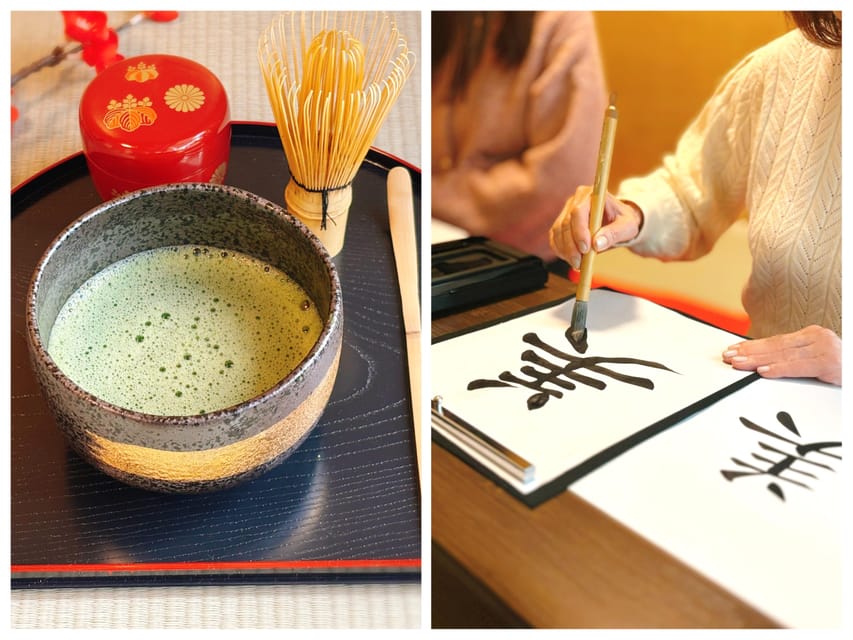
Osaka’s WA NO MA studio combines two hands-on Japanese arts in one calm 135-minute session: you learn the manners of a tea ceremony, make your own matcha, and then create calligraphy artwork. The clever touch is having your name converted into kanji based on your personality, rather than simply copying a character with no meaning.
I like the privacy here, since Wanoma can slow the pace for children, pause for questions, and take photos without a large group getting in the way. I also like that you leave with your own finished artwork, not just a quick demonstration. The main consideration is practical: you need to remove your shoes and wear socks, and the studio is not suitable for wheelchair users.
In This Review
- Key points at a glance
- Why this Osaka cultural class works so well
- Finding WA NO MA in central Namba
- Starting with your personal kanji theme
- Making a calligraphy souvenir on colored paper
- Learning the tea ceremony one step at a time
- Two rounds of sweets add variety
- Wanoma’s teaching style and the private setting
- Is $64 good value for 135 minutes?
- Who should book this experience?
- Booking and timing tips for a smoother visit
- Should you book the Osaka tea ceremony and calligraphy class?
- FAQ
- Where does the Osaka tea ceremony and calligraphy experience take place?
- How long does the activity last?
- Is this a private experience?
- Which languages does the instructor speak?
- What do I do during the calligraphy lesson?
- Can children take part?
- What is included in the price?
- What should I bring, and is the activity wheelchair accessible?
Key points at a glance
- A private 135-minute class: Your group receives the instructor’s full attention, with room to adjust the timing.
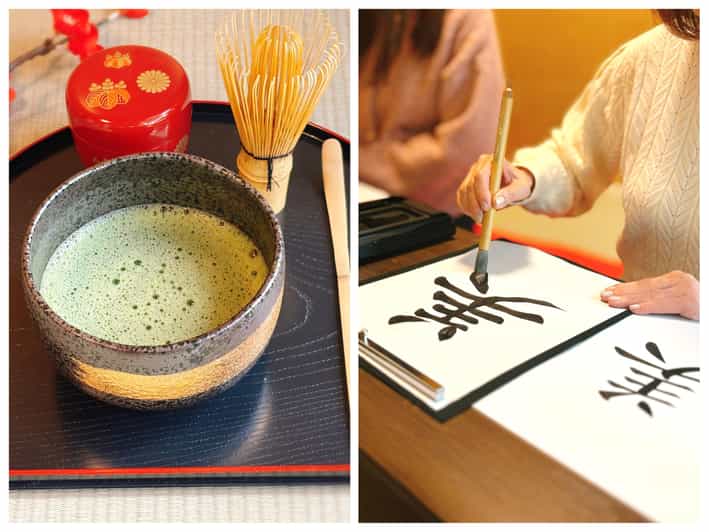
- Matcha made by you: Learn the basic steps, select a tea bowl, and whisk your own tea.
- Kanji with personal meaning: Wanoma helps turn your name or chosen theme into Japanese characters.
- Two sweet moments: Taste different Japanese confections during the tea ceremony.
- A useful handmade souvenir: Practice brush strokes, then create a finished piece on colored paper.
- Central Namba location: The studio is a short walk west from Shinsaibashi-suji shopping street.
Why this Osaka cultural class works so well
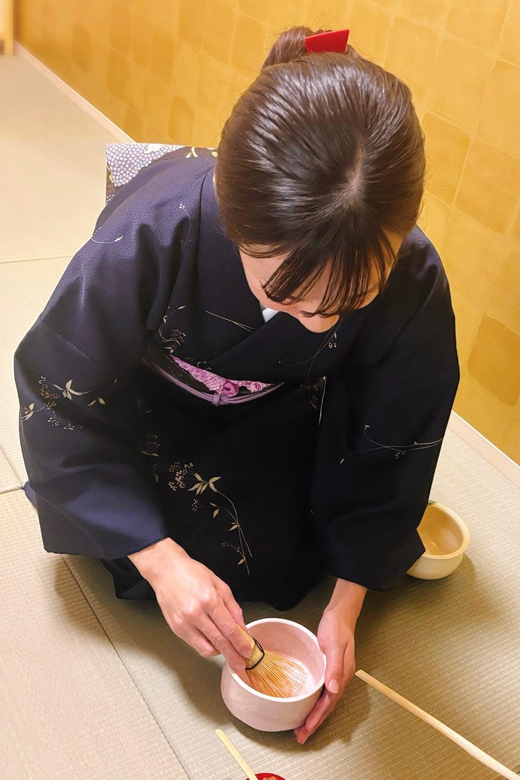
Many cultural activities ask you to watch. This one asks you to do the work, gently and at your own speed. You sit with the tools, make the tea, handle the brush, and learn why the small movements matter.
That makes the experience especially useful if you want more than a photograph in a kimono or a quick cup of matcha. The class gives you a basic understanding of two Japanese traditions while keeping the mood relaxed. You are not expected to know the rules in advance, and mistakes are treated as part of learning.
I would choose this for a first visit to Japan, especially if your Osaka schedule is heavy on shopping, food, and bright city streets. Two hours and 15 minutes indoors can provide a welcome pause without taking up an entire day.
The private format is the heart of the experience. Wanoma can answer questions as they arise and adjust the pace for your group. Families have found this useful, including one group with a 10-year-old and a teenager who needed a more flexible teaching style. For young children, water calligraphy is available, which helps keep hands and clothing clean.
More Kimono & Culture Experiences in Osaka
- Osaka: Sumo Show & Experience w/ Optional Kimono & Hot Pot
★ 4.5 · 609 reviews - Samurai Training Experience KENDO in Osaka
★ 5.0 · 515 reviews - OSAKA NIGHT FUSION Japanese Taiko Kabuki Samurai Dance Show
★ 4.8 · 155 reviews
Finding WA NO MA in central Namba
The studio is in Namba, one of Osaka’s main sightseeing areas, close to Shinsaibashi-suji shopping street. For the meeting point, go to the entrance of New Osaka Hotel Shinsaibashi and walk west for about 30 seconds.
Look for a blue vending machine near the entrance. The instructor waits outside the main entrance five minutes before your booking time and wears a kimono, making the meeting point easier to spot.
This location is useful for planning. You can pair the class with shopping in Shinsaibashi, a meal in Namba, or an evening walk through the surrounding entertainment district. The supplied details do not give a full address or directions from a particular station, so allow a little extra time to find the hotel entrance if you are unfamiliar with the area.
Bring socks. The instruction is simple, but important: you should not arrive barefoot. Smoking is not allowed.
Starting with your personal kanji theme
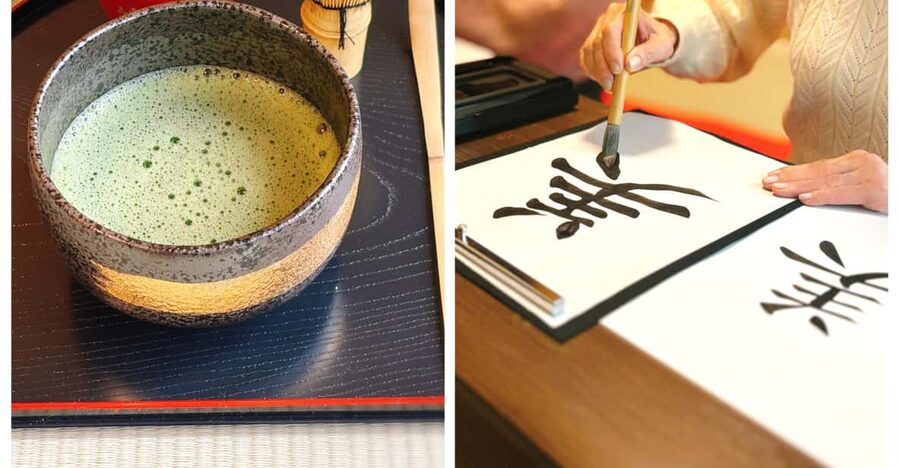
The calligraphy lesson begins by choosing what you want to write. You can offer a favorite word, a personal theme, or your name, and Wanoma can suggest kanji that express your personality or the idea you want to carry home.
This is more interesting than copying a standard character from a menu. Kanji can carry meaning beyond sound, so the choice becomes a small personal design project. You are not just writing your name in another script. You are deciding how you want that name or quality represented.
You then receive an explanation of the basic brush practices and strokes. The instruction is suitable for beginners, and different characters offer different levels of difficulty. If your group includes people with mixed abilities, each person can choose a character that feels manageable.
The preparation matters. Calligraphy looks simple when an experienced writer makes a single confident stroke, but brush pressure, direction, and order all affect the result. Practicing first takes away some of the pressure and helps you understand why a character has its particular shape.
Making a calligraphy souvenir on colored paper
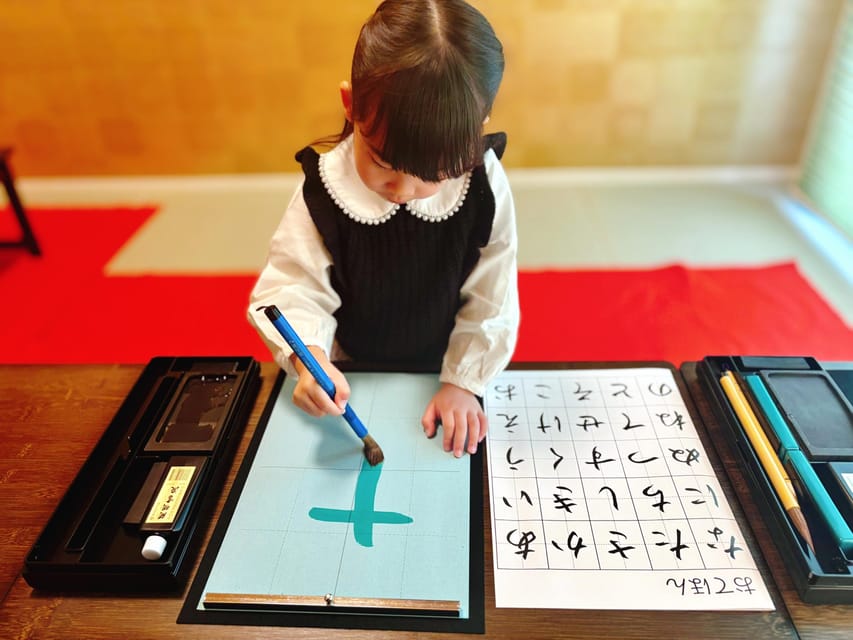
After practice, you choose a piece of colored paper from several options and print your selected character. You then write your name in Japanese characters, add your initials with a stamp, and finish the work.
The final piece is one of the best reasons to book this class. It is light, personal, and easy to pack, yet it connects directly to the time you spent learning. The artwork may not look like a professional scroll, and it is not meant to. Its value is that you made it after learning the strokes and meaning behind it.
I would encourage you to ask for help before the final attempt. The private setting gives you time to check the order of the strokes and brush position. If you are nervous about your handwriting, remember that the goal is not perfect museum-quality calligraphy. The goal is to make a piece you understand and remember.
Families with young children can ask about water calligraphy. This version avoids dirty hands and clothes, making it a sensible option for children who might find ink hard to manage.
More Tea Ceremony Experiences in Osaka
- Osaka: Tea Ceremony Experience
★ 4.9 · 1,426 reviews - Tea Ceremony Experience in Osaka Doutonbori
★ 5.0 · 754 reviews - Matcha Making Class in Osaka with Authentic Japanese Sweets Set
★ 5.0 · 509 reviews - Osaka: Matcha Making Experience with Japanese Sweets
★ 5.0 · 146 reviews
Learning the tea ceremony one step at a time
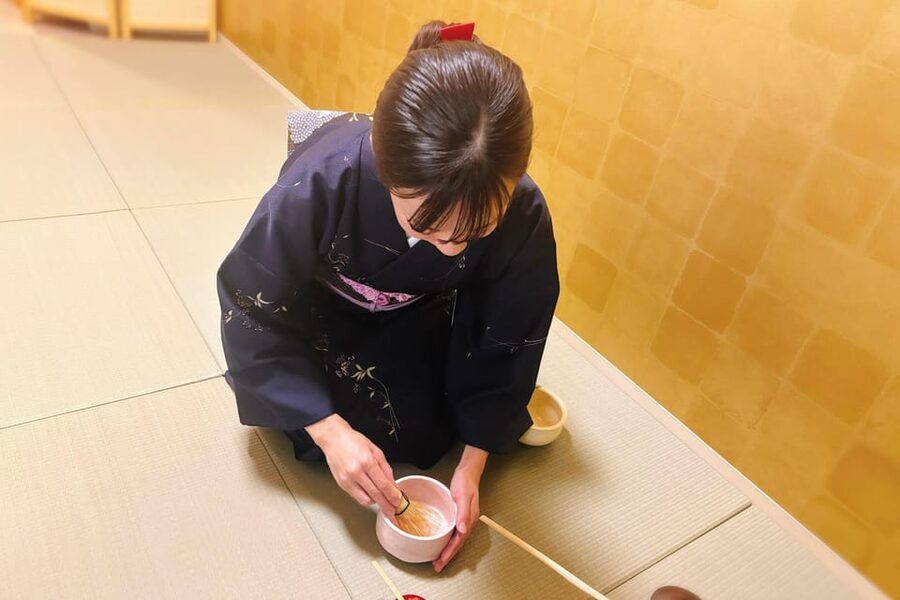
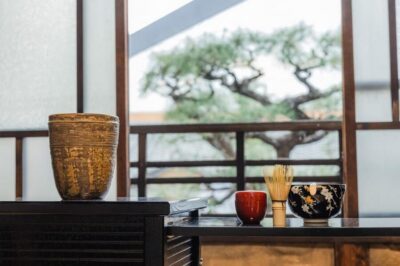
The tea portion introduces the customs and purpose of the Japanese tea ceremony before you make matcha yourself. Wanoma explains the sequence and shows you how to enjoy the tea properly, so the activity feels like a lesson rather than a staged performance.
You will learn about the role of the tea bowl and choose one that matches how you feel that day. This small decision adds a personal element to the ceremony. A tea bowl is not just a cup here. Its shape and appearance form part of the experience.
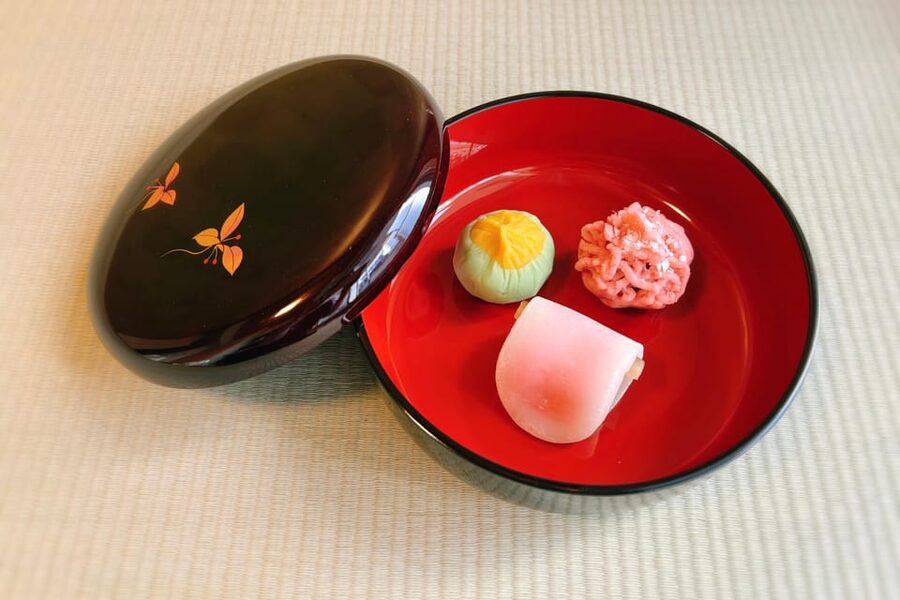
The class also explains the seasonal role of Japanese sweets. The sweets served during the ceremony can change with the time of year, so they are part of the setting and not merely a snack beside the tea. This is a helpful detail if you want to understand how Japanese food traditions connect with the calendar.
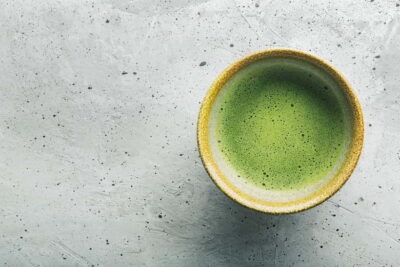
You first taste matcha prepared for you, then try making it on your own. The hands-on part is simple enough for a beginner, but it gives you a better sense of the care involved. You will see and feel the whisking process instead of treating matcha as an exotic green drink.
The private format helps here. If your first bowl is too bitter, too weak, or simply different from what you expected, you can ask about it without feeling self-conscious. The class is designed to let you learn through the attempt.
Two rounds of sweets add variety
Different Japanese sweets are served twice during the tea ceremony. This breaks up the lesson and lets you compare flavors and textures as the ceremony progresses.
The sweets are also useful cultural clues. Their seasonal connection gives Wanoma an opening to explain why a particular style may appear at a certain time of year. One participant specifically noted that the sweets were lactose-free, but dietary information beyond that is not provided, so you should raise any allergies or restrictions when booking or at the start of the session.
If you are unsure about matcha, the sweets provide a familiar counterpoint. Matcha has a strong, slightly bitter taste, and the sweets help balance it. You still get to appreciate the tea on its own, but the pairing makes the introduction easier.
Wanoma’s teaching style and the private setting
The instructor teaches in English and Japanese. The most repeated strengths are patience, clear explanations, humor, and a willingness to answer questions.
That combination matters. Traditional etiquette can feel intimidating if every movement is presented as a rule you might break. Here, the teaching aims to make the customs understandable first. You learn what to do, try it yourself, and have room to laugh when a movement feels awkward.
I especially like the value of being able to shape the session around your group. You can request plenty of photographs, ask the instructor to proceed slowly for a child, or spend more time on a question. The schedule is described as flexible, though the precise amount of adjustment depends on the booking and the group.
The studio is described as clean, peaceful, and cozy. That atmosphere supports the tea lesson, since the ceremony depends on attention to small details. It also gives the calligraphy portion a calm rhythm instead of making it feel like an assembly line.
Do not expect an elaborate temple setting or a full-day study of tea culture. This is an intimate studio class in central Osaka. Its strength is direct teaching and participation, not a grand historic backdrop.
Is $64 good value for 135 minutes?
At $64 per person, the price is reasonable for a private class that includes an instructor, all fees and taxes, matcha, Japanese sweets, the matcha-making activity, and materials for your calligraphy artwork.
The price becomes stronger if you value personal attention. A large demonstration may cost less, but it cannot offer the same ability to slow down, ask repeated questions, or get help with your individual character. You are paying for two activities, instruction in both, food and drink, and a souvenir you make yourself.
The value also depends on your interests. If you only want to taste matcha, this class may be more time and money than you need. If you want a quiet cultural activity that gives you a basic understanding of tea ceremony and calligraphy in one booking, it makes better sense.
The 135-minute length is long enough to avoid a rushed photo stop, yet short enough to fit between other Osaka plans. I would schedule it when you can walk away afterward rather than race straight into another appointment. The point is to slow down.
Who should book this experience?
I would recommend it to couples, families, and small private groups looking for a meaningful indoor activity in Osaka. It is also a good choice for first-time visitors who want a guided introduction without needing prior knowledge of Japanese customs.
Children can take part, particularly because the instructor can adjust the pace and offer water calligraphy. The private format is helpful for families who need breaks or more explanation, though parents should still consider how comfortably their children can sit and focus during a 135-minute lesson.
Calligraphy fans will appreciate the chance to choose a meaningful kanji and take home a finished piece. Food-minded visitors will enjoy the matcha and sweets, especially the explanation of seasonal pairings. Couples may find the shared activity more memorable than another pass through a shopping arcade.
I would be less likely to choose it if you need wheelchair access, since the experience is not suitable for wheelchair users. I would also look elsewhere if your main goal is a formal ceremony performed entirely for you, with little participation. This class asks you to learn and make things yourself.
Booking and timing tips for a smoother visit
The experience allows free cancellation up to 24 hours before the scheduled time for a full refund. You can also reserve now and pay later, which helps if your Osaka plans are still changing.
Check the available starting times before booking, since the duration is fixed at 135 minutes but the start time varies. Arrive at the meeting point five minutes early, as instructed, and look for the kimono-clad instructor outside the main entrance of New Osaka Hotel Shinsaibashi.
Wear socks and comfortable clothing that lets you sit and handle a brush without fuss. The materials are provided, including the colored paper, but your own phone or camera is useful if you want to record the finished work. Since photos are welcome, you can ask Wanoma to take pictures during the lesson.
I would also think ahead about your calligraphy theme. A favorite quality, word, or name gives the instructor something personal to work with. You can still decide on the spot, but arriving with a few ideas may make that part more enjoyable.
Should you book the Osaka tea ceremony and calligraphy class?
Yes, if you want a private, practical introduction to Japanese culture in central Osaka. The strongest reasons are the patient one-group teaching, the chance to make your own matcha, and the personal kanji artwork that goes home with you.
Book it with realistic expectations. You will not become a tea master or calligrapher in one afternoon, and the setting is a studio rather than a temple. But you will learn the basic customs, taste seasonal sweets, handle the tools, and leave with a better sense of why these arts matter.
For $64, the combination offers solid value, especially for families and couples who prefer a calm shared activity to another sightseeing stop. Bring socks, allow time to find the meeting point, and choose a few possible kanji themes before you arrive.
FAQ
Where does the Osaka tea ceremony and calligraphy experience take place?
The studio is in Namba, central Osaka, near Shinsaibashi-suji shopping street. Meet outside the main entrance of New Osaka Hotel Shinsaibashi, then walk west for about 30 seconds.
How long does the activity last?
The experience lasts 135 minutes, or two hours and 15 minutes. Starting times vary, so check availability when booking.
Is this a private experience?
Yes. The booking is for a private group, and the instructor focuses closely on your participants. The schedule can be adjusted to suit requests such as taking more photos or slowing down for a child.
Which languages does the instructor speak?
The experience is offered in English and Japanese.
What do I do during the calligraphy lesson?
You choose a theme, favorite word, or name. The instructor can suggest kanji based on your personality, explain basic brush strokes, and help you create a piece on colored paper. You also write your name in Japanese characters, add a stamp, and take the artwork home.
Can children take part?
Yes. The experience can be adjusted to a child’s pace, and water calligraphy is available for young children to help prevent ink from getting on hands and clothes.
What is included in the price?
The price includes all fees and taxes, the instructor, matcha, various Japanese sweets, the matcha-making activity, and colored paper for the calligraphy artwork.
What should I bring, and is the activity wheelchair accessible?
Bring socks. Smoking is not allowed, and the activity is not suitable for wheelchair users.
Just added around Osaka
- (Ticket Included) Explore Osaka Castle & Museum of History★ 4.8 · 21 reviews
- Hidden Osaka – Yukaku Red Light Tour & Culinary Adventure★ 4.8 · 96 reviews
- Osaka: Walking Tour and Top Highlights★ 4.8 · 104 reviews
- Osaka: Private Ceramic Painting Workshop★ 5.0 · 13 reviews
- Eat Like a Local in Osaka – Private Custom Street Food Tour★ 4.3 · 33 reviews
- Pickleball in Osaka, Kobe & Kyoto with Locals!★ 4.7 · 80 reviews
- Osaka:SUMO BEATS SHOWCASE: Taiko Drum and Wagyu burger!★ 4.2 · 37 reviews
- Kimono photoshoot-Includes 100 photo data★ 5.0 · 21 reviews
Tea Ceremony Experiences, compared.
Tea Ceremony in a Traditional Tea House in Kiyomizu
Read our review →
World Heritage Kyoto & Nara Uji Authentic Matcha Experience
Read our review →
Browse the lists this tour appears in