
REVIEW · WALKING TOURS
Osaka 6hr Private Walking Tour with Government Licensed Guide
Dotonbori’s giant signs and sizzling takoyaki are only the opening act. This six-hour private tour lets you shape the day around food, temples, markets, shopping, or major sights, with a licensed guide explaining how Osaka fits into Japan’s story.
I like the personal planning before the tour and the chance to combine famous places with everyday streets such as Doguyasuji kitchenware arcade. I also like the practical help with trains and subway routes, which can make the rest of your Osaka visit much easier. The main caution is pace: some guides walk fast, and six hours on foot can be tiring.
In This Review
- Key points to know before booking
- What this Osaka tour really offers
- Dotonbori, Osaka’s neon food theater
- Doguyasuji and Shinsaibashi for shopping with a purpose
- Kuromon Market and Osaka’s food culture
- Sumiyoshi Taisha, an older side of Osaka
- Shitennoji and the beginnings of Japanese Buddhism
- Osaka Castle and the one-hour headline stop
- Umeda Sky Building and modern Osaka
- Shinsekai and the old-school Osaka mood
- The museum and garden choices
- The walking pace, public transport, and physical effort
- Guide quality and the value of private planning
- Is $155.26 per person a good value?
- Who should book this Osaka day?
- Should you book it?
- FAQ
- How long does the Osaka private walking tour last?
- How many attractions can I choose?
- Is hotel pickup included?
- Are transportation costs included?
- Are admission fees included?
- What is the cancellation policy?
Key points to know before booking
- Choose three or four stops: The long sightseeing list is a menu, not a promise to visit every place.
- Expect a walking and public-transit day: Your guide meets you on foot, and transportation costs are extra.
- Food can shape the route: Dotonbori, Kuromon Market, udon, takoyaki, okonomiyaki, and kushikatsu can all fit your interests.
- Private means flexible: Guides including Yama, Yuki, Sachiko, Rie, Haru, and Saori have adjusted plans for families, food lovers, shoppers, and visitors seeking quieter places.
- Major sights cost extra: Osaka Castle, Shitennoji, Umeda Sky Building, the National Museum of Art, and Keitaku-en Garden do not include admission.
- The best value comes from preparation: Tell the guide what matters most before the day, especially if you have limited time or mobility concerns.
What this Osaka tour really offers
This is not a fixed sightseeing march through all eleven places listed in the outline. Six hours is not enough for that, especially when Osaka Castle alone can take an hour and the city’s shopping and food districts invite stops along the way.
Instead, you choose three or four places from the suggested list. Your guide helps build a sensible route, often mixing one or two major sights with markets, shopping streets, or religious sites. That distinction matters. If you expect to see Dotonbori, Osaka Castle, Sumiyoshi Taisha, Shitennoji, Kuromon Market, Umeda Sky Building, and Shinsekai in one day, you will need to trim the plan.
The private format is the heart of the experience. You do not share the day with strangers, and the guide can adjust explanations, food choices, walking speed, and sightseeing time to your group. Families have used the tour with children and teenagers. Couples have shaped it around food or less familiar areas. One guide even helped a visitor locate Ohtani Shohei baseball jerseys, a useful reminder that a good local guide can solve small travel problems as well as explain big landmarks.
The tour has a 4.9 rating from 174 reviews and a 97 percent recommendation rate. Those numbers point to a strong record, but they do not erase the need to set expectations. Guides have different personalities and walking speeds. One guide was praised for fitting in a huge amount of sightseeing, yet a participant found his pace too fast. Mention your preferred speed at the planning stage.
More Walking Tours in Osaka
- Osaka Bar Hopping Night Walking Tour in Namba (3 bars, 6 tastes)
★ 5.0 · 958 reviews - Osaka: Namba Local Food Walking Tour (Taste 15 Dishes)
★ 5.0 · 20 reviews - 1 Day Takoyaki Making and Osaka Castle Walking Tour
★ 5.0 · 15 reviews
Dotonbori, Osaka’s neon food theater
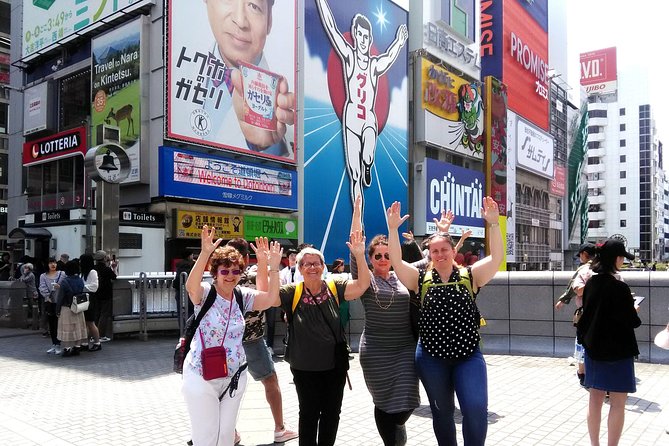
Dotonbori is the obvious place to begin if you want Osaka’s famous personality in one stretch. Huge signs, packed restaurant fronts, food stalls, and bright streets create a sensory introduction to the city.
Your guide can help you make sense of local favorites such as takoyaki, the hot octopus-filled balls, and okonomiyaki, a savory pancake cooked with a range of fillings and toppings. The value here is not simply seeing the signs. It is knowing which foods fit your tastes, how to approach a stall, and where a more local meal might make sense.
Dotonbori is best for first-time visitors, food-focused groups, and anyone who wants an immediate feel for Osaka’s energy. It can also be overwhelming, especially when the street is crowded. Give your guide clear instructions if you need vegetarian food or want to avoid seafood. One participant found the market and food-heavy route a poor fit because the group was vegetarian and uninterested in fish, so your preferences should guide the itinerary from the start.
Doguyasuji and Shinsaibashi for shopping with a purpose
Sennichimae Doguyasuji Shopping Street is about 150 meters long and lined with stores selling cooking tools, tableware, appliances, and kitchen accessories. It is a fine stop if you want a useful souvenir rather than another decorative trinket.
I like this street because it shows Osaka through work and food culture. A guide can explain what you are seeing and help you decide what is practical to carry home. It also pairs well with Dotonbori or Kuromon Market, giving you a food-focused section of the day without visiting only restaurants.
Shinsaibashi-suji is a much larger shopping arcade, extending about 600 meters. Cosmetics, clothing, restaurants, and retail shops fill the covered route. It is a better fit for a group with mixed shopping interests, though it may feel less distinctive if your main goal is temples or old Osaka.
Both streets are free to enter, but shopping and meals are personal expenses. If you want to spend time browsing, say so in advance. A rushed stop is not much use when you are looking for a particular item.
Kuromon Market and Osaka’s food culture
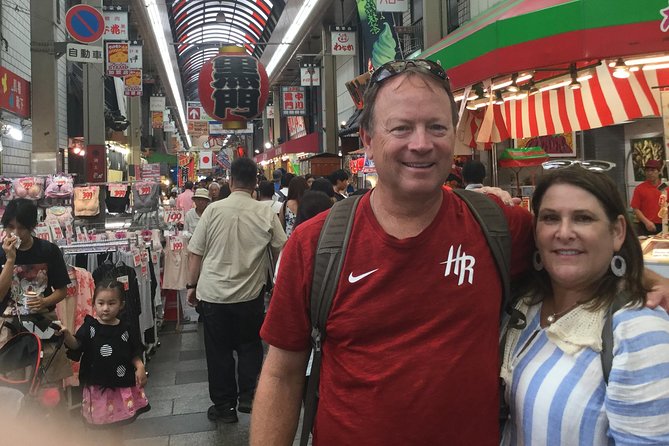
Kuromon Market is a covered market known for seafood and seasonal specialties. The supplied details point to conger pike in summer and fugu and hamo in winter, with many seafood shops specializing in fugu and hamo.
The guide’s role is especially useful here. Osaka markets can be visually exciting but confusing if you do not know what is being sold or how to order it. Guides have led visitors to authentic takoyaki stalls, recommended udon, explained food choices, and suggested kushikatsu, Osaka’s famous skewered and fried dish.
This is a strong choice for food lovers who want context rather than a simple walk past displays. It is less suitable if your group avoids seafood or wants a quiet cultural day. Vegetarians should say so before the itinerary is arranged. The market itself has no admission fee, but every tasting or meal comes from your own budget.
More private guided tours with driver in Namba:
- Osaka 4hr Private Tour with Government-Licensed Guide
★ 5.0 · 359 reviews - Tokyo 6hr Private Tour with Government-Licensed Guide
★ 5.0 · 3,902 reviews - Tokyo 4hr Private Tour with Government-Licensed Guide
★ 5.0 · 1,394 reviews - Kyoto 6hr Private Tour with Government-Licensed Guide
★ 5.0 · 1,369 reviews
Sumiyoshi Taisha, an older side of Osaka
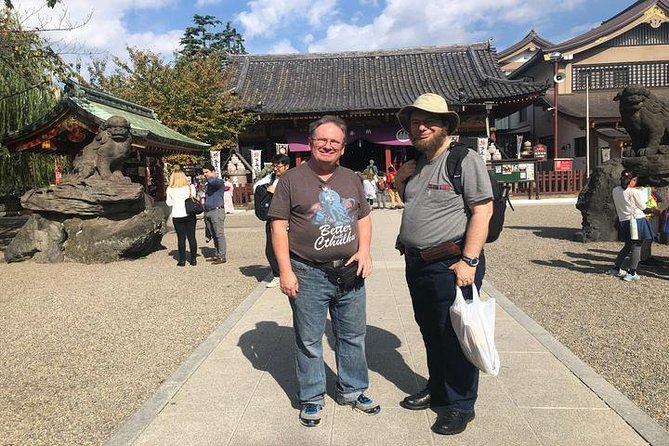
Sumiyoshi Taisha is one of Japan’s oldest shrines, founded in the third century before Buddhism entered Japan. It uses a distinctive shrine design and gives the day a calmer, more traditional turn after the commercial districts.
This is one of the best reasons to hire a guide. Shrine visits involve customs that are easy to copy incorrectly if you are unfamiliar with them. One guide explained the steps carefully and helped a couple take part respectfully. A traditional Shinto wedding happened to be taking photographs during another visit, showing how a local guide can add meaning to an unexpected scene without turning it into a staged attraction.
The shrine is free to enter and works well for visitors interested in Shinto, architecture, and older Osaka. Add it when you want contrast. A route made only of markets and shopping streets will tell you one part of Osaka’s story, not the whole city.
Shitennoji and the beginnings of Japanese Buddhism
Shitennoji was founded in 593 by Prince Shotoku and is recognized as one of Japan’s oldest temples. It was the first temple built by the state, and its importance comes from both its age and its role in the arrival of Buddhism in Japan.
Allowing about thirty minutes gives you a useful look, but anyone interested in religious architecture may want longer. The grounds and buildings are the main reason to visit, while certain areas may require an admission fee. The tour price does not cover entrance fees.
Shitennoji is a good partner for Sumiyoshi Taisha. The shrine shows Shinto tradition, while the temple introduces Buddhism and early Japanese state history. Guides such as Miyuki, Shogo, and Yoshii have been praised for explaining the meaning of these sites in clear English, with some adding humor to keep the history from becoming a lecture.
Osaka Castle and the one-hour headline stop
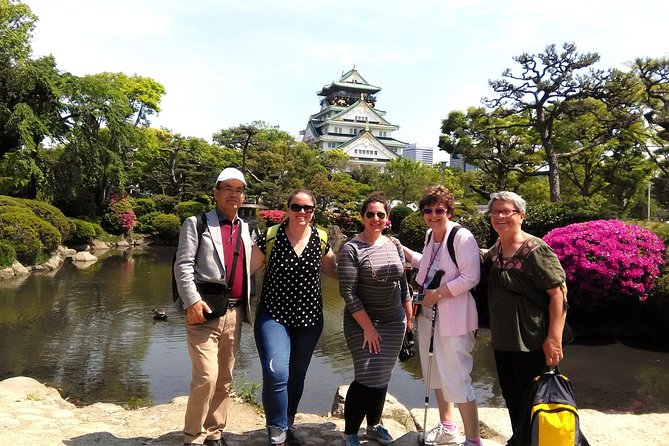
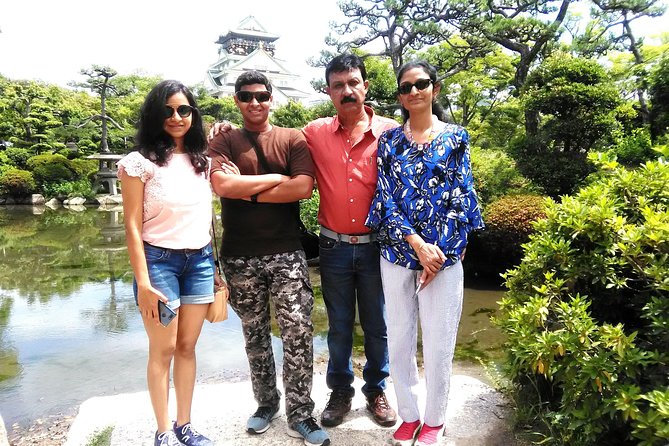
Osaka Castle is one of the city’s major landmarks, with a history reaching back almost 450 years. Its five-story exterior is photogenic, and the surrounding park gives you room to appreciate the scale of the site.
The suggested visit lasts about an hour, but admission is not included. Confirm with your guide whether you want to go inside or focus on the exterior and grounds. One visitor specifically chose to see the castle from outside, while others found the attraction worth the time and enjoyed learning how its history shaped Osaka.
The castle is a natural pick for a first Osaka visit, especially if you want one major symbol in your day. It also takes time to reach, so pairing it with far-south sites such as Sumiyoshi Taisha and Shinsekai may require train or subway travel. Those fares are extra, and the tour does not provide a private vehicle.
Umeda Sky Building and modern Osaka
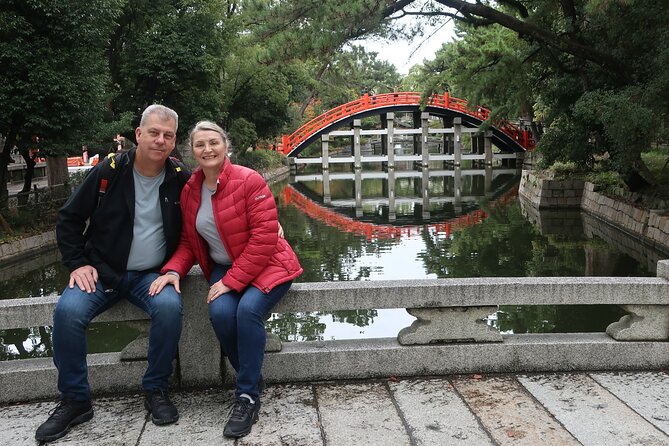
The 173-meter Umeda Sky Building offers a very different view of Osaka. Located near Osaka and Umeda stations, it is a striking high-rise in the Kita district, also known as New Umeda City.
Choose this stop if you want architecture and city views rather than temple grounds or food stalls. Admission is extra, and thirty minutes may feel short if you want to spend time at the building’s viewing areas.
Umeda is also geographically separate from the Namba and Tennoji districts. That makes route planning important. A private guide can help connect the areas by public transportation, but you should not treat the day as a private car tour. The guide’s help with the train system is one of the practical benefits repeatedly seen in the experience. After learning the routes, some participants felt confident continuing around Osaka independently.
Shinsekai and the old-school Osaka mood
Shinsekai means New World, though the district now feels more like a preserved slice of Osaka character than a new frontier. The Tsutenkaku tower, kushikatsu restaurants, Billiken figure, and Spa World give it a distinct identity.
This is a worthwhile stop if you want a neighborhood with personality and a food tradition separate from Dotonbori. Kushikatsu is the obvious local dish, and a guide can help you find a suitable place and explain how the meal works.
The planned time is only about twenty-five minutes, so think of Shinsekai as a short neighborhood introduction unless you request more time. It pairs naturally with Shitennoji, Keitaku-en Garden, or Osaka Castle, all in the broader southern part of the city.
The museum and garden choices
The National Museum of Art, Osaka is an underground museum on Nakanoshima, with a major collection. It is the most specialized option on the list, and admission is extra. Choose it if art matters to you, but do not add it simply because you feel obliged to cover every category.
Keitaku-en Garden sits in Tennoji Park and uses a traditional Japanese garden design centered on a pond, arranged rocks, and seasonal plantings. The suggested time is only five minutes, which is enough for a glance but not a proper garden visit. Admission is not included.
These two stops reveal an important planning rule: the listed time is not always the time you will want. Tell your guide if you prefer fewer places with more time at each one. The private structure makes that possible, but only if you communicate your priorities.
The walking pace, public transport, and physical effort
This is a walking tour, and pickup means meeting your guide on foot within the designated Osaka area. A private vehicle is not included. Public transportation may be used, as several tours included trains, buses, or subways, but you pay those fares separately.
Six hours can be an action-packed day. One family covered four major stops and described the experience as fast-paced. Another group with children aged 11, 16, and 19 enjoyed the day but found the final stretch tiring. You should wear comfortable shoes and avoid filling the route with distant stops unless you are comfortable with a long day.
Walking speed deserves direct attention. Most guides adjusted to the group, and one was specifically praised for sensing when to linger or move on. Still, a separate experience involved a guide walking rapidly and speaking with one family member ahead of the others. Tell the agency and guide if your group needs a slower pace, frequent rests, or a tighter group formation.
The tour suits most participants, and service animals are allowed. Still, the supplied information does not promise a fully accessible route, so ask before booking if stairs, long walks, or station transfers are a concern.
Guide quality and the value of private planning
The guide lineup varies. Names appearing in the experience include Yama, Miyuki Ogawa, Yuki, Haru, Sachiko, Shogo, Yoshii Kenichi, Rie, Saori, Hide, and Yuka. Several are praised for clear English, warmth, humor, and strong command of Japanese history and culture.
The most useful guide skill is not reciting dates. It is fitting the day to you. Sachiko helped organize routes, explain public transportation, add a small temple, and even help a family reach Shin-Osaka Station for a train. Rie combined major sites with less touristy places and a traditional lunch. Yuka tracked down a very specific baseball souvenir.
Communication before the tour matters. Contact your guide with a short wish list, your food restrictions, your preferred walking speed, and the one thing you most want to see. If you are visiting Osaka for only one day, that preparation can save valuable time.
Is $155.26 per person a good value?
At $155.26 per person, this is not a budget walking tour. The price makes more sense for a private group that values personal attention, especially when several people share the guide’s time. Group discounts are offered, but you cannot combine separate tour groups.
The fee includes a licensed local English-speaking guide and a customized route of three or four sites. It does not include transportation, lunch, personal purchases, or entry fees. Those extras can raise the final cost, so budget for them before you compare this tour with a group excursion.
I see the strongest value in three situations: you have one day in Osaka, you are unsure how to use the train system, or your group has specific interests that do not fit a standard route. The value is weaker if you already know Osaka well, prefer to move slowly without a schedule, or want a fully guided private vehicle.
Free cancellation is available up to 24 hours before the local start time. Cancellations or changes made later are not refunded or accepted.
Who should book this Osaka day?
I would choose this tour for first-time visitors, cruise passengers with a limited day in port, families, couples, food lovers, and anyone who wants cultural explanation without joining a large group.
It is also a smart option for visitors who want to combine Dotonbori and Kuromon Market with Sumiyoshi Taisha or Shitennoji. That mix gives you Osaka food, shopping, Shinto, Buddhism, and daily city life in one manageable plan.
I would hesitate if your group dislikes walking, has no interest in markets or food, or wants to see only one attraction at a leisurely pace. I would also avoid booking without first confirming the route if you are vegetarian, have mobility limits, or need a slow walking rhythm.
Should you book it?
Book this Osaka private tour if you want a flexible first look at the city and are willing to walk, use public transportation, and pay extra for admissions and meals. Its best moments come from the guide’s local judgment: a well-chosen food stop, a careful explanation at Sumiyoshi Taisha, a smoother train transfer, or a shopping detour that fits your group.
Before you commit, ask for a three or four-stop plan that matches your interests. Keep the route geographically sensible, set the walking pace clearly, and leave room for lunch. Done that way, $155.26 can buy more than sightseeing. It can give you a useful start in Osaka and the confidence to keep exploring on your own.
FAQ
How long does the Osaka private walking tour last?
The tour lasts approximately six hours.
How many attractions can I choose?
The included service covers a customized tour of three or four sites from the listed options.
Is hotel pickup included?
Pickup is offered on foot within the designated Osaka area. The guide does not provide a private vehicle.
Are transportation costs included?
No. Train, subway, bus, and other transportation fees are not included in the tour price.
Are admission fees included?
No general admission fees are included. Entrance fees for Osaka Castle, Shitennoji, Umeda Sky Building, the National Museum of Art, Osaka, and Keitaku-en Garden are listed separately.
What is the cancellation policy?
You can cancel at least 24 hours before the experience start time for a full refund. Cancellations or changes made less than 24 hours before the start time are not accepted for a refund.
More Walking Tours in Namba
- Kyoto Geisha Walking Tour: Gion District & Hidden Gems
★ 4.7 · 3,273 reviews - Tokyo Tsukiji Fish Market Food and Culture Walking Tour
★ 5.0 · 3,184 reviews - Kyoto: Gion Magical Night Walking Tour with Geisha Trivia
★ 4.9 · 2,393 reviews - Tokyo: Imperial Palace and Shogun Historical Walking Tour
★ 5.0 · 2,251 reviews
Just added around Namba
- Discover Real Osaka: A Cultural Walk with Food & Drink★ 5.0 · 13 reviews
- Private Airport transfer Kansai Intl. Airport(KIX) to OSAKA CITY★ 4.5 · 12 reviews
- Osaka: Namba Local Food Walking Tour (Taste 15 Dishes)★ 5.0 · 20 reviews
- Osaka Delights: Traditional Japanese Food Tour★ 4.5 · 33 reviews
- Osaka Private Tour with a Local Guide (Must See Places in 1 Day)★ 5.0 · 57 reviews
- Badminton in Osaka & Kyoto with Locals!★ 5.0 · 15 reviews
- From Osaka/Kyoto: Kyoto & Nara Day Trip with Optional Lunch★ 4.5 · 79 reviews
- 1 Day Takoyaki Making and Osaka Castle Walking Tour★ 5.0 · 15 reviews
Walking Tours, compared.

Kyoto Geisha Walking Tour: Gion District & Hidden Gems
Read our review →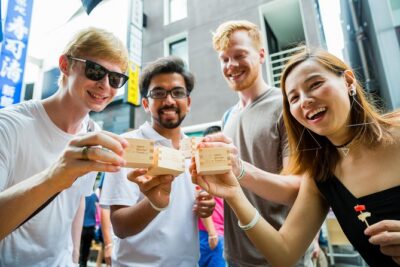
Tokyo Tsukiji Fish Market Food and Culture Walking Tour
Read our review →
Gion Magical Night Walking Tour with Geisha Trivia
Read our review →
Imperial Palace and Shogun Historical Walking Tour
Read our review →
Gion Geisha District Walking Tour – Stories of Geisha
Read our review →
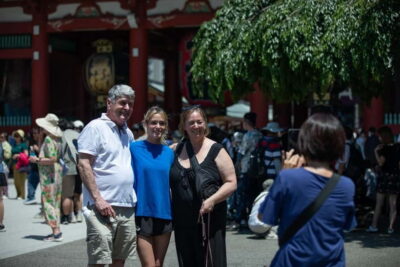
Asakusa Walking Tour with Sensoji Temple Visit
Read our review →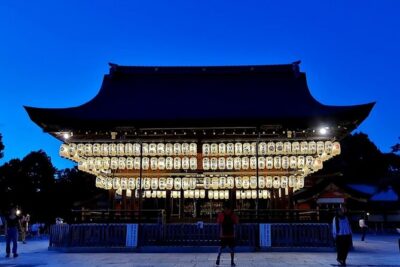
Kyoto Gion Geisha District Walking Tour – The Stories of Geisha
Read our review →Browse the lists this tour appears in