
REVIEW · FOOD MARKET TOURS
Osaka Delights: Traditional Japanese Food Tour
Osaka’s best introduction may be a meal you can walk through. This three-hour evening tour links Kuromon Market, classic Osaka dishes, and the neon glow of Dotonbori, so you get both local flavor and a quick sense of the city.
I like the clear food progression: savory takoyaki, sweet dango, filling okonomiyaki and kushikatsu, then a warm egg tart. I also like the guides, especially Paula, Angeles, Heli, Helimar, and Eli, who are praised for explaining both the food and Osaka’s culture. The main caution is language balance in mixed groups, since one English-speaking party felt overlooked on a Spanish-heavy departure.
In This Review
- Key details at a glance
- Why this Osaka food tour works as an evening introduction
- Kuromon Market and the first takoyaki
- Three-color dango at Mitoya
- Okonomiyaki and kushikatsu near Hozenji
- The warm egg tart finish
- Dotonbori after dark
- Guide quality and the language question
- Is $84 a fair price?
- Who should book this food walk?
- Practical details before you go
- Should you book Osaka Delights?
- FAQ
- How long does the Osaka food tour last?
- What time and where does the tour start?
- Where does the tour end?
- What foods are included?
- Are drinks or extra meals included?
- Is the tour offered in English?
- How large can the group be?
- Can people with mobility issues join?
Key details at a glance
- Kuromon Market begins the evening: Start with Osaka’s famous market atmosphere and freshly made takoyaki.
- Five food stops keep the tour varied: You’ll try octopus-filled batter, rice dumplings, savory pancakes, fried skewers, and custard pastry.
- Paula and Angeles receive especially warm praise: The guides are noted for clear explanations, friendly service, and good local food choices.
- Dotonbori comes at the right time: The tour reaches the neon-lit canal district after dark, ending with a photo at Ebisu Bridge.
- The $84 price buys a guided tasting route: It is useful if you want several Osaka specialties without planning restaurants yourself.
- Expect a walking evening: The tour is near public transportation, but it cannot accommodate people with mobility issues.
Why this Osaka food tour works as an evening introduction
Osaka is often described through its food, and this route gives you a practical sampler rather than one long restaurant meal. You move from market stalls to a sit-down-style local eatery, then finish among the signs, crowds, and canal lights of Dotonbori.
The 5:30 pm start is well chosen. You begin while Kuromon Market still provides a lively food setting, eat your main savory dishes as evening arrives, and reach Dotonbori after dark. The timing makes the final walk feel like part of the meal, with the city acting as your dessert course.
You should think of this as a guided tasting walk, not a full dinner replacement in the fine-dining sense. The listed tastings cover several signature foods, but extra meals and drinks are not included. Come hungry, but do not assume every portion will equal a complete restaurant dinner.
The route is also efficient for a first night in Osaka. You do not need to research which stall sells takoyaki, where to find dango, or which neighborhood is best for a first look at the canal. Your guide handles the route and food ordering, leaving you free to watch the city.
More Food Market Tours in Osaka
- Osaka: Shinsekai Food Tour with 13-15 Dishes at 5 Eateries
★ 4.8 · 2,204 reviews - Osaka Food Tour: 13 Dishes at 5 Local Eateries
★ 5.0 · 2,149 reviews - Hungry Osaka Street Food Tour:15 Tastings & 3 Drinks with a Local
★ 5.0 · 1,727 reviews
Kuromon Market and the first takoyaki
The group meets outside Hotel Royal Classic Osaka at 4-chōme-3-3 Namba at 5:30 pm. From there, you walk about 10 minutes to Kuromon Market, known locally as Osaka’s Kitchen.
The market is an ideal first stop because it gives context to the city’s food culture before you sit down for heavier dishes. Its stalls focus on food prepared for immediate eating, and the tour uses that setting for its first tasting.
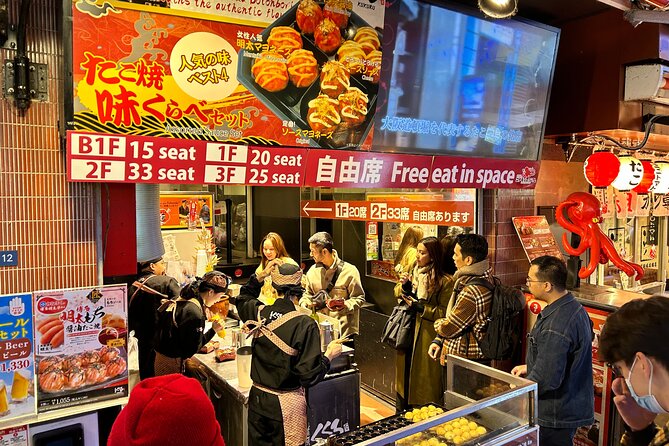
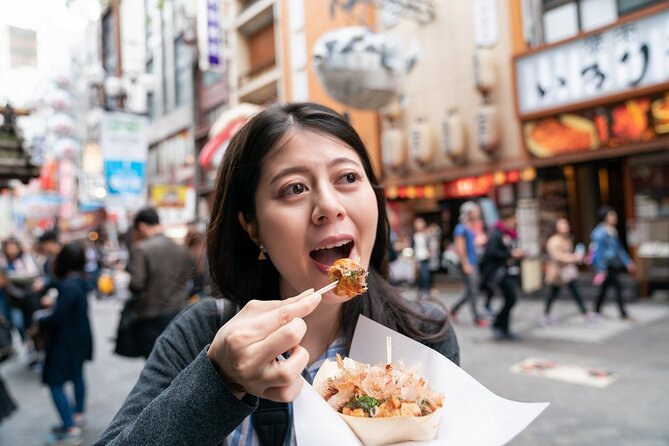
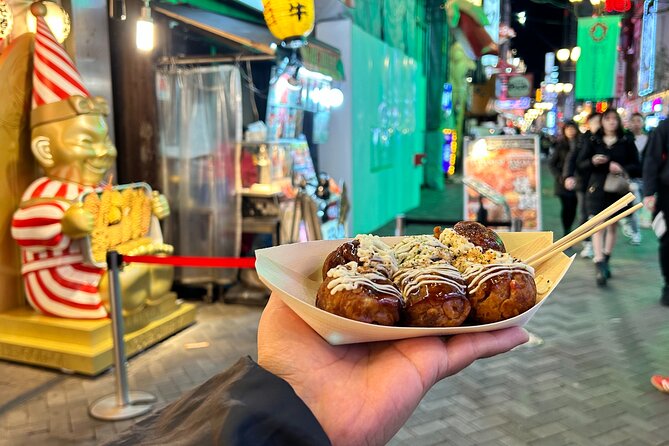
At Wanaka, you try takoyaki, Osaka’s famous round batter snacks filled with octopus. They are crisp on the outside, soft inside, and finished with sauces and bonito flakes. You should expect a small tasting rather than a plate designed to be your entire meal.
Takoyaki is simple food, but it benefits from explanation. Your guide can help you understand how the sauce, toppings, texture, and hot filling fit together. If you have never eaten it before, take care with the first bite, since the inside can be much hotter than it looks.
This part lasts about 10 minutes, with no separate admission charge. The short stop keeps the tour moving, though anyone hoping to browse every market stall will need to return independently another time.
Three-color dango at Mitoya
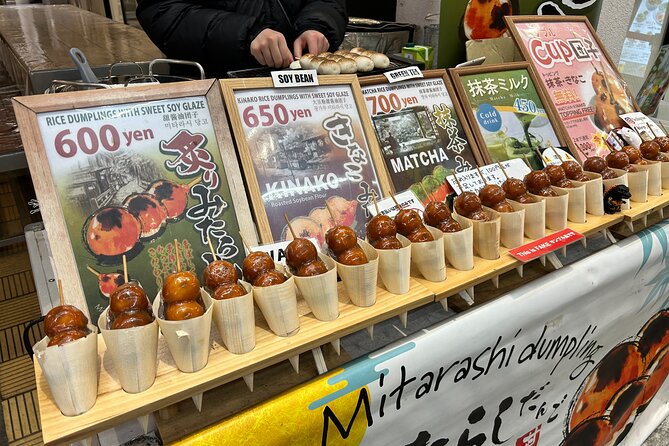
The next stop is Mitoya, a shop specializing in dango. These sweet rice dumplings arrive on skewers in three colors, giving the tour a pleasant turn from savory to sweet.
Dango has a chewy texture that differs from the soft batter of takoyaki. The three-color presentation also gives your guide a natural opening to explain traditional food customs and the cultural meaning attached to the dumplings.
This stop is scheduled for about 30 minutes, longer than the takoyaki tasting. That suggests a more relaxed pause, and it helps space out the evening’s food. You are not simply eating one dish after another at speed.
I like this change of pace. Many Osaka food walks focus almost entirely on fried or savory specialties. Adding dango gives you a clearer sense of contrast, although anyone who prefers strictly savory food may find the sweet course less exciting.
Okonomiyaki and kushikatsu near Hozenji
The main food stop is Kushikatsu Yokozuna Hozenji, where you try two of Osaka’s best-known comfort foods: okonomiyaki and kushikatsu. The stop lasts about 50 minutes, making it the most substantial part of the route.
Okonomiyaki is a savory pancake made with ingredients including flour, eggs, and cabbage. The appeal is its hearty texture and mix of toppings and sauce. It is filling, familiar enough for cautious eaters, and distinctly different from the earlier takoyaki.
Kushikatsu consists of battered and fried ingredients served on skewers. The crisp coating brings another texture to the meal, but it also means the food can feel heavy when combined with okonomiyaki and takoyaki.
Portion expectations matter here. One account praised the food but wished the tour provided more than a single skewer. I would treat the tastings as a well-planned introduction rather than an unlimited feast. The included food should give you a taste of the dishes, but you may still want a later snack if you have a large appetite.
The restaurant setting also deserves a realistic note. Most of the food feedback is positive, but one English-speaking party described the restaurant as dirty and found the food mediocre. That appears to be an exception among otherwise favorable comments, yet it is worth keeping in mind if you are particular about dining surroundings.
The location near Hozenji is useful because it places you close to Namba’s older lanes and Dotonbori. You are eating in the same broad entertainment district that you will explore afterward, instead of spending the evening crossing Osaka by train.
More food market tours in Namba:
- Tokyo: Shinjuku Food Tour (13 Dishes at 4 Local Eateries)
★ 5.0 · 6,603 reviews - Tokyo Tsukiji Fish Market Food and Culture Walking Tour
★ 5.0 · 3,184 reviews - Tokyo: Shinjuku Food Tour (15 Dishes and 4 Eateries)
★ 4.9 · 2,033 reviews - Best of Shinjuku: Izakaya Food Tour (4 Stops, 14+ Tastings)
★ 5.0 · 1,863 reviews
The warm egg tart finish
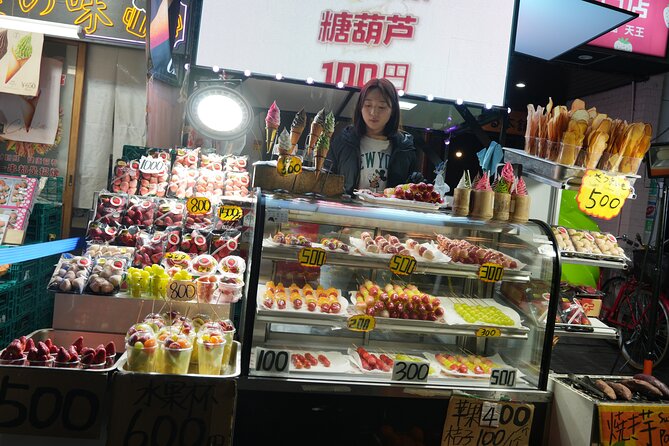
After the savory stop, the route turns to Egg Tart for a freshly baked pastry with smooth custard inside a crisp, flaky shell. The scheduled stop is 20 minutes.
This is a sensible small finish after two filling Osaka dishes. The warm pastry provides a clean shift in texture and temperature, and it gives the group a short pause before the final walk through Dotonbori.
Dessert expectations should be kept modest. One person had seen a different dessert shown in promotional material and received a sweet pastry instead. The egg tart is part of the stated food plan, so you should book this tour expecting the tart, not a cheesecake or another substitute seen elsewhere.
That distinction matters because the final bite can shape your memory of a food tour. The pastry sounds pleasant and fitting, but this is not a dessert-centered outing. The strongest part of the route is its range of Osaka staples.
Dotonbori after dark
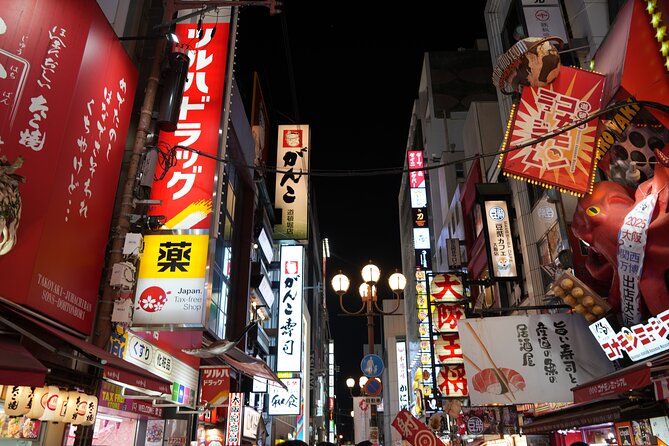
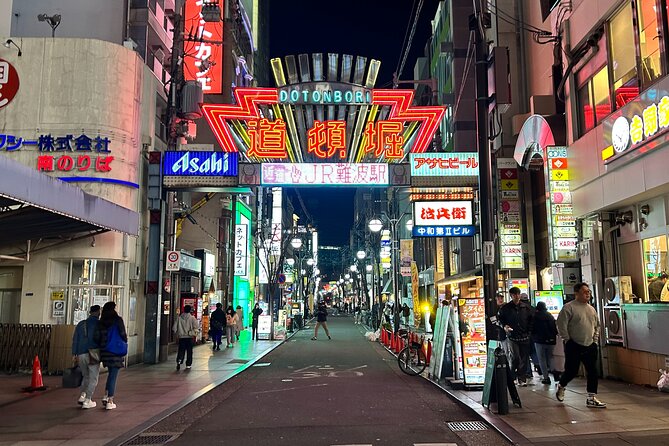
The group then walks to Dotonbori for about 30 minutes. This is Osaka’s most recognizable night district, with bright signs, restaurants, pedestrians, and the canal running through the center.
The tour does not treat Dotonbori as just a photo stop. By arriving after the food tastings, you can connect the neighborhood’s visual energy with the dishes you have just eaten. This is where the evening shifts from market food to city spectacle.
Dotonbori can feel crowded and noisy, especially around the canal and major signs. That is part of its appeal, but it is not a peaceful stroll. Stay close to the guide and keep your belongings secure in the crowds.
The final stop is Ebisu Bridge, where you can photograph the famous Glico Man sign. The bridge provides the classic Osaka picture, with the canal and illuminated district behind you. The tour allows about 20 minutes here, enough for photos and a final explanation before returning to the meeting point.
The advertised ending is back at Hotel Royal Classic Osaka. That makes the route easier to manage if you are staying nearby or need a known place to regroup after the tour.
Guide quality and the language question
The guide is central to the value of this experience. Food tours are easy to reduce to a list of snacks, but a good guide explains what you are eating, how the dishes fit Osaka, and how to approach unfamiliar textures.
Paula receives repeated praise for friendly service, strong food explanations, and arranging stops in advance. Angeles is also singled out for clear English and useful background on Osaka’s food culture and history. Heli, Helimar, and Eli are named positively for making the walk comfortable and explaining the origins of dishes and places.
The experience is offered in Spanish and English. If you need English, confirm the language arrangement at booking and again at the meeting point. One negative experience came from a group that expected an English tour but found the guide spoke mainly Spanish because most of the group was Spanish-speaking.
That problem does not erase the many positive comments about the guides, but it is the most important practical concern in the whole experience. Language is not a minor detail when explanations are part of what you are paying for.
The maximum group size is 30 people. That is not an intimate food walk, and a group that large may make market movement and restaurant conversation less personal. Still, the guides’ role in reserving popular places can be valuable, especially at busy evening hours.
Is $84 a fair price?
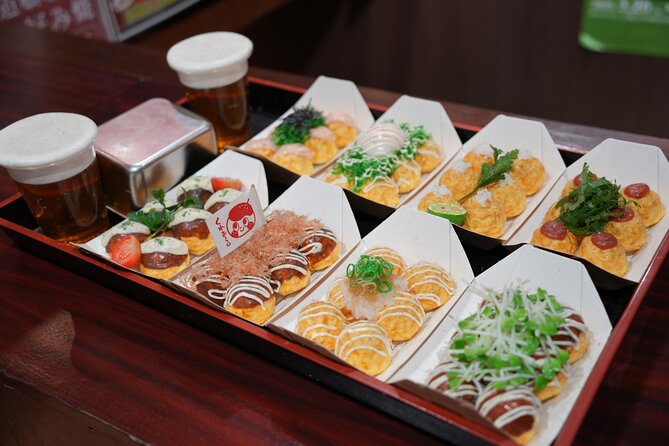
At $84 per person, this tour sits in the middle range for a three-hour guided food experience. The price makes the most sense if you value structure, explanations, and access to a sequence of carefully chosen stops.
You are paying for more than the food itself. The route covers Kuromon Market, Namba, Hozenji, Dotonbori, and Ebisu Bridge, with a bilingual guide leading the way. You also avoid spending your first Osaka evening comparing menus, locating stalls, and guessing what to order.
The value is weaker if you only want a large dinner. Additional meals and drinks are not included, and the portions are tastings. A hungry eater may need to buy something else afterward.
I would compare the $84 with the cost of trial and error. Ordering several unfamiliar dishes alone can be fun, but you may miss the context or choose places based only on the biggest sign. This tour gives you a reliable first pass through Osaka’s signature foods, then leaves you free to return to the dishes you liked best.
The rating is 4.7 from 33 submitted ratings, with 94 percent recommending the experience. Those figures support the idea that the tour generally delivers what it promises, while the language and restaurant concerns show why the details still matter.
Who should book this food walk?
I would recommend it most strongly to first-time visitors staying around Namba, especially if you have only a short time in Osaka. You get a useful introduction to the city’s food identity and finish in the area most associated with Osaka nightlife.
It also suits solo visitors and couples who want company and guidance without committing to a full-day activity. The bilingual format can be particularly useful for Spanish-speaking visitors who want explanations in Spanish.
Families and older adults should consider the walking demands carefully. The tour includes a 10-minute walk to the market, movement through busy areas, and several stops across Namba and Dotonbori. The provider says it cannot accommodate people with mobility issues.
Food lovers who dislike octopus, fried food, cabbage-based dishes, or sweet rice dumplings may find the menu limiting. The route is designed around Osaka classics, not broad Japanese cuisine, sushi, or a custom diet.
You should also avoid booking it if you expect a tiny group or a quiet restaurant evening. A maximum of 30 people and the pace of a popular market district make this a social city walk, not a private culinary lesson.
Practical details before you go
The tour starts at 5:30 pm at Hotel Royal Classic Osaka in Namba and lasts about three hours. It ends back at the starting point, and the meeting location is near public transportation.
A mobile ticket is provided, and booking confirmation arrives at the time of purchase. The tour includes the bilingual guide and tastings of the foods listed, but personal spending, extra drinks, additional meals, and admission fees for specific attractions are not covered.
Wear comfortable shoes and arrive ready to walk and share space. The route has no stated entrance charges at the food stops, but that does not mean every item you see in the market is included.
Free cancellation is available if you cancel at least 24 hours before the local start time. Cancellations or changes made inside that window are not accepted for a refund.
Should you book Osaka Delights?
Book this tour if you want a compact first taste of Osaka, a guide to explain the food, and an evening ending beneath the Glico sign. The combination of Kuromon Market, takoyaki, dango, okonomiyaki, kushikatsu, an egg tart, and Dotonbori gives you a lot of variety in three hours.
I would book with two checks in mind: confirm your preferred tour language and arrive with realistic expectations about portion sizes. If you want a full dinner, add your own meal later. If you want an efficient introduction to Osaka’s food and nightlife districts, the $84 price is reasonable, especially with a strong guide such as Paula or Angeles leading the way.
FAQ
How long does the Osaka food tour last?
The experience lasts approximately three hours, including the food tastings and walking portions through Kuromon Market, Namba, and Dotonbori.
What time and where does the tour start?
The tour starts at 5:30 pm at Hotel Royal Classic Osaka, located at 4-chōme-3-3 Namba, Chuo Ward, Osaka.
Where does the tour end?
The activity ends back at the meeting point at Hotel Royal Classic Osaka.
What foods are included?
The included tastings are takoyaki, three-color dango, okonomiyaki, kushikatsu, and a warm egg tart.
Are drinks or extra meals included?
No. Additional meals, drinks, personal expenses, and entrance fees for specific attractions are not included.
Is the tour offered in English?
Yes. The tour includes a bilingual guide in Spanish and English. If language balance is important to you, confirm the arrangement before joining.
How large can the group be?
The maximum group size is 30 people.
Can people with mobility issues join?
The provider states that the tour cannot accommodate travelers with mobility issues. Most other participants can take part, and the route is near public transportation.
More Food in Namba
- Tokyo Night Foodie Tour in Shinjuku – Seasonal Sushi, Wagyu Beef
★ 5.0 · 1,161 reviews - Osaka Local Foodie Walking Tour in Dotonbori and Shinsekai
★ 5.0 · 985 reviews - Eat and Drink Like a Local: Tokyo Ueno Food Tour-Taverns&Ramen
★ 5.0 · 957 reviews - Tokyo: Shibuya Food Tour (13 dishes and 4 Eateries)
★ 5.0 · 770 reviews
More Food & Drink in Namba
- Osaka: Namba Local Food Walking Tour (Taste 15 Dishes)
★ 5.0 · 20 reviews - Discover Real Osaka: A Cultural Walk with Food & Drink
★ 5.0 · 13 reviews - Kyoto Night Foodie Tour in Gion (9+ dishes + 6 Sake tastings)
★ 5.0 · 1,762 reviews - Tokyo: Tsukiji Fish Market Food and Walking tour
★ 5.0 · 1,724 reviews
Just added around Namba
- Discover Real Osaka: A Cultural Walk with Food & Drink★ 5.0 · 13 reviews
- Osaka 6hr Private Walking Tour with Government Licensed Guide★ 5.0 · 174 reviews
- Private Airport transfer Kansai Intl. Airport(KIX) to OSAKA CITY★ 4.5 · 12 reviews
- Osaka: Namba Local Food Walking Tour (Taste 15 Dishes)★ 5.0 · 20 reviews
- Osaka Private Tour with a Local Guide (Must See Places in 1 Day)★ 5.0 · 57 reviews
- Badminton in Osaka & Kyoto with Locals!★ 5.0 · 15 reviews
- From Osaka/Kyoto: Kyoto & Nara Day Trip with Optional Lunch★ 4.5 · 79 reviews
- 1 Day Takoyaki Making and Osaka Castle Walking Tour★ 5.0 · 15 reviews
Food Market Tours, compared.
Shinjuku Food Tour (13 Dishes at 4 Local Eateries)
Read our review →
Tokyo Tsukiji Fish Market Food and Culture Walking Tour
Read our review →
Shinsekai Food Tour with 13-15 Dishes at 5 Eateries
Read our review →
Osaka Food Tour: 13 Dishes at 5 Local Eateries
Read our review →
Shinjuku Food Tour (15 Dishes and 4 Eateries)
Read our review →
Best of Shinjuku: Izakaya Food Tour (4 Stops, 14+ Tastings)
Read our review →
Hungry Osaka Street Food Tour:15 Tastings & 3 Drinks with a Local
Read our review →
Browse the lists this tour appears in