
REVIEW · GARDEN & PALACE TOURS
1 Day Takoyaki Making and Osaka Castle Walking Tour
The best part of this Osaka day tour is its mix of hands-on food, old neighborhoods, major sights, and local transport. You make your own takoyaki at lunch, then spend the afternoon at Osaka Castle and on a riverboat. It gives you a useful first look at several sides of the city without leaving you to puzzle out every train connection.
I like the quiet start at Sumiyoshi Taisha and the nostalgic tram ride that follows. I also like the way the tour uses lunch as an activity, not just a break. You should know, though, that this is a long day with about 7 kilometers of walking, crowded public transport, and no guarantee of a seat.
In This Review
- Key points to know before booking
- A full Osaka day from Namba to Namba
- Sumiyoshi Taisha, Osaka’s spiritual starting point
- A 15-minute tram ride through old Osaka
- Shinsekai and the world around Tsutenkaku
- Making takoyaki and eating a proper Osaka lunch
- Osaka Castle, Toyotomi Hideyoshi, and the city from above
- The Aqua Liner and Osaka’s water-city view
- What the price includes, and what it is worth
- Walking, weather, and the practical side of the day
- Who should book this Osaka experience?
- Should you book it?
- FAQ
- Where does the tour start and finish?
- What time does the tour begin?
- Is lunch included?
- Can I request a vegetarian meal?
- Does the tour include Osaka Castle admission?
- What happens if the Aqua Liner does not operate?
- How much walking is involved?
Key points to know before booking
- Sumiyoshi Taisha begins the day on a calm, local note, with its famous Sorihashi bridge and distinctive shrine buildings.
- The tram ride is short but memorable, offering a look at Osaka’s older street life from a retro railcar.
- Takoyaki making is the tour’s hands-on highlight, with an all-you-can-eat session and a generous set lunch.
- Osaka Castle combines history, museum displays, and high city views, though the castle tower can be busy.
- The Aqua Liner adds a slower change of pace, with an Osaka Museum of History visit as the backup when the boat does not run.
- Public transportation and walking shape the day, so comfortable shoes and a willingness to share space matter.
A full Osaka day from Namba to Namba
This tour starts at Namba Hiroba Square at 8:50 in the morning and ends at Namba Station at about 5:40 in the afternoon. That makes it easy to fit into a stay in southern Osaka, especially if you want a guided day without arranging several separate tickets.
The group is limited to 15 people, which is small enough for a guide to keep an eye on the schedule and answer questions. The tour uses an English-speaking National Government Licensed Guide Interpreter. One guide praised in the tour information is Momo, whose short historical explanations helped keep the day moving without turning every stop into a lecture.
You will use public transportation between locations. That keeps the experience tied to ordinary Osaka life, but it also means you may stand, change trains, and move through busy stations. The order of stops can change because of crowds or operating conditions, so you should treat the schedule as a framework rather than a minute-by-minute promise.
More Garden & Palace Tours in Osaka
- Osaka Castle: Museum and Tower Entry Ticket
★ 4.5 · 2,380 reviews - Ultimate Osaka Walking Tour: Castle, Dotonbori & Hidden Gems
★ 5.0 · 862 reviews - Osaka Castle Walking Tour and Castle Tower Admission
★ 5.0 · 561 reviews
Sumiyoshi Taisha, Osaka’s spiritual starting point
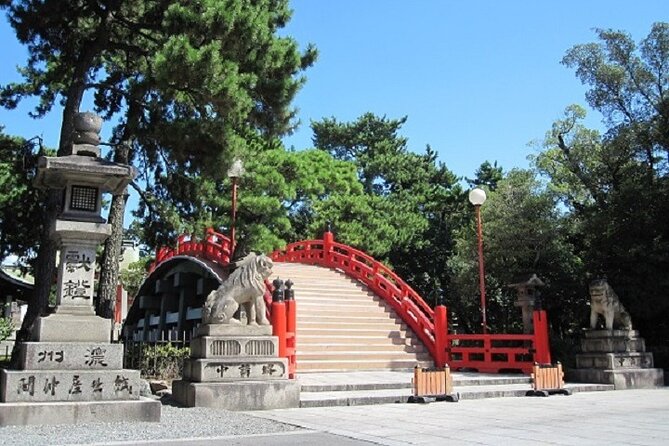
The morning begins at Sumiyoshi Taisha, one of Osaka’s important religious centers. The shrine is associated with maritime safety and is also a place where people pray for business prosperity. That connection fits Osaka well, a city shaped by trade, water, and commerce.
You have about an hour here, enough time to see the main features without rushing. The Sorihashi bridge is the first visual treat. Its steep arch makes a striking approach to the shrine grounds, and it gives you a clear sense that this is not just a decorative sightseeing stop. The shrine remains part of everyday religious life for people in Osaka.
The main sanctuary has a distinctive architectural style, and your guide can help explain what you are seeing and how the site fits into Japanese religious practice. I like this opening because it gives you a quieter setting before the neon, signs, and food stalls of the afternoon.
The drawback is simple: an hour can feel brief if you want to examine every building or take your time with photographs. This is a guided introduction, not a slow private visit. Still, the early start helps you see the shrine before the day becomes more crowded.
A 15-minute tram ride through old Osaka
From Sumiyoshitoriimae, you board Osaka’s only street tram for a short ride through the city. The journey lasts about 15 minutes, so it is not a major sightseeing segment, but it gives the day a welcome change of texture.
From the tram window, you can watch residential streets and ordinary city scenes pass by. This is less polished than a sightseeing bus and more connected to the way local people move around. The retro feel also links naturally with the older downtown atmosphere you will see next.
Do not expect a long narrated rail tour. The ride is brief, and seating is not guaranteed. If you are hoping for a relaxed seat by the window, public transport may not provide it. The value is in the transition itself, since the tram helps you move from a shrine setting into the street life of southern Osaka.
Shinsekai and the world around Tsutenkaku
The Shinsekai stop lasts about 30 minutes. This neighborhood is known for its old downtown character, lively shopping streets, izakaya, game centers, bright signs, and the tall Tsutenkaku Tower rising above it all.
You get a quick look at a part of Osaka that feels very different from the polished department stores and modern stations around Namba. The area has an energetic, slightly rough-around-the-edges personality. Signs compete for attention, food shops crowd the streets, and the atmosphere is made for wandering and people-watching.
The short visit is useful for orientation, but it is not enough to explore Shinsekai in detail. You may have time for photographs and a quick look at the streets, but not for a full meal, tower visit, or extended shopping. If Shinsekai is high on your personal list, plan to return on your own.
That limitation is also part of the tour’s design. You are seeing several parts of Osaka in one day, so each stop offers a clear sample rather than unlimited free time.
More Walking Tours in Osaka
- Osaka Bar Hopping Night Walking Tour in Namba (3 bars, 6 tastes)
★ 5.0 · 958 reviews - Osaka 6hr Private Walking Tour with Government Licensed Guide
★ 5.0 · 174 reviews - Osaka: Namba Local Food Walking Tour (Taste 15 Dishes)
★ 5.0 · 20 reviews - Osaka Kickstart: Hotspots & Hidden Gems Tour
★ 5.0 · 1,306 reviews
Making takoyaki and eating a proper Osaka lunch
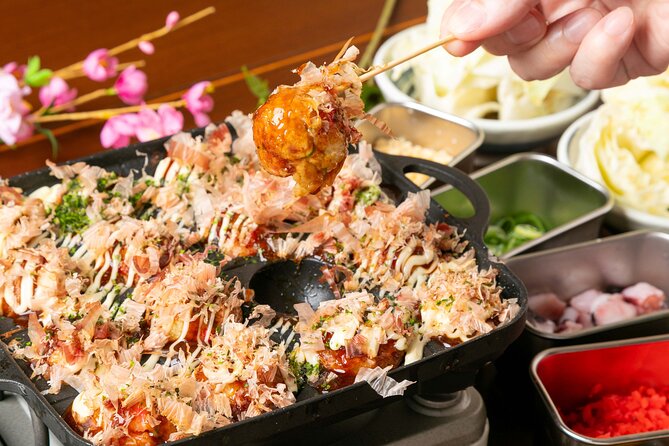
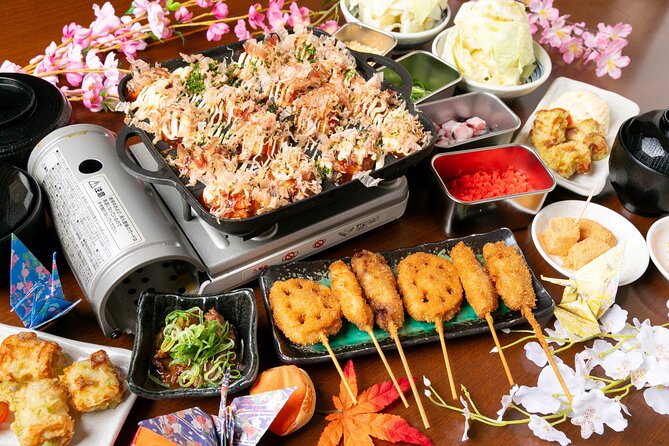
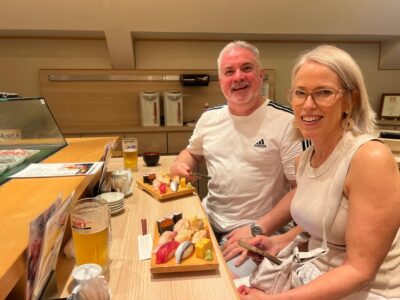
Lunch at Kushikatsu Takoyaki Ajinodaimaru is the most interactive part of the day. Takoyaki is Osaka’s famous ball-shaped snack made with batter and octopus, and here you get to prepare it yourself rather than simply order a plate.
The takoyaki session lasts about 60 minutes and is all-you-can-eat. One takoyaki maker is provided for every four people, so you may share a table with another group. That arrangement can make the meal more social, but it also means you will not necessarily have a cooking station all to yourself.
The meal includes much more than takoyaki. You receive salted cabbage, deep-fried chikuwa with seaweed, potato salad, three deep-fried skewers, white rice with refills available, and miso soup. The kushikatsu, or deep-fried skewers, adds another classic Osaka food experience, and the rest of the meal gives you enough substance for a full afternoon of walking.
The takoyaki contains octopus, eggs, and animal-derived stock. Vegetarian requests are accepted when you book, but a vegetarian meal does not include takoyaki. Instead, the special menu includes a mini salad, three appetizers, grilled vegetables in foil, grilled vegetable skewers, deep-fried tofu teppanyaki, grated kelp soup, and white rice.
This is a useful point to settle before booking. If you avoid seafood, eggs, or animal-derived stock, you need to request the vegetarian option in advance. You will receive a substantial meal, but you will not take part in eating the takoyaki itself.
The cooking can be messy and may take a few attempts, which is exactly why it works well as a group activity. Your guide can help explain the process, while you learn how quickly the batter firms up and how to turn the pieces into neat balls. I like that this puts Osaka food culture in your hands instead of reducing it to a restaurant tasting.
Osaka Castle, Toyotomi Hideyoshi, and the city from above
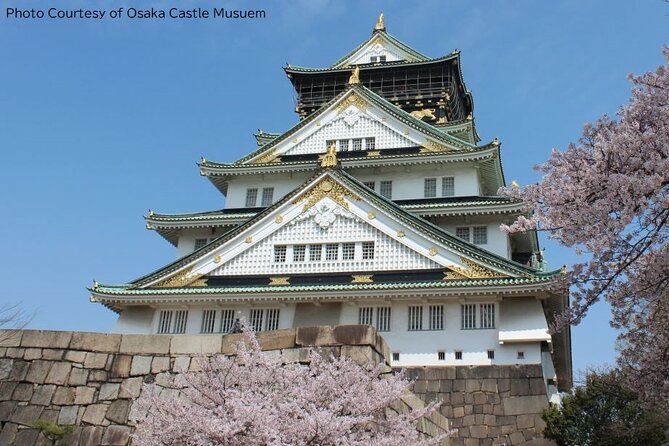
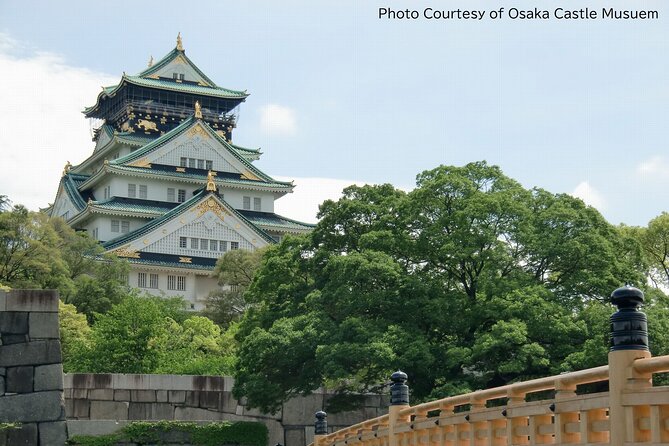
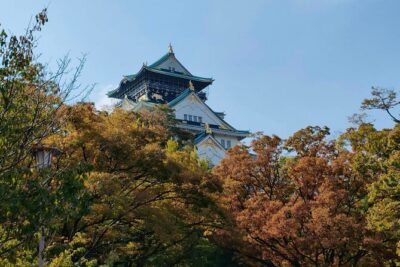
The afternoon centers on Osaka Castle, founded in the 16th century by Toyotomi Hideyoshi, a major figure of the Sengoku period. The castle is closely tied to the story of his power and remains one of Osaka’s clearest symbols.
You have about 1 hour and 30 minutes here. That time includes the castle grounds and entry to the tower, where you can see Osaka from above. The high views are a major reward after the morning’s walking, and the tower gives you a useful sense of the city’s scale.
Inside, the castle experience is more than an exterior photo stop. The exhibits explain the political and military world connected to Hideyoshi and the castle’s place in Osaka’s past. A guide’s context helps because the building you see today is not simply a preserved 16th-century structure. The real value is understanding the people, conflicts, and ambitions linked to the site.
The grounds can be large, and the distance between transport, park paths, and the tower adds to the day’s walking. Crowds may also affect how quickly you move through the tower. Some people will want more free time here, especially if they care about Japanese castle history or photography.
Transport arrangements may vary. From Namba, the group can use Temmabashi Station instead of Osakajokoen Station. On some days, if there are no customers on related morning or afternoon Osaka walking tours, the group may go directly to Osakajokoen Station after lunch instead of returning to Namba first. These changes can save time, but they also mean the exact route is not fixed.
The Aqua Liner and Osaka’s water-city view
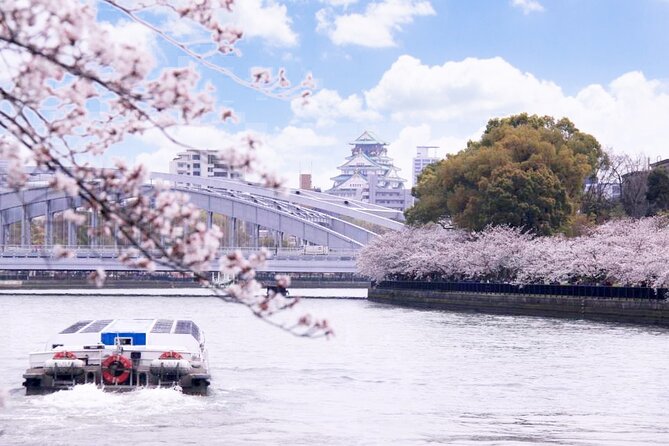
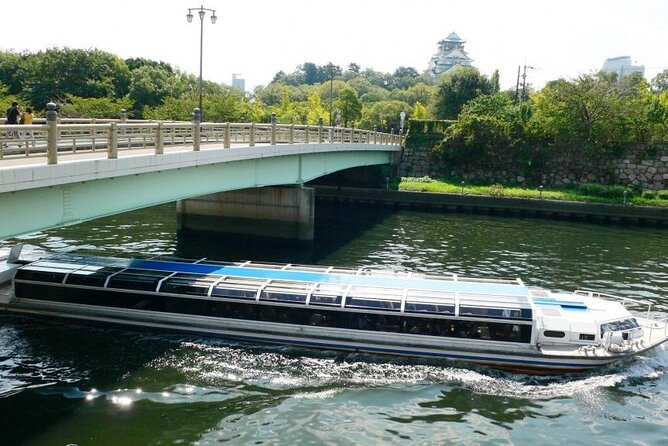
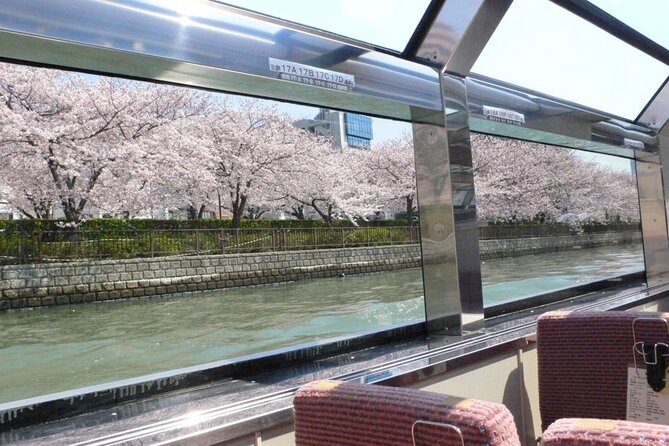
After the castle, you board the Aqua Liner at Osaka Castle Pier for a cruise along the Ogawa River. The boat ride normally lasts 40 minutes, although the duration changes to 55 minutes during the stated schedule periods around March 24 and April 11, 2025.
This is a smart way to finish the sightseeing portion of the day. After hours on foot and on trains, you can sit back and see Osaka from the water. The river gives you a different view of historic places and city scenery, and it explains why Osaka is often linked with waterways and commerce.
The cruise is also seasonal in character. The view changes with the time of year, and the pace is slower than the rest of the tour. I would not book this expecting a grand harbor voyage. Think of it as a pleasant city ride that lets you rest while seeing familiar places from a new angle.
The boat can be suspended because of bad weather, a temporary shutdown, or other operating problems. In that case, the tour visits the Osaka Museum of History instead. If the Aqua Liner is unavailable on a Tuesday, when the museum is closed, the guide issues a refund of JPY 2,000 for adults and JPY 1,000 for children on the tour day.
What the price includes, and what it is worth
The price is $148.65 per person. That is not a low-cost way to move around Osaka, but it covers an English-speaking licensed guide, lunch, transportation, the tram, the cruise, and other admission fees.
You are also paying for planning. The tour connects a shrine in the south, a tram, Shinsekai, a cooking restaurant, Osaka Castle, and a river pier in one day. Organizing that route independently would require separate fares, reservations or tickets for some activities, and careful timing.
The value is strongest if you are a first-time visitor with one open day and want structure. It is less compelling if you already know Osaka’s train system, prefer long unplanned stops, or would rather spend half a day inside Osaka Castle alone.
A mobile ticket keeps entry simple, and free cancellation is available up to 24 hours before the start time. Changes or cancellations made within 24 hours are not accepted for a refund. Confirmation is sent within 48 hours, subject to availability.
Walking, weather, and the practical side of the day
This is called a walking tour for good reason. The total distance is about 7 kilometers, or roughly 4 miles, spread across shrine paths, city streets, station connections, castle grounds, and transfers between stops.
Wear comfortable shoes and clothing suited to a full day outside. Public transport seating is not guaranteed, so you should be comfortable standing for part of a journey. The schedule can also shift with congestion, which is normal for a city tour built around trains, streets, and a boat timetable.
Children up to age five may join free but do not receive lunch. If a young child needs a meal, book the child rate instead. Written parental permission is required for participants under 18, and anyone under 15 or not yet enrolled in middle school must be accompanied by a parent or guardian.
The maximum group size is 15 people. That keeps the walking group manageable, though the shared cooking setup means you may still work at a table with people outside your booking.
Who should book this Osaka experience?
I would choose this tour if you want a well-organized first day in Osaka with a guide handling the route and historical background. It suits people who like switching between sightseeing, food, public transport, and short neighborhood walks rather than spending many hours at one attraction.
It is also a good fit for solo visitors and couples who enjoy meeting people from different countries. The cooking activity naturally creates conversation, and the day’s mix gives you plenty of topics to discuss.
Families with older children may enjoy the tram, takoyaki making, castle tower, and boat ride. Very young children may find the long schedule and walking distance tiring. The group rules for minors also require extra planning.
I would hesitate if you dislike fixed schedules, crowded stations, shared cooking equipment, or quick visits. You may prefer to visit Sumiyoshi Taisha, Shinsekai, and Osaka Castle separately, giving each one more time.
Should you book it?
Book this tour if you want Osaka’s major themes in one day: shrine traditions, street-level neighborhoods, local food, castle history, and waterways. The strongest features are the takoyaki cooking session, the licensed English guide, and the clear variety of the route.
Skip it if you want a slow day or already have a detailed Osaka plan. At $148.65, the price makes sense when you value included transport, lunch, admissions, and expert routing. It is a practical choice for a first visit, as long as you arrive ready to walk, stand, share a cooking table, and follow a schedule that may change with city conditions.
FAQ
Where does the tour start and finish?
The tour starts at Namba Hiroba Square, at 5 Chome-1 Namba, Chuo Ward, Osaka. It finishes at Namba Station at about 5:40 pm.
What time does the tour begin?
The stated start time is 8:50 am. The total duration is approximately 8 hours and 50 minutes.
Is lunch included?
Yes. Lunch includes takoyaki making, salted cabbage, deep-fried chikuwa with seaweed, potato salad, three deep-fried skewers, white rice with refills available, and miso soup.
Can I request a vegetarian meal?
Yes, vegetarian meal requests are accepted when booking. The vegetarian menu does not include takoyaki and instead provides a special selection of salads, appetizers, grilled vegetables, tofu, soup, and rice.
Does the tour include Osaka Castle admission?
Yes. Admission to Osaka Castle is included, along with approximately 1 hour and 30 minutes at the castle.
What happens if the Aqua Liner does not operate?
If the Aqua Liner is unavailable because of weather, a temporary suspension, or another operating issue, the tour visits the Osaka Museum of History instead. If this happens on a Tuesday, when the museum is closed, the guide provides a refund of JPY 2,000 per adult or JPY 1,000 per child on the tour day.
How much walking is involved?
The tour covers about 7 kilometers, or approximately 4 miles. Comfortable walking shoes and clothing suitable for a full day of walking are recommended.
More Garden & Palace Tours in Namba
- Osaka: teamLab Botanical Garden Entry Ticket
★ 4.5 · 1,710 reviews - Tokyo Castle & Imperial PalaceーShogun Walking Tour
★ 4.7 · 1,068 reviews - Kyoto: Nijo-jo Castle and Ninomaru Palace Guided Tour
★ 4.7 · 1,020 reviews - Tokyo: Imperial Palace Japanese History Walking Tour
★ 4.9 · 987 reviews
More Walking Tours in Namba
- Kyoto Geisha Walking Tour: Gion District & Hidden Gems
★ 4.7 · 3,273 reviews - Tokyo Tsukiji Fish Market Food and Culture Walking Tour
★ 5.0 · 3,184 reviews - Kyoto: Gion Magical Night Walking Tour with Geisha Trivia
★ 4.9 · 2,393 reviews - Tokyo: Imperial Palace and Shogun Historical Walking Tour
★ 5.0 · 2,251 reviews
Just added around Namba
- Discover Real Osaka: A Cultural Walk with Food & Drink★ 5.0 · 13 reviews
- Osaka 6hr Private Walking Tour with Government Licensed Guide★ 5.0 · 174 reviews
- Private Airport transfer Kansai Intl. Airport(KIX) to OSAKA CITY★ 4.5 · 12 reviews
- Osaka: Namba Local Food Walking Tour (Taste 15 Dishes)★ 5.0 · 20 reviews
- Osaka Delights: Traditional Japanese Food Tour★ 4.5 · 33 reviews
- Osaka Private Tour with a Local Guide (Must See Places in 1 Day)★ 5.0 · 57 reviews
- Badminton in Osaka & Kyoto with Locals!★ 5.0 · 15 reviews
- From Osaka/Kyoto: Kyoto & Nara Day Trip with Optional Lunch★ 4.5 · 79 reviews
Garden & Palace Tours, compared.

Imperial Palace and Shogun Historical Walking Tour
Read our review →
Tokyo Castle & Imperial PalaceーShogun Walking Tour
Read our review →
Nijo-jo Castle and Ninomaru Palace Guided Tour
Read our review →
Ultimate Osaka Walking Tour: Castle, Dotonbori & Hidden Gems
Read our review →Tokyo Castle & Imperial PalaceーShogun Walking Tour
Read our review →Browse the lists this tour appears in