
REVIEW · PRIVATE GUIDED TOURS WITH DRIVER
Osaka 4hr Private Tour with Government-Licensed Guide
Osaka is easiest to enjoy when someone helps you connect its scattered highlights. This private four-hour tour lets you choose two or three places, then pairs you with a government-licensed local guide who meets you on foot within the designated Osaka area. You can focus on food, history, shopping, gardens, or a mix of all four.
I like the flexible design, especially for a first visit or a short stay. I also like the practical help with Osaka’s trains and subway system, which guides such as Sachiko, Yuka, Andy, and Shige have provided. The main catch is simple: four hours goes quickly, and transportation, meals, and admission fees are extra.
In This Review
- Key points at a glance
- Why a private half-day works well in Osaka
- Choosing between Osaka’s food streets and historic sights
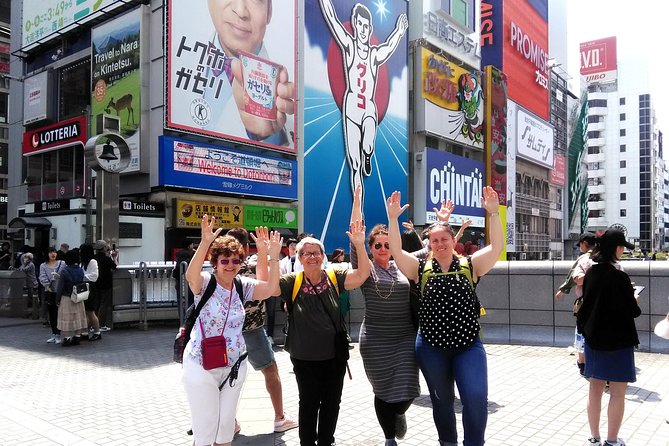
- Dotonbori: Osaka’s loud, tasty introduction
- Kuromon Market: a useful place for food decisions
- Sennichimae Doguyasuji for an unusual shopping stop
- Shinsaibashi-suji: shopping under one long roof
- Osaka Castle: the city’s grand historical symbol
- Shitennoji: an early Buddhist site with real historical weight
- Sumiyoshi Taisha: a calmer shrine experience
- Umeda Sky Building and the modern northern city
- Shinsekai and Keitakuen Garden
- The National Museum of Art, Osaka
- How the guides add value
- Price, extra costs, and real value
- Who should book this Osaka tour
- Should you book it?
- FAQ
- How long is the Osaka private tour?
- How many sights can I choose?
- Is hotel pickup included?
- Are entrance fees and transportation included?
- Is this a private tour?
- What is the cancellation policy?
Key points at a glance
- Choose two or three sights: You are not expected to force all 11 listed places into one half-day.
- Start with a local guide at your hotel: Pickup is on foot, so you avoid the stress of finding an unfamiliar meeting point.
- Mix food and culture: Dotonbori, Kuromon Market, Osaka Castle, Shitennoji, and Sumiyoshi Taisha give you very different sides of the city.
- Plan for walking and subway steps: The tour suits active visitors, and any train or subway fares are paid separately.
- Private means personal pacing: Your guide can adjust the route for weather, interests, injuries, or a last-minute change.
- Guide quality can vary: The overall score is 4.8 from 359 ratings, but two poor experiences show why clear communication about pace matters.
Why a private half-day works well in Osaka
Osaka covers a lot of ground. Its famous food streets sit in the Minami area, Osaka Castle occupies a separate central district, and Sumiyoshi Taisha lies farther south. Umeda, the city’s modern northern center, is another trip across town.
A private guide can help you avoid wasting half your time deciding where to go. You can ask for a food-centered walk through Dotonbori and Kuromon Market, a history-focused visit to Osaka Castle and Shitennoji, or a more local mix that includes cooking shops and a traditional shrine.
The tour is rated 4.8 out of 5, with 96 percent recommending it. The strongest praise centers on flexibility, historical explanation, transit help, patience, and local suggestions. Guides have recommended restaurants, helped visitors choose the right train from Kyoto, taken photos, and adjusted plans around hot weather or an injury.
That said, this is not a fixed sightseeing bus. You walk, use public transportation if needed, and pay the related fares. You should also understand that the advertised route contains more possibilities than any four-hour tour can reasonably cover.
More private guided tours with driver in Osaka:
- Osaka Private Tour with Government-Licensed Guide
★ 4.8 · 20 reviews - Tokyo 6hr Private Tour with Government-Licensed Guide
★ 5.0 · 3,902 reviews - Tokyo 4hr Private Tour with Government-Licensed Guide
★ 5.0 · 1,394 reviews
Choosing between Osaka’s food streets and historic sights
Before the tour, think about the two or three places you most want to experience. The time estimates for the full selection add up to far more than four hours, and they do not include travel between districts.
For a first visit, I would choose one historic site and one food area. Osaka Castle with Dotonbori gives you a classic introduction. Shitennoji with Kuromon Market gives you a slightly quieter mix of religion, history, and eating.
If you have already seen the headline sights, ask about Sumiyoshi Taisha, Sennichimae Doguyasuji, Shinsekai, or Keitakuen Garden. These choices can give the half-day a more distinctive Osaka flavor.
The private format also makes sense for families, but you must be honest about your walking speed. One poor experience involved a nine-year-old who struggled in the heat while the guide moved too quickly. Another involved a traveler with a knee injury who felt rushed. Ask for a slower pace when booking and repeat that request at the start.
Dotonbori: Osaka’s loud, tasty introduction
Dotonbori is the natural choice if you want to feel Osaka’s appetite right away. Its canal-side entertainment district is filled with oversized signs, restaurants, snack stalls, and the familiar smell of grilled food.
You can look for takoyaki, the round octopus-filled snack associated with Osaka, and okonomiyaki, a savory pancake cooked with a choice of ingredients. Your guide can explain what you are seeing and help you decide where to stop, although food is not included in the tour price.
The planned visit is about 30 minutes, which is enough for an orientation walk and a few photos. It is not enough for a leisurely meal, serious shopping, and a full exploration of the surrounding streets. If eating is your top goal, tell your guide early and accept that another stop may need to go.
Dotonbori is crowded and visually noisy. That is part of its appeal, but it can be tiring in hot weather or difficult with young children. A guide who keeps a comfortable pace is especially useful here.
Kuromon Market: a useful place for food decisions
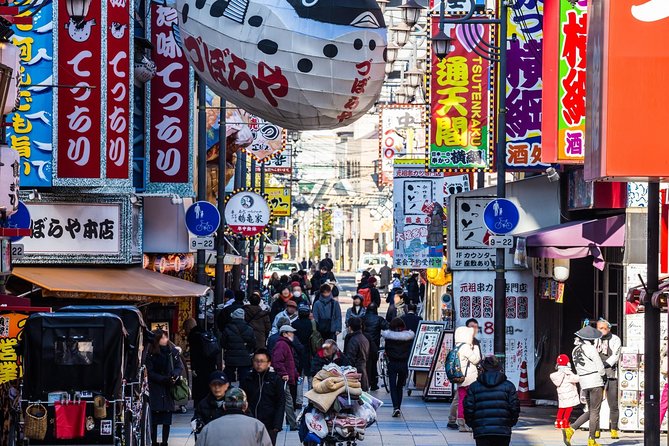
Kuromon Market is a roofed market known for seafood, prepared foods, and specialty shops. It is often called Osaka’s kitchen, and a guide can help you understand what is seasonal and how the market fits into everyday food culture.
The information for this tour highlights conger pike in summer and fugu in winter. Many seafood shops specialize in fugu and hamo, or conger pike, so this is a good stop if you want to see ingredients that may not be familiar from restaurant menus at home.
The suggested 30-minute visit works best as a tasting and orientation stop. You can browse, ask questions, and perhaps buy a snack, but you should not expect a long market meal without trimming the rest of the route.
Keep your budget in mind. Food is an extra expense, and market prices can vary from a quick bite to a more costly seafood purchase. I would pair Kuromon with Dotonbori only if food is the main purpose of your tour.
A few more Osaka trips to weigh up
- Osaka: Hotspots & Hidden Gems Walking Tour Private or Group
★ 4.9 · 1,300 reviews - Private Osaka Walking Tour: Highlights & Hidden Gems
★ 5.0 · 569 reviews - Osaka: Private Custom Walking Tour with a Local Guide
★ 4.6 · 97 reviews - Osaka : 3/4/5 Hours Private Tour With Local Guide
★ 4.9 · 86 reviews
Sennichimae Doguyasuji for an unusual shopping stop
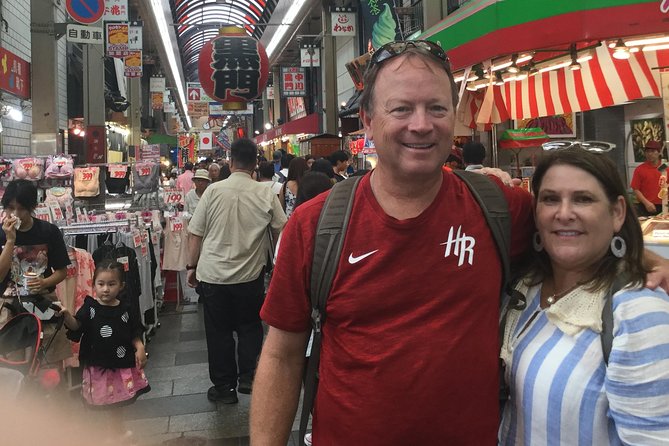
Sennichimae Doguyasuji Shopping Street stretches about 150 meters and is devoted to cooking equipment and restaurant supplies. You will find kitchen tools, tableware, appliances, and cooking accessories rather than the usual chain-store shopping.
This is one of the most interesting options for repeat visitors or anyone who enjoys Japanese design and cooking. The shops offer a glimpse into the working side of Osaka’s food culture, not just the polished restaurant frontage.
The planned time is 30 minutes. That is enough to browse, but cooks may want longer. If you are carrying purchases, remember that this remains a walking tour, and you may still have more streets and subway stations ahead.
Shinsaibashi-suji: shopping under one long roof
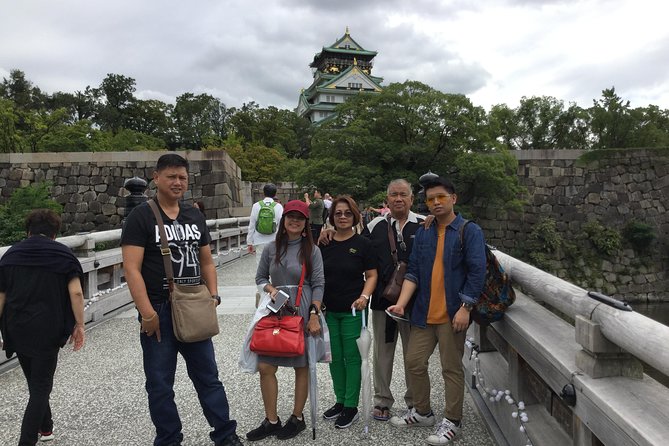
Shinsaibashi-suji is a roughly 600-meter shopping arcade lined with cosmetics shops, clothing stores, restaurants, and other retailers. The covered design makes it a practical stop in poor weather, though the busy retail setting may feel less distinctive than Osaka’s shrines and markets.
The scheduled 15 minutes is short. Think of it as a walk-through or a chance to locate a particular shop, not a proper shopping session. If you have a specific purchase in mind, tell your guide before the tour so the route does not lose time.
I would choose Shinsaibashi-suji when shopping matters more to you than monuments. It pairs naturally with Dotonbori, but that combination gives you less time for Osaka’s older religious sites.
Osaka Castle: the city’s grand historical symbol
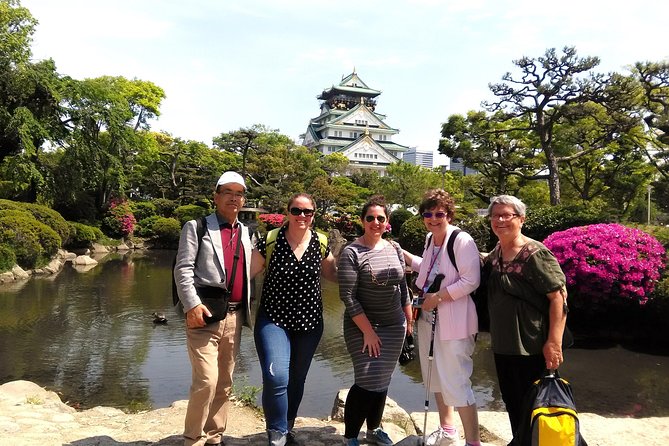
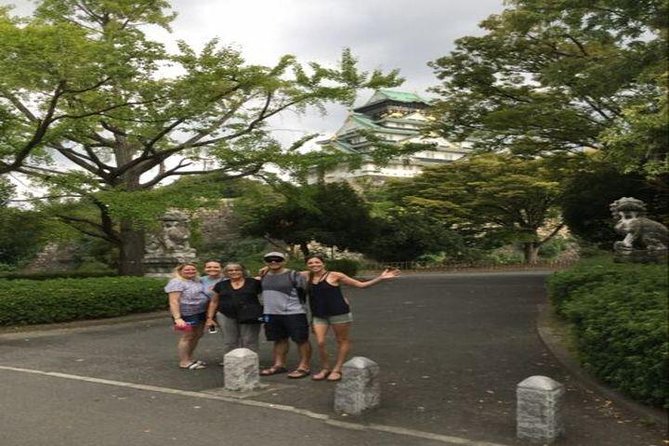
Osaka Castle is one of the city’s essential sights. Its current appearance presents a five-story castle tower, while the site’s history reaches back almost 450 years. The castle is closely tied to the story of Osaka and to the political changes that shaped Japan.
A good guide can make the site more than a photo stop. Yuji, Miyuki, Lily, and other guides have explained the castle’s layout and historical background in detail. One guide used images on an iPad before each stop, a useful touch when you want context before looking at a large complex.
The suggested 15 minutes is enough for an exterior view and orientation. It is not enough for a relaxed visit inside the castle museum. Admission is not included, so decide in advance if you want to pay to enter.
Osaka Castle is a strong choice for first-time visitors, but it can consume more time than the schedule suggests. The grounds are extensive, and the walk from a station or meeting point may add distance. Pair it with Shitennoji only if you are comfortable moving efficiently.
Shitennoji: an early Buddhist site with real historical weight
Shitennoji was founded in 593 by Prince Shotoku and is described as one of Japan’s oldest temples. It was also the first temple built by the state. For anyone interested in the arrival and development of Buddhism in Japan, this is one of the best choices on the tour.
The setting offers a different mood from Dotonbori and Osaka Castle. Instead of bright signs and commercial energy, you get a religious site with long historical connections. A guide can explain the temple’s role and architecture in a way that is difficult to grasp from a quick independent visit.
The suggested stop is 30 minutes, and admission is extra. Check the pace with your guide if you want time to look carefully rather than simply pass through. I would combine Shitennoji with Osaka Castle for a history-first tour, but not with distant Umeda unless you are willing to spend part of the half-day in transit.
Sumiyoshi Taisha: a calmer shrine experience
Sumiyoshi Taisha is one of Japan’s oldest shrines, founded before Buddhism was introduced to the country. Its architecture follows a distinctive shrine style, making it a worthwhile choice for visitors who want more than the most photographed central districts.
The 30-minute stop gives you a short introduction to Shinto traditions and the shrine’s design. Several guides have used Sumiyoshi Taisha as a meaningful counterpoint to Osaka Castle and the city’s shopping streets.
It is farther from the main Minami and Umeda areas, so transportation planning matters. Train fares are extra, and travel time reduces the number of other places you can fit in. Choose it because you want this shrine, not because you hope to add it casually to an already crowded plan.
Umeda Sky Building and the modern northern city
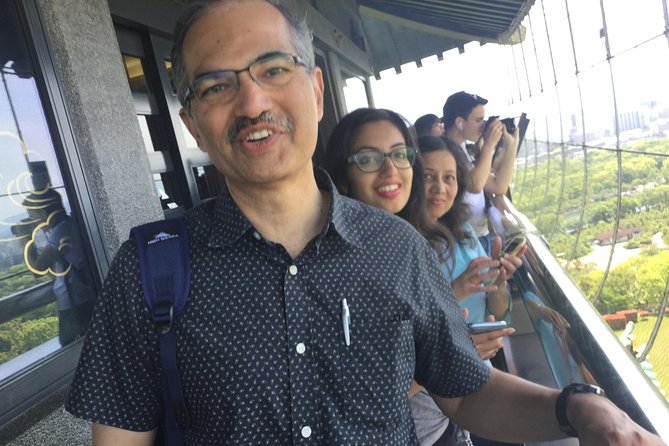
The Umeda Sky Building rises 173 meters near Osaka and Umeda Stations. Its unusual high-rise form gives you a strong look at modern Osaka, and the nearby station district is useful if you are staying in the north or continuing your day there.
The scheduled time is only 15 minutes, so this is mainly an exterior orientation unless you pay for an observation-area admission and allow more time. One guide sensibly suggested dropping Umeda Sky Building when the visitor already had a good city view from a hotel. That is exactly the kind of practical adjustment a private tour can provide.
Choose Umeda Sky Building if architecture, city views, or the Kita district interest you. Skip it if your hotel already provides a comparable view and you would rather spend time at a temple or market.
Shinsekai and Keitakuen Garden
Shinsekai, or New World, is known for Tsutenkaku Tower, kushikatsu, and Billiken, a local symbol linked with wealth and good fortune. Spa World, a large bath complex, is also located here.
The planned visit is just 10 minutes, which makes Shinsekai a quick look rather than a full neighborhood experience. If you want to eat kushikatsu or explore the area, you need to give it a larger share of the tour.
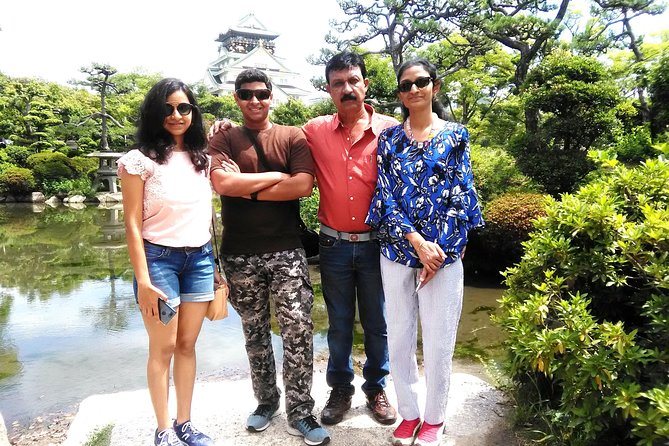
Nearby Keitakuen Garden is a traditional Japanese garden in Tennoji Park. It was designed in the early twentieth century and includes a central pond, arranged rocks, and seasonal plantings. The scheduled five minutes is far too brief for a thoughtful garden visit, so treat it as an optional add-on only if you are already in the area.
The National Museum of Art, Osaka
The National Museum of Art, Osaka occupies an underground building on Nakanoshima and holds a major art collection. This is the most specialized choice on the list, and it will suit you best if modern and contemporary art matters more than street food or temples.
The planned visit is 30 minutes, but admission is extra and a museum visit can easily expand. You should tell the guide if you want serious time inside. The private format is useful here because a guide can help you decide if the museum fits your interests rather than assuming every famous sight belongs on your route.
How the guides add value
The most useful part of this experience may be the person walking beside you. Guides have helped visitors choose local trains from Kyoto, meet them on train platforms, navigate Osaka’s subway, recommend restaurants, and share digital photos afterward.
Sachiko has been praised for thoughtful changes to plans, restaurant advice, and photo spots. Yuka has tailored tours around personal interests and offered suggestions for the rest of a Japan trip. Andy has been described as clear in English and good at explaining history and daily life, while Shige has helped visitors make the most of a short visit.
These strengths are not guaranteed with every guide. Two serious complaints involved poor communication, rushing, and a lack of engagement. That matters because a private tour depends heavily on the individual assigned to you.
Send a short note with your priorities: food, history, shopping, photography, children, mobility, or public transit. At the meeting point, confirm the route and walking speed. You are paying for a personal guide, so it is reasonable to speak up if the pace is wrong.
Price, extra costs, and real value
The listed price is $109.43 per person. For a private four-hour experience, that can be fair if you are sharing the cost with family or friends and want help organizing a complicated Osaka day.
The price covers a licensed local English-speaking guide and a customized route of two or three sites. It does not cover transportation, lunch, food, personal expenses, or your entrance fees. Private transportation is not provided.
Value depends on how much you use the guide. If you simply want photos outside three easy-to-reach places, you may be able to do that alone for much less. If you want history explained, a restaurant recommendation, help with trains, and a route adjusted to your interests, the fee becomes easier to justify.
Group discounts are available, and only your group participates. The experience has free cancellation up to 24 hours before the start time. Pickup is offered, but it is an on-foot meeting within the designated Osaka area, not a private vehicle pickup.
Who should book this Osaka tour
I would choose this tour if you are visiting Osaka for the first time, have only half a day, or feel unsure about linking neighborhoods by train and subway. It is also a good fit for couples, families with active older children, and small groups that want to set their own priorities.
It suits you less if you dislike walking, need a slow pace, or want long visits inside several museums and monuments. Four hours is a sampler, not a full exploration of Osaka.
Should you book it?
Book this tour if you want a flexible first look at Osaka and value a person who can explain the city while helping you move through it. Choose two or three stops, not six, and decide if food, history, shopping, or modern architecture matters most.
I would be especially comfortable booking it with clear requests about pace and interests. The strong overall rating and repeated praise for guides such as Sachiko, Yuka, Andy, Shige, and Miyuki point to real value, but the uneven experiences mean you should communicate well from the start. For a short Osaka stay, that small bit of planning can turn four hurried hours into a useful introduction.
FAQ
How long is the Osaka private tour?
The tour lasts approximately four hours.
How many sights can I choose?
The tour includes a customizable plan focused on two or three sites from the listed options.
Is hotel pickup included?
Your guide can meet you at your hotel or another agreed location on foot within the designated Osaka area. Private vehicle transportation is not included.
Are entrance fees and transportation included?
No. Transportation costs, entrance fees, food, lunch, and personal expenses are extra. Guide entry fees are covered only for sights listed under the tour’s included expectations.
Is this a private tour?
Yes. Only your group participates, and multiple tour groups cannot be combined.
What is the cancellation policy?
You can cancel at least 24 hours before the experience start time for a full refund. Changes or cancellations made less than 24 hours before the start time are not accepted or refunded.
Just added around Osaka
- (Ticket Included) Explore Osaka Castle & Museum of History★ 4.8 · 21 reviews
- Hidden Osaka – Yukaku Red Light Tour & Culinary Adventure★ 4.8 · 96 reviews
- Osaka: Walking Tour and Top Highlights★ 4.8 · 104 reviews
- Osaka: Private Ceramic Painting Workshop★ 5.0 · 13 reviews
- Pickleball in Osaka, Kobe & Kyoto with Locals!★ 4.7 · 80 reviews
- Eat Like a Local in Osaka – Private Custom Street Food Tour★ 4.3 · 33 reviews
- Osaka:SUMO BEATS SHOWCASE: Taiko Drum and Wagyu burger!★ 4.2 · 37 reviews
- Kimono photoshoot-Includes 100 photo data★ 5.0 · 21 reviews
Private Guided Tours with Driver, compared.
Tokyo 4hr Private Tour with Government-Licensed Guide
Read our review →
Kyoto 6hr Private Tour with Government-Licensed Guide
Read our review →
Hiroshima / Miyajima Full-day Private Tour with Government Licensed Guide
Read our review →
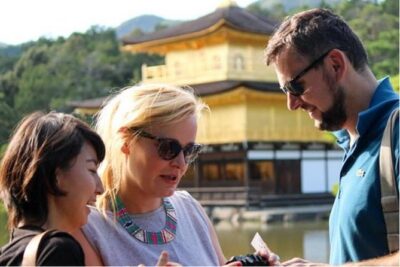
Kyoto 4hr Private Tour with Government-Licensed Guide
Read our review →
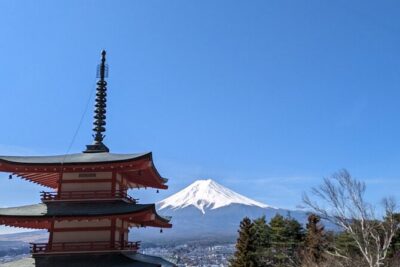
Mt. Fuji Day Trip from Tokyo with English Speaking Driver Guide
Read our review →
Hiroshima City 4hr Private Walking Tour with Licensed Guide
Read our review →Browse the lists this tour appears in