
REVIEW · WALKING TOURS
Osaka 4-Hour Walking Tour: Hotspots and Hidden Gems
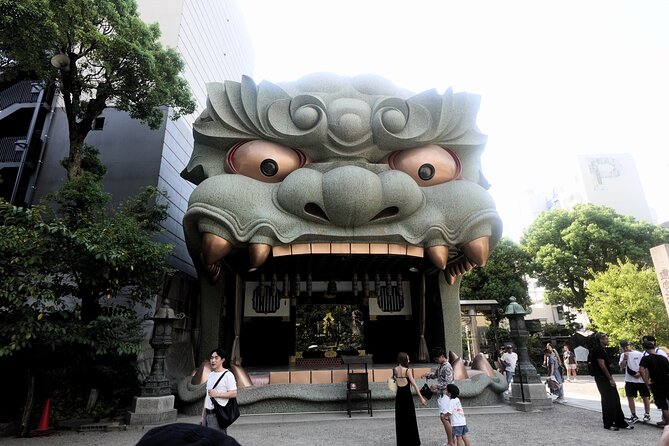
Osaka’s giant lion head is the hook here: at Namba Yasaka Shrine, a 12-meter stage appears ready to swallow bad luck. From there, this four-hour walk shifts neatly between anime shops, food stalls, neon canals, and a moss-covered temple statue.
I like the strong mix of old and new Osaka, and I like that guide Ai explains local customs, Osaka dialect, legends, and small food rituals rather than simply pointing at buildings. The main drawback is that some walking sections may feel like a simple drift through commercial streets, and a New Year shrine queue can eat into the schedule.
In This Review
- Key points to know before booking
- What this four-hour Osaka walk is really about
- Namba Yasaka Shrine and the 12-meter lion
- Nipponbashi turns Osaka into a pop-culture stop
- Kuromon Market, Osaka’s food corridor
- Dōtonbori and the Glico running man
- Hōzenji Temple and old Osaka lanes
- Guide style and group size
- The main strengths, and the fair warning
- Who should book this Osaka walk?
- Should you book the Osaka 4-Hour Walking Tour?
- FAQ
- How long is the Osaka walking tour?
- What time does the tour start?
- Where does the tour begin?
- Where does the tour end?
- What sights are included?
- Is admission included for the sightseeing stops?
- How many people can join the tour?
- Can I cancel for a full refund?
Key points to know before booking
- The lion-head stage is the tour’s most memorable photo stop, with a local legend tied to protection and good fortune.
- Den-Den Town brings Osaka pop culture into the route, including anime, manga, retro games, electronics, and gachapon capsule toys.
- Kuromon Market adds an edible side to the walk, with seafood, produce, local ingredients, and possible street-food tastings at your own cost.
- Dōtonbori gives you Osaka’s classic neon scene, including the Glico running man and canal-side photographs.
- Hōzenji Temple supplies a quiet finish, with lantern-lit lanes and a moss-covered statue close to the bright entertainment district.
- The group is capped at 10 people, which should make questions and conversation easier than on a large coach tour.
What this four-hour Osaka walk is really about

This is not a formal temple tour or a dedicated food crawl. It is a compact introduction to Osaka’s character, using four neighborhoods and landmarks that sit within a manageable walking route.
You begin at 2:00 pm and finish at Ebisubashi in Dōtonbori. That timing matters. The tour starts in daylight, useful for seeing the shrine and market, then reaches Dōtonbori as its signs and canal lights become more important. You get both sides of Osaka in one outing: everyday shopping streets first, famous nightlife scenery later.
The experience works best if you want orientation on your first Osaka visit. You will learn where Namba, Nipponbashi, Kuromon, and Dōtonbori fit together, while also picking up cultural details that are easy to miss alone. The route is less suitable if you want long visits inside museums, a deep study of Japanese religious art, or a meal with extensive included tastings.
The listed price is $40 per person. For four hours, that is fair if your guide gives useful context and keeps the group moving well. You are paying mainly for local explanation, route planning, and a small group capped at 10, not for entry tickets or a full meal. Since the stops have free admission, the value comes from what you learn and how easily the route connects several central sights.
More Walking Tours in Osaka
- Osaka Kickstart: Hotspots & Hidden Gems Tour
★ 5.0 · 1,306 reviews - Osaka: Hotspots & Hidden Gems Walking Tour Private or Group
★ 4.9 · 1,300 reviews - Osaka Local Foodie Walking Tour in Dotonbori and Shinsekai
★ 5.0 · 985 reviews
Namba Yasaka Shrine and the 12-meter lion
The first stop takes you off the main Namba flow and into the backstreets around Namba Yasaka Shrine. The setting helps the place make an impression. Instead of approaching a huge temple complex, you come upon a compact shrine with an enormous lion-head stage rising above it.
The lion is said to swallow evil spirits and bring good fortune. That story gives the structure more meaning than a quick photo alone. A good guide can explain how to behave at a shrine, how to pray, and why people come here, which is one of the tour’s strongest features. Ai has been praised for making these customs easy to follow, including the small steps that can feel uncertain when you visit a Japanese shrine by yourself.
Plan on about 40 minutes here, with no admission charge. That is enough time for photographs, a look at the shrine grounds, and an explanation of the lion’s symbolism. It is not a long religious-site visit, so you should not expect a broad architectural survey or a quiet hour of contemplation.
The shrine can also be affected by seasonal crowds. Around New Year, a reported queue reached about 30 minutes. If you are visiting during a major holiday, keep your expectations flexible. The guide may need to adjust the pace, and the shrine could feel less calm than it does on an ordinary afternoon.
Nipponbashi turns Osaka into a pop-culture stop
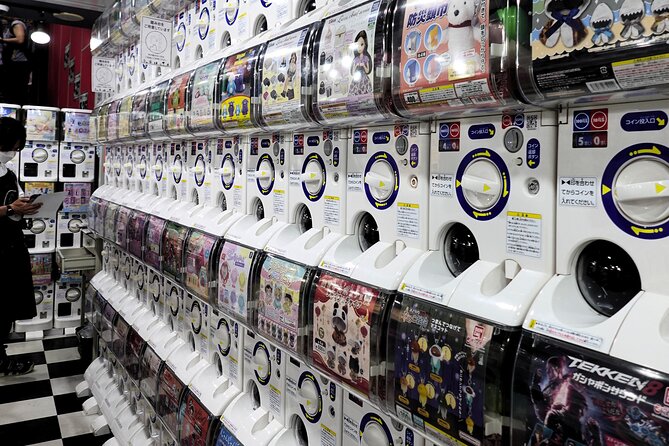
Next comes Nipponbashi, also called Den-Den Town. This is Osaka’s main electronics and pop-culture quarter, with shops selling anime goods, manga, video games, retro games, collectibles, and other items that give the area a playful tone.
You get roughly 30 minutes here. That is enough to understand the district and browse a few storefronts, but not enough to inspect every shop. If you collect figures, games, or Japanese pop-culture items, you may want to return later on your own. The short guided visit gives you a first look, then lets you decide where your interests lie.
The gachapon stop is a simple but smart addition. You put in a coin, turn the knob, and receive a surprise capsule toy. It costs extra if you choose to play, but the point is not the value of the prize. It is a small Japanese pastime that turns a commercial district into an activity rather than a string of shop windows.
This part also helps balance the shrine. You move from ancient myths and prayer customs to manga characters and retro machines within a few blocks. That contrast is central to Osaka’s appeal. The city can feel humorous and practical, with tradition and entertainment sharing the same afternoon.
One caution: this section may not satisfy you if you are expecting major historic sights at every turn. Some of the streets are commercial, and the appeal depends heavily on your interest in anime, games, electronics, and quirky goods. The guide’s stories and humor matter here. Ai is described as patient and friendly, which is useful when a group has mixed interest in Japanese pop culture.
Kuromon Market, Osaka’s food corridor
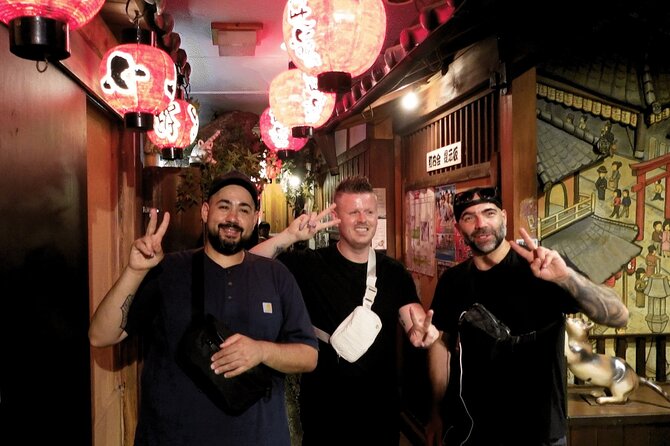
Kuromon Market is often called Osaka’s Kitchen, and it has served local shoppers for more than a century. Its covered arcade is lined with stalls selling seafood, produce, and other ingredients. You walk through a working market rather than a single attraction built for photographs.
The market is one of the best places on this route to connect Osaka’s food reputation with ordinary shopping. You can watch vendors handle fresh products, hear their calls, and see the ingredients used in local cooking. That kind of short stop can tell you more about daily life than another large sightseeing complex.
Food costs are not included in the $40 tour price, so treat this as a chance to choose your own snack rather than a meal package. The supplied experiences include takoyaki, wagyu skewers, and other market food, but your exact purchase will depend on what is open and what you want to eat. Ask the guide for help if you are unsure what to order. Ai has helped people try takoyaki and has explained local food in a relaxed way.
The market can be crowded, especially at popular times. Keep your belongings close and avoid blocking stall entrances while taking pictures. You should also expect a lively commercial setting, not a silent cultural exhibit. That is part of the point, but it may feel less appealing if you prefer slow, spacious sightseeing.
The schedule does not provide a clear duration for Kuromon Market, so the time here may vary. That flexibility is useful if the market is especially active, but it also means you may not have enough time for a full meal and careful browsing. If you want to return for lunch or more shopping, Dōtonbori and central Namba remain close after the tour.
Same city, a completely different kind of day:
- Osaka Go Karting Tour with Funny Costume
★ 5.0 · 2,658 reviews - Osaka Castle: Museum and Tower Entry Ticket
★ 4.5 · 2,380 reviews - Osaka: Shinsekai Food Tour with 13-15 Dishes at 5 Eateries
★ 4.8 · 2,204 reviews - Osaka Food Tour: 13 Dishes at 5 Local Eateries
★ 5.0 · 2,149 reviews
Dōtonbori and the Glico running man
The route finishes in Dōtonbori, Osaka’s most famous entertainment district. You head toward the canal, neon signs, and the familiar Glico running man. This is the place for the classic Osaka photograph, but it is also where the city’s appetite for bright signs, humor, and casual street food comes together.
The planned stop lasts about 50 minutes. That gives you time for photographs at Ebisubashi, a look along the canal, and an introduction to the district’s layout. The tour ends at Ebisubashi, so you can stay afterward for dinner, shopping, more photographs, or a second look at the food streets.
Dōtonbori is energetic and crowded. If you want peaceful sightseeing, it may be the least relaxing part of the walk. Still, the noise and lights make sense after the quieter shrine and temple stops. You are not simply collecting another famous sign. You are seeing how Osaka turns food and entertainment into public theater.
The ending is practical. You do not have to hurry back to a distant meeting point. You can continue exploring on your own, and the neighborhood offers plenty of ways to extend the evening. That makes the 2:00 pm start useful for a first-day introduction or an afternoon before dinner.
Hōzenji Temple and old Osaka lanes
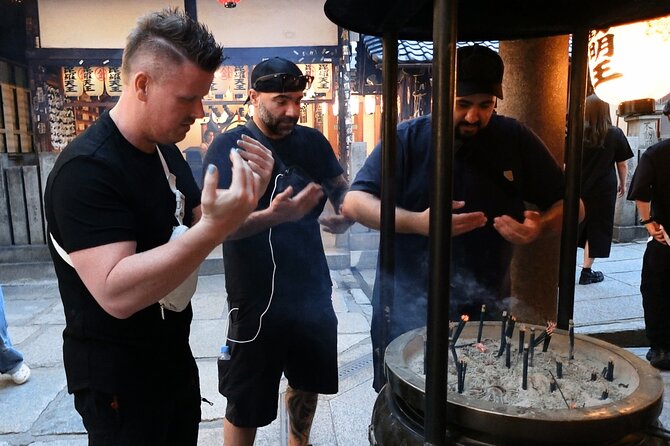
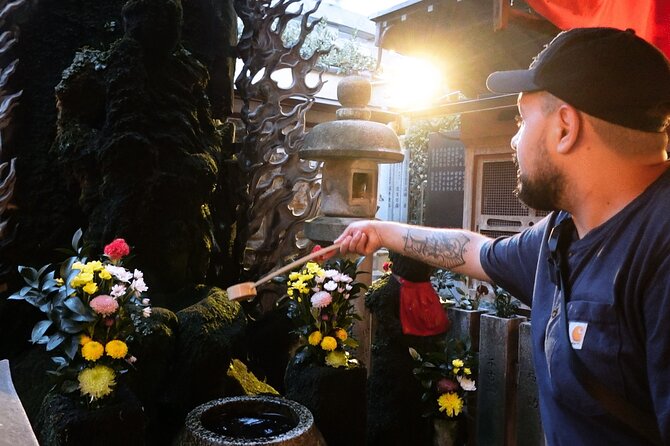
Near Dōtonbori, Hōzenji Temple provides the route’s sharpest change of mood. Its moss-covered statue and lantern-lit alleys feel far removed from the giant signs and canal crowds just minutes away.
This is a small, atmospheric stop rather than a grand temple complex. The moss-covered statue is the focus, and the surrounding lanes preserve a nostalgic side of Osaka that can be easy to miss when you stay on the main entertainment streets. A guide can help explain the meaning of the site and the customs connected with it.
I especially like this pairing with Dōtonbori. The tour does not pretend Osaka is only old temples or only neon nightlife. Instead, you see how both exist side by side. The quiet temple gives the busy district some depth, while Dōtonbori keeps the temple visit from feeling detached from modern city life.
The exact time at Hōzenji is not specified, so this may be a shorter guided look within the Dōtonbori portion. If you want to sit quietly, study details, or return after dark, make a note of the location and come back later. It is close enough to revisit independently.
Guide style and group size
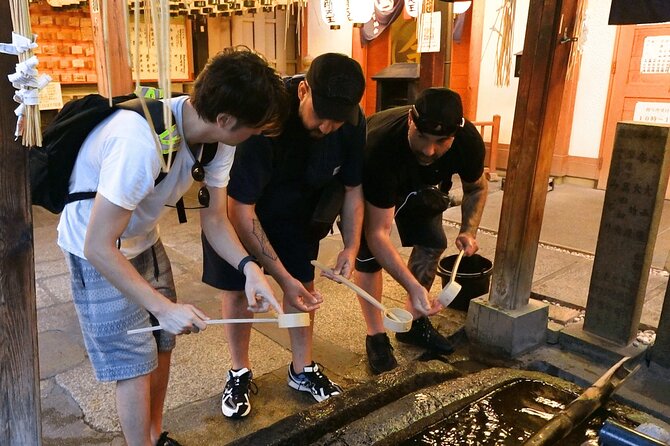
Ai is the guide name most closely associated with this experience. The strongest descriptions of the tour point to her ability to explain myths and traditions in plain language, teach a few Osaka dialect words, and keep the mood light. That matters because the route includes several places that can seem ordinary without context.
You may learn how to pray at a shrine, hear the story behind the lion head, and understand why Hōzenji feels different from the surrounding streets. The guide also adds small human touches, such as helping with a first takoyaki or explaining a capsule-toy machine. These details turn a walk into an introduction to how people use the city.
The maximum group size is 10. That is small enough for questions and conversation, though the actual group may be smaller or close to the limit. You should still expect to walk at a group pace and wait at crossings, market stalls, and crowded photo points.
Most people can participate, and the route is near public transportation. The provided details do not give a total walking distance or specific accessibility information, so contact the operator if you need firm information about surfaces, steps, or rest opportunities. Wear comfortable shoes and leave room in your schedule for crowds.
The main strengths, and the fair warning
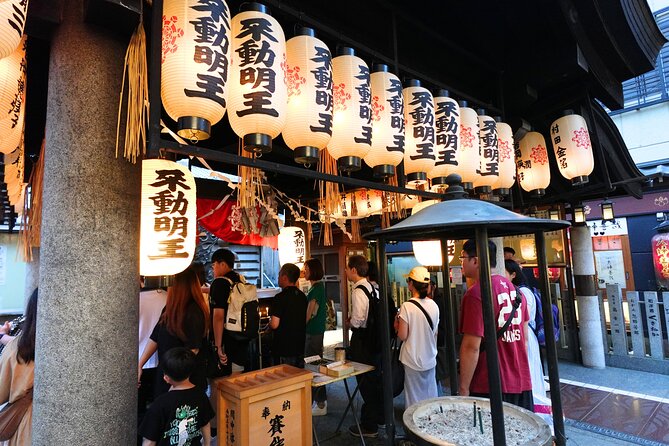
The tour’s best quality is its range. In four hours, you see a striking shrine, a pop-culture district, a food market, a neon entertainment center, and a small temple. That is a lot of Osaka in one afternoon, and the stops have very different moods.
The second strength is cultural explanation. The most praised parts focus on legends, prayer customs, Osaka expressions, and local food. If Ai leads your walk, expect a friendly style with humor and short explanations rather than a long academic lecture.
The main weakness is depth. Thirty minutes in Nipponbashi cannot satisfy a serious collector, and a market passage cannot replace a full food tour. Some commercial streets between the major stops may feel like transit rather than sightseeing. The experience depends on the guide making those transitions useful.
There is also a service concern worth taking seriously. The overall rating is 4.5 from 14 ratings, but one booking record describes a guide no-show at the 2:00 pm start. That is a serious complaint, even though the larger pattern is strongly positive. Confirm the meeting details and watch for the booking confirmation before setting aside your afternoon.
Who should book this Osaka walk?
I would choose this tour for a first visit to Osaka, especially if you want a quick map of the Namba and Dōtonbori area. Families and mixed-age groups may like the lion stage, capsule toys, colorful shops, market snacks, and easy photo stops. You do not need a specialist interest in temples or anime to get something from the route.
It also suits you if you prefer a guide who connects places with stories. Ai’s approach, as described in the supplied material, includes Japanese customs, ancient myths, Osaka dialect, and food advice. That is more useful than a guide who simply names each location.
I would skip it if your priority is a long food tasting session, serious electronics shopping, or detailed temple study. In those cases, use the tour as an orientation, then plan separate time for Kuromon Market, Den-Den Town, or Hōzenji.
At $40, the tour is good value when you want a small-group introduction and practical local context. It is less compelling if you are comfortable finding the major sights yourself and do not need help understanding them.
Should you book the Osaka 4-Hour Walking Tour?
Book it if you want Osaka in miniature: a giant lion swallowing bad luck, anime storefronts, a capsule toy, market smells, neon canal signs, and a quiet moss-covered statue. The route has enough variety to keep four hours moving, and the finish at Ebisubashi leaves you in the right place for dinner.
Go in with realistic expectations. This is a guided sampler, not an exhaustive study of each district. Keep your food budget separate, expect crowds, and allow extra time if you want to browse or eat. With those limits in mind, this is a useful and good-value way to get your bearings in Osaka.
FAQ
How long is the Osaka walking tour?
The tour lasts approximately four hours.
What time does the tour start?
It starts at 2:00 pm.
Where does the tour begin?
The meeting point is in Naniwa Ward at South Hills Namba Sanbankan, in the 2-chōme Shikitsunishi area of Osaka.
Where does the tour end?
The tour ends at Ebisubashi in Dōtonbori, Osaka’s famous food district. You can continue exploring the area afterward.
What sights are included?
The route includes Namba Yasaka Shrine, Nipponbashi or Den-Den Town, Kuromon Market, Dōtonbori, and Hōzenji Temple.
Is admission included for the sightseeing stops?
The listed sightseeing stops have free admission. Food purchases and gachapon capsule-toy plays are not stated as included in the tour price.
How many people can join the tour?
The group has a maximum of 10 people.
Can I cancel for a full refund?
Yes. You can cancel at least 24 hours before the local start time for a full refund. Cancellations or changes made less than 24 hours before the start time are not accepted for a refund.
Just added around Osaka
- Samurai dress-up and shows, plus Tea Ceremony & Calligraphy★ 5.0 · 27 reviews
- Kyoto & Nara Private customized tour with English speaking Guide★ 4.5 · 99 reviews
- Well-balanced BENTO (lunch box) Cooking Class★ 5.0 · 35 reviews
- Urban Canvas: Osaka Street Art Bike Tour★ 5.0 · 47 reviews
- OSAKA:Feel the Power! Learn Taiko Drum from Professionals★ 5.0 · 28 reviews
- Volleyball in Osaka & Kyoto with Locals!★ 5.0 · 21 reviews
- 1.5〜2 Hours Traditional Kintsugi Work Shop in Namba Osaka★ 5.0 · 75 reviews
- Umami Town Street Food Tour★ 5.0 · 120 reviews
Walking Tours, compared.

Kyoto Geisha Walking Tour: Gion District & Hidden Gems
Read our review →
Tokyo Tsukiji Fish Market Food and Culture Walking Tour
Read our review →
Gion Magical Night Walking Tour with Geisha Trivia
Read our review →
Imperial Palace and Shogun Historical Walking Tour
Read our review →
Gion Geisha District Walking Tour – Stories of Geisha
Read our review →
Asakusa Walking Tour with Sensoji Temple Visit
Read our review →
Kyoto Gion Geisha District Walking Tour – The Stories of Geisha
Read our review →Browse the lists this tour appears in