
REVIEW · KIMONO & CULTURE EXPERIENCES
Ninja Wire Action Experience
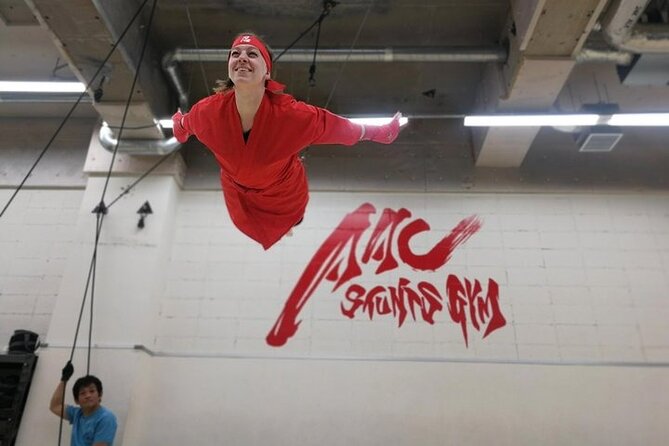
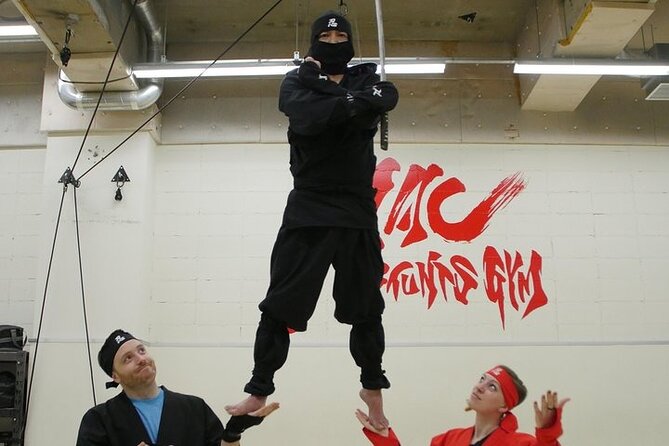
Tokyo’s Ninja Wire Action Experience turns a professional stunt studio into your temporary movie set. You put on a harness, pull a ninja costume over it, learn three wire moves and a sword-fight sequence, then perform for the camera. The finished clip makes the souvenir far more personal than another shop-bought trinket.
I like the small maximum of six people, which gives Makoto Yokoyama and his crew time to coach each person. I also like the same-day video, complete with editing that can make a first-time performer look surprisingly sharp. The main caution is simple: this is a physical activity involving height and a harness, so it is not recommended if you have a fear of heights, and clothing or harness-size limits may affect participation.
In This Review
- Key points before you book
- What the one-hour ninja session is really like
- Three wire moves and a sword fight
- From rehearsal to your original short film
- Why the same-day video changes the value
- A look at the Yushima setting
- Who will enjoy this most
- Clothing, harness limits, and comfort
- A balanced verdict on the staff and production
- Booking flexibility and small practical details
- Should you book the Ninja Wire Action Experience?
- FAQ
- Where does the Ninja Wire Action Experience take place?
- How long does the experience last?
- How many people can join?
- Do I need previous stunt or martial-arts experience?
- What do I do during the session?
- Is the video included?
- What should I wear?
- Are there height or weight restrictions?
Key points before you book
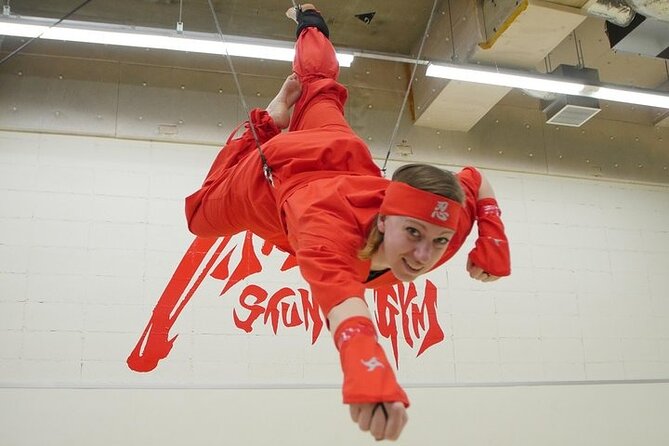
- You become the stunt performer: Learn three wire-action moves and a choreographed sword fight, with staff demonstrating and correcting each step.
- The group is capped at six: Small numbers mean more coaching, encouragement, and time in front of the camera.
- The video is part of the experience: Your footage is edited into an original short film and shown after the session, often the same day.
- The studio is in Yushima: Look for the action-studio sign at 1-chome 10-5 Yushima, Bunkyo City, near Kanda, Ochanomizu, Akihabara, and Ueno.
- Dress for movement: Wear casual clothes under the costume. Avoid skirts and dresses, and use the changing room if needed.
- Check the physical requirements: Children under 95 centimeters cannot participate. Anyone over 100 kilograms should email body measurements in advance because harness sizes are limited.
What the one-hour ninja session is really like
This is not a sightseeing tour through Tokyo. It is a compact studio workshop built around action-film technique. The nearby area names, Kanda Shrine, Yushima Seido, Ueno, and the Ochanomizu, Akihabara, and Kanda districts, help place the meeting point geographically, but the activity itself begins and ends at the action studio in Yushima.
Plan to arrive about 15 minutes before the scheduled start. Reception gives the crew time to check you in and organize the group. The location can be easy to miss because it sits on a small side street, so read the building signs carefully and look for the sign indicating an action studio.
Once inside, you change into the equipment. The harness goes on first, followed by the ninja costume and props. The costume is not just for photographs. It helps create the movie-set feeling and gives the final video a clear character, even if your everyday clothes are visible only briefly.
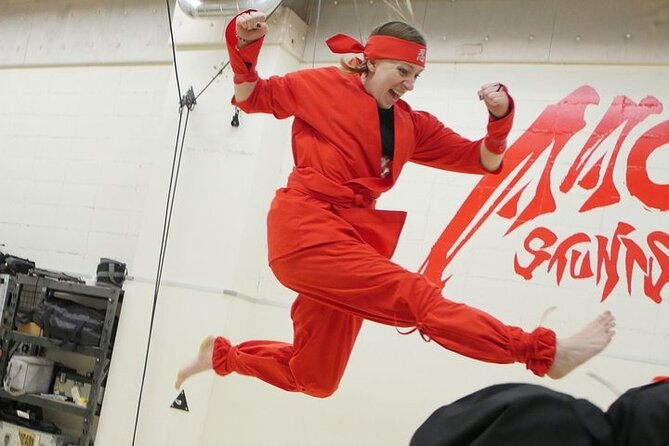
The crew then explains how the wire setup works and guides you through the basic movements. You do not need prior martial-arts, dance, acting, or stunt experience. The instruction is designed for beginners, and the staff demonstrates the movements before asking you to try them.
Expect some repetition. That is useful here. A wire move can look simple when a trained performer does it, but body position, timing, and eye direction matter. The instructors help you find the right shape and work with you until the action reads clearly on camera.
More Kimono & Culture Experiences in Tokyo
- Tokyo: Samurai Ninja Museum Guided tour and Experience
★ 4.6 · 1,010 reviews - Tokyo: Samurai Sword & Archery Class from Samurai Descendant
★ 5.0 · 603 reviews - Best Samurai Experience in Tokyo
★ 5.0 · 458 reviews
Three wire moves and a sword fight
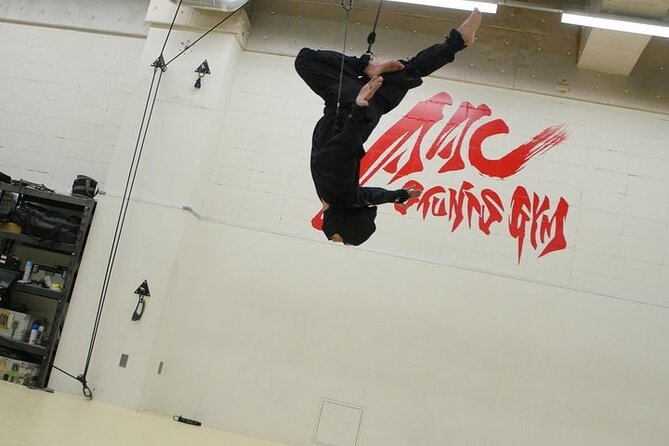
The central part of the session is learning three different wire-action techniques. The supplied details do not name each move, so you should not arrive expecting a fixed catalog of stunts. The exact performance can depend on the group, the choreography, and how comfortably you handle the harness.
A sword-fight sequence is also included. This gives the activity a little story rather than a series of disconnected poses. You are not simply lifted into the air for a photo. You rehearse an action scene, work with the crew, and then perform the sequence as a short piece of screen entertainment.
The staff’s approach appears encouraging rather than competitive. Makoto and his team are used to demanding wire-action work, but this session is designed to let ordinary people feel like action stars in a controlled studio setting. That matters if you are not especially athletic. One participant who struggled with a back flip was shown an acting trick and received help from a scene partner, allowing the move to work on film.
You should still expect to make an effort. The experience involves movement, balance, and being lifted or guided by a harness. It is playful, but it is not a passive photo booth. The crew takes care with safety and technique, yet you need to follow directions and tell them if a movement feels uncomfortable.
From rehearsal to your original short film
After the techniques are learned, the crew films your performance. This is where the small group becomes especially valuable. With no more than six participants, each person has a reasonable chance to receive personal direction instead of being lost in a large class.
The team may help you with facial expression, timing, posture, and the way you look toward your scene partner. These details are important because action footage can look stiff if you focus only on completing the move. The instructors help you sell the moment, even if you have never acted before.
The filming is followed by photographs. This gives you a chance to see how the costume and props look on camera and provides another record of the session. If someone in your group is comfortable filming during rehearsal, the activity information suggests doing so, since practice moments can be funny and entertaining too.
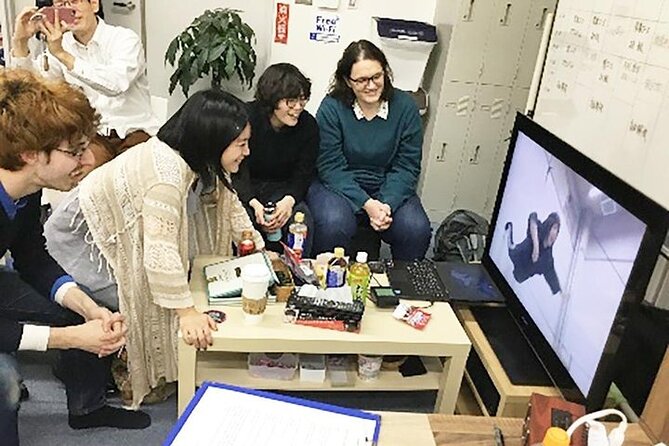
Then comes the payoff. After changing clothes, you watch a preview of the edited footage. Your performance is cut into a short movie, and the finished video is provided as an original souvenir starring you. The editing is a major part of the value. It can turn imperfect flips, missed cues, and tentative sword work into a coherent little action scene.
The tone is intentionally fun rather than solemn. One video included a blooper reel, showing the difference between the polished action and the mistakes made during filming. That is worth remembering if you are nervous about looking awkward. The finished product is meant to preserve the laughs as well as the heroic moments.
Why the same-day video changes the value
At $111.50 per person, this costs more than a standard cultural demonstration or a quick costume photograph. You are paying for equipment, instructors, studio time, filming, editing, costumes, props, and the completed video. The price makes more sense if you value an activity you actively take part in, rather than a tour where you mainly watch someone else perform.
The video is the strongest practical reason to consider the price. You do not leave with only a memory and a few snapshots. You receive a short film that you can show to friends and family, and the production team has often completed it the same day. That quick turnaround is useful during a short Tokyo visit because you can see the result before moving on.
The value is also better for couples, families, or friends who enjoy being silly together. The group setting encourages shared laughter, while each person still gets an individual performance. A family can leave with a joint story from the trip, and a pair of friends can compare their action scenes.
I would think twice if your main goal is a serious martial-arts lesson. This is a performance workshop, not a long course in ninja history, combat training, or Japanese weapons. You learn enough technique to create a convincing scene, then move on to filming.
Same city, a completely different kind of day:
- Mt Fuji and Hakone 1-Day Bus Tour Return by Bullet Train
★ 5.0 · 26,383 reviews - 1-Day Tokyo Bus Tour
★ 5.0 · 14,250 reviews - Tokyo: TOKYO SKYTREE® Admission ticket
★ 4.5 · 11,192 reviews - Tokyo: teamLab Planets TOKYO Digital Art Museum Entry Ticket
★ 4.6 · 9,779 reviews
A look at the Yushima setting
The meeting point is at Ninja Wire Action Experience, 1-chome 10-5 Yushima, Bunkyo City, Tokyo 113-0034, listed as B2A. The studio is near public transportation, but the side-street location means you should not rely on spotting a large tourist sign from a major road.
The surrounding place names are useful when planning the rest of your day. Kanda Shrine and Yushima Seido are nearby points of interest, while Ueno, Ochanomizu, Akihabara, and Kanda are all named in the activity information. You can pair the session with time in one of those areas, but the wire-action event itself returns to the original studio rather than ending at a sightseeing attraction.
That arrangement has two advantages. First, you do not need to carry your activity across several parts of the city. Second, you can plan the session around other stops in northeastern central Tokyo. Allow extra time to find the building, especially if you are arriving for a fixed start time.
Who will enjoy this most
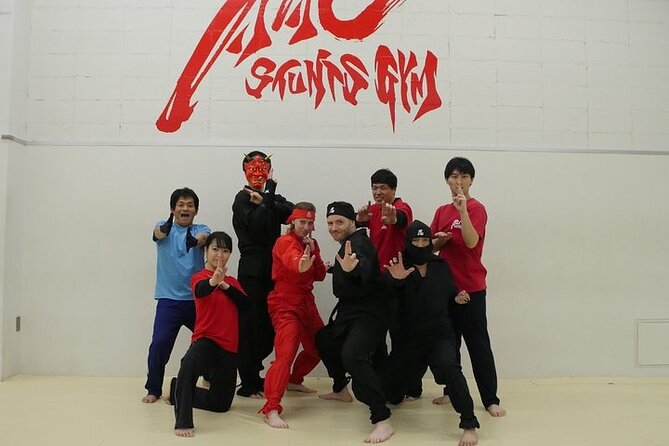
I would recommend this for adults, older children who meet the height requirement, couples, families, and friends who want an unusual Tokyo memory. It also suits people who enjoy film production, cosplay, martial-arts movies, superhero shows, or simply trying something that would never happen at home.
You do not need to be athletic. A 63-year-old participant was able to take part and described the activity as a major highlight, while another participant who did not consider themselves athletic still managed a demanding filmed sequence with coaching. Those examples do not remove the physical requirements, but they show that the session is not reserved for trained performers.
It is also a good match for people who like encouragement. The crew coaches, cheers, and adjusts the moves rather than leaving you to work them out alone. English is spoken by the staff, according to the activity information and participant experience.
This is less suitable if you dislike being filmed, do not want to wear a harness, or feel uneasy with height. It may also be a poor choice if you need a highly predictable schedule. The activity lasts about one hour, but individual rehearsal and filming can vary slightly depending on the group.
Clothing, harness limits, and comfort
Wear clothes that let you move freely. Casual clothing is fine, and you can bring a tracksuit or similar outfit if you want to change. A changing room is available.
Do not wear a skirt or dress. The harness must fit securely, and loose or restrictive clothing can make the process less comfortable. The ninja costume is worn over the harness, so you do not need to arrive already dressed as a character.
Children under 95 centimeters, or roughly 3 feet, cannot participate because of the harness size. If you weigh more than 100 kilograms, contact the provider before booking and send your bust, waist, or hip measurement. Participation may be refused if the special harness cannot fit safely.
Service animals are allowed, and the studio is near public transportation. Most people can participate, but the height concern remains important. The activity specifically advises against booking if you have a fear of heights.
A balanced verdict on the staff and production
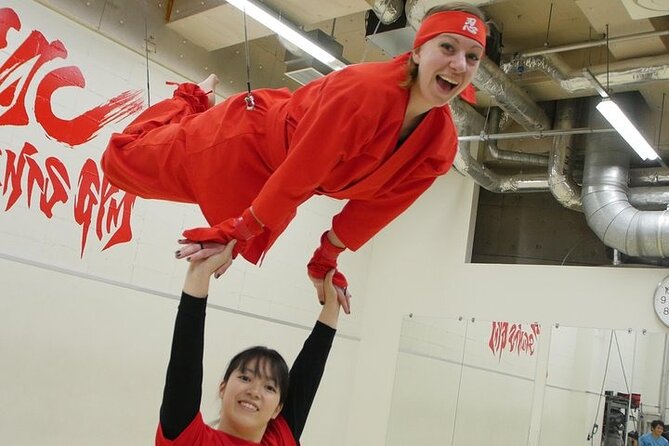
The crew is the heart of this experience. Makoto Yokoyama is identified as the lead figure, and his background includes professional wire-action work and past Power Ranger acting. You are not simply handed a costume and told to jump. The team demonstrates the moves, helps with choreography, manages the harness, and directs your performance.
The production quality is intentionally lighthearted. The finished film may be corny in the best sense, with quick editing that gives your moves a cinematic shape. Do not expect a Hollywood stunt sequence with elaborate sets or special effects. Expect a polished personal souvenir made from a short studio session.
That distinction is important. The best reason to book is not that you will become a real ninja in one hour. You will learn enough action technique to play one convincingly for the camera, with professional help and a finished video to prove it.
Booking flexibility and small practical details
Confirmation is provided at booking, and free cancellation is available if you cancel at least 24 hours before the start time. Cancellations made within 24 hours are not refunded, and changes in that period are not accepted. The cut-off uses Tokyo local time, so check the time difference if you are arranging the session from abroad.
The experience is mobile-ticket friendly. It ends back at the meeting point, which makes onward planning easier. The maximum group size is six, and the listed price is $111.50 per person.
I would arrive early, wear flexible clothing, check the sign on the building, and keep your schedule after the session reasonably open. The video may be ready the same day, but you should not build a tight connection or timed attraction around the exact finish minute.
Should you book the Ninja Wire Action Experience?
Book it if you want an active, funny, highly personal Tokyo souvenir and you are comfortable with a harness, height, and being on camera. The small group, patient instruction, professional crew, and edited same-day film make this more than a costume photo.
Skip it if you want a traditional ninja history lesson, a quiet cultural activity, or a serious martial-arts class. At $111.50, the value depends on enjoying the performance and the finished video. For families, couples, and friends who are happy to look a little ridiculous together, it is a memorable use of one hour in Tokyo.
FAQ
Where does the Ninja Wire Action Experience take place?
It takes place at Ninja Wire Action Experience, 1-chome 10-5 Yushima, Bunkyo City, Tokyo 113-0034, listed as B2A. The activity ends back at this meeting point.
How long does the experience last?
The activity lasts about one hour.
How many people can join?
The maximum group size is six participants.
Do I need previous stunt or martial-arts experience?
No. The professional team teaches the movements and choreography, so beginners can participate.
What do I do during the session?
You wear a special harness under a ninja costume, try three wire-action moves, learn sword-fight choreography, have your performance filmed, take photographs, and watch the edited video after changing clothes.
Is the video included?
Yes. The crew edits your performance into an original short film, which you take home. The video may be ready the same day.
What should I wear?
Wear casual clothing that allows free movement. Do not wear a skirt or dress. A changing room is available if you want to change into a tracksuit or similar clothing.
Are there height or weight restrictions?
Children under 95 centimeters cannot participate. If you weigh more than 100 kilograms, email the provider your bust, waist, or hip measurement before booking because harness sizes are limited.
Just added around Tokyo
- Private Memorable Tokyo Tour with English Speaking Driver★ 5.0 · 30 reviews
- Private Tokyo Custom Full-Day Tour by Chartered Vehicle★ 5.0 · 16 reviews
- Private Sightseeing to Mt Fuji and Hakone with English Driver★ 5.0 · 51 reviews
- Tokyo Photography Masterclass – Private Photography Lesson★ 5.0 · 25 reviews
- Private Mt. Fuji Day Trip from Tokyo with English-Speaking Driver★ 5.0 · 33 reviews
- 4 Day Tour – Mount. Fuji, Tokyo, Hakone, Kamakura and Yokohama★ 5.0 · 19 reviews
- Private Unforgettable Mt Fuji Tour with English Speaking Driver★ 5.0 · 142 reviews
- Private Tokyo Food Tour – A Journey Through Time Through Food★ 5.0 · 36 reviews
Kimono & Culture Experiences, compared.

Kyoto Geisha Walking Tour: Gion District & Hidden Gems
Read our review →
Gion Magical Night Walking Tour with Geisha Trivia
Read our review →
Gion Geisha District Walking Tour – Stories of Geisha
Read our review →
Best of Kyoto: Gion, Geisha, Pagodas & Cobblestones
Read our review →

Kyoto Gion Geisha District Walking Tour – The Stories of Geisha
Read our review →
Browse the lists this tour appears in