
REVIEW · KIMONO & CULTURE EXPERIENCES
Let’s make kimono !(Kimono is a gift for you
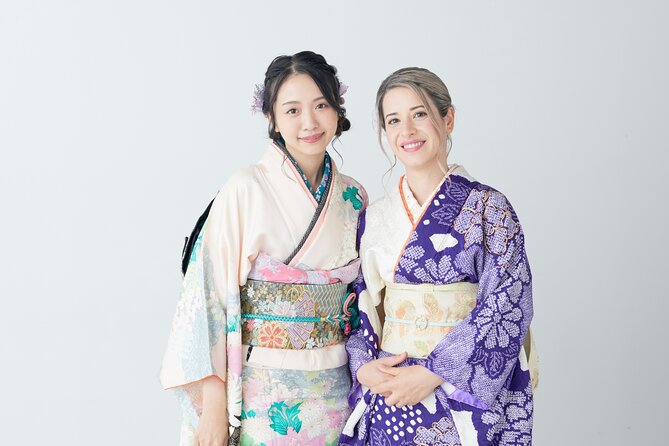
The most unusual part of this Tokyo activity is that you do not simply rent a kimono for an hour. You choose a vintage piece, help adapt it to your size, learn a simpler way to wear it, and take the finished kimono home. It takes place in a local home studio in Kiba, not a large costume shop.
I like the small maximum of five people, which gives the staff room to help with fitting and dressing. I also like the useful souvenir: you leave with a kimono or remade kimono rather than only a set of photos. The main thing to understand is that this is an upcycling and wearing workshop, not a formal course in traditional kimono tailoring. Some kimonos also cost extra.
In This Review
- Key points at a glance
- What you actually make in 90 minutes
- Choosing your vintage kimono in Kiba
- The women’s route: fitting, dressing, and photos
- Men’s kimono options and the haori upgrade
- Children have a different itinerary
- What is included, and what is not
- Why the small group matters
- Is $43.11 good value?
- Practical details before you book
- Who should book this kimono workshop?
- Should you book it?
- FAQ
- How long does the kimono experience last?
- Where does the experience take place?
- What is included in the price?
- Can I choose a more ornate kimono?
- Can men and children participate?
- Is the activity suitable for a small group?
- Can I cancel or change my booking?
Key points at a glance
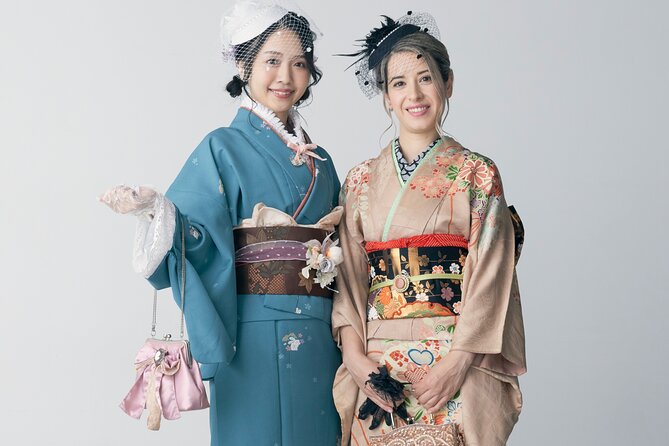
- Choose from vintage fabrics and kimonos: Basic pieces are included, while more ornate choices cost extra.
- Learn a practical way to wear it: Staff adjust the garment and show you how to put it on.
- Keep the kimono afterward: This makes the price more meaningful than a standard rental session.
- A personal home-studio setting: The meeting point is in Kiba, a residential part of eastern Tokyo.
- Suitable for families: Children can take part, though the children’s route differs from the women’s itinerary.
- Plan for add-on costs: Upgraded kimonos, a men’s haori, obi, and some accessories may require additional payment.
What you actually make in 90 minutes

The name of the activity can suggest that you will sew a complete kimono from new cloth. That is not quite what happens. You select a pre-owned kimono and work with the staff to adjust or remake it into something easier to wear.
The exact work depends on the garment. For women, the process can involve adjusting the waist, folding material, cutting or hemming, and using an iron. One practical description of the workshop compared it to cutting, folding, and ironing rather than difficult sewing. If those tasks make you nervous, staff are there to help.
Some pieces may be changed into a jacket and skirt style, while others remain close to the shape of a traditional kimono. This point matters. If your dream is to learn the full formal dressing method, including every traditional layer and tie, this workshop will give you only part of that picture. If your goal is to wear a beautiful kimono more easily and take it home, the format makes good sense.
Once your garment is ready, the staff help you put it on. You also learn how the obi and related pieces fit into the outfit. The session ends with photo time, giving you a chance to record the finished look before you change or leave.
The activity lasts about one hour and 30 minutes. That is long enough for choosing, fitting, basic construction, dressing, and photos, but not long enough for a slow lesson in every aspect of kimono culture. Morning and afternoon appointments are available, so you can fit this around sightseeing in Tokyo.
More Kimono & Culture Experiences in Tokyo
- Tokyo: Samurai Ninja Museum Guided tour and Experience
★ 4.6 · 1,010 reviews - Tokyo: Samurai Sword & Archery Class from Samurai Descendant
★ 5.0 · 603 reviews - Best Samurai Experience in Tokyo
★ 5.0 · 458 reviews
Choosing your vintage kimono in Kiba
Selection is one of the best parts of this experience. The available fabrics vary in color, texture, and pattern, and the collection includes vintage and pre-owned pieces. You can look for a basic option included in the price or choose something more elaborate.
The supplied price is $43.11 per person. That covers the kimono and the main obi-related rental pieces, but not every kimono on the racks. Women’s upgrades are listed at about ¥2,000 to ¥6,000. Several people have chosen to pay extra for a more ornate fabric, and the final cost has varied depending on the kimono and accessories selected.
I would set a clear spending limit before you begin. The basic price is attractive, but a beautiful fabric can make it easy to add ¥2,000, ¥6,000, or more. One participant paid about ¥11,000 for a full set including the kimono, collar, obi, and related pieces. Another family spent about ¥20,000 for several people after selecting paid upgrades. Those totals do not make the activity poor value, but you should know that the advertised starting price is not a guarantee that your favorite design will be included.
The kimonos are vintage, so some may have stains or signs of age. That is part of the character of the material, but inspect your choice carefully if you want a flawless souvenir. Staff customize the selection to your size, and the workshop has received especially warm feedback from taller or larger participants who often struggle to find a ready-made kimono that fits.
The setting also shapes the mood. You meet at 6-chōme-8-6 Kiba, Koto City, in an older residential part of Tokyo. It is in a home rather than a polished retail studio, and the entrance may not look like a conventional tourist attraction. Check your directions before leaving and allow time to find the address. The home setting feels personal, but it can also feel confusing if you expect a clearly marked storefront.
The women’s route: fitting, dressing, and photos
Women begin by choosing a kimono. Staff then adjust it to the wearer’s measurements and guide the hands-on work. The goal is a garment you can manage more easily later, rather than a one-time rental that must be returned.
The dressing lesson is practical. You learn how the kimono sits on the body and how the obi helps hold the look together. Staff also provide guidance with the small details, which can be hard to understand from a picture alone. This is useful for anyone who wants to wear the piece again at home.
The included obi rental comes with access to the obiage, obijime, and obi pillow. These pieces help complete the outfit during the activity. They may also be available to purchase, but the core experience includes them as rentals.
Photos follow the dressing session. The staff take pictures of you in the finished outfit, and one participant received photos afterward when a phone battery had died. Do not treat this as a professional studio portrait package, but the photo time adds value and gives you a record of the result.
The women’s experience is also flexible in body size. Staff have helped larger participants fit into a kimono, and they can adjust the piece to make the result more practical. Still, no fixed size range is provided, so it is sensible to contact the operator ahead of time if fit is a serious concern.
Men’s kimono options and the haori upgrade
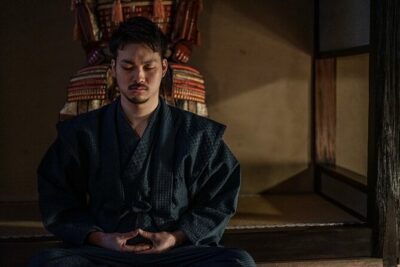
Men select a kimono in much the same spirit, with an optional haori and kimono set available for an additional ¥2,000. The haori gives the outfit a more complete formal appearance, but it is not part of the basic price.
A distinctive men’s detail is the option to print your name in Kanji and choose the font color. The name detail is applied to the kimono, giving the finished piece a personal touch. The men’s route also includes ironing the kimono as part of the preparation.
The men’s choices may not have the same type of alteration process as the women’s route, so do not assume both versions are identical. Ask staff to explain exactly what will be changed before you start, especially if you are choosing a more expensive vintage piece.
For boys, the name can be printed in Japanese on the collar of the kimono. That small feature can be a fun souvenir for a child, particularly if the child wants something clearly personal rather than a costume worn once.
Same city, a completely different kind of day:
- Mt Fuji and Hakone 1-Day Bus Tour Return by Bullet Train
★ 5.0 · 26,383 reviews - 1-Day Tokyo Bus Tour
★ 5.0 · 14,250 reviews - Tokyo: TOKYO SKYTREE® Admission ticket
★ 4.5 · 11,192 reviews - Tokyo: teamLab Planets TOKYO Digital Art Museum Entry Ticket
★ 4.6 · 9,779 reviews
Children have a different itinerary
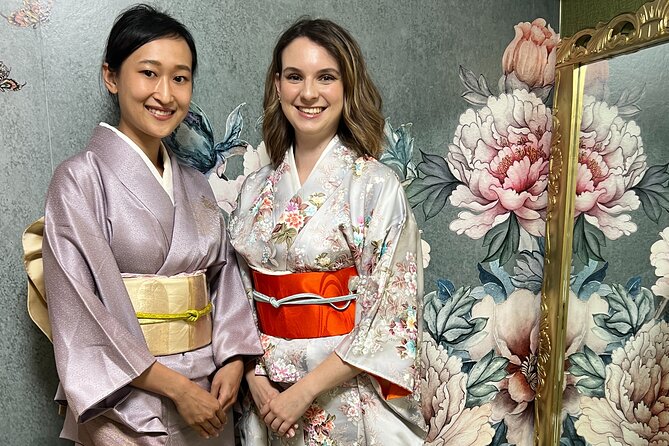
Children can join the activity, and families have used it for daughters, sons, and teenagers. Staff help children with the fitting and dressing, and the process is adjusted for younger participants.
Girls’ children’s kimonos follow a different itinerary from the women’s route. Some children’s kimonos do not require material adjustment, so the child can wear the garment without cutting it. This means a child may spend less time on the construction work and more time on dressing and photos.
The boys’ route includes the Japanese name detail on the collar. If you are booking for a mixed-age family, expect the adults and children to have slightly different steps rather than one identical class.
The activity has also worked well for a mother and daughter or a grandmother and grandchild. One older participant in her late 70s had no trouble taking part, although the supplied information does not give detailed seating or mobility arrangements. Most people can participate, and service animals are allowed, but ask ahead about any physical needs that could affect working or dressing.
What is included, and what is not
Your booking includes:
- A kimono
- An obi rental
- Obiage
- Obijime
- An obi pillow
- Fitting and dressing assistance
- Photo time
Japanese sandals and tabi are not included. You will need to account for that if you want a complete traditional outfit from head to toe. The activity focuses on the kimono itself, so footwear is a separate matter.
Some included pieces may also be available for purchase. The same applies to upgraded kimonos and, for men, the haori set. Ask about the price of each add-on before confirming your choice. This avoids an awkward surprise at the end and lets you decide if the more ornate fabric is worth it to you.
Why the small group matters
The maximum group size is five people. That is a real advantage during a hands-on activity. Choosing fabric, holding folds in place, checking fit, and learning to dress all work better when staff are not trying to manage a large room.
The home-studio format also allows for conversation. You can ask about the garment, the materials, and how to style it. The staff have been described as friendly, patient, humorous, and helpful, and an English-speaking instructor has assisted international participants.
Do not expect a formal lecture. The activity provides some explanation while you work, but it is not presented as a structured history lesson. If you want cultural context, prepare a few questions and ask them during the fitting. That approach seems to work well, especially for people interested in how kimono are worn and altered.
The location gives you a look at a quieter residential side of Tokyo. Kiba is not the obvious first stop for most sightseeing routes, and reaching the home may require attention to directions. In return, you get a local setting instead of a large commercial rental operation.
Is $43.11 good value?
At the base price, I think the activity offers fair value because you receive a kimono to keep, not just temporary use of one. You also get staff help, obi-related pieces during the session, dressing guidance, and photos.
The value depends heavily on your final selection. If you are happy with one of the basic kimonos, the price is quite reasonable for a 90-minute creative activity and a wearable souvenir. If you choose an ornate vintage piece, buy accessories, and add a haori, your total can rise quickly.
I would compare this with a standard kimono rental in Tokyo. A rental can be better if you want to walk around town in traditional dress for several hours. This workshop is better if you want a personal item to take home and a chance to learn how the garment can be made easier to wear.
It is also good value for families who want a shared activity. Children can participate, adults can select their own fabrics, and everyone gets photos. Just remember that each person’s upgrades are charged separately.
Practical details before you book
The meeting point is in Kiba, Koto City, Tokyo, and the activity ends at the same location. It is near public transportation, and a mobile ticket is accepted.
Wear something that allows you to change comfortably. No specific clothing requirement is provided, so avoid assuming that sandals or tabi will be supplied. Since the activity includes fitting and dressing, tell the staff about any size or mobility concern in advance.
The group is capped at five people, but the exact number in your session can vary. Morning and afternoon times are offered. Confirmation is provided at booking.
The cancellation policy is strict: the experience is non-refundable and cannot be changed for any reason. If the operator cancels because of poor weather, you are offered another date or a full refund. That weather clause is worth noting even though much of the activity takes place indoors.
Who should book this kimono workshop?
I would choose this for you if you want a creative souvenir, prefer a personal setting, or have struggled to find a kimono that fits. It is especially well suited to couples, families, mother-daughter trips, and anyone who enjoys choosing fabric and doing simple hands-on work.
It is also a strong choice for taller or larger people, since the garment is customized rather than taken straight from a standard rental rack. Children and older adults can take part, with different routes for children and help from the staff.
I would skip it if you expect a complete traditional kimono-making course, a detailed cultural lecture, or a flawless new garment included at the base price. The word make can be misleading. You are adapting and learning to wear a vintage kimono, not producing one from raw fabric.
Should you book it?
Book this experience if you want to leave Tokyo with a kimono that has a personal story attached to it. The friendly small-group format, hands-on fitting, wide choice of vintage fabrics, and included photo time make it more meaningful than a quick dress-up rental.
Before booking, decide how much you are willing to spend on upgrades, check the Kiba address carefully, and remember that footwear is not included. If you accept those limits, this is a thoughtful way to spend 90 minutes in a quieter Tokyo neighborhood and take home something you can use again.
FAQ
How long does the kimono experience last?
The activity lasts approximately one hour and 30 minutes.
Where does the experience take place?
It starts and ends at 6-chōme-8-6 Kiba, Koto City, Tokyo 135-0042, Japan.
What is included in the price?
The price includes a kimono, obi rental, obiage, obijime, and an obi pillow. Japanese sandals and tabi are not included.
Can I choose a more ornate kimono?
Yes. Basic kimonos are included, while upgraded women’s kimonos generally cost an additional ¥2,000 to ¥6,000. Vintage pieces may have stains or other signs of age.
Can men and children participate?
Yes. Men can choose a kimono and add a haori set for an additional ¥2,000. Children can join with separate girls’ and boys’ kimono itineraries.
Is the activity suitable for a small group?
Yes. The maximum group size is five people, and the experience is available in morning and afternoon sessions.
Can I cancel or change my booking?
The experience is non-refundable and cannot be changed for any reason. If it is canceled because of poor weather, you can choose another date or receive a full refund.
Just added around Tokyo
- Tokyo: Customizable Private Guided Walking Tour★ 4.5 · 129 reviews
- Private Harajuku Omotesando Architecture Tour★ 4.9 · 18 reviews
- Tokyo: Guided Helicopter Ride★ 4.9 · 24 reviews
- Tokyo: Guided Walking Tour of Tsukiji Market with Lunch★ 4.4 · 24 reviews
- Tokyo: Private Personalized Local Food Tour★ 4.5 · 101 reviews
- Tokyo GINZA: KONPARU Japanese Cabaret Show with Drink★ 4.8 · 38 reviews
- Tokyo: Guided Walking Tour of Tsukiji Market with Breakfast★ 4.4 · 134 reviews
- Tokyo: Gotokuji Cat Temple, Shinjuku Cat Cafe & 3D Cat Tour★ 4.9 · 38 reviews
Kimono & Culture Experiences, compared.
Kyoto Geisha Walking Tour: Gion District & Hidden Gems
Read our review →
Gion Magical Night Walking Tour with Geisha Trivia
Read our review →
Gion Geisha District Walking Tour – Stories of Geisha
Read our review →
Best of Kyoto: Gion, Geisha, Pagodas & Cobblestones
Read our review →
Kyoto Gion Geisha District Walking Tour – The Stories of Geisha
Read our review →
Browse the lists this tour appears in