
REVIEW · CYCLING TOURS
Kyoto Satoyama Cycling with Lunch and English Guide
The best part of this tour is that it takes you well beyond Kyoto’s crowded temple circuit without sending you far from the city. In Sonobe, you pedal beside fields and rivers, stop at old shrines, and eat food tied to the local farming community. Fresh soba-making and the quiet rural setting are the main draws.
I like the friendly, hometown feel of guides such as Maki and Yasu, and I like that the electric bikes make a half-day of countryside riding manageable. The main consideration is timing: the tour usually lasts four to five hours, but optional activities such as exploring Mt. Komugi, known here as the birthplace of Mario, may push the finish past 2 PM.
In This Review
- Key Points
- Leaving Kyoto City for Sonobe’s Quiet Roads
- Ikimi Tenmangu Shrine and the God of Learning
- Sonobe Castle Ruins at a High School Gate
- Making Soba in a Former Elementary School
- A Second Lunch Choice in a Traditional Japanese House
- Make Shrine and Its Thatched Main Hall
- Choosing Two or Three Extra Experiences
- What the Ride Feels Like
- Guide Style and Group Comfort
- Price, Timing, and Overall Value
- Who Should Book This Sonobe Tour?
- Should You Book It?
- FAQ
- How long does the Kyoto Satoyama Cycling tour last?
- Where does the tour start?
- How far is Sonobe from Kyoto City?
- Is the tour private?
- What lunch options are available?
- Can dietary requirements be accommodated?
- What sights are included?
- Which extra activities can I choose?
- What happens if the weather is bad?
Key Points
- A 30-minute train ride from Kyoto City: Sonobe gives you a rural break without requiring an overnight stay.
- Two lunch choices: Make soba from locally grown buckwheat, or eat local produce in a traditional Japanese house.
- Four main stops: See Ikimi Tenmangu Shrine, Sonobe Castle ruins, a former school used for soba-making, and thatched-roof Make Shrine.
- Local English-speaking guides: Maki, Yasu, and other guides from the town explain the area in a personal, easygoing way.
- Optional cultural extras included: Choose from kimono photos, koto playing, spring water, castle visits, shrine worship, and Mario Mountain exploration.
- Private group format: Only your party takes part, with group discounts available.
Leaving Kyoto City for Sonobe’s Quiet Roads
Sonobe sits in Kyoto Prefecture, about 30 minutes by train from Kyoto City. That short transfer changes the feel of the day quickly. Instead of crowds and souvenir shops, you get fields, mountain views, Japanese homes, shrines, birdsong, and the sound of flowing water.
The tour begins at 10 AM at Mizobe-6-21 Sonobechō Oyama Higashimachi in Nantan. You meet the guide there, receive the e-bike, and set off through the town and countryside. The riding time between stops is generally 10 to 20 minutes, so this is not a race or a strenuous all-day cycling trip.
I see the e-bike as important here. You can enjoy the views without treating every slope as a personal challenge. The tour is aimed at most people who can participate in a normal sightseeing outing, but you should still be comfortable riding a bicycle and following a guide on public roads and country lanes.
The private format also changes the pace. Your group does not have to match the needs of a large mixed party, and the guides can shape the day around your selected extras. A school group of 16 has taken part, so the experience can work for larger parties, though you should ask about the current group arrangements when booking.
A few more Kyoto trips to weigh up
- Hidden Kyoto E-Biking tour
★ 5.0 · 1,843 reviews - Bike Tour Exploring North Kyoto plus Lunch
★ 5.0 · 1,087 reviews - Arashiyama Bamboo Forest & Hidden Gems Bike Tour (Early Bird)
★ 5.0 · 613 reviews
Ikimi Tenmangu Shrine and the God of Learning
The first stop is Ikimi Tenmangu Shrine, visited for about 10 minutes. It is described as the oldest Tenmangu Shrine in Japan and is dedicated to Sugawara no Michizane, the deity associated with learning and academic success.
That makes this a particularly fitting stop for families with school-age children or anyone interested in how Shinto places connect to everyday hopes. People come here to pray for success in exams, so the shrine is not only a historic site. It remains part of local life.
Ten minutes is brief. You will get an introduction and a chance to look around, but this is not a long, free-form shrine visit. If your interest is mainly in architecture or religious customs, use the optional shrine worship time for a fuller experience. The extra choices are included in the tour price, and you can tell the guide at the start which two or three you want.
Sonobe Castle Ruins at a High School Gate
Next comes the ruins of Sonobe Castle, with about 20 minutes to see the remains. The castle is notable as the last castle built in Japan. Today, the main gate serves as the entrance to Sonobe High School, while castle walls, turrets, and a guardhouse remain.
This is a good example of how history in rural Japan can sit inside ordinary modern life. You are not entering a large restored fortress with a museum and grand exhibits. Instead, you see surviving pieces being used and passed by in the course of a normal day.
The schedule may affect access to parts of the site. The information provided notes that the castle visit can depend on the school schedule, so keep your expectations practical. You are coming for a short, well-explained look at the remains, not a full castle reconstruction.
I appreciate this stop because it adds context to the countryside ride. You are not simply cycling past attractive views. The guide connects the quiet town to Japan’s political and architectural past, then gets you back on the bike before the visit becomes too formal.
Making Soba in a Former Elementary School
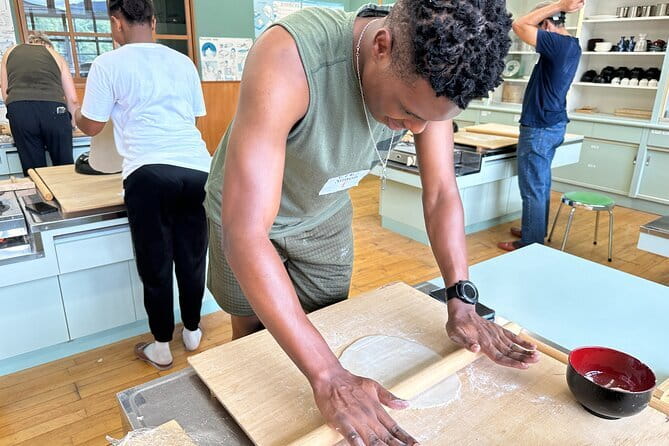
The longest stop is held in front of the former Maki Elementary School, now used for the food experience. Plan on about one hour and 50 minutes here. This is the heart of the tour.
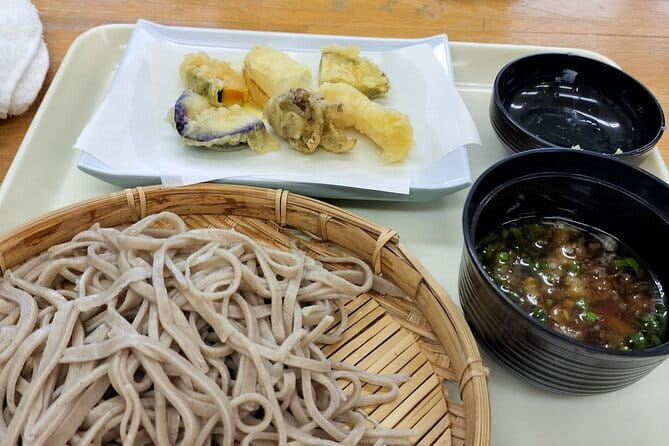
On Course A, you make soba noodles using buckwheat flour harvested in the local area. After the hands-on work, you eat the noodles freshly boiled, with tempura and rice balls served as part of the meal. You get both an activity and lunch, rather than simply sitting down to a prepared plate.
That matters because soba is not just a convenient Japanese meal. Here, the buckwheat connects your lunch to local agriculture, and the old school setting gives the activity a strong sense of place. You are using a former community building to handle food produced nearby, which feels more personal than a standard cooking demonstration.
The long stop also gives the day a welcome pause. Cycling is broken up with time to work, eat, and talk with the guide. Families and school groups should find this especially useful because the activity gives children something concrete to do. Solo participants can also take part, although a private tour means the social feel depends on the size of your own party.
The main drawback is that food preparation adds time. If you want a fast ride with only short photo stops, this is not the right tour. The soba course is a major part of the experience, and you should choose it because you want to make the noodles, not because you are trying to squeeze in the maximum number of sights.
Same city, a completely different kind of day:
- PERFECT KYOTO 1-Day Bus Tour
★ 5.0 · 13,518 reviews - Kyoto: Fushimi Inari, Kinkakuji, Bamboo Grove 1 Day Bus Tour
★ 4.8 · 4,316 reviews - Kyoto: Tea Ceremony in a Traditional Tea House in Kiyomizu
★ 4.9 · 3,519 reviews - Kyoto Geisha Walking Tour: Gion District & Hidden Gems
★ 4.7 · 3,273 reviews
A Second Lunch Choice in a Traditional Japanese House
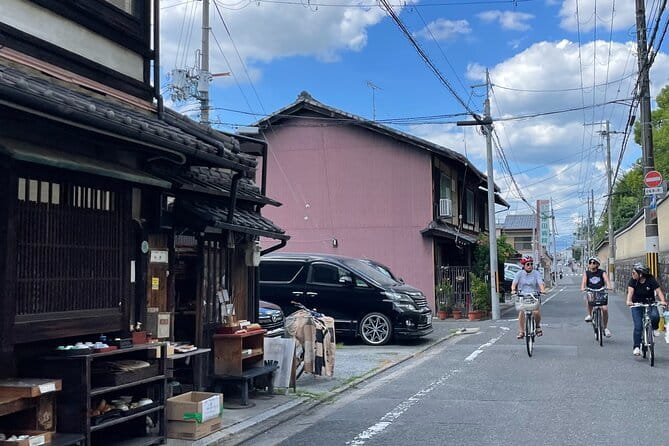
If you prefer not to make soba, Course B offers local produce at a restaurant in a traditional Japanese house. The exact dishes can change with the available ingredients, but the central idea is a meal based on food from the area.
This option suits you if you would rather focus on the setting and the meal than on hands-on cooking. One local restaurant, Kaeyuno Oyado, has been singled out as a good lunch choice, and another meal setting has a playful frog theme. The food is repeatedly described as a pleasant part of the day, especially when paired with the fresh country air and scenery.
You can request vegan, vegetarian, and allergy-friendly meals in advance. That request should be made before the tour rather than left until lunch. This is a useful feature for a rural outing, where food choices may be less flexible than in central Kyoto.
Make Shrine and Its Thatched Main Hall
After lunch, the ride continues to Make Shrine, where you spend about 30 minutes. The shrine honors the agricultural god of the Tamba region, an area that has long helped supply food to Kyoto.
The shrine’s main hall has a traditional thatched roof, which gives this stop a distinct look. It also ties together several themes from the tour: farming, local food, water, rural belief, and the way Kyoto’s food supply reaches beyond the city itself.
Your guide can explain the proper way to worship at a Shinto shrine. That small lesson is valuable because many visitors know the broad outline of shrine etiquette but are unsure about the order of actions. Here, the visit gives you a chance to do more than take a photograph.
Thirty minutes is enough for an introduction and a calm look around. As with the other shrine stop, it is not designed as a long independent visit. The value lies in the guide’s explanation and in seeing a working religious site in its local setting.
Choosing Two or Three Extra Experiences
The tour includes extra activities at no added charge. You can choose two or three at the beginning of the day:
- Visit the castle
- Worship at Shinto shrines
- Drink spring water after crossing a small mountain
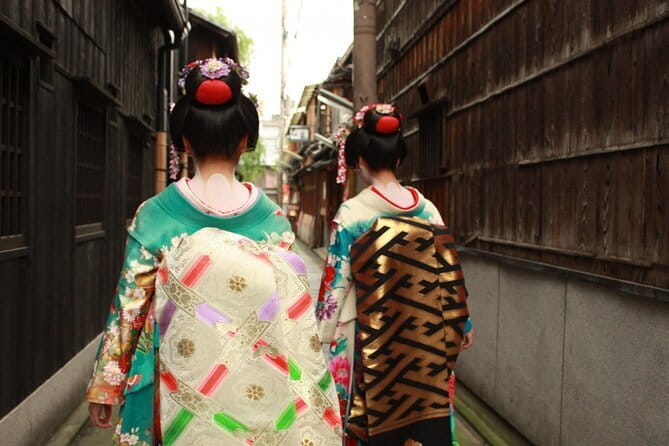
- Take photographs in a kimono
- Play the koto, a traditional Japanese instrument
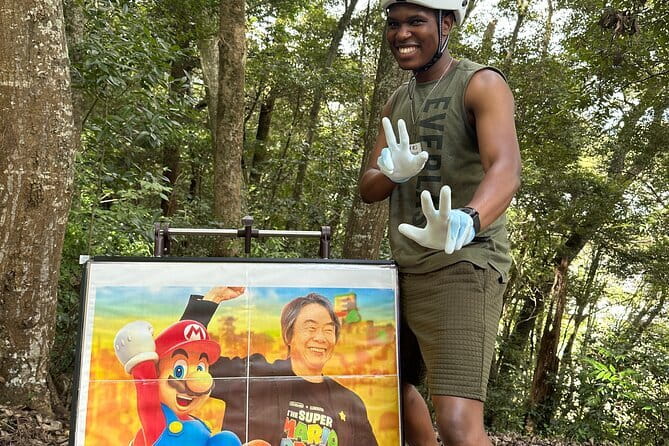
- Explore Mt. Komugi, associated with the birthplace of Mario
This menu makes the experience more adaptable than a fixed sightseeing loop. A family might choose the kimono photographs and Mario Mountain. Someone interested in Japanese customs might choose shrine worship and the koto. A group focused on the countryside might prefer the spring-water outing and castle visit.
There is a practical tradeoff. The more extras you choose, the longer the day may become. Mt. Komugi exploration, in particular, can extend the tour beyond 2 PM. The advertised duration is about four to five hours, but you should not arrange a tight afternoon booking immediately afterward.
The free kimono and koto options are unusual additions to a cycling outing. They also make the tour useful for people who want a few cultural activities without committing to a separate full-day class. Ask about the choices at the start so the guide can fit them into the route.
What the Ride Feels Like
This is a sightseeing ride, not a sporting tour. The stated travel time between stops is about 10 to 20 minutes, and the e-bike helps you handle the route while keeping your attention on the surroundings.
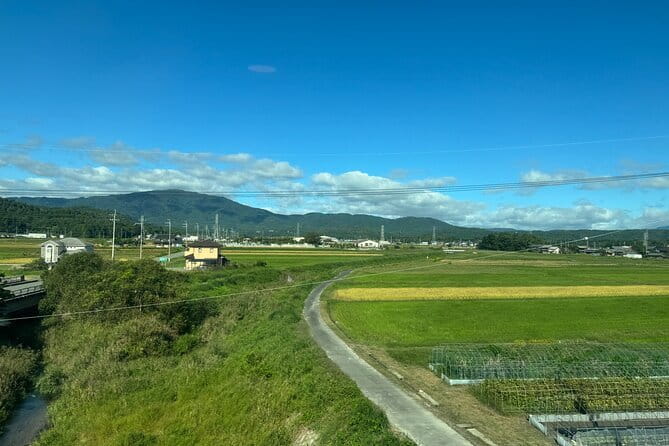
You will see mountain views, fields, trees, Japanese houses, and rural roads. The appeal comes from the quiet details: birds in the trees, water moving along the river, and the space between villages. This is a different side of Kyoto, one that many first-time visitors miss when they stay within the city.
The tour provider gives clothing advice based on the forecast and prepares safety equipment. In colder weather, guides have provided disposable hand warmers and neck warmers. You should still dress for the day and pay attention to the weather notice, since the activity depends on good conditions.
Poor weather can lead to a change of plan. The provider gives notice by 5 PM the day before, offering transport by car, a different date, or cancellation without a fee. Separately, the standard cancellation policy allows a full refund if you cancel at least 24 hours before the start time.
Guide Style and Group Comfort
English-speaking local guides are a central part of the experience. Maki is one named guide, and Yasu is also involved in welcoming and guiding groups. Their connection to Sonobe gives the explanations a hometown point of view rather than a script focused only on famous attractions.
The tone is friendly and personal. Guides explain the stops clearly, help with the activities, and pay attention to comfort and weather. That is useful in a private tour because you can ask questions about local customs, food, or places that catch your eye along the route.
The tour is private, so only your party participates. That is a strong benefit for families, couples, and groups of friends who want to set their own rhythm. It can also be good for a school group, though the food activity and optional stops should be planned with the group’s size and age range in mind.
Price, Timing, and Overall Value
The listed price is $78.83 per person, while the participation fee is also given as 15,000 yen for one person. Because the information presents both figures, check the current amount and currency at booking.
At first glance, the cost may look higher than a simple bicycle rental. The comparison is not quite fair. The price includes the e-bike tour, an English-speaking local guide, the main visits, lunch through one of the two course choices, and two or three selected extra experiences. It also buys you a direct route into the countryside without having to research minor shrines, rural roads, and food stops yourself.
The value is strongest if you want several types of activity in one outing: cycling, local food, shrine visits, history, and a cultural extra. It is less compelling if you only want to rent a bike and explore independently, or if you prefer a long, unstructured ride.
The tour is often booked well ahead, with an average booking lead time of 86 days. That suggests you should reserve early if your Kyoto dates are fixed, especially for a private group or a larger party. Group discounts are available, so larger groups should ask for the current terms before paying.
Who Should Book This Sonobe Tour?
I would choose this tour if you have already seen Kyoto’s central temples and want a quieter half-day with real local texture. It also works well for families, school groups, couples, and solo visitors who value a guide and want lunch built into the outing.
It is especially suitable for you if:
- You want rural scenery without spending a full day traveling from Kyoto City
- You like the idea of making food rather than only eating it
- You want an English-speaking guide from the area
- You enjoy gentle outdoor activity with the help of an e-bike
- You are interested in small shrines, farming traditions, and local history
- You need vegan, vegetarian, or allergy-friendly food by prior request
I would hesitate if you dislike cycling, need to be back at a precise time, or want a major attraction every few minutes. The charm here is the slower pace and the space between stops.
Should You Book It?
Book it if you want to see another Kyoto, one of fields, rivers, local food, and small religious sites. The strongest reasons are the personal guides, the fresh soba option, the private format, and the easy escape from the city.
Before you commit, choose your lunch course, request any dietary changes, and decide which two or three extras matter most. Leave room after 2 PM in case you select the mountain exploration or several activities. For the right kind of visitor, this is a well-priced way to add a calm, human-scale day to a Kyoto itinerary.
FAQ
How long does the Kyoto Satoyama Cycling tour last?
The tour lasts approximately four to five hours, including bicycle travel between the stops. Optional activities may make the day longer, with Mt. Komugi exploration possibly extending the finish past 2 PM.
Where does the tour start?
The meeting point is Mizobe-6-21 Sonobechō Oyama Higashimachi, Nantan, Kyoto 622-0041, Japan. The tour begins at 10 AM and ends back at the same meeting point.
How far is Sonobe from Kyoto City?
Sonobe is approximately a 30-minute train ride from Kyoto City.
Is the tour private?
Yes. Only your group participates in the activity.
What lunch options are available?
You can choose Course A, which includes making soba noodles from locally harvested buckwheat and eating a soba set meal with tempura and rice balls. Course B offers local produce at a restaurant in a traditional Japanese house.
Can dietary requirements be accommodated?
Vegan, vegetarian, and allergy-friendly meals are available when requested in advance.
What sights are included?
The route includes Ikimi Tenmangu Shrine, the ruins of Sonobe Castle, the former elementary school used for soba-making, and Make Shrine with its thatched main hall.
Which extra activities can I choose?
You can choose two or three included extras from castle visits, shrine worship, spring-water drinking after crossing a small mountain, kimono photographs, koto playing, and Mt. Komugi exploration.
What happens if the weather is bad?
If poor weather causes cancellation, you can choose transportation by car, reschedule for another date, or cancel without a fee. Notice is provided by 5 PM the day before. You can also cancel for a full refund up to 24 hours before the scheduled start time.
Just added around Kyoto
- Private Guided Traditional Buddhist Cooking in Japan★ 5.0 · 16 reviews
- Kyoto: Gion Geisha District & Sake-in-Hand Walking Tour★ 5.0 · 37 reviews
- Your Private Vacation Photography Session In Kyoto★ 5.0 · 110 reviews
- Kyoto: Zen Meditation at a Private Temple with a Monk★ 5.0 · 25 reviews
- Private Pewter Sake Cup Experience with a Kyoto Artisan★ 5.0 · 31 reviews
- Traditional Japanese Washi Papermaking- Kyoto morning★ 5.0 · 77 reviews
- Kyoto Wagashi(Japanese sweets) Cooking Class near Fushimiinari★ 5.0 · 60 reviews
- Kyoto Private 6 hour Tour: English Speaking Driver Only, No Guide★ 5.0 · 88 reviews
Cycling Tours, compared.
3h Tokyo E-Bike Tour: Hidden Gems, and Local Life with guide
Read our review →
Arashiyama Bamboo Forest & Hidden Gems Bike Tour (Early Bird)
Read our review →
Hiroshima in a Nutshell: Morning Bike Adventure
Read our review →
5 Top Highlights of Kyoto Full Day Bike Tour (E-bike option)
Read our review →Browse the lists this tour appears in