
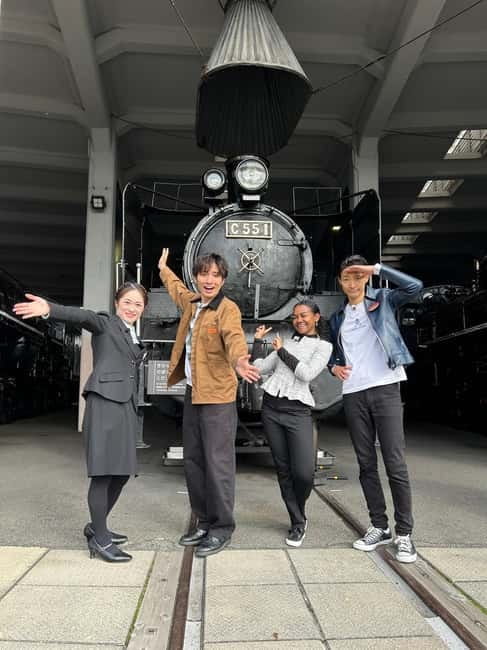
REVIEW · MUSEUMS
Kyoto Railway Museum Admission Ticket
The Kyoto Railway Museum puts you close to the real machinery of Japanese rail travel. You can step inside everything from old steam engines to a sleek Shinkansen, then watch a working turntable rotate locomotives in the historic roundhouse. It is not just a hall of static displays.
I especially like the hands-on exhibits and the sheer variety of 53 real trains. The museum also works well for families, since children can look, touch, and try rather than simply read labels. The main consideration is timing: the ticket is non-refundable, the museum closes every Wednesday, and opening hours can change, so check before you set out.
In This Review
- Key things to know
- Why the Kyoto Railway Museum is worth your Kyoto time
- Start with the 53-train collection
- The steam locomotive ride adds real motion
- Watch the roundhouse turntable rotate
- Use the simulators and technical displays
- Allow time for railway dioramas
- Finish with the Sky Terrace
- A practical plan for your one-day visit
- Tickets, children, and access details
- Timing matters more than the low price
- Who will enjoy this museum most?
- Should you book the Kyoto Railway Museum?
- FAQ
- Where is the Kyoto Railway Museum located?
- How long is the admission valid?
- What does the admission ticket include?
- Is the museum open every day?
- Are children under three charged admission?
- How much is admission for children aged three to seven?
- Is the Kyoto Railway Museum wheelchair accessible?
- Can I re-enter the museum after leaving?
- Is the ticket refundable?
Key things to know
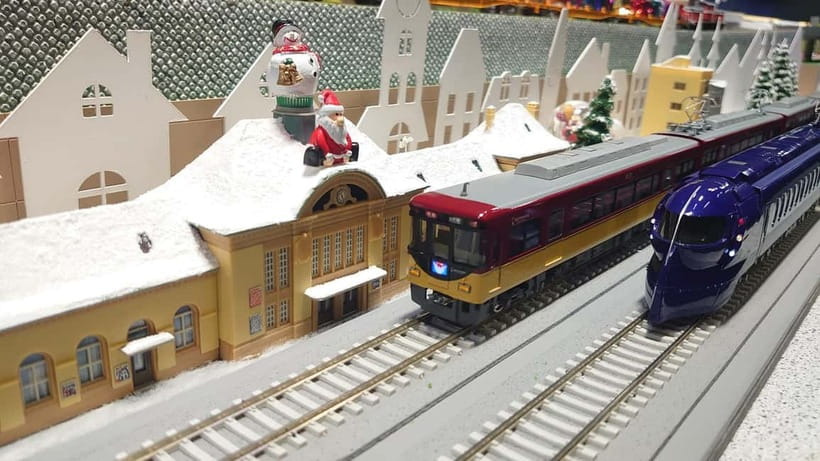
- See 53 real trains: The collection covers steam locomotives, classic railway equipment, and Japan’s famous Shinkansen.
- Ride a working steam locomotive: This adds the sound and motion of rail travel to the museum visit.
- Watch the roundhouse turntable: The rotating platform is one of the most memorable sights on the grounds.
- Try train-driving simulators: Hands-on controls make the technical side easier to understand.
- Take in the Sky Terrace: The elevated viewing area adds a wider look at the railway world around the museum.
- Plan around Wednesday closure: Children under three enter free, while children aged three to seven can buy a 200-yen ticket on-site.
Why the Kyoto Railway Museum is worth your Kyoto time

Kyoto is famous for temples, gardens, and old wooden streets. The Kyoto Railway Museum offers a different view of Japan, one built around steel, steam, engineering, and motion.
I like this change of pace. You are not asked to admire trains from a distance. You can enter selected carriages, study the controls, watch mechanical demonstrations, and see how railway travel developed from steam power to the Shinkansen age.
The museum suits serious rail fans, but you do not need to know the difference between locomotive classes to enjoy it. The displays explain how railways work, and the interactive sections give children a reason to stay engaged. A recent visit described the museum as both technically informative and full of things for children to do, which is a fair way to think about the experience.
The standard ticket costs about $9 per person. That is a strong value for a full-day admission, especially if you plan to spend several hours with the collection rather than make a quick stop. You are paying for access to a large museum with real trains, simulators, railway models, the roundhouse, and the Sky Terrace, not for a short guided presentation.
A few more Kyoto trips to weigh up
- From Osaka: Sagano Train Ride and Kyoto Guided Day Tour
★ 4.3 · 180 reviews - Kyoto: Arashiyama Tour with optional Sagano Romantic Train
★ 4.7 · 18 reviews - Mt Fuji and Hakone 1-Day Bus Tour Return by Bullet Train
★ 5.0 · 26,383 reviews
Start with the 53-train collection
Begin by giving yourself time to take in the size of the collection. Fifty-three real trains create a much stronger sense of scale than a few preserved carriages behind glass.
The range matters. Steam locomotives show the early, industrial side of rail travel, while the Shinkansen represents Japan’s modern image of speed and precision. Between those points, you can see how railway design changed over time.
I find the best part of a collection like this is the comparison. A steam engine looks heavy, exposed, and mechanical. A bullet train looks smooth and controlled. Seeing them in the same museum lets you understand the change in railway design without needing a long technical lecture.
Plan to spend time looking inside the trains. The chance to step into historic carriages turns the display into a physical experience. You can notice the size of the seats, the shape of the compartments, and the practical details that are easy to miss when you only see a train from the platform.
The museum is also a good place to explain rail travel to children. A real train is easier to understand when you can walk through it, look at the driver’s area, and connect the controls with the movement you feel on a train ride.
The steam locomotive ride adds real motion
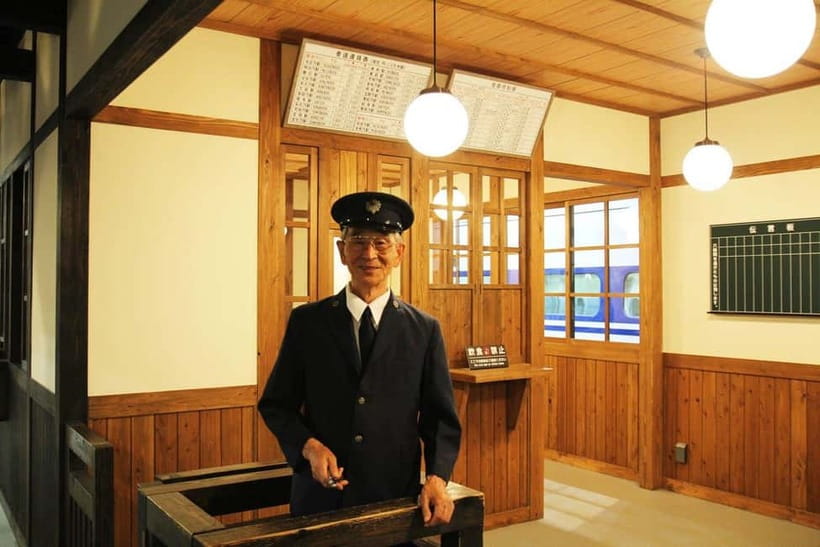
The working steam locomotive is the museum’s nostalgic centerpiece. Seeing an old engine is one thing. Riding behind a working steam locomotive gives you the sound, movement, and old-fashioned mood that a static exhibit cannot provide.
This is especially valuable if you are visiting with a child who might lose interest in display panels. The ride gives the museum a clear moment of action. It also helps explain why steam power once felt so remarkable: the engine is not just an object from the past, but a machine capable of moving people.
The supplied information identifies the steam ride as a major part of the experience, but the standard admission description does not spell out separate ride arrangements. Check the museum’s current official information before you visit if the ride is your main reason for going.
That small bit of planning matters. A museum can be worthwhile without the ride, but if you have a dedicated rail enthusiast in your group, you will want to know how the locomotive operates on your chosen day.
Watch the roundhouse turntable rotate
The historic roundhouse gives the visit a strong visual anchor. Locomotives sit around a central turntable, and watching the platform rotate is far more interesting than a simple row of parked engines.
A turntable solves a practical railway problem. Large locomotives cannot easily reverse or make tight turns, so the rotating platform moves an engine into the right track position. At the museum, that working motion becomes a small piece of theater.
I would make a point of checking when the rotation takes place once you arrive. The exact schedule is not provided here, so do not assume it will happen at any moment. If you see the turntable in action, stop and watch the whole movement rather than treating it as something to photograph quickly.
The roundhouse also helps place the trains in their working setting. You are seeing locomotives where railway maintenance and storage make sense, not simply viewing them as decorative objects in a modern gallery.
Same city, a completely different kind of day:
- PERFECT KYOTO 1-Day Bus Tour
★ 5.0 · 13,518 reviews - Kyoto: Fushimi Inari, Kinkakuji, Bamboo Grove 1 Day Bus Tour
★ 4.8 · 4,316 reviews - Kyoto: Tea Ceremony in a Traditional Tea House in Kiyomizu
★ 4.9 · 3,519 reviews - Kyoto Geisha Walking Tour: Gion District & Hidden Gems
★ 4.7 · 3,273 reviews
Use the simulators and technical displays
The train-driving simulators are a useful break from looking at machinery. They let you try the controls and gain a basic feel for the decisions involved in operating a train.
You should not expect a full professional training session. The value is simpler: the simulator turns a complicated job into something you can attempt yourself. Even a short try can make you look at the driver’s cab differently when you return to the real trains.
The museum also includes interactive explanations of how railways work. These displays cover more than train shapes. They help connect engines, tracks, signals, and railway operations into one system.
That broader approach is one reason the museum works for people who are not devoted rail fans. You can enjoy the machines for their size and design, then pick up the basic engineering ideas through demonstrations and models.
Allow time for railway dioramas
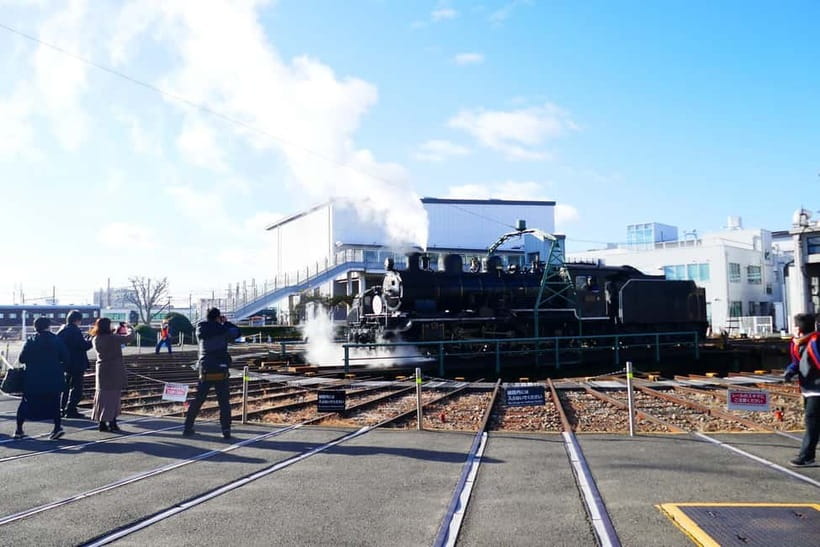
The railway dioramas offer a smaller-scale view of the same subject. Detailed model scenes show how railways operate as a complete world, with trains moving through stations and surrounding settings.
Dioramas can be easy to rush past, especially after seeing full-size engines. I would slow down here. A model makes it easier to follow the relationship between tracks, stations, trains, and daily railway activity.
These displays are also useful for children because they give them a clear overall picture. A full-size locomotive can be impressive but hard to understand as part of a wider network. A model layout brings the system together at eye level.
The exact contents and operating schedule of individual displays can change, so treat this section as something to explore rather than a fixed show with a guaranteed sequence.
Finish with the Sky Terrace
The Sky Terrace provides a change of scale after the indoor exhibits. From above, you can enjoy wider views and think about the railway system as part of the city rather than as a group of isolated machines.
I like having a viewing area in a museum visit because it gives you a natural pause. After close-up work with engines, controls, and models, you can step away, look out, and reset before returning to the galleries.
The terrace also helps children and adults who need a quieter moment. One detailed account described the museum as cool and quiet inside, which makes it a comfortable choice during a busy Kyoto day. Still, your experience will depend on the season and the number of people in the building.
Do not treat the Sky Terrace as the main reason to buy the ticket. Think of it as a pleasant extra that rounds out a visit already built around trains and railway technology.
A practical plan for your one-day visit
Your ticket is valid for one day, giving you flexibility to set your own pace. Since this is standard museum admission rather than a guided tour, you can move between exhibits according to your interests.
A sensible order would be:
- Start with the main train collection so you see the full range while your attention is fresh.
- Step inside the trains and spend time with the hands-on displays.
- Try the simulators when you want a more active section.
- Check the roundhouse for the turntable rotation.
- Fit in the steam locomotive ride if it is operating and available under the current arrangements.
- Leave the Sky Terrace and railway dioramas for a slower final stretch.
You do not need to follow that order exactly. Families may prefer to begin with the most active displays, while rail enthusiasts may want to head straight for the steam engines or Shinkansen.
The museum can fill a full day, but the ticket does not force you to stay all day. If your Kyoto schedule is tight, you can still make a shorter visit focused on the 53 trains, roundhouse, and simulators. The stronger value comes when you allow enough time to read, climb aboard, and pause at the working exhibits.
Tickets, children, and access details
The listed price is $9 per person for standard admission. That is inexpensive for a full-day museum, but remember that it does not automatically clarify the arrangements for every special activity. If the steam ride or a particular simulator is essential to your plan, check current details through the official museum website.
Children under three years old enter free. Children aged three to seven can buy tickets on-site for 200 yen. This makes the museum especially practical for families with young children, though the ticket rules differ by age.
The museum is wheelchair accessible. That is useful information for anyone planning a day around large exhibits and several areas of the building.
You redeem the ticket directly at the Kyoto Railway Museum. The provided meeting point is the museum itself, at coordinates 34.9870986, 135.7422732. There is no separate meeting point or guide listed for this admission experience.
If you leave and plan to return, show your admission ticket to staff on re-entry. Keep it handy rather than discarding it after the first entrance.
Timing matters more than the low price
The museum closes every Wednesday. That is the first date to check before you buy.
Opening hours may also change, so confirm them on the official website. The ticket is non-refundable, which makes this especially important. A low ticket price is not a good bargain if you buy for a closed day or arrive after a schedule change.
If there is a long queue, follow the line at the entrance marked Early Bird Advance Ticket, as instructed for crowded periods. The wording can be confusing, so follow staff directions rather than trying to find a different entrance.
The museum offers a full-day ticket, but it does not list a fixed starting time in the information provided. Check availability for current entry times before booking.
Who will enjoy this museum most?
Rail enthusiasts will find the strongest reason to visit in the size and range of the collection. The Shinkansen alone will appeal to many people interested in modern Japanese transport, while the steam engines and roundhouse provide a look at an earlier age.
Families are another strong match. The simulators, train interiors, working locomotive, and model displays provide several ways for children to stay involved. A child does not need to read every panel to have a good visit.
The museum also suits adults who enjoy engineering, design, and Japanese history. You can focus on the mechanics, the passenger experience, or the shift from steam to high-speed rail.
It may be less suitable if you want a quick, tightly scheduled attraction with a guide leading you from one highlight to the next. This is a self-directed museum visit, and its value depends on how much time you give the exhibits.
Should you book the Kyoto Railway Museum?
I would book this experience if you want a substantial indoor attraction that feels different from Kyoto’s temples and gardens. The combination of 53 real trains, hands-on displays, the steam locomotive, and the roundhouse turntable gives you enough variety to justify the low admission price.
Book with care if your date is fixed. Check the Wednesday closure, current opening hours, entry availability, and the arrangements for special activities before paying, since the ticket is non-refundable.
For rail fans, this is an easy recommendation. For families, it is one of the better choices in Kyoto when children need action as well as information. If you have only a short window in the city, make sure the museum’s location and hours fit your day. If they do, the ticket offers a memorable look at the machines and ideas that helped shape modern Japan.
FAQ
Where is the Kyoto Railway Museum located?
The museum is in Kyoto on Honshu, Japan. The provided coordinates are 34.9870986, 135.7422732.
How long is the admission valid?
The ticket is valid for one day.
What does the admission ticket include?
The ticket includes standard admission to the Kyoto Railway Museum.
Is the museum open every day?
No. The museum is closed every Wednesday. Opening hours may vary, so check the official website for current details.
Are children under three charged admission?
No. Infants under three years old enter free of charge.
How much is admission for children aged three to seven?
Children between three and seven years old can purchase tickets on-site for 200 yen.
Is the Kyoto Railway Museum wheelchair accessible?
Yes. The activity is wheelchair accessible.
Can I re-enter the museum after leaving?
Yes. You must present your admission ticket to staff when you re-enter.
Is the ticket refundable?
No. This activity is non-refundable.
Just added around Kyoto
- Taste of Nishiki Market Walking Food Tour with Local guide★ 5.0 · 17 reviews
- Kyoto: Sushi Making Class with Sushi Chef★ 4.8 · 64 reviews
- Kyoto: City Secrets eBike Tour★ 4.9 · 196 reviews
- Sacred Pathways: Discover the Philosopher’s Path of Kyoto★ 4.9 · 20 reviews
- Private Tour to Monkey Park and Arashiyama Highlights★ 5.0 · 22 reviews
- Private Nara Tour from Osaka – Meet at Your Hotel★ 5.0 · 22 reviews
- Private Sake Tasting in Central Kyoto with Sake Sommelier★ 5.0 · 13 reviews
- Kyoto : Private Custom Walking Tour With A Local Guide★ 4.6 · 144 reviews
Museums, compared.

teamLab Planets TOKYO Digital Art Museum Entry Ticket
Read our review →
Samurai Ninja Museum Guided tour and Experience
Read our review →
Tea Museum Tickets and Matcha Grinding Experience
Read our review →
Skip the lines Basic Ticket at SAMURAI NINJA MUSEUM KYOTO
Read our review →
Ninja Experience (Family Friendly) at Samurai Ninja Museum TOKYO
Read our review →
Tokyo Studio Ghibli Museum and Ghibli Film Appreciation Tour
Read our review →
Geiko Maiko Dance of Kyoto & Visits of Gion Museum
Read our review →
Tokyo Sword Experience – includes Museum Ticket/Ninja Experience
Read our review →Browse the lists this tour appears in