
REVIEW · PRIVATE GUIDED TOURS WITH DRIVER
Kyoto Early Morning Private Tour with Government-Licensed Guide
Kyoto is at its best before the crowds arrive, and this private morning tour makes that early start count. You can focus on two or three places, such as Fushimi Inari Shrine, Kiyomizu-dera, Gion, or the Bamboo Forest, rather than race through a long sightseeing checklist. Guides such as Rie, Yasu, Tomy, Kay, and Mayumi have helped shape the morning around each group.
I like two things here. First, a licensed local guide can explain customs, temple details, and everyday Japanese life that are easy to miss on your own. Second, the private format gives you room to change the pace, ask questions, and use public transport or walking routes that fit your plans. The main caution is simple: four hours is not enough for more than two or three major sights, and admission fees and transport are extra.
In This Review
- Key points to know before you book
- Why an early Kyoto start pays off
- Choosing two or three sights instead of chasing 34
- Fushimi Inari, where the early start matters most
- Kiyomizu-dera and the old streets of Higashiyama
- Arashiyama, bamboo, bridges, and temple choices
- Gion, Nishiki Market, and central Kyoto
- Northern and eastern choices for repeat visitors
- What the guides add to the morning
- Price, transport, and practical value
- The one serious caution
- Who should book this Kyoto tour
- Should you book it?
- FAQ
- How long does the Kyoto private tour last?
- How many sights can I choose?
- Is hotel pickup included?
- Are entrance fees included?
- Is this a group tour?
- Can I cancel for a full refund?
Key points to know before you book
- Early starts change the experience: Meeting at 6:30 or 7:00 a.m. can make Fushimi Inari and Kiyomizu-dera far calmer than later visits.
- You choose two or three stops: The long list of possible sights is a menu, not a promise to visit them all.
- Your guide joins you on foot: There is no private vehicle, so expect walking and public transportation.
- Local explanation is the main value: Guides explain culture, history, etiquette, and practical Kyoto navigation as you go.
- Arashiyama works well in the morning: The Bamboo Forest, Togetsukyo Bridge, and nearby temples can form a memorable route.
- Plan for extra costs: Entrance tickets, train or bus fares, lunch, and personal expenses are not included.
Why an early Kyoto start pays off
Kyoto’s famous sights are not difficult to find. The harder part is seeing them without being swept along by crowds, tour groups, and narrow lanes filled with people. This tour tackles that problem with an early start and a private guide.
The exact meeting time depends on your booking, but past tours have begun at 6:30 or 7:00 a.m. That may feel severe after a long flight, yet it is the tour’s most useful feature. At that hour, Fushimi Inari’s torii gates can feel far more peaceful, and Kiyomizu-dera is easier to explore without stopping every few steps.
The tour lasts about four hours. You meet your guide on foot within the designated Kyoto area, then walk and use public transportation as needed. A private vehicle is not provided. That keeps the cost lower than a chauffeured outing, but you should wear comfortable shoes and be ready for stairs, temple paths, and city walking.
The guide’s role is more than pointing at buildings. You can ask why visitors bow, how to behave at a shrine, what a temple object represents, or how Kyoto’s districts fit together. This is especially useful during a short stay, when a well-planned morning can also help you understand how to get around for the rest of your trip.
More Private Guided Tours with Driver in Kyoto
- Kyoto 6hr Private Tour with Government-Licensed Guide
★ 5.0 · 1,369 reviews - Kyoto 4hr Private Tour with Government-Licensed Guide
★ 5.0 · 629 reviews - Kyoto: Private Tour with Local Licensed Guide
★ 4.8 · 463 reviews
Choosing two or three sights instead of chasing 34
The tour presents a very long range of possible stops. That can sound exciting, but it needs to be understood correctly. In four hours, you will normally choose two or three sites, not attempt every temple, market, garden, and district on the list.
A strong plan groups sights by area. Fushimi Inari pairs naturally with Tofuku-ji or Toji. Kiyomizu-dera can be combined with the preserved Higashiyama streets, Gion, or Nishiki Market. Arashiyama deserves its own focused morning, with the Bamboo Forest, Togetsukyo Bridge, and perhaps Tenryu-ji or a quieter nearby temple.
You can also follow a recommended route. This is a good choice if Kyoto is your first visit and you are unsure how long each stop will take. If you already have a wish list, tell the guide what matters most before the tour begins. The private setup is most useful when you make that choice clearly.
Do not treat the advertised sightseeing menu as a fixed daylong program. Places such as Kibune, Kurama, Yoshimine-dera, Shugakuin Imperial Villa, Katsura Imperial Villa, and western Arashiyama are spread across Kyoto. Some require more travel time or separate admission arrangements. They may be possible choices, but they do not fit neatly into a quick central Kyoto loop.
Fushimi Inari, where the early start matters most
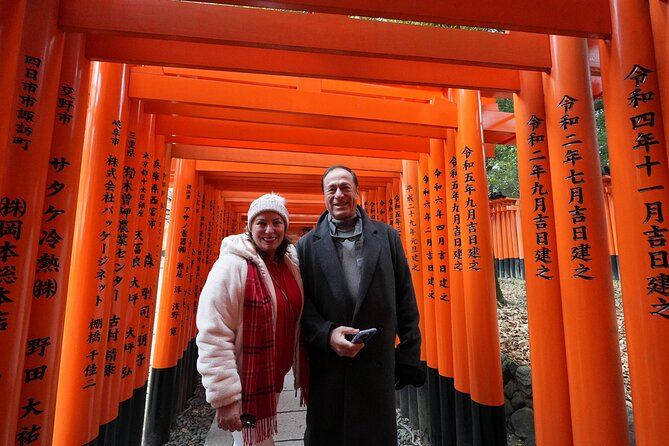
Fushimi Inari-taisha is famous for its thousands of vermilion torii gates climbing the wooded mountain. The gates are the obvious attraction, but a guide can help you notice more than the repeated red frames.
The shrine is dedicated to Inari, associated with rice, agriculture, and business success. Fox figures appear around the grounds because foxes are regarded as Inari’s messengers. The exact stories, symbols, and customs make more sense when someone explains them at the site rather than in a guidebook paragraph.
You do not need to hike to the summit to enjoy Fushimi Inari. A short walk through the lower gates gives you the classic view, while a longer climb brings quieter sections and more effort. Your guide can help match the route to your energy and the time available.
This is one of the best reasons to book an early tour. Fushimi Inari is free to enter, but free does not mean empty later in the day. A 6:30 or 7:00 a.m. visit gives you a better chance of walking at your own pace and taking photographs without a constant stream of people.
Kiyomizu-dera and the old streets of Higashiyama
Kiyomizu-dera is one of Kyoto’s essential sights, set on the eastern hills above the city. Its broad wooden stage and views across Kyoto make it a natural choice for a first morning, though the grounds include more than one famous viewpoint.
The temple charges an entrance fee, which is not included. You should also expect uphill walking and temple paths. The effort is manageable for many people, but it matters if someone in your group has ankle or mobility trouble. One guide added about half an hour when a guest’s wife was dealing with ankle problems, a useful reminder that private tours can sometimes respond to real needs better than a fixed group schedule.
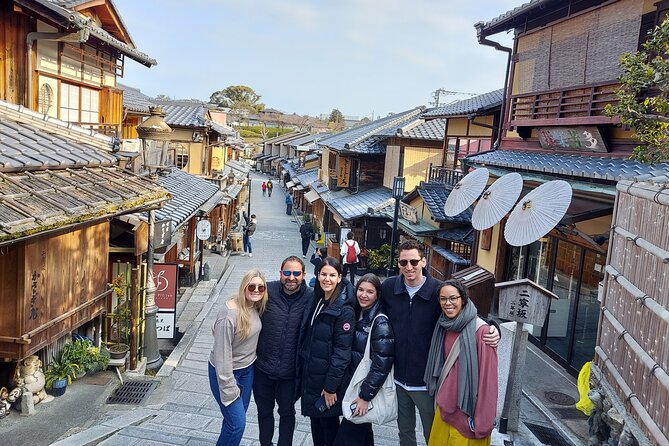
Pairing Kiyomizu-dera with Higashiyama gives the visit more texture. The district’s older streets run along the lower slopes of the eastern mountains, with traditional buildings, small shops, and lanes that reward slow walking. Gion is nearby and adds Kyoto’s best-known geisha district, though you should approach it as a living neighborhood, not a stage set.
A guide is particularly useful in Gion. The narrow lanes can be confusing, and a local can explain the difference between public streets, restaurant alleys, tea-house areas, and places where respectful behavior matters. You will also have someone to answer questions about geisha culture without turning the district into a costume show.
Same city, a completely different kind of day:
- PERFECT KYOTO 1-Day Bus Tour
★ 5.0 · 13,518 reviews - Kyoto: Fushimi Inari, Kinkakuji, Bamboo Grove 1 Day Bus Tour
★ 4.8 · 4,316 reviews - Kyoto: Tea Ceremony in a Traditional Tea House in Kiyomizu
★ 4.9 · 3,519 reviews - Kyoto Geisha Walking Tour: Gion District & Hidden Gems
★ 4.7 · 3,273 reviews
Arashiyama, bamboo, bridges, and temple choices
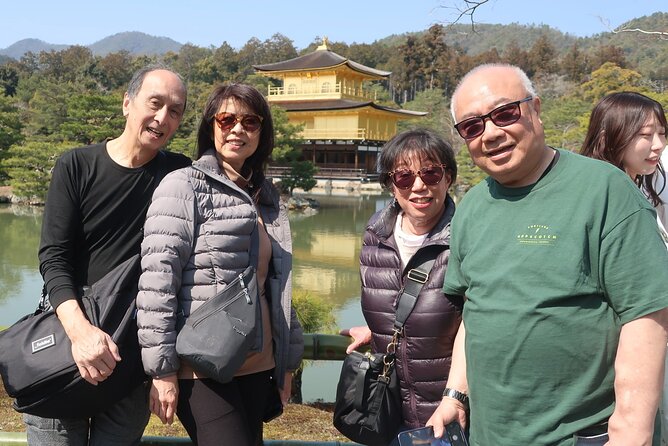
Arashiyama is one of the most popular choices for this tour. The area lies on Kyoto’s western edge and offers several sights close enough to combine, though the district can become very busy later in the day.
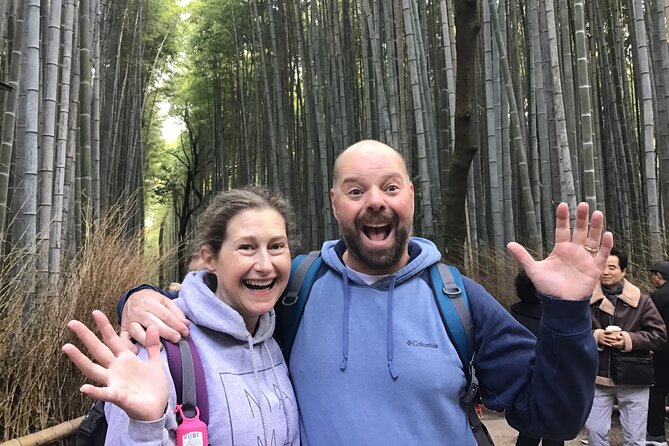
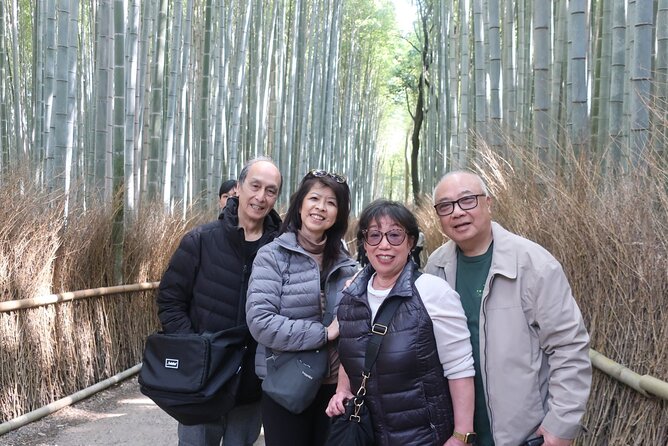
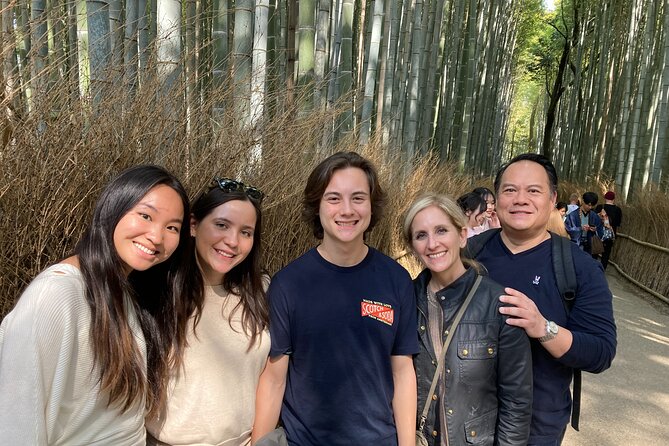
The Bamboo Forest is photogenic, but it is not a long trail. The walking paths pass through tall bamboo groves, and the mood is best when the air is cool and the paths are less crowded. An early visit gives you the strongest chance of enjoying the gentle movement of the bamboo without a wall of people around you.
Togetsukyo Bridge provides a different view, with the river and surrounding hills forming Arashiyama’s signature scene. Tenryu-ji is the area’s leading Zen temple and a World Heritage site, with gardens and buildings that deserve more than a quick glance. Admission is extra.
If you want something quieter, ask about Jojakko-ji, Nisonin, Gio-ji, Adashino Nenbutsu-ji, or Otagi Nenbutsu-ji. These temples offer moss, forest paths, hillside views, and distinctive stone figures. They are not interchangeable with the Bamboo Forest, and fitting several into four hours would make the morning rushed.
Okochi Sanso Garden is another option behind the Bamboo Forest, but it has its own admission fee. Daikaku-ji and other western Kyoto sights require more planning. I would choose one main Arashiyama temple, not attempt to collect every nearby entrance ticket.
Gion, Nishiki Market, and central Kyoto
Gion and Nishiki Market offer a different kind of morning from the major temples. Gion gives you historic streets and traditional architecture. Nishiki Market, known as Kyoto’s Kitchen, runs along a narrow five-block shopping street lined with more than 100 shops and restaurants.
Nishiki can be an enjoyable place to learn about Kyoto food, but timing matters. A four-hour morning tour may catch the market as it is coming to life rather than at its busiest. If tasting and food shopping are your main goals, tell the guide in advance. Lunch is not included, though one guide finished a tour by dropping the group at a favorite sushi restaurant.
Pontocho is another atmospheric central district, a narrow dining lane beside the Kamogawa River. It is usually more associated with evening meals, so it may not be the strongest choice for an early morning unless you want to see its architecture and location before restaurants open.
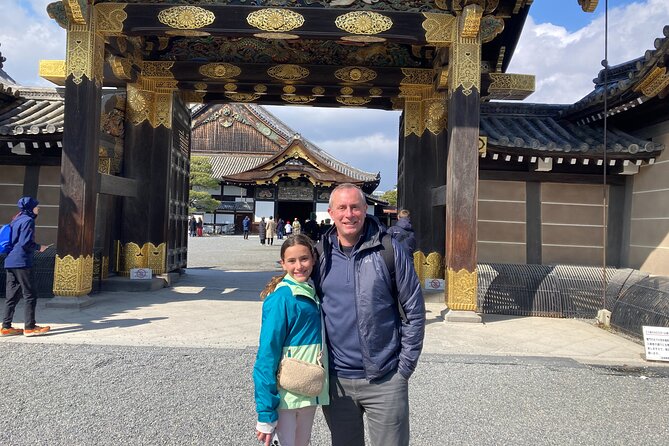
Nijo Castle offers a useful change of pace. Built in 1603 as the Kyoto residence of Tokugawa Ieyasu, it connects directly to the political story of the Edo period. Admission is extra, and the castle grounds can take time to explore. I would choose it when you want shogun-era architecture rather than another shrine or temple.
The Kyoto Imperial Palace occupies spacious grounds and was the Imperial Family’s residence until the capital moved to Tokyo in 1868. It is a good option for broad avenues, formal buildings, and imperial history. Like Nijo Castle, it works best when you want a slower, more open site rather than a compact photographic stop.
Northern and eastern choices for repeat visitors
The eastern mountains offer a string of respected temples. Ginkaku-ji, the Silver Pavilion, began as the retirement villa of shogun Ashikaga Yoshimasa and later became a Zen temple. Its gardens and setting make it a thoughtful choice for anyone who wants art, design, and Zen culture.
Nanzen-ji is one of Japan’s important Zen temples. Its spacious grounds at the foot of the Higashiyama mountains include the striking brick aqueduct known as Nanzenji Suirokaku. Tofuku-ji, in southeastern Kyoto, is especially well known for autumn color and makes a strong choice in the fall.
Toji, the East Temple, dates to the early Heian period, soon after Kyoto became the capital. Kinkaku-ji, the Golden Pavilion, is one of Kyoto’s most recognizable sights, with its upper two floors covered in gold leaf. It requires admission and is best treated as a main stop, not squeezed between several distant locations.
Ryoan-ji contains Japan’s most famous rock garden. You may find its simplicity powerful or puzzling, and a guide can give you cultural context without telling you exactly what to think. Ninna-ji, a World Heritage temple and head temple of the Omuro school of Shingon Buddhism, is another northern option.
These sights are spread out. If you choose Kinkaku-ji, Ryoan-ji, or Ninna-ji, build the morning around northern Kyoto. Combining one with Fushimi Inari or Arashiyama could leave more time spent in transit than at the sites themselves.
What the guides add to the morning
The strongest part of this experience is the human guide. The licensed English-speaking guides include Rie, Yasu, Tomy, Kay, Mayumi, Nabet, Yoshi, Bell, and Yoji, among others. The individual style will vary, but the service is designed to be personal rather than scripted.
Rie contacted her group well before the trip and again during the week of the tour. She led a 7:00 a.m. route through four locations and finished by directing the group to a sushi restaurant. Yasu has guided families and groups of friends by public transportation, including a route to the Bamboo Forest, Monkey Park, and Fushimi Inari.
Tomy began one tour at 6:30 a.m., using the quiet conditions at Kiyomizu-dera and Fushimi Inari to good effect. Kay also worked as a personal photographer during a morning that included the Bamboo Forest and Fushimi Inari. Those details show what you can reasonably ask for: help with route planning, cultural explanation, photographs, and local food suggestions.
Mayumi’s flexibility was especially useful when a guest had ankle trouble. Bell adjusted a cherry blossom season route and used a taxi to reach Kiyomizu-dera around 8:00 a.m. These examples do not guarantee a specific guide or extra time, but they show why it is worth explaining your interests and physical limits before the morning.
The guide can also help you after the tour. One guest found the navigation advice useful for the rest of the Kyoto stay. That is real value if you have only a short visit and want to learn the train, bus, and walking patterns quickly.
Price, transport, and practical value
At $101.82 per person, the tour is not the cheapest way to see Kyoto. You still pay entrance fees, transportation, lunch, and personal expenses. There is no private vehicle, and the tour is conducted on foot with public transportation when needed.
The value comes from the private attention and saved planning time. For a couple or small family, a guide who helps you choose the right two or three sights can prevent an overstuffed morning. The price also buys cultural interpretation and practical orientation, not simply transportation between landmarks.
Group discounts may improve the per-person value for a larger private party, though you should still compare the total cost with a self-guided morning. If you already know Kyoto well, can read transit maps, and mainly want photographs, you may not need this service. If you want to understand what you are seeing and make a smart plan quickly, the cost is easier to justify.
The tour is suitable for most participants, and service animals are allowed. Still, this is a walking activity. Temple stairs, long paths, early waking, and public transport are part of the day, so be honest about your pace when you choose the route.
The one serious caution
The overall rating is 4.8 from 23 ratings, with 96 percent recommending the experience. The positive pattern is clear: guests place the highest value on flexible planning, clear English, cultural explanation, and early access to places that become crowded.
There is also one serious service failure to consider. A guide became ill and did not arrive for a honeymoon booking, leaving the group to chase communication about its refund. The provider apologized and said it had requested the refund, but the incident shows why you should keep your confirmation details and contact information handy on the morning itself.
That problem appears to be an exception rather than the usual experience, but it should not be ignored. A private tour depends heavily on one guide showing up. The strong overall score supports the service, while the no-show incident is a reminder to have a backup plan for your first morning in Kyoto.
Who should book this Kyoto tour
I would choose this experience if you are visiting Kyoto for the first time, have limited time, or feel unsure about fitting temples, markets, and historic districts together. It is also a good match for families and small groups who want to set their own pace instead of following strangers.
It suits early risers especially well. The quiet at Fushimi Inari, Kiyomizu-dera, or Arashiyama can be worth more than another hour of sleep, particularly in peak seasons, during cherry blossom time, or around busy Japanese holidays.
I would be more cautious if your priority is a private car, a full-day tour, or a long list of attractions. Four hours passes quickly, and the many possible stops could create unrealistic expectations. Pick two or three places with a sensible geographic connection, then let the guide add meaning and local know-how.
Free cancellation is available up to 24 hours before the start time. Changes or cancellations inside that window are not accepted for a refund, so make your decision early.
Should you book it?
Book this tour if you want a calm, tailored introduction to Kyoto and are willing to start early. The best plan is simple: choose Fushimi Inari and Kiyomizu-dera for classic Kyoto, Gion and Higashiyama for old streets, or Arashiyama for bamboo, river views, and temples.
At $101.82 per person, it is a service purchase rather than a bargain sightseeing ticket. You pay for a licensed guide, flexible routing, cultural context, and a useful introduction to getting around. If you value those things, this private morning can set the tone for the rest of your Kyoto visit. If you prefer to travel independently and slowly, save the money, pick one district, and explore it on your own.
FAQ
How long does the Kyoto private tour last?
The tour lasts approximately four hours.
How many sights can I choose?
The tour includes a customizable route with your choice of two or three sites from the available options.
Is hotel pickup included?
A guide meets you on foot within the designated area of Kyoto. There is no private vehicle pickup.
Are entrance fees included?
Entrance fees are not included for most attractions. Transportation, lunch, and personal expenses are also extra. The guide’s entry fees are covered only for sights specified under the tour details.
Is this a group tour?
No. This is a private activity, so only your group participates. You cannot combine multiple tour groups.
Can I cancel for a full refund?
Yes, if you cancel at least 24 hours before the experience start time. Cancellations or changes made less than 24 hours before the start time are not accepted for a refund.
More Morning in Kyoto
- Kyoto Early Morning Tour with English-Speaking Guide
★ 5.0 · 1,427 reviews - Kyoto: Early Morning Tour with English-Speaking Guide
★ 4.9 · 1,128 reviews - From Kyoto: Nara Guided Morning Tour
★ 4.6 · 335 reviews - Kyoto Morning Tour from Kyoto or Osaka
★ 4.0 · 281 reviews
Just added around Kyoto
- Private Guided Traditional Buddhist Cooking in Japan★ 5.0 · 16 reviews
- Kyoto: Gion Geisha District & Sake-in-Hand Walking Tour★ 5.0 · 37 reviews
- Your Private Vacation Photography Session In Kyoto★ 5.0 · 110 reviews
- Kyoto: Zen Meditation at a Private Temple with a Monk★ 5.0 · 25 reviews
- Traditional Japanese Washi Papermaking- Kyoto morning★ 5.0 · 77 reviews
- Kyoto Wagashi(Japanese sweets) Cooking Class near Fushimiinari★ 5.0 · 60 reviews
- Private Pewter Sake Cup Experience with a Kyoto Artisan★ 5.0 · 31 reviews
- Kyoto Private 6 hour Tour: English Speaking Driver Only, No Guide★ 5.0 · 88 reviews
Private Guided Tours with Driver, compared.
Tokyo 4hr Private Tour with Government-Licensed Guide
Read our review →
Kyoto 6hr Private Tour with Government-Licensed Guide
Read our review →
Hiroshima / Miyajima Full-day Private Tour with Government Licensed Guide
Read our review →
Kyoto 4hr Private Tour with Government-Licensed Guide
Read our review →
Mt. Fuji Day Trip from Tokyo with English Speaking Driver Guide
Read our review →
Hiroshima City 4hr Private Walking Tour with Licensed Guide
Read our review →Browse the lists this tour appears in