
REVIEW · WALKING TOURS
Hiroshima: Private City Highlights Walking Tour
Hiroshima is best understood on foot, where the Peace Memorial Park’s monuments, the Atomic Bomb Dome, and the rebuilt city fit into one powerful story. This private tour gives you a local guide to explain what you are seeing, then leads you beyond the main park to Hiroshima Castle and other places tied to August 6, 1945.
I like the private format, which lets you ask hard questions and adjust the pace. I also like the guide’s local touch: Ali has taken guests to a school and a bank linked to the bombing, while Ihsan and Wajid have added food stops and useful city advice. The main drawback is simple: four hours on foot can feel long, especially in Hiroshima’s heat, humidity, or rain.
In This Review
- Key points
- Why Hiroshima Works Best as a Walking Story
- Gates of Peace and the Prayer Fountain
- One Hour Inside the Peace Memorial Museum
- The Cenotaph, Flame, and Bell of Peace
- The Korean Atomic Bomb Victims Cenotaph
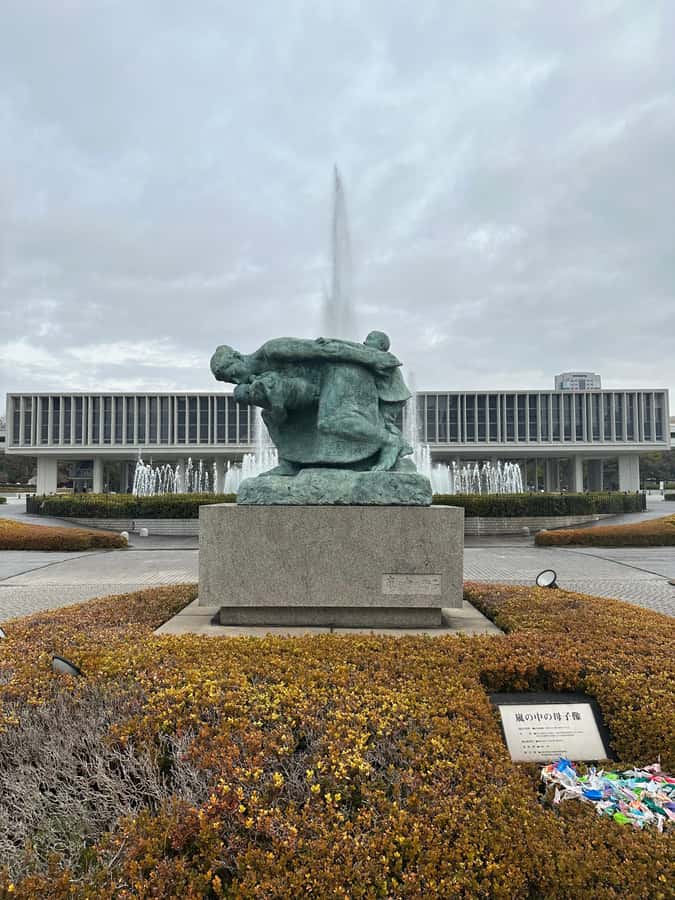
- The Children’s Peace Monument and the Power of a Personal Story
- The Atomic Bomb Dome, Hiroshima’s Most Recognizable Ruin
- Beyond the Park to Hiroshima Castle
- Local Detours That Add Real Value
- What Four Hours Feels Like on Foot
- Guide Quality and Language Choices
- Is $90 Per Person Good Value?
- Who Should Book This Hiroshima Walk
- FAQ
- How long is the Hiroshima private walking tour?
- Where does the tour start and finish?
- What places are included on the route?
- Is admission included?
- Is this a private group tour?
- What languages are available?
- Can I cancel or pay later?
- Should You Book It?
Key points
- The Peace Memorial Museum gets a full hour, with admission included and a guide available to provide context before and after your visit.
- The route includes the major Peace Park memorials, from the Prayer Fountain to the Children’s Peace Monument and the Korean Atomic Bomb Victims Cenotaph.
- Private guiding makes the history more personal, with time for questions and adjustments based on your interests.
- The tour goes beyond the standard park circuit, reaching 16th-century Hiroshima Castle and, when arranged by the guide, other historic sites nearby.
- Guides speak English, Malay, Urdu, Hindi, or Punjabi, though the specific guide depends on the date you book.
- At $90 per person, the tour is strongest value for first-time visitors who want context, efficient sightseeing, and a flexible pace.
Why Hiroshima Works Best as a Walking Story
Hiroshima can look calm and modern at first glance. Trams move through broad streets, shops serve local specialties, and the city feels fully alive. Then you enter the Peace Memorial Park and begin connecting today’s city with the destruction of August 6, 1945.
That change in perspective is the main reason to take this tour. You are not simply checking off a museum and a famous ruin. Your guide can explain how the monuments relate to one another, what the city looked like before and after the bombing, and how Hiroshima chose to remember the dead while building a new future.
The private setting matters here. This is difficult material, and you may want to stop, ask a question, or spend longer at one memorial. Guides including Maria, Ihsan, Ali, and Wajid have been praised for calm explanations, empathy, humor when appropriate, and the ability to match the group’s interests.
The route begins at 1-2 Nakajimachō in Naka Ward and returns there at the end. Food, drinks, and transport are not included, so plan this as a walking experience rather than a vehicle tour. The activity is wheelchair accessible, but the stated program covers a lot of ground in four hours, so tell your guide about mobility needs at the start.
More Walking Tours in Hiroshima
- Hiroshima Historical Walking Tour – Why A-Bomb was Dropped
★ 4.8 · 893 reviews - Hiroshima Peace (Heiwa) Walking Tour at World Heritage Sites
★ 5.0 · 872 reviews - Hiroshima City 4hr Private Walking Tour with Licensed Guide
★ 5.0 · 437 reviews
Gates of Peace and the Prayer Fountain
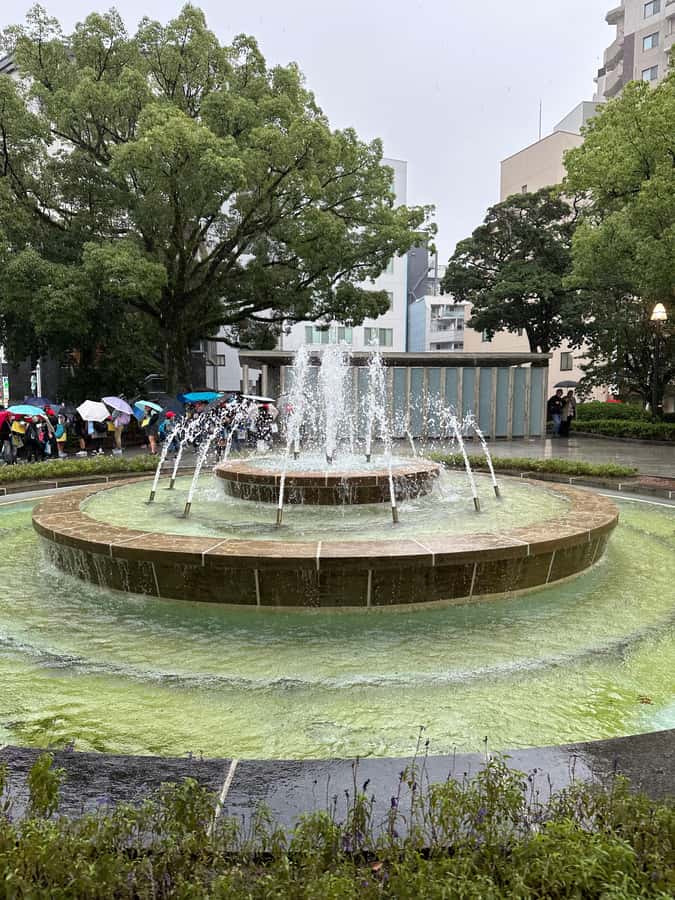
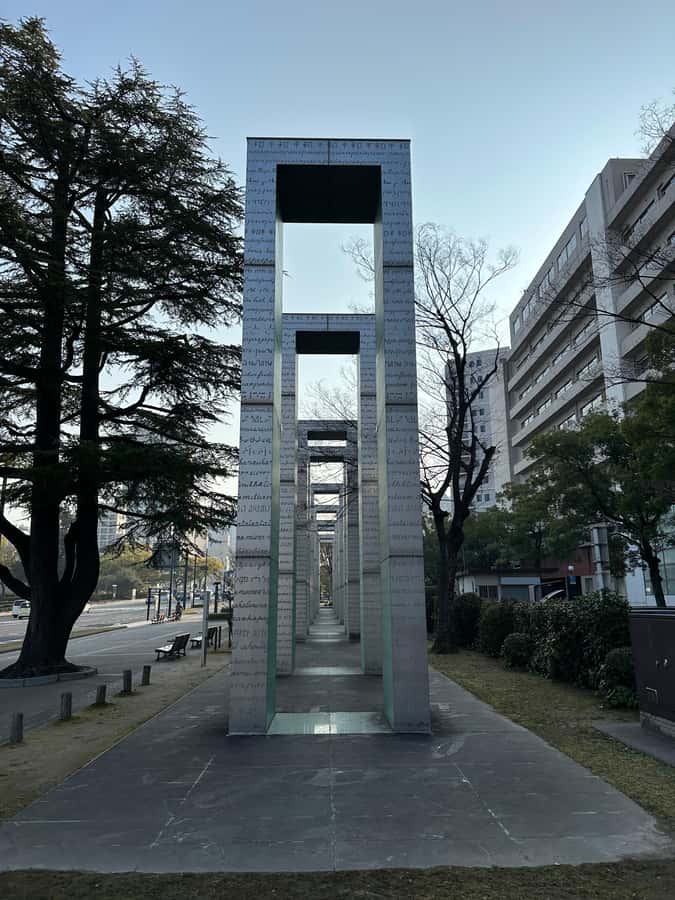
The first stops, the Gates of Peace and the Prayer Fountain, set the tone for the morning. The Gates of Peace are a natural opening because they frame the park as a place of remembrance and hope rather than a simple monument zone.
The Prayer Fountain gives your guide a chance to explain the human suffering behind the memorials. It is a short stop, listed at about 10 minutes, but the meaning is greater than the clock suggests. You will likely pause for photographs, though this is a place where looking carefully matters more than collecting another picture.
Starting here also helps you get your bearings before entering the museum. A guide can point out how the park is arranged and explain why several memorials sit close together. That context makes the later walk easier to follow.
One Hour Inside the Peace Memorial Museum
The Hiroshima Peace Memorial Museum is the emotional center of the tour. You have about one hour inside, and admission is included.
The museum presents objects and records from the bombing and its aftermath. Expect a serious visit. The displays are intended to show the human cost of the event, not just its military or political background. Some exhibits can be upsetting, and you should allow yourself time to process what you see.
Your guide will not be able to speak continuously beside you in every gallery, and much of the museum experience is necessarily quiet and personal. The useful role of the guide comes before and after the visit: explaining the setting, answering questions, and helping you connect individual exhibits with the wider story of Hiroshima.
One hour is enough to see the key collections, but it is not a leisurely museum study. If the museum is your main reason for visiting Hiroshima, you may want more time on another visit. For a first overview, though, the included entry and guided framing make this a practical arrangement.
The Cenotaph, Flame, and Bell of Peace
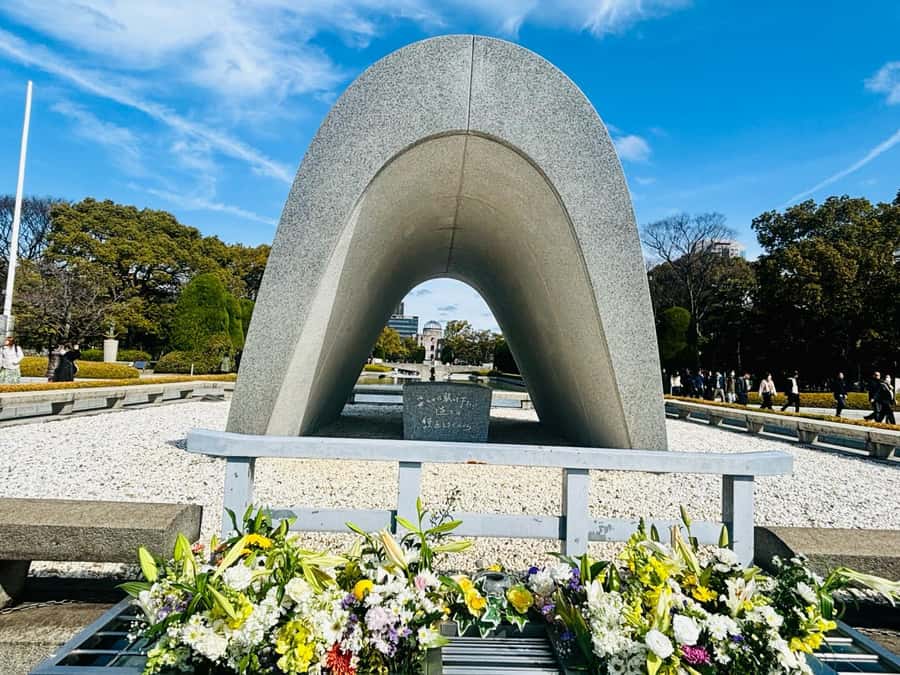
After the museum, the tour moves through the central memorial area. The Hiroshima Victims Memorial Cenotaph receives about 15 minutes, giving you time to hear about its purpose and pause in front of it.
The Flame of Peace is a shorter stop, listed at five minutes. Its compact timing does not mean it is unimportant. It works as part of the larger sequence, linking the city’s memorial message with the goal of ending nuclear weapons.
The Bell of Peace gets another 15 minutes. Here, your guide can explain the symbolism and point out details you might otherwise pass without noticing. These stops are close enough to combine efficiently, but the route does not feel like a rushed parade of plaques when your guide adjusts the pace to your group.
I especially value this section for visitors who might otherwise read each monument in isolation. The meaning comes from the connections between them. Ask questions here. The private arrangement gives you room to do that without holding up a larger group.
Same city, a completely different kind of day:
- Peaceful Hiroshima & Miyajima UNESCO 1 Day Bus Tour
★ 5.0 · 5,309 reviews - Hiroshima: Hiroshima and Miyajima UNESCO Sites 1-Day Tour
★ 4.9 · 2,330 reviews - Hiroshima / Miyajima Full-day Private Tour with Government Licensed Guide
★ 5.0 · 1,298 reviews - Hiroshima in a Nutshell: Morning Bike Adventure
★ 5.0 · 524 reviews
The Korean Atomic Bomb Victims Cenotaph
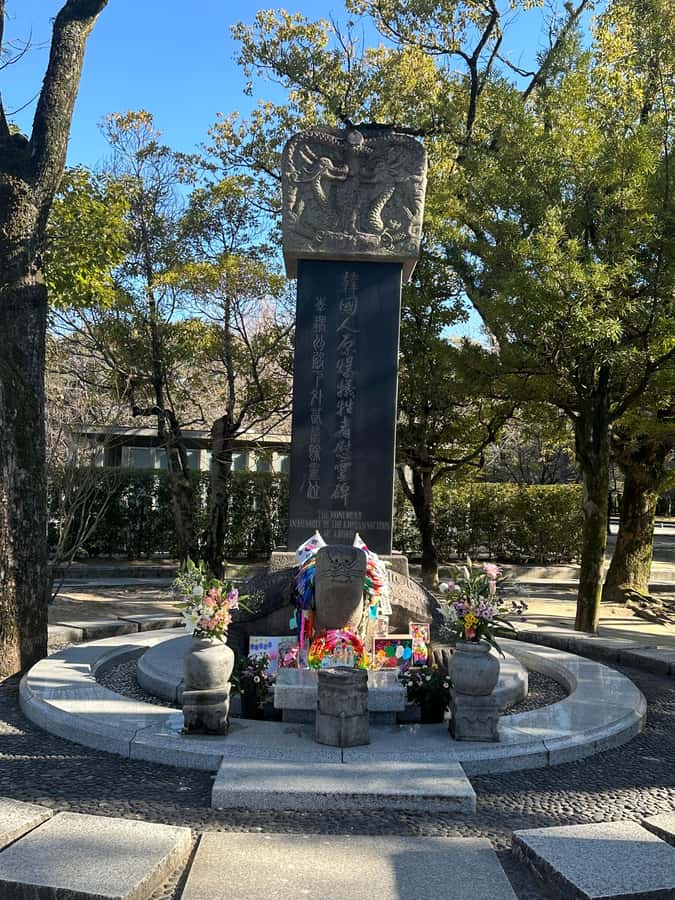
The Korean Atomic Bomb Victims Cenotaph is an important part of the route because it broadens the story beyond Hiroshima’s Japanese victims. The stop lasts about 15 minutes.
This memorial reminds you that people from Korea were also in Hiroshima when the bomb fell. A standard visit focused only on the most famous monuments can leave out that part of the city’s wartime story. Having a guide explain its place in the park helps you see how remembrance in Hiroshima includes several communities.
This is one of the tour’s more valuable details. It shows that the program is not limited to the Atomic Bomb Dome and the museum’s best-known rooms. You are given a wider view of the people affected by the bombing.
The Children’s Peace Monument and the Power of a Personal Story
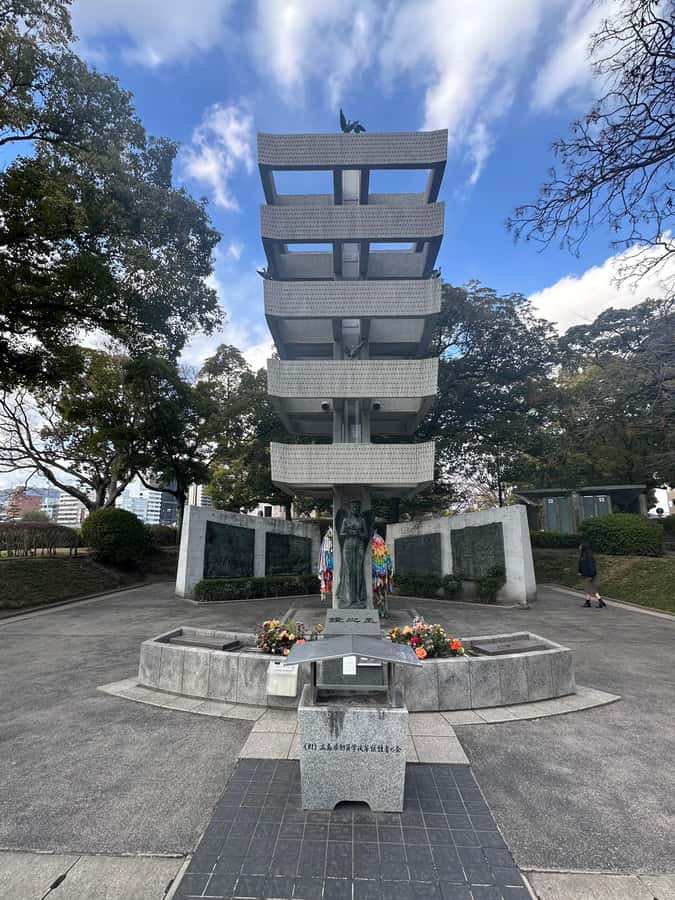
The Children’s Peace Monument is another 15-minute stop. It is closely tied to the story of children affected by the bombing and to the peace message carried by younger generations.
Guides can make this stop more meaningful by explaining the symbols and the reason visitors leave paper cranes there. The monument is often one of the most affecting parts of a first visit, particularly for families and younger visitors.
A private guide helps here because you can set your own emotional pace. Some people want detailed explanation. Others need a quiet moment. You are not locked into a fixed group schedule, though the four-hour limit still means the guide must keep an eye on time.
The Atomic Bomb Dome, Hiroshima’s Most Recognizable Ruin
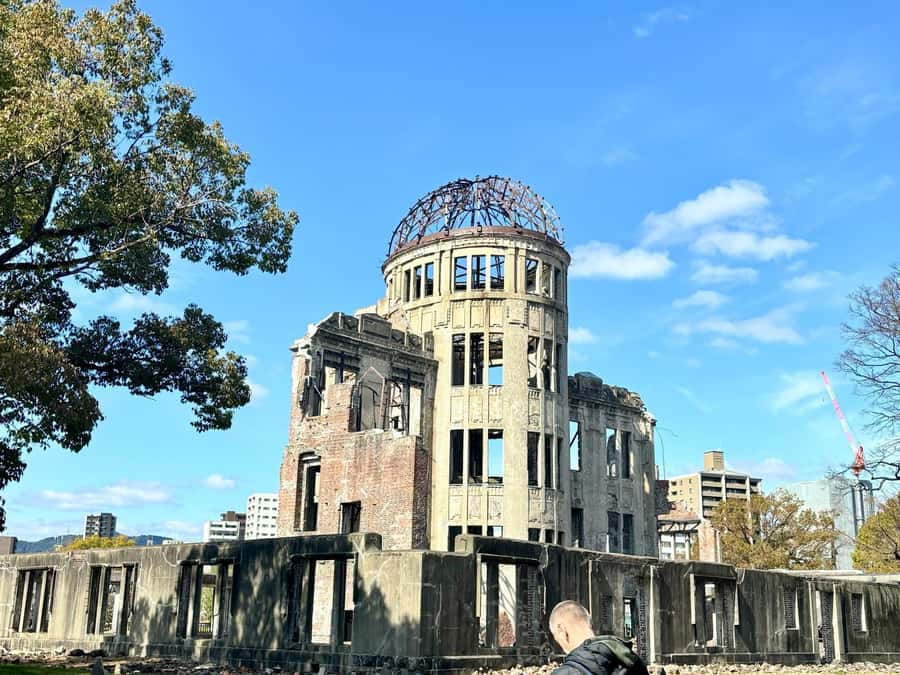
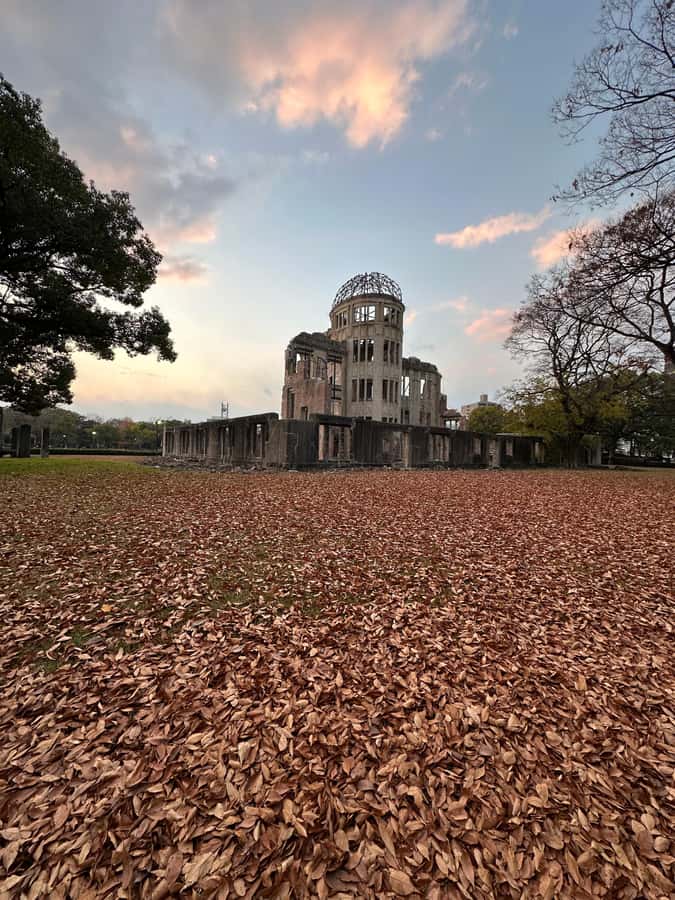
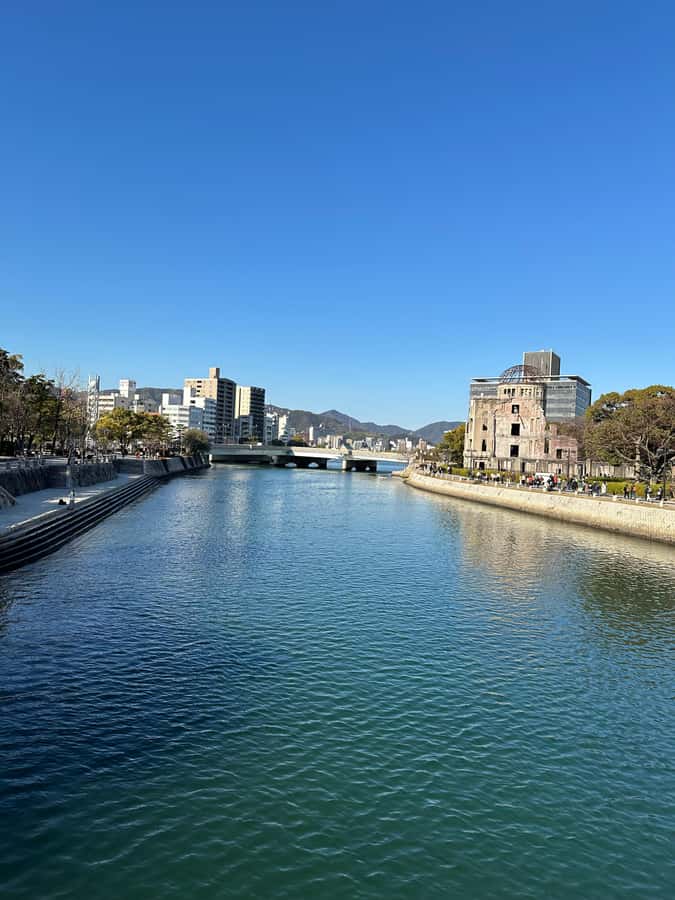
The Atomic Bomb Dome receives about 20 minutes and is one of the clearest visual links to the bombing. The damaged structure remains beside the river, surrounded by a city that was rebuilt around it.
Your guide can explain what the dome represented before 1945 and why it was preserved afterward. This is where the phrase see Hiroshima before and after the bombing becomes real. The ruin is not an abstract historical illustration. It is a surviving building set within the present-day city.
The stop is mainly outside, so it works well as a guided photo and explanation point. Admission to the Atomic Bomb Dome is included in the activity details, although the main value here is the guide’s interpretation and the chance to view the structure in relation to the park.
I would not rush this stop. Look across the river and notice how ordinary city life continues nearby. That contrast is part of the experience. Hiroshima is not preserved as a museum city, and the tour helps you understand both the destruction and the recovery.
Beyond the Park to Hiroshima Castle
The walk to Hiroshima Castle shifts the subject from twentieth-century tragedy to the city’s older identity. The castle dates to the 16th century, and the tour allows about 40 minutes for a guided visit and walk.
This is a useful change of pace after the Peace Memorial Park. Hiroshima existed long before 1945, and the castle helps restore that longer view. You can ask your guide about the city’s earlier role, its geography, and how the modern center grew around older foundations.
The exact balance between walking, viewing, and entering parts of the castle may depend on the day and your starting time. One guest missed the castle interior after a delayed train, but the guide still explained its history and adjusted the ending. That is a reminder to leave a little breathing room if your schedule is tight.
The castle stop also makes this tour more than a memorial tour. You see two sides of Hiroshima: the city shaped by centuries of Japanese history and the city known worldwide for the atomic bombing.
Local Detours That Add Real Value
The advertised route includes other places along the way, and this is where the guide can make the biggest difference. Ali has taken groups outside the park to a school and a bank with links to the events of that day. These are not necessarily part of a fixed timetable, so ask early if you want more of that local context.
Wajid has also added a garden and helped visitors find local food. Ihsan has ended tours at restaurants serving Hiroshima-style okonomiyaki, and guides have stopped for fresh orange juice, ice cream, or other refreshments when the pace and weather called for it.
These additions are not guaranteed, and food is not included. Still, they show why a private tour can offer more than a standard monument circuit. You get a person who can respond to your questions and point you toward something useful after the formal route ends.
I would ask your guide at the beginning which side trips fit the day. If you want only the major sights, the four-hour schedule can stay focused. If you want schools, older buildings, food, or local life, the guide may be able to shape the walk around those interests.
What Four Hours Feels Like on Foot
The schedule is full. The listed stops add up to several hours of sightseeing, plus the walking between them. One visitor felt four hours was slightly too long, while others appreciated the full morning and the amount of ground covered.
That difference is easy to understand. Hiroshima’s memorial sites invite reflection, but the route keeps moving. In hot and humid weather, the distance can become tiring. Rain does not necessarily cancel the experience, but you should dress for it and expect outdoor stops to feel slower.
The pace is easier to manage in a private group. Guides have adapted for families, teenagers, delayed trains, rain, and different levels of interest. You can ask to linger at the museum or keep the castle section shorter, though the guide may need to trim another stop to stay within four hours.
Wear comfortable shoes and bring water. Since transportation is not included, you should also confirm how you will reach the meeting point and how you will continue afterward. The tour ends back at 1-2 Nakajimachō.
Guide Quality and Language Choices
The strongest part of this experience is the guide. Maria has been praised for clear English, thoughtful pacing, and tailoring the visit to individual interests. Ihsan is known for enthusiasm, detailed answers, stories about Hiroshima and Japan, and a good sense of humor. Ali has provided strong historical context and practical help, including directions and a pharmacy stop when needed.
Wajid has combined history with food and local recommendations. Other guides, including Marie and Meg, have been described as warm, clear, and especially good at explaining the museum, park, and monuments.
Guide assignments can vary, so you cannot necessarily select one specific person unless the booking process allows it. The available languages are English, Malay, Urdu, Hindi, and Punjabi. If language is important for your group, check the available guide before paying.
The private setup is especially useful if you have children, older family members, or a specific interest in wartime history, architecture, food, or Japanese culture. It is also a good choice if you dislike standing in a large group while a guide speaks to the back row.
Is $90 Per Person Good Value?
At $90 per person, this is not the cheapest way to see Hiroshima. You could walk through the park independently and pay for the museum yourself. The value comes from the time saved, the included admissions, and the explanations that connect the sites.
For a first visit, I think the price is reasonable if you want a guided morning with a private group. You are paying for four hours of personal attention, not just entry tickets. The guide can answer questions, adjust the route, add local stops, and help you understand details that are easy to miss alone.
The calculation is less favorable if you already know Hiroshima well or want to spend several hours reading every museum display at your own pace. In that case, an independent visit may suit you better.
Free cancellation up to 24 hours before the activity and the reserve-now, pay-later option also reduce the risk when your Japan schedule is still changing. These are practical advantages, but the real decision is how much context you want around the sights.
Who Should Book This Hiroshima Walk
I would choose this tour for a first-time Hiroshima visit, especially if you have only one day in the city. It brings the Peace Memorial Park, museum, Atomic Bomb Dome, and Hiroshima Castle into one organized route.
It also suits families and mixed-interest groups. The private format lets you balance serious history with a castle visit, food advice, or a short refreshment stop. The guides have worked well with teenagers and have adjusted to heat, rain, and delayed arrivals.
You may prefer to visit independently if you want a very slow museum visit, dislike a four-hour walking schedule, or are already familiar with the memorial sites. The tour is full, so it is not designed as a casual stroll with long café breaks.
FAQ
How long is the Hiroshima private walking tour?
The activity lasts four hours. Starting times vary, so you need to check availability for the date you want.
Where does the tour start and finish?
You meet your guide at 1-2 Nakajimachō, Naka Ward, Hiroshima. The tour ends back at the same meeting point.
What places are included on the route?
The route includes the Gates of Peace, Prayer Fountain, Hiroshima Peace Memorial Museum, Hiroshima Victims Memorial Cenotaph, Flame of Peace, Korean Atomic Bomb Victims Cenotaph, Bell of Peace, Children’s Peace Monument, Atomic Bomb Dome, and Hiroshima Castle.
Is admission included?
Yes. Entry to the Hiroshima Peace Memorial Museum, Atomic Bomb Dome, and Hiroshima Peace Memorial Park is included.
Is this a private group tour?
Yes. The experience is arranged as a private walking tour, so the guide can respond to your group’s questions and adjust the pace.
What languages are available?
Live guiding is available in English, Malay, Urdu, Hindi, and Punjabi. The specific guide depends on availability.
Can I cancel or pay later?
You can cancel up to 24 hours in advance for a full refund. You can also reserve the activity and pay later, which helps if your Japan plans are not fully settled.
Should You Book It?
Book this tour if you want Hiroshima’s major memorials explained in human terms, with a local guide who can adapt the route and add context beyond the usual photo stops. The museum and Peace Park are the heart of the experience, while the Atomic Bomb Dome and Hiroshima Castle give the day a clear visual and historical shape.
Skip it if you prefer complete independence or want to spend most of your time inside the museum. For most first-time visitors, though, the combination of private guiding, included admission, local detours, and a well-planned four-hour route makes $90 a fair price for a thoughtful introduction to Hiroshima.
Just added around Hiroshima
- The Journey of Hiroshima from Tragedy to Peace★ 4.8 · 44 reviews
- Miyajima: Private Rickshaw Tour to Itsukushima Shrine★ 4.9 · 45 reviews
- Hiroshima: Miyajima Half-day Historical Walking Tour★ 4.7 · 100 reviews
- Hiroshima/Miyajima Private Custom Tour with Local Guide★ 5.0 · 134 reviews
- Hiroshima:Guided Virtual Tour/PEACE PARK TOUR VR★ 5.0 · 29 reviews
- Hiroshima: Saijo Sake Tasting at 7 Breweries Guided Tour★ 4.8 · 29 reviews
- Hiroshima: Tour of Atomic Bomb Dome & Peace Memorial Museum★ 5.0 · 20 reviews
- Hiroshima: Private Walking Tour with a Local★ 4.6 · 70 reviews
Walking Tours, compared.
Kyoto Geisha Walking Tour: Gion District & Hidden Gems
Read our review →
Tokyo Tsukiji Fish Market Food and Culture Walking Tour
Read our review →
Gion Magical Night Walking Tour with Geisha Trivia
Read our review →
Imperial Palace and Shogun Historical Walking Tour
Read our review →
Gion Geisha District Walking Tour – Stories of Geisha
Read our review →
Asakusa Walking Tour with Sensoji Temple Visit
Read our review →
Kyoto Gion Geisha District Walking Tour – The Stories of Geisha
Read our review →Browse the lists this tour appears in