
REVIEW · WALKING TOURS
Hiroshima: Hidden Gems and Highlights Private Walking Tour
Hiroshima is easiest to understand when you pair its major sights with the ordinary streets around them. This private walk does exactly that, moving from Shukkei-en Garden and the A-Bomb Dome to back alleys, local restaurants, and neighborhood bars chosen around your interests. I like the personal format, and I like that a guide such as Ken may add family stories tied to Hiroshima’s past. The catch is that food, entry tickets, and any train, tram, or taxi rides cost extra.
I also like the freedom to choose a short two-hour orientation or a fuller six-hour outing. You can focus on wartime history, Japanese gardens, local food, nightlife, or a mix of all four. Since the route changes to suit you, the experience depends heavily on the host you are matched with and on how clearly you explain what you want before arrival.
In This Review
- Key points at a glance
- Starting near the A-Bomb Dome
- Shukkei-en Garden and a quieter Hiroshima
- Peace Memorial Park and the A-Bomb Dome
- Hiroshima Castle and the city beyond the memorials
- Backstreets, Ekinishi, and Nagarekawa
- Okonomiyaki, oysters, curry, and sake
- What the private format is really worth
- Duration, walking, and transport
- The guides and the human side of Hiroshima
- Who should book this walk?
- Final call: is it worth booking?
- FAQ
- Where does the Hiroshima walking tour meet?
- How long does the private walking tour last?
- Which languages are available?
- Is transportation included?
- Are food, drinks, and attraction tickets included?
- Can the itinerary be customized?
Key points at a glance
- Start at Hiroshima Orizuru Tower: Meet your host outside the souvenir shop on the ground floor, close to the A-Bomb Dome and Peace Memorial Park.
- Choose the depth of your walk: A two-hour version works for a first look, while six hours gives you time for history, food, and neighborhoods farther from the main sights.
- Shukkei-en adds a quiet beginning: This 400-year-old garden survived the atomic bombing and offers a calm setting before the heavier memorial sites.
- Local guides add personal context: Ken has shared family history connected to Hiroshima, while Yuka, Kaku, Masayo, and Tom have led highly rated walks.
- Food is part of the plan, not an add-on: You may stop for Hiroshima-style okonomiyaki, oysters, curry, or sake, but you pay for food and drinks separately.
- The itinerary can change as you walk: Ask for another café, a neighborhood bar, or Minato Park if your interests shift during the day.
Starting near the A-Bomb Dome
Your meeting point is outside the souvenir shop at ground level of Hiroshima Orizuru Tower. This is a practical place to begin because you are already near the A-Bomb Dome, Peace Memorial Park, and the city center. Your host will meet you there, then shape the opening of the walk around your interests and available time.
The tour is private, so you are not tied to a fixed group pace. That matters in Hiroshima. Some people need time at the memorial sites, while others prefer a shorter visit before turning to food and daily life. Tell your host early if you want a serious history-focused morning, a lighter city introduction, or a balance of both.
Before the tour, you receive a questionnaire about your personality, tastes, and travel style. Use it well. Mention foods you want to try, places already on your list, mobility concerns you want to discuss, and whether you prefer museums, gardens, shopping streets, bars, or quiet corners. The better your answers, the more useful the host’s suggestions should be.
More Walking Tours in Hiroshima
- Hiroshima Historical Walking Tour – Why A-Bomb was Dropped
★ 4.8 · 893 reviews - Hiroshima Peace (Heiwa) Walking Tour at World Heritage Sites
★ 5.0 · 872 reviews - Hiroshima City 4hr Private Walking Tour with Licensed Guide
★ 5.0 · 437 reviews
Shukkei-en Garden and a quieter Hiroshima
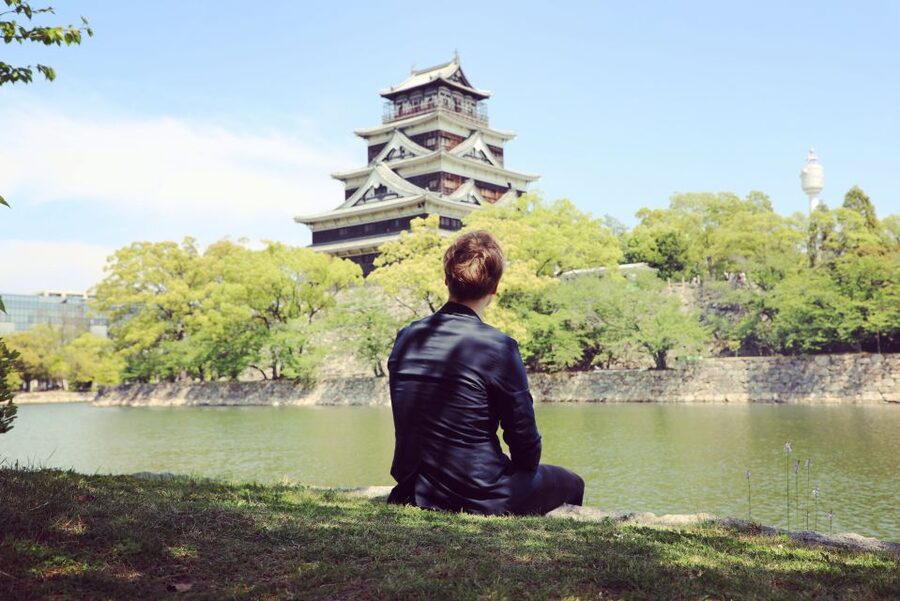
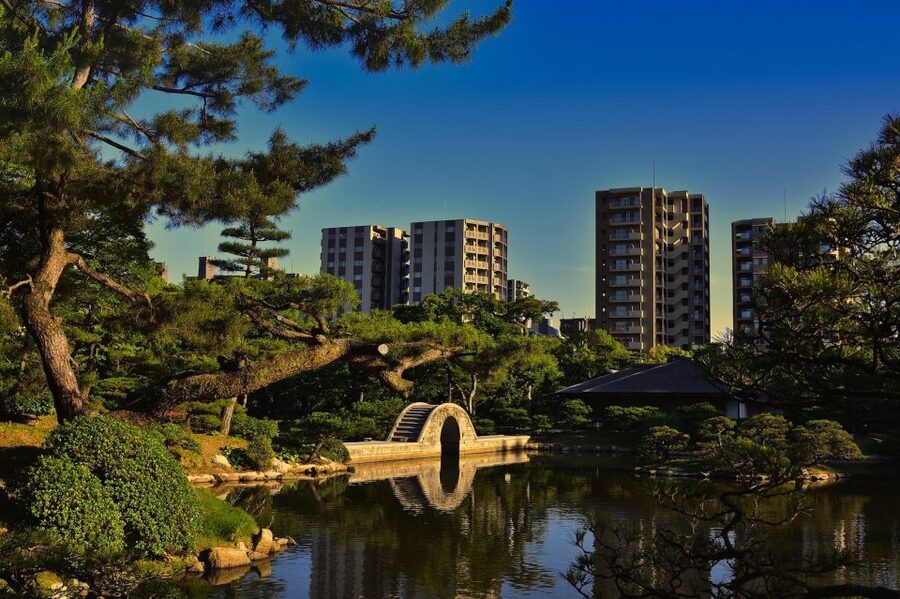
Shukkei-en Garden is a fine first stop because it gives you room to settle into the city before confronting its most painful history. The garden is about 400 years old and survived the atomic bombing. Its ponds, paths, and carefully arranged scenery offer a quiet contrast to the modern city around it.
I would choose this stop if you enjoy gardens or want a slower start. Your host can explain why the garden matters beyond its looks, including its survival during the bombing. It also gives you a chance to ask questions before reaching the memorial area, when many people find the subject emotionally heavy.
The limitation is time. On a two-hour walk, the garden may leave less room for neighborhood food stops or other sights. If Shukkei-en is a priority, say so in advance and consider choosing a longer duration.
Peace Memorial Park and the A-Bomb Dome
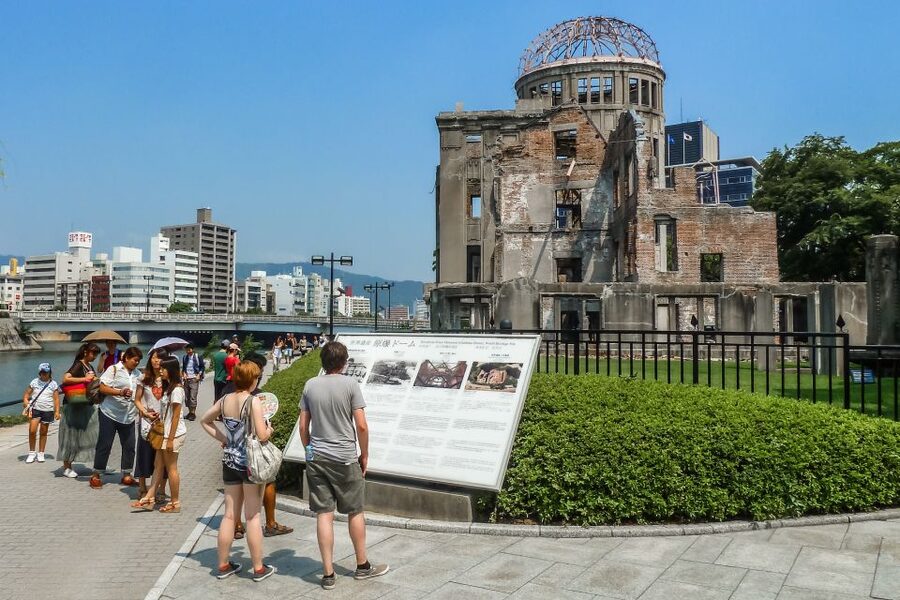
The walk then turns toward Peace Memorial Park and the Atomic Bomb Dome. These are not casual sightseeing stops. The park asks you to slow down, pay attention, and consider the human cost of August 6, 1945. A local guide can help connect the buildings and memorials to Hiroshima’s present-day identity.
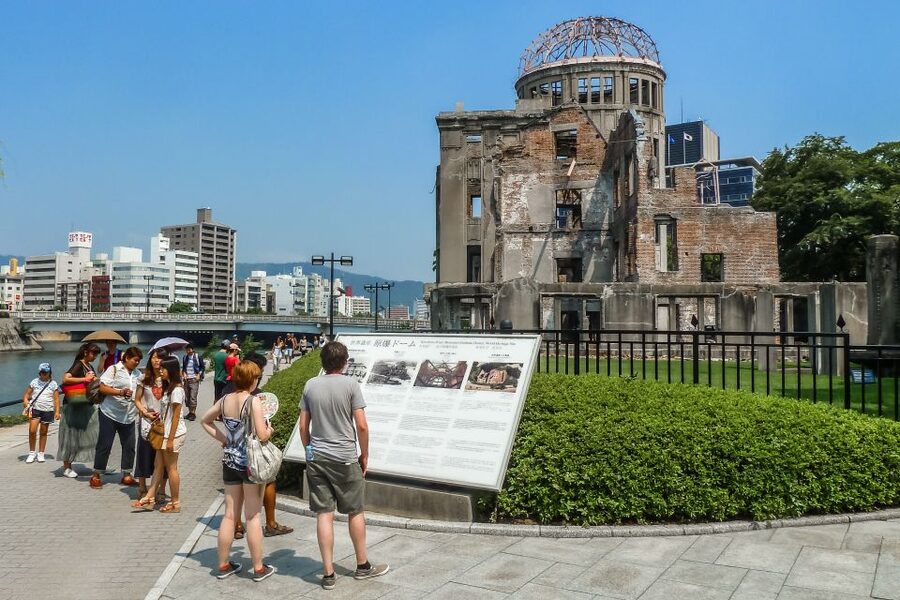
The A-Bomb Dome is especially powerful because its damaged frame remains beside the river in the middle of a living city. You are not looking at a distant monument. You are seeing a surviving structure surrounded by streets, offices, shops, and people going about their day.
A host may also help you decide how much time to spend at the Peace Memorial Museum. One published route included the A-Bomb Dome, museum, and Hiroshima Castle during a four-hour walk. Museum admission is not included, so confirm your plan before you begin if you want to go inside.
I value the private format here. You can ask direct questions without worrying about slowing a group. You can also pause in silence if that is what the moment requires. Still, the guide cannot remove the emotional weight of these places, and some people may prefer to visit the museum independently after the walk.
Hiroshima Castle and the city beyond the memorials
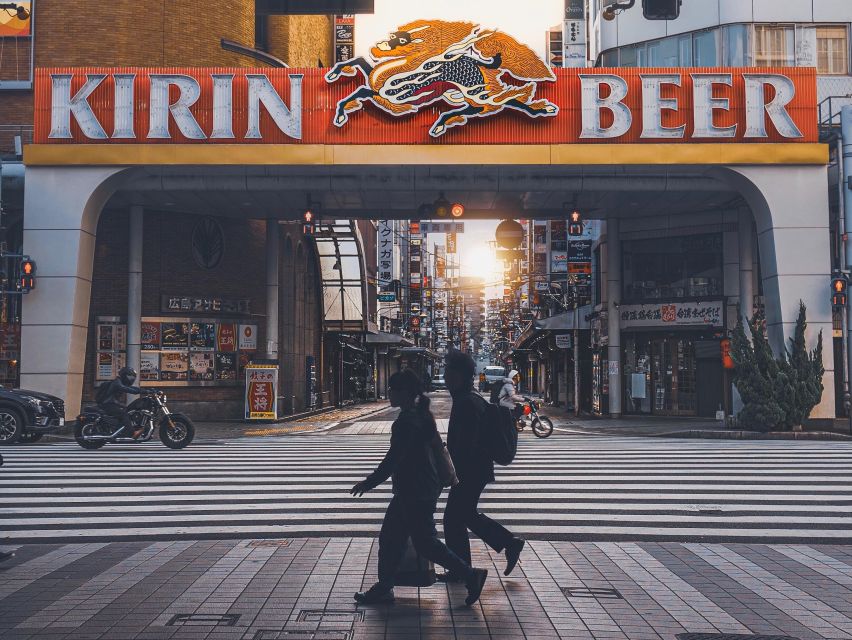
Hiroshima Castle is another possible stop, especially if you want to see how the city’s story extends beyond the bombing. One four-hour route included the castle along with the A-Bomb Dome and museum. The exact balance depends on your host, the length you choose, and your interests.
This is where the private setup pays off. A fixed sightseeing route often pushes you from one famous site to another. Here, you can ask to spend more time on the castle area, skip it for food, or use it as a bridge between historical sites and the modern city.
Do not assume every major sight is included automatically. The tour is personalized rather than fixed. State your must-see places in the questionnaire and repeat them when your host contacts you.
Same city, a completely different kind of day:
- Peaceful Hiroshima & Miyajima UNESCO 1 Day Bus Tour
★ 5.0 · 5,309 reviews - Hiroshima: Hiroshima and Miyajima UNESCO Sites 1-Day Tour
★ 4.9 · 2,330 reviews - Hiroshima / Miyajima Full-day Private Tour with Government Licensed Guide
★ 5.0 · 1,298 reviews - Hiroshima in a Nutshell: Morning Bike Adventure
★ 5.0 · 524 reviews
Backstreets, Ekinishi, and Nagarekawa
The best reason to book this walk is the turn away from the main sights. Your host may lead you through narrow lanes, local shopping areas, and less familiar districts where the city feels more like a place to live than a sightseeing set.
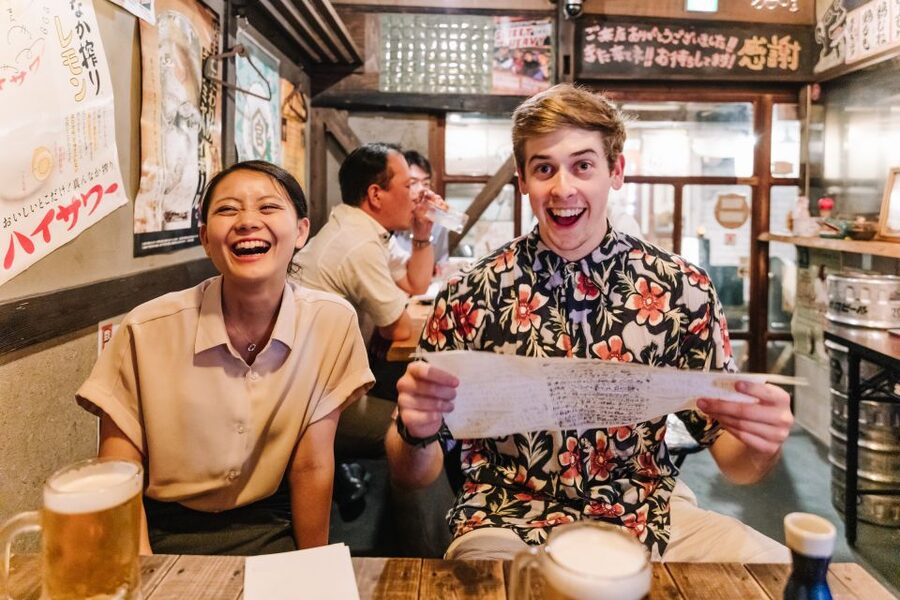
Ekinishi is suggested as one possible area for tucked-away bars and casual evening stops. Nagarekawa offers another setting for food and drinks. You might end up in a small bar, a neighborhood restaurant, or a café chosen to match your tastes. These places are not guaranteed, so treat them as possibilities to request rather than fixed promises.
Kaku’s route included a local curry restaurant that became a major meal highlight for two people who did not usually seek out curry. That detail is useful: tell your host what you normally avoid, not just what you enjoy. A good local recommendation often begins with a food you would not have chosen from a standard sightseeing list.
You may also find oyster stalls or a quiet sake stop. Hiroshima is known for its oysters and its regional food culture, but the tour does not include food or drinks. Plan to pay directly for whatever you order, and tell your host if you want a sit-down meal or several small tastings.
Okonomiyaki, oysters, curry, and sake
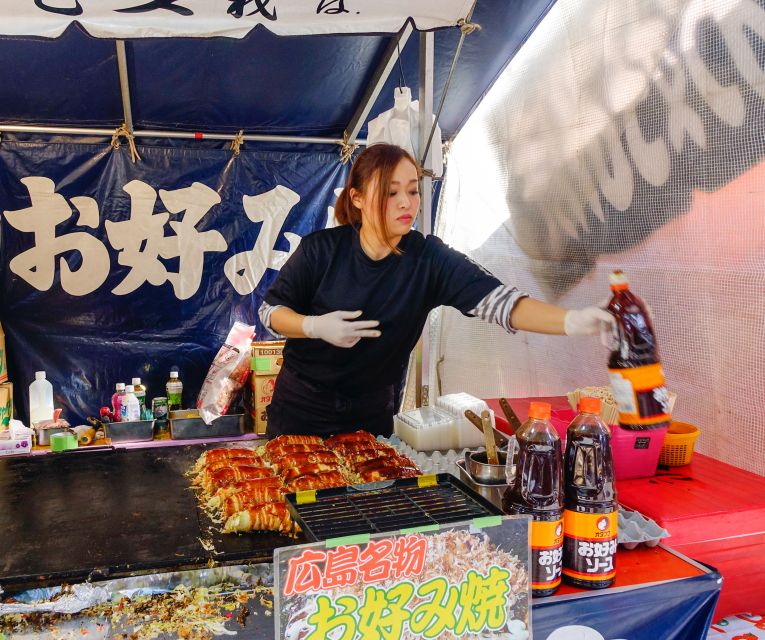
Hiroshima-style okonomiyaki is the obvious food request. It is prepared in layers, with noodles commonly forming part of the dish, and it makes a filling meal during a walking day. Your host may take you to a favorite neighborhood eatery such as Okamoto’s, which was a highlight on one route.
The value here is not simply getting a plate of local food. It is learning where your host would eat, how the dish fits into city life, and which kind of place suits your budget and mood. A recommendation is more useful when you can return there later without a guide.
Ask about oysters if you want another Hiroshima specialty. You might visit a stall or a casual seafood stop, but the exact venue depends on timing and availability. Sake is another possible addition, especially around Ekinishi or Nagarekawa.
Keep your schedule realistic. A full meal takes time, and a six-hour walk allows more room than a two-hour introduction. Food and drinks are extra, as are tickets to attractions, so the $67 per-person starting price is not your complete day’s budget.
What the private format is really worth
At $67 per person, this is a fair price for a private host if you value conversation and flexibility. You are not paying only for directions between landmarks. You are paying for planning before arrival, a host assigned around your interests, and recommendations that can shape the rest of your stay.
The value is strongest for first-time visitors who want help making sense of Hiroshima quickly. It is also useful for couples or families with different priorities. One person can ask for memorial sites, another for food, and the host can build a day that gives both room.
The price is less attractive if you want a cheap way to tick off landmarks. You still pay for museum or garden admission, meals, drinks, and transport when needed. Since this is a walking tour, a tram or taxi may be used between areas, with those costs handled separately.
The group is private, which gives you control but also places more responsibility on you. Be specific. Ask for the places you care about, say when you need a break, and tell the host if you would rather spend money on food than tickets.
Duration, walking, and transport
You can choose a duration from two to six hours, with start times selected during booking. A two-hour walk is best for a compact introduction around the city center. It can cover a major sight or two and give you restaurant and neighborhood tips for later.
Four hours gives you a more balanced outing. You may have time for the A-Bomb Dome, Peace Memorial Park, the museum or Hiroshima Castle, plus a meal or a local street. Six hours suits anyone who wants a fuller mix of history, gardens, food, and districts away from the central memorial area.
This remains a walking experience, not a private vehicle tour. Public transport or local taxis may be used to connect sites, and you pay those costs separately. Ask your host about the likely route after your reservation is complete, especially if you want to include Minato Park or another waterfront area.
Wear comfortable shoes and leave room in your schedule. Even when the route is flexible, Hiroshima’s main sights and food districts are spread across the city. A short tour should stay focused rather than trying to cover everything.
The guides and the human side of Hiroshima
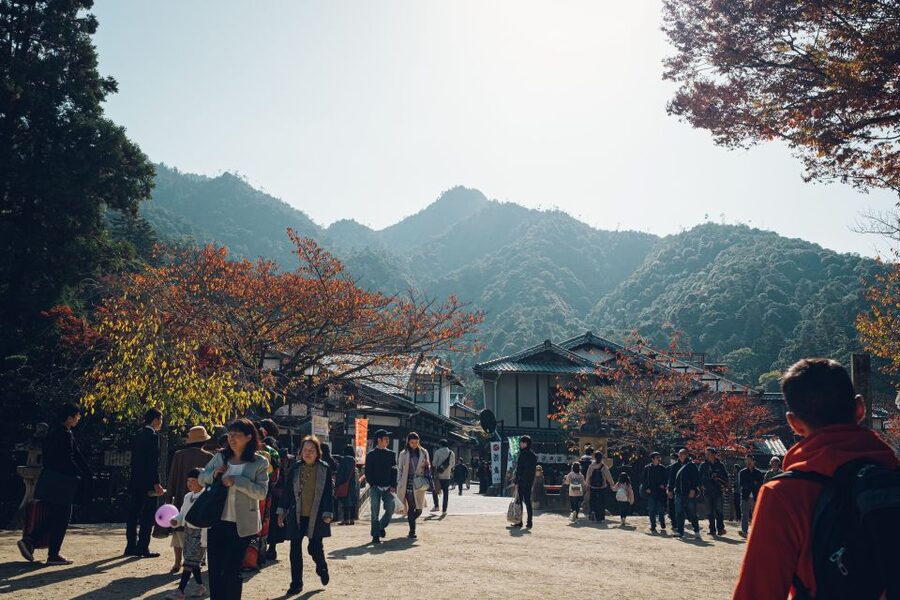
The host can make or break a private city walk, and the named guides connected with this experience bring different strengths. Ken has led walks in clear English and shared personal family history connected with Hiroshima. That kind of first-person context can add meaning to the memorial sites without turning the visit into a lecture.
Yuka has been praised for an open manner and strong command of the subject. Kaku has taken people to local food spots and made conversation easy. Masayo has guided walks focused on the city’s painful wartime period, while Tom has handled a route covering the A-Bomb Dome, museum, and castle.
You cannot request a particular guide with certainty from the information provided, but you can explain your preferences in the questionnaire. Say if you want a host who talks at length about history, one who puts food first, or someone who can balance both.
The published score is 4.8 from 27 ratings, which is a strong sign, though it is still a small sample. I would treat the host match as the key variable and use the pre-tour contact to set clear expectations.
Who should book this walk?
Book it if you want more than a standard route through Peace Memorial Park. It suits first-time visitors, curious eaters, couples, families, and anyone who prefers a private conversation to a large group tour.
It is especially useful early in your Hiroshima stay. The host can suggest restaurants, bars, cafés, and areas to revisit later, giving you practical ideas beyond the tour itself.
You may want another option if you prefer a fixed, low-cost sightseeing itinerary or if you do not want to pay separately for transport, entry, and food. You should also think carefully about the duration. A two-hour booking cannot deliver the same range as a six-hour walk.
Final call: is it worth booking?
I would book this tour if you want Hiroshima’s major memorial sites placed in the context of local food, ordinary neighborhoods, and personal stories. The strongest plan is to request Shukkei-en, Peace Memorial Park, the A-Bomb Dome, and one food stop, then let the host fill in the best connecting streets.
Choose four to six hours if you want both history and local life. Choose two hours if you need orientation and recommendations for the rest of your stay. At $67 per person, it offers good value when you use the flexibility well, but remember to budget for meals, tickets, and transport.
FAQ
Where does the Hiroshima walking tour meet?
Your host will wait outside the souvenir shop on the ground level of Hiroshima Orizuru Tower.
How long does the private walking tour last?
You can choose a duration from two to six hours. Available starting times are shown when you check availability.
Which languages are available?
The tour is offered with a live guide in English or Japanese.
Is transportation included?
No. This is a walking experience, though public transport or local taxis may be used between sites at an additional cost.
Are food, drinks, and attraction tickets included?
No. You pay separately for food, drinks, and tickets to attractions such as museums or gardens.
Can the itinerary be customized?
Yes. After booking, you complete a questionnaire about your interests and travel style. Your host then contacts you to suggest a route and adapt the experience to your preferences.
Just added around Hiroshima
- The Journey of Hiroshima from Tragedy to Peace★ 4.8 · 44 reviews
- Miyajima: Private Rickshaw Tour to Itsukushima Shrine★ 4.9 · 45 reviews
- Hiroshima: Miyajima Half-day Historical Walking Tour★ 4.7 · 100 reviews
- Hiroshima:Guided Virtual Tour/PEACE PARK TOUR VR★ 5.0 · 29 reviews
- Hiroshima/Miyajima Private Custom Tour with Local Guide★ 5.0 · 134 reviews
- Hiroshima: Tour of Atomic Bomb Dome & Peace Memorial Museum★ 5.0 · 20 reviews
- Hiroshima: Saijo Sake Tasting at 7 Breweries Guided Tour★ 4.8 · 29 reviews
- Hiroshima: Private Walking Tour with a Local★ 4.6 · 70 reviews
Walking Tours, compared.
Kyoto Geisha Walking Tour: Gion District & Hidden Gems
Read our review →
Tokyo Tsukiji Fish Market Food and Culture Walking Tour
Read our review →
Gion Magical Night Walking Tour with Geisha Trivia
Read our review →
Imperial Palace and Shogun Historical Walking Tour
Read our review →
Gion Geisha District Walking Tour – Stories of Geisha
Read our review →
Asakusa Walking Tour with Sensoji Temple Visit
Read our review →
Kyoto Gion Geisha District Walking Tour – The Stories of Geisha
Read our review →Browse the lists this tour appears in