
REVIEW · WALKING TOURS
Half Day Private Guided Walking Tour in Hiroshima City
Hiroshima is best understood on foot, and this tour adds something a museum label cannot: guide Pancho, also known as Tetsuo Hamano, is the son of an A-bomb survivor. His family story gives the city’s monuments a personal link, while the route also shows Hiroshima’s resilience through surviving trees, buildings, shrines, and everyday local life.
I like the personal family perspective and the way the tour connects the bomb’s physical impact to individual places. I also like the practical shape of the morning: you get historic sites, time for questions, an origami activity, and a local lunch suggestion in four hours.
The main drawback is cost. At $200 per person, this is a serious outlay for a walking tour, and lunch, public transport, museum admission, and any taxi or private vehicle cost extra. You are paying for a private guide and personal attention, not a bargain group excursion.
In This Review
- Key points to know before booking
- Why Pancho’s family story changes the walk
- Meeting at Hiroshima Station or your hotel
- Shirakami Shrine and Hiroshima’s pre-bomb story
- The hypocenter: a short stop with heavy meaning
- Saiko-ji Temple and the physical force of the blast
- The Atomic Bomb Dome and the Peace Flame
- Lunch with Hiroshima-style okonomiyaki
- The Rest House and a small origami lesson
- Children’s Peace Monument and Sadako’s story
- The Cenotaph and the idea behind its shape
- What four hours really gives you
- Is $200 per person a fair price?
- Who should book this Hiroshima walk?
- Final call: book it for meaning, not bargains
- FAQ
- How long does the Hiroshima walking tour last?
- Where can I meet the guide?
- Is this a private tour?
- Is lunch included?
- Is transportation included?
- Is the Hiroshima Peace Memorial Museum admission included?
- Are admission tickets required for the main outdoor memorial stops?
- What is the cancellation policy?
Key points to know before booking
- Pancho brings a family connection: His experience as the son of an A-bomb survivor adds a personal layer to the city’s wartime story.
- The route covers more than the Peace Memorial Park: You visit Shirakami Shrine, the bomb’s hypocenter, Saiko-ji Temple, surviving trees and buildings, and key memorials.
- You get a private four-hour outing: Only your own group participates, so questions and pacing can be adjusted to your interests.
- Lunch is flexible but not included: Pancho can point you toward Hiroshima-style okonomiyaki, ramen, sushi, and options for vegetarian, vegan, or gluten-free diners.
- Public transport is part of the plan: Allow about $4 per person for local transport, unless you arrange a taxi or optional private transportation.
- Book early if your dates are fixed: The tour averages 108 days of advance bookings, and confirmation is subject to availability.
Why Pancho’s family story changes the walk
Hiroshima can be a difficult place to visit. The facts are familiar to many people, but the scale of the destruction can remain abstract until you connect it to a shrine, a tree, a temple, or a person’s family.
Pancho’s role is not simply to point out monuments. He shares his family’s connection to the bombing and links that story to the places you pass. That can make the tour more emotional than a standard sightseeing walk, but it also gives you room to ask questions and talk through what you are seeing.
His approach, based on the experience described by past participants, includes both the painful side of Hiroshima’s story and the city’s effort to recover. That balance matters. You are not taken through a series of grim sites with no wider context. You also see the living city, eat local food, and learn about the customs and symbols that keep peace at the center of Hiroshima’s public life.
This is a good fit if you want a guide who will talk with you rather than simply recite dates. It may be less suitable if you prefer a silent, self-guided visit or want to move quickly through a long list of attractions.
More Walking Tours in Hiroshima
- Hiroshima Historical Walking Tour – Why A-Bomb was Dropped
★ 4.8 · 893 reviews - Hiroshima Peace (Heiwa) Walking Tour at World Heritage Sites
★ 5.0 · 872 reviews - Hiroshima City 4hr Private Walking Tour with Licensed Guide
★ 5.0 · 437 reviews
Meeting at Hiroshima Station or your hotel
The tour offers three meeting choices, including the bullet train platform at Hiroshima Station. That is particularly useful if you arrive from Osaka, Kyoto, or Tokyo and have only part of the day.
You can also meet at your hotel. The exact third option is described as reception at your hotel or Hiroshima Station, so confirm the meeting details after booking. Pancho has used text messages and exchanged photos with participants to make meeting easier, a helpful touch in a large station.
The first station stop is listed at about 20 minutes, although it functions mainly as the start of the outing and a way to get organized. If you arrive by shinkansen, plan a little extra time to get off the platform, collect your belongings, and find the meeting point.
This is a walking tour, but not a walk with no transport at all. Public transportation or a taxi may be used from your hotel or Hiroshima Station. Public transport costs about $4 per person, and private transportation is an optional extra.
Shirakami Shrine and Hiroshima’s pre-bomb story
Shirakami Shrine is an important early stop because it looks, at first glance, like a typical Shinto shrine. The guide uses it to explain a less obvious question: why was Hiroshima selected as an atomic bomb target?
That makes the shrine more than a quick photo stop. You begin with the city before the bombing and learn how its location, military role, and wartime importance shaped what happened. The supplied schedule allows about an hour here, so this is one of the places where Pancho can provide fuller context and answer questions.
You also see trees that survived the blast. These living survivors offer a different way to understand the force of the explosion. A photograph shows destruction in an instant, while a tree that continued growing after the bombing gives you a physical reminder of endurance.
I like this beginning because it prevents the tour from treating Hiroshima as only a memorial site. You first get a glimpse of the city’s religious and local identity, then connect it to the events of August 1945.
The hypocenter: a short stop with heavy meaning
The hypocenter monument marks the ground directly below the point where the atomic bomb exploded. The stop lasts about 10 minutes, but the timing does not suggest that it is unimportant.
At this location, the guide can show you photographs and explain the meaning of the monument. The value is in the exactness of the place. Instead of hearing only that a bomb destroyed central Hiroshima, you are told where the blast began at ground level.
This is likely to be one of the most emotionally concentrated parts of the walk. If you want time alone at significant sites, tell Pancho. A private tour gives you more flexibility than a fixed group schedule, though the four-hour limit still means the route must keep moving.
Same city, a completely different kind of day:
- Peaceful Hiroshima & Miyajima UNESCO 1 Day Bus Tour
★ 5.0 · 5,309 reviews - Hiroshima: Hiroshima and Miyajima UNESCO Sites 1-Day Tour
★ 4.9 · 2,330 reviews - Hiroshima / Miyajima Full-day Private Tour with Government Licensed Guide
★ 5.0 · 1,298 reviews - Hiroshima in a Nutshell: Morning Bike Adventure
★ 5.0 · 524 reviews
Saiko-ji Temple and the physical force of the blast
Saiko-ji Temple helps explain how heat and pressure affected buildings close to the explosion. The stop is scheduled for about 10 minutes, with surviving evidence of what happened.
The temple visit works best as a short, focused lesson. You are not spending a long time inside a major attraction. Instead, you are looking at a place that helps make the bombing’s physical force easier to picture.
The tour does not include entrance fees for these stops, and the listed admission cost is free. Still, do not expect every location to function like a full museum. Some stops are brief outdoor visits or short explanations. The guide’s interpretation is the main reason to include them.
The Atomic Bomb Dome and the Peace Flame
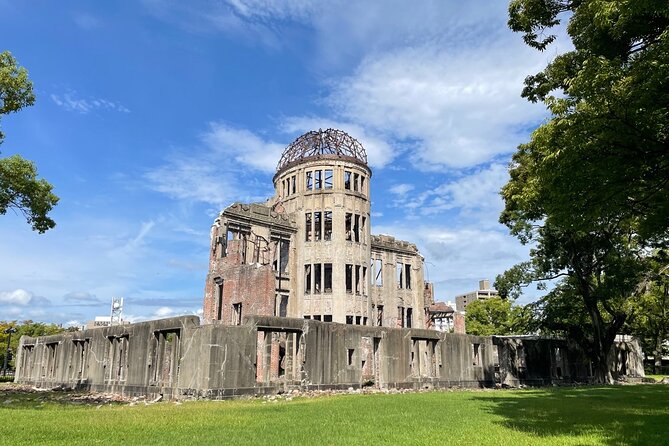
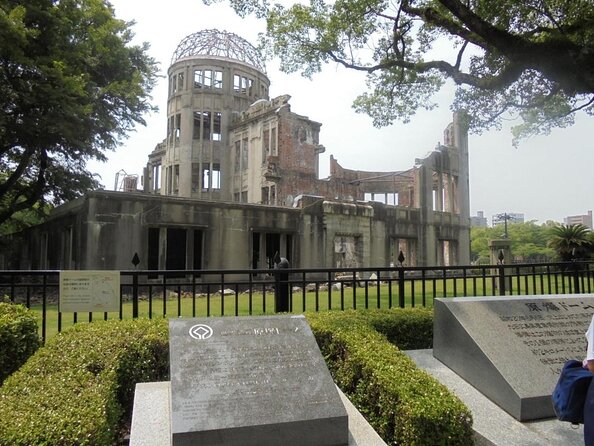
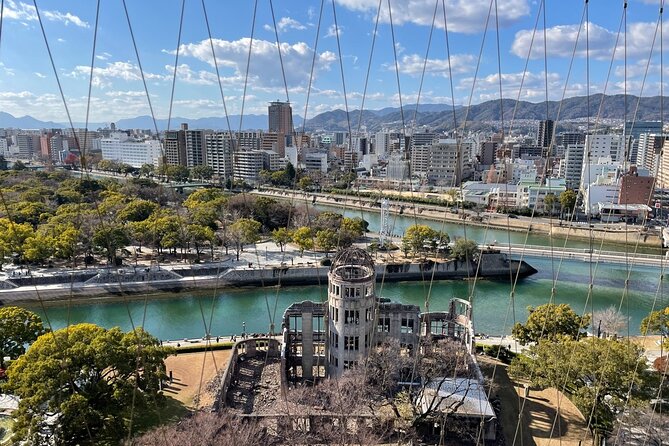
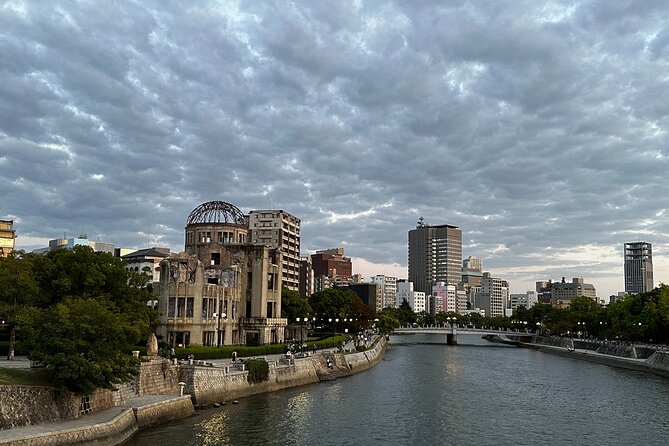
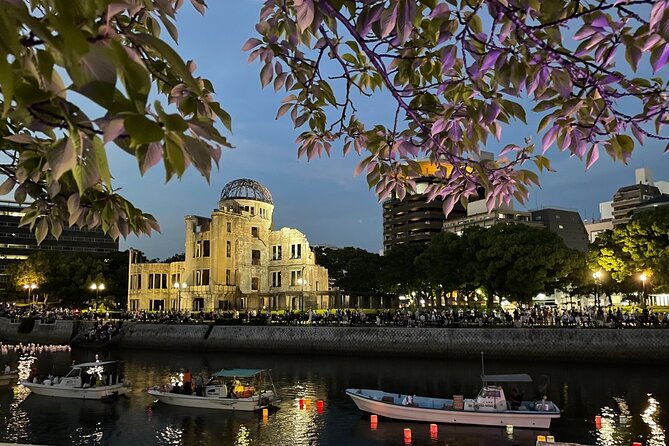
The Atomic Bomb Dome is Hiroshima’s most recognized structure. Its damaged frame has become a symbol of the bombing and the city’s call for peace.
You have about 20 minutes here. That is enough to view the building from different angles and hear its place in Hiroshima’s story, but it is not enough for a detailed museum-style visit. Bring your questions, because this is one of the most useful places to ask Pancho how the structure survived and why it was preserved.
The Peace Flame follows as a much shorter stop, about five minutes. The flame has continued burning since 1964 and is intended to remain lit until the world is free of nuclear weapons. The guide explains why it burns and what that message means in the setting of Peace Memorial Park.
The short timing may suit you if you are covering Hiroshima in one day. If you want long periods of quiet reflection or photography, you may need to return to the park later on your own.
Lunch with Hiroshima-style okonomiyaki
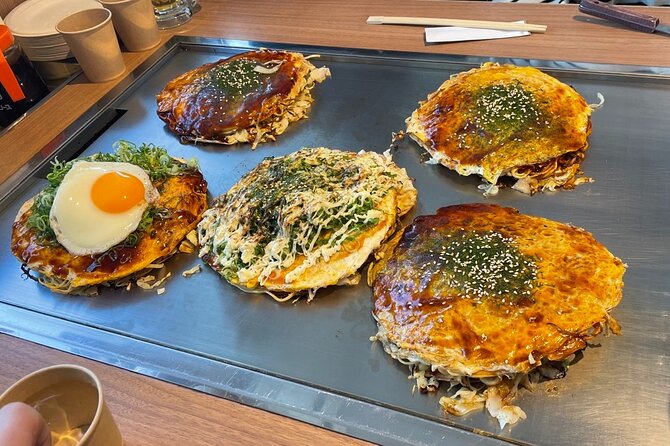
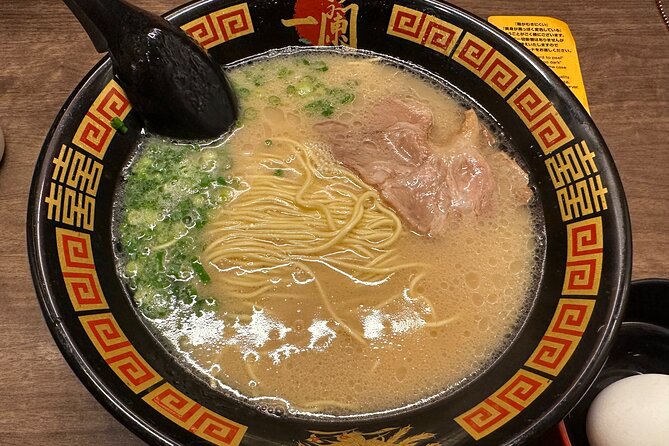
Lunch is built into the schedule for about 50 minutes, but food is not included in the price. Pancho introduces you to local restaurants near Peace Memorial Park, with Hiroshima-style okonomiyaki, ramen, and sushi among the choices.
Hiroshima-style okonomiyaki is especially worth considering. Unlike the Osaka version, it is commonly layered rather than mixed, and noodles are often part of the dish. The tour data does not promise a particular restaurant, so think of this as local guidance rather than a prepaid food tasting.
The flexible menu is useful for different diets. Vegetarian, vegan, and gluten-free options may be available, but you should tell Pancho your needs in advance. One past participant had discussed dietary restrictions before arrival, which helped make the tour more productive.
I like having lunch in the middle of the walk instead of treating food as an afterthought. It gives you a break after the heavier memorial stops and lets you experience Hiroshima as a living city. On the other hand, you should budget separately for lunch and remember that restaurant choice may depend on availability and your requests.
The Rest House and a small origami lesson
The Rest House of Hiroshima Peace Park is one of the city’s surviving buildings from the bombing. Today it serves as a tourist information point and includes a small museum.
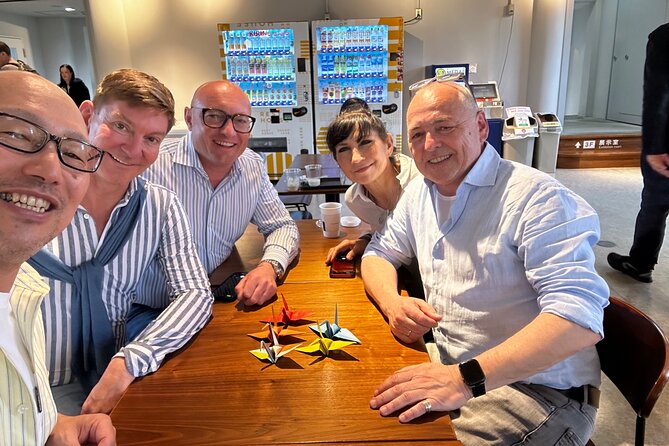
The scheduled visit lasts about 15 minutes. You may rest there, look at the small museum, or take part in an origami experience. Pancho has taught paper-crane folding during the tour, making this more than a quick look at another memorial building.
The paper crane has a strong connection to the Children’s Peace Monument, which comes later. Folding one gives you a simple way to take part in a Japanese tradition rather than only observe. It is also a welcome change of pace after several sites focused on destruction and loss.
Because this is a small museum and short stop, do not plan on replacing the full Hiroshima Peace Memorial Museum with it. The Rest House adds local context, but it is not the main museum visit.
Children’s Peace Monument and Sadako’s story
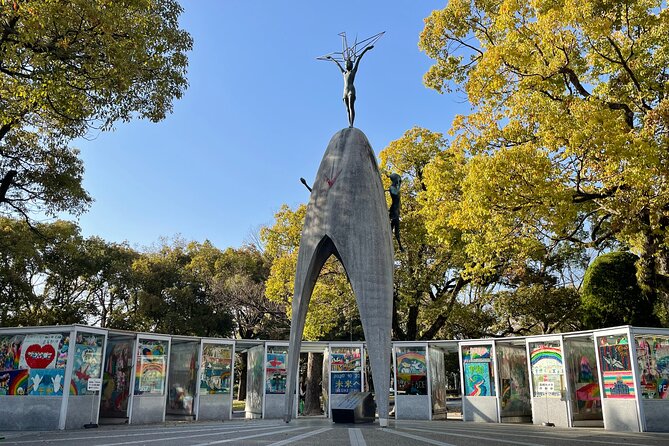
The Children’s Peace Monument honors children who died because of the bombing. The guide explains the story of one girl who folded paper cranes while hoping to recover from leukemia, following the Japanese belief that folding many cranes can bring healing or a wish.
This stop is often especially meaningful for families. The story gives younger visitors a clear human connection to the aftermath of the bomb, though the subject is still sad and may need gentle explanation for small children.
The visit lasts about 10 minutes. You will see the monument, hear its background, and connect it to the origami activity at the Rest House. That link gives the tour a better flow than treating the two stops as unrelated sights.
If you are traveling with children, ask Pancho to adjust the explanation to their age. The private format makes that kind of conversation easier.
The Cenotaph and the idea behind its shape
The Hiroshima Peace Memorial City Cenotaph for the Atomic Bomb Victims is one of the central memorials in the park. Pancho explains its history, the reason for its shape, and the design idea behind it.
The cenotaph’s curved form is meant to shelter the souls of the victims. Its inscription expresses the hope that the victims will rest in peace and that the tragedy will not be repeated. The tour gives you the chance to understand the design rather than simply photograph it.
The schedule allows about 10 minutes. As with the other short memorial stops, you may want to return later if you prefer a quiet, unhurried visit. The tour’s strength is the connected story, while a second visit lets you absorb the park at your own speed.
What four hours really gives you
Four hours is enough for a thoughtful introduction to Hiroshima’s key memorial sites, but it is not enough to see every important museum and neighborhood. The route includes about 10 stops, lunch, transport time, and discussion, so the day has a steady pace.
You should expect walking between several locations, with public transportation or a taxi used as needed. Wear comfortable shoes and keep water handy, particularly if the weather is warm. The tour description says most people can participate, but it does not provide a total walking distance or detailed accessibility information.
The private format is a real advantage. Pancho can spend more time on the places that matter to you, help with food choices, and answer questions without a large group waiting. It also means the tour can feel more like a conversation than a performance.
Still, the itinerary is fairly full. If you want to spend hours inside the Peace Memorial Museum, take long breaks, or photograph every angle of the Atomic Bomb Dome, you may need to continue independently after the tour.
Is $200 per person a fair price?
At $200 per person, the tour is expensive compared with a free self-guided walk or a large group tour. The guide fee is included, but lunch, museum admission, public transportation, and optional private transport are extra. The Peace Memorial Museum admission is listed as ¥200 per person, and public transportation is about $4 per person.
The price makes more sense for a small party that values a private English-speaking guide and personal attention. It is also easier to justify if Hiroshima is a major reason for your trip, if you have limited time, or if you want a family connection woven into the visit.
For a couple or family, compare the total cost with other private guiding options, including transport and food. For a solo visitor, $200 is a larger commitment. You are paying for access to Pancho’s time and interpretation, not for expensive admission tickets or an elaborate vehicle.
I would not choose this tour simply to save time or check off monuments. I would choose it for the human context, the private questions, and the chance to see sites that can be easy to pass without understanding.
Who should book this Hiroshima walk?
I would recommend it to you if you want:
- A private tour rather than a large group
- An English-speaking guide with a direct family connection to Hiroshima’s bombing
- A balanced look at sorrow, survival, and recovery
- Help choosing local food near Peace Memorial Park
- A route that includes less familiar stops such as Shirakami Shrine and Saiko-ji Temple
- A flexible discussion with time for questions and an origami activity
Families may find the Children’s Peace Monument and paper-crane activity useful, though parents should decide how much wartime detail their children can handle. History-focused visitors will appreciate the hypocenter and surviving buildings, while food-minded visitors get a local introduction to okonomiyaki, ramen, or sushi.
I would hesitate if you want a low-cost tour, a long museum visit, or a purely cheerful sightseeing outing. Hiroshima asks for attention and reflection, and this experience does not avoid that weight.
The tour has a 5.0 rating from 30 reviews and a 100 percent recommendation rate, with especially strong praise for Pancho’s thoughtful guidance, personal family story, communication before arrival, and ability to connect the history with a pleasant meal and hands-on origami. Those qualities are central to the experience.
You can cancel for a full refund up to 24 hours before the local start time. Confirmation arrives within 48 hours, subject to availability, so do not leave a fixed Hiroshima date until the last minute.
Final call: book it for meaning, not bargains
Book this tour if you want Hiroshima explained through real places and a guide who can connect public history with his family’s past. Pancho’s personal account, the surviving trees and buildings, the hypocenter, and the Peace Park memorials create a thoughtful four-hour route.
Skip it if $200 per person feels too high for a walk, or if you would rather spend the same time inside the Peace Memorial Museum on your own. For the right visitor, though, the value is not the number of stops. It is leaving Hiroshima with a clearer sense of what happened, how the city remembers it, and how ordinary life continued afterward.
FAQ
How long does the Hiroshima walking tour last?
The tour lasts approximately four hours.
Where can I meet the guide?
You can meet at the bullet train platform at Hiroshima Station if arriving from cities such as Osaka, Kyoto, or Tokyo. Meeting at your hotel is also available. Confirm the exact meeting point after booking.
Is this a private tour?
Yes. Only your own group participates in the activity.
Is lunch included?
No. Food and drinks are not included. The guide can introduce you to restaurants serving Hiroshima-style okonomiyaki, ramen, sushi, and some vegetarian, vegan, or gluten-free options.
Is transportation included?
Private transportation is not included. The tour may use public transportation or a taxi from your hotel or Hiroshima Station. Public transportation costs about $4 per person, and private transportation is available for an additional charge.
Is the Hiroshima Peace Memorial Museum admission included?
No. Admission is listed separately at ¥200 per person.
Are admission tickets required for the main outdoor memorial stops?
The hypocenter monument, Saiko-ji Temple stop, Atomic Bomb Dome, Peace Flame, Rest House, Children’s Peace Monument, and cenotaph are listed with free admission. The guide fee does not include the Peace Memorial Museum ticket.
What is the cancellation policy?
You can cancel at least 24 hours before the local start time for a full refund. Cancellations or changes made less than 24 hours before the start time are not accepted for a refund.
Just added around Hiroshima
- The Peace Memorial to Miyajima : Icons of Peace and Beauty★ 4.5 · 31 reviews
- Private Full Day Hiroshima Tour★ 4.5 · 29 reviews
- Hiroshima & Miyajima All-Inclusive Tour w/Licensed guide Pancho★ 5.0 · 54 reviews
- Okunoshima Rabbit Island Cycling Tour with Local Guide★ 4.5 · 17 reviews
- Shore Excursion from Hiroshima Port : Private Tour in Hiroshima★ 5.0 · 17 reviews
- Hiroshima Saijo Sake Tasting Tour with visit to 7 Breweries★ 5.0 · 104 reviews
- Miyajima Guided Tour and Fresh Oyster Farm Tour★ 5.0 · 20 reviews
- Hiroshima Country Cycling: Explore Rural Life 1 HR from City★ 5.0 · 22 reviews
Walking Tours, compared.

Kyoto Geisha Walking Tour: Gion District & Hidden Gems
Read our review →
Tokyo Tsukiji Fish Market Food and Culture Walking Tour
Read our review →
Gion Magical Night Walking Tour with Geisha Trivia
Read our review →
Imperial Palace and Shogun Historical Walking Tour
Read our review →
Gion Geisha District Walking Tour – Stories of Geisha
Read our review →
Asakusa Walking Tour with Sensoji Temple Visit
Read our review →
Kyoto Gion Geisha District Walking Tour – The Stories of Geisha
Read our review →Browse the lists this tour appears in