
REVIEW · WALKING TOURS
From Osaka: Sakai Knife Maker or Blacksmith Walking Tour
Sakai’s finest work happens in small workshops, not behind a glass case. This 210-minute walk takes you from an old sweet shop to the city craft museum, then into either Yamawaki Hamono, a century-old knife maker, or the De Sakai blacksmith forge.
I like the mix of local culture and hands-on skill. The mochi stop gives the tour a human start, while the sharpening lesson and chance to order a custom knife make the visit useful, not just interesting. The main catch is scheduling: the blacksmith and knife-maker visits run on different days, and the museum can close on the third Tuesday of the month.
In This Review
- Key points to know before you book
- Why Sakai is worth the short trip from Osaka
- Starting with mochi at Yao Gen Raikodo Honten
- A short, useful stop at the Sakai Traditional Crafts Museum
- Tuesdays and Thursdays: inside Yamawaki Hamono
- Wednesdays: the De Sakai blacksmith experience
- The walking matters more than the map suggests
- What the guides add to the experience
- Who will get the most from this tour
- Buying a knife: useful advice before you decide
- Practical details, cancellation, and the small print
- Should you book the Sakai knife tour?
- FAQ
- Where does the Sakai knife tour begin?
- How long does the tour last?
- Which days visit the knife maker?
- Which day visits the blacksmith forge?
- Is a sweet included?
- Can I order a custom knife?
- Is French guaranteed?
Key points to know before you book
- Choose your craft carefully: Tuesdays and Thursdays focus on knife finishing at Yamawaki Hamono, while Wednesdays focus on forging at De Sakai.
- Taste Sakai’s traditional sweets: You get one snack at Yao Gen Raikodo Honten, with extra food and drinks available at your own cost.
- Practice Japanese sharpening: The knife-maker option includes a lesson in traditional sharpening technique.
- See work most visitors cannot access: The factory and forge are working craft spaces, not standard tourist displays.
- Plan for a fair amount of walking: The route links Sakai Station, the sweet shop, museum, workshop, and station on foot.
- Check the language and date details: English is available, but French must be confirmed in advance for a shared tour.
Why Sakai is worth the short trip from Osaka
Sakai sits south of central Osaka and is reached from Nankai Sakai Station. The tour begins here, so you avoid the fuss of finding an out-of-the-way workshop on your own.
The setting is part of the appeal. You are not simply taken to a shop in a busy shopping district. You walk through a local part of Sakai, hear about the city’s past, and see how traditional craft still fits into an ordinary neighborhood.
Sakai is especially known for cutlery. The city’s knife trade connects blacksmithing, blade sharpening, handle fitting, and final finishing. That division of labor helps explain why a Japanese kitchen knife is more than a sharp souvenir. Several specialists may contribute to one finished tool.
I like that the tour gives you this context before the workshop visit. Without it, a knife factory can seem like a series of skilled movements that are hard to follow. With a guide explaining what you are seeing, the stages make sense.
The tour costs about $64 per person. That is more than a museum admission and a casual shopping stop, but the price includes a local bilingual guide, the sweets tasting, entry to the craft spaces, shopping time, and the sharpening lesson on the knife-maker route. For anyone seriously interested in Japanese knives or traditional making, the value is stronger than it first appears.
More Walking Tours in Osaka
- Osaka Kickstart: Hotspots & Hidden Gems Tour
★ 5.0 · 1,306 reviews - Osaka: Hotspots & Hidden Gems Walking Tour Private or Group
★ 4.9 · 1,300 reviews - Osaka Local Foodie Walking Tour in Dotonbori and Shinsekai
★ 5.0 · 985 reviews
Starting with mochi at Yao Gen Raikodo Honten
After meeting your guide at Nankai Sakai Station, you walk for about 15 minutes to Yao Gen Raikodo Honten, an old-fashioned sweets shop. The stop lasts around 20 minutes and includes one sweet.
This is a smart opening. It gives you a gentle introduction to Sakai before the technical part begins. You may taste traditional mochi, including flavors such as poppy seed or cinnamon, depending on what is offered during your visit.
The shop is not filler. The owner and the shop itself help connect food to local custom, family business, and everyday Sakai. I especially like the contrast between the soft, carefully made sweets and the heat, steel, and precision you encounter later.
One practical note: only one sweet is included. Extra food and drinks are not part of the tour price, so bring a little spending money if you want to try more.
A short, useful stop at the Sakai Traditional Crafts Museum
The next walk takes about five minutes. You then spend roughly 30 minutes at the Sakai Traditional Crafts Museum and Knife Shop.
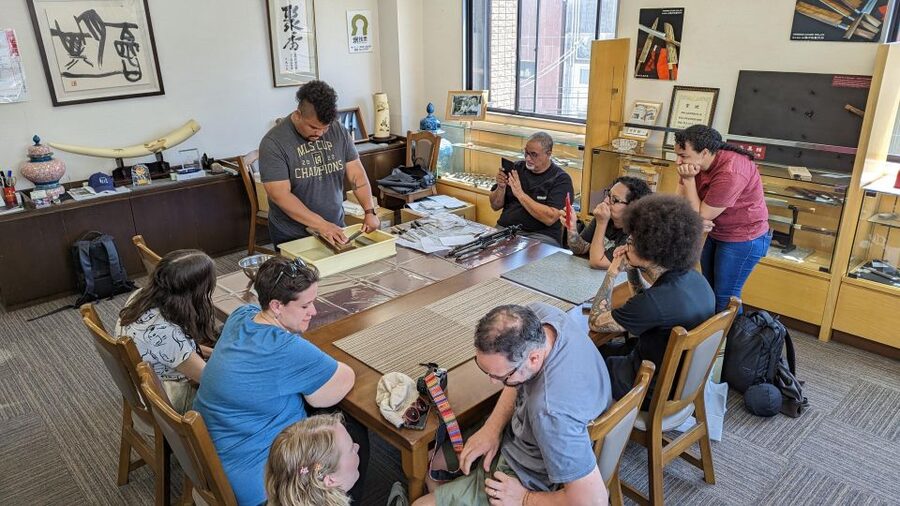
The museum provides the background that makes the workshop visit easier to understand. You can learn about Sakai’s cutlery tradition, see examples of local craft, and browse knives. The visit is partly self-guided, so do not expect a long formal lecture from the guide inside every display area.
This is also a good point to begin thinking about what kind of knife interests you. The shop can help you compare styles and finishes, but the final buying decision is yours. The guide can help explain your choices, especially if you are unsure about Japanese knife terminology or want to purchase a blade to use at home.
The museum may close without notice for inventory on the third Tuesday of each month. If that happens, the guide substitutes the cutlery history during the walk and at the knife company office. It is a sensible backup, but if the museum is important to you, avoid that date or confirm before booking.
Tuesdays and Thursdays: inside Yamawaki Hamono
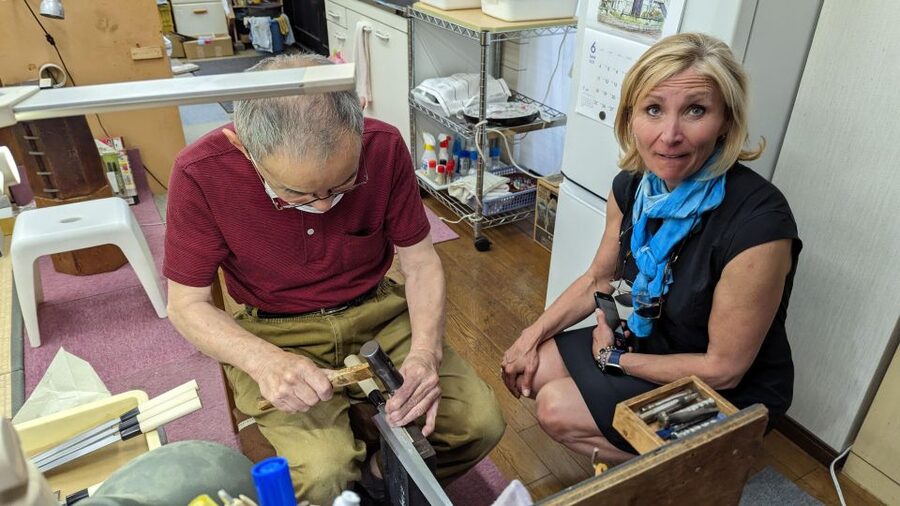
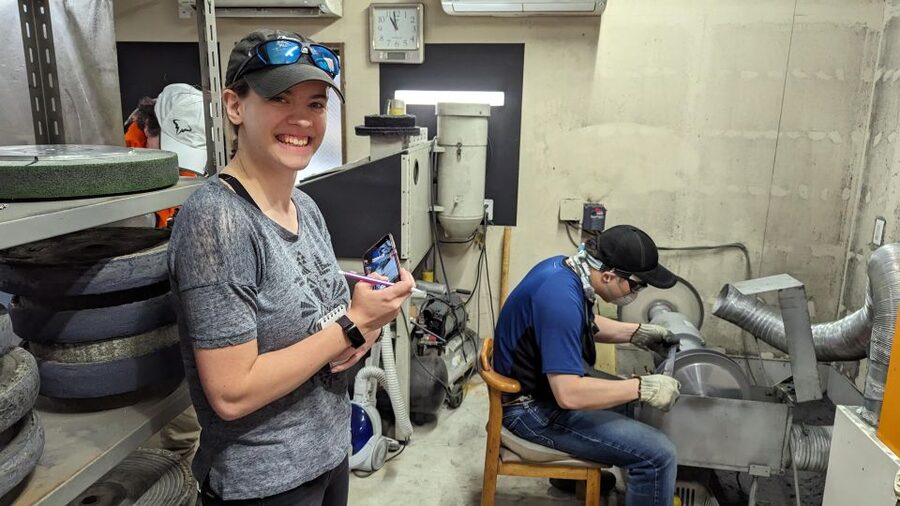
On the knife-maker option, the main workshop visit lasts about 90 minutes. You enter Yamawaki Hamono, a knife-making company with more than 100 years of history.
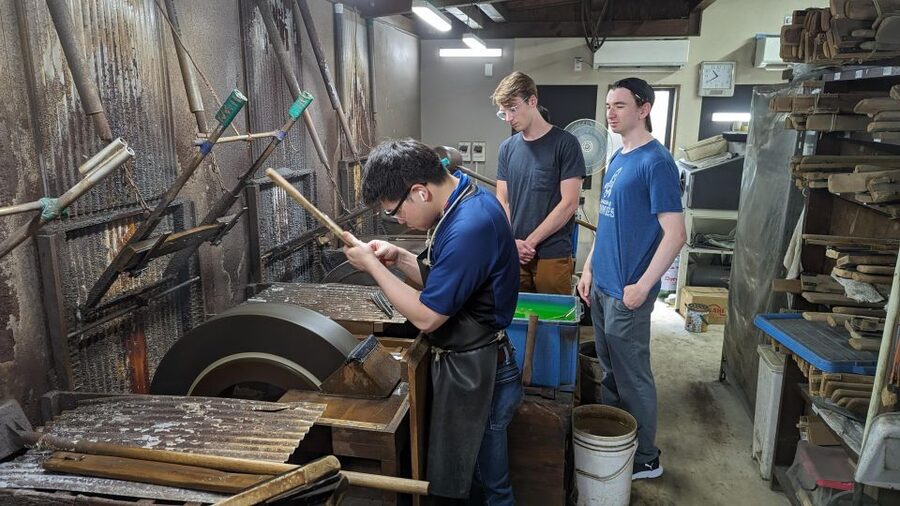
This is not the blacksmithing stage. The raw blades arrive from the blacksmith, and the workers at Yamawaki turn them into finished cooking knives. You can see the sharpening station, the main office, and the steps that give a blade its final form.
That distinction matters. If you want to see glowing steel being hammered into shape, this is not the right option. If you want to understand how a rough blade becomes a precise kitchen tool, the knife-maker visit is the better choice.
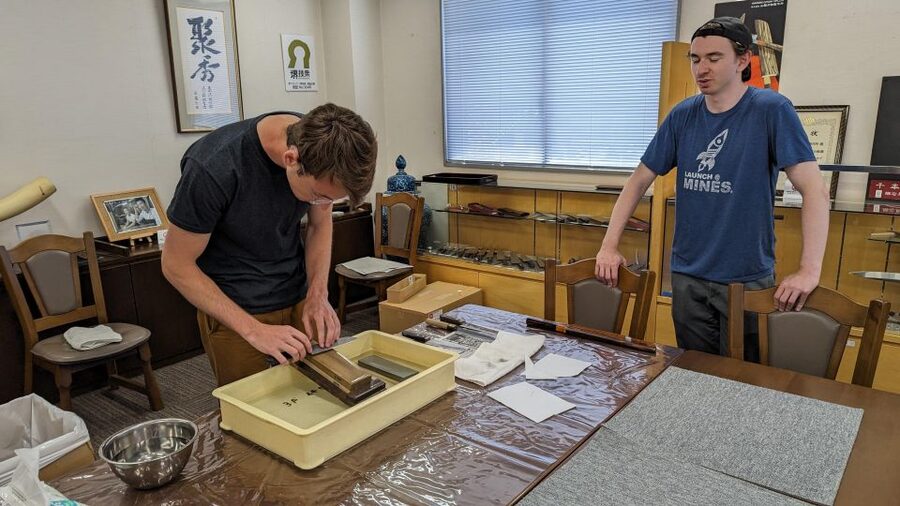
The tour includes a traditional sharpening lesson. You learn how to sharpen Japanese knives using the traditional technique, with a trained guide helping you through the process. This practical element is one of the best reasons to choose the knife-maker day. A display can show you a beautiful blade, but a sharpening lesson gives you a skill you can use after you return home.
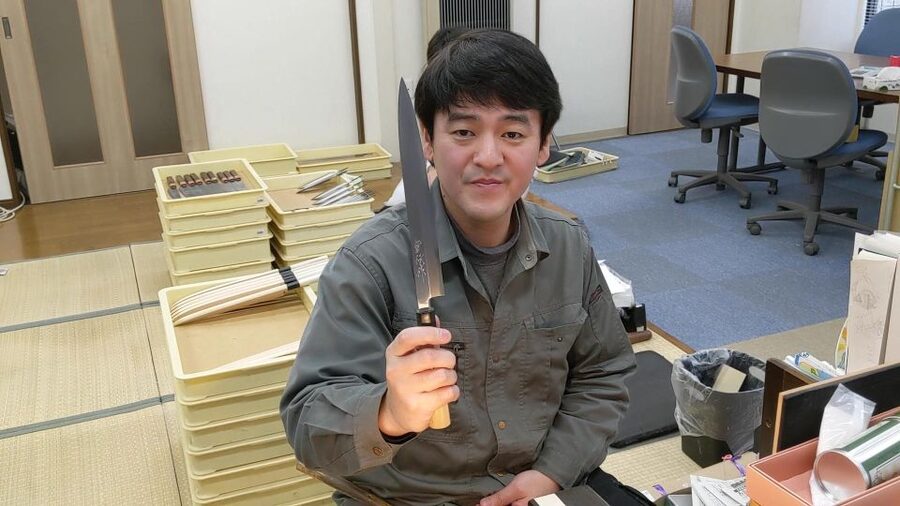
You also have the option to order a customizable knife. The guide can help with the purchase, and you may be able to watch your chosen knife being made in front of you. Because this is a custom order, you should treat it as a serious purchase rather than an impulse souvenir. Ask about the style, intended use, and delivery details before committing.
The shopping time is useful even if you do not buy anything. You get to handle knives in their place of production and ask questions in a setting where the focus is on function as well as appearance.
Same city, a completely different kind of day:
- Osaka Go Karting Tour with Funny Costume
★ 5.0 · 2,658 reviews - Osaka Castle: Museum and Tower Entry Ticket
★ 4.5 · 2,380 reviews - Osaka: Shinsekai Food Tour with 13-15 Dishes at 5 Eateries
★ 4.8 · 2,204 reviews - Osaka Food Tour: 13 Dishes at 5 Local Eateries
★ 5.0 · 2,149 reviews
Wednesdays: the De Sakai blacksmith experience
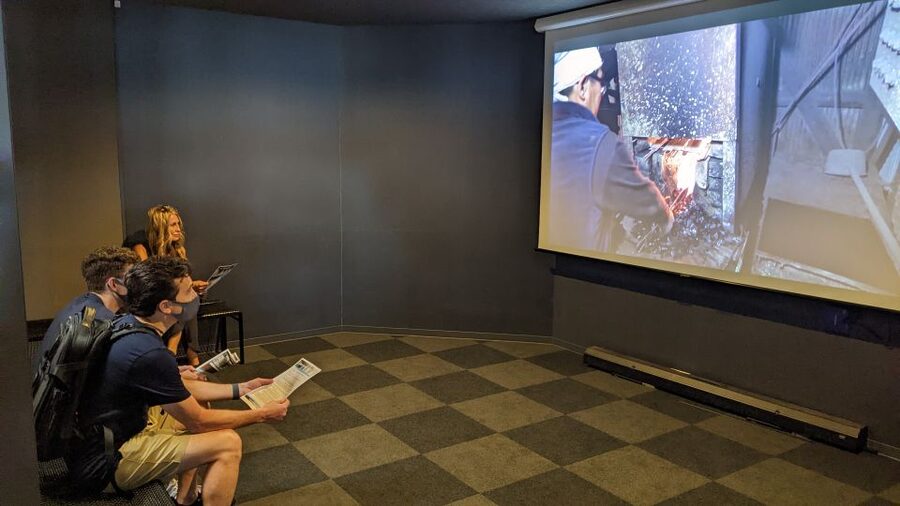
The Wednesday route visits the De Sakai cutlery forge and lasts about an hour. This is the more direct look at the forging process.
At the forge, you learn how the artisan works with steel, how heat changes the material, and how hammering helps shape the blade. The visit is especially memorable because you may be given a chance to hammer glowing steel yourself under instruction. That short hands-on moment makes the work’s physical demands clear very quickly.
Eric Chevallier is identified as the blacksmith associated with this visit. The experience takes place in his small, old-style workshop, where you can see the process at close range and hear the explanation directly from the person doing the work.
This option is best for you if the act of forging matters more than buying a finished kitchen knife. The workshop is not presented as a large production line. It is a personal look at a traditional craft, with the artisan explaining his methods and showing how much control each stage requires.
The blacksmith route does not replace the knife-maker sharpening lesson. The two options focus on different parts of the craft. Choose the forge for heat, hammering, and blade formation. Choose Yamawaki Hamono for sharpening, finishing, and kitchen-knife shopping.
From March 6 through April 6, 2026, only the blacksmith option is available. During that period, Tuesdays and Wednesdays are offered at the knife-maker rate, which makes those dates a useful bargain if the forge is your priority. Check the exact date when booking because the normal weekly pattern does not apply during this window.
The walking matters more than the map suggests
The total duration is 210 minutes, and the route is on foot. The listed walks are about 15 minutes from the station to the sweet shop, five minutes to the museum, five minutes to the first workshop, and 15 minutes back to the station.
That is not an extreme walking day, but you should wear comfortable shoes. The tour works best if you enjoy moving through a neighborhood and stopping often, rather than rushing from attraction to attraction.
The walking also gives the guide room to explain Sakai outside the formal stops. One guide, Remy, is described as having lived in Japan for more than 15 years, while Scott, Jean-Yves, and Rémy have also led this experience. Guide assignments can change, but the strongest part of the guiding is the local storytelling along the route.
Several parts of the tour deal with Sakai’s past, including its contact with Portuguese visitors and the growth of its crafts. The exact balance depends on the guide and group, but this background helps you see the district as a living place rather than a backdrop for knife shopping.
The tour returns to Sakai Station, with two drop-off location choices listed as Sakai Station. In practice, confirm the meeting details attached to your booking because the exact meeting point can vary by option.
What the guides add to the experience
The guide is particularly useful at the workshop and during shopping. Knife terminology can be confusing, and it is easy to focus on a blade’s appearance without understanding its intended use.
A guide can also translate questions, explain the steps you are watching, and help you avoid buying a knife that does not suit your kitchen. That support is one reason the tour can make sense even for someone who is not already an expert in cutlery.
The guides speak English. Some also speak French, but French is not guaranteed on a shared tour. If French matters to you, contact the operator before booking and ask for confirmation for your chosen date. The blacksmith visit is described as offering detailed instruction in English and French from the artisan, but you should still confirm the language arrangement when reserving.
Private and small-group options are available. A smaller group should make it easier to hear the guide and observe work in a compact workshop, though the exact group size is not specified.
Who will get the most from this tour
I would choose this tour if you want a local craft experience with a clear connection to daily life. It suits cooks, food lovers, craft enthusiasts, and anyone who wants to get beyond Osaka’s central attractions for a few hours.
It also works for families with older children and teenagers. One family with a teenage daughter found the combination of sweets, local stories, museum displays, and knife production held everyone’s interest.
You do not need to be a knife collector. The museum and sweets shop give the tour enough variety for a general visitor. Still, the experience is most rewarding if you are willing to listen closely and spend time learning why the knife-making process matters.
I would not choose it if you want a broad tour of many Sakai attractions. The focus narrows steadily toward cutlery. Nor is it the best match for someone looking for hunting knives or decorative blades. One visitor noted that the experience is best understood as a kitchen-knife factory tour.
Buying a knife: useful advice before you decide
You can browse and shop without ordering a custom knife. That is important because a handmade Japanese blade may cost enough to deserve careful thought, and the tour price does not include purchases.
Use the workshop visit to ask practical questions:
- What food is the knife designed for?
- How should it be sharpened and maintained?
- Is the blade suitable for a beginner?
- What handle and size options are available?
- How will a custom order be completed and delivered?
The guide can help translate and supervise the purchase. That makes this a better setting for buying than a rushed shop visit in Osaka, especially if you want to understand what you are getting.
Remember that shopping and souvenirs are extra. The $64 covers the tour elements, not the knife itself.
Practical details, cancellation, and the small print
Bring your passport or another form of identification. The tour is wheelchair accessible, though the amount of walking and the compact workshop spaces are worth discussing in advance if you have specific mobility needs.
You can cancel up to 24 hours before the start time for a full refund, and the reserve-now, pay-later option lets you keep your plans flexible. A single person can book, but the tour requires at least two participants to operate. If that minimum is not reached, the session may be canceled and you will be offered a new date or a full refund.
The museum closure on the third Tuesday is the main calendar warning. The seasonal blacksmith-only period from March 6 to April 6, 2026, is the other. Read the date-specific option carefully so you know which workshop you are buying.
Should you book the Sakai knife tour?
Book it if you want to see real craft at close range, taste a local sweet, and learn something practical. The knife-maker route gives you the strongest all-around experience, with sharpening instruction and time to order a custom kitchen knife.
Choose Wednesday if the sight and sound of forging appeal to you most. Watching Eric Chevallier shape hot steel, and possibly trying the hammering yourself, offers the more unusual workshop visit.
At $64, this is good value for a three-and-a-half-hour guided experience, especially when you count the museum, sweets tasting, translation help, and workshop access. Just check the date, pick the right craft option, and wear shoes suited to walking. If you do that, Sakai offers a thoughtful break from Osaka and a much better understanding of what goes into a Japanese kitchen knife.
FAQ
Where does the Sakai knife tour begin?
The tour begins at Nankai Sakai Station, south of Osaka. The exact meeting point may vary depending on the option booked.
How long does the tour last?
The tour lasts 210 minutes, or three and a half hours.
Which days visit the knife maker?
The Yamawaki Hamono knife-maker visit is scheduled for Tuesdays and Thursdays.
Which day visits the blacksmith forge?
The De Sakai blacksmith visit is scheduled for Wednesdays. From March 6 through April 6, 2026, only the blacksmith option is available.
Is a sweet included?
Yes. One sweet at Yao Gen Raikodo Honten is included. Extra food and drinks are not included.
Can I order a custom knife?
Yes. Ordering a customizable knife is an optional part of the knife-maker experience. The knife purchase itself is not included in the tour price.
Is French guaranteed?
No. All guides speak English, but French is not guaranteed on a shared tour. Contact the operator before booking if you need a French-speaking guide on a specific date.
Just added around Osaka
- (Ticket Included) Explore Osaka Castle & Museum of History★ 4.8 · 21 reviews
- Hidden Osaka – Yukaku Red Light Tour & Culinary Adventure★ 4.8 · 96 reviews
- Osaka: Walking Tour and Top Highlights★ 4.8 · 104 reviews
- Osaka: Private Ceramic Painting Workshop★ 5.0 · 13 reviews
- Pickleball in Osaka, Kobe & Kyoto with Locals!★ 4.7 · 80 reviews
- Eat Like a Local in Osaka – Private Custom Street Food Tour★ 4.3 · 33 reviews
- Osaka:SUMO BEATS SHOWCASE: Taiko Drum and Wagyu burger!★ 4.2 · 37 reviews
- Kimono photoshoot-Includes 100 photo data★ 5.0 · 21 reviews
Walking Tours, compared.
Kyoto Geisha Walking Tour: Gion District & Hidden Gems
Read our review →
Tokyo Tsukiji Fish Market Food and Culture Walking Tour
Read our review →
Gion Magical Night Walking Tour with Geisha Trivia
Read our review →
Imperial Palace and Shogun Historical Walking Tour
Read our review →
Gion Geisha District Walking Tour – Stories of Geisha
Read our review →

Asakusa Walking Tour with Sensoji Temple Visit
Read our review →
Kyoto Gion Geisha District Walking Tour – The Stories of Geisha
Read our review →Browse the lists this tour appears in