
REVIEW · KIMONO & CULTURE EXPERIENCES
Embrace the Samurai Way: Iaido Swordsmanship Experience in Tokyo
The most memorable part of this Tokyo activity is the chance to practice with a real Japanese sword under close supervision, not simply pose with a prop blade. You begin with basic iaido movements, learn how samurai discipline shapes the art, and may finish by cutting tatami targets.
I like the private format, since the instructor can adjust the lesson to your level. I also like the English support and the chance to wear iaido clothing, handle antique blades, and receive a certificate. The main drawback is that the session lasts only about 90 minutes, so you get an introduction rather than full training.
In This Review
- Key Points
- Meeting at Kudanshita for a Focused Iaido Lesson
- Putting on Iaido Clothing and Learning the Rules
- Hearing the Samurai Story Behind the Sword
- Practicing First With a Safer Training Method
- Cutting Tatami With a Real Japanese Sword
- The Instructor and English Support
- What the $154.37 Price Really Buys
- Who Will Get the Most From This Activity
- Practical Advice Before You Book
- Should You Book This Tokyo Samurai Experience?
- FAQ
- Where does the iaido experience begin?
- How long does the activity last?
- Is the activity private?
- Is an English-speaking attendant included?
- What clothing should I wear?
- Can I use a real sword?
- Is the activity wheelchair accessible?
- What is the cancellation policy?
Key Points
- Real sword practice: Supervised tatami cutting gives this lesson more substance than a costume photo stop.
- Private instruction: Your group receives personal attention rather than joining a large class.
- Traditional setting and clothing: You practice in an iaido jacket and learn formal handling methods.
- Samurai philosophy included: The lesson connects movement with discipline, licensing, responsibility, and Japanese culture.
- English assistance: An English-speaking attendant helps explain technique and cultural details.
- Convenient central meeting point: Meet at Starbucks Coffee near Kudanshita and return there after the session.
Meeting at Kudanshita for a Focused Iaido Lesson
The experience begins at Starbucks Coffee in the Kudankita 1-chome building, near Kudanshita in Chiyoda City. The listed address is 1-2-1 Kudankita, Chiyoda City, Tokyo 102-0073. You should arrive 10 minutes early, which matters here because the activity is short and the group moves together to the training location.
Kudanshita is near public transportation, so this is a practical meeting point in central Tokyo. Still, give yourself time to find the correct Starbucks and building entrance. The meeting point is not the dojo itself, so arriving at the last second could leave you scrambling.
The activity ends back at the same meeting point. Private transportation is not included, and no hotel pickup is provided. The simplest plan is to use the train system and treat the Starbucks as your fixed start and finish point.
More Kimono & Culture Experiences in Tokyo
- Tokyo: Samurai Ninja Museum Guided tour and Experience
★ 4.6 · 1,010 reviews - Tokyo: Samurai Sword & Archery Class from Samurai Descendant
★ 5.0 · 603 reviews - Best Samurai Experience in Tokyo
★ 5.0 · 458 reviews
Putting on Iaido Clothing and Learning the Rules
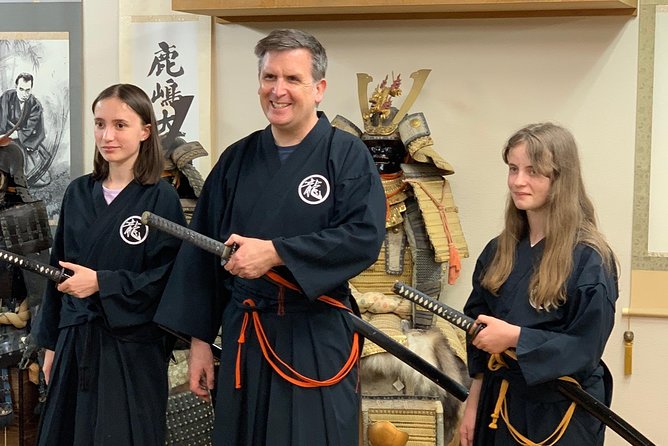
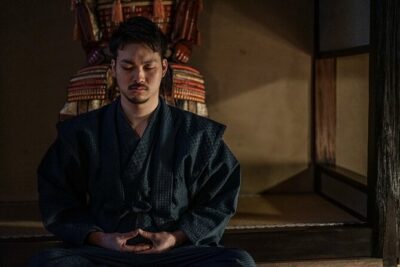
Once you reach the training space, you put on an iaido jacket and prepare for instruction. This small change of clothing helps set the tone. You are not just handling a sword as a stage prop. You are being asked to stand, move, and pay attention within a formal martial art.
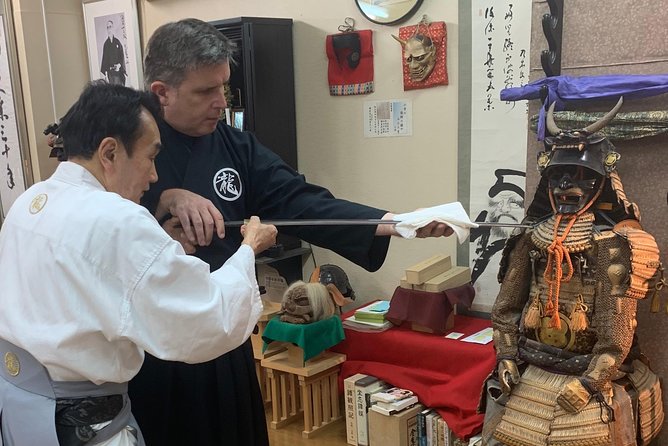
The first part focuses on basic sword handling and movement. You learn how to hold the sword, how to draw it, and how to return it safely. The instructor also explains the ideas behind iaido, including the calm control and discipline expected from a practitioner.
This matters because swordsmanship can look simple from a distance. A draw, cut, and return may take only a few seconds, but each motion has a prescribed shape. Your posture, hand position, footwork, and attention all count. The lesson gives you a taste of that precision without pretending you will master it in one visit.
The English-speaking attendant helps bridge language gaps. Several participants have particularly valued clear explanations of the sword’s cultural role and the details of proper handling. The support is useful for families and mixed-language groups, especially when the instructor is explaining ideas that go beyond simple physical commands.
Hearing the Samurai Story Behind the Sword
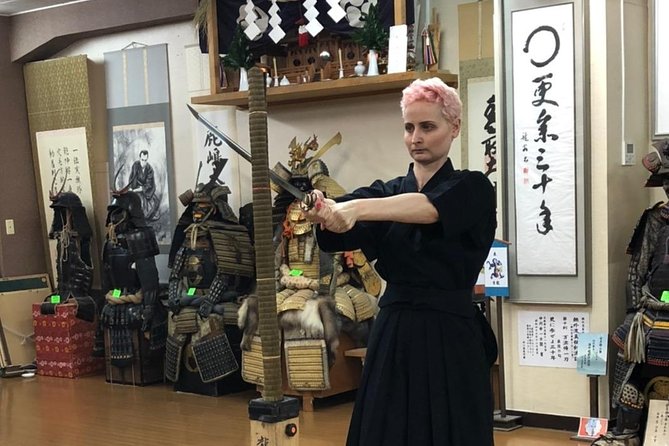
The cultural side is one of the strongest reasons to book this activity. The instructor explains the samurai way, the concept of iaido, and the responsibilities tied to owning and handling Japanese blades.
The storytelling can include information about blade licensing, antique swords, and the traditions surrounding them. That gives the sword context. You begin to see it as a carefully regulated cultural object, not merely a weapon from a movie.
I appreciate this balance. The session is physical, but it is not only physical. You learn why formal movement matters and how discipline, restraint, and respect fit into the practice. The cultural explanation also makes the later cutting exercise more meaningful.
The instructor may demonstrate techniques before asking you to try them. Demonstrations are especially useful here, since the movements can be difficult to understand from spoken instructions alone. Watch the hands and feet closely, then copy the shape rather than rushing to swing the blade.
Practicing First With a Safer Training Method
The early drills use basic practice methods before you handle a live blade. This gives you a chance to understand the movement without immediately worrying about cutting a target.
The lesson is adapted to your ability. If you have no martial arts background, the instructor can guide you through the basic positions and handling steps. If you already practice martial arts, you may appreciate the chance to ask more detailed questions and work on the form with closer attention.
That private structure is important. A large group class can force everyone into the same pace. Here, your group receives direct instruction, and the attendant can help translate questions or explain details again.
Do not expect a full martial arts course. Ninety minutes is enough for an introduction, a demonstration, practice, and the supervised cutting portion, but not enough to build reliable technique. The value comes from the concentrated introduction and the unusual chance to try the art in a proper setting.
Same city, a completely different kind of day:
- Mt Fuji and Hakone 1-Day Bus Tour Return by Bullet Train
★ 5.0 · 26,383 reviews - 1-Day Tokyo Bus Tour
★ 5.0 · 14,250 reviews - Tokyo: TOKYO SKYTREE® Admission ticket
★ 4.5 · 11,192 reviews - Tokyo: teamLab Planets TOKYO Digital Art Museum Entry Ticket
★ 4.6 · 9,779 reviews
Cutting Tatami With a Real Japanese Sword
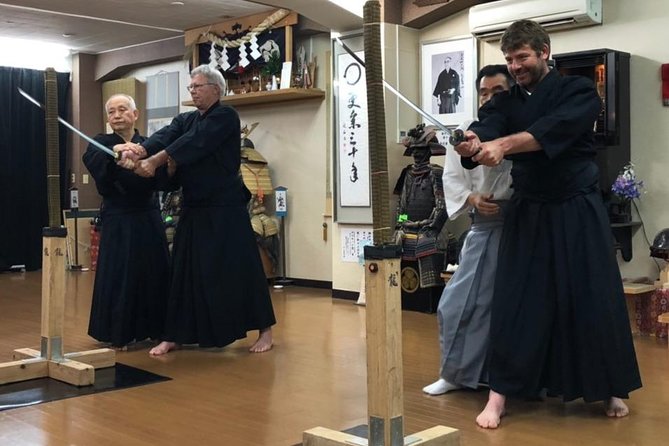
The defining moment is the tatami cutting exercise. Under supervision, you can use a real sword to cut prepared tatami targets. This is the part that separates the activity from a basic samurai costume session.
The cutting is not a free-form swing. You must use the correct angle and follow the instructed movement. Poor form can stop the blade rather than carry it through the target, so listen carefully and let the instructor control the pace.
This is also where safety becomes central. The sword is real, the target is physical, and the instructor remains responsible for guiding the process. Follow every instruction, keep your attention on the blade, and do not treat the exercise as a photo opportunity.
The activity is not suitable for people with heart conditions or pregnant women. It is also not wheelchair accessible. Comfortable clothing is required, and you should choose clothes that allow you to move freely beneath the iaido jacket.
The cutting portion can be a strong family memory. A parent and child have used the session to practice together, learn the techniques, and cut tatami under supervision. It also suits friends who want a shared activity with more substance than a standard sightseeing stop.
The Instructor and English Support
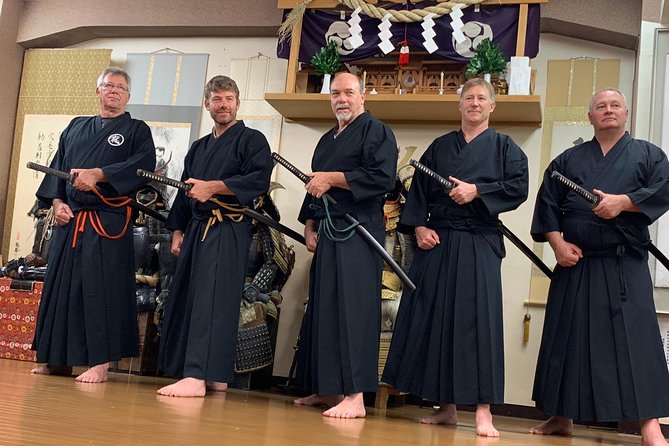
The experience is presented by a seasoned dojo master, with Masahiro mentioned as a guide and attendant in the tour material. The operator’s owner, Masa, also appears to handle communication and follow-up. Names and staffing can vary, so confirm the current arrangements when booking.
The teaching style appears to combine demonstration, explanation, and hands-on correction. The instructor is described as energetic and skilled, with a talent for explaining samurai culture as well as sword technique.
English support is included. That does not mean every exchange will feel like a private English lecture, but an English-speaking attendant helps translate and clarify the important parts. For a technical activity, that support is worth having. Misunderstanding a movement is inconvenient in most classes, but it matters much more when a live sword is involved.
The cultural explanations can also be tailored to your questions. You can ask about licensing, antiques, samurai customs, or the meaning of the movements. If you have a particular interest, bring it up early so the instructor has time to address it.
What the $154.37 Price Really Buys
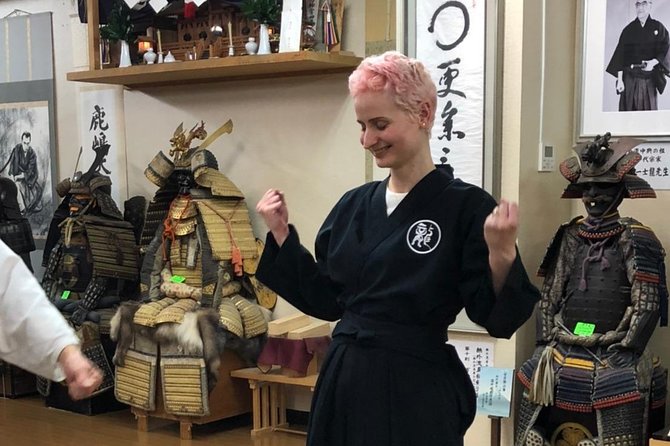
At $154.37 per person, this is not a cheap add-on activity. The price makes more sense if you value private instruction, cultural explanation, traditional clothing, English assistance, and supervised use of a real sword.
You are paying for a specialized lesson rather than a general Tokyo attraction. The private format means your group has the instructor’s attention, and group discounts may improve the value if you book with family or friends. Since the session is limited to your group, you avoid the impersonal feel of a large demonstration.
The 90-minute duration is both a strength and a limit. It fits neatly into a busy Tokyo schedule, but the cost per minute is high compared with a museum or neighborhood walk. I would book it for the hands-on element, not simply for a certificate or a few photographs.
The certificate of participation is a pleasant keepsake, but it should not be the reason you choose the activity. The real value is the chance to learn the basic movements and attempt tatami cutting in a controlled setting.
Who Will Get the Most From This Activity
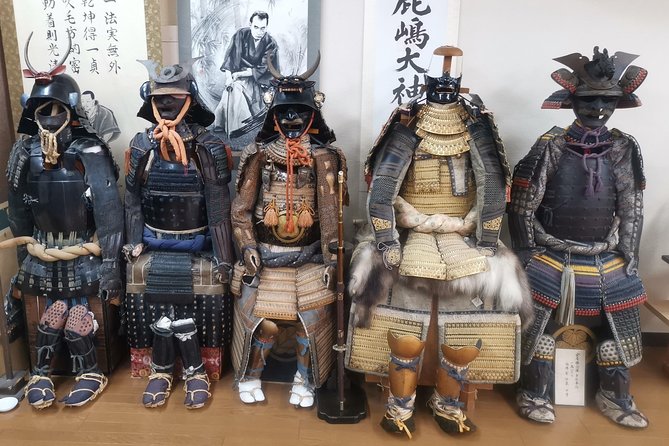
This suits you if you have a serious interest in Japanese martial arts, samurai culture, or traditional swords. It also works well for families with older children who can listen carefully and follow safety instructions.
Friends and couples may enjoy the shared challenge. It gives you something to talk about afterward, especially if one person cuts successfully on the first attempt and another needs more guidance.
The activity is a good choice for people who want cultural contact rather than passive sightseeing. You will not simply watch a performance. You will put on the clothing, practice the movements, ask questions, and take part in the final exercise.
It is less suitable if you want a relaxed photo session or a long historical lecture. The sword handling requires focus, and the live-blade portion may feel too physical for anyone with the listed health concerns. Wheelchair users should also choose another activity because accessibility is not provided.
Practical Advice Before You Book
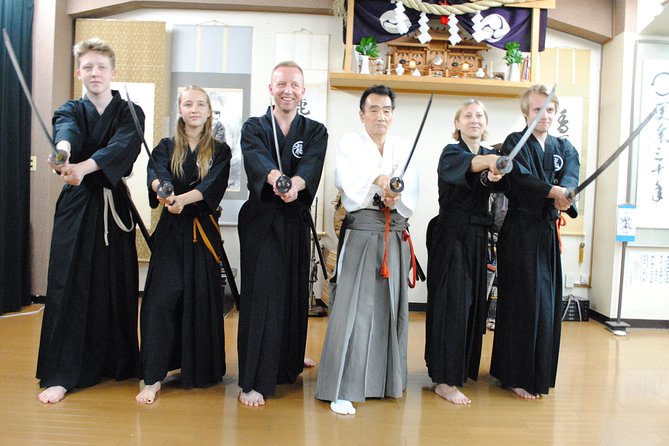
Wear comfortable clothing that allows easy movement. The iaido jacket is included, but you should still arrive ready to bend, step, and practice without restrictive clothing.
Arrive 10 minutes early at the Starbucks meeting point. Save the address and allow extra time for Tokyo’s station exits. The activity is short, so delays at the meeting point can take away from your training.
Read the meeting instructions carefully after booking. Confirmation is sent within 48 hours, subject to availability. The activity requires a minimum number of participants, and poor weather can also cause a cancellation or date change.
Free cancellation is available if you cancel at least 24 hours before the start time. Cancellations or changes made within 24 hours are not refunded or accepted. If the operator cancels because of weather or because the minimum group size is not reached, you can receive a different date or activity, or a full refund.
The overall rating is 4.8 out of 5, with 94 percent recommending it. That is a strong signal, but the occasional booking failure is worth noting. One person reported that no one arrived at the meeting point and that messages went unanswered. The operator apologized and blamed a problem with its web and app setup. I would keep your booking confirmation and contact details handy, then arrive early and confirm the meeting instructions before the day.
Should You Book This Tokyo Samurai Experience?
Book it if you want to handle a real Japanese sword, learn the correct basics, and connect the physical practice with samurai ideals. The combination of private instruction, English assistance, traditional clothing, and supervised tatami cutting gives the session real substance.
I would especially recommend it to martial arts fans, families, and anyone who has already seen Tokyo’s temples and museums and wants a more active cultural experience. The higher price is easier to justify when shared with a small private group or when this is a major personal interest.
Skip it if you want an inexpensive activity, have mobility or health concerns listed in the restrictions, or prefer a purely observational tour. For everyone else, this is a focused and unusual introduction to iaido, with the right mix of instruction, history, and hands-on practice.
FAQ
Where does the iaido experience begin?
You meet at Starbucks Coffee in the Kudankita 1-chome building, at 1-2-1 Kudankita, Chiyoda City, Tokyo 102-0073. The meeting point is near public transportation.
How long does the activity last?
The experience lasts approximately 1 hour and 30 minutes.
Is the activity private?
Yes. This is a private activity, and only your group participates.
Is an English-speaking attendant included?
Yes. An English-speaking attendant is included to help with explanations and translation.
What clothing should I wear?
You should wear comfortable clothing. An iaido jacket and related items are included for the activity.
Can I use a real sword?
The session includes supervised practice cutting tatami targets with a real Japanese sword. The instructor teaches the basic handling and technique first.
Is the activity wheelchair accessible?
No. The activity is not suitable for wheelchair users.
What is the cancellation policy?
You can cancel for a full refund up to 24 hours before the start time. Cancellations or changes made less than 24 hours before the start time are not accepted or refunded. Weather or minimum-participant cancellations may result in a different date, a different activity, or a full refund.
Just added around Tokyo
- Private Memorable Tokyo Tour with English Speaking Driver★ 5.0 · 30 reviews
- Private Tokyo Custom Full-Day Tour by Chartered Vehicle★ 5.0 · 16 reviews
- Private Sightseeing to Mt Fuji and Hakone with English Driver★ 5.0 · 51 reviews
- Tokyo Photography Masterclass – Private Photography Lesson★ 5.0 · 25 reviews
- Private Mt. Fuji Day Trip from Tokyo with English-Speaking Driver★ 5.0 · 33 reviews
- 4 Day Tour – Mount. Fuji, Tokyo, Hakone, Kamakura and Yokohama★ 5.0 · 19 reviews
- Private Unforgettable Mt Fuji Tour with English Speaking Driver★ 5.0 · 142 reviews
- Private Tokyo Food Tour – A Journey Through Time Through Food★ 5.0 · 36 reviews
Kimono & Culture Experiences, compared.

Kyoto Geisha Walking Tour: Gion District & Hidden Gems
Read our review →
Gion Magical Night Walking Tour with Geisha Trivia
Read our review →
Gion Geisha District Walking Tour – Stories of Geisha
Read our review →
Best of Kyoto: Gion, Geisha, Pagodas & Cobblestones
Read our review →

Kyoto Gion Geisha District Walking Tour – The Stories of Geisha
Read our review →
Browse the lists this tour appears in