
REVIEW · TEMPLE & SHRINE TOURS
Crowd-Free Kyoto: Fushimi Inari, Nijo Castle & Kinkaku-ji
Kyoto’s famous sights are wonderful, but they are not quiet by accident. This private tour tackles three major landmarks in about five hours, with an early start aimed at giving you a calmer walk beneath Fushimi Inari’s red torii gates before the crowds build.
I like the private format, which lets your guide adjust the pace and answer your questions instead of shepherding a large group. I also like the route itself: Fushimi Inari, Nijo Castle, and Kinkaku-ji show three very different sides of Kyoto in one morning or afternoon.
The main drawback is that the $91.96 price does not include admission to Nijo Castle or Kinkaku-ji, and five hours is a brisk amount of time for three important places. You get an efficient introduction, not a slow, complete study of each site.
In This Review
- Key points to know before booking
- Why this five-hour Kyoto tour works
- Fushimi Inari before the crowds
- Nijo Castle and the world of the shogun
- Kinkaku-ji, the Golden Pavilion
- The private guide makes the difference
- Timing, pace, and what to budget
- Who should book this Kyoto experience
- How this tour compares with going alone
- Booking details and cancellation
- Should you book it?
- FAQ
- How long does the Kyoto tour last?
- Is this a private tour?
- Where does the tour begin?
- Where does the tour end?
- Are admission fees included?
- Is food included?
- Can I cancel for a full refund?
- What happens if bad weather cancels the tour?
Key points to know before booking
- Early Fushimi Inari visit: The timing is designed to reach the shrine before it becomes most crowded.
- Three major Kyoto sights: You see a Shinto shrine, a samurai-era castle, and a famous Zen temple in one tour.
- Private guide only: Your group does not share the activity with other participants.
- Guides add local detail: Tom, Ryu, Kazuya, and Maki have each led tours noted for clear explanations, friendly conversation, and cultural stories.
- Admissions cost extra: Fushimi Inari is free, but Nijo Castle and Kinkaku-ji require separate admission.
- Convenient route ending: The tour begins at Kyoto Station’s South Square and ends at Kinkaku-ji.
Why this five-hour Kyoto tour works
Kyoto has no shortage of temples and shrines. The problem is choosing a route that makes sense and does not leave you spending half the day figuring out trains, entrances, and directions.
This tour solves that problem with a private guide who takes you from Kyoto Station to three of the city’s best-known sights. You get a clear plan, local explanation, and a pace that can feel less rushed than a shared group outing.
The route also has good variety. Fushimi Inari gives you a powerful religious setting and its famous torii path. Nijo Castle brings you into the world of the Tokugawa shoguns. Kinkaku-ji finishes with Kyoto’s most recognizable temple view.
That variety matters. If you visited three similar temples in a row, the details could blur together. Here, each stop has a different purpose and mood.
You should still view the tour as an introduction. Each stop receives about one hour, and that is enough to see the main features, hear useful context, and take in the atmosphere. It is not enough for every path, room, garden, or historical detail.
More Garden & Palace Tours in Kyoto
- Kyoto: Nijo-jo Castle and Ninomaru Palace Guided Tour
★ 4.7 · 1,020 reviews - Kyoto: Nijo Castle, Kiyomizu & Fushimi Inari Guided Tour
★ 4.7 · 700 reviews - Kyoto: Imperial Palace & Nijo Castle Guided Walking Tour
★ 4.7 · 453 reviews
Fushimi Inari before the crowds
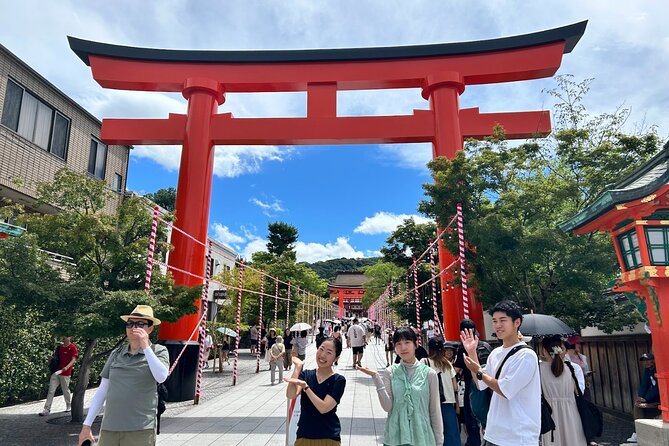
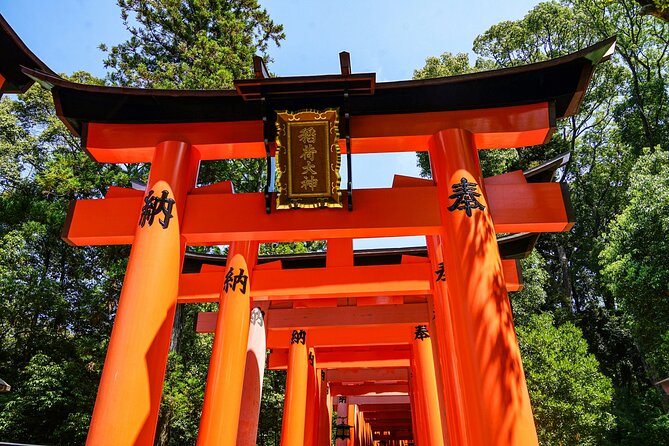
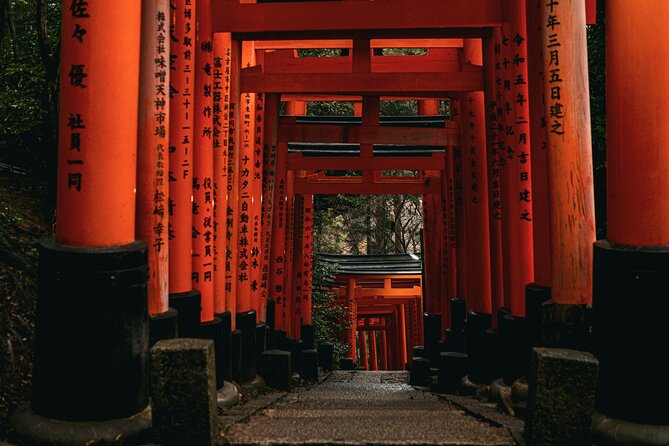
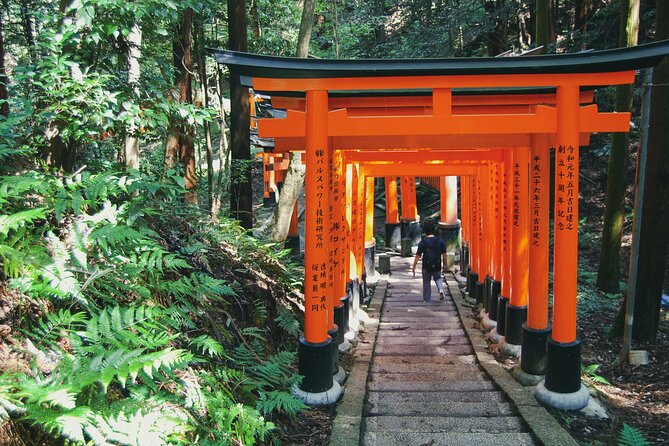
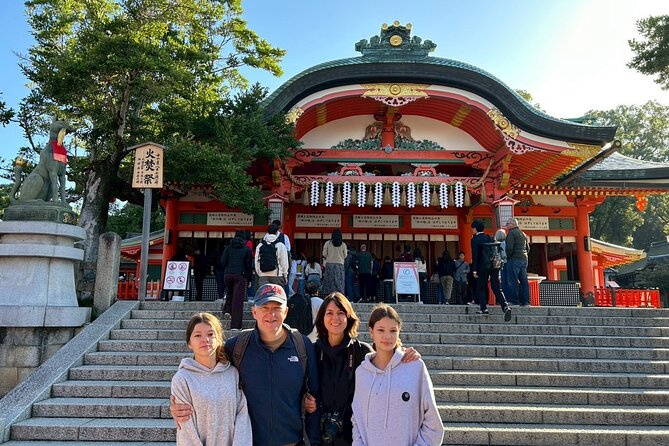
The first stop is Fushimi Inari-taisha, Kyoto’s celebrated Shinto shrine dedicated to Inari, a deity associated with rice, prosperity, and business success. Its signature feature is the Senbon Torii, a long series of orange-red gates that climbs through the wooded slopes of Mount Inari.
The early timing is the smart part of the plan. Fushimi Inari has become one of Kyoto’s most photographed places, and the lower section can fill quickly. Arriving early gives you a better chance to walk beneath the gates with some breathing room rather than waiting behind a line of people at every turn.
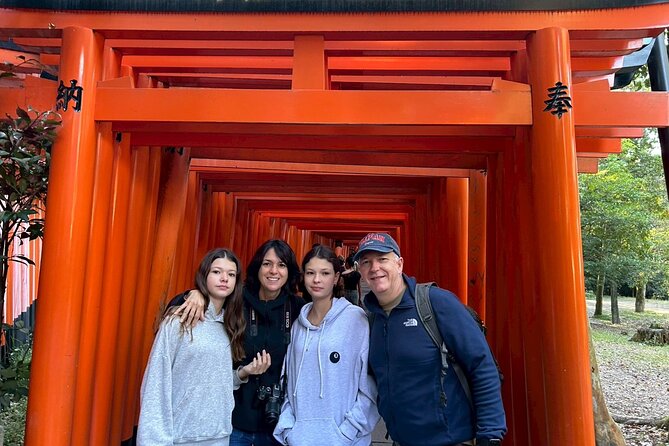
Your guide can also help explain what you are seeing. The torii gates are not simply decoration. They are offerings made by individuals and businesses, and each gate carries the name of its donor. That detail changes the way you read the path. You are not just walking through a red tunnel. You are moving through a long record of devotion and gratitude.
You receive about one hour here, with admission included because the shrine is free to enter. That hour should be enough to experience the lower torii path and understand why the shrine matters. If you hope to reach the highest point of the mountain, you need to ask your guide about the pace and available time. One person who took the tour made it to the top and described the climb as a real effort, so do not treat the torii path as a flat photo stop.
Wear comfortable shoes. Even if you do not complete the full climb, the shrine involves walking and steps. The reward is the change in mood as you leave the entrance area and head farther into the gates. The noise can lessen, the path can narrow, and the shrine feels more like a place of worship than a sightseeing backdrop.
Water is not included, so bring your own if you can. A small purchase along the way may feel expensive compared with a convenience-store bottle, especially after a climb.
Nijo Castle and the world of the shogun
The second stop changes the subject completely. Nijo Castle was built for the Tokugawa shoguns and served as a residence and power base during Japan’s samurai era. It is also a UNESCO World Heritage site.
The main draw is Ninomaru Palace. Inside, you can see grand rooms built to impress, with decorated interiors that reflect the authority of the shogunate. The palace is not just an old building to walk through. It was designed for political theater, where rank, ceremony, and control shaped the way people moved and met.
One famous feature is the palace’s nightingale floors. Their boards make a chirping sound underfoot, a clever security measure intended to warn of intruders. Your guide can give this kind of feature meaning. Without context, you might simply notice the sound and move on. With explanation, you understand how architecture served the rulers who lived there.
You receive about an hour at the castle. That is enough for a focused visit, but the grounds and buildings deserve more time if you enjoy gardens, architecture, or Japanese political history. The admission fee is not included, so budget for it separately.
Nijo Castle was the favorite stop for at least one guide-led visitor, which makes sense. It has more layers than its exterior first suggests. Fushimi Inari is immediately striking. Kinkaku-ji is visually unforgettable. Nijo Castle rewards closer attention to rooms, symbols, floorboards, and the way power was displayed.
The private format helps here. If you want to ask why a room was arranged a certain way or how the shogun used the palace, you can ask without holding up a busload of people. Guides such as Maki have been praised for making the castle visit fun and easy to follow.
Keep in mind that private does not mean unlimited time. If Nijo Castle is your main interest, you may prefer to visit it separately and give it half a day. On this tour, you see the essential parts as one chapter in a larger Kyoto story.
Kinkaku-ji, the Golden Pavilion
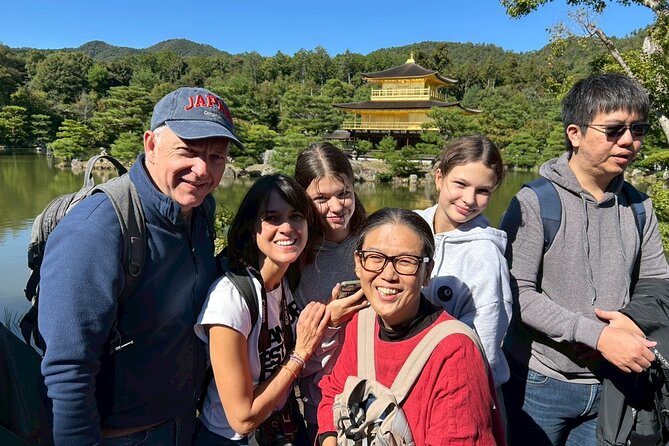
The final stop is Kinkaku-ji, also called the Golden Pavilion. The temple’s upper stories are covered in gold leaf, and the building is set beside a pond where its reflection creates the classic Kyoto view.
This is the most immediately visual stop on the route. Even people who have never studied Japanese architecture often recognize the pavilion from photographs. Seeing it in person gives you the scale, setting, and changing light that a picture cannot provide.
The visit is weather dependent in the sense that poor weather can cause the tour to be canceled or moved to another date. That matters most here, since the pavilion’s appearance depends heavily on the conditions around the pond. Gray weather does not erase the beauty, but clear conditions can make the gold and reflection more striking.
Admission is not included, so you will pay separately at the temple. You should also expect a more controlled sightseeing route than at Fushimi Inari. Kinkaku-ji is designed for viewing from designated paths, not for wandering freely through the pavilion itself.
About one hour is allocated here. That gives you time to see the main view, walk through the grounds, and listen to your guide’s explanation. If Kinkaku-ji is the reason you are booking, the timing is useful but brief. One person who joined mainly to see the Golden Pavilion considered it the high point of the experience, while another found Nijo Castle more compelling. That contrast tells you something important: this tour serves different interests well, but each stop receives equal attention rather than being tailored entirely around one favorite.
The tour ends at Kinkaku-ji, which is practical if you want to continue exploring that part of northern Kyoto. It also means you do not return to Kyoto Station with the group. Plan your next move from the temple area.
More Temple & Shrine Tours in Kyoto
- Kyoto: Fushimi Inari, Kinkakuji, Bamboo Grove 1 Day Bus Tour
★ 4.8 · 4,316 reviews - Kyoto: Tea Ceremony in a Traditional Tea House in Kiyomizu
★ 4.9 · 3,519 reviews - Kyoto: Tea Ceremony Ju-An at Jotokuji Temple
★ 4.9 · 3,207 reviews - Fushimi Inari Hidden Hiking Tour (Private Option Available)
★ 5.0 · 1,750 reviews
The private guide makes the difference
A private guide is the central reason to choose this experience over a self-guided visit. Kyoto’s major sights are easy enough to reach, but the meaning behind them is less obvious.
The guides associated with this experience include Tom, Ryu, Kazuya, and Maki. Tom has been praised for answering questions and explaining Kyoto’s cultural background. Ryu is described as friendly and entertaining. Kazuya is known for making the time feel personal and conversational, while Maki has been especially appreciated at Nijo Castle.
You should not assume you will receive a particular guide unless the booking confirms it. Still, the range of feedback points to the feature that matters most: the guide is not there only to lead you from gate to gate. The guide provides the stories and local details that help you understand why the places matter.
That is especially useful when you are visiting Kyoto for the first time. A guide can explain shrine customs, point out details in a palace, and connect the Tokugawa period to the city you see today. You can also ask direct questions instead of searching for answers later.
The tour is private for your group, not a shared activity. That can make the pace more relaxed, though the fixed five-hour schedule still requires discipline. If someone in your group wants to stop for many photographs, the time at later sites may shrink.
Timing, pace, and what to budget
The tour lasts approximately five hours. That makes it a good fit for a day when you want to see several headline sights without giving up the entire day.
The $91.96 per-person price is easiest to judge by group size. For a solo visitor or a couple, it is a sizable expense compared with using public transportation and a guidebook. For a family or small group, the private arrangement may offer better value because the service is shared only among your party, and group discounts are available.
You must also add the entrance fees for Nijo Castle and Kinkaku-ji. Food and drinks are not included. Fushimi Inari does not charge admission, but you may want water before or during the walk.
The meeting point is South Square in the Kyoto Station Building. That is a sensible starting place because Kyoto Station is a major transport hub, but make sure you identify the exact square before the start time. The tour ends at Kinkaku-ji, not back at the station.
The experience is near public transportation, and most people can participate. The information provided does not give a detailed mobility description, so anyone who has difficulty with steps or longer walks should ask the provider before booking, especially because Fushimi Inari includes an uphill torii path.
Early starts are a key part of the crowd-avoidance plan. The benefit is a quieter Fushimi Inari. The tradeoff is simple: you need to be ready at the agreed start time, and you may prefer a later schedule if sleep is your top priority.
Who should book this Kyoto experience
I would recommend this tour to a first-time Kyoto visitor who wants a strong overview and prefers having the route handled by a local guide. It is also a good choice for families, couples, and small groups who want private attention rather than a shared tour.
It suits you especially well if you value cultural explanation as much as photographs. The guide’s stories can turn a quick visit into a clearer lesson about Shinto practice, samurai authority, Zen temple design, and Kyoto’s role in Japanese history.
It is less suitable if you want long, unhurried visits. Three major sights in five hours means each stop is selective. It is also not ideal if your budget is tight, since the tour fee is joined by two admission charges and any food or drinks you buy.
Photographers should think about the weather and timing. Fushimi Inari is best when the path is quieter. Kinkaku-ji is best when the pond and pavilion have good light. The tour’s plan improves your chances, but no schedule can guarantee empty paths or perfect skies.
How this tour compares with going alone
You can visit all three places independently. Kyoto has good public transportation, and each attraction is well known. The challenge is not finding the sites. It is managing the timing and making sense of what you see once you arrive.
Going alone gives you full control. You can climb farther at Fushimi Inari, spend extra time in Nijo Castle, or linger at Kinkaku-ji. You also avoid the per-person guide fee.
The private tour gives you structure and interpretation. You do not need to work out the sequence, find the entrances, or read several pages of background while standing in a crowded courtyard. You can ask questions as they arise, which is often the best way to understand a place.
For a short Kyoto stay, that efficiency has real value. If you have several days and enjoy planning, self-guided visits may be the better bargain. If you have one open half-day and want three major sights explained in a sensible order, the tour earns its price more easily.
Booking details and cancellation
Confirmation is provided when you book. You can cancel for a full refund up to 24 hours before the experience begins. Changes or cancellations made less than 24 hours before the start time are not accepted for a refund.
The experience requires good weather. If poor weather forces a cancellation, you will be offered another date or a full refund. That policy is worth noting before you build a tightly fixed sightseeing plan around this outing.
Should you book it?
Book this private Kyoto tour if you want to see Fushimi Inari, Nijo Castle, and Kinkaku-ji in one organized half-day, with a guide who can explain the customs, politics, and stories behind the sights. The early approach to Fushimi Inari and the private format are the strongest reasons to choose it.
Skip it if you want to explore at your own speed, need to keep entrance costs low, or already have a detailed Kyoto plan. The tour is efficient rather than leisurely.
For most first-time visitors with limited time, I see the value. You get three very different Kyoto experiences, a personal guide, and a route that ends at Kinkaku-ji so you can continue your day from there.
FAQ
How long does the Kyoto tour last?
The tour lasts approximately five hours.
Is this a private tour?
Yes. Only your group participates in the private activity.
Where does the tour begin?
It begins at South Square in the Kyoto Station Building, Higashishiokōjichō, Shimogyo Ward, Kyoto.
Where does the tour end?
The tour ends at Kinkaku-ji, at 1 Kinkakujichō, Kita Ward, Kyoto.
Are admission fees included?
Admission to Fushimi Inari-taisha Shrine is free. Admission to Nijo Castle and Kinkaku-ji is not included in the tour price.
Is food included?
No. Food and drinks are not included.
Can I cancel for a full refund?
Yes. You can cancel at least 24 hours before the experience start time for a full refund. Cancellations made less than 24 hours before the start time are not refunded.
What happens if bad weather cancels the tour?
If poor weather causes a cancellation, you will be offered a different date or a full refund.
Just added around Kyoto
- Private Guided Traditional Buddhist Cooking in Japan★ 5.0 · 16 reviews
- Kyoto: Gion Geisha District & Sake-in-Hand Walking Tour★ 5.0 · 37 reviews
- Your Private Vacation Photography Session In Kyoto★ 5.0 · 110 reviews
- Kyoto: Zen Meditation at a Private Temple with a Monk★ 5.0 · 25 reviews
- Traditional Japanese Washi Papermaking- Kyoto morning★ 5.0 · 77 reviews
- Kyoto Wagashi(Japanese sweets) Cooking Class near Fushimiinari★ 5.0 · 60 reviews
- Private Pewter Sake Cup Experience with a Kyoto Artisan★ 5.0 · 31 reviews
- Kyoto Private 6 hour Tour: English Speaking Driver Only, No Guide★ 5.0 · 88 reviews
Temple & Shrine Tours, compared.
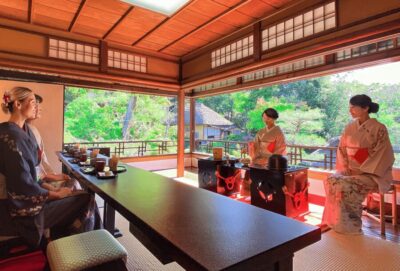
Tea Ceremony in a Traditional Tea House in Kiyomizu
Read our review →
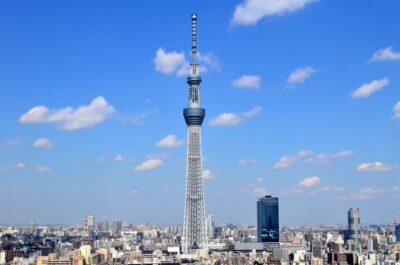
Meiji Shrine, Asakusa, Skytree Bus Tour and Cruise
Read our review →
Asakusa Walking Tour with Sensoji Temple Visit
Read our review →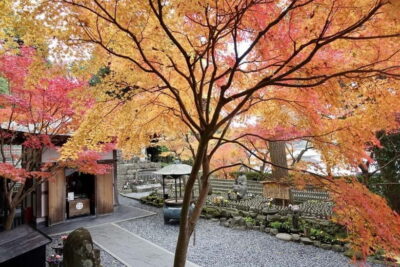
Kamakura & Enoshima Day Trip including Temple Tickets
Read our review →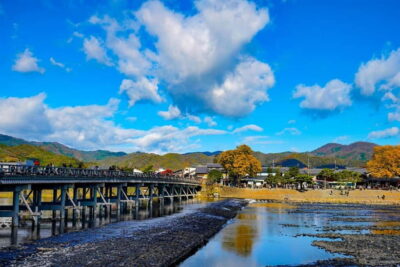
Kyoto/Osaka: Nara, Fushimi Inari Taisha, Arashiyama Bus Tour
Read our review →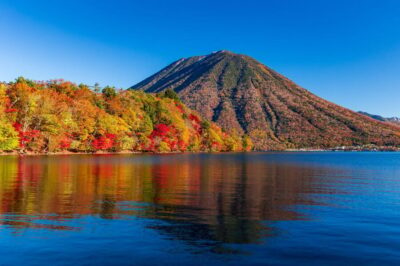
Nikko Toshogu Shrine and Kegon Waterfall Tour
Read our review →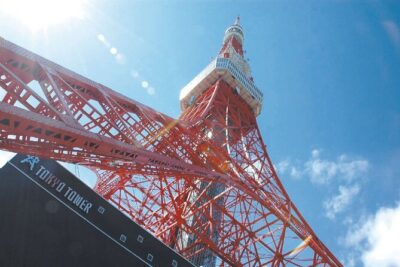
Tokyo Panoramic 1 Day: Meiji Shrine, Asakusa, Odaiba and SKYTREE®
Read our review →Browse the lists this tour appears in