
REVIEW · JAPANESE COOKING CLASSES
3-Hour Small-Group Sushi Making Class in Tokyo
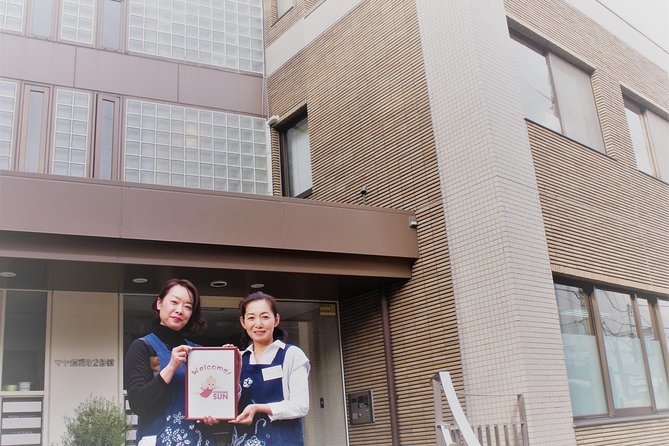
The best part of this three-hour class is that you do not simply watch a chef work. You make several kinds of sushi yourself, from hand-pressed nigiri to thin rolls, then sit down to eat the results. The friendly English-speaking team, including instructors such as Miki, Yuki, Yuko, and Aya, keeps the pace easy for first-timers.
I like the small group of up to nine, which gives you room to ask questions and get help with rolling and shaping. I also like that the class covers more than sushi assembly: you make tamagoyaki, learn about dashi and miso, and prepare sushi rice. The main limitation is that the fish comes pre-sliced, so this is a sushi-making class, not a lesson in breaking down whole fish.
In This Review
- Key points to know before booking
- A quiet Shinjuku kitchen instead of a showy restaurant
- The first lesson: dashi, miso, and the building blocks of Japanese cooking
- Tamagoyaki is the surprise challenge
- Sushi rice, shrimp, and the work before the rolling
- Four sushi styles, four different techniques
- The meal is part of the lesson, not an afterthought
- Why the small group makes a difference
- Is $72.67 a fair price?
- Who should take this class?
- Practical details for a smooth afternoon
- Should you book this Tokyo sushi class?
- FAQ
- How long does the sushi-making class last?
- What time does the class begin?
- Where does the class meet?
- Is the class taught in English?
- What types of sushi will I make?
- Can children or vegetarians join?
Key points to know before booking
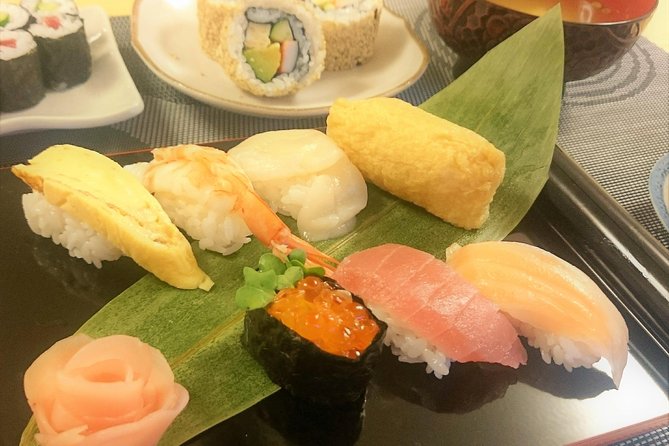
- You make four main sushi styles: nigiri, inari, hosomaki, and California rolls, with additional pieces possible depending on the class.
- Tamagoyaki is part of the hands-on work: you prepare Japanese rolled omelet to use in your sushi.
- The meal is substantial: miso soup, wasabi, pickled ginger, shrimp, omelet, tofu pouches, and several sushi creations are included.
- English support is built in: instructors explain the ingredients, methods, and cultural background in English.
- Children from age six can join: the patient, hands-on format suits families as well as solo participants and couples.
- Fish preparation has a clear limit: seafood is pre-sliced, so there is no raw fish cutting instruction.
A quiet Shinjuku kitchen instead of a showy restaurant
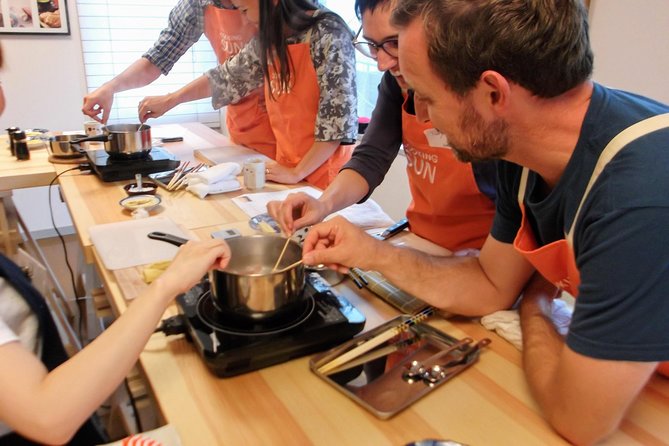
Cooking Sun Tokyo is at 18-39 Shinanomachi, in Shinjuku City. The studio is near public transportation, but it is set back from the main roads in a quiet residential area. That setting matters. You are not being rushed through a restaurant counter or squeezed into a large demonstration room.
The class begins at 1:30 pm and lasts about three hours. You finish back at the same meeting point, which keeps the afternoon simple. I would allow enough time to find the studio, especially if you are coming from another part of Tokyo and are not familiar with Shinanomachi.
The room is described as clean, well equipped, and comfortably cooled. That last detail can be welcome during Tokyo’s hot summer months. Aprons and towels are provided, and the ingredients are ready for you, so you do not need to shop or bring cooking equipment.
The maximum group size is nine. Some sessions may be smaller, while a full class still remains manageable. You share the kitchen, but you also get direct help when your omelet folds go wrong or your sushi roll needs rescuing.
More Japanese Cooking Classes in Tokyo
- Sushi Making Tokyo Roll and Authentic Japanese Sushi Class
★ 5.0 · 3,971 reviews - Tokyo: Roll and Authentic Sushi Making Class in Asakusa
★ 4.9 · 1,957 reviews - Tokyo: Sushi Making Class in a Happi Coat near a Famous Spot
★ 4.9 · 1,377 reviews
The first lesson: dashi, miso, and the building blocks of Japanese cooking
The class opens with an introduction to basic Japanese ingredients and seasonings. Dashi, miso, and other traditional flavors are explained before the cooking begins. This gives you useful context, since Japanese food often depends on a few carefully balanced ingredients rather than a long list of strong spices.
This opening is especially helpful if you want to repeat the recipes at home. You learn not just what goes into the food, but how these ingredients fit into everyday Japanese cooking. The focus is practical, not academic. You get the information needed to understand the dishes you are about to prepare.
The instructors also explain some of the background of sushi and Japanese cooking. It is a small but worthwhile addition. Sushi can look simple on the plate, yet the rice, fillings, seasonings, and shaping all affect the final result.
The class is designed for beginners. You do not need prior cooking experience, and the instructors guide you through each stage. That makes it a good choice if sushi seems precise or intimidating. You are not expected to arrive knowing how to form rice or use a bamboo rolling mat.
Tamagoyaki is the surprise challenge
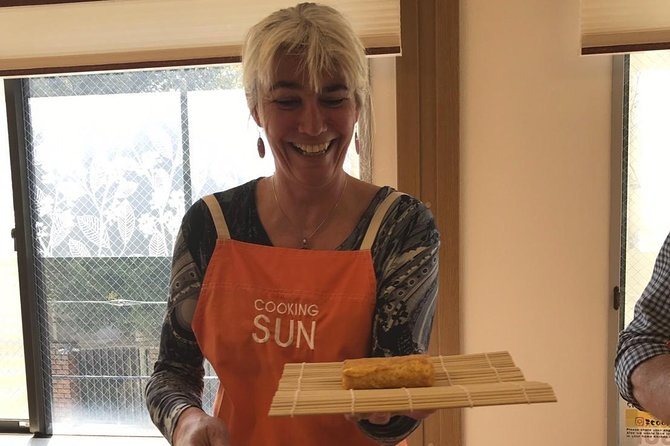
Before assembling the sushi, you make tamagoyaki, the sweet Japanese rolled omelet. It becomes a filling for some of the sushi, so this is not a side demonstration where the instructor does all the work.
Tamagoyaki looks modest, but the rolling technique takes attention. You cook and fold the egg in layers, building the familiar rectangular shape. Your first attempt may not look perfect. That is part of the fun, and the instructors help you correct the technique rather than taking over.
I like this part because it broadens the class beyond the familiar image of raw fish and rice. You learn a Japanese home-cooking skill that is useful on its own. It also shows why a hands-on class can offer more than a sushi meal. You leave with a better sense of how several different textures and flavors are combined.
Families should note that children from age six are allowed. The class has worked well for families with children aged 10 and 12, and the instructors are described as patient with young cooks. Adults should still expect to help younger children with hot pans and careful food preparation.
Sushi rice, shrimp, and the work before the rolling
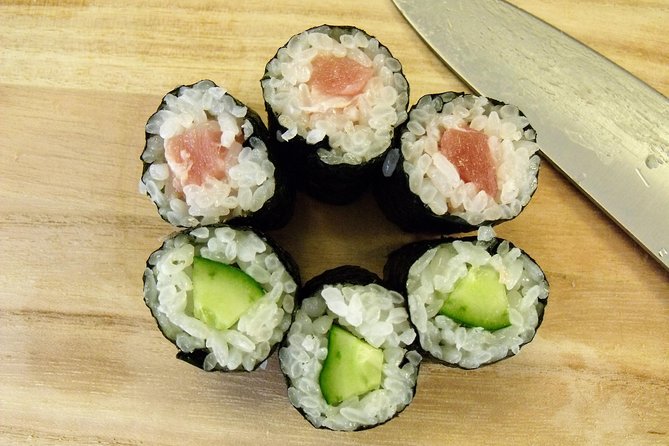
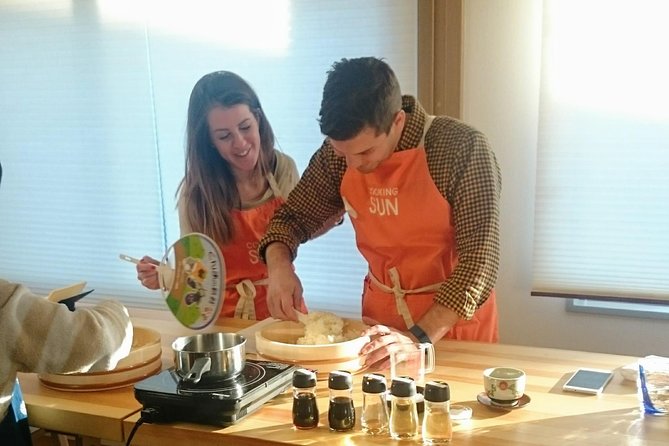
Next comes the sushi rice and toppings. Rice is the foundation of every piece, and the class gives it proper attention rather than treating it as a ready-made filler. You also prepare ingredients such as shrimp, then arrange the fillings and toppings for the different sushi forms.
The class uses pre-sliced fish. This keeps the lesson approachable and reduces the need for advanced knife work, but it also sets a clear boundary around what you will learn. If your goal is to fillet fish, judge freshness from a whole fish, or study professional sushi-counter technique, this is not the right class.
For most people, that trade-off makes sense. Three hours is enough time to learn useful home techniques without turning the afternoon into a professional culinary course. You get to focus on rice, filling proportions, hand pressure, and presentation.
The instructors support you at each stage. English is used throughout, and the teaching style is described as friendly, clear, and easy to follow. That is important in a class where small hand movements matter. You can ask why the rice sticks, how much filling to use, or how firmly to press the nigiri.
Same city, a completely different kind of day:
- Mt Fuji and Hakone 1-Day Bus Tour Return by Bullet Train
★ 5.0 · 26,383 reviews - 1-Day Tokyo Bus Tour
★ 5.0 · 14,250 reviews - Tokyo: TOKYO SKYTREE® Admission ticket
★ 4.5 · 11,192 reviews - Tokyo: teamLab Planets TOKYO Digital Art Museum Entry Ticket
★ 4.6 · 9,779 reviews
Four sushi styles, four different techniques
The class includes nigiri, inari, hosomaki, and California rolls. Each one teaches a different way to handle rice and fillings.
Nigiri is the hand-pressed form. You shape a small portion of rice and add a topping, such as shrimp or fish. The lesson helps you understand how much rice to use and how to form a piece that holds together without becoming heavy.
Inari uses a sweet tofu pouch filled with sushi rice. It is easier to shape than a roll, but the balance between the pouch and rice still matters. The sweet tofu adds a different flavor from the savory toppings.
Hosomaki is a thin roll. It teaches control. Too much filling makes the roll difficult to close, while too much rice can overwhelm the center. This is the kind of technique you can repeat at home once you have the basic method.
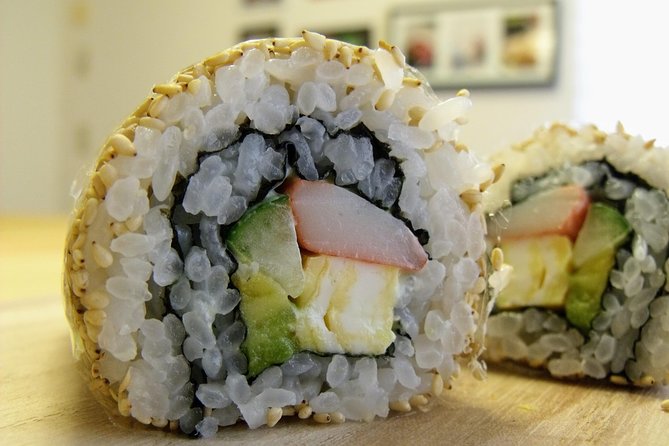
California rolls add a familiar international style to the menu. They are approachable for beginners and help you practice rolling before you move on to more delicate shapes. The mix of traditional and widely known sushi styles makes the class accessible without pretending that all sushi follows one format.
The exact meal can include several other pieces. One session produced a spread with miso soup, tamagoyaki, inari age, hosomaki, California roll, ebi nigiri, tamago sushi, and four pieces of nigiri. That is a generous amount of food for a class, so arrive hungry.
The meal is part of the lesson, not an afterthought
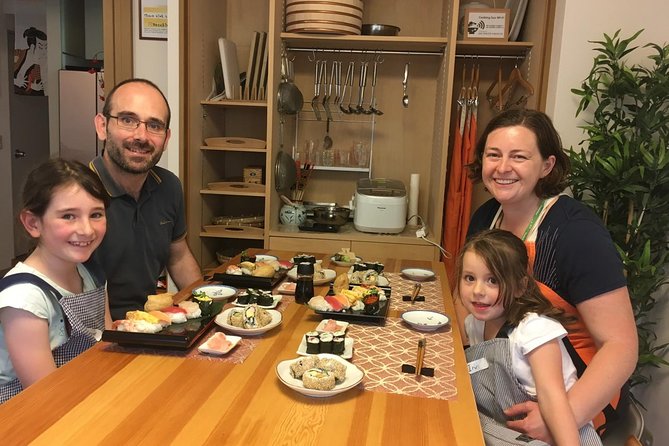
Once the sushi is ready, you sit down and eat what you made. Miso soup, fresh wasabi, and pickled ginger accompany the meal. This final sitting gives you time to compare the different styles and see which techniques produced the best results.
The amount of food can be surprisingly large. If your sushi does not look restaurant-perfect, it still tends to be satisfying because you made it yourself and understand what went into it. The class is less about producing flawless professional pieces and more about learning a method you can repeat.
I would not book this expecting premium restaurant fish. One useful point is that the seafood is pre-sliced and the class is built around instruction, not a high-end omakase meal. The reward is the process, the quantity, and the practical skill you take home.
Vegetarian sushi is available if requested in advance. You should give any dietary requirements when booking. The provided information does not list every possible substitution, so specific needs should be raised before the class rather than at the kitchen door.
Why the small group makes a difference
A class of nine or fewer is a strong fit for this type of activity. Sushi shaping is difficult to learn from the back of a crowded room. Here, you can watch a demonstration, try the movement yourself, and get help before a small mistake becomes a full plate of loose rice.
The instructors named in class feedback include Miki, Yuki, Yuko, Aya, Yuca, and Yummy Yuma. The team is consistently described as warm, efficient, and easy to understand in English. Since staffing can vary by session, you may not meet every instructor listed here.
The teaching style also suits people with very different cooking backgrounds. Experienced home cooks can ask about ingredients and technique, while complete beginners can follow each step without feeling behind. Solo participants, couples, and families all fit naturally into the format.
The class has a social side, but it does not depend on forced group games. You cook alongside other people, share a kitchen, and then eat together. That gives the afternoon a friendly feel while keeping the main focus on food.
Is $72.67 a fair price?
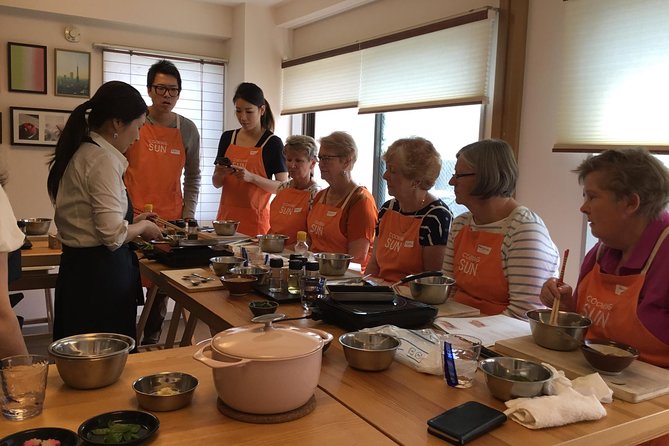
At $72.67 per person, this is not the cheapest way to eat sushi in Tokyo. It is also not simply a meal. The price includes a three-hour guided class, an English-speaking local instructor, ingredients, recipes, apron and towel rental, and the sushi meal at the end.
The value is strongest if you want an activity rather than another restaurant stop. You receive instruction in rice, dashi, miso, tamagoyaki, nigiri, inari, and rolling techniques. You also get enough food to make the final meal feel like part of the purchase, not a token sample.
The price is less attractive if you mainly want the finest fish or a professional sushi lesson. There is no fish cutting instruction, and the class is aimed at home cooks. For a first introduction to sushi in Japan, though, the combination of food, instruction, and English support is reasonable.
This activity is often booked around 53 days ahead. That suggests you should plan early, especially for a particular date or a family booking. Confirmation is provided when you book, and the mobile ticket makes entry straightforward.
Who should take this class?
I would recommend it to you if you want to understand sushi by making it. It suits first-time visitors who want a break from temples, shopping, and train stations, as well as repeat visitors who want a practical food experience.
Families are a good match, since the minimum age is six and the instructors have experience helping children. Adults should be ready to supervise younger children around cooking equipment, but the lesson itself is structured for beginners.
Solo participants and couples should also feel comfortable. The small group gives you company without the scale of a large tour. If you are on a honeymoon or celebrating a special trip, making a meal together gives you a shared activity and a story to take home.
Vegetarians can request an option in advance. People with allergies or other dietary needs should contact the provider before booking. The class may not suit you if you want a strictly traditional sushi menu, advanced knife training, or a lesson based on whole raw fish.
The three-hour length works well in a Tokyo itinerary. The 1:30 pm start leaves room for a morning visit elsewhere, and the class ends at the same location. You may want to keep the evening flexible, since the meal can be filling.
Practical details for a smooth afternoon
Meet at Cooking Sun Tokyo, 18-39 Shinanomachi, Shinjuku City, Tokyo 160-0016. The activity begins at 1:30 pm and ends back at the meeting point. Hotel pickup and drop-off are not included, so you make your own way to the studio.
Wear something comfortable for kitchen work. An apron and towel are supplied, but you still want clothing that allows easy movement. The class requires active participation, so this is not a sit-back demonstration.
Ask about dietary requirements when booking. Vegetarian preparation is available, but advance notice is required. The confirmation arrives at booking, and the ticket is mobile.
Cancellation is free up to 24 hours before the local start time for a full refund. Changes or cancellations inside that 24-hour window are not accepted and are not refunded. The activity also lists a good-weather requirement. If the provider cancels for poor weather, you are offered another date or a full refund.
Should you book this Tokyo sushi class?
Book it if you want a useful, filling, beginner-friendly food lesson with English instruction and plenty of hands-on time. The strongest features are the small group, the patient teaching, the range of sushi styles, and the chance to make tamagoyaki, sushi rice, and miso soup as part of the meal.
Skip it if your priority is luxury sushi, whole-fish preparation, or advanced professional technique. You will work with pre-sliced fish and home-style methods. For everyone else, $72.67 buys more than a plate of sushi. It buys a relaxed afternoon, a proper introduction to Japanese cooking, and recipes you can try again after Tokyo.
FAQ
How long does the sushi-making class last?
The class lasts approximately three hours.
What time does the class begin?
The scheduled start time is 1:30 pm.
Where does the class meet?
You meet at Cooking Sun Tokyo, 18-39 Shinanomachi, Shinjuku City, Tokyo 160-0016, Japan. The activity ends at the same meeting point.
Is the class taught in English?
Yes. A local, English-speaking cooking instructor leads the class.
What types of sushi will I make?
The class teaches nigiri, inari, hosomaki, and California rolls. You also prepare tamagoyaki, sushi rice, and toppings such as shrimp.
Can children or vegetarians join?
Children from age six can join. A vegetarian option is available, but you must request it when booking. Specific dietary requirements should also be provided in advance.
More 3-Hour Experiences in Tokyo
- Tokyo Top Highlights 3h Guided E-bike Tour
★ 5.0 · 714 reviews - 3h Tokyo E-Bike Tour: Hidden Gems, and Local Life with guide
★ 5.0 · 670 reviews - Tokyo: 3-Hour Bike or E-Bike City Highlights Tour
★ 4.8 · 435 reviews - Tokyo: 3-hour Guided E-Bike Tour of the City’s Hidden Gems
★ 4.8 · 251 reviews
More Workshops in Tokyo
- Tokyo Shinjuku Chopsticks Making Class
★ 5.0 · 1,763 reviews - Chopstick Making Workshop in Ginza
★ 4.8 · 1,366 reviews - Tokyo Sushi Making Class in Tsukiji with Professional Chef
★ 5.0 · 1,177 reviews - Ramen & Gyoza Cooking Class in Tokyo with Local Supermarket Visit
★ 5.0 · 823 reviews
Just added around Tokyo
- Private Memorable Tokyo Tour with English Speaking Driver★ 5.0 · 30 reviews
- Private Tokyo Custom Full-Day Tour by Chartered Vehicle★ 5.0 · 16 reviews
- Private Sightseeing to Mt Fuji and Hakone with English Driver★ 5.0 · 51 reviews
- Tokyo Photography Masterclass – Private Photography Lesson★ 5.0 · 25 reviews
- 4 Day Tour – Mount. Fuji, Tokyo, Hakone, Kamakura and Yokohama★ 5.0 · 19 reviews
- Private Mt. Fuji Day Trip from Tokyo with English-Speaking Driver★ 5.0 · 33 reviews
- Private Unforgettable Mt Fuji Tour with English Speaking Driver★ 5.0 · 142 reviews
- Private Tokyo Food Tour – A Journey Through Time Through Food★ 5.0 · 36 reviews
Japanese Cooking Classes, compared.
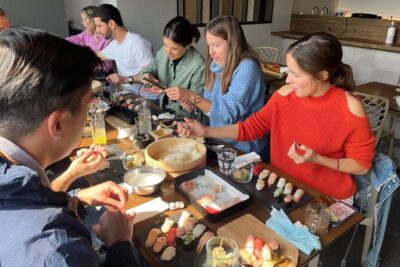
Sushi Making Tokyo Roll and Authentic Japanese Sushi Class
Read our review →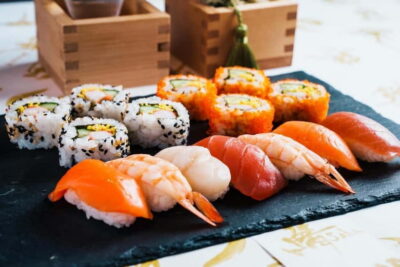
Roll and Authentic Sushi Making Class in Asakusa
Read our review →
Ramen Cooking Class at Ramen Factory in Kyoto
Read our review →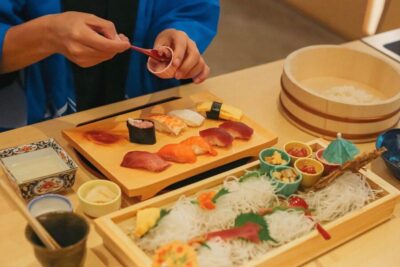
Sushi Making Class in a Happi Coat near a Famous Spot
Read our review →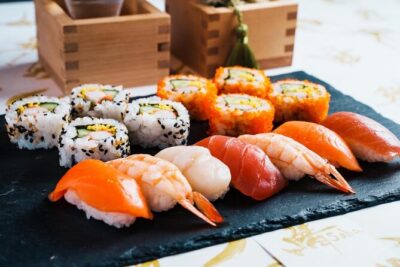
Sushi Making Osaka Roll and Authentic Japanese Sushi Class
Read our review →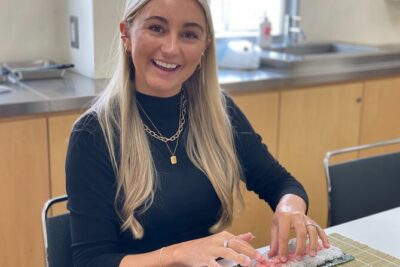
Tokyo Sushi Making Class in Tsukiji with Professional Chef
Read our review →
Ramen & Gyoza Cooking Class in Tokyo with Local Supermarket Visit
Read our review →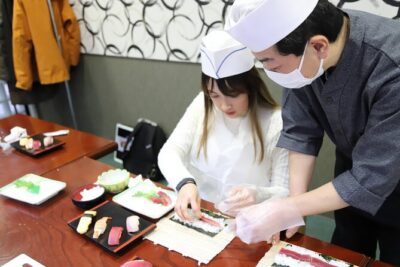
Tsukiji Fish Market Guided Tour and Sushi Making with Pro Chef
Read our review →Browse the lists this tour appears in