
REVIEW · COOKING CLASSES
Traditional Home cooking Experience in Osaka, Japan
The best part of this Osaka cooking class is the chance to make familiar Japanese dishes with ingredients chosen for quality, not just speed. You work alongside an experienced chef and an English-speaking host, then sit down to eat what you prepared. I especially like the small group size and the use of Koshihikari rice bought directly from a farmer in Niigata. The option to choose between a sukiyaki-focused menu and a wagyu bowl menu also lets you shape the experience around your appetite.
I also like that this is built around having fun, rather than treating cooking like a formal lesson. A possible drawback is the price, $104.51 per person, which is a serious sum for a two-hour activity. It makes the most sense if you want a meal, a hands-on cultural activity, and personal guidance in one package, not simply a cheap lunch.
In This Review
- Key points at a glance
- What this Osaka cooking class is really offering
- Picking between Course A and Course B
- Seasonal ingredients and Niigata Koshihikari rice
- Cooking with the host and chef
- Eating what you prepare
- Location, timing, and group size
- Who will get the most from this experience
- Booking and cancellation advice
- Should you book this Osaka cooking class?
- FAQ
- Where does the cooking class meet?
- Where does the experience end?
- How long does the cooking class last?
- What is included in the price?
- Are alcoholic beverages included?
- What are the two course choices?
- How many people can join the class?
Key points at a glance
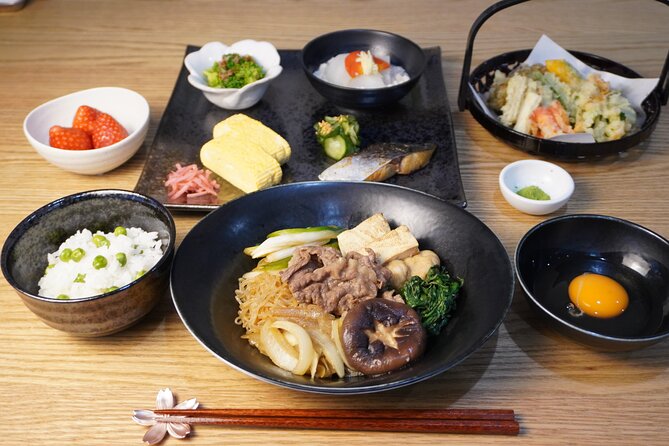
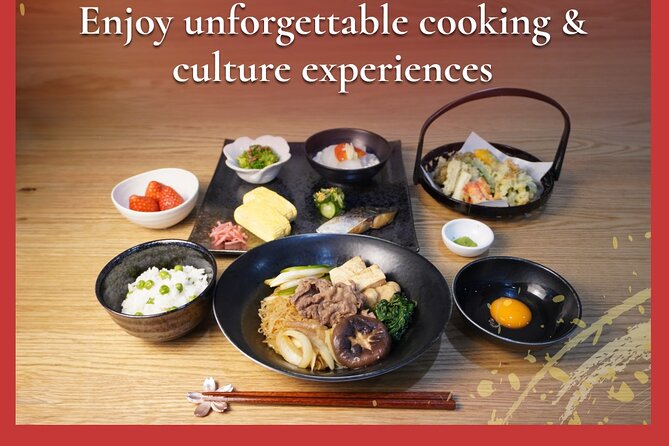
- Choose your menu: Course A combines sukiyaki, tempura, and rolled omelet, while Course B includes wagyu roast beef bowl, chicken nanban, and sashimi.
- Premium rice matters: The class uses Koshihikari rice purchased directly from a contracted farmer in Minamiuonuma, Niigata.
- Small class setting: The maximum group size is eight, so you should receive more personal help than in a large demonstration.
- Friendly instruction: The host speaks good English, and the chef cooks alongside you while explaining the dishes.
- A meal with the lesson: You eat the food you prepare, with water included and other drinks charged separately.
- Central Osaka location: The meeting point is at 2 Chome-13 Nishishinsaibashi, near public transportation.
What this Osaka cooking class is really offering
This is not just a recipe lesson. It is a compact introduction to the way everyday Japanese food can be built around good ingredients, careful preparation, and shared eating.
The class focuses on home-style cooking, not restaurant theatrics. You prepare seasonal dishes that may change with Japan’s four seasons, so the exact ingredients can reflect the time of year. That gives the experience a useful local angle. You are not simply assembling a fixed tourist menu with ingredients chosen months in advance.
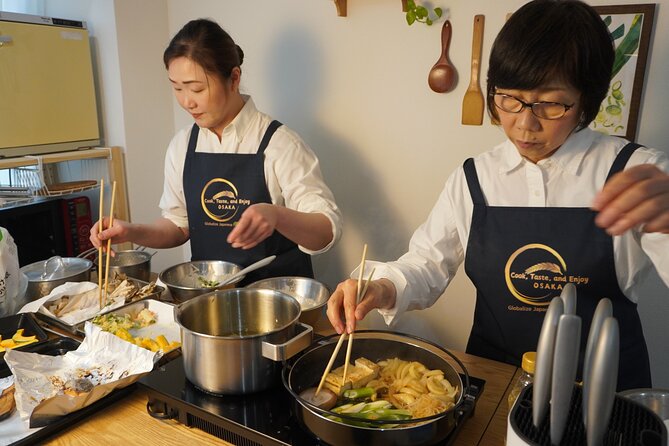
The format is social and practical. The instructors cook with you, guide your work, and keep the mood light. If you are nervous around Japanese recipes or unfamiliar kitchen methods, that support matters. You can ask questions as you go instead of watching a chef work from across a room.
The group is limited to eight people. That is small enough to make the class feel personal, though the actual amount of hands-on time will still depend on how many people attend and how tasks are shared.
A few more Osaka trips to weigh up
- Osaka: Ramen and Gyoza Cooking Class in Dotonbori
★ 5.0 · 378 reviews - Osaka Cooking Class: Okonomiyaki &Japanese cuisines experience
★ 5.0 · 261 reviews - Ramen and Gyoza Cooking Class in Osaka
★ 5.0 · 202 reviews
Picking between Course A and Course B
You choose your course when you book, so this is the first decision to make.
Course A features sukiyaki, tempura, and rolled omelet. It is the better match if you want a broad sample of classic Japanese cooking techniques. Sukiyaki brings a simmered, savory dish to the table, while tempura introduces frying and the rolled omelet adds a more delicate preparation.
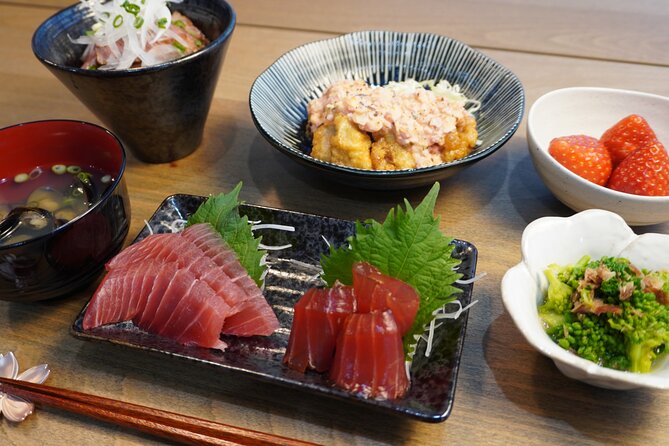
Course B features wagyu roast beef bowl, chicken nanban, and sashimi. It is the stronger choice if a premium beef dish is the main reason you are interested. The wagyu bowl gives you a substantial centerpiece, while chicken nanban and sashimi provide different flavors and textures.
The description refers to making two dishes together, but the menu information names three preparations for each course. You should expect to work on a selection of the listed dishes, with the exact division of tasks handled by the chef.
If you are choosing for a family or mixed group, Course A may offer the wider range of cooking styles. If you are planning around a special meal and want wagyu, Course B is the obvious pick. Sashimi is listed as part of Course B, but the available details do not say how much preparation you will do for it, so do not book this expecting a full fish-cutting lesson.
Seasonal ingredients and Niigata Koshihikari rice
The strongest food detail here is the rice. The class uses Koshihikari rice bought directly from a contracted farmer in Minamiuonuma City, Niigata Prefecture, one of Japan’s leading rice-growing areas.
That may sound like a small point, but rice is central to many Japanese meals. Good rice can change the texture and balance of a simple bowl, especially when paired with roast beef, sashimi, or other strongly flavored foods.
The use of seasonal ingredients adds another worthwhile layer. Japan’s cooking changes with the calendar, and seasonal food is part of the country’s everyday dining culture. You may see different ingredients depending on when you visit, though the available information does not list specific seasonal substitutions.
I like this focus because it gives the class a clear purpose. You are not only learning how to follow directions. You are also learning why ingredient quality matters in a cuisine that often uses a short list of components.
Cooking with the host and chef
The human side of the class seems just as important as the menu. The host is described as friendly, easy to talk with, and comfortable speaking English. That can make a major difference in a hands-on activity, where unclear instructions can quickly turn a pleasant lesson into kitchen confusion.
The chef works alongside you and helps with the cooking. The available details do not give the chef’s name, but the instruction is described as skilled, helpful, and kind. You should expect guidance at the work surface rather than a lecture followed by a meal.
The class also puts emphasis on fun. That does not mean the food is treated casually. It means the atmosphere is meant to be relaxed, with room for conversation and enjoyment while you learn.
One account also describes songs and an instrument performance during a session lasting about two and a half hours, with a performer named Keiko dressed in a kimono. This appears in the experience feedback but is not listed as a standard feature in the main tour details, so treat it as a possible part of the welcome or entertainment rather than a guaranteed element of every booking.
Same city, a completely different kind of day:
- Osaka Go Karting Tour with Funny Costume
★ 5.0 · 2,658 reviews - Osaka Castle: Museum and Tower Entry Ticket
★ 4.5 · 2,380 reviews - Osaka: Shinsekai Food Tour with 13-15 Dishes at 5 Eateries
★ 4.8 · 2,204 reviews - Osaka Food Tour: 13 Dishes at 5 Local Eateries
★ 5.0 · 2,149 reviews
Eating what you prepare
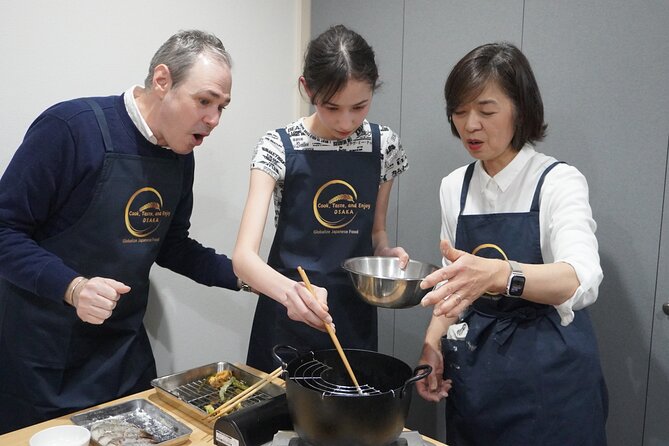
The meal at the end gives the lesson a satisfying payoff. You are not cooking only for practice, then heading elsewhere for lunch. You get to taste the dishes made during the class and see how the separate preparations work together.
That matters for beginners. When you eat the finished food right away, you can connect the cooking steps with the final flavor. You can also ask about ingredients or methods while everything is still fresh in your mind.
Water is free. Other drinks cost extra, and alcoholic beverages are not included. If you want a drink with the meal, budget beyond the advertised price.
The food itself is a major part of the value. At $104.51, this is not a bargain cooking lesson. You are paying for ingredients, instruction, the meal, and a small-group cultural activity in central Osaka. If you would otherwise spend money on a quality meal and a separate paid attraction, the price becomes easier to justify.
If your only goal is to eat Japanese food, you can find less expensive options in Osaka. If you want to learn, cook, and eat in a social setting, the comparison is fairer.
Location, timing, and group size
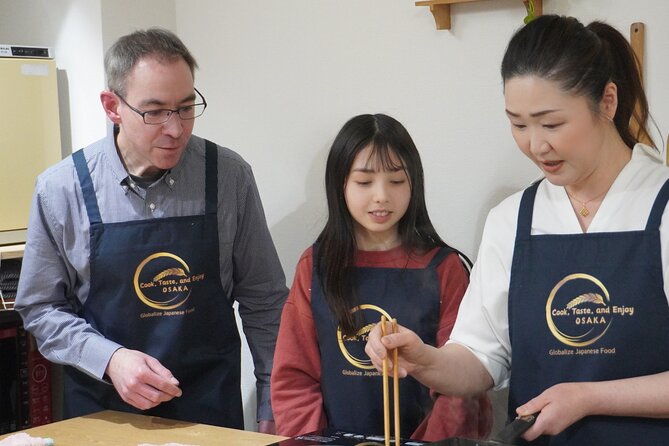
The class begins and ends at 2 Chome-13 Nishishinsaibashi, Chuo Ward, Osaka, postal code 542-0086. It is near public transportation, which makes it practical to fit into a day in central Osaka.
The advertised duration is about two hours. That is a useful length for a busy itinerary. It is long enough to prepare several dishes and eat, but short enough to combine with shopping, sightseeing, or an evening meal.
One account describes spending two and a half hours at the class, so allow a little breathing room if you have a strict reservation afterward. Cooking times can vary, especially when a group is learning together.
The maximum is eight people. That does not guarantee a private class, but it does keep the setting from becoming a large food demonstration. For couples, families, and solo visitors who like meeting people, this size should offer a good balance between personal instruction and conversation.
The mobile ticket is convenient. Confirmation is sent within 48 hours of booking, subject to availability, so do not assume the reservation is final until you receive it.
Who will get the most from this experience
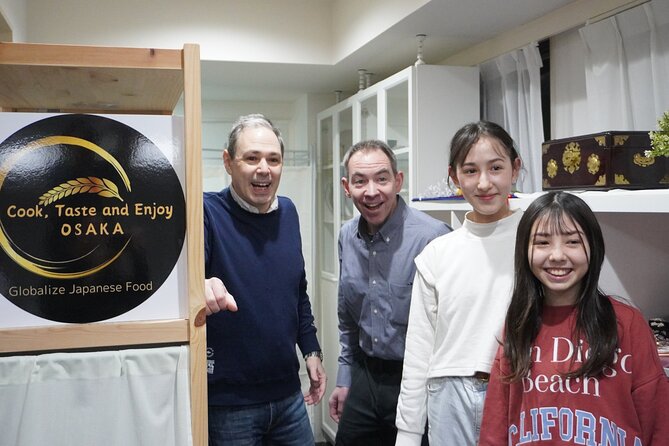
I would recommend this class to you if you want an activity that gives you something to do with your hands. It suits people who enjoy food but also want context, conversation, and a finished meal.
It should work well for:
- First-time visitors who want a gentle introduction to Japanese home cooking
- Couples looking for a shared activity beyond sightseeing
- Families who prefer a short, structured experience
- Food lovers interested in wagyu, seasonal ingredients, and Japanese rice
- Solo visitors who enjoy a small social group
- Anyone with limited time in Osaka who wants a meal and cultural activity in one stop
Course B may appeal most to beef lovers, while Course A gives you a wider spread of familiar Japanese preparations. The class is also a good choice if you value English guidance and want to avoid guessing your way through a recipe.
You may want to skip it if you dislike group activities, do not want to cook, or are mainly seeking the lowest-cost meal. The price is easier to defend for people who see the teaching and social setting as part of the meal.
Booking and cancellation advice
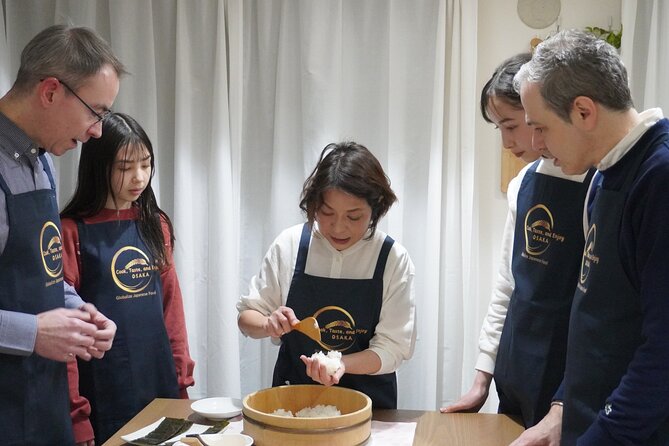
You can cancel for a full refund up to 24 hours before the experience starts. Cancellations made less than 24 hours before the start time are not refunded, and changes within that period are not accepted.
The cut-off follows Osaka local time. Keep that in mind if you are booking from another time zone or changing a tightly packed itinerary.
Because the class is limited to eight people and is booked on average 19 days ahead, reserving early is sensible if you need a particular date. Confirmation arrives within 48 hours, subject to availability.
Should you book this Osaka cooking class?
Book it if you want more than a meal and less than a full-day workshop. The class gives you a focused two-hour window to cook seasonal Japanese dishes, work with a chef, taste premium Niigata rice, and share food with a small group.
I especially like the choice between two menus and the care given to the rice. The friendly English-speaking host and the chef’s hands-on help make the class approachable, while the possible songs and instrument performance add a cultural touch when included.
The main question is value. At $104.51, this is a splurge for a short activity. But if you have limited time in Osaka and want a personal food experience with instruction included, it can earn its place in your schedule. Choose Course A for variety, Course B for wagyu, and leave enough time afterward in case your session runs beyond the advertised two hours.
FAQ
Where does the cooking class meet?
The meeting point is 2 Chome-13 Nishishinsaibashi, Chuo Ward, Osaka, 542-0086, Japan.
Where does the experience end?
The class ends back at the meeting point.
How long does the cooking class last?
The advertised duration is approximately two hours. One account describes a session lasting two and a half hours, so allowing extra time is sensible.
What is included in the price?
The class includes the cooking experience, the food you prepare, and free water. Other drinks are charged separately.
Are alcoholic beverages included?
No. Alcoholic beverages are not included.
What are the two course choices?
Course A includes sukiyaki, tempura, and rolled omelet. Course B includes wagyu roast beef bowl, chicken nanban, and sashimi.
How many people can join the class?
The activity accepts a maximum of eight participants.
Just added around Osaka
- Samurai dress-up and shows, plus Tea Ceremony & Calligraphy★ 5.0 · 27 reviews
- Kyoto & Nara Private customized tour with English speaking Guide★ 4.5 · 99 reviews
- Well-balanced BENTO (lunch box) Cooking Class★ 5.0 · 35 reviews
- Urban Canvas: Osaka Street Art Bike Tour★ 5.0 · 47 reviews
- OSAKA:Feel the Power! Learn Taiko Drum from Professionals★ 5.0 · 28 reviews
- Volleyball in Osaka & Kyoto with Locals!★ 5.0 · 21 reviews
- 1.5〜2 Hours Traditional Kintsugi Work Shop in Namba Osaka★ 5.0 · 75 reviews
- Umami Town Street Food Tour★ 5.0 · 120 reviews
Cooking Classes, compared.
Ramen Cooking Class at Ramen Factory in Kyoto
Read our review →
Ramen & Gyoza Cooking Class in Tokyo with Local Supermarket Visit
Read our review →
Ramen Cooking Class at a Ramen Factory with Souvenir
Read our review →
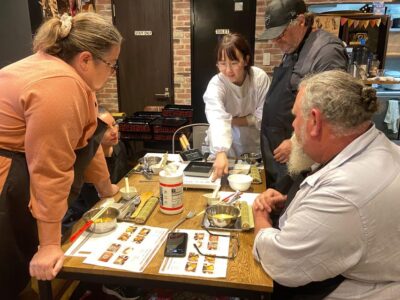
Japanese Washoku Bento Small Group Cooking Class
Read our review →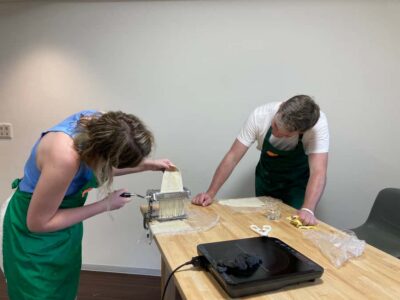

Easy Ramen Cooking Experience in Kabukicho, Shinjuku
Read our review →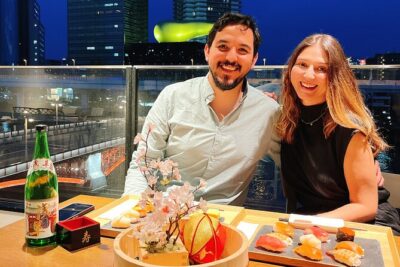
Ramen and Sushi Cooking Class with Sake Pairing Set in Tokyo
Read our review →Browse the lists this tour appears in