
REVIEW · GARDEN & PALACE TOURS
Tokyo Castle, Imperial Palace, Shogun & Garden Walking Tour
Tokyo’s Imperial Palace is less a grand palace visit than a walk through the remains of Edo Castle, where stone foundations, gates, gardens, and defensive structures tell the story. A guide turns those quiet traces into a useful lesson on shoguns, emperors, and modern Tokyo.
I like the easy meeting point at Starbucks in Wadakura Fountain Park, and I like the small-group format, listed as up to 10 people in the practical details, with another tour description giving a limit of 15. The main drawback is simple: you cannot enter the Inner Palace, and much of the old castle was destroyed, so this tour suits history fans more than anyone expecting palace rooms.
In This Review
- Key points at a glance
- What you are really seeing at Tokyo’s Imperial Palace
- Meeting at Wadakura Fountain Park
- Ōtemon Gate and the castle defenses
- Edo Castle ruins and the story of the shoguns
- Ninomaru Garden and the calmer side of Tokyo
- Why the guide makes such a difference
- What the two-hour timing means
- Price and practical value at $31.84
- Who should book this Imperial Palace walk
- Weather, clothing, and small booking details
- Should you book Tokyo Castle, Imperial Palace, Shogun & Garden Walking Tour?
- FAQ
- How long does the tour last?
- Where does the tour begin?
- Where does the tour end?
- Does the tour enter the Imperial Palace itself?
- What sights are included?
- How many people can join the tour?
- Is admission included?
- Is there a dress code?
- Can I cancel for a refund?
Key points at a glance
- Edo Castle remains: See Ōtemon Gate, guardhouse ruins, massive stone bases, and the site of the former castle buildings.
- A guide adds the meaning: Mika, Natsumi, Lakki, Nicola, and other guides are praised for explaining the shogun era in clear English.
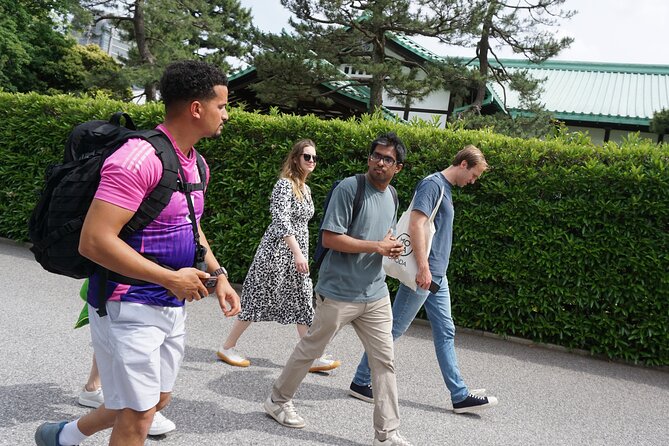
- Two hours on foot: The pace allows time for questions, photographs, and a calm look at Ninomaru Garden.
- Small group setting: The experience is designed for a limited number of people, making it easier to hear the guide and ask questions.
- Not an Interior Palace tour: The Inner Palace is closed to the public, so expectations matter.
- Good seasonal setting: The gardens are attractive in cherry blossom season, lush in warmer months, and peaceful in winter.
What you are really seeing at Tokyo’s Imperial Palace

The name can set you up for the wrong kind of visit. This is not a tour through the Emperor’s residence, and it does not take you into lavish palace halls. The Inner Palace is not open to the public.
Instead, you walk through the East Gardens of the Imperial Palace, a public part of the former Edo Castle grounds. The visible remains include the Ōtemon Gate, guardhouse ruins, stone walls, castle foundations, gardens, and the Ninomaru Garden.
That may sound modest compared with a preserved European castle. The setting is still worthwhile, but its appeal depends on your interest in what happened here. The old castle buildings were destroyed, including by fire, and were not rebuilt in the way many visitors might expect. You see the stone base of the former palace rather than a complete castle rising above the trees.
This is exactly where a guide helps. Without explanation, you may see a pleasant park with stones, ponds, and clipped greenery. With a good guide, those stones become evidence of military planning, political power, and the long shift from shogun rule to imperial government.
More Garden & Palace Tours in Tokyo
- Tokyo: Imperial Palace and Shogun Historical Walking Tour
★ 5.0 · 2,251 reviews - Tokyo Castle & Imperial PalaceーShogun Walking Tour
★ 4.7 · 1,068 reviews - Tokyo: Imperial Palace Japanese History Walking Tour
★ 4.9 · 987 reviews
Meeting at Wadakura Fountain Park
The tour begins at the Starbucks Coffee in Wadakura Fountain Park, at 3-1 Kōkyogaien in Chiyoda City. The meeting point is near public transportation and gives you a clear place to gather before entering the palace grounds.
I like this start because it removes one common Tokyo problem: trying to spot a guide beside a huge station exit or a crowded landmark. Give yourself enough time to reach the park and confirm the exact meeting instructions on your mobile ticket.
From the meeting point, you walk with the guide toward Ōtemon Gate, the grand entrance to the East Gardens. The tour ends back at the meeting point after about two hours, so it is easy to pair with another activity in central Tokyo.
Wear shoes suited to walking and prepare for outdoor conditions. The route is not described as strenuous, and most people can participate, but the gardens are spread out and the weather can change the feel of the visit. Summer heat, winter cold, and rain all matter here. One practical review specifically cautions that the large grounds can be uncomfortable in very hot or cold weather if you arrive unprepared.
Ōtemon Gate and the castle defenses
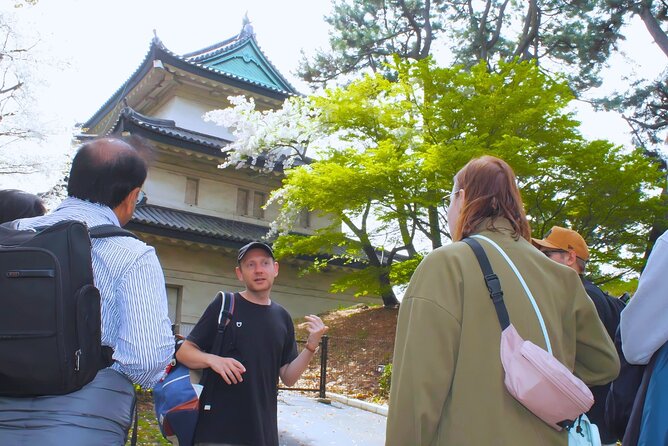
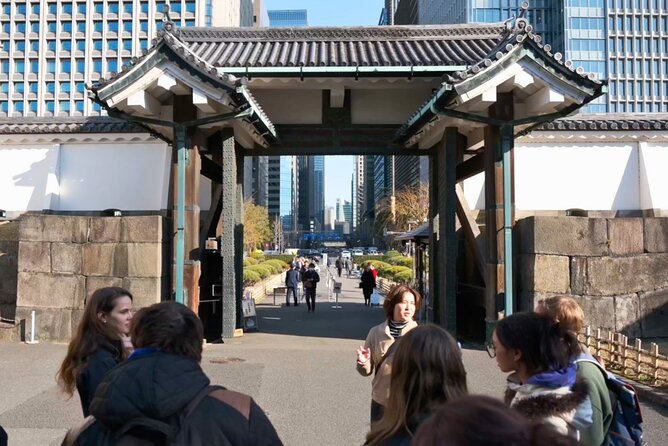
The first major sight is Ōtemon Gate. This was not just a pretty entrance. It formed part of the castle’s security system, and your guide explains how visitors, guards, and potential attackers would have encountered the castle.
The guardhouse ruins help make the defensive plan easier to understand. You may hear about castle defenses, controlled access, and the practical design of the Edo-period compound. The tour also includes discussion of samurai-era power, so this opening section gives you a useful frame for the rest of the walk.
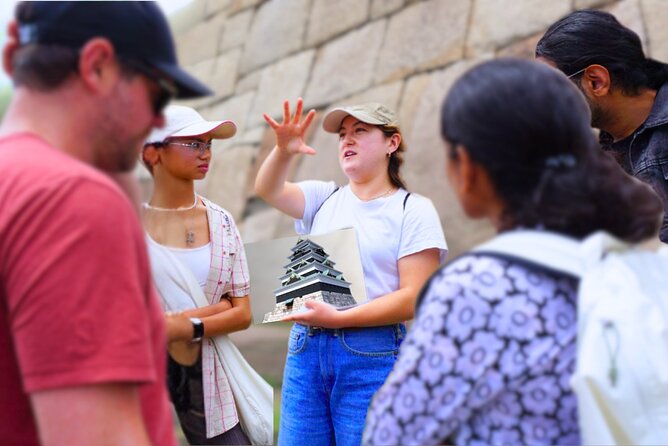
I would pay close attention here, even if gates and stone walls are not usually your main reason for sightseeing. Tokyo can feel modern and fast, but this entrance shows how carefully the city was organized around political authority. The guide’s maps or images, used by at least one guide on the route, can help you picture structures that no longer exist.
The limitation is that the physical remains are incomplete. If you need intact buildings and furnished interiors, Ōtemon Gate and the ruins may not satisfy you on their own. The value comes from the explanation and the sense of scale.
Edo Castle ruins and the story of the shoguns

The walk continues into the former Edo Castle grounds, where the main castle buildings once represented the center of shogun power. The guide connects the site to the Edo period and explains how the shoguns and emperors influenced Japan at different points in the country’s past.
This is the heart of the experience. You are not simply looking at an old foundation. You are learning why Edo, now Tokyo, became the center of leadership and how the political structure changed over time.
The tour’s title mentions Tokyo Castle and shoguns, but the most useful way to think about it is as a history walk through a former seat of power. The guide helps you imagine the original layout and explains what the remaining stone base means.
The reviews consistently praise the guides’ ability to explain this material. Mika is described as engaging with children and teenagers, using historical references that held the attention of three boys aged 11, 13, and 15. Natsumi is praised for connecting the Edo period, the shoguns, the emperors, and modern Japan. Lakki is repeatedly singled out for his command of shogun history. Nicola, also called Nicolas in one response, is praised for making the gardens and historical eras easier to understand.
That pattern matters. The site itself does not provide a constant stream of dramatic buildings. A guide who can explain clearly is not an optional extra here. It is the main reason to book rather than walk through the gardens alone.
More Walking Tours in Tokyo
- Tokyo Tsukiji Fish Market Food and Culture Walking Tour
★ 5.0 · 3,184 reviews - Tokyo: Shinjuku Local Bar and Izakaya Guided Walking Tour
★ 4.9 · 1,794 reviews - Tokyo: Tsukiji Fish Market Food and Walking tour
★ 5.0 · 1,724 reviews - Tokyo: Asakusa Walking Tour with Sensoji Temple Visit
★ 4.8 · 1,583 reviews
Ninomaru Garden and the calmer side of Tokyo
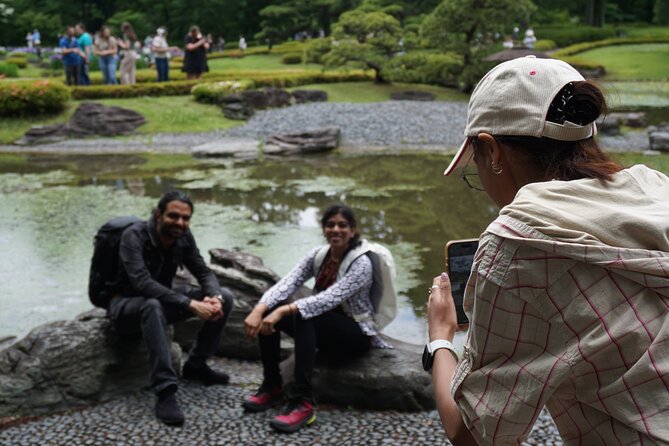
Ninomaru Garden provides a change of pace. After the gates, walls, and castle foundations, you move through a more peaceful part of the grounds, with greenery, ponds, and koi.
The garden is especially appealing if you want a break from Tokyo’s noise and concrete. One review describes it as a calm walk on a quiet day, while another points to the lush greenery and beautiful koi. In cherry blossom season, the gardens can add a memorable seasonal touch. Winter has its own appeal, with fewer distractions and a quieter mood.
The guide also explains details that are easy to miss without help. Garden design, the use of the grounds, and the relationship between beauty and authority all become part of the visit. Ask your guide about the best photo spots. The guides are happy to point them out, and some will take photos for members of the group.
Do not expect a formal garden tour focused only on plants. The garden is one part of a broader story about the castle and the people who used it. That blend works well, though plant lovers seeking a detailed horticultural tour may want something more specialized.
Why the guide makes such a difference
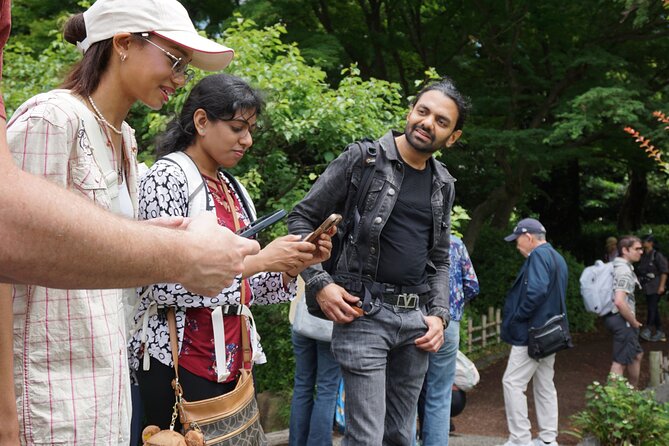
The strongest reason to choose this walk is the human explanation. The tour is short enough to remain manageable, but long enough to cover the main historical points and leave room for questions and photographs.
The best feedback centers on guide qualities: clear English, friendly conversation, strong answers to questions, and an ability to keep the group moving without rushing. Natsumi is praised for sharing local suggestions about restaurants and shrines as well as explaining the site. Mika used maps and images to show how the palace grounds once looked. Lakki and Nicola are praised for making difficult historical links easier to follow.
That does not guarantee the same guide or the same style on every departure. One less positive experience described a guide whose explanations were difficult to understand and whose historical detail felt limited. This is worth noting because the tour’s success depends heavily on communication. Most of the available feedback is highly positive, but no guided experience is identical every time.
The group size helps. The tour information gives two different limits, 15 in the main description and 10 in the additional details. Either way, it is intended to be a small group rather than a large crowd. A smaller group means you can ask about a detail, hear the answer, and take photos without losing the guide immediately.
What the two-hour timing means
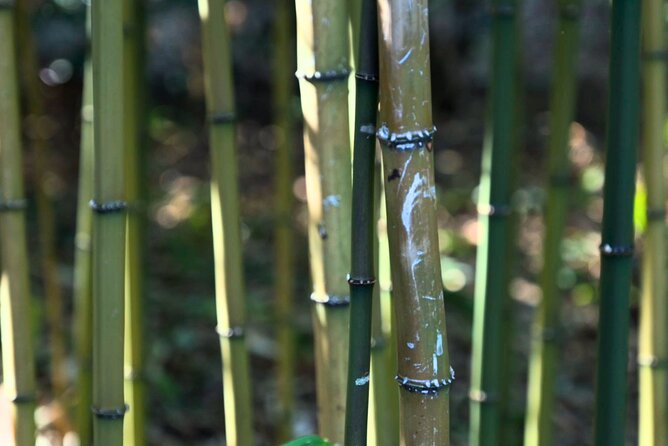
Two hours is enough for an introduction, not a complete study of the Imperial Palace grounds. You will see the East Gardens section covered by the tour, hear the main historical explanation, and return to the meeting point.
That short format works well on a first day in Tokyo, when you want orientation without giving up half a day. It also fits neatly before lunch or another central Tokyo activity.
The tradeoff is coverage. The Imperial Palace grounds are large, and this experience focuses on the East Gardens rather than every part of the complex. You should not book it expecting a full circuit of the palace area or a long visit inside a building.
The pace is described as relaxed, with time for pictures and questions. That makes it suitable for families and for anyone who prefers a thoughtful walk to a rapid list of facts. Still, you are outdoors for the full experience, and summer heat or poor weather can make two hours feel longer.
Price and practical value at $31.84
At $31.84 per person, this is priced as an affordable guided city walk rather than a major attraction ticket. Admission to the grounds is included, and the tour provides a local guide, a small group, historical commentary, and help finding the route.
The value depends on how you see the site. If you are comfortable reading maps, researching Edo Castle, and filling in the missing history yourself, you may find the price less compelling. The grounds are open and the visible remains are limited, so you are not paying for access to grand interiors.
I think the price makes sense for three types of visitors. First, you want a simple introduction to Japanese political history. Second, you prefer a guide to explain what you are seeing rather than relying on plaques. Third, you are short on time and want a planned route through a huge site.
The price may feel high if you expect to see the Emperor’s palace or a restored castle. The description should be understood carefully: this is an East Gardens and Edo Castle ruins walk, not an Inner Palace visit.
Who should book this Imperial Palace walk
I would recommend it to first-time visitors who want historical context, families with older children, and anyone curious about the connection between shogun rule and modern Tokyo. The reports of Mika keeping teenagers interested are encouraging for families, though children who need constant visual spectacle may find the ruins slow.
It also suits a second visit. One person found it more useful for a return trip because the physical remains are limited and the history is the main attraction. I agree with that judgment, with one qualification: if you have never been to Tokyo and enjoy history, this can still be a good early stop because it gives you a useful framework for the city.
You should also consider it if you like gardens but do not want a full-day excursion. Ninomaru Garden offers a peaceful pause, while the gate and ruins supply the historical backbone.
I would skip it if your main goal is to enter the palace, see royal rooms, or photograph a complete Japanese castle. Those experiences are not part of this tour, and the Inner Palace is not open to the public.
Weather, clothing, and small booking details
There is no dress code, and tattoos are welcome. You should still dress for a two-hour outdoor walk, particularly in the hot or cold seasons.
A mobile ticket is provided, and booking confirmation arrives at the time of booking. The meeting point is near public transportation, and the activity ends where it begins.
Free cancellation is available up to 24 hours before the start time for a full refund. Changes or cancellations inside that 24-hour window are not accepted for a refund. The experience requires good weather, so if the operator cancels because of poor conditions, you are offered another date or a full refund.
Should you book Tokyo Castle, Imperial Palace, Shogun & Garden Walking Tour?
Book it if you want the story behind the stones. The East Gardens are pleasant on their own, but the guide explains why Ōtemon Gate mattered, how Edo Castle worked, and how shogun and imperial power shaped Tokyo.
The strongest guides, including Mika, Natsumi, Lakki, and Nicola, appear to bring warmth, clear explanations, and useful local advice. The small group, relaxed pace, free entry to the grounds, and modest two-hour commitment add practical value.
Just set the right expectation. You will not enter the Emperor’s palace, and you will not see a complete castle. If you accept this as a guided history walk through gardens and ruins, the $31.84 price is reasonable. If you want grand rooms and intact architecture, choose a different Tokyo attraction.
FAQ
How long does the tour last?
The walking tour lasts approximately two hours.
Where does the tour begin?
It begins at Starbucks Coffee in Wadakura Fountain Park, at 3-1 Kōkyogaien, Chiyoda City, Tokyo 100-0002, Japan.
Where does the tour end?
The tour ends back at the meeting point.
Does the tour enter the Imperial Palace itself?
No. The Inner Palace is not open to the public. The tour visits the East Gardens and the former Edo Castle grounds.
What sights are included?
The walk includes Ōtemon Gate, guardhouse ruins, Edo Castle remains, and Ninomaru Garden.
How many people can join the tour?
The experience is intended for a small group. The main description gives a limit of 15 people, while the additional tour information lists a maximum of 10.
Is admission included?
Yes. The guided walk includes admission to the Imperial Palace East Gardens, and the listed admission ticket cost is free.
Is there a dress code?
No. There is no dress code, and tattoos are welcome.
Can I cancel for a refund?
You can cancel at least 24 hours before the start time for a full refund. Cancellations or changes made less than 24 hours before the start time are not refunded. If poor weather causes the operator to cancel, you are offered another date or a full refund.
Just added around Tokyo
- Tokyo: Customizable Private Guided Walking Tour★ 4.5 · 129 reviews
- Private Harajuku Omotesando Architecture Tour★ 4.9 · 18 reviews
- Tokyo: Guided Helicopter Ride★ 4.9 · 24 reviews
- Tokyo: Guided Walking Tour of Tsukiji Market with Lunch★ 4.4 · 24 reviews
- Tokyo: Private Personalized Local Food Tour★ 4.5 · 101 reviews
- Tokyo GINZA: KONPARU Japanese Cabaret Show with Drink★ 4.8 · 38 reviews
- Tokyo: Guided Walking Tour of Tsukiji Market with Breakfast★ 4.4 · 134 reviews
- Tokyo: Gotokuji Cat Temple, Shinjuku Cat Cafe & 3D Cat Tour★ 4.9 · 38 reviews
Garden & Palace Tours, compared.

Imperial Palace and Shogun Historical Walking Tour
Read our review →
Tokyo Castle & Imperial PalaceーShogun Walking Tour
Read our review →
Nijo-jo Castle and Ninomaru Palace Guided Tour
Read our review →

Ultimate Osaka Walking Tour: Castle, Dotonbori & Hidden Gems
Read our review →Tokyo Castle & Imperial PalaceーShogun Walking Tour
Read our review →Browse the lists this tour appears in