
REVIEW · CYCLING TOURS
South Kyoto in a Nutshell: Gentle Backstreet Bike Tour!
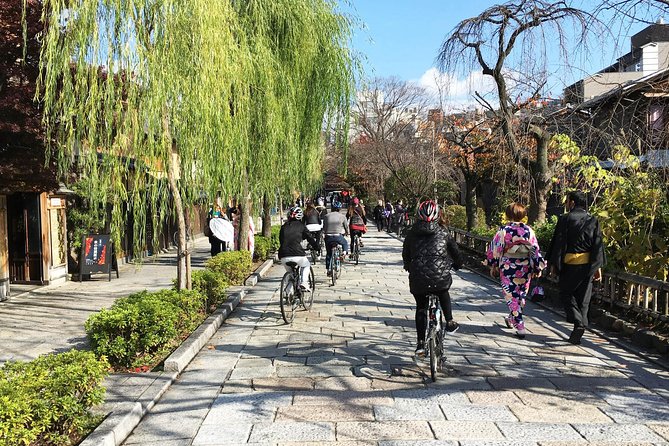
Kyoto’s famous sights can feel crowded and spread out. This small-group bike tour gives you a calmer way to connect them, using narrow lanes that buses cannot reach and covering more ground than you could on foot. You’ll pedal from the shop near Kyoto Station toward Nishi Honganji, Gion, Tofukuji, Takase Canal, and Fushimi Inari.
I like the mix of major sights and ordinary Kyoto streets. I also like that a guide handles the route, traffic advice, and bike fitting while you focus on the scenery. The main thing to consider is pace: stops are short, and some people have found that Gion in particular deserves more time for photos and quiet wandering.
In This Review
- Key points to know before you book
- Why a bicycle works so well in southern Kyoto
- Starting with a bike fit and a city orientation
- Nishi Honganji, a huge wooden start to the sightseeing
- Following Takase Canal at an easy pace
- Gion, Kyoto’s famous geisha district
- Tofukuji Temple and the bridge view
- Fushimi Inari, the morning’s big finish
- Guides who add more than directions
- What the $79.59 price really buys
- Who will enjoy this ride most
- Booking, cancellation, and practical details
- Should you book South Kyoto in a Nutshell?
- FAQ
- How long does the South Kyoto bike tour last?
- What time does the tour start?
- Where does the tour begin?
- Where does the tour end?
- What equipment is included?
- What sights does the tour visit?
- How old must riders be?
- How many people can join the tour?
- Can I cancel for a full refund?
Key points to know before you book
- Small groups of up to eight: The limited size makes it easier to follow the guide through backstreets and ask questions.
- A useful Kyoto sampler: You see temples, a canal, a geisha district, and one of Japan’s best-known shrines in a single morning.
- Good bikes included: A Cannondale bike, helmet, bottled water, and bicycle use are part of the price.
- Mostly manageable riding: The route uses side streets and is described as relaxed, though you must already feel comfortable on a bicycle.
- Flexible guiding: Guides have adjusted the route for crowds and answered questions about Japanese culture, religion, and daily life.
- Fushimi Inari without a long walk from the start: A guide helps you find a practical route through one of Kyoto’s busiest sights.
Why a bicycle works so well in southern Kyoto
Kyoto rewards slow travel, but its sights are not always close together. Walking between them takes time, while buses can be crowded and slow on busy streets. A bicycle gives you a middle path: enough speed to link several places, with enough freedom to notice small lanes, canals, houses, and quiet corners.
This is not a hard cycling challenge. The ride lasts roughly three to four hours, and the route is presented as gentle and manageable. You will still need basic road awareness and the confidence to ride in a city. The operator requires riders to be at least 13 years old and comfortable on a bike.
The group limit of eight matters. A guide can give clearer instructions, keep the ride together, and make small adjustments when a lane or shrine area is crowded. Larger bike groups often feel like a parade. This one should feel more like a guided outing with a few companions.
The tour begins at 9 a.m. at Cycle Kyoto, at 7 Higashikujō Nishisannōchō in Minami Ward. It returns to the same meeting point, which makes planning easier. The shop is near public transportation, and mobile ticketing keeps the arrival process simple.
A few more Kyoto trips to weigh up
- Hidden Kyoto E-Biking tour
★ 5.0 · 1,843 reviews - Bike Tour Exploring North Kyoto plus Lunch
★ 5.0 · 1,087 reviews - Arashiyama Bamboo Forest & Hidden Gems Bike Tour (Early Bird)
★ 5.0 · 613 reviews
Starting with a bike fit and a city orientation
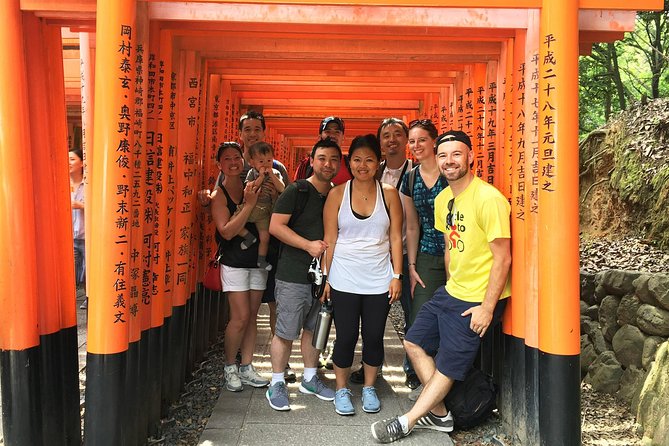
The opening 15 minutes are used to meet the guide, get fitted to your bicycle, collect a helmet, and prepare for the ride. This is more important than it sounds. A poor saddle height or unfamiliar bicycle can make a pleasant morning tiring, so use this moment to speak up if the fit feels wrong.
The included bicycle is a high-quality Cannondale model, according to the tour details. An e-bike upgrade has also been available to some riders, and one rider found it especially helpful. Since the standard experience is not described as strenuous, most people who ride regularly should find the regular bike suitable. If you are concerned about heat, hills, or stamina, ask about the upgrade when booking.
The guides place safety in practical terms. One guide was praised for giving clear advice about traffic and how to interact with pedestrians. That is useful in Kyoto, where narrow lanes may be shared by bicycles, walkers, and local traffic. Pay attention during the opening briefing, stay with the group, and follow the guide’s signals.
Bottled water is included. That helps, especially in warm weather. One outing took place on a 36C day, and another happened in chilly rain, so conditions can change the feel of the ride. The tour requires good weather and may be moved or refunded if poor weather prevents it from running.
Nishi Honganji, a huge wooden start to the sightseeing
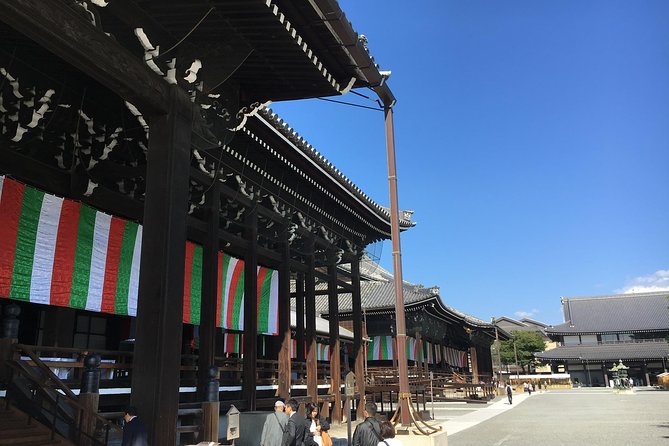
Nishi Honganji is the first main stop, with about 15 minutes set aside. It is one of Kyoto’s less visited religious sites and includes one of the world’s largest wooden buildings. That gives you a striking early contrast with the crowded sights later in the morning.
The short visit is best treated as an introduction rather than a full temple tour. You can take in the scale, look at the architecture, and hear the guide explain the site before getting back on the bike. If you like grand wooden structures and Buddhist architecture, you may wish the schedule allowed longer here.
This stop also shows the value of the route. A regular sightseeing plan can become a checklist of famous names. Cycling between places gives the guide room to explain how different parts of Kyoto fit together, while you see the city at street level.
Following Takase Canal at an easy pace
The ride then follows the peaceful Takase Canal. The canal has a place in Kyoto’s past, and the guide explains that role while you stop for photos. This is one of the most pleasant sections for people who want a break from large temple grounds and packed streets.
The canal ride offers a change of rhythm. You are not simply arriving at another monument, taking a quick picture, and leaving. You get a quieter stretch where the city feels more local and the bicycle makes sense as a way to move.
There is no fixed stop duration listed for the canal, so the amount of time may depend on the group and the day. That flexibility can be helpful, though it also means the schedule is not minute by minute. If photography is your main goal, tell the guide early. The tour may need to balance your interests with the pace of the whole group.
Same city, a completely different kind of day:
- PERFECT KYOTO 1-Day Bus Tour
★ 5.0 · 13,518 reviews - Kyoto: Fushimi Inari, Kinkakuji, Bamboo Grove 1 Day Bus Tour
★ 4.8 · 4,316 reviews - Kyoto: Tea Ceremony in a Traditional Tea House in Kiyomizu
★ 4.9 · 3,519 reviews - Kyoto Geisha Walking Tour: Gion District & Hidden Gems
★ 4.7 · 3,273 reviews
Gion, Kyoto’s famous geisha district
Gion is scheduled for around 15 minutes. This is a compact visit to one of Kyoto’s most recognizable districts, known for traditional streets and geisha culture. The guide explains the customs and the less visible side of this carefully guarded world.
You might catch sight of a maiko or geisha, but do not book this tour expecting a guaranteed encounter. The appeal is the setting, the stories, and the chance to see the district respectfully rather than treating it as a stage set.
The limited time is the clearest weakness of the tour. One rider felt rushed in Gion and wanted more time to take pictures and absorb the atmosphere. I understand that concern. Gion rewards patience, and a quick stop cannot provide the same experience as returning later on foot.
The practical answer is simple: use the bike tour as an introduction, then revisit Gion on your own if it interests you. The morning gives you orientation and cultural context. A separate evening walk can give you the slower pace that this schedule cannot.
Tofukuji Temple and the bridge view
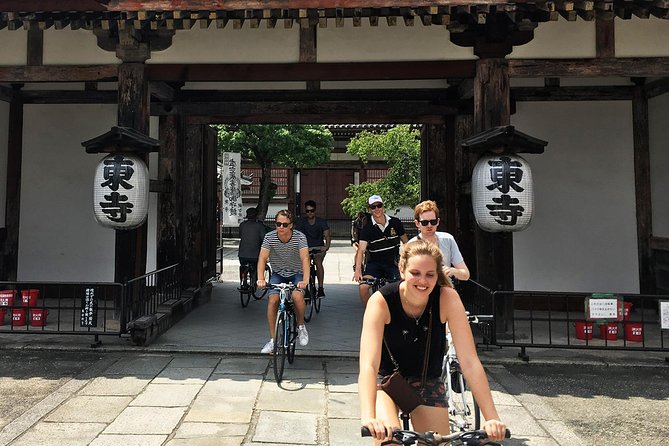
Tofukuji Temple receives only about five minutes, making it a photo and orientation stop rather than a full temple visit. The temple is one of Kyoto’s oldest and largest Zen temples, and the bridge provides a memorable view across its spacious grounds.
Five minutes is enough to see why the temple matters, but not enough to explore its buildings or gardens in detail. That is worth knowing before you book. If Tofukuji is high on your personal list, plan another visit.
The short stop does help the overall route. You get a broad taste of southern Kyoto without spending the entire morning inside one complex. I see this tour as a sampler: it introduces you to several places so you can decide where to return for a longer visit.
Fushimi Inari, the morning’s big finish
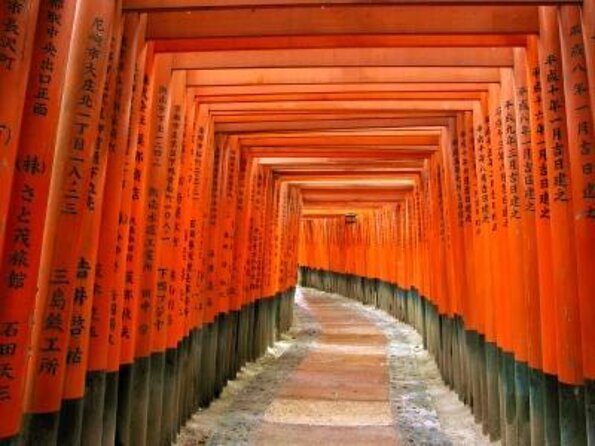
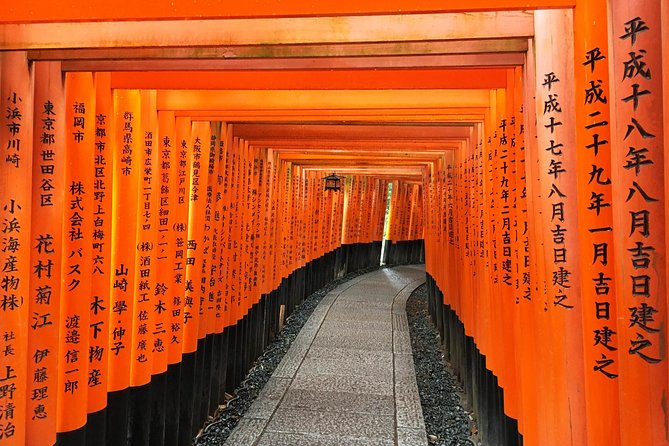
Fushimi Inari-taisha is the final major stop, with about 25 minutes planned. Its thousands of red torii gates make it one of Kyoto’s most recognizable sights, but the area can be confusing and crowded. A guide can help you choose a sensible path and avoid wasting time at the most congested points.
The 25-minute visit will not cover the entire mountain route. Fushimi Inari extends far beyond the first gates, and a full exploration takes much longer. Still, this stop gives you a useful first look and a chance to take photographs without having to work out the approach yourself.
Because it is the last major sight, the morning ends on a high note. You then cycle back to the meeting point. If you want a longer walk through the torii, consider returning separately with comfortable shoes and extra time.
Guides who add more than directions
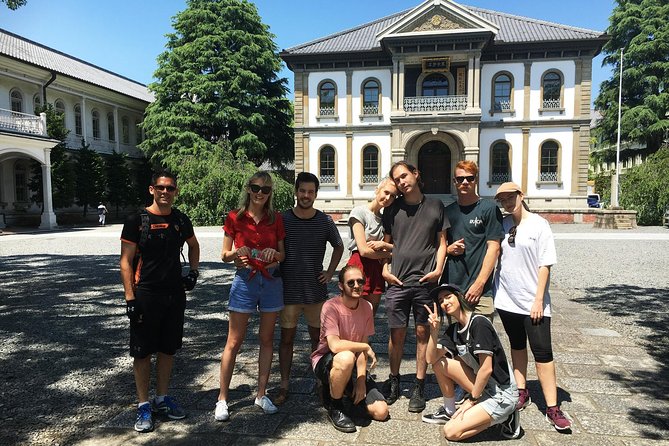
The strongest part of this experience is the guide’s role. You are not just following a GPS route. The guide explains Kyoto’s history, Japanese culture, religious meaning, and present-day life at the places you visit.
Several guides have been singled out by name in past outings, including Jay, Indra, Juan, Kevin, Jaime, Julian, Carl, Thierry, Shaun, Paul, Sam, and Quin. Their styles differ, but the useful pattern is clear: the best guides combine clear riding instructions with stories and practical help.
One guide was an ordained Shinto priest, offering a distinctive view of religion and culture. Another helped arrange a restaurant reservation. Juan even added a special stop connected with the original Nintendo card company after learning that a child in the group liked Nintendo. Those details show how a good guide can respond to the people in front of them instead of delivering a fixed speech.
That flexibility has a limit. One person felt that side conversations used time that could have gone toward another stop. With a small group, the guide has to balance questions, safety, and the full route. If you have a specific priority, mention it at the start so expectations are clear.
What the $79.59 price really buys
At $79.59 per person, this is not the cheapest way to see Kyoto. You could rent a bicycle independently for less, and public transportation may cost less still. The price makes more sense if you value a planned route, a guide, a fitted Cannondale bike, helmet, water, and the ability to connect several sights in one morning.
You are also paying for time saved. You do not need to map a route between southern Kyoto’s scattered sights or work out how to move from a canal to Gion and then to Fushimi Inari. For a first visit, that structure can be worth a lot.
The maximum group size is eight, which improves the value compared with a large coach tour. You get a more personal ride and can ask about food, temples, customs, and later plans. Several guides have also offered restaurant tips or local recommendations, adding practical value beyond the listed stops.
I would call the price fair for first-time visitors who want an active orientation to Kyoto. It is less compelling for experienced cyclists who enjoy planning their own routes, or for visitors who want long, unhurried temple visits.
Who will enjoy this ride most
This tour suits you if you want to see a lot without spending a full day on foot. It is especially useful early in a Kyoto visit because it helps you identify places worth revisiting.
It also fits families with teenagers, provided everyone is comfortable riding. The minimum age is 13. One family outing was praised for careful safety guidance and clear storytelling, while another guide adapted the experience around a child’s interest.
The tour may not suit you if you dislike cycling in city streets, need a slow walking pace, or want extensive time at each temple. It is also not ideal if your main goal is to climb deep into Fushimi Inari or spend hours photographing Gion.
Expect a gentle workout rather than a demanding athletic ride. Hot weather can make even easy cycling tiring, while rain or cold can change the mood. Dress for the forecast and treat the included water as helpful but not a substitute for sensible preparation.
Booking, cancellation, and practical details
You receive confirmation when you book, and the mobile ticket is convenient. The experience ends back at Cycle Kyoto, so avoid scheduling a distant activity immediately afterward unless you leave some breathing room.
Free cancellation is available up to 24 hours before the 9 a.m. start time for a full refund. Changes or cancellations made inside that window are not accepted or refunded. The tour can also be canceled if the weather is poor or the minimum number of participants is not reached, with a different date, another experience, or a full refund offered.
The experience is described as suitable for most people, but the bicycle requirement matters more than the general accessibility note. You must be at least 13 and comfortable riding. Ask about the e-bike option if you want extra help with the distance or summer heat.
Should you book South Kyoto in a Nutshell?
I would book this if you want a friendly, active introduction to southern Kyoto and prefer quiet lanes to bus windows. The combination of Nishi Honganji, Takase Canal, Gion, Tofukuji, and Fushimi Inari gives you a useful range of Kyoto experiences in three to four hours.
Book with realistic expectations. This is a sampler, not a deep visit to every temple. Gion and Tofukuji are brief, and Fushimi Inari receives only part of the time it deserves. But the guide, small group, quality bicycle, and backstreet route make the price reasonable for a first morning in the city.
Choose it especially if you want local stories, clear riding support, and a little exercise. Skip it if you would rather linger at one shrine, avoid bicycles entirely, or plan every minute around photography.
FAQ
How long does the South Kyoto bike tour last?
The tour lasts approximately three to four hours.
What time does the tour start?
The tour starts at 9 a.m.
Where does the tour begin?
It begins at Cycle Kyoto, 7 Higashikujō Nishisannōchō, Minami Ward, Kyoto, 601-8003, Japan.
Where does the tour end?
The activity ends back at the Cycle Kyoto meeting point.
What equipment is included?
The price includes a Cannondale bicycle, helmet, bottled water, and use of the bicycle during the tour.
What sights does the tour visit?
The route includes Nishi Honganji, Takase Canal, Gion, Tofukuji Temple, and Fushimi Inari-taisha Shrine.
How old must riders be?
Riders must be at least 13 years old and comfortable riding a bicycle.
How many people can join the tour?
The tour has a maximum of eight participants.
Can I cancel for a full refund?
Yes. You can cancel at least 24 hours before the experience start time for a full refund. Cancellations or changes made less than 24 hours before the start time are not accepted or refunded. If poor weather or low participation causes the tour to be canceled, you will be offered another date or experience, or a full refund.
Just added around Kyoto
- Taste of Nishiki Market Walking Food Tour with Local guide★ 5.0 · 17 reviews
- Kyoto: Sushi Making Class with Sushi Chef★ 4.8 · 64 reviews
- Kyoto: City Secrets eBike Tour★ 4.9 · 196 reviews
- Sacred Pathways: Discover the Philosopher’s Path of Kyoto★ 4.9 · 20 reviews
- Private Tour to Monkey Park and Arashiyama Highlights★ 5.0 · 22 reviews
- Private Nara Tour from Osaka – Meet at Your Hotel★ 5.0 · 22 reviews
- Private Sake Tasting in Central Kyoto with Sake Sommelier★ 5.0 · 13 reviews
- Kyoto : Private Custom Walking Tour With A Local Guide★ 4.6 · 144 reviews
Cycling Tours, compared.
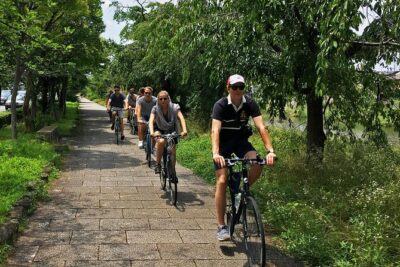
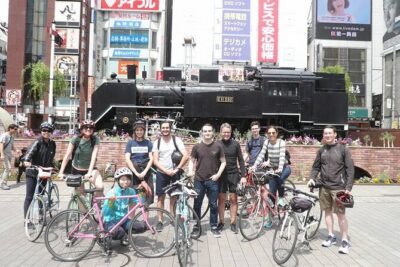
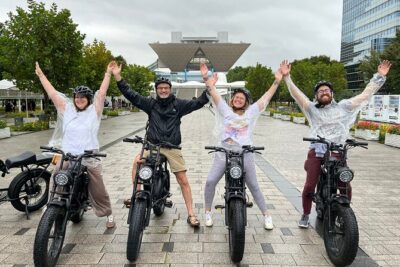

3h Tokyo E-Bike Tour: Hidden Gems, and Local Life with guide
Read our review →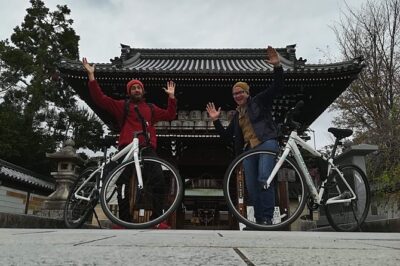
Arashiyama Bamboo Forest & Hidden Gems Bike Tour (Early Bird)
Read our review →
Hiroshima in a Nutshell: Morning Bike Adventure
Read our review →
5 Top Highlights of Kyoto Full Day Bike Tour (E-bike option)
Read our review →Browse the lists this tour appears in