
REVIEW · KIMONO & CULTURE EXPERIENCES
Seki: Samurai Knife Making Experience at the Knife Museum
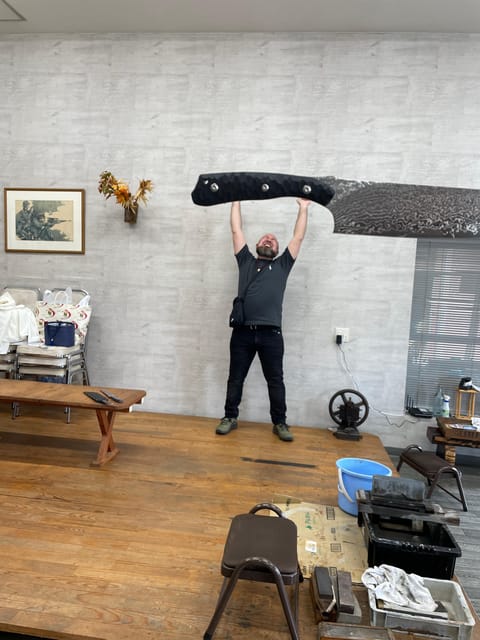
Seki’s best souvenir is not something you pick from a shop shelf. It is the Damascus kitchen knife you finish yourself, with your name etched into the blade and a cutting edge you sharpen by hand. At the Knife Museum, master craftsman Sumi and instructor Yoshi guide you through the work, while Hiro handles transportation and translation.
I like two things right away: you learn a useful skill rather than simply watching a demonstration, and the day connects the knife to Seki’s swordmaking past. The sushi or other Japanese lunch is another strong touch. The main caution is time. Knife work can take much longer than planned, so do not schedule a tight evening train or another major activity afterward.
In This Review
- Key points to know before booking
- Why Seki is the right place for a blade-making day
- Meeting Hiro at Sekitomioka Station
- Choosing and shaping your personal knife
- Learning to sharpen instead of just admiring steel
- Testing the knife on fresh vegetables
- A Japanese lunch after the workshop
- Seeing Seki’s knives at the G. Sakai museum
- Connecting kitchen knives with samurai swords
- What the $322 price really includes
- Timing, transport, and practical planning
- Who should book this Seki experience
- Should you book the knife-making day?
- FAQ
- Where does the experience begin?
- How long does the experience last?
- How far is Seki from Kyoto?
- Is transportation included?
- Who leads the experience?
- What will I make?
- Can I put my name on the blade?
- Is lunch included?
- Can children join?
- What is included in the price?
Key points to know before booking
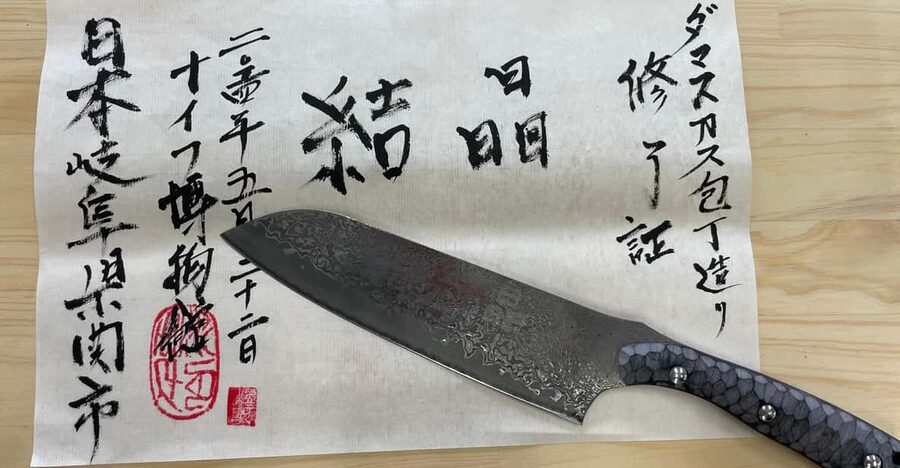
- You finish a real Damascus kitchen knife: Polish, engrave, assemble, sharpen, and test your own blade.
- Sumi and Yoshi teach the workshop: Their patient, hands-on instruction makes the process approachable even if you have never sharpened a knife.
- Hiro makes an out-of-the-way town easy: He meets you at Sekitomioka Station, drives you between stops, and translates in English.
- The group is limited to five people: That matters when you need individual help with polishing and sharpening.
- Lunch is part of the cultural experience: Depending on the day, you may choose sushi, eel, or another Japanese meal.
- Plan for a full day: The published schedule may run late because the knife-making session is detailed and unhurried.
Why Seki is the right place for a blade-making day
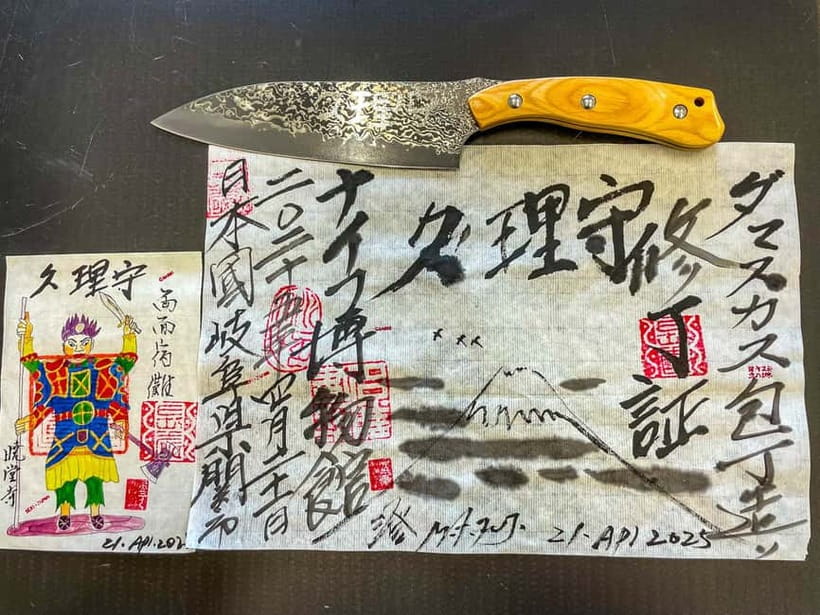
Seki, in Gifu Prefecture, has made blades since the Kamakura period, from 1185 to 1333. The area had the ingredients traditional smiths needed: iron sand, charcoal, and clean water. Over time, swordmaking skills also supported the production of practical cutlery.
That past is still visible in the town’s museums, workshops, and knife factories. Seki knives are valued for sharpness, durability, and careful finishing. The city is not a quick stop between Kyoto and Tokyo. It is a working center of Japanese cutlery, which gives this experience more substance than a souvenir lesson in a major tourist district.
From Kyoto, the train journey takes roughly 1.5 to 2 hours, so you need to commit most of a day. That is a drawback for anyone trying to pack in several cities. For me, though, the journey makes sense if you care about food, tools, Japanese craft, or the link between samurai swords and modern kitchen knives.
More kimono & culture experiences in Japan:
- Kyoto Geisha Walking Tour: Gion District & Hidden Gems
★ 4.7 · 3,273 reviews - Kyoto: Gion Magical Night Walking Tour with Geisha Trivia
★ 4.9 · 2,393 reviews - Kyoto: Gion Geisha District Walking Tour – Stories of Geisha
★ 4.7 · 2,187 reviews
Meeting Hiro at Sekitomioka Station
The day begins at Sekitomioka Station on the Nagaragawa Railway. The meeting time is 10:06 AM, timed to the arriving train. Hiro picks you up by car and takes you to the G. Sakai Knife Museum and its adjoining workshop.
This pickup is more important than it may first sound. Seki’s blade sites are spread out, and reaching each place without local help would be awkward. Transportation between the stops is included, and Hiro also provides English guidance and translation. His role helps turn a scattered collection of workshops and museums into one clear day.
The group is capped at five participants. That is a useful limit for a practical class. You need room at the workbench, and you need the instructor to watch your angle and pressure while polishing or sharpening. The small size also leaves space for questions about Japanese names, blade styles, and swordmaking.
Choosing and shaping your personal knife
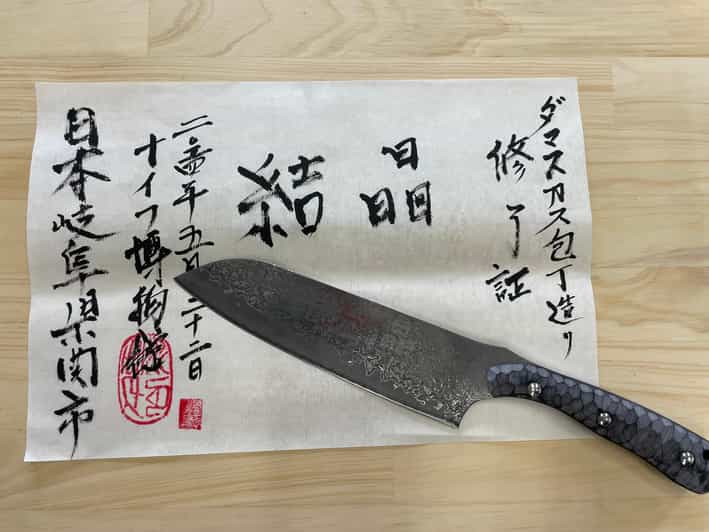
At the G. Sakai Knife Museum, the hands-on portion takes about 2.5 hours on the published plan, though the full work session can run considerably longer. You begin with a prepared blade blank rather than forging a glowing piece of steel from raw material. That distinction matters: this is a finishing and assembly workshop, not a complete blacksmithing course.
You choose from the available knife styles, colors, and handle options. The range is not unlimited, so do not arrive expecting every shape or size. Still, the choice gives you control over the object you take home. You are not simply buying a standard model and adding a souvenir mark.
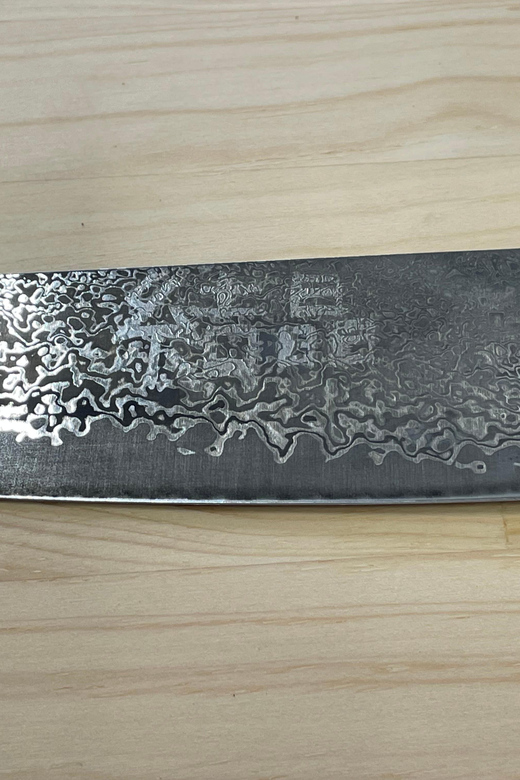
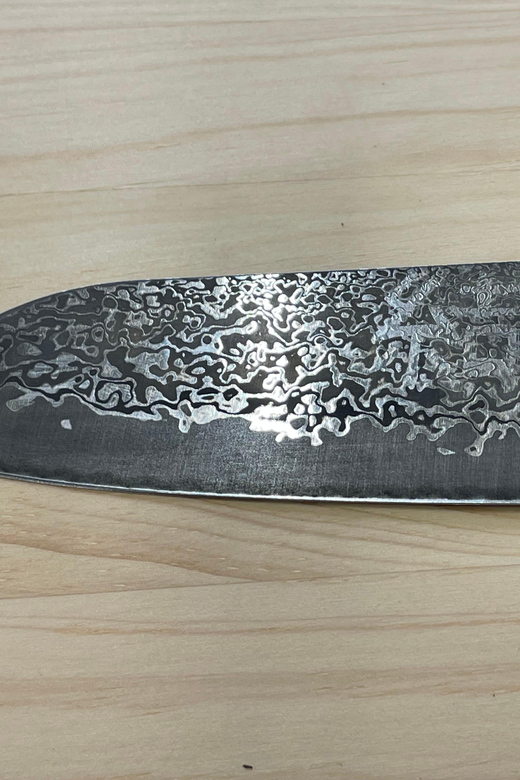
The knife is made from Damascus steel, with its layered pattern. The process includes several careful stages:
- Polishing the blade
- Writing or selecting your name in Japanese characters
- Etching the name onto the blade
- Assembling the handle and knife components
- Sharpening the cutting edge
- Testing the finished knife
The engraving is one of the most personal parts. Hiro can help translate your name into kana or kanji and explain the meaning of the characters. You then place that identity on the blade using the workshop’s special technique. It turns an ordinary kitchen tool into something tied to your day in Seki.
Sumi brings more than 50 years of knife-making experience to the workshop. Yoshi provides patient instruction as you polish and sharpen. The work is not rushed, and that is both the pleasure and the practical warning. One session may take until around 4 PM, even though the schedule suggests a shorter workshop.
Learning to sharpen instead of just admiring steel
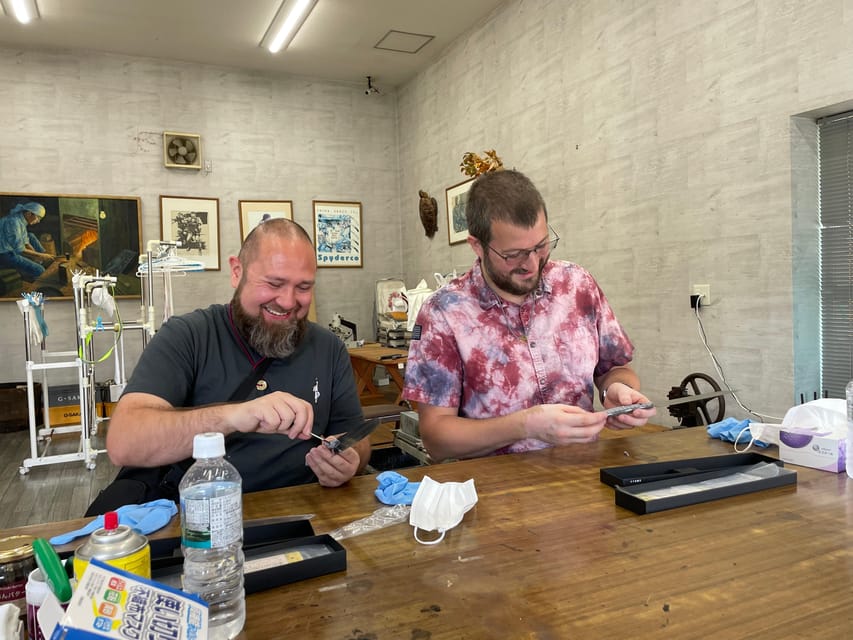
Many craft activities let you make something that looks handmade but leave the difficult work to the instructor. Here, you get direct instruction in sharpening. You will not become a professional sharpener in one afternoon, but you can take home a technique that applies to other knives as well.
Pay close attention to the angle and the feel of the blade against the sharpening surface. The point is not brute force. You are learning how a sharp edge is created and maintained. This is one of the best reasons to choose the workshop over a simple factory tour.
The class is intended for adults. Children under 18 cannot take part, so this is not a family activity for younger children. It suits a couple, friends, or a solo participant who is happy to work carefully and ask questions.
A few more Japan trips to weigh up
- Tokyo: teamLab Planets TOKYO Digital Art Museum Entry Ticket
★ 4.6 · 9,779 reviews - Osaka Castle: Museum and Tower Entry Ticket
★ 4.5 · 2,380 reviews - Tokyo: Samurai Ninja Museum Guided tour and Experience
★ 4.6 · 1,010 reviews - Kyoto: Tea Museum Tickets and Matcha Grinding Experience
★ 4.9 · 739 reviews
Testing the knife on fresh vegetables
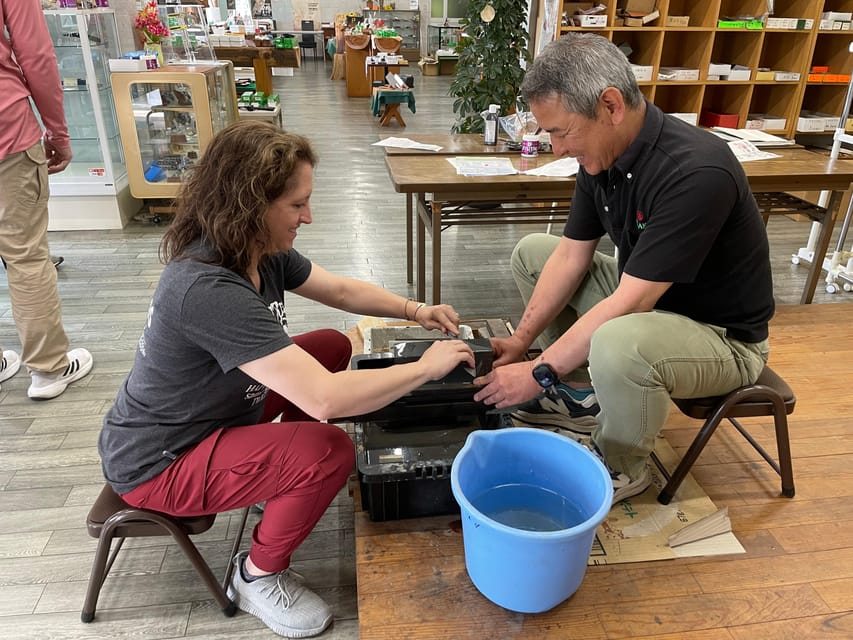
After polishing, sharpening, and assembly, you get to use the knife. Fresh local vegetables provide a simple but effective test. You can feel the difference between a dull edge that pushes through food and a sharp edge that makes a clean cut.
Some sessions also include playful cutting tests, such as slicing a water bottle. The listed focus is fresh vegetables, so treat the bottle demonstration as an occasional extra rather than a guaranteed part of the program. Either way, testing the blade gives the workshop a satisfying finish.
This step also brings the knife back to its purpose. Japanese blades are not only museum objects or symbols of samurai culture. They are working tools for cooks. You leave with a knife that can serve in your kitchen, not just sit in a display case.
The completed set is included in the price, along with museum admission, transportation, lunch, an English and Japanese guide, and the knife instructor. The exact accessories can vary. A chopping board, certificate, mini knife, key ring, or other small gift may be offered, but the dependable item is the handmade knife set itself.
A Japanese lunch after the workshop
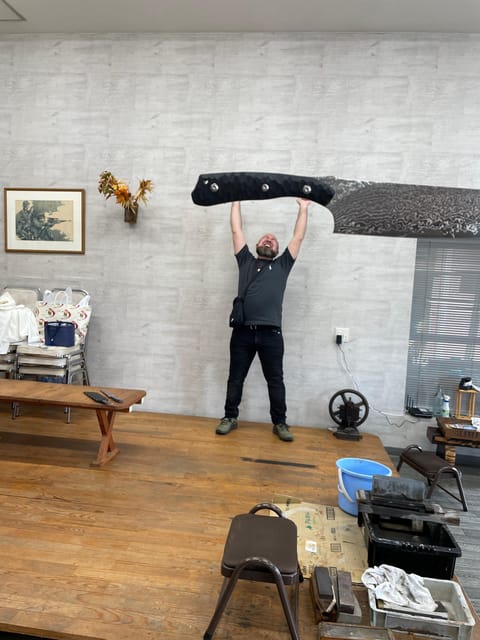
Lunch follows the knife-making session at a local restaurant. This is not an afterthought. After several hours of close handwork, sitting down for a proper Japanese meal gives the day a welcome change of pace.
Sushi is a popular choice, and the meal may be prepared by a sushi master with decades of experience. Depending on the arrangements that day, you may also choose eel or another Japanese meal. The available choices can include three meal types, so tell the guide about your preference when appropriate.
I like the way lunch fits the theme. You have just made a kitchen knife, then you see how Japanese food depends on precise cutting, fresh ingredients, and practiced hands. It is a small but effective connection between craft and cuisine.
Do not think of this as a quick boxed lunch squeezed between attractions. The meal takes about an hour and is part of the day’s cultural visit. If you are in a hurry, that relaxed pace may test your patience. If you want time to talk with the guide and instructors, it is one of the more enjoyable pauses.
Seeing Seki’s knives at the G. Sakai museum
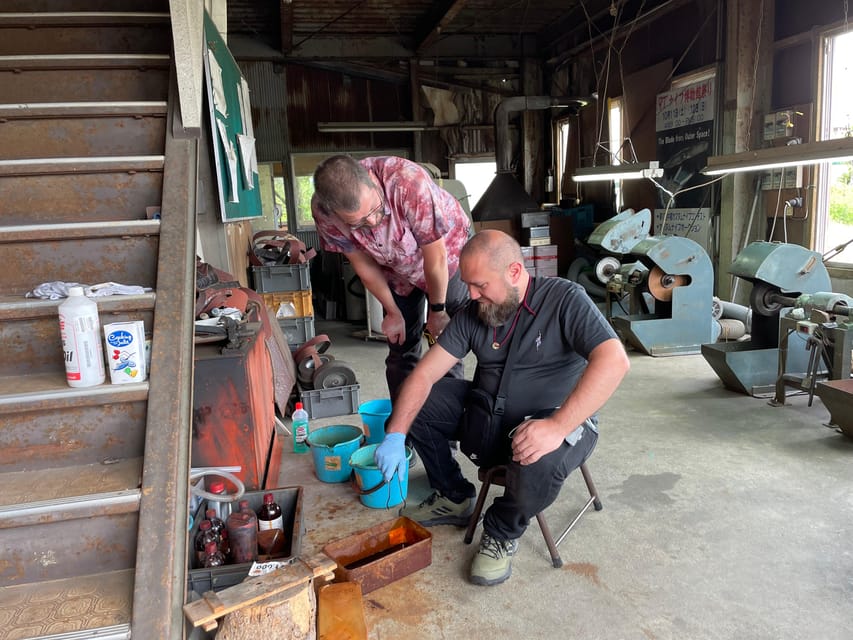
The Knife Museum occupies part of the G. Sakai factory, a major Japanese knife maker. After the workshop and lunch, you can see unusual and rare blades and learn how Seki’s cutlery developed.
The display gives context to the knife in your hand. You can compare different blade forms, uses, and finishes, then browse the company shop. The selection can include kitchen knives, pocket knives, hunting knives, and small souvenirs.
The name Knife Museum may suggest a large, formal institution. In practice, this stop is closely tied to a factory and working knife business. That is useful if you want to see how Seki’s craft functions today, but less satisfying if you expect a vast museum with extensive English interpretation.
Allow time for questions. Hiro can help explain what you are seeing, while the staff and instructors add practical details from their own work. The experience is strongest when you treat the museum as an extension of the workshop, not as a separate grand attraction.
Connecting kitchen knives with samurai swords
The final cultural stop is the Seki Swordsmith Museum, also described as a blacksmith museum or swordmaking workshop. Here you learn about Japanese samurai swords and Seki’s role in their production.
The visit can include a sword factory or artisan showroom, with a look at the work involved in making, repairing, or adjusting Japanese swords. You may see swords that have come from other parts of the world for repair and calibration. The setting helps explain why Seki remains associated with blades of many kinds, from practical kitchen tools to ceremonial swords.
This stop is especially appealing if you have an interest in Japanese history. It also gives the day a wider frame. You are not making a miniature katana. You are working with a modern kitchen knife shaped by a regional tradition that once centered on swordmaking.
The museum visit lasts about an hour. It is not as hands-on as the knife workshop, and the amount of access can vary. Still, it makes a worthwhile closing chapter, especially after you have already handled steel yourself.
What the $322 price really includes
At $322 per person, this is expensive compared with a museum ticket or ordinary cooking class. The price makes more sense when you count the knife, lunch, admission, private transportation, guide, translation, and several hours of instruction.
You are also paying for access to a specialized place that is not easy to visit efficiently on your own. Hiro’s station pickup and car transfers remove much of the planning problem. His translation helps you understand instructions that would otherwise be difficult to follow, particularly during engraving, polishing, and sharpening.
The value depends on what you bring home. If you want the cheapest Japanese knife, buy one in Kyoto or Tokyo. If you want to understand how a blade feels, learn a basic sharpening method, personalize the handle and engraving, and carry home a useful object connected to a specific town, the price is easier to justify.
The limited group size strengthens the value. With only five people, the instructors can give individual attention. That matters more here than it would on a standard sightseeing tour.
Timing, transport, and practical planning
Meet at Sekitomioka Station at 10:06 AM, when the scheduled train arrives. The day returns to the station according to the planned route, though the knife work can cause a later finish.
If you are continuing to Kyoto, the train connection is manageable when you leave enough room. Some arrangements may instead drop you at Gifu Station, which can make onward travel to Nagoya or Kyoto easier, but you should confirm the final drop-off for your date.
I would not book a dinner reservation, long-distance train, or evening show too soon after the planned end. The process is detailed, and the instructors do not appear to treat it like a rushed assembly line. Build in spare time.
Wear something that lets you work comfortably and keep your attention on the blade. The activity involves polishing, assembling, and sharpening, so careful listening matters more than physical strength. The supplied information does not give specific clothing or safety requirements, so ask the provider if you need details before departure.
The activity is offered with English and Japanese guidance. Hiro’s translation is particularly useful for questions and personal engraving. The workshop itself remains a Japanese craft setting, which means some terms and explanations may be translated in a practical, conversational way rather than through a formal museum audio system.
Who should book this Seki experience
I would choose this day if you fit one or more of these descriptions:
- You cook and want a knife with a personal story.
- You enjoy making things with your hands.
- You care about Japanese sword and cutlery traditions.
- You prefer a small group to a large guided bus tour.
- You are happy to spend a full day outside the main tourist routes.
- You want a useful souvenir instead of another decorative object.
This is less suitable if you want a short activity, dislike repetitive handwork, or only want to watch a sword being forged. The workshop is the heart of the day, and it rewards patience.
It also may not suit younger families because participants must be at least 18. The cost is high for anyone who does not care about knives, food, or craft. Seki is not a convenient add-on if your Japan schedule is already packed.
Should you book the knife-making day?
I would book it if you can spare a full day and the idea of using a tool you helped finish appeals to you. The strongest parts are the individual instruction from Sumi and Yoshi, Hiro’s careful transport and translation, the name etched in Japanese characters, and the chance to test the blade immediately.
The day is not perfect. The museum portion may feel smaller than its name suggests, the knife choices are limited, and the timing can stretch. At $322, it is not a casual purchase.
But this is a rare chance to connect Seki’s swordmaking tradition with the ordinary pleasure of preparing food. If that sounds more memorable than another city tour, book it. Leave your schedule open, take the train to Sekitomioka, and let the knife work take the time it needs.
FAQ
Where does the experience begin?
You meet at Sekitomioka Station on the Nagaragawa Railway at 10:06 AM, timed to the arriving train.
How long does the experience last?
It is a one-day experience. The planned stops include about 2.5 hours at the Knife Museum and workshop, one hour for lunch, and one hour at the Seki Swordsmith Museum, but the knife-making session may run late.
How far is Seki from Kyoto?
The journey from Kyoto takes roughly 1.5 to 2 hours by train.
Is transportation included?
Yes. Transportation between the meeting point and the activity locations is included, with pickup by car at Sekitomioka Station.
Who leads the experience?
Hiro provides the guide service, transportation, and translation. Sumi and Yoshi teach the knife-making work.
What will I make?
You make a personalized Damascus kitchen knife. The process includes polishing, name engraving, assembly, sharpening, and testing.
Can I put my name on the blade?
Yes. You can have your name written in Japanese characters and etched onto the blade using the workshop’s special technique.
Is lunch included?
Yes. Lunch at a local restaurant is included. The meal may be sushi, eel, or another Japanese option, with choices available depending on the day.
Can children join?
No. The activity is not suitable for children under 18.
What is included in the price?
The $322 price includes the samurai kitchen knife set, lunch, museum admission, transportation, an English and Japanese guide, and instruction from the knife-making craftsman.
Just added around Japan
- Tokyo: Customizable Private Guided Walking Tour★ 4.5 · 129 reviews
- Private Harajuku Omotesando Architecture Tour★ 4.9 · 18 reviews
- Tokyo: Guided Helicopter Ride★ 4.9 · 24 reviews
- Tokyo: Guided Walking Tour of Tsukiji Market with Lunch★ 4.4 · 24 reviews
- Tokyo: Private Personalized Local Food Tour★ 4.5 · 101 reviews
- Tokyo GINZA: KONPARU Japanese Cabaret Show with Drink★ 4.8 · 38 reviews
- Tokyo: Guided Walking Tour of Tsukiji Market with Breakfast★ 4.4 · 134 reviews
- Tokyo: Gotokuji Cat Temple, Shinjuku Cat Cafe & 3D Cat Tour★ 4.9 · 38 reviews
Kimono & Culture Experiences, compared.
Kyoto Geisha Walking Tour: Gion District & Hidden Gems
Read our review →
Gion Magical Night Walking Tour with Geisha Trivia
Read our review →
Gion Geisha District Walking Tour – Stories of Geisha
Read our review →
Best of Kyoto: Gion, Geisha, Pagodas & Cobblestones
Read our review →

Kyoto Gion Geisha District Walking Tour – The Stories of Geisha
Read our review →
Browse the lists this tour appears in